A lion is one of the few animal subjects that still reads clearly a decade after it heals. The difference between a lion tattoo that ages well and one that turns into a grey blob is almost never the idea — it is the style, the size and the artist you hand it to.
I have sat through a lot of lion consultations, and the same thing happens nearly every time. Someone arrives with a saved photo of a hyper-detailed portrait the size of a postcard, and the artist has to explain why that much detail will not survive on a four-inch patch of forearm.
So this guide is organised the way an artist would actually talk you through it: style first, then placement, then the practical stuff nobody mentions until you are already in the chair. If you are still deciding where a piece like this should live, the forearm tattoo ideas roundup is a useful companion to this one.
Every design below is a reference, not a template. Bring two or three to your artist and let them redraw the idea for your body — that is the part that makes it yours.
Which Lion Tattoo Style Is Right for You?
Style is the decision that drives everything else — cost, session count, minimum size and how the piece will look in fifteen years. Here is how the main options compare.
| Style | Smallest size that works | Typical sessions | How it ages | Best for |
|---|---|---|---|---|
| Black & grey realism | Roughly a hand-span | 2–4 | Softens gradually; contrast is what fades first | Forearm, outer arm, calf, back |
| Full-colour realism | Roughly a hand-span | 3–5 | Warm tones dull sooner than black; needs sun care | Outer arm, thigh, chest |
| Neo-traditional | Palm-sized | 1–3 | Very well — bold outlines hold shape | Chest, shoulder, thigh |
| Geometric / low-poly | Palm-sized | 1–2 | Clean lines stay readable; thin lines can soften | Forearm, calf, ribs |
| Fine line / minimalist | Coin-sized upward | 1 | Spreads slightly; may need a touch-up in time | Neck, ankle, inner forearm |
| Ornamental / filigree | Forearm-length | 2–4 | Strong — pattern reads even as detail softens | Forearm, armband, spine |
Session counts vary enormously by artist speed and your own pain tolerance, so treat the middle column as a rough planning figure rather than a quote.
What a Lion Tattoo Actually Means
The short version: courage, protection, and authority you did not have to ask permission for. That reading is old and it is remarkably consistent across cultures.
Lions guarded temple entrances in Mesopotamia, sat on the shields of European heraldry, and still stand at the doors of banks and libraries in half the cities I have visited.
What most people miss is the social side of the animal. Lions are the only truly social big cat, living in prides where related females do the bulk of the hunting and cub-rearing — a point the Smithsonian’s National Zoo makes plainly in its species profile.
That is why lioness tattoos read as family and fierce loyalty rather than as a softer version of the male design. They are not the same symbol at all.
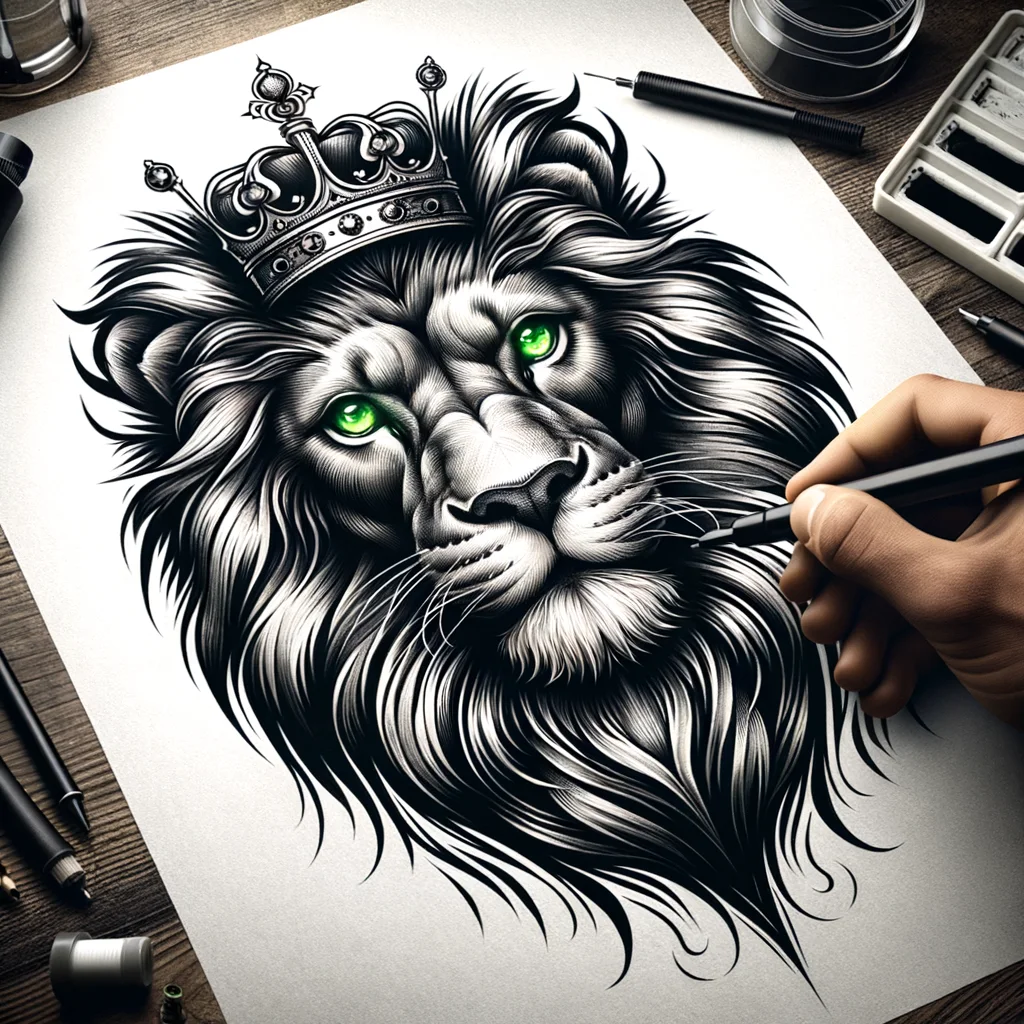
Then there is the crown. Adding one shifts the piece from “strength” toward “sovereignty” — closer in spirit to what we cover in the king tattoo meaning guide — and it is worth deciding whether that is a claim you want on your skin permanently.
Zodiac matters to some people too. Leo runs late July to late August, and a lion piece with a small constellation or glyph is one of the more graceful ways to mark a birth sign without it looking like a birth sign.
Lion Tattoo Styles That Hold Up Over Time
Black and Grey Realism
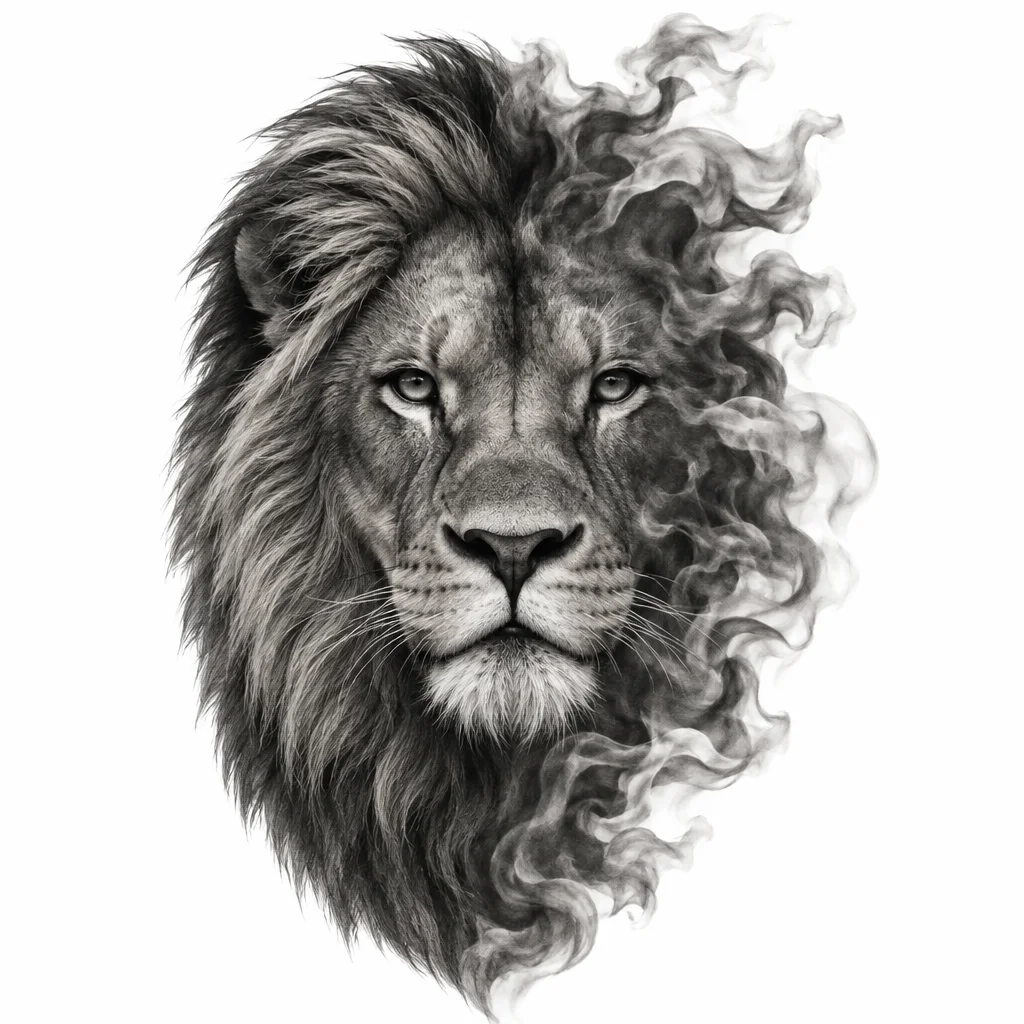
This is the default for a reason. A realistic lion in black and grey gives you the full weight of the animal without the fade risk that comes with colour.
The face is where the whole piece lives. In every realism lion I have watched come together, the artist spent the longest stretch on the eyes and the bridge of the nose, because that is where the expression is decided.
Give it room. Realism needs space for tonal transitions, and squeezing a full portrait into a small patch is the single most common way these pieces go wrong.
A good trick is letting the mane dissolve into bare skin rather than boxing it in with an outline. It reads softer, it heals cleaner, and it saves you an hour of shading you did not need.
Full-Colour Realism
Colour realism is the most technically demanding option here, and it is the one I would be most careful about choosing an artist for.
A lion’s coat is not one shade of tan. It runs from near-white on the muzzle to deep russet in the mane, and getting that gradient right without it going muddy takes real skill in colour packing.
Amber eyes are the payoff. When they are done well the whole portrait comes alive; when they are flat, no amount of mane detail rescues it.
Plan for sun care from day one. Warm pigments are the first thing to dull, and a piece like this rewards a lifetime habit of sunscreen more than any other style on this list.
Neo-Traditional and American Traditional
If you want the piece to still look sharp in twenty years with the least maintenance, this is the honest answer.
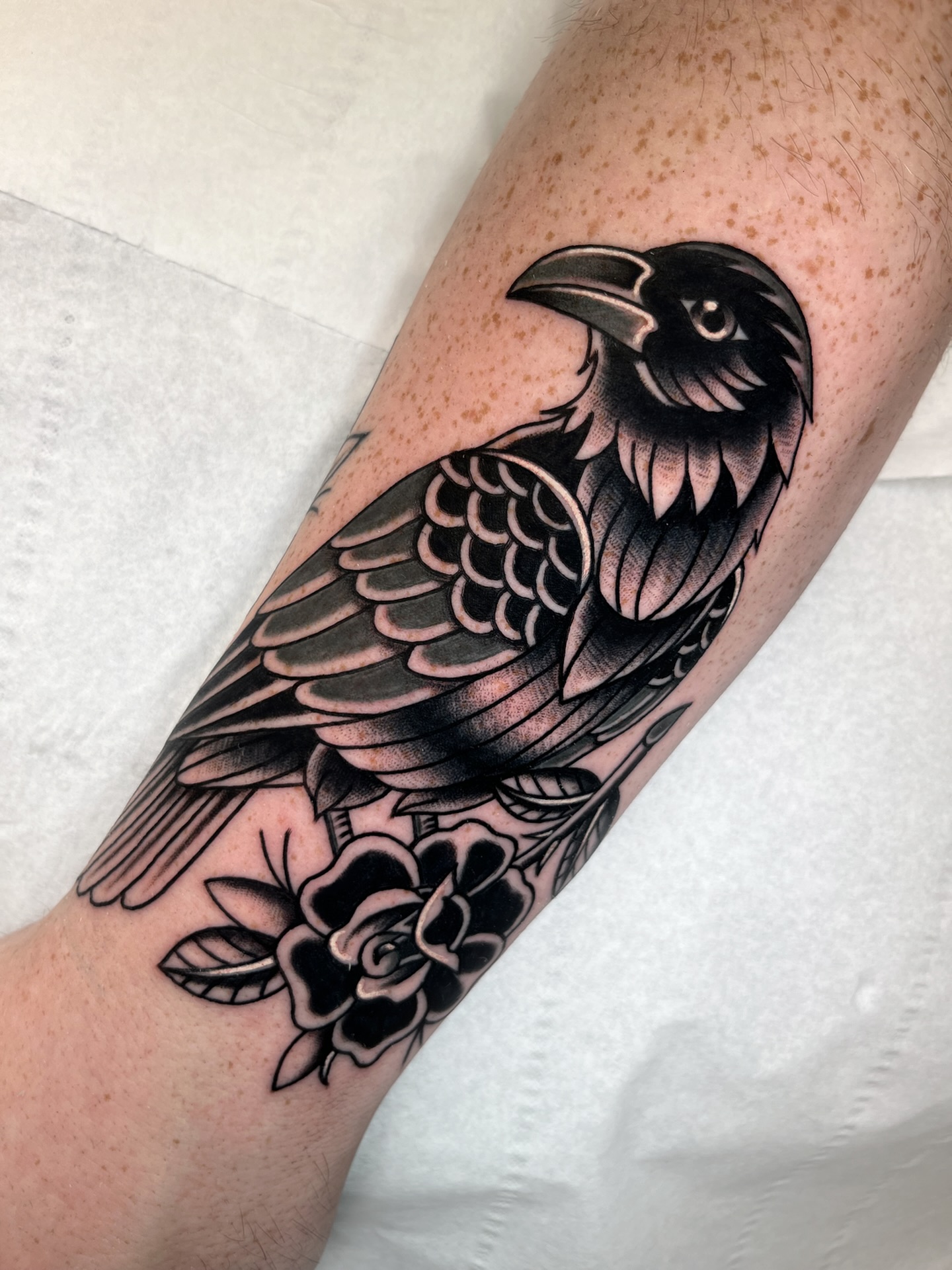
Heavy outlines and simplified shapes are not a stylistic quirk — they are a durability strategy. Bold linework holds its edge as skin changes in a way that fine gradients simply do not.
Neo-traditional gives you room for red peonies, roses and decorative shapes around the head, which fills space that would otherwise need shading. It sits in the same family as the American traditional animal tattoos tradition.
This is also the friendliest option for a first large tattoo, since it usually finishes in fewer sittings than realism.
Geometric and Low-Poly Lions
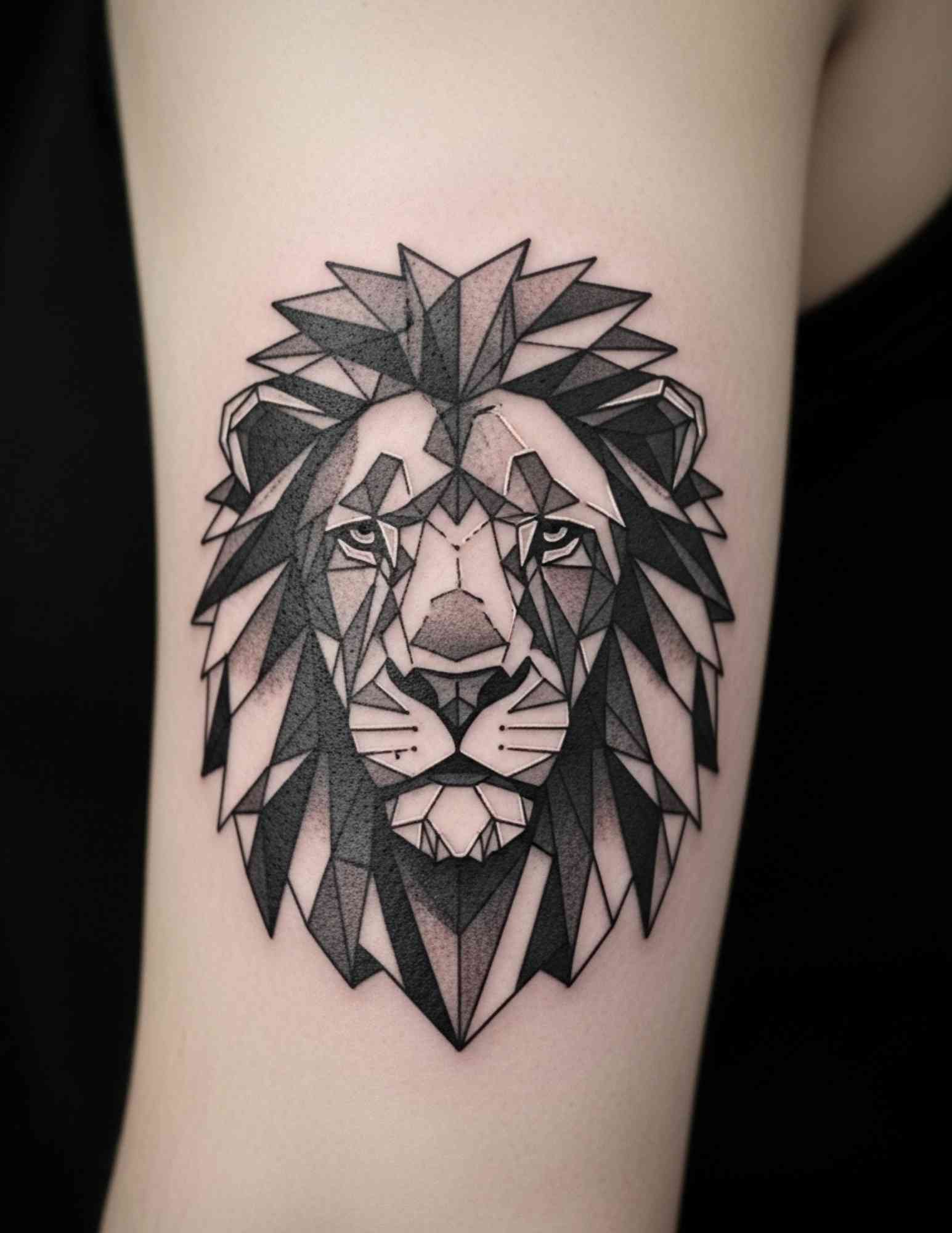
Geometric lions turn the head into facets — a low-poly sculpture rather than a photograph.
The appeal is precision. Done properly, every line has a purpose and the design reads instantly even from across a room.
The catch is that geometry is unforgiving. A wobble in a straight line is visible in a way that a wobble in a mane never would be, so this style genuinely depends on an artist with a steady, confident hand.
We have a full gallery of geometric lion designs if this is the direction you are leaning.
Fine Line and Minimalist Lions
Small lions work — as long as you accept that they will be a suggestion of a lion, not a portrait of one.
Fine line pieces on the neck, ankle or inner forearm are usually a single short session, which makes them the lowest-commitment entry point on this list.
Be realistic about longevity. Very thin lines placed close together tend to spread a little as they settle, and a touch-up somewhere down the line is normal rather than a sign anything went wrong.
If restraint is what appeals to you, the broader minimalist tattoo ideas collection is worth a look before you commit to an animal subject.
Ornamental and Filigree Lions
This is my favourite underrated option. The lion sits inside carved scrollwork, waves or baroque ornament rather than floating on bare skin.
It solves the composition problem elegantly. Ornament fills the space around the head, gives the piece a defined shape, and hides the awkward transition where a portrait would otherwise just stop.
Pattern also ages generously. Even as fine detail softens, the rhythm of the ornament keeps the design readable at a glance.
Armband and Cuff Lions
Two versions exist here and they are not interchangeable. In one the lion sits above a decorative band; in the other the lion is built into the band itself.
The built-in version wraps cleanly and looks deliberate from every angle, which matters more on a forearm than most people expect.
Knotwork and blackwork bands pair especially well with a lion head — a natural overlap with tribal tattoo styling.
Ask your artist to draw the band on your arm freehand before any needle touches skin. A band that is level standing up can sit crooked when your arm is relaxed at your side.
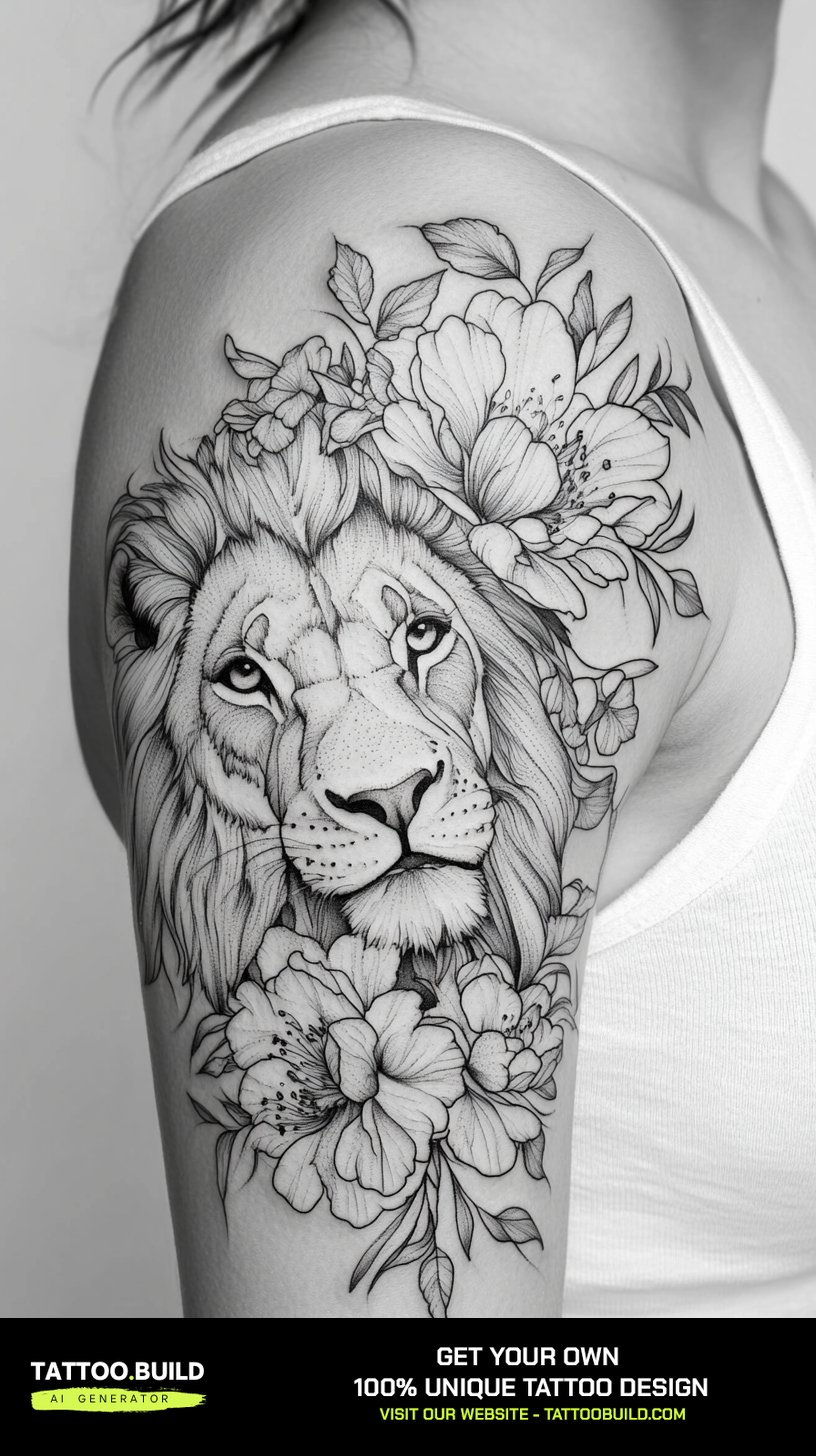
Lions with Florals
Pairing a lion with peonies, roses or loose foliage is the most requested combination I have seen in the last few years, and it works for a simple reason.
Flowers soften the silhouette and give the artist somewhere for the composition to breathe, so the head does not have to carry the whole design.
In fine line especially, botanical elements let a piece cover a large area without ever feeling heavy or dark.
Placement: Where a Lion Tattoo Works Best
Forearm
The forearm is the most practical home for a lion, which is why so many of the designs above sit there.
It is flat enough for a portrait, visible enough to enjoy, and moderate in pain for most people compared with bonier spots.
The inner forearm holds fine detail slightly better than the outer, mostly because it gets far less sun over a lifetime.
Upper Arm and Shoulder
The outer bicep and shoulder cap give you a large, gently curved canvas that suits a roaring head especially well.
It is also easy to cover, which matters if your workplace has opinions about visible ink.
One thing worth knowing: the shoulder curve distorts a flat design, so a stencil that looks perfect on paper often needs reshaping on the body.
Chest
A chest lion is a statement piece and it should be planned as one, ideally with the rest of your chest in mind even if you never fill it.
Bold styles win here. Traditional and neo-traditional lions handle the chest’s movement and stretch better than delicate shading does.
The sternum is genuinely sharp for most people, so read up on placements first — our chest piece guide covers layout in more depth.
Back and Spine
The back is the only placement that lets a lion be truly life-sized, and a crowned lion running the spine is about as commanding as body art gets.
Expect multiple sessions. A full back piece is a project measured in months rather than hours, and rushing it is how people end up with mismatched shading.
The upside is that the back is the least sun-exposed large canvas on the body, so the work tends to stay crisp longer than an arm would.
Thigh
The thigh is quietly the best-kept secret in tattoo placement: lots of flat area, easy to hide, and generally kinder than ribs or sternum.
It suits larger fine-line lionesses and floral combinations particularly well, as the thigh tattoos for women gallery shows.
Variations Worth Considering
Lioness and Cub
This is the design I recommend most often to people who want the symbolism without the roar.
A lioness with a cub reads as protection and family, and because it is usually rendered in soft fine line it sits comfortably on a shoulder blade or upper back.
The Crowned Lion
Adding a crown changes the message from strength to rule. Some people love that; others find it reads louder than they intended.
Sit with the idea for a few weeks before committing — it is the element people most often ask to have removed or reworked later.
Half Lion, Half Something Else
Split designs — half realistic lion, half geometric pattern, or half lion and half human profile — are a strong way to make a common subject specific to you.
They demand a confident artist, because the seam between the two halves is where the whole concept succeeds or falls apart.
Lion with Clock, Compass or Roses
Object pairings let you carry a second meaning: time, direction, loss, love. A compass under a lion is a favourite of mine for how cleanly it fills a forearm.
Keep it to one companion element. Two or three competing objects turn a strong silhouette into visual noise.
Getting a Lion Tattoo That Heals Well
Choose the artist before you choose the design. Look specifically for healed lion or big-cat work in their portfolio — fresh photos flatter everyone, healed photos tell the truth.
Eat properly and sleep before a long session. Realism sittings run long, and being under-fuelled makes the last hour miserable for both of you.
Follow your artist’s aftercare instructions over anything you read online, including this page. They know their inks, their technique and how your particular piece was worked.
Watch for the difference between normal healing and trouble. Mild redness, swelling and flaking in the first week are expected; spreading redness, increasing pain after a few days, pus or fever are not — that is a call to a doctor, not to a tattoo forum. The Mayo Clinic has a clear, level-headed summary of tattoo risks worth reading before your appointment.
If you have a history of skin allergies or keloid scarring, say so at the consultation, and speak to a doctor first if you are unsure. Reactions to specific pigments — reds especially — do happen, and the US FDA keeps a plain-language fact sheet on tattoo inks and safety.
Sunscreen for life. It is the single cheapest thing you can do to keep a lion looking like a lion in twenty years.
Common Mistakes I See With Lion Tattoos
Going too small for the style. A realism portrait shrunk to fit a wrist loses the exact detail that made it worth getting.
Copying another person’s tattoo exactly. Bring references for style and mood, then let your artist design something for your anatomy.
Ignoring pain in the planning. Sternum, ribs and inner arm are meaningfully harsher than outer arm or thigh — the tattoo pain chart is worth reading before you book a long sitting.
Booking on price alone. A cheap lion that needs covering up is the most expensive tattoo you can buy.
Rushing the stencil. Stand up, sit down, let your arm hang. Ten extra minutes at the placement stage prevents a lifetime of a slightly crooked lion.
Frequently Asked Questions
How much does a lion tattoo cost?
There is no honest universal figure — rates vary hugely by city, artist demand and experience. Most shops price either by the hour or by the piece, and a detailed lion is a multi-hour job in any style except minimalist fine line. The only reliable answer is to send reference photos and your rough size to two or three local artists and compare their quotes. Be wary of a quote that is dramatically lower than the rest.
How long does a lion tattoo take?
A small fine-line lion is usually a single session of an hour or two. A forearm-sized black and grey portrait more often runs across two to four sittings, and a full back piece is a months-long project. Your artist will give you a realistic schedule at the consultation. Sessions are typically capped at three to five hours because both skin and concentration have limits.
Do lion tattoos hurt more than other designs?
The design does not determine pain — the placement and session length do. A lion on the outer thigh or bicep is manageable for most people; the same lion on the ribs, sternum or inner arm is significantly rougher. Because lions are usually large, the bigger factor is endurance over hours rather than intensity in any one moment. Tell your artist if you need a break; every artist I have asked would rather pause than have you tense up.
What is the difference between a lion and lioness tattoo?
Visually, the mane. Symbolically, the readings differ more than people expect: male lions tend to carry themes of authority, courage and protection, while lionesses are usually read as family, loyalty and quiet fierceness. Lioness designs also lend themselves to softer fine-line and floral treatments. Neither is more “serious” than the other.
Will a lion tattoo still look good in twenty years?
It depends far more on style and care than on the subject. Bold traditional and neo-traditional lions hold up best, ornamental work ages gracefully, and high-contrast realism softens as the contrast that defines it settles. Sun exposure is the biggest accelerant of fading in every style. Consistent sunscreen and an occasional touch-up will keep almost any lion looking intentional decades later.
Quick Summary
- Pick the style before the size — realism needs space, fine line does not.
- Black and grey realism is the safest large-scale choice; colour realism is the most demanding.
- Neo-traditional ages best with the least upkeep, thanks to bold outlines.
- Geometric lions look sharp but depend entirely on the artist’s line control.
- Ornamental and floral framing solves composition problems and fills space elegantly.
- Forearm, outer arm and thigh are the most forgiving placements; chest and ribs are the harshest.
- A lioness reads as family and loyalty; a crown shifts the meaning toward rule.
- Choose an artist with healed big-cat work in their portfolio, and wear sunscreen for life.