A king tattoo is one of the few designs where the meaning is obvious to a stranger and still deeply personal to the wearer. At its core, a king tattoo stands for earned authority over yourself — not power handed to you, but power you built.
I have been writing about symbolic tattoo design for years, and the king motif comes up more often than almost any other archetype in the requests I see. It sits alongside the lion, the crown and the warrior as shorthand for people who want their ink to say something about how they carry themselves.
What surprises most people is how wide the design range actually is. A king tattoo can be a full-back Renaissance portrait with a jewelled crown, or a three-line crown outline on a finger that takes twenty minutes in the chair.
In this guide I will walk through what the symbol means, the placements that hold up best over time, the variations worth considering, and the mistakes I see people regret. If the crown itself is what pulls you in, the crown tattoo on the back meaning guide covers that narrower symbol in more depth.
Which King Tattoo Style Is Right for You?
Before placement, decide which visual language you want. These five approaches age very differently.
| Style | Typical Size | Sitting Time | Ages Best On | Best For |
|---|---|---|---|---|
| Minimal crown outline | 1–3 inches | 20–45 minutes | Forearm, upper arm | First tattoos and discreet placements |
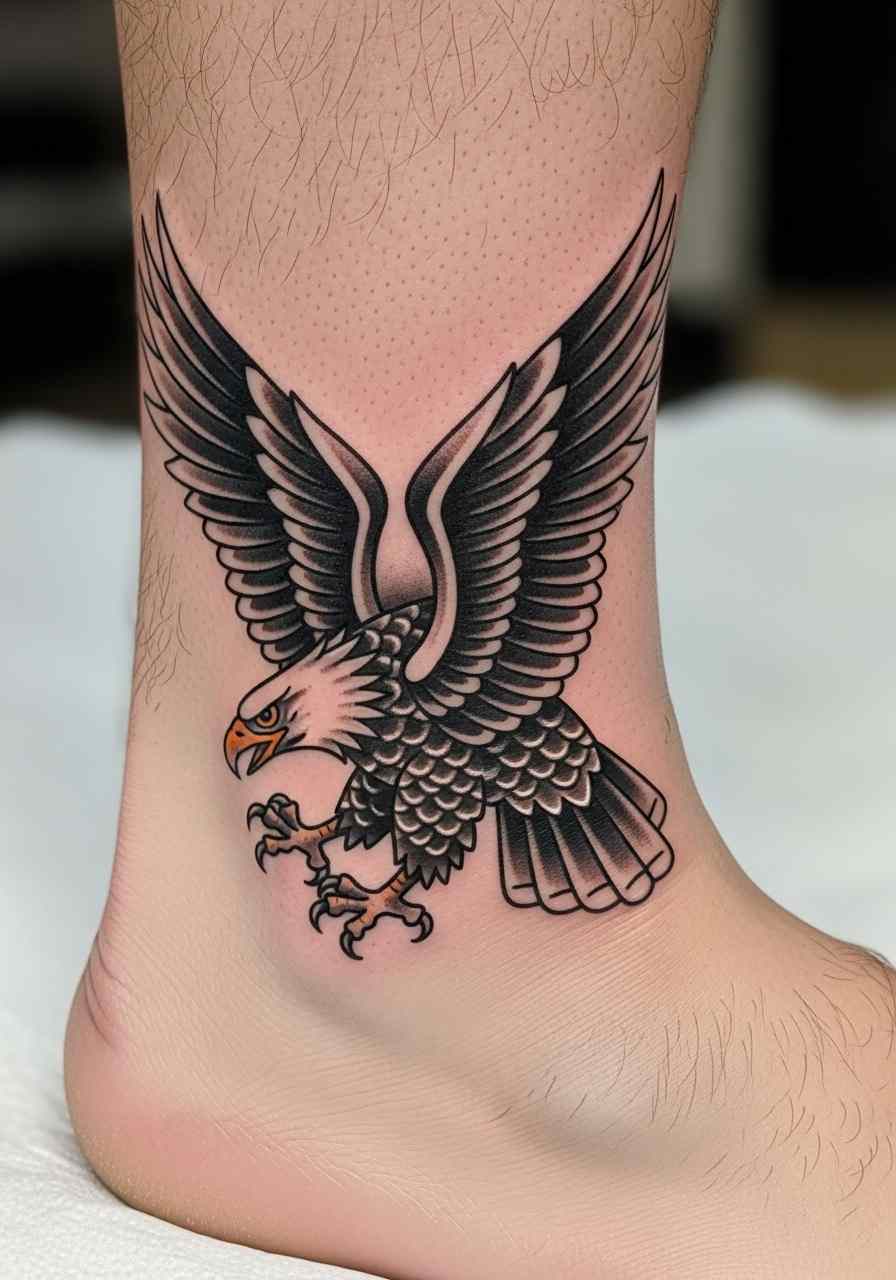
| Bold traditional king | 4–7 inches | 2–4 hours | Outer arm, calf | Readability decades later |
| Black and grey realism | 6–12 inches | 6–15 hours, multiple sessions | Chest, back, thigh | Portrait and legacy pieces |
| Lion king hybrid | 5–10 inches | 4–10 hours | Chest, shoulder, back | Strength plus royalty in one image |
| Chess king / geometric | 3–6 inches | 1–3 hours | Forearm, inner bicep | Strategy and self-mastery themes |
If you are torn, the honest answer is usually the bolder option. Fine detail is what fades first, and a design that reads clearly from six feet away will still read clearly in twenty years.
Why the King Symbol Carries So Much Weight
Crowns and kingship are among the oldest visual symbols humans have used, appearing in royal regalia across Europe, Africa and Asia long before tattooing became a mainstream art form. The history of the crown as a headdress is essentially a history of how societies marked out who was allowed to decide things.
That inherited weight is exactly why the tattoo works. You do not have to explain a crown — the meaning arrives before the viewer has finished looking.
In my experience, the people who choose a king tattoo rarely mean it as a boast. Most of the time they are marking a period where they stopped waiting for permission and started making decisions.
There is a second layer too. In chess, in card decks and in mythology, the king is often the piece that is most protected and least mobile — powerful, but constrained by responsibility.
That tension is what keeps the symbol interesting. A well-designed king tattoo can suggest both the authority and the cost of carrying it, which is a lot more compelling than a crown floating on its own.
The Meanings Behind King Tattoo Designs
Most king tattoos carry one dominant meaning and two or three supporting ones. Knowing which is dominant for you changes the design brief you give your artist.
Leadership and Authority
This is the most common reading, and the one people usually have in mind when they first book the consultation. A king leads — and the tattoo becomes a reminder that leadership is a behaviour, not a title.
Designs that lean into this tend to use a forward-facing crown, strong symmetry and clean geometry. Symmetry reads as order, and order reads as control.
When I have asked artists how they signal authority in a small piece, the answer is almost always weight rather than detail. A heavier line and a slightly larger crown do more than adding jewels.
If leadership is your dominant theme, ask for a design that would still look deliberate at thumbnail size. That is a good test for any symbolic tattoo.
Royalty and Nobility
Some people choose a king tattoo for lineage rather than leadership. It becomes a nod to family, culture or a name that means “king” in their own language.
These designs often include ornamental filigree, fabric drapery or a coat-of-arms element. They are decorative on purpose, and they suit larger placements where the detail has room to breathe.
The trade-off is maintenance. Ornamental line work is the first thing that blurs, so plan on a touch-up at some point if you go this route.
Power and Dominance
This is the most aggressive reading of the symbol, and it usually pairs the crown with a second motif — a lion, a skull, a sword or clenched hands.
In my experience these are the pieces that benefit most from a skilled artist rather than a cheap one. Heavy black work that is packed unevenly looks patchy within a couple of years.
If power is the theme, consider whether a warrior tattoo concept might actually serve you better. The two overlap heavily, and warrior imagery often gives an artist more to work with compositionally.
Self-Confidence and Self-Worth
A quieter version of the symbol. Here the crown is not aimed at anyone else — it is a private correction to a period of feeling small.
These tend to be smaller, softer pieces: fine black and grey, a simple crown above initials, or a crown paired with a date.
Every artist I have asked about small meaningful pieces says the same thing — keep the element count low. Two ideas in a two-inch tattoo is already one too many.
Legacy and Heritage
Portrait-style king tattoos usually fall here: a grandfather, a father, a historical figure, or a stylised monarch standing in for a family line.
Portraits are the highest-difficulty category in tattooing, and the gap between an excellent one and a mediocre one is enormous. This is not the place to price-shop.
Ask to see healed portrait work, not fresh photos. Fresh tattoos always look sharper than they will at the one-year mark.
Ambition and Aspiration
Some people get the crown before they feel they have earned it, deliberately. The tattoo becomes a target rather than a trophy.
Designs in this lane often include upward movement: rising rays, an ascending staircase, a crown held rather than worn.
It is a genuinely good use of the symbol, and in most cases it holds up better emotionally than a tattoo tied to one specific achievement.
Best Placements for a King Tattoo
Placement changes how a king tattoo is read as much as the artwork does. A crown on the chest says something different from a crown on the finger.
Forearm
The most popular choice, and the most practical. The forearm is flat, easy to reach for aftercare, and moderately low on the pain scale for most people.
It works for vertical compositions — a crown with lettering beneath it, or a narrow column design running toward the wrist.
The inner forearm holds detail slightly better than the outer, since it gets less sun. If you plan on fine line work, that matters more than people expect. There are plenty more layouts in our forearm tattoo ideas collection.
Chest
The chest is the natural home for a king tattoo that is meant to be private. It is covered most of the time, which suits the more personal meanings.
It also gives an artist a large, relatively flat canvas for symmetrical compositions centred on the sternum.
Be realistic about pain here. The sternum and the area over the ribs are consistently reported as among the more difficult spots, and long sessions there are genuinely hard.
Back
If you want the full throne-room composition — figure, drapery, architecture — the back is the only placement with enough room.
Expect multiple sessions and a real budget. Large back pieces are usually planned across months rather than weeks.
The upper back is easier to sit through than the lower back and spine for most people. Our guide to back tattoo designs for men has more on how these compositions are usually laid out.
Upper Arm
A good middle ground: more space than the forearm, easier to conceal, and forgiving in terms of pain for most people.
The outer upper arm is also one of the best-ageing spots on the body because the skin there moves and stretches relatively little.
It is my usual recommendation for a first medium-sized symbolic piece.
Leg
Calves and thighs are underrated for symbolic work. They offer a large, curved canvas and they are easy to keep out of the sun.
Thigh tattoos in particular tend to hold saturation well, partly because the area sees so little UV exposure.
The main downside is aftercare. Trousers rub, and healing a leg piece in winter takes a bit more discipline than healing an arm.
Small and Discreet Placements
Ankles, fingers, necks and feet all work for minimal crown designs, with one important caveat.
Fingers, hands and feet are the highest-friction areas on the body and almost always need touch-ups. Many artists will tell you upfront that finger tattoos fade unevenly, and that is not a reflection of their work.
If you want a small king tattoo that stays crisp with minimal fuss, the ankle and the back of the neck are the safer picks of this group.
Popular King Tattoo Variations to Consider
If the plain crown feels too generic, these five variations give the symbol a sharper point of view.
The Lion King
A lion wearing or beneath a crown is probably the single most requested king variation, and for good reason — it merges royalty with raw strength in one readable image.
It also solves a composition problem. A crown alone can look like it is floating; a lion gives the design an anchor and a focal point.
If the animal is doing most of the symbolic work for you, browse our lion tattoo ideas before committing to adding the crown at all.
King and Queen Matching Set
Matching king and queen crowns are a long-running couple design, usually placed on wrists, forearms or ring fingers.
I will be honest about the risk: relationship tattoos are among the most commonly covered up. That is not a reason to avoid them, but it is worth choosing a design that could stand alone if it needed to.
A crown with a meaningful date reads fine on its own. A crown with another person’s name does not. Our matching tattoos guide covers ways to build in that flexibility.
The Chess King
The chess king is the thinking person’s version of this tattoo. It swaps dominance for strategy, patience and knowing when not to move.
Visually it is clean, geometric and instantly recognisable, which makes it one of the better options for small placements.
It also pairs well with a second piece later — a knight, a pawn, a board fragment. See our chess tattoo ideas for how people build these out over time.
The Minimal Crown
Three to five lines, no shading, no ornament. The minimal crown is the most-requested first tattoo in this whole category.
It is cheap, quick and low-commitment, and it leaves room to expand later if you want to.
The one thing to watch is line weight. A crown drawn too thin can soften into a smudge over the years, so ask your artist to go slightly heavier than looks right on paper.
The Mythological King
Odin, Zeus, Poseidon, Arthur and Solomon all show up in this category, usually rendered in black and grey realism.
These are ambitious pieces and they demand real space — chest, back or full upper arm at minimum.
Do the reading before you book. A mythological figure carries specific cultural associations, and it is worth knowing them rather than discovering them afterwards.
Aftercare Tips for a King Tattoo
Aftercare is where most of the difference between a sharp tattoo and a dull one is decided, and none of it is complicated.
Keep the area clean with unscented soap, keep it lightly moisturised rather than smothered, and leave the scabs and flakes alone entirely. The American Academy of Dermatology’s guidance on caring for tattooed skin is a reliable general reference.
Sun is the long-term enemy. Once the tattoo is fully healed, sunscreen over it is the single highest-value habit for keeping black work dense and crisp.
Follow the specific instructions your artist gives you over anything you read online, including this article — they know what ink and technique they used. And if you see spreading redness, heat, swelling that worsens after a few days, pus or a fever, that is a matter for a doctor rather than a tattoo forum. The FDA’s consumer information on tattoo safety covers the reactions worth knowing about, including delayed sensitivity to certain inks.
Common King Tattoo Mistakes and How to Avoid Them
Most regrets in this category come from four repeatable errors.
- Going too small for the detail. A crown with twelve jewels at two inches becomes a grey blob in five years. Match detail to size, not to the reference photo.
- Copying another person’s tattoo exactly. Bring three references and ask your artist to build something new from them. Most artists strongly prefer this anyway.
- Choosing an artist by price. Heavy black work and portraits are skill-dependent in a way that small line work is not.
- Adding a name too early. Symbols age well. Names age with the relationship.
There is also a subtler one: picking the crown because it looked good, without deciding what it means to you. That tattoo tends to feel hollow later even when it is technically excellent.
Still Not Sure Which Direction to Take?
If the symbol appeals but the execution is not clear yet, it usually helps to browse adjacent categories rather than staring at more crowns.
Our broader tattoo ideas for men collection is a good starting point for composition ideas, and if budget is the open question, how much tattoo designs cost gives a realistic picture of what to expect.
Give yourself a few weeks between deciding and booking. A design you still want after a month is almost always the right one.
How to Generate Any King Tattoo Design With TattooBuild AI
If you want to see a concept before you take it to an artist, the TattooBuild AI generator will render it in seconds. I use it mainly to test composition ideas — crown up high versus low, lettering above versus below.
Treat the output as a reference for your artist, not a finished stencil. A human artist still needs to adapt it to your body and to how the ink will actually settle.
Here is the process step by step, as it worked in an earlier version of the studio. The studio has changed since, so for the current steps see how to use TattooBuild.
Step 1. Open the TattooBuild homepage to reach the design tools.
Step 2. Select the AI Tattoo Generator from the tool list.
Step 3. Choose between design generator mode and body mockup mode. Mockup mode is useful for judging placement and scale.
Step 4. Describe your king tattoo in plain language — subject, style, and any elements you want included or excluded.
Step 5. Pick the AI model, design style and image size that match what you want.
Step 6. Generate, then download the versions worth showing your artist.
There is a fuller walkthrough with prompt tips in our guide on how to use TattooBuild AI.
Frequently Asked Questions
What does a king tattoo symbolize?
A king tattoo most often symbolizes leadership, authority and self-mastery — the idea of ruling your own life rather than ruling other people. Depending on the design it can also carry meanings of royalty and heritage, ambition, resilience or family legacy. The supporting elements decide which reading dominates: a lion pushes it toward strength, a chess piece toward strategy, a portrait toward lineage. In most cases the wearer has one specific meaning in mind and the rest are secondary.
Is a king tattoo only for men?
No. The crown and king motif are worn by people of every gender, and plenty of women choose a king tattoo specifically because they like what the symbol says rather than who traditionally wore it. Some pair it with a queen design, others wear it alone. The styling tends to shift — finer lines and smaller placements are common — but the symbolism does not change.
Where is the best place to get a king tattoo?
The forearm and upper arm are the most reliable all-round choices: they are easy to care for, moderate on pain for most people, and they age well. The chest and back are better when you want a large, private, detailed composition. Fingers, hands and feet look striking but fade faster because of friction and will usually need touch-ups. Your artist can tell you which of these suits the specific design you have in mind.
How much does a king tattoo cost?
Cost depends almost entirely on size, detail and the artist’s rate, so there is no single figure worth quoting. A small minimal crown is typically a shop-minimum job, while a detailed portrait or back piece is priced by the hour across several sessions. Always ask for an estimate at the consultation rather than over text. Our cost guide walks through the variables in more detail.
Does a king tattoo have to include a crown?
Not at all. A lion, a chess king, a throne, a sceptre, a mythological figure or even a single word in a strong typeface can all carry the same meaning. The crown is simply the fastest shortcut to it. Dropping the crown often produces a more original design, and in my experience those are the ones people are happiest with years later.
Quick Summary
- A king tattoo primarily symbolizes leadership, self-mastery and earned authority rather than inherited power.
- Secondary meanings include royalty and heritage, ambition, confidence and family legacy — the supporting elements decide which one dominates.
- Bolder designs age better than fine detail; if you are undecided, size up and simplify.
- Forearm and upper arm are the most practical placements; chest and back suit large private compositions; fingers and feet fade fastest.
- The lion king, king and queen set, chess king, minimal crown and mythological king are the five variations worth comparing first.
- Portraits and heavy black work are skill-dependent — check healed photos, not fresh ones, before booking.
- Sunscreen after healing is the single highest-value habit for keeping the tattoo crisp long term.
- Use an AI generator to test composition, then hand the reference to a human artist to adapt.