I have spent more hours than I care to admit scrolling hip tattoo galleries with friends who were trying to decide between the hip and the ribs. The hip is one of the most flattering places on the body for a tattoo, and also one of the easiest to get wrong.
It curves in two directions at once. A design that looks perfect flat on paper can fold, stretch or disappear entirely once it sits on the hip bone.
What follows is a walk through ten hip tattoo directions I keep coming back to, plus the practical stuff nobody mentions on Pinterest — how much it hurts, how the shape changes with movement, and how to brief an artist so the piece actually fits you. If you are still weighing placements, the rib tattoo guide covers the closest alternative.
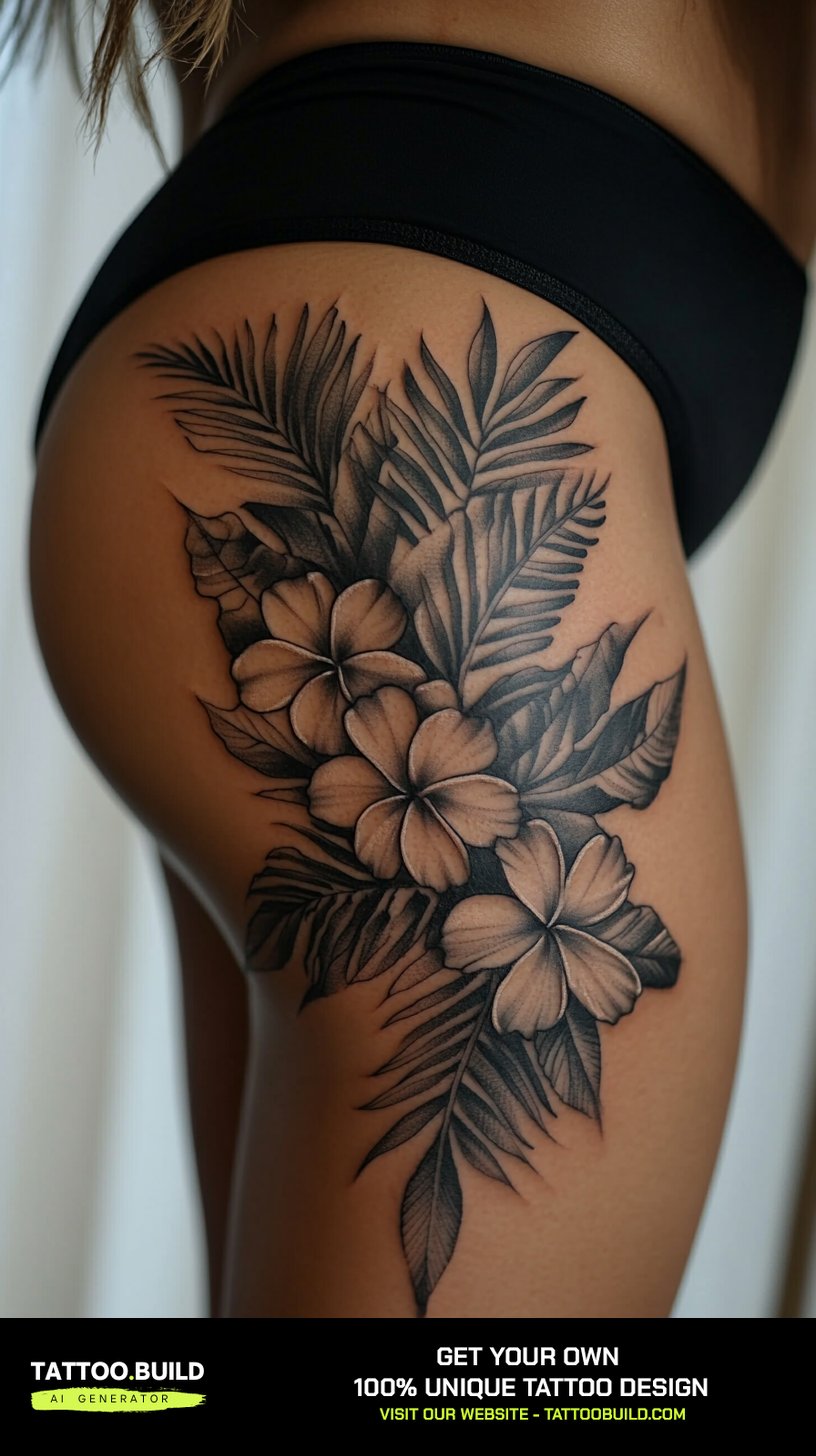
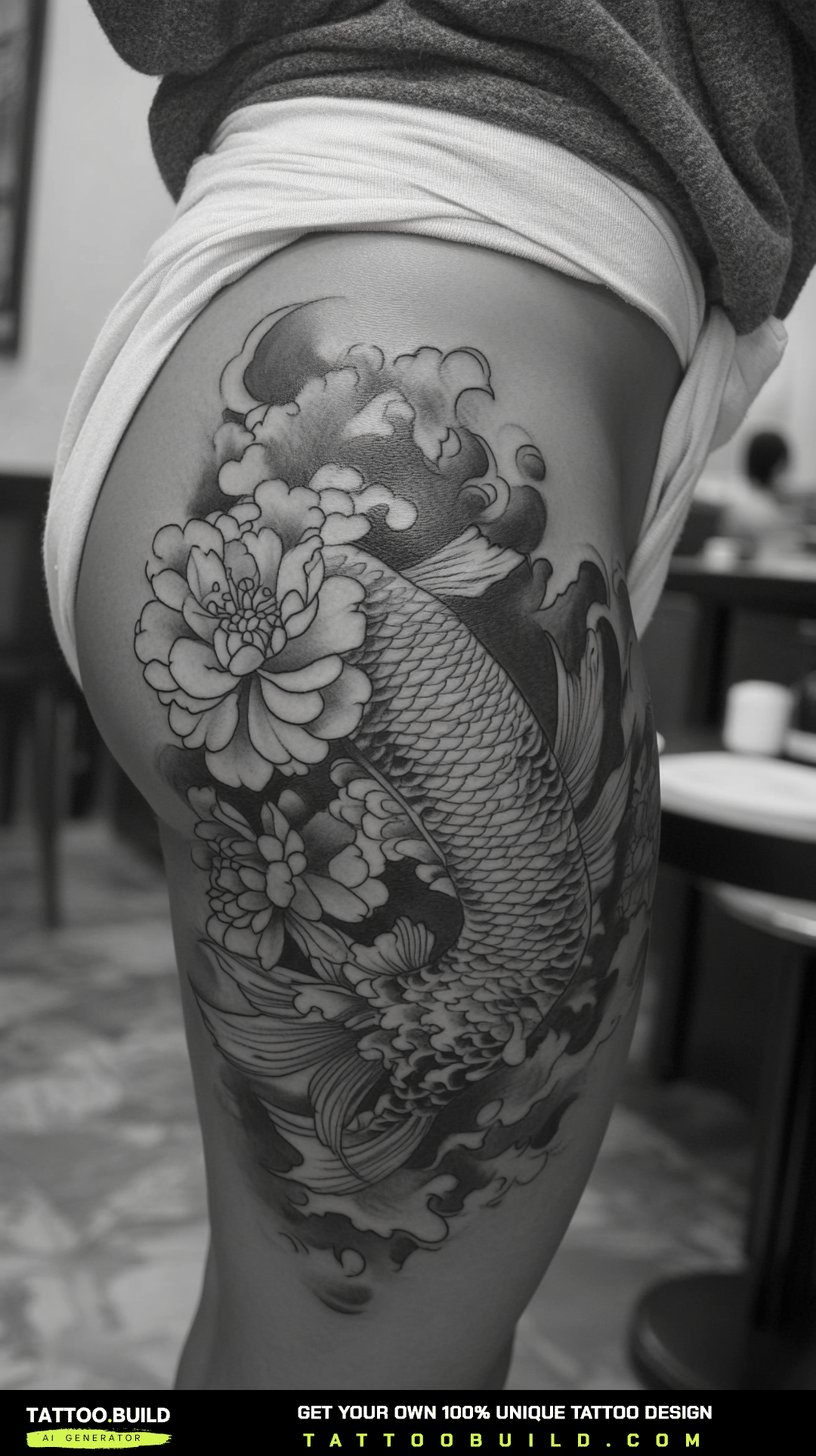
Every image below is a real design idea rather than a rendering, so use them as conversation starters with your artist rather than as things to copy line for line.
Which Hip Tattoo Style Is Right for You?
Before picking a subject, it helps to pick a style. The hip rewards some approaches and punishes others, mostly because of how the skin moves there.
| Style | Best For | Typical Session | Ages Like |
|---|---|---|---|
| Fine line | Small florals, script, single motifs | 1–2 hours | Softens noticeably; may need a touch-up in a few years |
| Black & grey illustrative | Roses, animals, portraits | 3–6 hours | Very well when contrast is built in |
| Blackwork / bold line | Scorpions, silhouettes, tribal-inspired shapes | 2–4 hours | The most forgiving option long term |
| Ornamental / lace | Wrap-around bands, garter effects | 4–8 hours | Good, though dense dotwork can blur |
| Full colour | Peacocks, mermaids, botanicals | 5–10 hours, often split | Depends heavily on sun exposure |
What Makes the Hip Such a Distinct Placement
The hip is not one flat surface. It is a hinge between the torso and the leg, and it changes shape completely between standing, sitting and lying down.
That matters more than most people expect. A design drawn for a standing pose can compress by a visible amount when you sit, which is why experienced artists stencil the hip while you are standing and then have you sit before they commit.
The upper hip, over the iliac crest, sits close to bone and tends to be the sharper part of the session. The soft outer hip is usually far more comfortable, though the skin there is looser and holds fine detail less crisply.
There is also the practical question of who sees it. Hip pieces are easy to keep private and easy to reveal, which is a large part of why they stay popular with people getting their first larger tattoo.
If pain is your main hesitation, the tattoo pain chart gives a placement-by-placement comparison that is more useful than any single person’s account, including mine.
10 Hip Tattoo Ideas for Women
1. Hummingbird Hovering Over a Flower
The hummingbird works on the hip for a structural reason: the bird’s body gives you a compact focal point and the wings give you something that can taper into the curve.
In my experience the best versions keep the flower low, near the hip bone, and let the bird hover slightly above it. That vertical lift follows the natural line of the body rather than fighting it.
Fine line suits this subject, but ask for the wing edges to be slightly heavier than the interior detail. Very thin interior linework on a hummingbird is the first thing to blur. Keep the wings a touch heavier than the interior detail and the piece will still read clearly years from now.
2. Minimalist Wave
A single wave is one of the few designs that genuinely improves on the hip, because the hip already provides the curve.
I have seen these done as one continuous line and as a small Hokusai-style crest, and both hold up. The continuous-line version is quick, often under an hour, and it is an easy first tattoo.
The thing to watch is scale. Minimalist waves under about two inches tend to lose their character on a surface this large — they read as a stray mark rather than a design. Three to five inches along the hip line usually sits better.
3. Scorpion
The scorpion is the most underrated hip design on this list. Its shape — wide body, curling tail — maps almost perfectly onto the diagonal of the hip.
Every artist I have asked about this placement says the same thing: let the tail curl upward toward the waist rather than downward. Pointed down, the whole piece drags the eye toward the leg and loses tension.
Blackwork is the natural fit here. Bold solid segments will still read clearly in twenty years, which is not something you can say about a heavily stippled scorpion. There is a broader scorpion tattoo guide if you want to see the range of interpretations.
4. Peacock
Peacocks are a commitment. The feathers want space, and a cropped peacock rarely looks intentional.
Where they work brilliantly is as a piece that starts on the hip and continues onto the upper thigh, using the feather train as the transition. That gives the artist somewhere to put the detail without crowding the hip bone.
Colour is the obvious choice, though I have seen black and grey peacocks that were more striking precisely because the eye pattern carried the design instead of the palette.
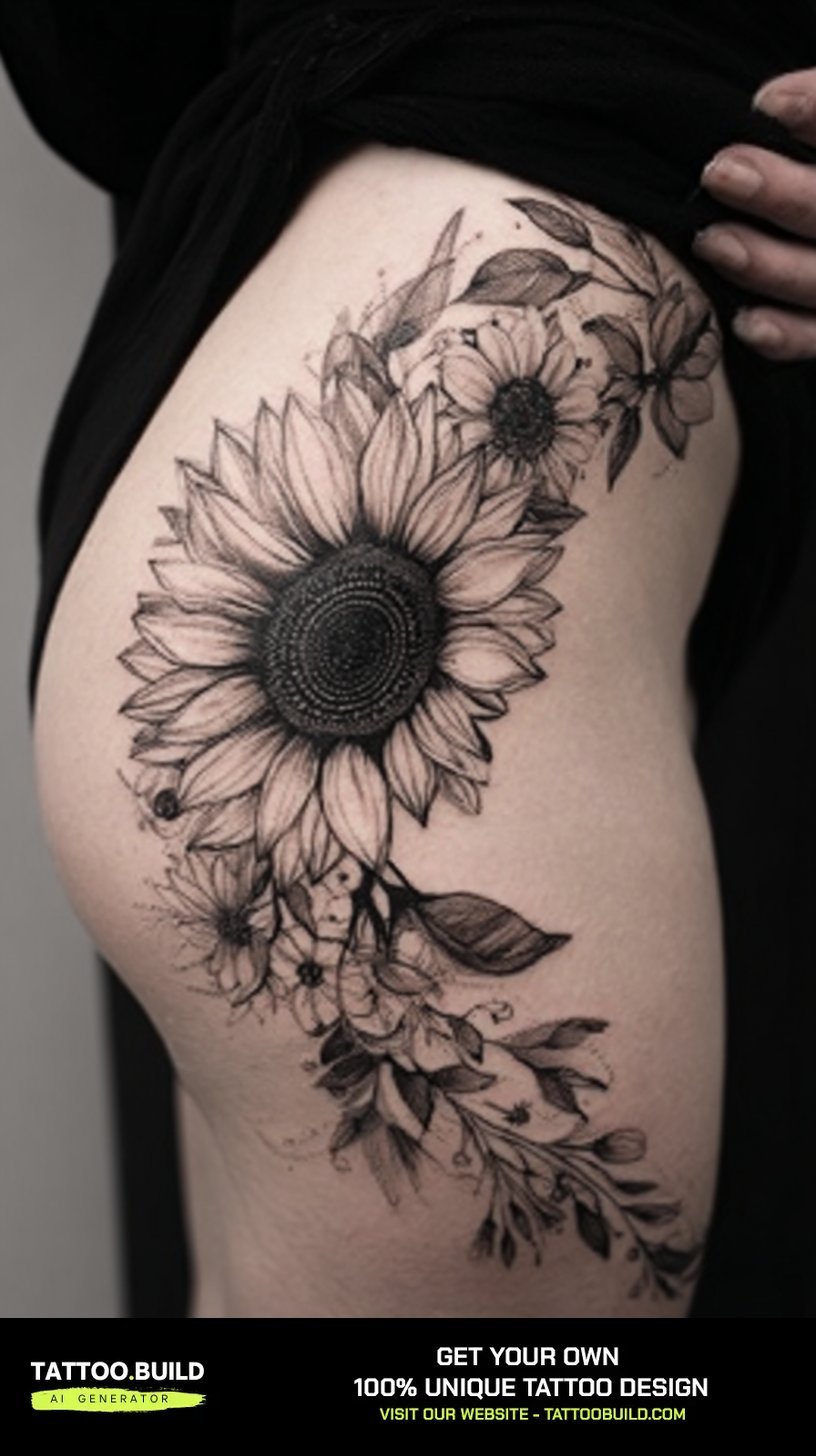
5. Sunflower With Real Detail
Sunflowers are common enough that the only way to make one memorable is through execution rather than concept.
The detail that separates a good sunflower from a generic one is the centre. A well-tattooed seed head has visible spiral structure and varied depth; a rushed one is a flat stippled circle.
On the hip I would keep it to one large bloom with a short stem rather than a bouquet. One well-rendered flower beats three average ones every time. The sunflower tattoo gallery is worth a browse for centre-detail references you can show your artist.
6. Delicate Lace Wrapping the Hip
Lace and garter designs are the classic hip tattoo, and they remain popular because they use the wrap rather than resisting it.
These are also the longest sessions on this list. A full wrap with dotwork shading and pearl or ribbon elements can run eight hours or more, usually split across two appointments.
A word of caution from watching several of these heal: very dense dotwork placed close together will merge over time. Ask your artist to leave more negative space than looks right on the stencil.
7. Whale
A whale is a shape built for a curved surface. The body already arcs, so it settles onto the hip without distortion.
Soft grey wash is the most common treatment and it suits the subject, but it is also the treatment that fades fastest without sun protection. If you want a grey-wash whale, plan on sunscreen being permanent, not optional.
Pairing the whale with a small wave or a few water lines gives the piece context and stops it floating oddly on the skin. The whale tattoo ideas page has more compositions along these lines.
8. Mermaid
The mermaid is the most placement-specific idea here, because the tail is exactly the right shape for the hip-to-thigh transition.
When I have seen these done well, the figure sits on the upper hip and the tail sweeps down and slightly forward. Done poorly, the tail runs straight down the outer leg and the whole thing reads as a sticker.
This is a design worth booking with someone whose portfolio shows figurative work specifically. Faces and hands are where mermaid tattoos fall apart, and no amount of good shading rescues a badly drawn face. Browse mermaid tattoo designs to narrow the style before you approach an artist.
9. Rose
Roses survive on the hip better than almost anything else, and the reason is contrast. A rose has natural dark recesses between petals, which gives the design structure that holds up as ink softens.
The version I would push you toward is a single bloom with one or two leaves rather than a vine. Vines look elegant on the stencil but they thin out where the hip flexes.
Ask for the shadows between the petals to be pushed darker than feels comfortable on day one. That contrast is what the tattoo will live on in a decade.
10. Phoenix
The phoenix is the largest-feeling idea on the list and the one most people underestimate in terms of time and budget.
Its advantage is flexibility: the wings and tail can be shaped around whatever surface you give them, so a skilled artist can make it fit a hip far more easily than, say, a symmetrical mandala.
Most of the strong hip phoenixes I have seen run from the lower ribs down over the hip, using the tail feathers to carry the eye downward. If that scale appeals, the phoenix tattoo guide for women covers composition in more depth.
Nearby Placements Worth Considering
If the hip is not quite right, three neighbouring placements solve different versions of the same problem.
The Ribs
More visible when you want it to be, and a flatter surface for detailed work. Considerably more painful for most people, and the breathing movement makes long sessions harder.
The Upper Thigh
Larger, flatter and generally far more comfortable to sit through. It is the placement I suggest most often to people who want a big first piece. The floral thigh tattoo ideas show what the extra space buys you.
The Spine and Side Body
Best for long vertical designs — vines, script, ornamental columns. A spine tattoo gives you symmetry that the hip simply cannot, though it is a sharper sit over the vertebrae.
Aftercare for a Hip Tattoo
The hip has one specific problem that other placements do not: your waistband sits directly on it.
For the first two weeks, plan your wardrobe around the tattoo rather than the other way round. Loose, soft, high-waisted-avoidant clothing, and nothing with a seam that crosses the piece. Friction is the single biggest cause of patchy healing here.
Otherwise the routine is standard: keep it clean with unscented soap, pat dry, apply a thin layer of whatever your artist recommends, and do not pick. Most tattoos surface-heal in two to three weeks, with deeper healing continuing for a couple of months. The American Academy of Dermatology’s aftercare guidance is a reliable general reference.
If you see spreading redness, swelling that worsens after day three, pus, or a fever, that is a doctor’s visit rather than a question for your artist. Allergic reactions to ink are uncommon but real, and they can appear weeks or even years later — Mayo Clinic’s overview of tattoo risks covers what to watch for. Nothing in this article is medical advice.
Still Not Sure? The Mistakes I See Most Often
Choosing the design before choosing the placement. A hip tattoo has to be drawn for the hip. Bringing in a flat reference image and asking for it as-is is how you end up with something that only looks right in one pose.
Going too small. The hip is a large surface, and small pieces that would be perfect on a wrist tend to look lost. A wrist or ankle usually suits that scale far better than a hip does.
Underestimating the session. People book two hours for something that needs five, then rush the artist. Ask for an honest time estimate and believe it.
Picking hairline-thin linework for a large design. Fine line work is beautiful and it has real limits — it softens faster, and on a stretchy area like the hip it softens faster still.
Skipping the sit-down stencil check. Stand, sit, twist. If the artist has not asked you to do this, ask them.
Frequently Asked Questions
How much do hip tattoos hurt?
Most people describe the upper hip, directly over the bone, as sharp and the softer outer hip as much more manageable. It generally sits in the mid-to-upper range of the pain scale — harder than an outer thigh, easier than the ribs or sternum for most people. Pain tolerance varies enormously, so treat any chart as a rough guide rather than a promise. Eating properly beforehand and booking a shorter first session both help more than people expect.
Will a hip tattoo stretch if my weight changes?
Moderate weight changes usually distort a hip tattoo far less than people fear, because skin is elastic and the ink sits in the dermis. Larger or rapid changes, including pregnancy, can stretch the surrounding skin and soften the shape. Designs with organic, flowing lines tolerate this much better than rigid geometry or lettering. If you are planning a pregnancy soon, many artists will suggest waiting.
How long does a hip tattoo take to heal?
The surface typically heals in two to three weeks, with the deeper layers settling over roughly two to three months. The hip often takes slightly longer than average because clothing rubs against it constantly. Loose waistbands during the first fortnight make a noticeable difference. Follow your artist’s specific instructions over any general advice, including this.
What size works best on the hip?
As a rough guide, three to eight inches suits most single-motif designs, while wraps and figurative pieces often want ten inches or more. Anything under about two inches tends to look isolated on a surface this size. Your artist will size the stencil to your actual proportions, which is why in-person consultations beat quoting from photographs.
Can I get a hip tattoo as my first tattoo?
Plenty of people do, and it is a reasonable choice if you go in with realistic expectations about the sensation and the session length. If you are nervous, a small piece on the softer outer hip is a gentler introduction than a wrap across the bone. Booking a two-hour first session rather than a full day is the advice I give most often. You can always extend the design later.
Quick Summary
- The hip curves in two directions — pick a design that uses that curve rather than one drawn flat.
- Fine line suits small motifs; blackwork and high-contrast black and grey age best at larger sizes.
- Waves, scorpions, mermaids and phoenixes all have shapes that map naturally onto the hip.
- Roses survive long term because their internal shadows give the design permanent structure.
- Lace wraps are the longest sessions here — often eight hours or more, usually split in two.
- The upper hip over the bone is the sharper area; the soft outer hip is far more comfortable.
- Waistband friction is the main healing risk, so plan loose clothing for the first two weeks.
- Always check the stencil standing, sitting and twisting before any needle touches skin.