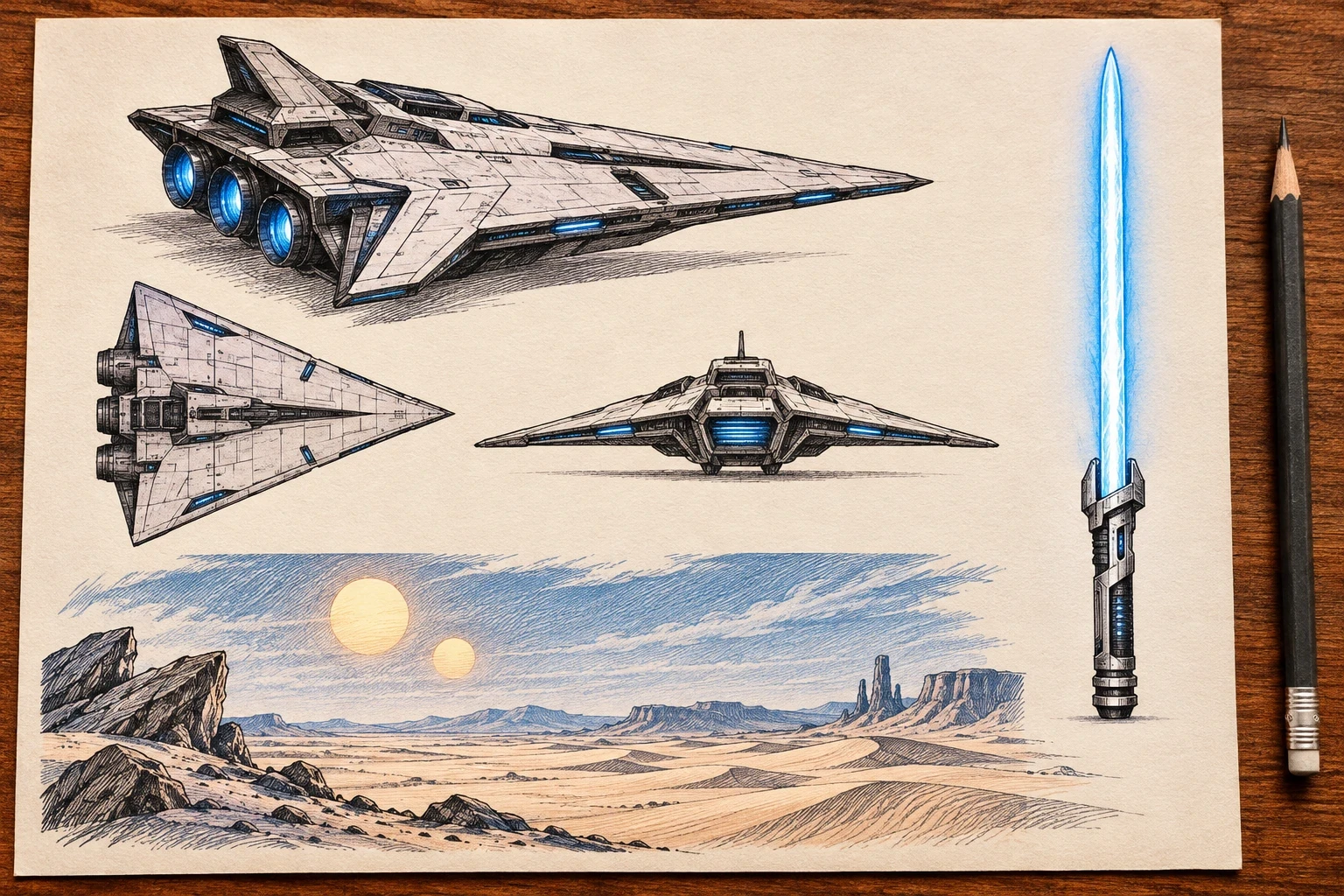
A Star Wars tattoo works best when it starts with the part of the galaxy you actually care about: a ship, a world, a weapon or a small object that recalls a favorite scene. Choose that connection before deciding how much detail to include.
These 20 Star Wars tattoo ideas offer twenty distinct design directions, plus a separate editorial hero image. Some use a compact silhouette; others leave room for mechanical detail or a small color accent.
Image disclosure: All images are AI-generated fan concepts, not official production art or real or healed client tattoos. They are starting points for an artist’s original redraw. Check the final design against the particular character, prop or screen version you want.
Choose the reference before the style
A landscape, prop or spacecraft can appear in different versions across the series. Bring a specific reference image or scene to the artist instead of relying on a name alone. Decide which details carry recognition: the outline, a panel arrangement, a skyline or the relationship between large shapes.
The official Star Wars Databank is a useful reference starting point. For example, it identifies the Millennium Falcon as a modified Corellian light freighter. Start with the subject’s large visual features before adding small surface details. References checked 9 November 2026.
The meanings below are possible personal connections, not fixed meanings shared by every fan. A design might recall a family movie night, a particular character or simply an image you enjoy.
1. Hoth-inspired ice landscape
Snowy peaks and a small mechanical structure offer a pale, open composition. Grey shadows can separate the mountains without filling every part of the scene.
Choose the specific ice-world reference you want and keep the structure secondary. This is an atmospheric fan interpretation rather than a reconstruction of an exact location.
2. Mustafar-inspired lava river
A winding red channel cuts through a dark volcanic landscape. The contrast between the river and surrounding rock gives the design a strong route through the composition.
Keep the largest rock shapes separate before adding cracked texture. A narrow format can follow the river, while a wider one can leave more space around the ridge.
3. Naboo-inspired palace and waterfall
Domes, broad arches and falling water combine architecture with a landscape. The palace silhouette provides recognition while the waterfall gives the lower half a clear direction.
Decide which architectural details matter before shrinking the scene. Treat this as a stylized setting rather than an exact elevation drawing of a screen building.
4. Cloud City above layered clouds
A floating city shape creates a broad upper silhouette over soft cloud forms. The contrast between a mechanical edge and drifting layers makes the setting the subject.
Keep the city separate from the clouds so its lower outline remains visible. Bring a specific viewpoint if the platform shape is the detail you most want to preserve.
5. Coruscant-inspired fantasy skyline
Tall slender towers make a vertical city composition with repeated gaps between buildings. A pale celestial disc can give the upper edge a quiet focal point.
This fan concept adds cliff terraces and waterfalls rather than recreating Coruscant exactly. For a screen-specific cityscape, bring the skyline reference you want and ask the artist to replace those invented landscape details.
6. Millennium Falcon from above
The broad hull, forward split and offset cockpit give the ship a distinctive outline. A top view lets those large features carry the design before small surface panels are added.
Specify which version you want and check the cockpit side. The aim is a convincing fan illustration, not an engineering plan or a promise of screen-perfect detail at any size.
7. X-wing with open S-foils
Four separated wing shapes create a wider frame around the central fuselage. Keeping visible space between them helps the aircraft read as a single coherent machine.
Count the wing and engine forms in the final redraw. If the artist changes the viewing angle, check that the smaller rear parts do not become disconnected marks.
8. TIE fighter between dark wings
A central cockpit and two broad side panels make a strong geometric subject. Large black areas can contrast with thin structural lines around the round center.
Keep the cockpit centered and the wing connections visible. Choose a viewpoint that shows the two panels clearly instead of compressing one into an unexplained dark strip.
9. Death Star with a clear dish
A spherical outline, circular dish and equatorial trench make a recognizable mechanical emblem. The surrounding blank space can keep its many small panels from overwhelming the composition.
Decide which station and state of completion you want before the artist starts. Large structural features should remain legible when the reference is viewed at the intended tattoo size.
10. Tatooine’s twin-sun horizon
Two discs above a low desert scene offer a quieter reference than a character portrait. The official Tatooine entry describes the desert world as orbiting twin suns.
Keep the horizon low enough that both suns remain distinct. A small dwelling can add a story reference, but it should not become a dense cluster of tiny architectural lines.
11. Forest-moon scene
Tall trunks make a vertical frame for a small celestial accent and helmet detail. The official Endor entry provides a reference for the forest-moon setting.
Treat this as an atmospheric interpretation, not an exact film frame or astronomy diagram. Choose the detail that makes the forest personal before adding more trees.
12. Star Destroyer from above
A wedge-shaped spacecraft creates a forceful triangular silhouette. Raised structures toward the rear give the broad body a second level without changing its main outline.
Specify the ship version and viewing angle. Check the central axis and rear bridge placement before adding many tiny panel lines.
13. AT-AT walker in profile
A boxy body above four articulated legs makes a tall mechanical subject. The open spaces beneath the hull are part of what keeps the walker readable.
Count all four legs and trace their joints to the body. Ask the artist to keep the smaller head and connecting neck distinct from the main hull.
14. Speeder bike above a desert
A long narrow vehicle and forward steering vanes make a horizontal design. Leaving out the rider keeps attention on the bike’s mechanical shape.
Check the relationship between the main body and the front vanes. A specific reference angle can help prevent a collection of separate bars from replacing a coherent vehicle.
15. Blue crystal in a geometric frame
A single blue faceted crystal offers a compact object-based reference. A restrained outer frame can echo the angular form without requiring a full weapon or scene.
This is an artistic kyber-crystal concept, not a technical diagram of a particular prop. Choose how much of the frame to retain after checking the stone at the intended size.
16. A single blue lightsaber
A long blue blade and silver hilt cross a larger crest-and-flower arrangement. The fan composition combines a mechanical object with a softer botanical lower edge.
If you want a particular character’s weapon, bring that hilt reference. This generic fan concept should not be mistaken for an exact reproduction of every blue saber in the series.
17. Crossed red and blue lightsabers
Two diagonal blades give the design a broad, balanced frame. The crossing point creates a focal area while the two hilts remain individually visible.
Decide which blade passes in front and keep that overlap consistent. A personal contrast between the colors does not require an invented universal meaning for everyone who wears them.
18. Double-bladed red saber
A central handle with blades extending in opposite directions creates a long, symmetrical form. It offers a different outline from the two separate crossed weapons.
Keep the central hilt large enough to remain a recognizable object. Use a specific prop reference if the exact grip and emitter details matter to your concept.
19. Rebel starbird in a light frame
A red emblem within a thin circular accent makes a compact graphic design. The open space around the symbol can keep the frame from competing with it.
Check the emblem’s contour against your reference instead of relying on a rough memory. Remove the outer line if you prefer the symbol to stand on its own.
20. Geometric holocron cube
A blue cube with an angular gold framework offers an object-based direction for fans of Jedi lore. The official holocron entry is a useful place to begin a reference check.
Choose the specific object you want before the artist invents small panel details. Keep the visible edges consistent so the cube reads as one form rather than overlapping unrelated polygons.
Fit the design to its proportions
A single lightsaber is long and narrow; an open X-wing is broad; a crystal can be compact. Compare the shape with the available body area before deciding on a placement. Print the design at the proposed size and check its main features from a normal viewing distance.
For a smaller direction, compare our minimalist tattoo ideas. For a wider setting, the space tattoo gallery offers ways to think about planets, stars and surrounding negative space. Add a setting only if it helps the main subject.
Make the artist brief specific
Bring a short explanation of your chosen reference, the exact character or prop version, intended size, placement photograph and preferred amount of color. Choose one main subject before adding several worlds, ships and symbols around it.
Check the silhouette first. Then trace mechanical connections, count repeated wings or support legs, check which side the accessories sit on, and compare the large color panels. Keep a clear reference available when reviewing the stencil rather than making corrections from memory.
Plan for your appointment
Ask your artist about the placement, clothing and aftercare instructions before the appointment. For a skin condition or healing concern, ask an appropriate clinician. An AI illustration cannot demonstrate how a design will look on your skin after healing.
Frequently asked questions
Which Star Wars idea is easiest to keep compact?
A simple emblem or crystal outline starts with a contained shape. The artist still needs to check which details remain readable at your intended size.
Do I need a quote to make the reference clear?
No. A recognizable silhouette can carry the reference without lettering. If you want a quote, verify the exact words and leave space for the artist to plan the text separately.
Can I combine light-side and dark-side designs?
Yes. Decide how the two subjects share the composition and which is the focus. Their relationship can express your own interest in the story without claiming a fixed meaning.
Are these exact screen replicas?
No. They are AI-generated fan concepts. Use a specific official reference and an artist’s redraw if accuracy to a particular scene, prop or character version is important to you.
Should every detail be copied into the stencil?
Not automatically. Decide with the artist which details make the subject recognizable and which can be simplified. A clear design is more useful than a crowded miniature of a large reference image.