I have been collecting and writing about floral tattoo work for years, and sunflowers come up more than almost any other bloom. The sunflower is one of the few flowers that reads clearly at almost any size, which is exactly why it survives on skin better than most florals.
That is not a small thing. Plenty of flowers look beautiful on a drawing tablet and turn into a grey smudge after eight years.
The sunflower has a strong circular centre, a ring of wide petals and an obvious silhouette. Even when the fine detail softens, the shape still says sunflower — which is more than I can say for the delicate peonies and butterfly tattoo ideas I have watched blur over the same period.
Below are the sunflower designs I keep coming back to, what each one actually costs you in healing and touch-ups, and the honest trade-offs nobody mentions at the consultation.
Which Sunflower Tattoo Style Is Right for You?
Style matters more than subject here. The same sunflower drawn five different ways ages five different ways.
This is the comparison I sketch out for people who cannot decide, based on what I have seen hold up and what I have seen need rework.
| Style | Best Size | How It Ages | Good For |
|---|---|---|---|
| Fine line / minimalist | 2–4 inches | Softens noticeably; often wants a touch-up within a few years | A first tattoo, discreet placements, tight budgets |
| Bold traditional | 3–6 inches | The most forgiving option by a wide margin | Anyone who wants it still readable in twenty years |
| Black and grey realism | 5 inches and up | Holds well if the artist left enough contrast | Forearms, thighs, calves — anywhere with room |
| Full colour realism | 5 inches and up | Yellows and light golds fade first; sun exposure decides everything | People committed to sunscreen and touch-ups |
| Watercolour | 4–7 inches | The softest edges blur fastest; needs a line anchor to survive | A painterly look, accepted as a shorter-lived piece |
| Ornamental / mandala | 4–8 inches | Ages well when dotwork is spaced generously | Symmetrical placements: spine, sternum, back of arm |
If you take one thing from that table, take this: the yellow is the part that fades. Every colour sunflower I have seen at the ten-year mark has lost warmth in the petals before it lost anything else.
What Actually Affects How a Sunflower Tattoo Ages
Sun exposure is the single biggest factor, and it is not close. A sunflower on a forearm that spends every summer uncovered will look tired years before the same design on a thigh.
Dermatologists routinely recommend covering healed tattoos with broad-spectrum sunscreen, and in my experience that one habit does more for colour retention than any aftercare product on the shelf.
Line weight is second. Hair-thin lines carry less pigment, so they soften sooner — that is physics, not a criticism of the artist.
Placement is third. Areas that flex and rub constantly, such as the inner wrist, the side of the finger and the top of the foot, tend to need touch-ups earlier than flat, protected areas.
Skin tone matters too, and it deserves an honest answer rather than a hedge. Yellow and light pastel inks show up strongest on fair skin; on deeper skin tones a sunflower usually reads better with heavy black structure, strong contrast and warmer oranges rather than pale lemon shades. A good artist will tell you this at the consultation without being asked.
Sunflower Tattoo Ideas That Actually Work
These are grouped by the pairing rather than by placement, because in practice the pairing is what people decide first.
1. Minimalist and Fine Line Sunflower Tattoos
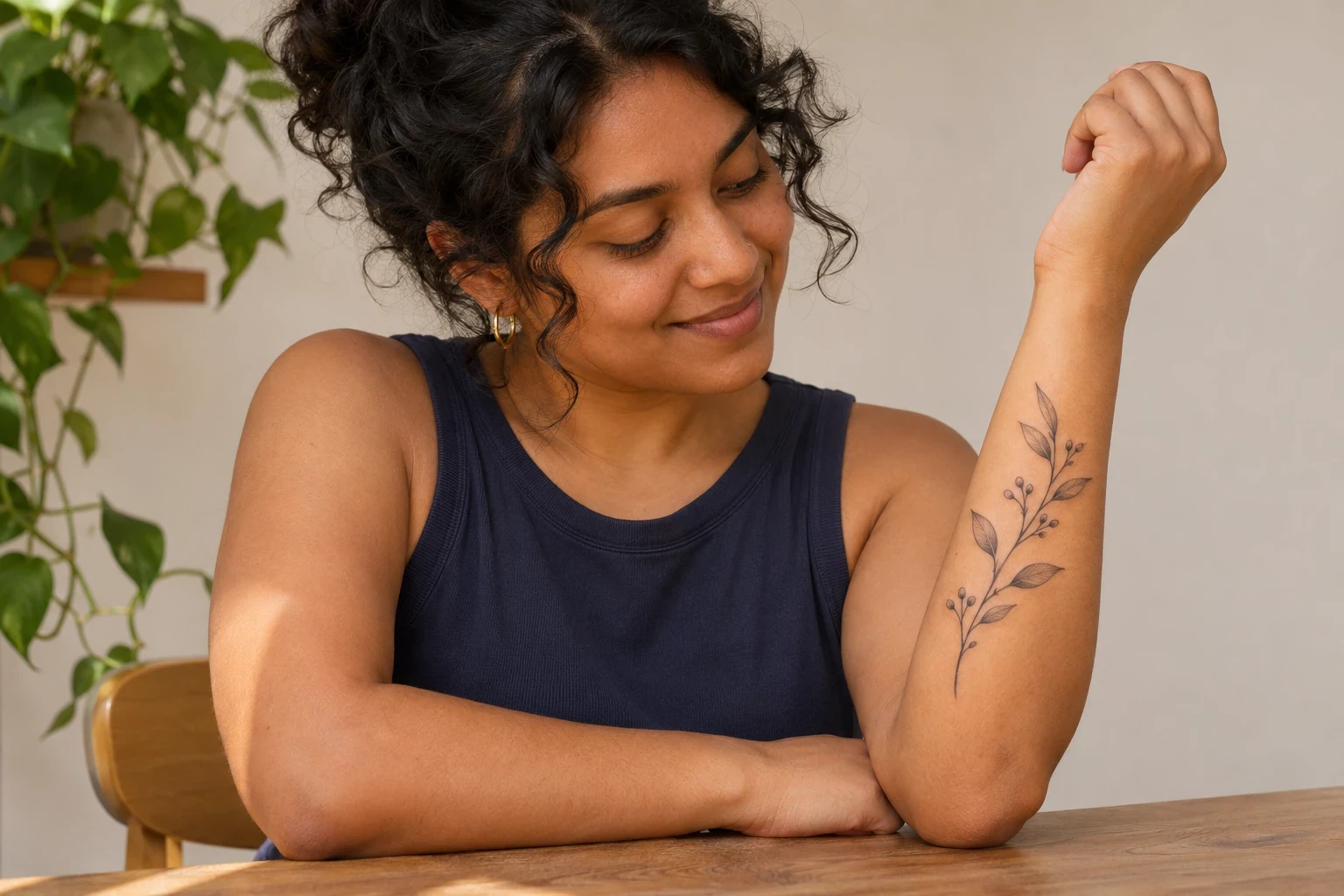
This is the version most people picture when they say they want a small sunflower. A single stem, a simple head, no shading.
It is also the most requested design I come across, and the one artists most often quietly advise sizing up. At under two inches the petal gaps close as the ink settles, and what was a crisp flower becomes a dark circle.
When I have compared healed photos side by side, the fine line sunflowers that still looked sharp after five years were almost always three inches or larger with visible white space between petals.
Ask for slightly heavier outer linework than the reference photo shows. A fresh fine line tattoo always looks more delicate than the healed version, so what you see on Instagram is day one, not year five.
Good placements: inner forearm, outer upper arm, behind the shoulder, along the ribs.
2. Sunflower and Butterfly Tattoos
The most popular pairing by a wide margin, and the one most likely to end up looking generic if you are not careful.
The problem is scale. Two subjects of similar size fight each other, and the eye does not know where to land.
The versions I like keep the butterfly clearly smaller and place it off-centre — above the bloom, or landing on a leaf rather than the flower head itself. That reads as a scene instead of two stickers side by side.
Symbolically the combination is straightforward: the sunflower carries loyalty and optimism, the butterfly carries change and rebirth. Together people usually read it as coming through something difficult.
It is a common memorial choice for that reason, though I would not assume that meaning about anyone else’s tattoo.
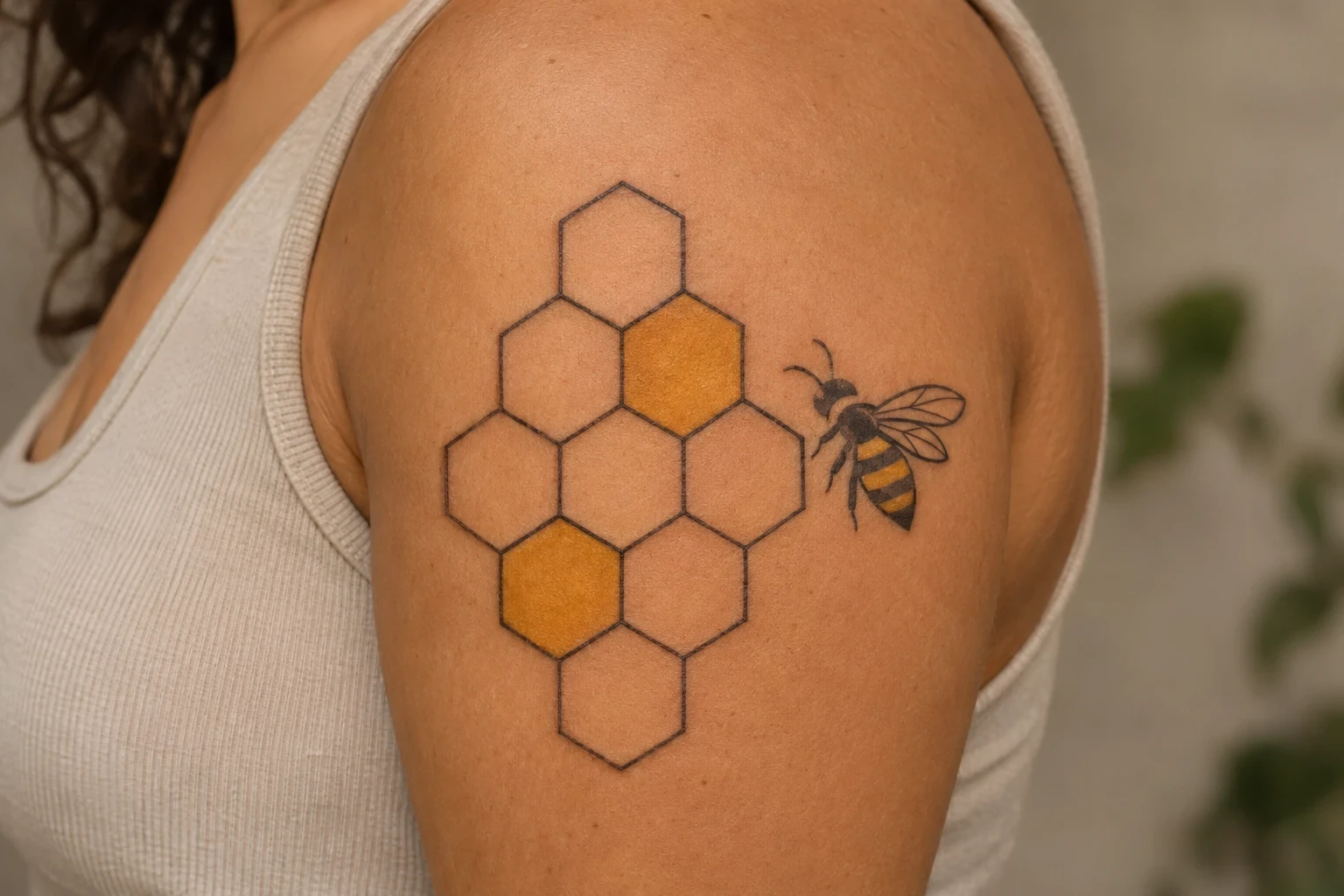
3. Sunflower and Bee Tattoos
My favourite of the pairings, because the bee is small enough that it never competes with the flower.
A bee also solves a compositional problem. A single sunflower can look static; a bee approaching it implies movement and gives the piece a focal point away from the dead centre.
Keep the bee at roughly a quarter of the flower head’s width or smaller. Any larger and the proportions read as cartoonish rather than botanical.
This works especially well in black and grey, where the bee’s stripes give you contrast without needing a second colour. If you like the insect more than the flower, the bee tattoo designs guide has standalone options worth comparing.
Bee wings are the detail most likely to blur. Ask your artist to leave the wings mostly open with a defined outline rather than filling them with fine hatching.
4. Sunflower and Mandala Tattoos
The sunflower is already radially symmetrical, which makes it one of the few florals that merges naturally into mandala work.
You are essentially treating the seed head as the mandala centre and letting the petals become the first ring of the pattern.
These designs suit placements where symmetry is visible: the centre of the back, the sternum, the back of the upper arm, the outer thigh.
Dotwork is the usual technique, and it needs more spacing than the stencil suggests. Dots that sit tight together on paper merge into solid grey within a few years.
Expect a longer session than the size implies. Ornamental dotwork is slow, and a five-inch mandala sunflower can easily run three to four hours.
5. Sunflower Bouquet Tattoos
If a single sunflower feels too plain, a bouquet gives you room without changing the subject.
The practical advantage is personalisation. You can slot in birth flowers, a partner’s favourite bloom or a set of stems that match family members, and the sunflower still anchors the piece.
Bouquets want long, narrow placements. Forearms, outer calves and the side of the thigh all suit a vertical arrangement far better than a shoulder does.
One honest warning: bouquets grow. Every consultation I have watched start at “just three flowers” ended somewhere closer to six, and the quote moved with it.
Agree the final flower count before the stencil is drawn, not during the session.
6. Sunflower and Dragonfly Tattoos
Less common than the butterfly version, and better for it.
A dragonfly’s long, straight body echoes the sunflower stem, so the two shapes agree with each other instead of clashing. That makes the whole design read as one object.
It also works beautifully in fine line, because the dragonfly is mostly line to begin with. There is no large fill to fade.
The catch is the wings. Dragonfly wing veining is the single most delicate thing in any of these designs, and it is the first detail I see soften in healed photos.
If you want the veining to last, go bigger than feels necessary — four inches minimum, and preferably somewhere protected from the sun. The dragonfly tattoo collection is worth a look if the insect is the part you love.
7. Sunflower and Hummingbird Tattoos
This is the pairing for anyone who wants a larger, more painterly piece.
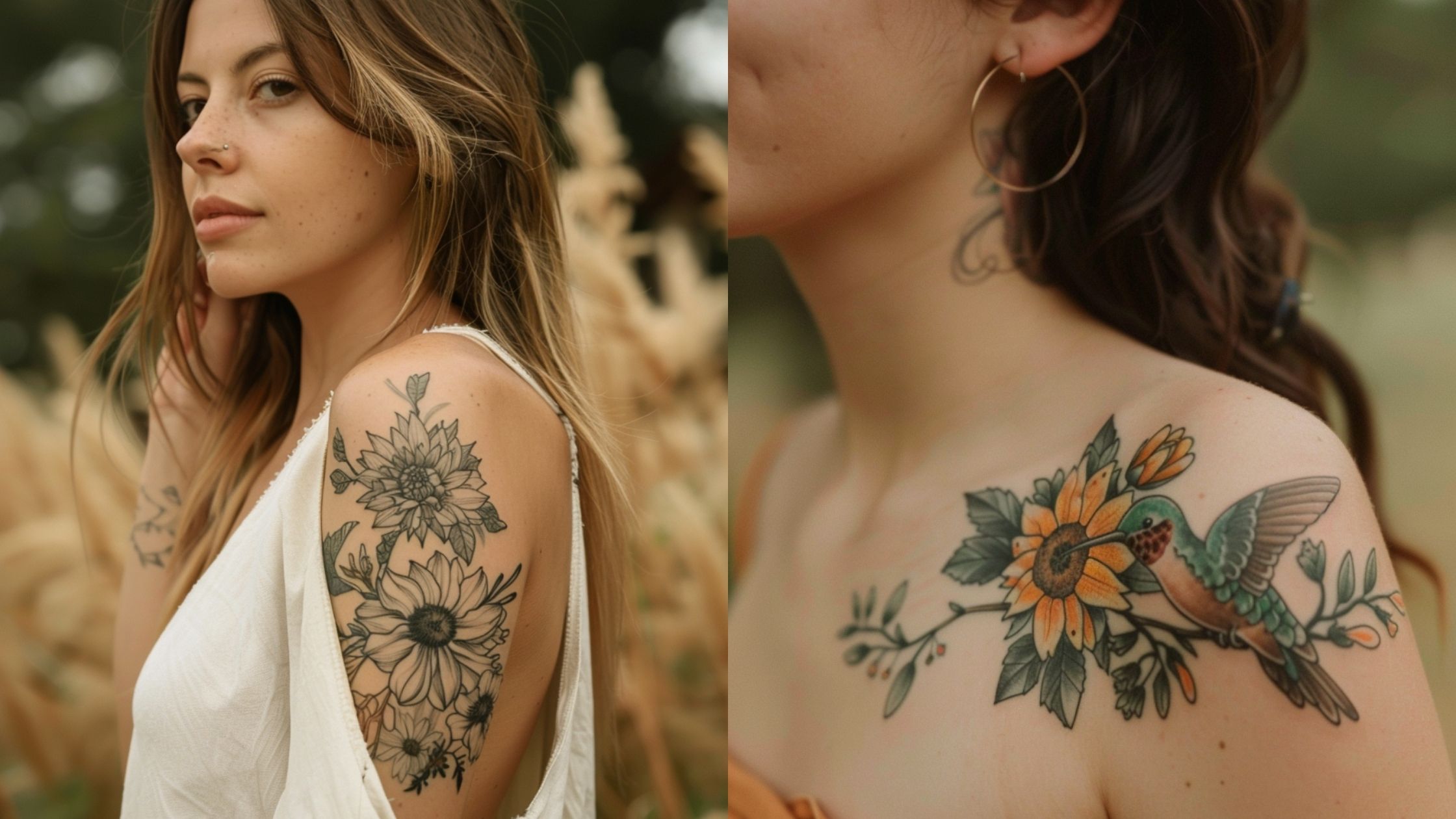
A hummingbird brings diagonal motion that a flower alone cannot carry. Angled across the bloom with the beak toward the centre, it turns a botanical illustration into a scene.
It needs space. Feather detail below about five inches tends to collapse into a dark mass, so this is a forearm, calf or thigh design rather than a wrist one.
Black and grey is the safer choice here. Hummingbird plumage in full colour looks spectacular fresh, but the iridescent greens and pinks are among the first shades to lose punch.
If the bird is the point rather than the flower, the hummingbird tattoo ideas guide covers standalone compositions in more depth.
8. Sunflower and Heart Tattoos
The most personal of the group, and usually the smallest.
Most requests I come across are memorial pieces — a sunflower for someone who loved them, a heart for the relationship, sometimes initials or a date worked into the stem.
Two approaches work. Either a separate outline heart sitting beside or behind the bloom, or the petals themselves curved into a heart shape.
The second is subtler and I think it holds up better, because there is no second element to compete with the flower.
If you are adding a date or initials, keep the lettering larger than looks necessary. Small script inside a floral design is the most common touch-up request I hear about.
Placement Variations Worth Considering
The pairing decides the mood; the placement decides whether it works.
Wrist and Forearm
The inner forearm is the most requested spot and one of the most forgiving — flat, low friction, easy to keep out of the sun under a sleeve.
The inner wrist is a different story. It flexes constantly and tends to need touch-ups sooner. If you want something there, keep it simple and expect maintenance. There are more options in the wrist tattoo ideas collection.
Shoulder and Upper Arm
The outer upper arm suits round compositions, which is exactly what a sunflower is.
It is also easy to cover for work and easy to extend later if you ever want to grow the piece into a half sleeve. Worth browsing floral upper arm tattoo ideas before committing to a size.
Spine and Sternum
Best for the mandala and ornamental versions, where symmetry is the whole point.
Be honest with yourself about pain. The sternum and the spine are consistently rated among the sharper placements, and a long dotwork session there is genuinely demanding.
Thigh and Calf
The most underrated option. Large surface area, easy to hide, and mostly protected from the sun.
If you want a full colour sunflower or a large bouquet and you want it to stay vivid, this is where I would put it.
Ankle and Foot
Small sunflowers look lovely here, but the top of the foot rubs against shoes daily and heals unevenly for a lot of people.
It is not a reason to avoid it — just budget for a touch-up rather than being surprised by one.
Aftercare and Practical Advice
Most sunflower tattoos are surface-level pieces on easy skin, so healing is usually straightforward — but the colour ones reward care more than most.
Follow whatever aftercare your artist gives you, because they know what pigments and technique they used. Generally that means keeping it clean, applying a thin layer of the ointment they recommend, and not picking or scratching while it flakes.
Keep it out of direct sun entirely while it heals, and out of pools, hot tubs, lakes and baths until it is fully closed — usually around two to three weeks, though deeper colour work can take longer.
Once it is healed, sunscreen is the whole game for colour retention. I cannot overstate how much difference this makes on yellow petals specifically.
If you see spreading redness, swelling that worsens after the first few days, pus, or a fever, contact a doctor rather than waiting it out. Some people also react to specific pigments — red and yellow are the shades most often associated with reactions — and the FDA notes that tattoo inks are not approved for injection into the skin. If you have sensitive skin or a history of pigment reactions, ask your artist about a patch test before a large colour piece. Nothing here is medical advice.
Common Mistakes and What to Do Instead
Going too small is the mistake I see most. A sunflower has a centre, petals and leaves — three levels of detail that need room to stay separate.
Copying a reference exactly is the second. Bring three or four images that show the feeling you want and let the artist draw something original for your body; the result almost always sits better.
Booking on style rather than portfolio is the third. Find an artist whose healed work in your chosen style looks good, not just their fresh photos.
And skipping the consultation over a small piece — that is where placement, sizing and line weight get decided, and it costs nothing.
Still not sure the sunflower is your flower? It is worth comparing a few alternatives before you book. Daisy tattoo ideas offer a similar cheerful simplicity at smaller sizes, poppy tattoo ideas carry remembrance symbolism, and birth flower tattoos are the obvious route if you want the meaning tied to a specific person.
Frequently Asked Questions
What does a sunflower tattoo symbolise?
Sunflowers are most commonly associated with happiness, optimism, loyalty and adoration. A lot of that comes from the plant’s behaviour: immature sunflower buds track the sun across the sky, and according to botanical descriptions of Helianthus annuus, mature heads settle into a fixed, typically easterly direction. People read that as steadfastness and facing the light. That said, meaning is personal — plenty of people get one simply because they like how it looks, and that is a perfectly good reason.
How much does a sunflower tattoo cost?
It depends far more on your artist and city than on the design. A small fine line sunflower is usually a shop-minimum piece, while a detailed mandala or a hummingbird composition is priced by the hour and can run several sessions. Shop minimums and hourly rates vary widely by region, so the only reliable answer is to ask two or three local studios for quotes. Do not choose on price alone — a cheap tattoo you need reworked costs more than a good one.
Do sunflower tattoos fade quickly?
The yellow does fade faster than the black, and that is true of yellow pigment generally rather than anything specific to sunflowers. In my experience the black linework and dark centre hold up well, while golden petals lose warmth first — especially on sun-exposed placements like the forearm. Sunscreen on healed skin and a touch-up every several years keeps a colour piece looking bright. Black and grey versions need noticeably less maintenance.
What size should a sunflower tattoo be?
I would treat three inches as a practical floor for anything with visible petal separation, and larger if you are adding a second element like a bee, butterfly or hummingbird. Below that, the gaps between petals tend to close as the ink settles and spreads over the years. If you want something genuinely tiny, choose a simplified design with fewer petals rather than shrinking a detailed one. Your artist will tell you honestly what a given design needs.
Does a sunflower tattoo hurt?
That depends almost entirely on placement rather than the design. The outer upper arm, forearm and thigh are generally considered easier; ribs, sternum, spine, ankle and the top of the foot are consistently reported as sharper. Pain is also very individual, so someone else’s experience is a rough guide at best. For a long session, eating properly beforehand and staying hydrated makes more difference than most people expect.
Quick Summary
- Size up. Three inches is a sensible floor; petal detail closes below that.
- Bold beats delicate long term. Fine line looks best on day one, traditional looks best at year fifteen.
- Yellow fades first. Plan for sunscreen and a touch-up if you go full colour.
- Keep pairings unequal. A bee or butterfly should be clearly smaller than the bloom.
- Match placement to style. Mandalas want symmetry; bouquets want long, narrow space.
- Thigh and calf are the most underrated spots — large, hidden and sun-protected.
- Check healed portfolios, not fresh ones, before you book.
- Ask about a patch test if you have reacted to pigments or have sensitive skin.