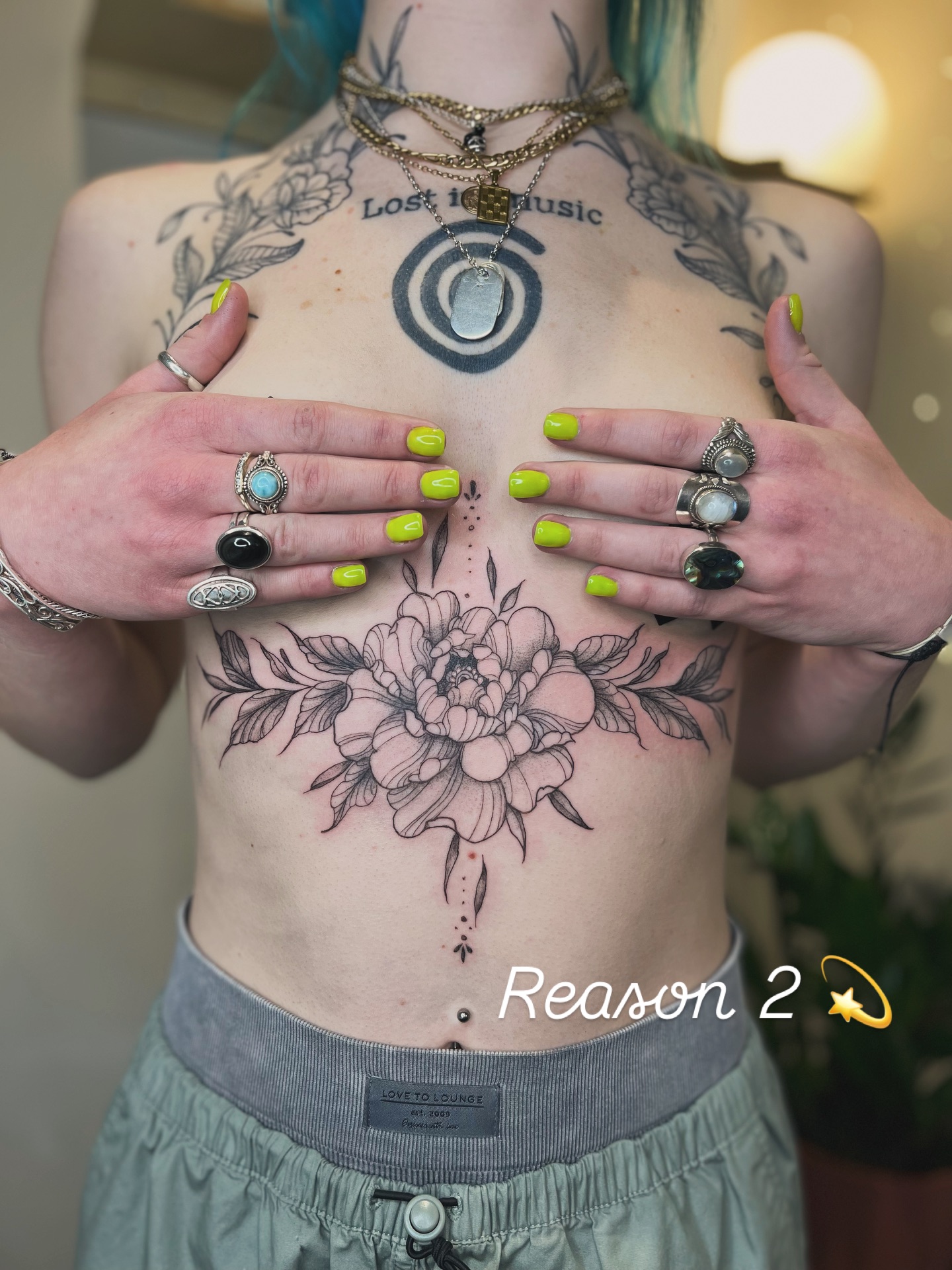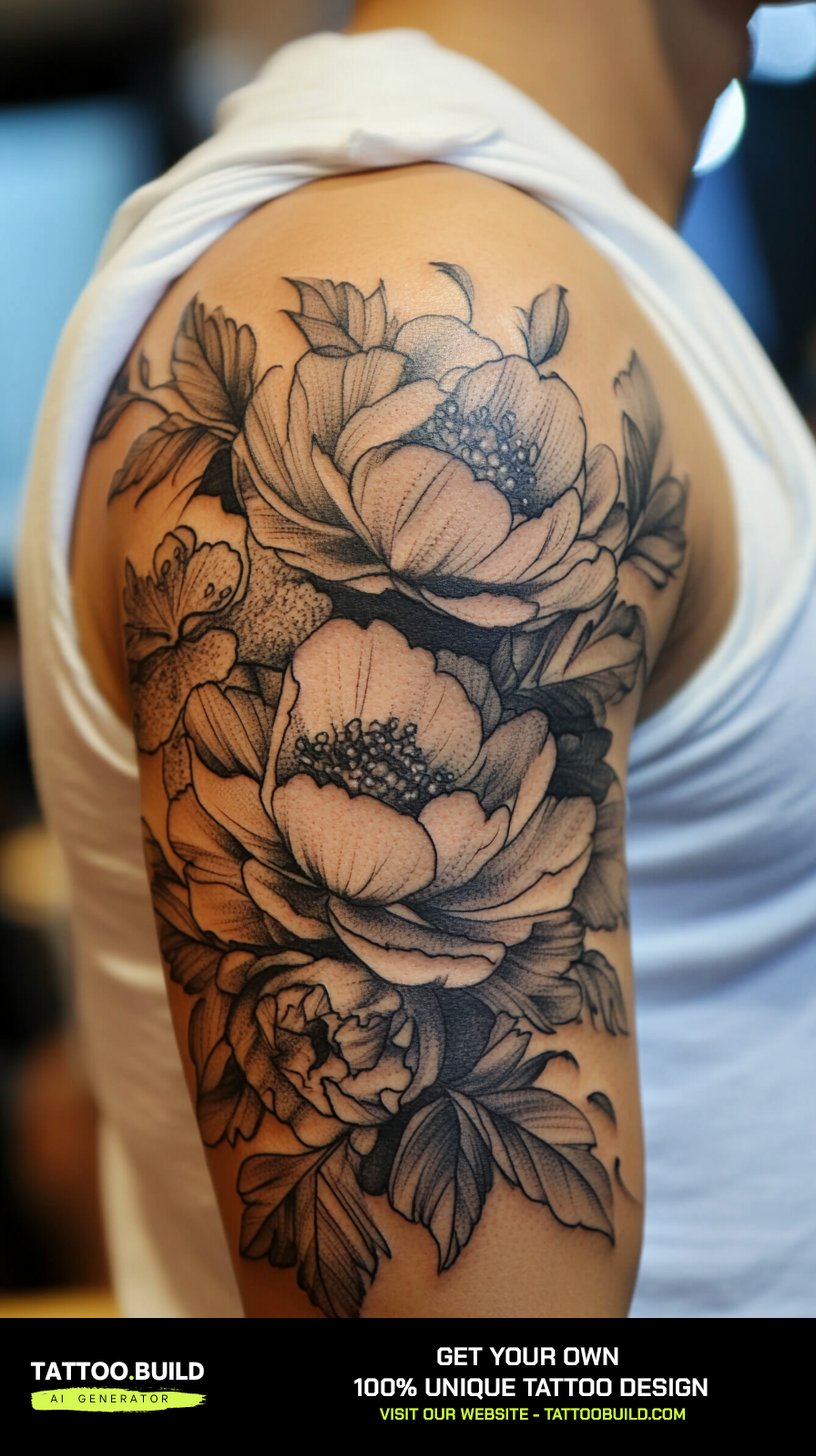
A floral upper arm tattoo is one of the most flattering pieces of body art a woman can choose, because the curve of the outer bicep gives flowers room to bloom without crowding.
In my years writing about tattoos and sitting in on studio consultations, this is the placement I recommend most often to first-timers who still want something substantial.
The upper arm hides easily under a sleeve for work, yet shows off beautifully in a tank top. That flexibility is why I keep steering readers here rather than toward a full sleeve on the first try.
Below I have gathered real design directions, honest advice on pain and healing, and a gallery of ideas I actually like. Let me walk you through what works.
I will be straight with you throughout: where a style ages well, where it does not, and which choices tend to cause regret. A floral upper arm tattoo is a long-term commitment, and a little planning up front saves a lot of laser later.
Which Floral Style Is Right for You?
Before booking, it helps to match the flower style to your pain tolerance, budget, and how much upkeep you are willing to do. Here is the shorthand I give people.
| Style | Best For | Upkeep & Aging |
|---|---|---|
| Black & gray realism | A bold, timeless statement piece | Ages very well; light touch-ups over the years |
| Watercolor | A soft, painterly, colorful look | Softer edges can fade faster; plan a refresh |
| Fine-line / minimalist | First tattoos and delicate designs | Thin lines can blur; usually needs touch-ups sooner |
| Full color | Vibrant peonies and roses | Bright but sun-sensitive; keep it covered |
| Blackwork / geometric | Graphic, modern designs | Excellent longevity thanks to solid saturation |
Why the Upper Arm Suits Floral Designs
The upper arm has a gently rounded surface with a good spread of muscle underneath, which matters more than most people expect.
That padding tends to make the area more comfortable to tattoo than bony spots. In my experience clients rate the outer bicep as one of the easier placements, though the inner arm near the armpit is a different, more tender story.
Flowers also flatter this shape. A stem can follow the length of the arm while blossoms fan across the widest part, so the design feels intentional rather than pasted on.
It is also a forgiving canvas for growth. Many women start here and later extend into a full sleeve, and the upper arm piece becomes the anchor everything else is built around.
Flower symbolism adds a personal layer too. Roses read as love and resilience, peonies as prosperity, lotuses as renewal, and wildflowers as free-spirited individuality.
There is a practical angle as well. Because the upper arm is usually covered at work, women in stricter professional settings can carry a large, meaningful piece without it ever being an issue on the job.
And unlike the hand or foot, the upper arm holds ink well. Skin here is thicker and less exposed to daily friction, so in most cases the design stays sharper for longer with basic care.
Popular Floral Designs for the Upper Arm
These are the flower directions I see requested most, and the ones that consistently look good on this placement.
Roses: The Reliable Classic
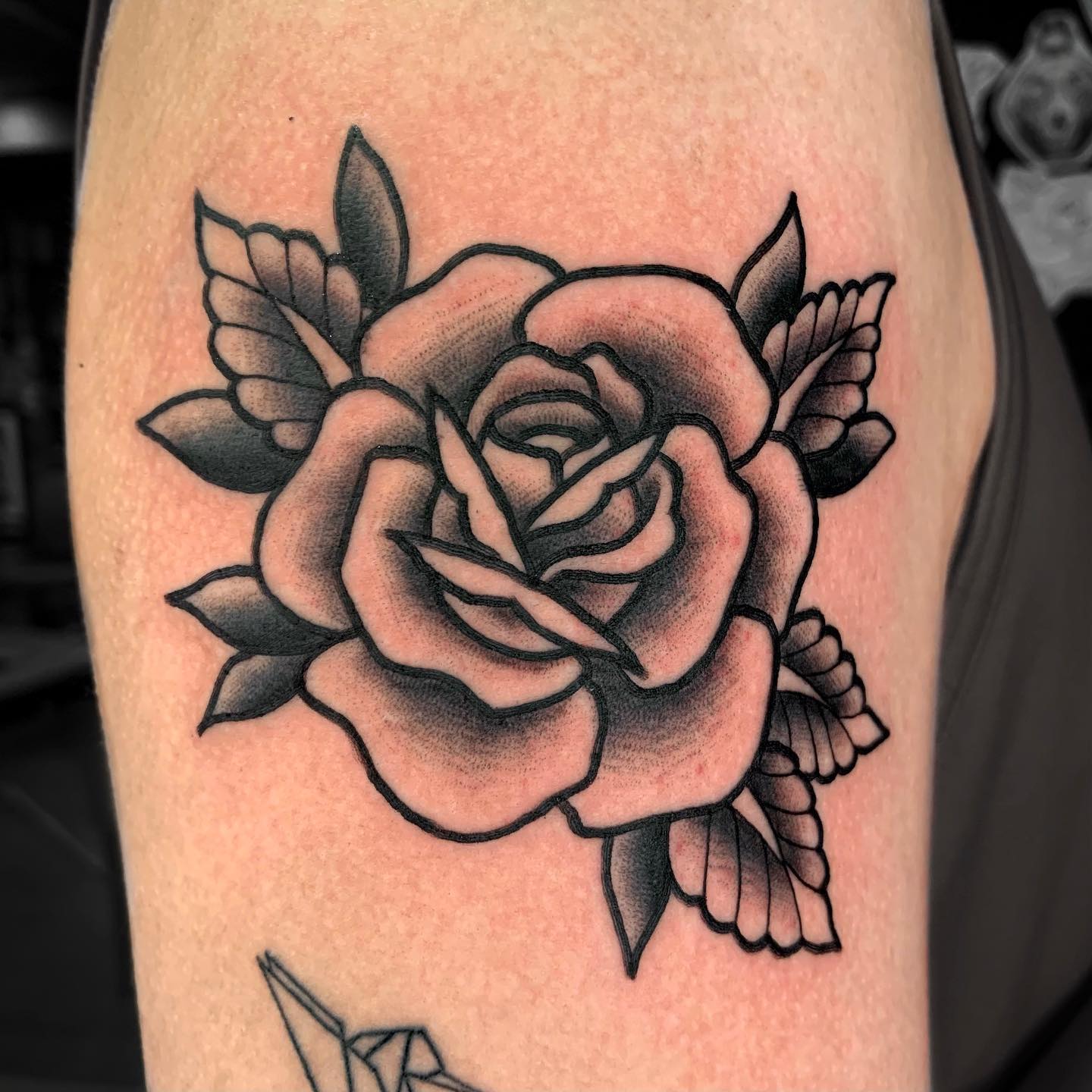
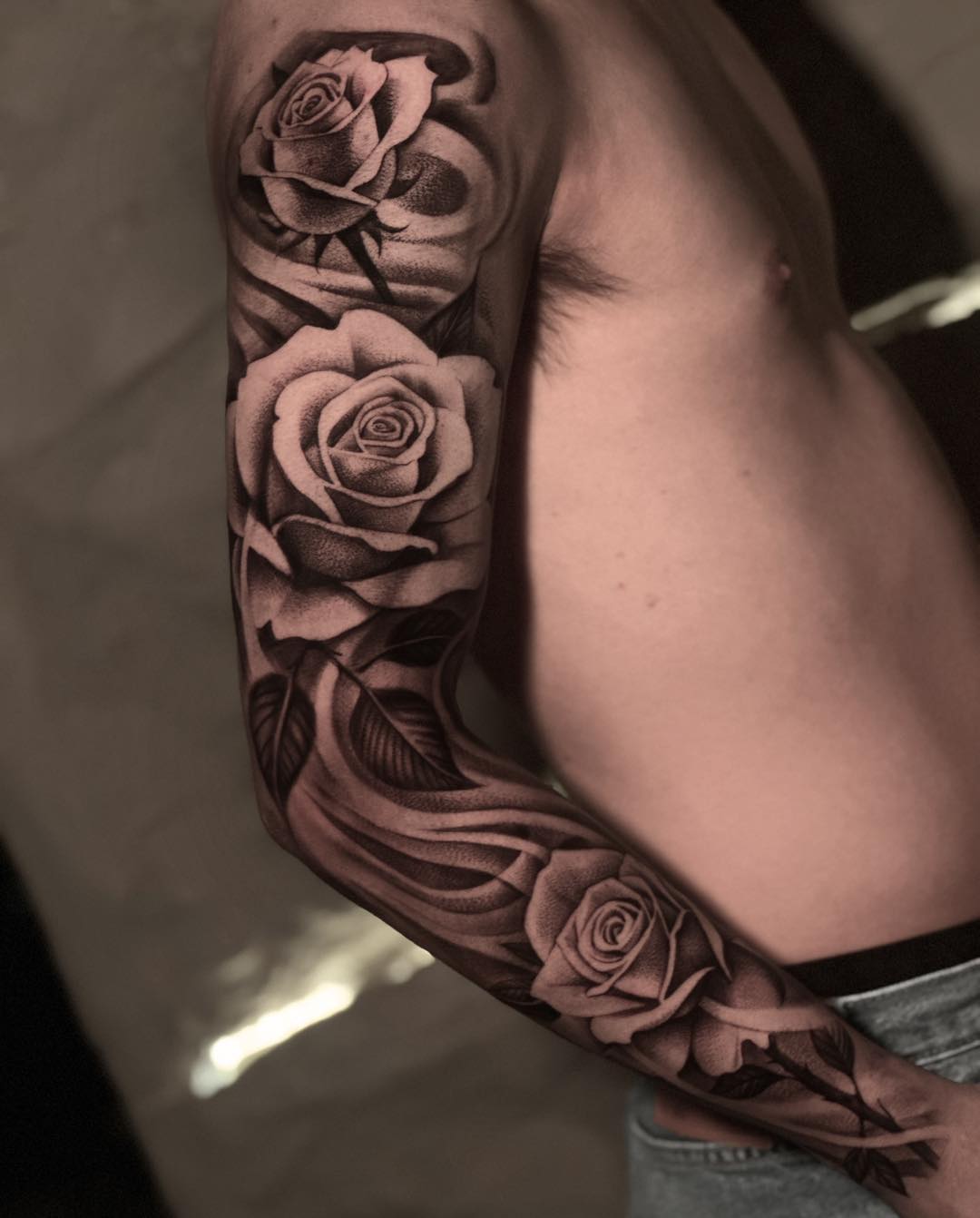
Roses are the most requested flower I encounter, and for good reason. Their layered petals give an artist plenty of room to show off shading.
A single large rose sits beautifully on the outer bicep, while a small cluster can trail toward the elbow. If you love the bloom itself, our roundup of rose tattoo ideas is worth a look.
One honest caution: a rose packed with tiny internal details can look muddy after several years if it is inked too small. I usually steer clients toward a slightly larger rose so the shading has room to age gracefully.
Peonies for Softness and Volume
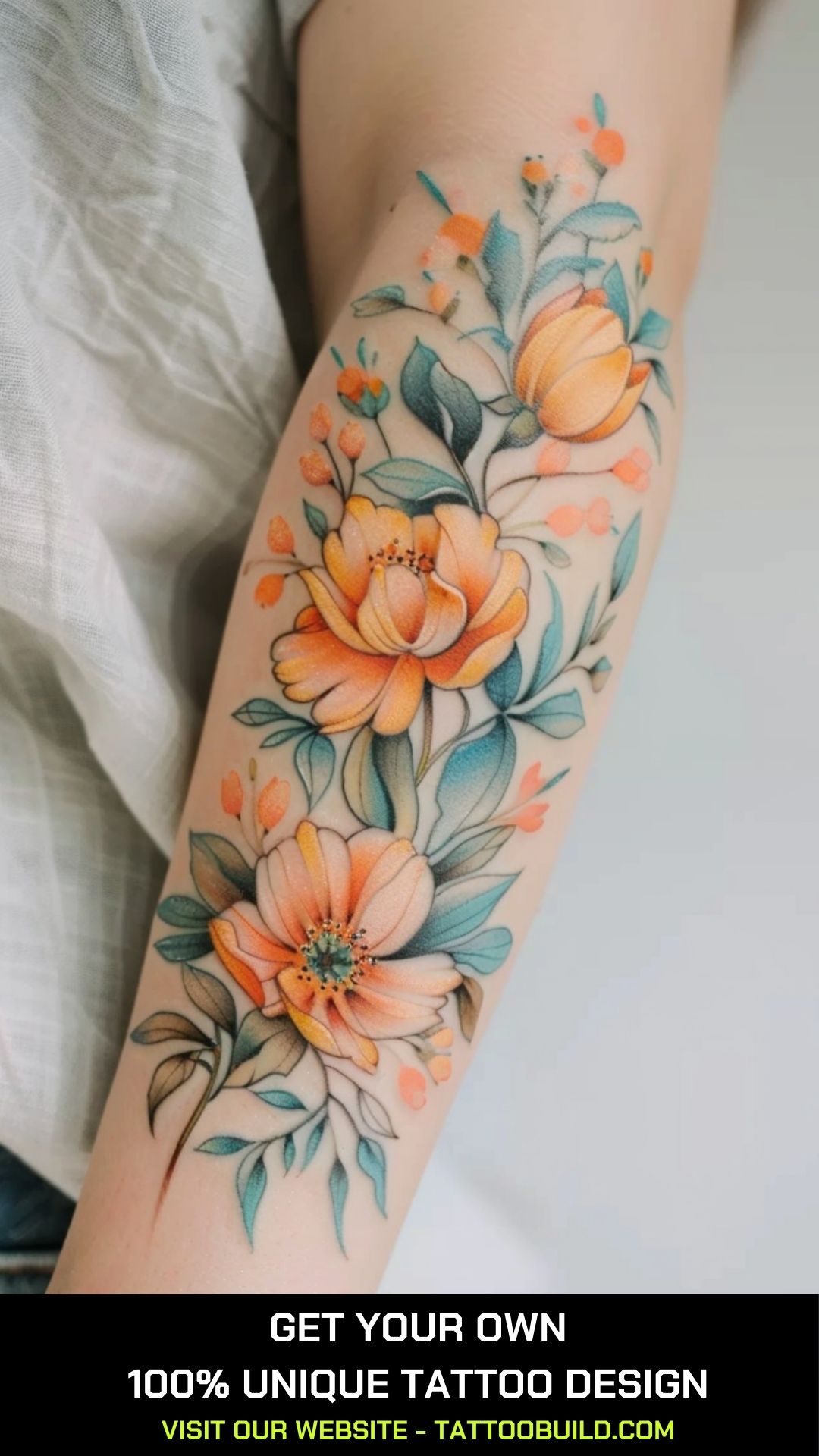
Peonies have become a favorite over the last few years, and I understand the appeal. Their ruffled, full petals create a lush, feminine focal point.
They work especially well in watercolor or soft black and gray, where the layered petals can fade gently into the skin.
Because peonies are large by nature, they suit the broad outer bicep better than a cramped spot like the wrist. Give a single peony the space to be the star and it rarely disappoints.
Wildflowers and Botanical Sprigs
If you want something less symmetrical, a mix of wildflowers, buds, and greenery reads as effortless and organic.
This style pairs naturally with delicate stems, and it flows nicely into a vine arm tattoo if you decide to extend it later.
Wildflower compositions are also forgiving to build on. You can start with two or three blooms and add more over time, which is a low-pressure way to grow a piece as your budget allows.
Symbolic Blooms: Lotus and Lily
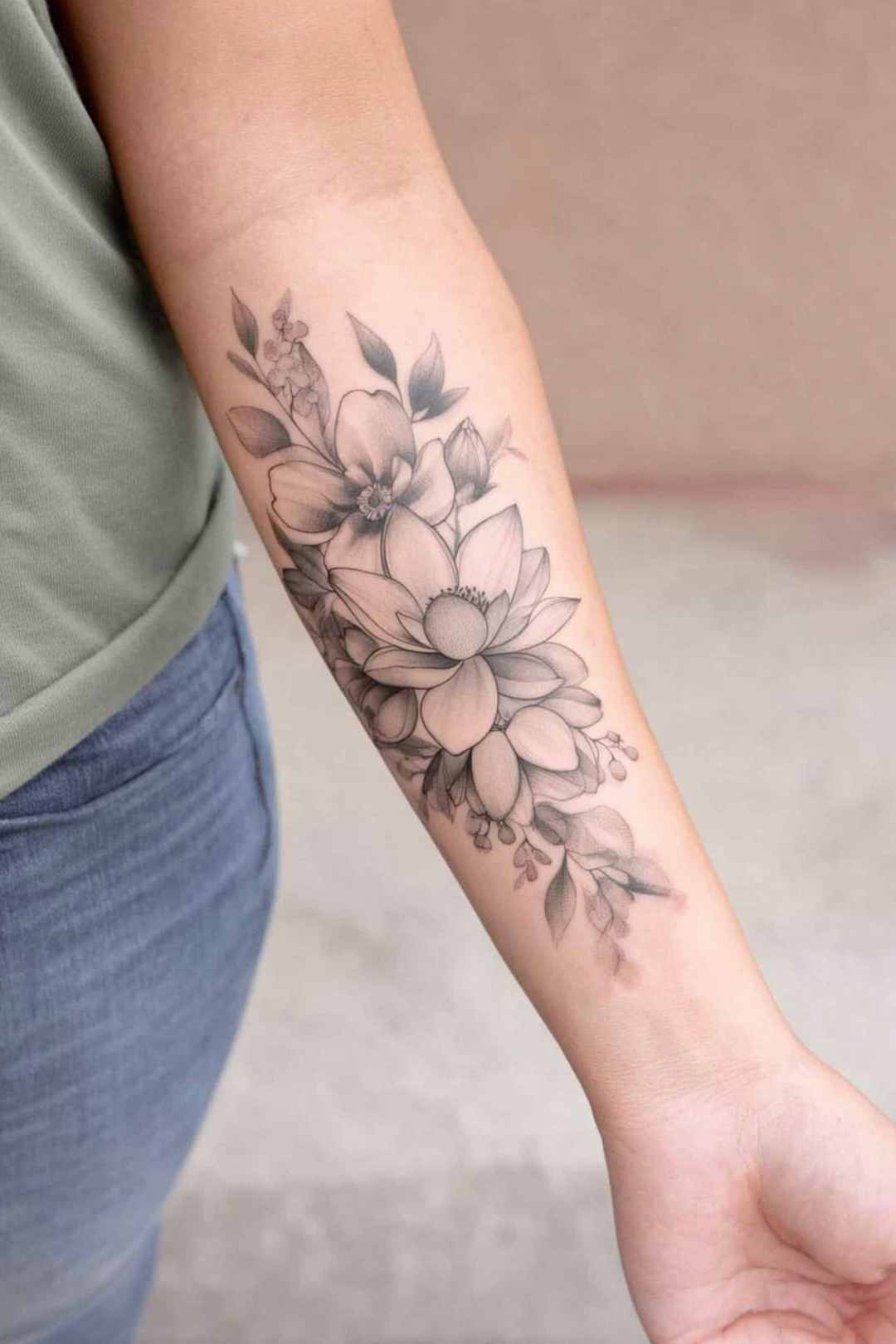
Some flowers carry meaning that people want front and center. The lotus, tied to renewal and calm, is a frequent request from clients marking a fresh start.
Lilies and other symbolic blooms work here too; if you are drawn to the shape, these lily flower drawings are a good starting reference.
If a specific meaning matters to you, tell your artist the story behind it. Every artist I have asked says the pieces they are proudest of are the ones where the client explained why the flower mattered.
Fine-Line and Minimalist Florals
Not every floral tattoo needs to be large. Thin single-needle work can produce a small, understated flower that still holds its own.
This is my usual suggestion for a first tattoo, and it sits alongside other classy arm tattoos for women without shouting for attention.
Just set expectations on longevity. Thin lines are the first thing to soften as a tattoo ages, so plan on a touch-up every few years to keep a minimalist floral crisp.
Styles and Techniques to Consider
The same flower can look completely different depending on the technique your artist uses. Choose the artist for the style, not the other way around.
Realism vs. Watercolor vs. Blackwork
Realism captures a flower as if it were photographed, with dimensional shading that ages gracefully.
Watercolor trades crisp outlines for soft washes of color, which I love visually but always flag as slightly higher-maintenance over time.
Blackwork and geometric approaches lean graphic and modern, and their solid saturation tends to hold up especially well.
My honest advice: pick the technique first, then find an artist who specializes in exactly that. A phenomenal blackwork artist is not automatically the right person for a soft watercolor peony, and vice versa.
Placement and Sizing on the Upper Arm
Where exactly on the upper arm you place the design changes how it reads and how it wears.
Shoulder Cap, Outer Bicep, and Half-Sleeve
A shoulder-cap piece rounds over the top of the arm and pairs well with a matching design on the shoulder blade.
The outer bicep is the most versatile spot, easy to show or hide. If you want more coverage, a half-sleeve extends the florals from shoulder to elbow.
Curious about cost before you scale up? Our guide on how much a sleeve tattoo costs sets realistic expectations.
Think about how the design will look at rest and in motion. A stem that follows the length of the arm reads well when your arm hangs naturally, which is how people will see it most of the time.
Aftercare and Practical Tips
A floral tattoo is only as good as its healing. The first two weeks decide how crisp those petals stay.
Follow the specific aftercare instructions your artist gives you, since products and film bandages vary. Wash gently with fragrance-free soap, pat dry, and apply a thin layer of the recommended ointment.
The dermatologists at the American Academy of Dermatology recommend keeping a new tattoo clean and moisturized and avoiding sun and swimming while it heals, which lines up with what every reputable artist I know tells clients.
Keep it out of direct sun while it heals, and use sunscreen for life afterward, because UV exposure is the single biggest cause of fading I see. This is general guidance, not medical advice.
Expect some light peeling and itching in the first week or two. Do not pick or scratch, since that is how fine floral detail gets patchy and how color can pull out unevenly.
If you notice spreading redness, swelling, heat, or discharge that seems off, contact your artist and, if it persists, a doctor. The U.S. Food and Drug Administration notes that infections and allergic reactions can occur, so signs of trouble are worth taking seriously rather than waiting out.
Common Mistakes and Still Not Sure?
A few avoidable missteps come up again and again in consultations.
Going too small too detailed is the classic one. Tiny, intricate florals can blur as they age, so give fine detail room to breathe.
Rushing the artist search is another. Look specifically at healed floral work in a portfolio, not just fresh photos, and browse related looks like floral shoulder tattoos and inner arm tattoos to refine your idea.
Still deciding on placement? Comparing the upper arm with a lower arm floral tattoo often makes the choice obvious.
Frequently Asked Questions
How much does a floral upper arm tattoo hurt?
In my experience the outer upper arm is one of the more tolerable placements, because muscle padding softens the sensation. Most people describe it as a manageable scratching or vibrating feeling rather than sharp pain. The inner arm, closer to the armpit, is noticeably more tender. Pain is personal, so your mileage may vary.
How long does a floral upper arm tattoo take?
A small fine-line flower might take one to two hours, while a detailed half-sleeve of florals can run several sessions. Realism and heavy shading generally add time. Your artist can give a realistic estimate once they see the size and detail you want. Booking in blocks tends to be easier on your body.
Will a floral upper arm tattoo fade over time?
Every tattoo softens with age, but placement and care make a big difference. The upper arm is fairly protected from constant friction, which helps. Sun exposure is usually the biggest culprit behind fading, so daily sunscreen once healed is the best defense. Occasional touch-ups keep colors and fine lines looking fresh.
Should I choose color or black and gray?
Both look striking; it comes down to taste and upkeep. Black and gray tends to age very gracefully and reads timeless. Color, especially in watercolor styles, is beautiful but generally more sun-sensitive and may need refreshing sooner. I often suggest black and gray for a first floral piece, then adding color later if you want it.
Can I extend an upper arm floral tattoo into a sleeve later?
Yes, and it is a common path. Many clients start with an upper arm piece and use it as the anchor for a future sleeve. It helps to mention that plan to your artist upfront so they leave room and keep the style consistent. That way the additions flow naturally instead of looking stitched together.
Quick Summary
- The upper arm is a flattering, flexible placement that hides or shows easily.
- Roses, peonies, wildflowers, and symbolic blooms like the lotus all suit the curve of the arm.
- Match the style — realism, watercolor, fine-line, or blackwork — to your upkeep tolerance.
- Black and gray ages best; color and fine lines may need touch-ups sooner.
- The outer bicep is comfortable to tattoo; the inner arm is more tender.
- Protect healing skin from the sun and follow your artist’s aftercare instructions.
- Watch for infection signs and see a professional or doctor if healing looks wrong.
- An upper arm floral piece makes a great anchor if you extend into a sleeve later.