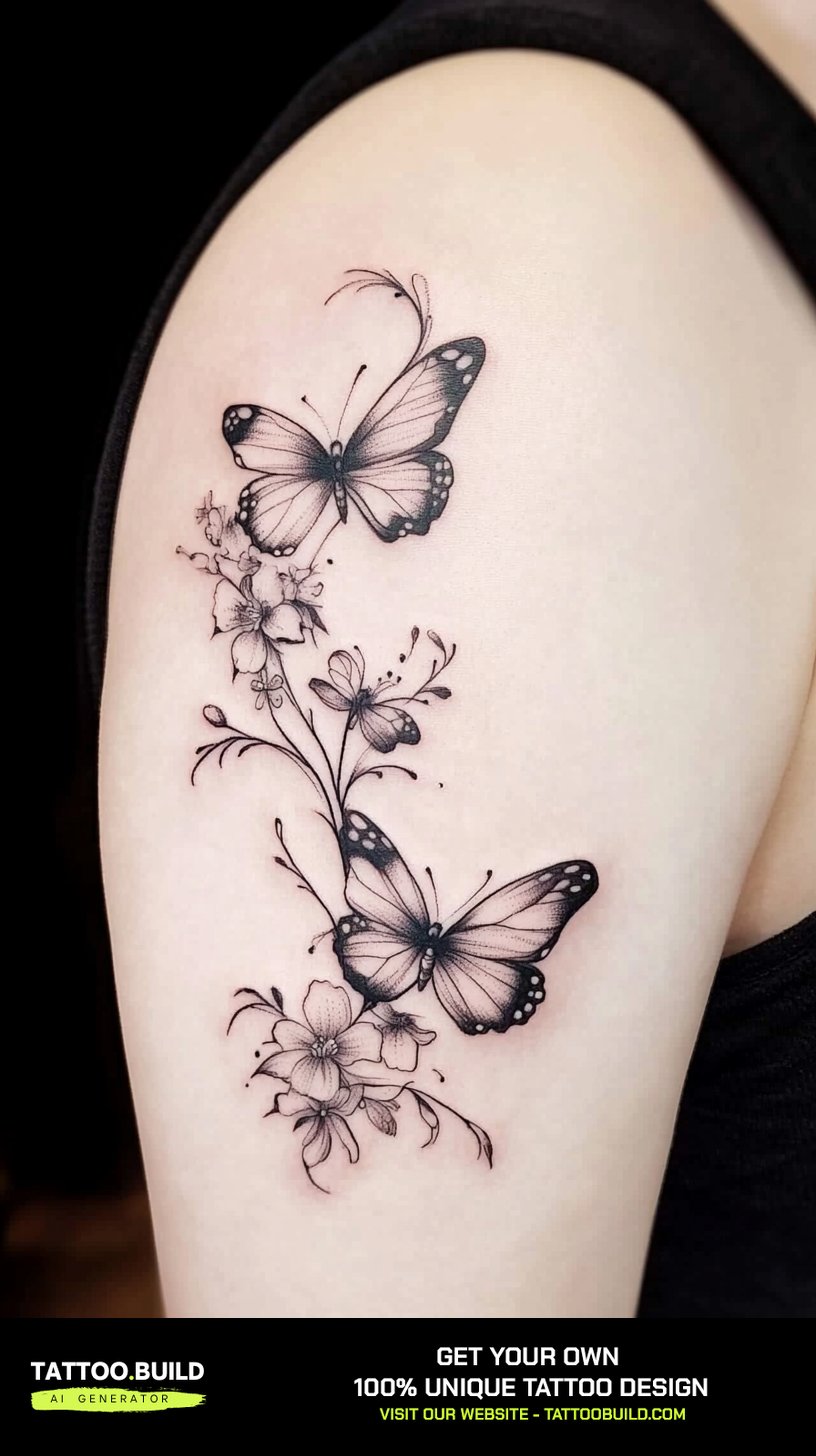
I have been writing about arm tattoos for years, and the same request keeps arriving in almost identical words: something pretty, something personal, something I will not have to explain in a job interview. A classy arm tattoo is not a style — it is a set of decisions about scale, contrast and placement that happen to work on almost every design.
That is genuinely good news, because it means you are not locked into fine-line florals if that is not your taste. A neo-traditional peony and a dotwork mandala can both read as elegant when the sizing and the placement are right.
Below are twenty-six arm tattoos worth stealing ideas from, grouped by style rather than dumped in a random gallery. I have also included what each style actually costs you in sitting time, healing and long-term touch-ups.
If you already know you want something small and tucked away, the inner arm placements are a better starting point than anything on this page — the skin there is softer, and the results are easier to keep private.
Which Arm Placement Is Right for You?
Every artist I have asked ranks arm placements roughly the same way. This is the shorthand version I now give friends before their first consultation.
| Placement | Best For | Discomfort | Coverability | Typical First Session |
|---|---|---|---|---|
| Outer forearm | Detailed florals you want to see yourself | Low to moderate | Poor — long sleeves only | 2–4 hours |
| Inner forearm | Script, small symbols, dates | Moderate — thinner skin | Poor | 1–3 hours |
| Upper arm / bicep | Larger florals and half sleeves | Low — most forgiving spot | Excellent — hidden by a t-shirt | 3–5 hours |
| Shoulder cap | Realism and fine detail | Low to moderate | Excellent | 3–4 hours |
| Elbow ditch | Connecting a half sleeve | High — most people rate this the worst | Poor | 1–2 hours |
| Wrist wrap | Bands, small botanicals | High near the bone | Very poor | 1–2 hours |
What Actually Makes an Arm Tattoo Look Classy
When I look back at the pieces that have aged well, the common thread is restraint in exactly three places: line weight, contrast, and how much of the arm the design tries to claim.
Line weight is the one most people get wrong. A hairline that looks impossibly delicate on fresh skin can blur into a soft grey smudge within five to ten years, because ink spreads slightly in the dermis over time.
Contrast matters almost as much. A design that is entirely mid-grey has nothing for the eye to lock onto, which is why the strongest black and grey work usually keeps a few genuinely black anchor points.
Then there is coverage. In my experience the pieces that read as elegant leave visible skin between the elements, rather than filling every gap with filler foliage.
None of that rules out colour, realism or heavy blackwork. It just means the design needs a plan for how it will look at arm’s length, not only at reading distance.
26 Classy Arm Tattoo Ideas for Women
These are grouped by style so you can bring a coherent reference set to your consultation instead of a folder of unrelated screenshots.
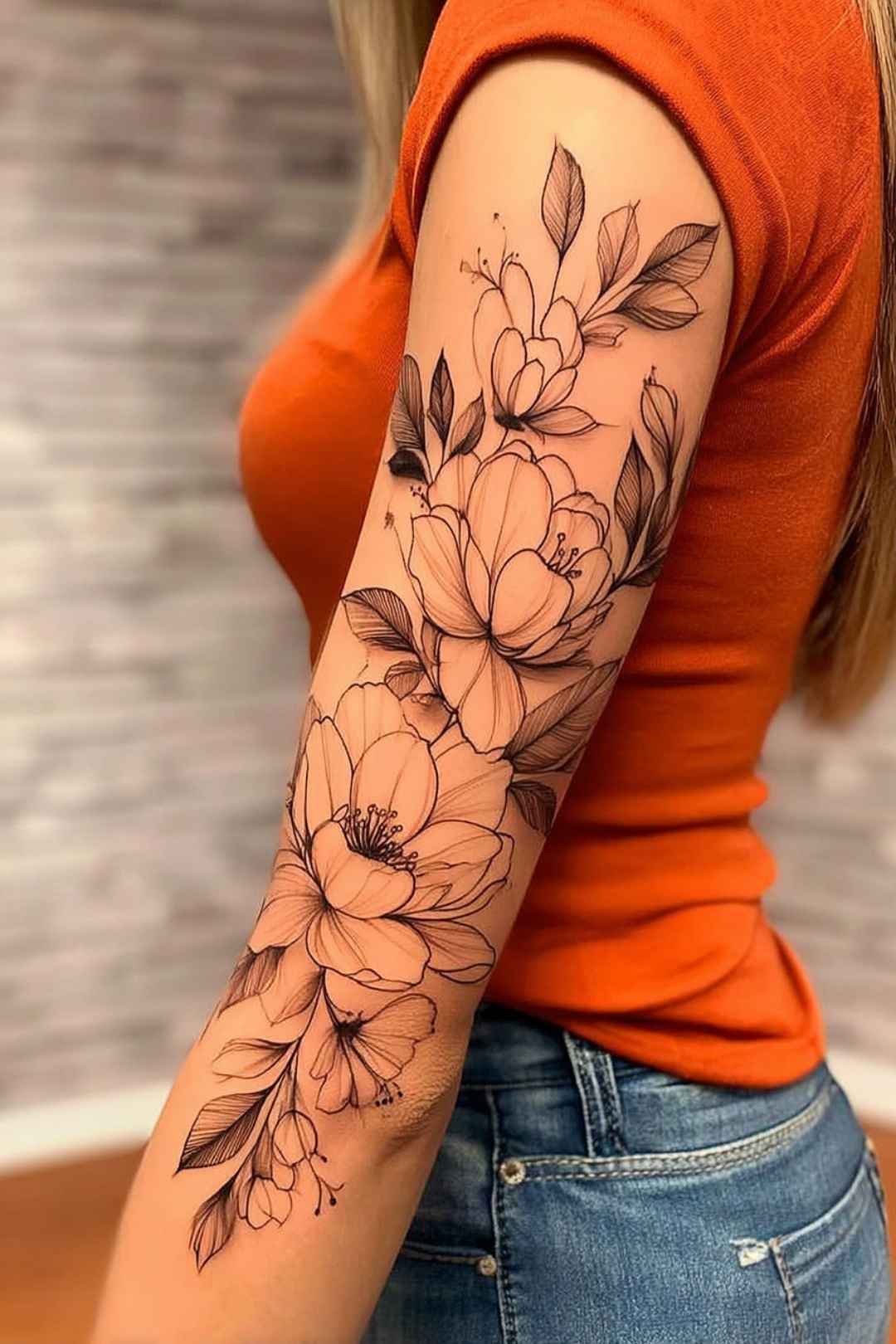
1. Fine-Line Florals With Almost No Shading
Outline-only florals are the most requested version of a classy arm tattoo, and for good reason — they sit fast, heal quickly and read as jewellery rather than statement art.
The trade-off is longevity. Very fine lines on the forearm see more sun than almost anywhere else on the body, and I have watched several of these soften noticeably inside a decade.
If you want this look to last, ask your artist for a line weight one step heavier than the reference photo, and expect a touch-up somewhere around year five. The same logic applies to dainty tattoo designs anywhere on the body.
Sizing tip from every artist I have asked: a single fine-line flower under about two inches will lose its interior detail. Go bigger, or simplify the design.
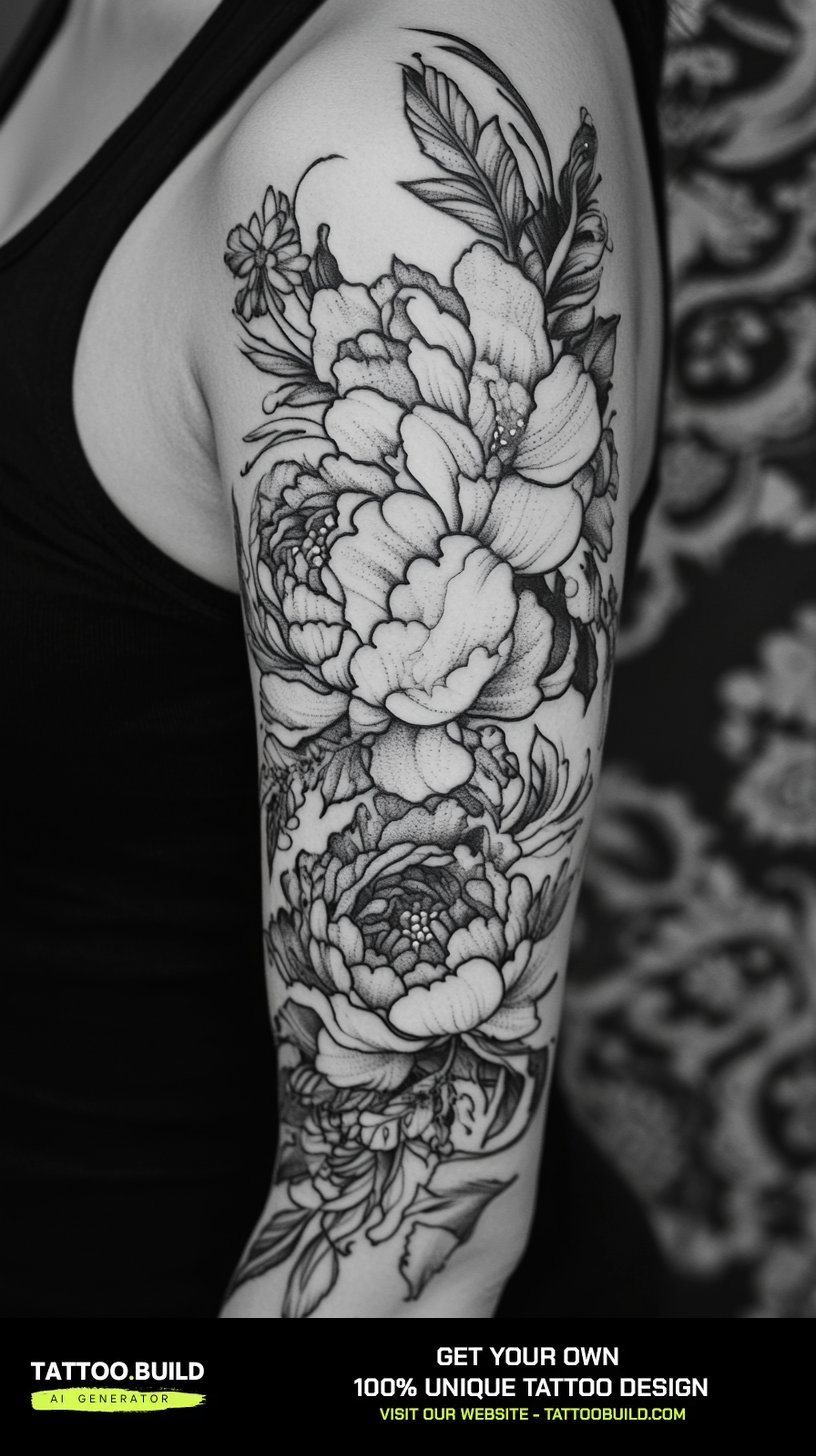
2. Black and Grey Botanical Sleeves
A full botanical sleeve is the long game — usually four to eight sessions spread over several months, depending on your artist’s pace and your budget.
What makes these look expensive is flow. The stems follow the length of the arm and the blooms sit on the outer curve, so the design still reads clearly when your arm hangs at your side.
When I tested reference photos with a few artists, the pieces they praised all had one thing in common: a clear focal flower, with everything else shaded lighter to support it.
Budget realistically. A sleeve is typically the most expensive tattoo most people ever commission, and rushing it to save money is the fastest route to regret.
3. Soft-Shaded Peony and Rose Studies
If you want something substantial but not sleeve-sized, a single shaded bouquet on the outer forearm is the sweet spot — usually one sitting of three to four hours.
Peonies and roses dominate this category because their layered petals give an artist somewhere to put soft grey wash without the design turning muddy.
Dotwork shading is worth asking about specifically. It builds depth through stippling rather than solid saturation, which tends to hold up beautifully as the skin ages.
One honest caveat: dotwork takes longer at the machine, so expect the session to run longer than a smooth-shaded equivalent of the same size.
4. Colour Florals Done With Restraint
Colour has a reputation for looking loud, but that is usually a palette problem rather than a colour problem.
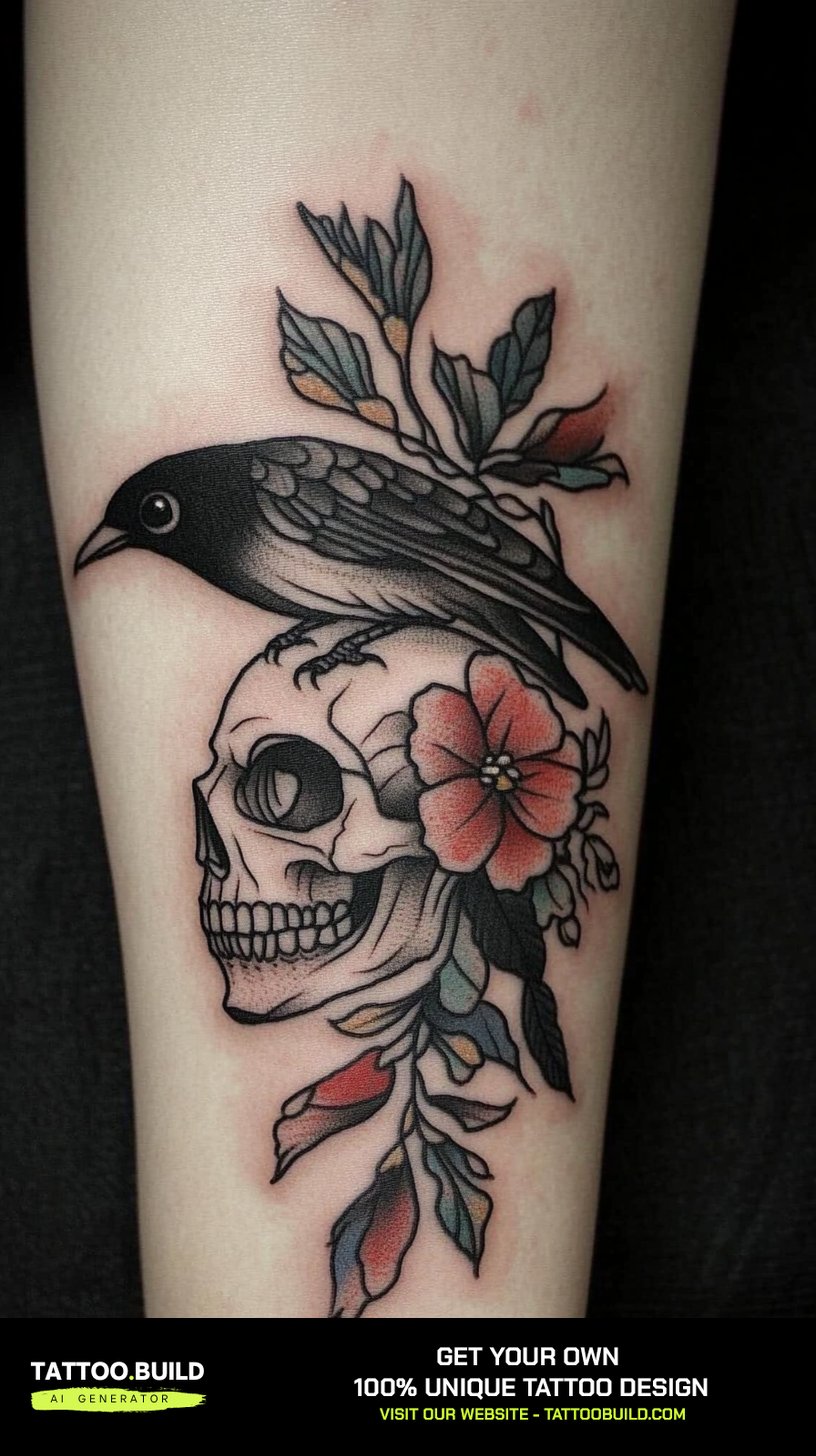
Muted, desaturated colour reads far more elegant on the arm than bright primaries — dusty oranges, sage greens and soft ochres against black linework.
Neo-traditional work sits in this category too. The heavy outlines look bold up close, but they are exactly what keeps the shape legible twenty years later.
Practical note: colour needs more diligent sun protection than black and grey, and yellows and reds are typically the first pigments to fade.
5. Keepsake and Storytelling Motifs
Pocket watches, lockets, compasses and heirloom objects give a floral piece a centre of gravity — and usually a personal date or reference hidden somewhere in the detail.
I have seen a lot of these done badly, almost always because the object was tattooed too small for its own internal detail to survive.
Give the object real estate. A watch face with legible numerals generally needs to be at least three inches across on the arm.
If you are hiding a date, ask the artist to place it where the skin creases least — a number tucked into an elbow ditch will not stay crisp.
6. Ornamental, Mandala and Lace Work
Ornamental blackwork is the most underrated option on this list. It follows the taper of the forearm naturally, which is why it so often looks tailored rather than applied.
It also ages exceptionally well, because the design lives in repeated geometry rather than in delicate individual lines. The same is true of bracelet and band tattoos that wrap the wrist or forearm.
Symmetry is unforgiving here. This is a style where the artist’s stencil placement matters more than their shading, so review the stencil in a mirror before any needle touches skin.
Ask to see healed photos specifically. Ornamental work that looked razor-sharp on day one can lose its crispness if the lines were packed too densely.
7. Portrait and Nature Realism
Realism is the one category where the artist matters more than the design. This is a specialist skill, and the gap between a good realism artist and an average one is enormous.
Expect to travel, expect a waiting list, and expect a higher hourly rate. In my experience it is worth all three if realism is genuinely what you want.
Scale is non-negotiable. A face rendered smaller than about four inches will lose the subtle tonal shifts that make it read as a face at all.
Colour realism on the shoulder cap works particularly well, because the skin there is flatter and less prone to the stretching you get across the forearm.
Variations Worth Considering Before You Book
If nothing above is quite right, these are the adjustments I suggest most often.
Move It to the Upper Arm
The upper arm is the most forgiving placement on the whole body: lower discomfort, slower fading thanks to less sun exposure, and complete coverage under a t-shirt.
It is also where most people should start if they are unsure about visibility at work. Browse upper arm tattoo designs for scale references before you commit.
A shoulder tattoo takes this even further — it disappears entirely under almost any sleeve.
Stop at a Half Sleeve Instead of a Full One
A half sleeve ending above the elbow gives you most of the visual impact of a full sleeve at roughly half the cost and time.
It also leaves the door open. Plenty of the classy half sleeve designs I have seen were built as standalone pieces and only later extended downward.
Choose a Motif That Already Means Something
The pieces people are happiest with years later are rarely the most technically impressive ones — they are the ones that were already personal before the stencil went on.
Birth flowers are the easiest entry point here, and birth flower tattoo ideas give you a built-in reason for the design without needing to explain it.
Keeping a Classy Arm Tattoo Looking Sharp
Arms take more incidental abuse than almost any other placement — sleeves, seatbelts, car windows, gym equipment — so aftercare matters more here than on a hip or a thigh.
Follow the aftercare instructions your artist gives you, not the ones on the internet. They know their inks and their healing protocol. That said, the American Academy of Dermatology publishes sensible general guidance that broadly agrees with what most reputable studios recommend.
Sun is the single biggest long-term factor. Once the tattoo is fully healed, sunscreen on the arm is the difference between a piece that still looks crisp in fifteen years and one that does not.
Take healing seriously. Redness, swelling and heat that get worse rather than better after the first few days are not normal — see a doctor rather than waiting it out. The US Food and Drug Administration and the Mayo Clinic both cover the infection and allergic-reaction risks worth knowing about before you book. Nothing on this page is medical advice.
Still Not Sure? Avoid These Common Mistakes
The regrets I hear about most are almost never about the design itself.
Booking the available artist rather than the right artist is the big one. A three-month wait for someone who specialises in your style is cheaper than a cover-up.
Second is sizing down to save money. If your budget only covers a smaller version, wait — and in the meantime it is worth understanding what a sleeve tattoo actually costs so the number does not surprise you.
Third is picking a placement for the photo rather than for your life. Look at forearm tattoo ideas honestly and ask whether you want that visible every single day.
Finally, never let anyone tattoo you outside a licensed, properly equipped studio. Home and back-room tattooing carries real infection and bloodborne-illness risk, and no design is worth that.
Frequently Asked Questions
Do classy arm tattoos have to be small?
Not at all. A full black and grey botanical sleeve can read as elegant while a badly placed two-inch design does not. What makes a piece look refined is the relationship between line weight, contrast and negative space, not the overall footprint. In my experience, larger pieces often look more considered because the artist has room to let the design breathe. Size to the design, not to your nerves.
Which part of the arm hurts the least?
Most people find the upper arm and the outer bicep the most comfortable, because there is more muscle and fewer nerve endings close to the surface. The elbow ditch and the inner wrist are usually rated the worst. That said, pain tolerance varies enormously between individuals, and being rested, fed and hydrated makes a bigger difference than most people expect. Tell your artist if you need a break — every artist I have asked would rather stop than have you push through.
How long does a classy arm tattoo take to heal?
The surface usually looks settled within two to three weeks, but the deeper layers of skin generally take a few months to finish healing. During that time the tattoo can look slightly dull or cloudy, which is normal and typically resolves on its own. Avoid soaking the area and keep it out of direct sun until your artist says otherwise. If anything looks infected rather than simply healing, see a doctor.
Will fine-line work still look good in ten years?
Usually it will look softer rather than sharper. Ink spreads a little in the skin over time, so the very finest lines gradually thicken and lose some crispness — that is normal ageing, not bad work. You can slow it considerably with consistent sunscreen and a touch-up every few years. If long-term crispness is your priority, ask your artist for a slightly heavier line weight from the start.
Can a classy arm tattoo be covered for work?
It depends entirely on placement. Upper arm and shoulder pieces disappear under any short sleeve, while forearm and wrist work only hides under long sleeves. If your workplace has a visible-ink policy, plan the piece around it rather than hoping to negotiate afterwards. Plenty of people build upward from the shoulder for exactly this reason and extend downward only later.
Quick Summary
- “Classy” is a set of choices — line weight, contrast and negative space — not a single tattoo style.
- The upper arm and shoulder cap are the most comfortable placements and the easiest to cover at work.
- The elbow ditch and inner wrist are the spots most people rate as the most painful.
- Fine-line work heals fastest but softens over the years; ask for a slightly heavier line weight if you want it crisp long-term.
- Muted, desaturated colour palettes read more elegant on the arm than bright primaries.
- Realism is artist-dependent above all else — travel and wait for a specialist rather than settling.
- A half sleeve ending above the elbow delivers most of a full sleeve’s impact for roughly half the cost and time.
- Sunscreen after healing is the single biggest thing you control in how the tattoo ages.