A feminine bracelet tattoo is the only tattoo I know of that people mistake for real jewellery on a daily basis. I have watched a friend get asked three times in one evening where she bought her chain, only for her to hold up her bare wrist and enjoy the double take.
That illusion is the whole appeal. A band that circles the wrist reads as an accessory rather than as a statement, which is why it suits people who want something permanent but not loud.
I have spent a long time looking at these designs — in studios, in healed photos, and in the wider collection of women’s bracelet tattoo ideas on this site. The good ones share a few habits, and the ones that age badly usually break the same rule.
Below are 30+ ideas grouped by style, plus the practical parts nobody mentions until you are already in the chair: how the wrist heals, where lines blur first, and which designs still look sharp after a decade.
Which Bracelet Tattoo Style Is Right for You?
Every style on this page can be beautiful. They are not, however, equally easy to live with, and that is the part worth comparing before you book.
| Style | Best For | Typical Sitting | How It Ages | Touch-Up Outlook |
|---|---|---|---|---|
| Fine-line chain | First tattoos, subtle wearers | 30–60 minutes | Softens gradually; gaps close slightly | Likely once every few years |
| Lace & ornamental cuff | Anyone who wants detail without colour | 2–4 hours | Negative space can fill in if packed too tight | Depends heavily on line spacing |
| Floral band | Meaningful, personalised pieces | 2–5 hours | Well, when petals are kept larger than a grain of rice | Usually minimal |
| Solid black band | Bold, graphic looks | 1–3 hours | The most stable option long term | Rare, but edges may need tidying |
| Charm & pendant | Jewellery lovers | 1–2 hours | Pendant survives better than the thin chain | Chain often refreshed first |
| Colour florals | Softer, painterly results | 3–6 hours | Pale colours fade fastest on sun-exposed wrists | Most maintenance of any style here |
If you are torn, the honest advice is to start simpler than you think you want. Adding to a band later is straightforward; thinning one out is not.
What Actually Affects How a Bracelet Tattoo Ages
The wrist is a demanding place to put permanent linework, and pretending otherwise does nobody any favours.
Skin here is thin, constantly flexed, and among the most sun-exposed areas on the body. Every one of those factors works against very fine detail.
Lines placed too close together tend to bleed toward each other over the years, so a lace pattern with generous breathing room will still read as lace in a decade, while a densely packed one can turn into a grey smudge.
Placement matters as much as design. The inner wrist and the area right over the wrist bone take ink less predictably than the flatter section two or three centimetres up the forearm — one reason so many artists nudge a band slightly higher than clients first ask for.
Sun is the quiet culprit. Daily sunscreen on a healed band is genuinely the single highest-return habit, and the American Academy of Dermatology says the same about tattooed skin generally.
If you want the band to genuinely encircle the arm, look at how wrap-around wrist designs handle the underside — that is where most bands either close beautifully or fall apart.
Feminine Bracelet Tattoo Ideas by Style
What follows is grouped by how the design is built rather than by theme, because construction is what determines whether you will still love it later.
1. Fine-Line Chain and Link Bracelets
Chain bracelets are the closest thing to wearing jewellery you never take off, and they are the design I recommend most often to people getting their first piece.
The trick is asking for links slightly larger than feels necessary. A chain drawn at hair-thin scale looks exquisite on day one and turns into a soft grey line within a few years.
Braided and rope variations add texture without adding width, which is useful if you want something visually interesting but still discreet. They belong to the same family as broader fine line tattoo ideas and follow the same rules about spacing.
In my experience these sittings are short — often under an hour — which makes them far less intimidating than the size of the commitment suggests.
2. Lace and Ornamental Cuffs
Lace cuffs are the most requested feminine bracelet tattoo style I have seen, and the most frequently done badly.
A good lace band is mostly empty space. The pattern reads because of the gaps, not the ink, and an artist who understands that will draw fewer elements than you expect.
Ask to see healed photographs of lace work, not fresh ones. Fresh lace always looks crisp; only a two-year-old photo tells you whether the artist spaces lines well.
Garter-style cuffs with a jewel centrepiece work particularly well because the solid focal point holds the design together even as the surrounding detail softens.
3. Filigree, Baroque and Scrollwork Bands
Filigree sits somewhere between lace and ornamental blackwork — flowing, symmetrical, and heavier in the centre than at the edges.
These designs need room. Every artist I have asked about scrollwork says the same thing: it looks cramped on a narrow wrist and comes alive two inches higher on the forearm.
The symmetry is also unforgiving. A filigree centrepiece slightly off-centre is far more noticeable than an asymmetric floral cluster, so spend real time on stencil placement before the needle starts.
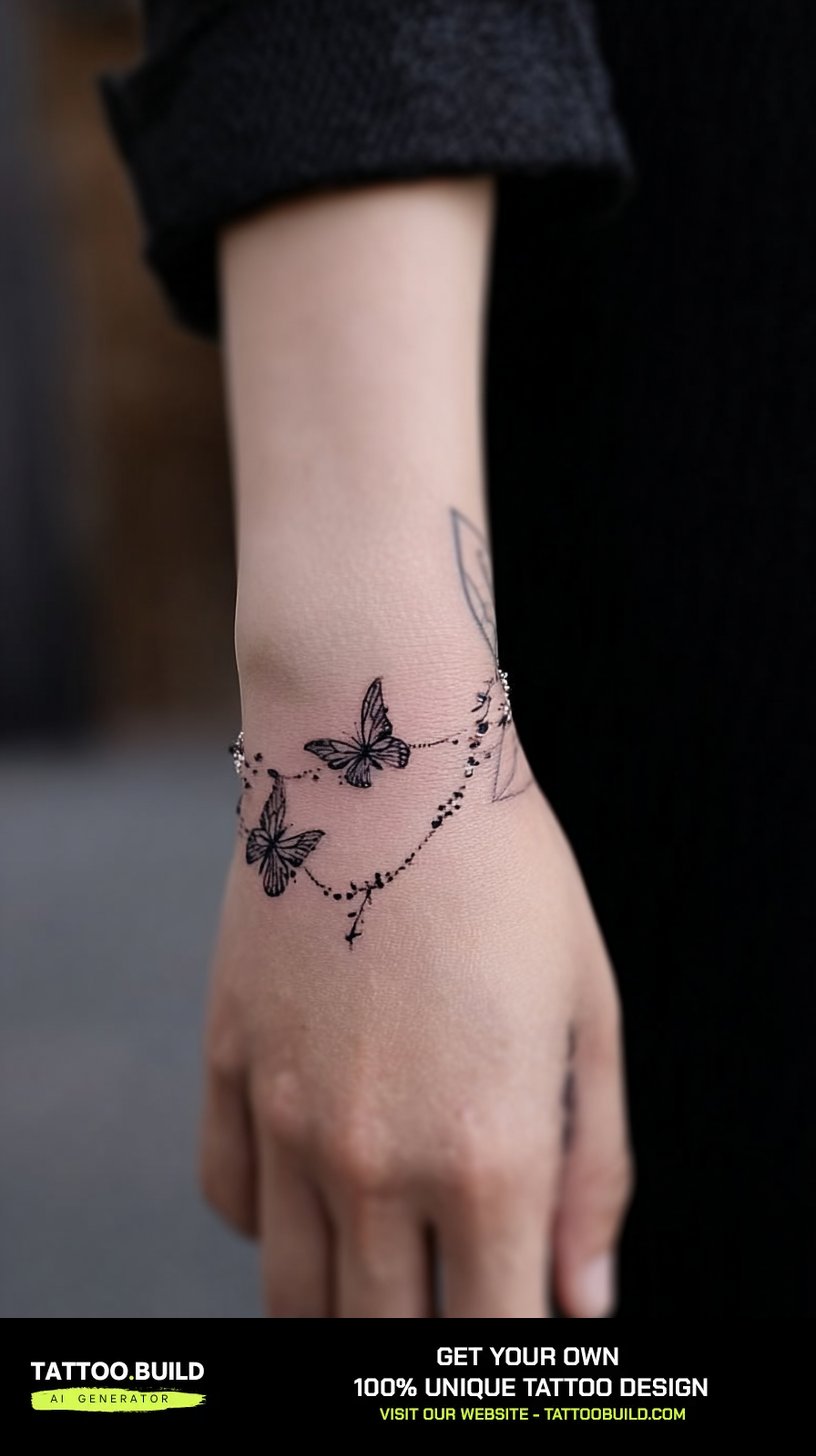
Hanging drops and teardrop pendants are what turn a band into a bracelet. Without them, ornamental work can read as an armband rather than jewellery.
4. Floral Bands and Vine Wraps
Floral bracelet tattoos are the most personal option, largely because the flower itself can carry meaning.
Birth month flowers are the obvious route, and the birth flower tattoo guide covers which bloom belongs to which month if you want the design to mean something specific.
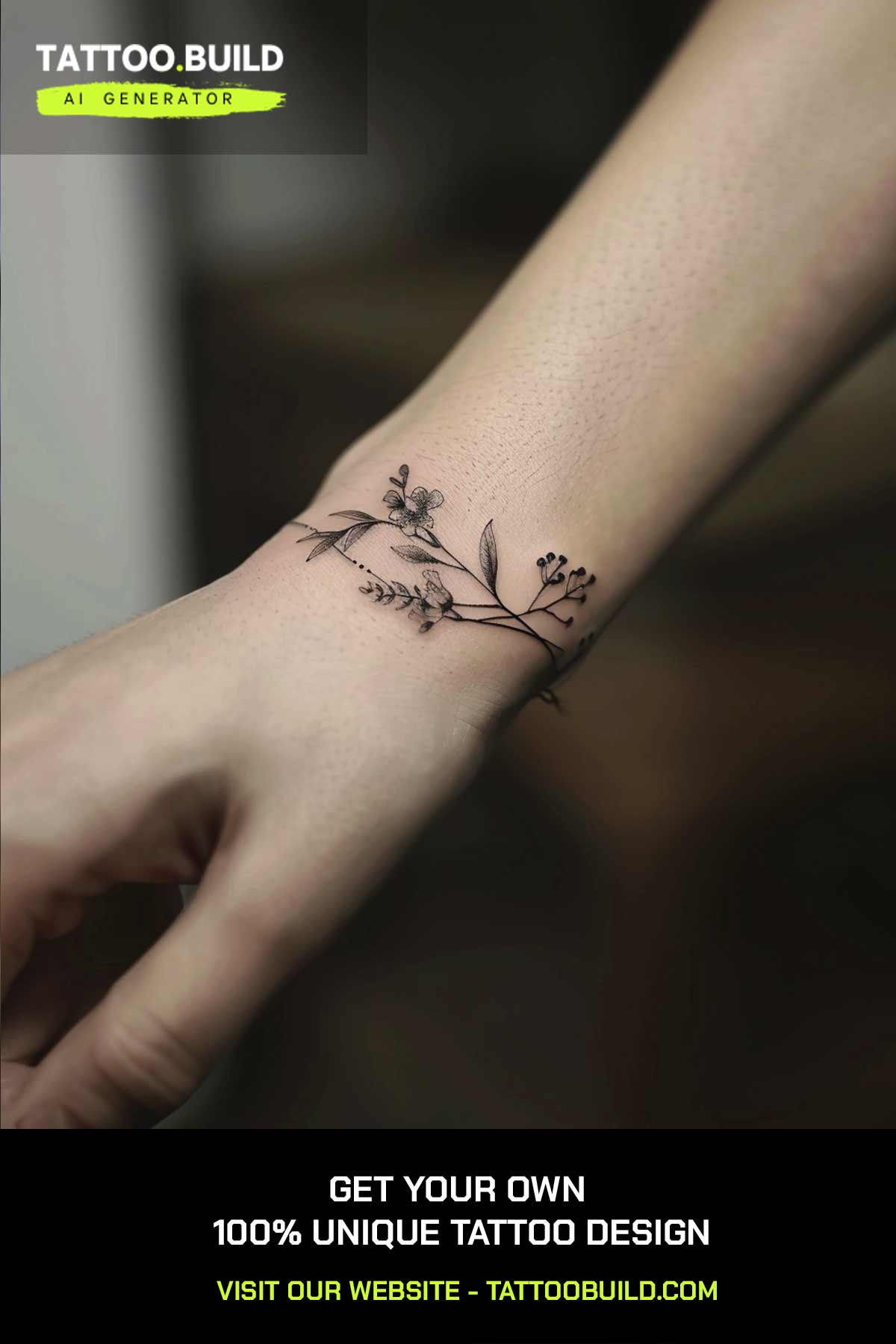
Vine wraps are worth considering as an alternative to a closed band. A stem that spirals up the wrist gives the impression of a bracelet without the commitment of a full circle.
Keep individual petals larger than you think you need. When I have compared healed floral bands, the ones with fewer, bigger blooms consistently look better after five years than the ones crowded with tiny buds.
5. Bold Blooms Over Solid Bands
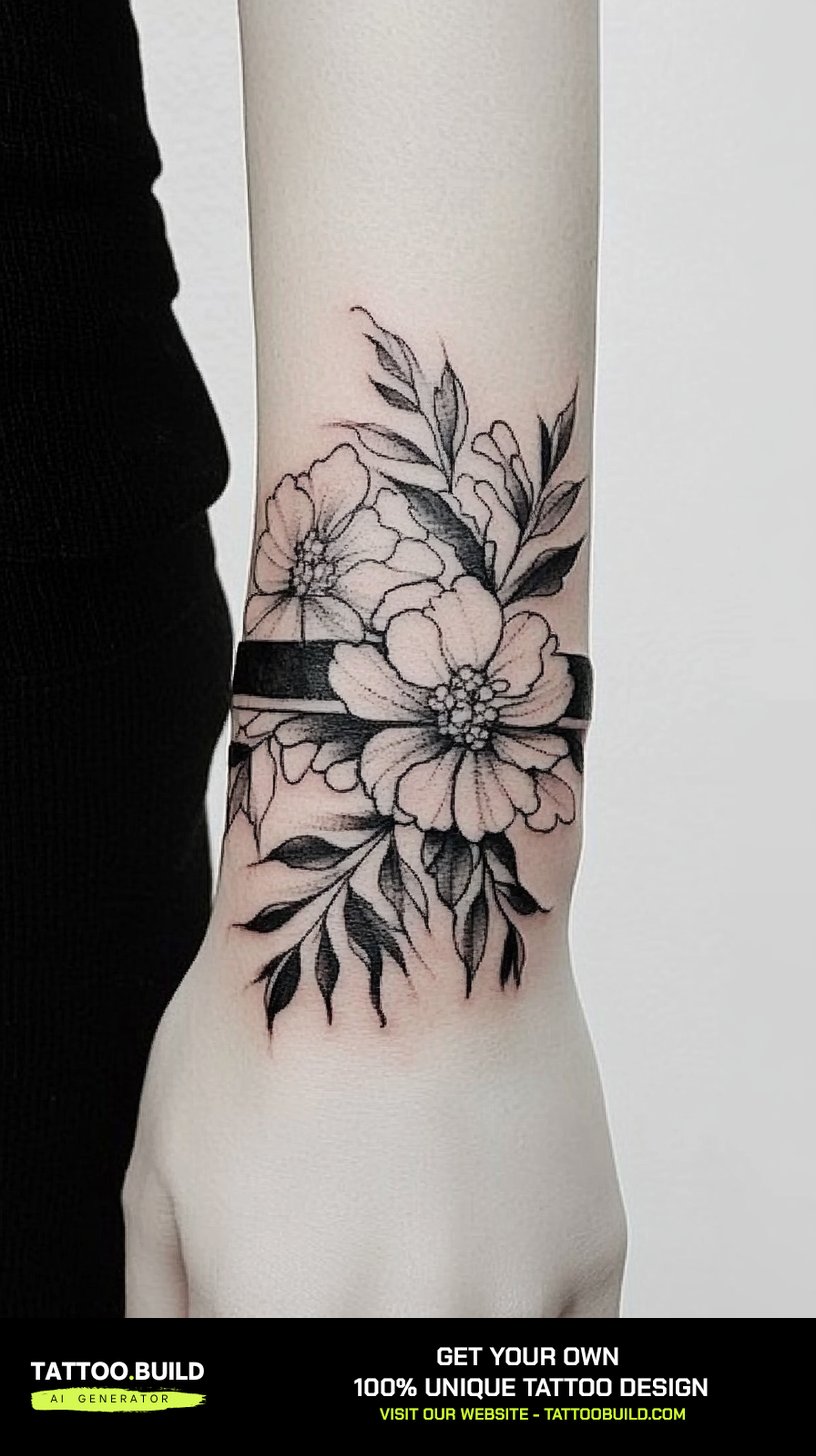
This is the combination I find most striking in person: a solid or heavily shaded band with large flowers spilling over one edge.
The contrast does the work. The band gives structure and reads instantly as jewellery, while the blooms keep it from feeling severe or masculine.
It is also the most durable pairing on this page. Solid black holds its shape for decades, and larger floral shapes have enough internal space to survive natural softening.
Expect a longer sitting and more discomfort than a fine-line piece — solid packing over the wrist bone is genuinely uncomfortable, and there is no point pretending otherwise.
6. Charms, Bows and Pendant Details
Charms are what separate a bracelet tattoo from a plain band, and they are the easiest element to make personal.
A single hanging initial, a tiny key, a star, or a bow tied at the underside of the wrist all achieve the same thing: they suggest a clasp, and a clasp is what your eye reads as jewellery.
Bows deserve a specific warning. They are charming at any size, but a bow smaller than a fingertip loses its loops within a few years — I have seen several turn into a small grey knot.
Mandala-style ornamental bands with dangling drops sit at the more elaborate end of this category and work best on the forearm where the drops have somewhere to fall.
7. Symbols, Moons and Nature Bands
Not every bracelet tattoo has to look like jewellery. Some of the most interesting ones borrow the shape of a band and fill it with something else entirely.
Crescent moons and foliage that spill from the wrist onto the back of the hand break the circle deliberately, which suits people who dislike how a closed band can look like a shackle.
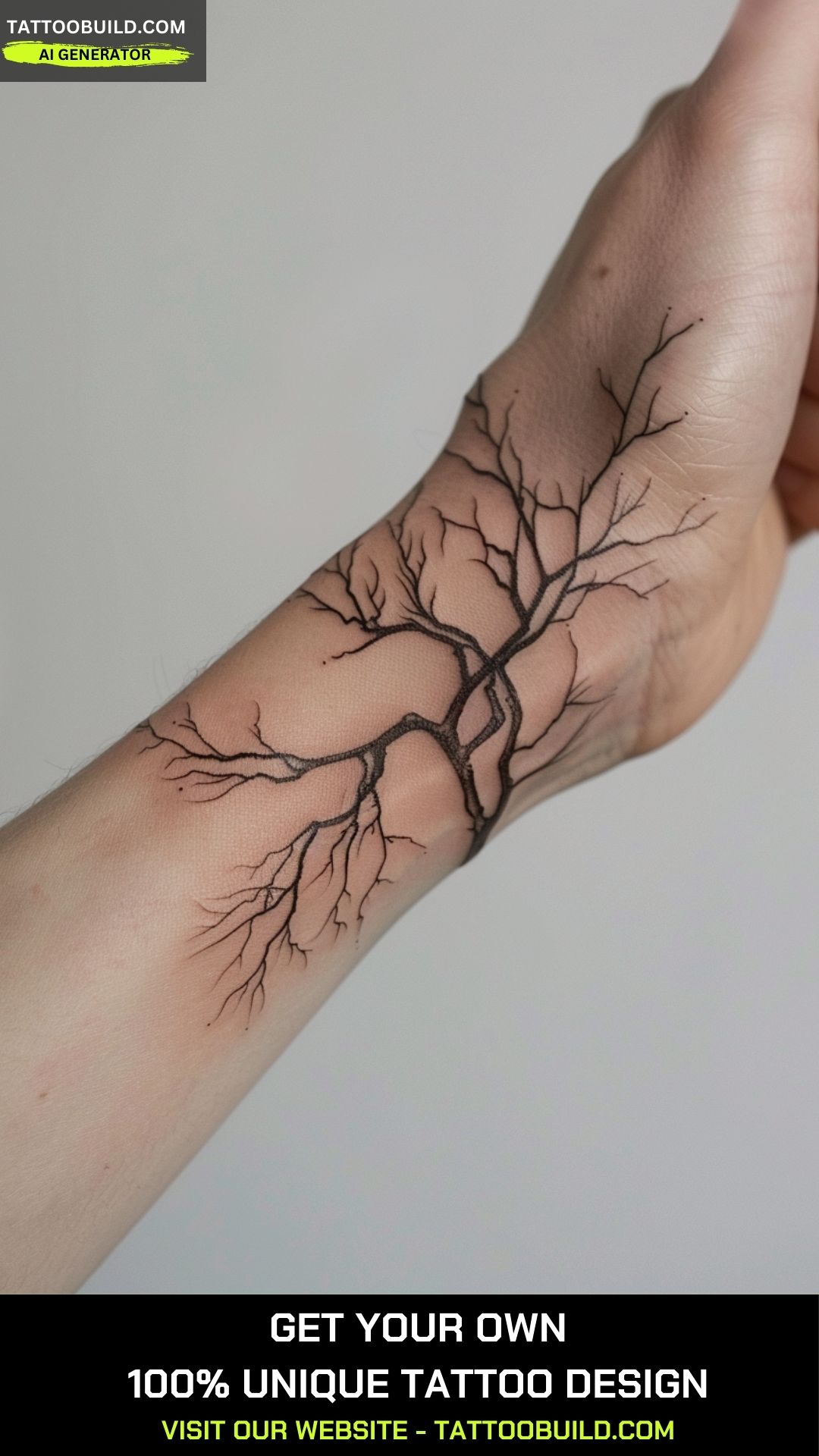
Thorned vines are the counterweight to all the softness on this page — still delicate in line weight, considerably harder in mood.
Wider cuffs, like a sun or wave design covering the lower forearm, are the boldest version of this idea and are worth seeing on skin before committing, because photographs flatten how much arm they actually cover.
8. Geometry, Pattern and Soft Colour
Geometric and pattern-based bands look simple and are anything but. A repeating motif has to meet perfectly where the band closes, which demands careful stencil wrapping.
When I have watched artists apply these, the stencil goes on and comes off several times before anyone is happy. That is normal and worth the extra twenty minutes.
Colour is the other variable. Soft roses and muted botanical tones look gorgeous, but pale pinks and yellows fade faster on a wrist than anywhere else on the body.
If you want colour on a bracelet tattoo, accept touch-ups as part of the plan rather than as a failure of the tattoo.
Placement Variations Beyond the Wrist
The bracelet concept transfers surprisingly well to other parts of the body, and sometimes the alternative placement is the better answer.
Ankle Bracelets
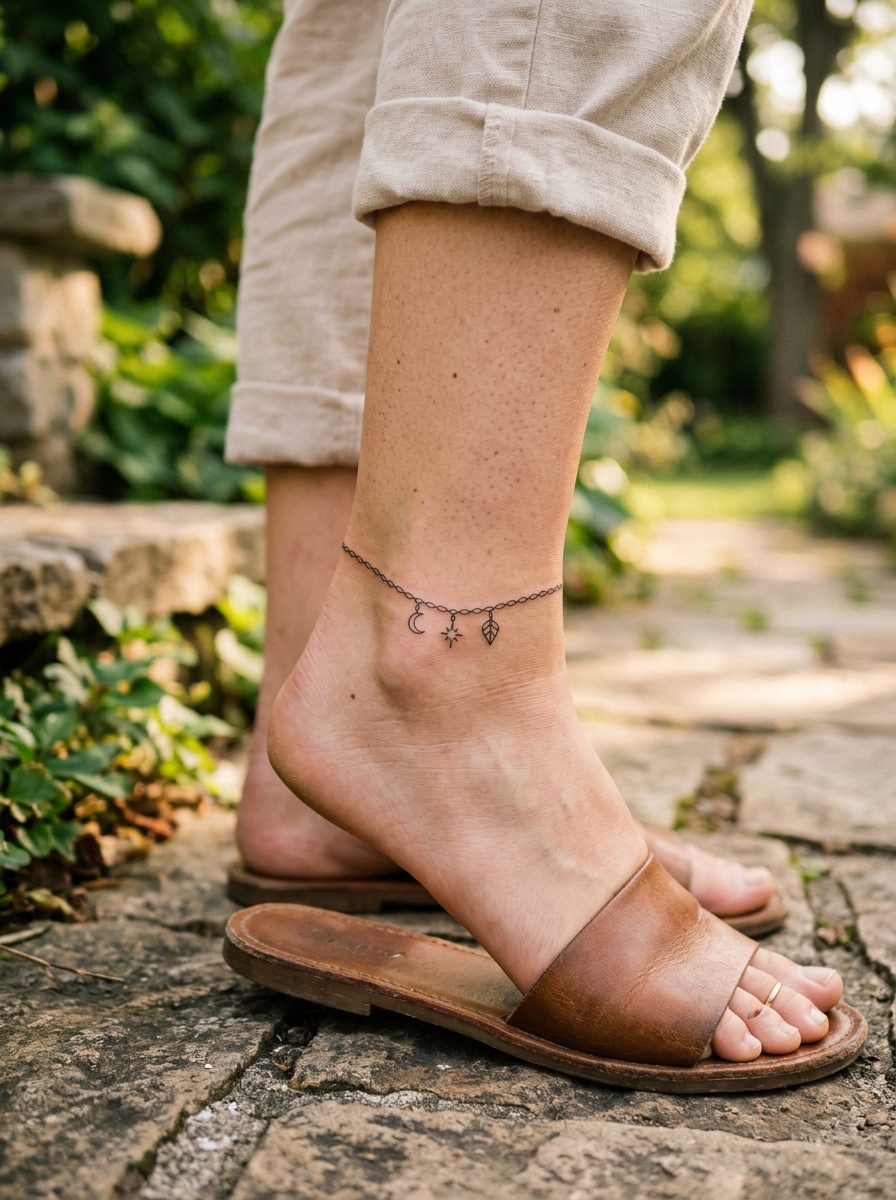
An anklet band is the classic alternative and heals a little more predictably than the wrist because the skin flexes less.
It is also easier to keep out of the sun for most of the year. If that appeals, the collection of women’s ankle tattoo ideas covers what works at that scale.
Upper Arm and Forearm Cuffs
Moving the band up the forearm gives an artist far more room for detail, and the skin there holds fine linework better than the wrist does.
The trade-off is visibility — a forearm cuff is harder to hide under a sleeve than a slim wrist band.
Finger and Hand Extensions
Some designs continue past the wrist onto the hand or down a finger, which looks striking and fades faster than anything else on this page.
Hands are washed constantly and exposed permanently. If you are drawn to this, read the honest expectations in the finger tattoo guide first.
Double and Layered Bands
Two thin bands with a gap between them often read as more jewellery-like than one thick band, and they leave room to add a charm later.
Layering is also the most forgiving way to expand a small first tattoo into something larger over time.
Aftercare and Longevity Tips That Actually Matter
Bracelet tattoos sit on a joint you use constantly, which makes the first two weeks slightly more demanding than a tattoo on, say, a thigh.
Follow the aftercare instructions your artist gives you, since they know their inks and their technique. Keep the area clean, keep it lightly moisturised rather than smothered, and resist picking at flakes as the band heals.
Watches, bracelets and tight sleeves should stay off the fresh tattoo. Friction over a healing wrist band is the most common cause of patchy healing I have heard artists complain about.
Once healed, sunscreen is the single habit that preserves the design. Reactions and irritation can also appear well after healing, and the AAD’s guide to tattoo skin reactions is a sensible reference for what is and is not normal.
Tattoo inks are not regulated the way cosmetics are in every market, and the FDA’s tattoo and permanent makeup fact sheet is worth ten minutes of reading before your appointment.
If you notice spreading redness, swelling that worsens after a few days, discharge, or a fever, contact your artist and see a doctor. This article is not medical advice, and an infection is not something to research your way out of at home.
Common Mistakes — and What to Do If You’re Still Not Sure
The most common regret I hear is not about the design at all. It is about scale: people ask for something smaller than the design can support, and the detail disappears.
The second is rushing the stencil. A band that is even slightly crooked when it closes on the underside of the wrist will bother you every single day.
The third is choosing an artist by price rather than portfolio. Ornamental and fine-line work are specialisms, and a generalist doing lace for the first time is a gamble you can avoid.
If you are still undecided, browsing adjacent styles usually clarifies things faster than staring at the same design. The minimalist tattoo ideas collection helps if you suspect you want something even simpler, and tiny wrist tattoo ideas shows what works at the smallest usable scale.
And if this would be your first piece of body art, the first tattoo guide for women covers the practical questions — consultations, pricing, pain, and what to ask before you sit down.
Frequently Asked Questions
Do bracelet tattoos hurt more than other placements?
The wrist is generally considered one of the more sensitive areas because the skin is thin and sits close to bone. Most people describe it as sharp rather than deeply painful, and the inner wrist is usually reported as more uncomfortable than the outer side. Sessions for simple bands are short, which limits how long you have to sit with it. Pain is highly individual, so treat any description — including this one — as a rough guide only.
How much does a feminine bracelet tattoo cost?
Pricing varies enormously by studio, city and artist reputation, so any specific figure would be misleading. A simple fine-line chain is often charged at a studio’s minimum rate, while an ornamental lace cuff or a large floral band is priced by the hour and can run across several hours. Ask for a quote at consultation rather than over message, since artists need to see the placement. Booking a well-regarded artist for a smaller design is usually better value than a large piece from someone cheaper.
Will a bracelet tattoo blur or fade over time?
Some softening is normal for any tattoo, and fine linework on the wrist shows it sooner than most placements. Designs with generous spacing between lines age noticeably better than densely packed ones. Sun exposure is the biggest accelerator, so daily sunscreen on the healed band makes a real difference. Occasional touch-ups are common and should be planned for rather than treated as a problem.
Can a bracelet tattoo be covered for work?
A wrist band is one of the easier tattoos to conceal, since a watch, cuff or long sleeve covers most designs completely. Bands that extend onto the hand or fingers are much harder to hide. If workplace visibility is a concern, placing the band slightly higher on the forearm gives you more options. It is worth checking your employer’s policy before booking rather than after.
What is the best size for a bracelet tattoo?
Most bands sit somewhere between one and four centimetres wide, depending on the style. Chain and charm designs work at the narrow end; lace, filigree and floral pieces need more width to stay readable. In my experience the most common regret is going too small rather than too large. A good artist will tell you the minimum size a particular design needs to survive — listen to that number.
Quick Summary
- Feminine bracelet tattoos read as jewellery, which is exactly why they suit people who want something permanent but understated.
- Fine-line chains are the easiest entry point — short sittings, low visibility, straightforward to expand later.
- Lace and filigree look best when the artist leaves generous negative space rather than packing in detail.
- Floral bands carry the most personal meaning, especially when built around a birth flower.
- Solid black bands with large blooms over them are the most durable combination on this page.
- Charms, bows and pendants are what turn a plain band into a convincing bracelet.
- The wrist is thin, flexed and sun-exposed — sunscreen after healing does more for longevity than anything else.
- Go slightly larger than feels necessary, and choose the artist by healed portfolio, not by price.