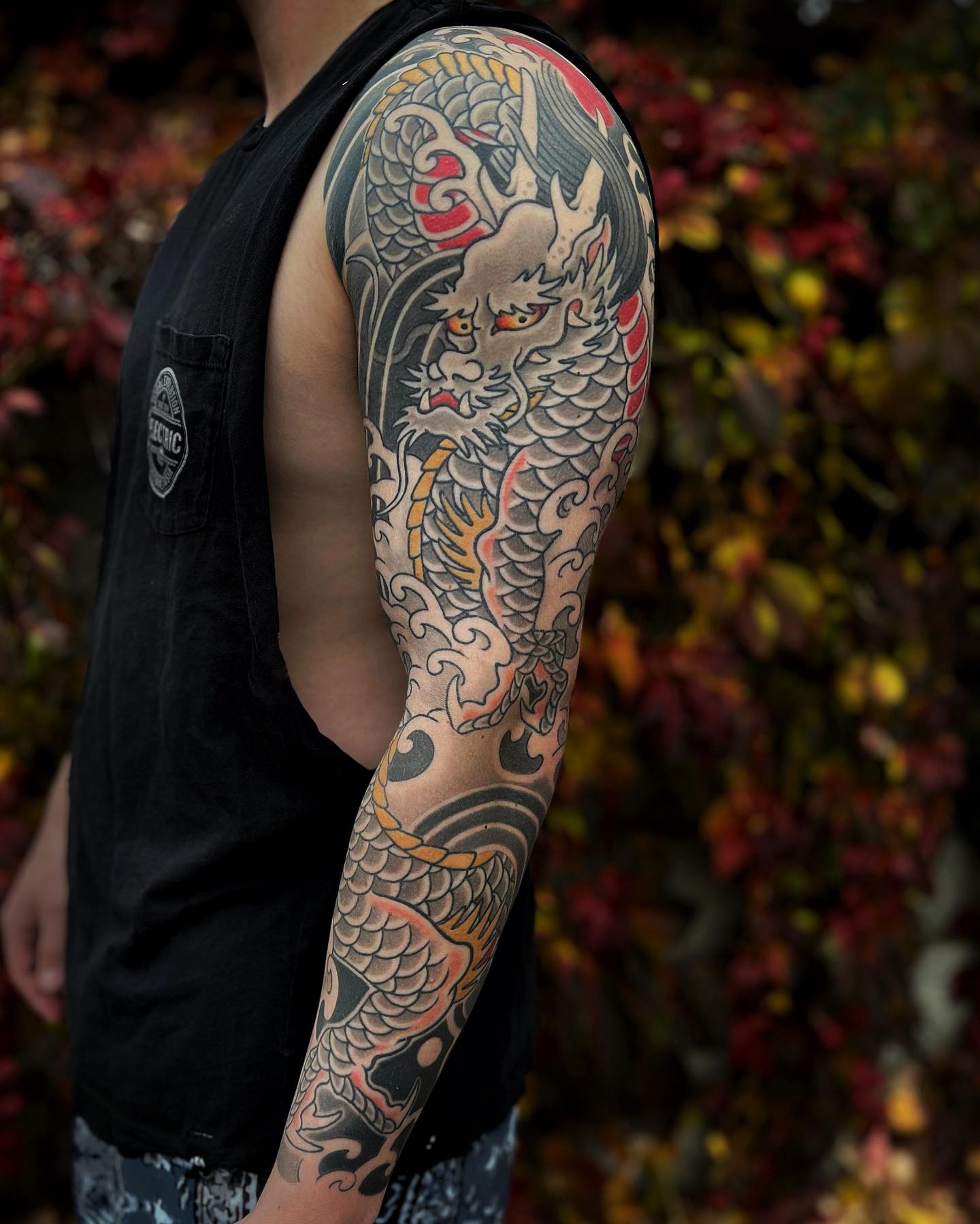
The best first tattoo is not the most meaningful one you can think of — it is the one you will still like when you stop noticing it.
I have sat with a lot of people for their first piece, and the ones who walk out happiest almost always chose something small, simple, and placed somewhere they can see it themselves.
The ideas below are all realistic starter pieces: short sessions, forgiving placements, and designs that hold up as the skin softens them over the years. If you already know you want something on the arm, our tiny wrist tattoo ideas guide narrows it down further.
None of this is about playing it safe forever. It is about giving yourself a first experience calm enough that you actually want a second one.
Which First Tattoo Style Is Right for You?
Most starter pieces fall into one of four style families. They differ less in how they look on day one and more in how they age.
| Style | Best For | Typical Sitting | How It Ages | Watch Out For |
|---|---|---|---|---|
| Fine line | Florals, script, delicate symbols | 30–60 minutes | Softens noticeably; may want a touch-up in a few years | Detail packed too tightly together |
| Bold minimal | Symbols, shapes, silhouettes | 20–45 minutes | The most forgiving of the four | Reading heavier than you expected |
| Script / lettering | A word, a name, a date | 20–60 minutes | Depends almost entirely on letter spacing | Fonts with hairline strokes |
| Small illustrative | Animals, botanicals, portraits | 1–2 hours | Well, if it was not shrunk down too far | Asking for detail the size cannot hold |
If you are torn, bold minimal is the family I steer nervous first-timers toward. It is the quickest to sit through and the least likely to need attention later.
What Actually Makes a Good First Tattoo
A good first tattoo is defined mostly by constraints, not by subject matter. Three of them do the heavy lifting.
Size is the first. A design that reads clearly at two inches will usually read clearly forever, while the same design at three-quarters of an inch will slowly close up as the lines spread. Our tattoo size guide covers where those limits sit for different subjects.
Placement is the second. Flat, low-movement areas — the outer forearm, the upper arm, the calf, the shoulder blade — hurt less, heal more predictably, and are easier for an artist to work on cleanly.
Complexity is the third, and it is where most first-timers overreach. Every extra element you add is another thing that has to survive both the tattooing and the next twenty years.
Cost tends to surprise people less than they expect. In my experience most shops have a minimum somewhere in the $80–$150 range, and a simple starter piece often lands at or near that minimum; what a small tattoo actually costs goes into more detail.
One more thing worth saying plainly: choose an artist whose healed work you have seen, not just their fresh photos. Fresh line work always looks good.
22 First Tattoo Ideas for Women
Each of these is a genuine starter piece — nothing here needs a multi-hour session or a specialist portfolio, with one deliberate exception at the end.
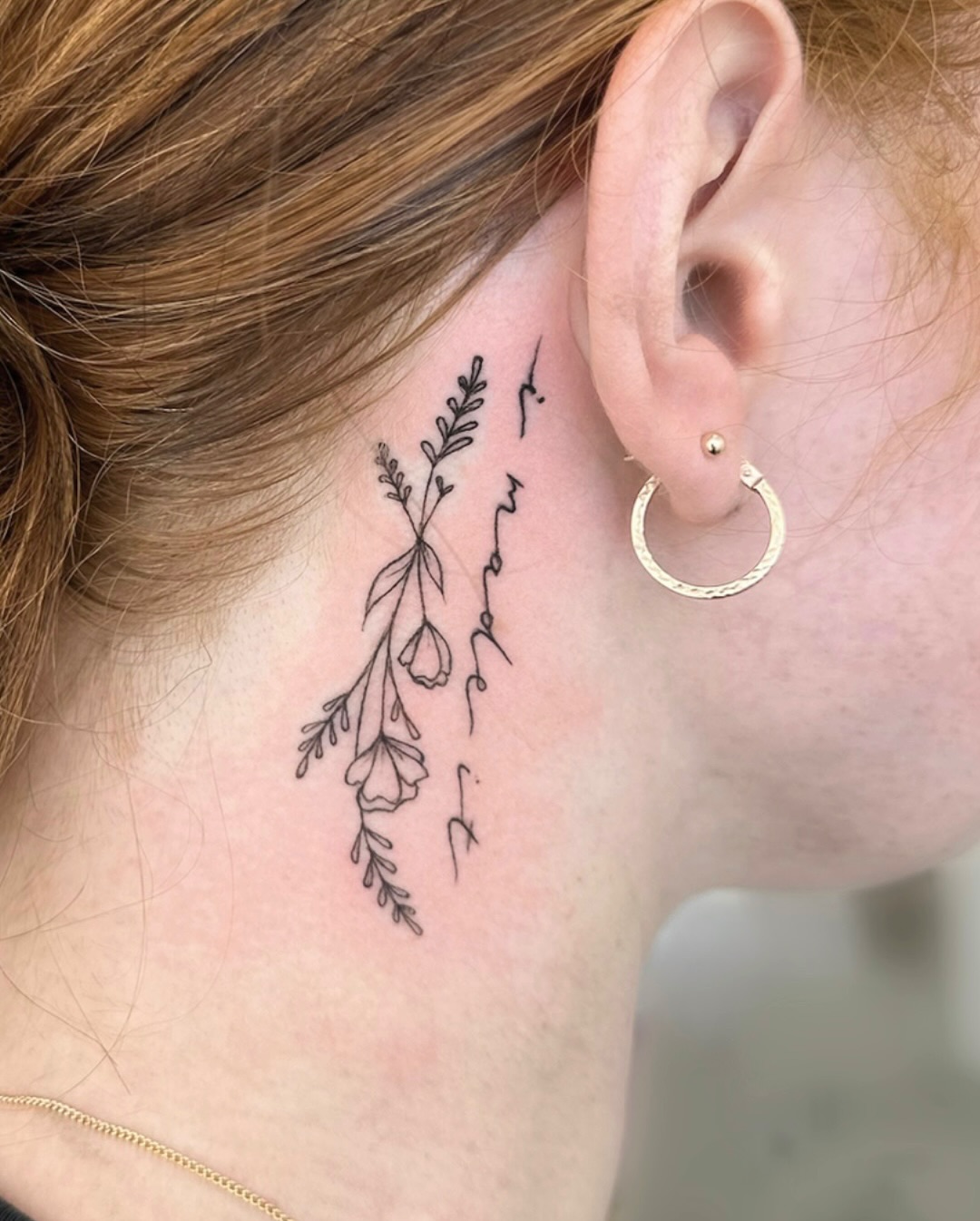
1. Fine Line Floral on the Inner Forearm
This is the piece at the top of this guide, and it is the one I recommend most often. A single stem with two or three blooms fills the inner forearm without crowding it.
The inner forearm is softer than the outer, so expect a little more sting, but it is a short sitting and the skin there heals evenly.
Ask for the stem to follow the length of the arm rather than sit across it — a vertical flow reads as intentional, a horizontal one tends to look pasted on.
Keep the leaves separated. Fine line florals fail when petals and leaves are drawn close enough to blur into one shape as they settle.
2. Small Symbol on the Wrist
A single symbol on the inner wrist is the classic first tattoo for a reason: it is quick, it is yours to look at all day, and it costs about as little as a tattoo can.
The wrist is bonier than it looks and the sensation is sharper than the forearm, but most wrist pieces are finished in under half an hour.
Sizing is the whole game here. Keep the design inside the flat area below the palm rather than letting it wrap onto the side of the wrist, where it will distort.
It is also the easiest placement to cover with a watch or a sleeve, which matters if your workplace is unpredictable about tattoos.
3. Minimal Moon Behind the Ear
A crescent behind the ear is subtle to the point of being a secret, and it is one of the fastest pieces on this list. If the shape appeals to you, moon phase tattoo ideas shows how far it can be taken.
Be honest with yourself about the pain first. The skin there is thin and close to bone, and the sound of the machine that near your ear bothers some people more than the needle does.
Keep it simple and keep it small. Behind-the-ear skin is not generous with detail, and touching up a faded piece there is fiddly.
Expect it to soften faster than an arm piece — it sits in a spot that gets more incidental sun and friction than people assume.
4. Single Word on the Collarbone
One word along the collarbone is elegant, and it is a first tattoo that grows on people rather than off them.
The trap is font choice. Scripts with hairline strokes look beautiful on paper and thicken unpredictably in skin, so pick a face with consistent weight.
The collarbone is bone-adjacent and does register more sharply than the arm, though a single short word rarely takes long enough for that to matter.
Have the artist stencil it and then look in a mirror from a few steps back. Words that read perfectly up close sometimes sit at an odd angle from a normal distance.
5. Small Star Cluster
A scattered cluster of small stars is one of the most forgiving designs a beginner can pick, because there is no single line the whole piece depends on.
It also expands gracefully. Plenty of people add to a cluster over the years, which makes it a good first tattoo if you suspect you will want more.
Spacing is what keeps it clean. Stars crowded together will eventually read as one grey smudge rather than several distinct shapes.
The shoulder, upper arm, and the back of the forearm all work well. Avoid the very edge of the collarbone, where the shapes get pulled out of alignment.
6. Tiny Heart
A tiny heart is unfussy, quick, and much harder to regret than a design loaded with specific meaning.
It is often the shortest sitting on this list — for many people the needle is on the skin for only a few minutes.
Outline or solid fill both work. Solid holds its shape more reliably over decades; an outline reads lighter and more delicate.
Good placements are the wrist, the inner arm, the ankle, and the finger — although fingers are the one spot I would talk a first-timer out of, since ink there fades and patchy healing is common.
7. Botanical Sprig on the Ankle
A slim botanical sprig curving with the ankle bone is one of the prettiest small pieces there is, and it suits people who want something visible in summer and hidden the rest of the year.
The ankle is more sensitive than the arm — thin skin over bone almost always is — but the sittings are short.
Ask for the design to curve with the bone, not across it. A sprig that cuts straight over the ankle will look crooked the moment you stand differently.
Ankle pieces are also the ones I most often see healed badly, purely because socks, shoes, and walking all rub the area. Loose footwear for the first week makes a real difference.
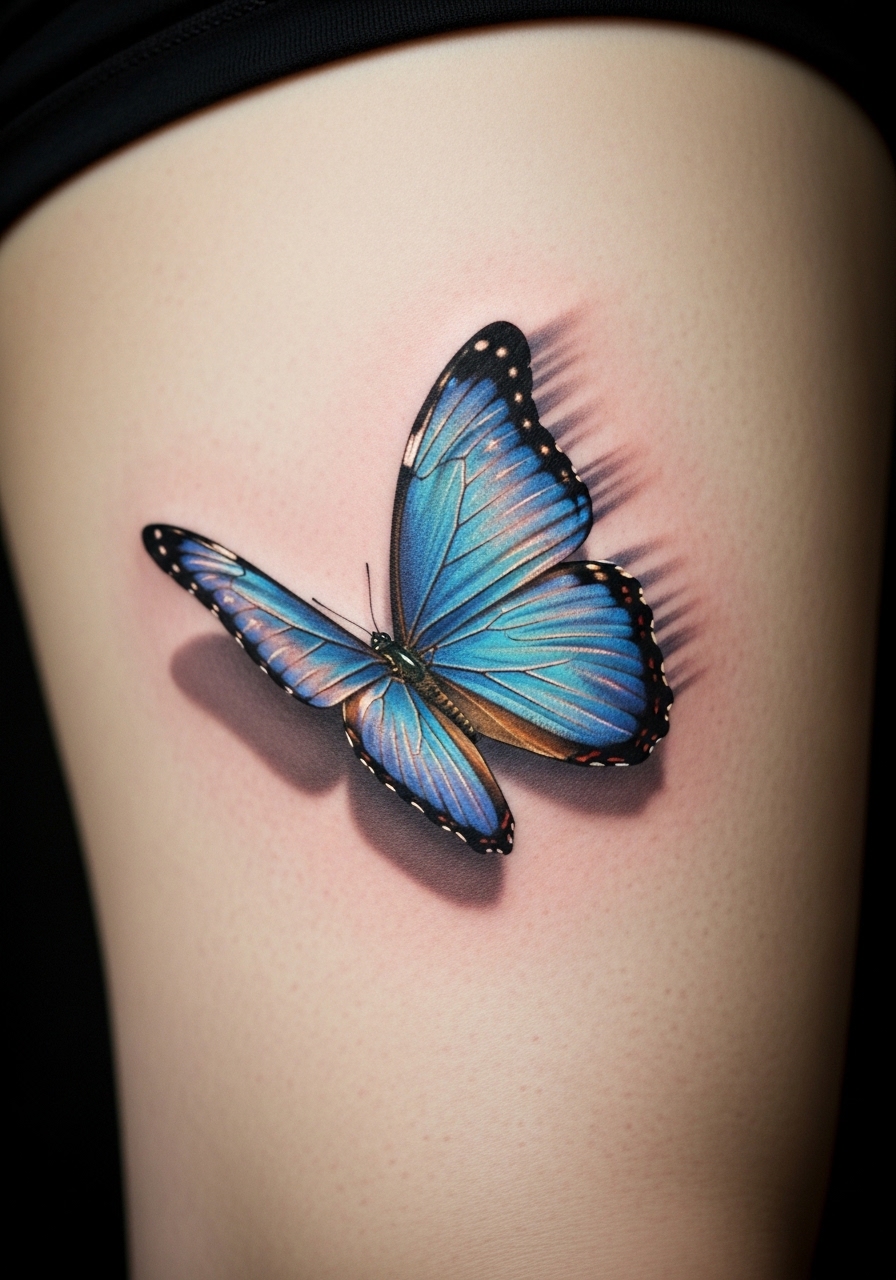
8. Simple Butterfly
The butterfly is a first tattoo people sometimes apologise for choosing, and they shouldn’t. Done simply, it is a genuinely well-suited beginner design.
The reason it works is structural: symmetrical wings give the artist clean shapes to build on, and outline-plus-negative-space designs age beautifully.
Keep it under three inches or so and resist the urge to fill the wings with fine internal pattern, which is the part that tends to blur.
The shoulder blade, the outer forearm, and the upper arm are the placements where I have seen these hold up best.
9. Small Wave
A small wave is a few confident curves and nothing else, which makes it close to the ideal first tattoo from a technical standpoint.
There is no fine internal detail to lose, no lettering to space, and no symmetry to get wrong.
It sits well almost anywhere flat — the forearm, the ankle, the ribs if you are feeling brave, the back of the arm.
Ask for varied line weight rather than one uniform thickness. A wave drawn with a heavier base and a lighter crest reads as movement instead of a squiggle.
10. Birth Flower
A birth flower gives you personal meaning without committing to a name or a date, which is exactly the balance a lot of first tattoos are looking for.
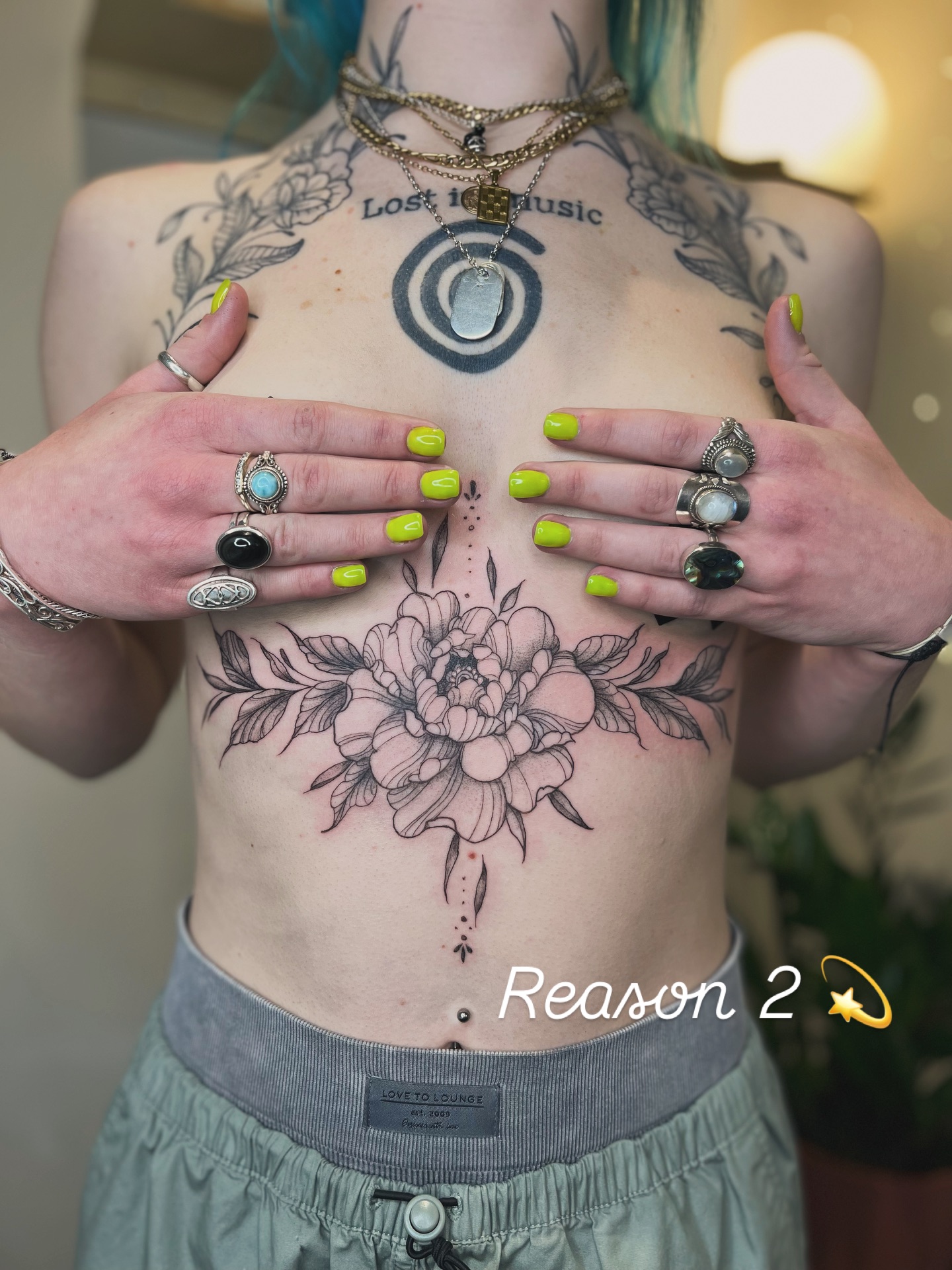
Each month has an associated bloom, and some are far friendlier to small tattoos than others. Larkspur, narcissus, and daisy simplify well; a peony really wants room to breathe.
Have the artist open the petals out slightly rather than drawing them tightly overlapped, so the shape stays legible as the lines soften.
This is also one of the easiest pieces to extend later, since a single stem can grow into a forearm arrangement without looking like an afterthought.
11. Roman Numerals
Roman numerals turn a date into a design, and they read as considered rather than sentimental.
Spacing matters more than the font. Numerals set too close together become a solid bar over time, and the individual characters stop being readable.
The inner forearm, the ribs, and the back of the upper arm all give you a long straight run of skin, which is what this design needs.
Check the numerals twice before the needle touches you. I have seen more errors in Roman numeral tattoos than in any other lettering, and they are not easy to fix.
12. Small Elephant
A small elephant is a first tattoo that carries weight without needing an explanation, and it works at a size that keeps the session short.
The design is more demanding than the simple shapes above, since a little shading is what gives the body form. Budget an hour rather than twenty minutes.
Keep the ears and the trunk generous. Shrink the piece too far and those are the features that stop being recognisable first.
The outer forearm and the upper arm suit it best — flat areas where soft shading heals evenly.
13. Arrow
An arrow is about as simple as a tattoo gets, and it suits the long straight runs of skin that beginners tend to have available.
Because the whole piece is a single clean line, it is worth choosing an artist whose straight lines you have actually looked at in healed photos.
The forearm, the outer upper arm, and the side of the calf all give the line somewhere to go without crossing a joint.
Avoid crossing a wrist or elbow crease. Skin that folds constantly is where straight lines lose their crispness fastest.
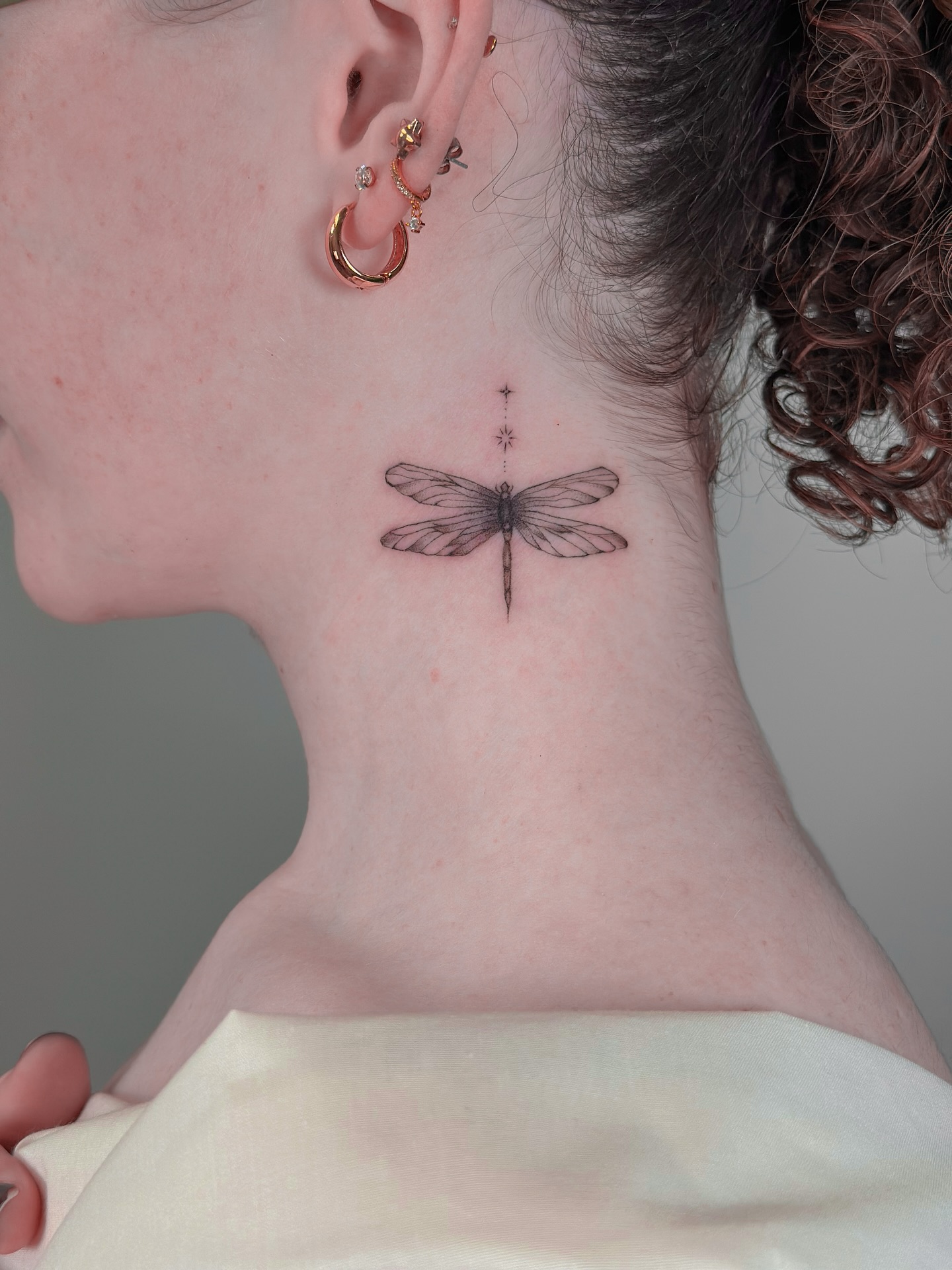
14. Small Dragonfly
A dragonfly gives you delicate wings and a clear silhouette in one design, and it stays interesting at a small size in a way many insects do not.
The wings are where the care goes. Detail spaced too tightly will bleed together within a couple of years.
Two inches is roughly the floor for a dragonfly with any wing detail at all. Below that, ask for a simplified version instead of a shrunken one.
The shoulder, the upper back, and the outer forearm all give the wings enough flat room to sit properly.
15. Infinity Symbol
The infinity symbol is a genuinely easy first tattoo: one continuous loop, no fill, no lettering.
The whole piece depends on the smoothness of that loop, which sounds trivial and is not — a wobble is very visible in a design this bare.
It is often combined with a small word or a heart at the crossover. That works, but each addition is one more element to keep clean at a small scale.
The wrist and inner forearm are the natural homes for it, since both give a flat run of skin wide enough for the loop to stay even.
16. Sun Outline
A sun outline with short rays is bold enough to stay readable for decades and simple enough to finish in one short sitting.
Ask for the centre to be left generous. A sun with a tight middle and many rays will slowly close up into a dark spot.
Fewer, longer rays almost always age better than many short ones, and they suit a small piece better too.
The shoulder, the upper arm, and the back of the calf all give the circular shape a flat area where it will not distort.
17. Small Feather
A feather is soft, adaptable, and one of the more personal-feeling small designs. Our guide to feather tattoo ideas for women covers the variations in more depth.
Light stippled shading holds up better here than solid black fill, and it is easier to touch up years later if you want to.
Keep the barbs on the vane separated rather than drawn as a solid mass, which is the detail that decides how it looks at year five.
The forearm and the ribs are the two placements I see most, though the ribs are a big step up in discomfort for a first piece.
18. Lotus Flower
A lotus is symmetrical, structured, and reads clearly even when small, which makes it a stronger beginner choice than its reputation suggests. There is a fuller range in our lotus flower tattoo designs guide.
That symmetry is also the catch: on a curved area, a symmetrical design will look off-centre from certain angles no matter how carefully it is placed.
Flat placements are your friend — the outer forearm, the shoulder blade, the sternum if you want it central.
Ask for the petal count to be kept modest. A lotus with too many overlapping petals loses its clean geometry as the lines widen.
19. Small Mountain Range
A small mountain range is angles and negative space, which is close to the ideal recipe for a design that stays sharp.
It suits people who want something meaningful without it being obviously sentimental, and it works at almost any size.
Three or four peaks is usually the sweet spot. More than that and the range starts to read as a jagged line rather than mountains.
The forearm is the natural placement, since a horizontal design needs a horizontal run of skin to sit on properly.
20. Initials
Initials in fine script are discreet, quick, and easy to keep private — a good option if you want the experience of a first tattoo without announcing it.
Letter spacing is the one thing to get right. Two initials set close together will merge over the years in a way that is difficult to correct.
I would think carefully before tattooing a partner’s initials as a first piece. Family, children, and people you have lost are the versions of this I see people stay happy with.
The inner forearm, the wrist, and the back of the upper arm all work; the ribcage suits a slightly larger set.
21. Small Crown
A small crown is tidy geometry — clean angles, clear silhouette, nothing that needs delicate internal detail.
The points need space between them. Crowded points will fill in and turn the top of the design into a solid band.
It sits well on the wrist, the back of the arm, and behind the shoulder, all of which are flat enough to keep the shape square.
Skip the tiny gemstones if you are going small. That is the detail that disappears first, and the crown reads better without it anyway.
22. Fine Line Portrait of Your Pet
This is the deliberate exception on the list. A pet portrait is not a technically easy first tattoo, but it is one of the few that almost nobody regrets.
It needs a specialist. Look specifically for healed fine line portrait work in an artist’s portfolio, not fresh photos, and expect to wait for an appointment.
Budget properly: two to three hours is normal, and the cost reflects the skill rather than the size.
Bring several clear, well-lit photos rather than one favourite. Artists work from structure, and a single low-light phone picture rarely gives them enough to build from.
Variations Worth Considering Before You Book
Most first tattoos change shape a little between the idea and the appointment. These are the four adjustments that come up most often.
Go One Size Up
Almost nobody I have spoken to wishes their first tattoo were smaller. A fair number wish it were slightly bigger, because the detail would have held better.
Going up half an inch usually costs nothing extra and buys the design years of legibility.
Colour or Black and Grey
Black and grey is the safer starting point. It ages more predictably, it suits every skin tone, and it is easier to touch up.
Colour is not off-limits for a first tattoo, but ask your artist how a given pigment tends to settle on your skin rather than assuming it will look like the reference photo.
Move It Somewhere Less Exposed
Sun is the main thing that ages a tattoo, and the hands, forearms, and feet get the most of it.
If two placements appeal to you equally, the more covered one will usually still look sharper in a decade.
Matching Pieces With Someone
Matching first tattoos work best when each piece stands on its own as well as it does alongside the other.
Design them so that neither one becomes meaningless if life goes a different direction. That is not pessimism, just good design.
Getting Through the Appointment and the Healing
Eat a real meal within a couple of hours of your appointment and drink water beforehand. Feeling faint during a first tattoo is common and almost always traceable to an empty stomach; our tattoo pain management tips guide covers the rest.
Wear something that gives easy access to the area without you having to undress awkwardly, and bring a jumper — shops are often colder than you expect once you have been still for a while.
Follow your artist’s aftercare instructions rather than advice you find online, since they know what they used on you. If they send you home in a second-skin bandage, healing under Saniderm explains what to expect from that process.
Keep it clean, keep it out of the sun, do not pick at it, and do not soak it — no baths, pools, or hot tubs until it has fully healed. The American Academy of Dermatology publishes straightforward guidance on caring for tattooed skin if you want a second reference.
See a doctor rather than your artist if something looks genuinely wrong — spreading redness, heat, pus, or a fever are not normal healing. The Mayo Clinic outlines the infection and allergic-reaction risks worth knowing about, and the FDA guidance on tattoo inks is a reasonable primer on inks if you have sensitive skin or a history of reactions. Nothing in this article is medical advice.
Common First Tattoo Mistakes
The mistakes I see repeated are rarely about taste. They are about process.
Booking on impulse with whoever is available is the big one. Waiting three months for the right artist is a much smaller cost than living with work you do not love.
Shrinking a design to keep the price down is the second. If the budget is tight, simplify the design rather than miniaturising it — our roundup of small meaningful tattoos for women is full of pieces that stay strong when kept simple.
Copying someone else’s tattoo exactly is the third. Most artists will happily use it as a reference, but a good one will want to redraw it so it fits your body and their hand.
And treating it as a decision you have to get perfect is the fourth. Most people with a lot of tattoos will tell you the first one is not their favourite, and that is fine. If you are shopping ideas for someone else, first tattoo ideas for men covers the same ground from a different angle.
Frequently Asked Questions
How much does a first tattoo usually cost?
Most small starter pieces land at or near the shop’s minimum, which in my experience tends to sit somewhere in the $80–$150 range depending on the city and the artist’s demand. Larger or more detailed work is usually quoted by the hour instead. Always ask for the price before you sit down, and factor in a tip if that is customary where you live. If an artist you love quotes higher than you expected, waiting and saving is generally the better call.
Where does a first tattoo hurt the least?
The outer forearm, the outer upper arm, the calf, and the shoulder are the placements most people find most manageable, because there is muscle and fat between the needle and the bone. Areas over bone or thin skin — ribs, sternum, ankle, behind the ear, the top of the foot — register more sharply. Pain tolerance varies a lot between individuals, so treat these as tendencies rather than promises. For a small first piece the session is usually short enough that placement matters less than people fear.
How long does a small tattoo take to heal?
The surface usually looks settled within two to three weeks, while the deeper layers of skin generally take a few months to finish healing. During the first stage you can expect some redness, tightness, and flaking, all of which is normal. Keep it clean, moisturised as your artist directs, and out of direct sun. If you see spreading redness, heat, pus, or you develop a fever, contact a doctor rather than waiting it out.
Should I design my own first tattoo?
Bringing your own idea is great; bringing your own finished drawing is usually not. Artists work with how ink behaves in skin and how a design sits on a moving body, and that knowledge is most of what you are paying for. Bring references, describe the feeling you want, and let them draw it. In my experience the pieces people are happiest with a decade later are almost always the ones where the artist was given room to adjust the design.
Will a small fine line tattoo fade quickly?
Fine line work does soften faster than bold work, because there is less ink in the skin to begin with. That usually shows up as gentle blurring over several years rather than sudden disappearance, and a touch-up can restore it. Sun exposure is the single biggest accelerator, so sunscreen once it is healed genuinely extends its life. If long-term crispness matters more to you than delicacy, a slightly bolder line weight is the trade worth making.
Quick Summary
- Pick something small, simple, and placed somewhere flat — those three constraints do most of the work.
- Bold minimal designs are the most forgiving family for a first tattoo; fine line is the most delicate.
- Go one size up if you are hesitating. Almost nobody wishes their first tattoo were smaller.
- Choose the artist before the design, and judge them on healed photos rather than fresh ones.
- The outer forearm, upper arm, calf, and shoulder are the gentlest placements to start with.
- Eat beforehand, follow your artist’s aftercare, and keep the piece out of the sun while it heals.
- See a doctor, not a tattooist, for spreading redness, heat, pus, or fever — that is not normal healing.
- Your first tattoo does not have to be your best one. It has to be one you enjoyed getting.