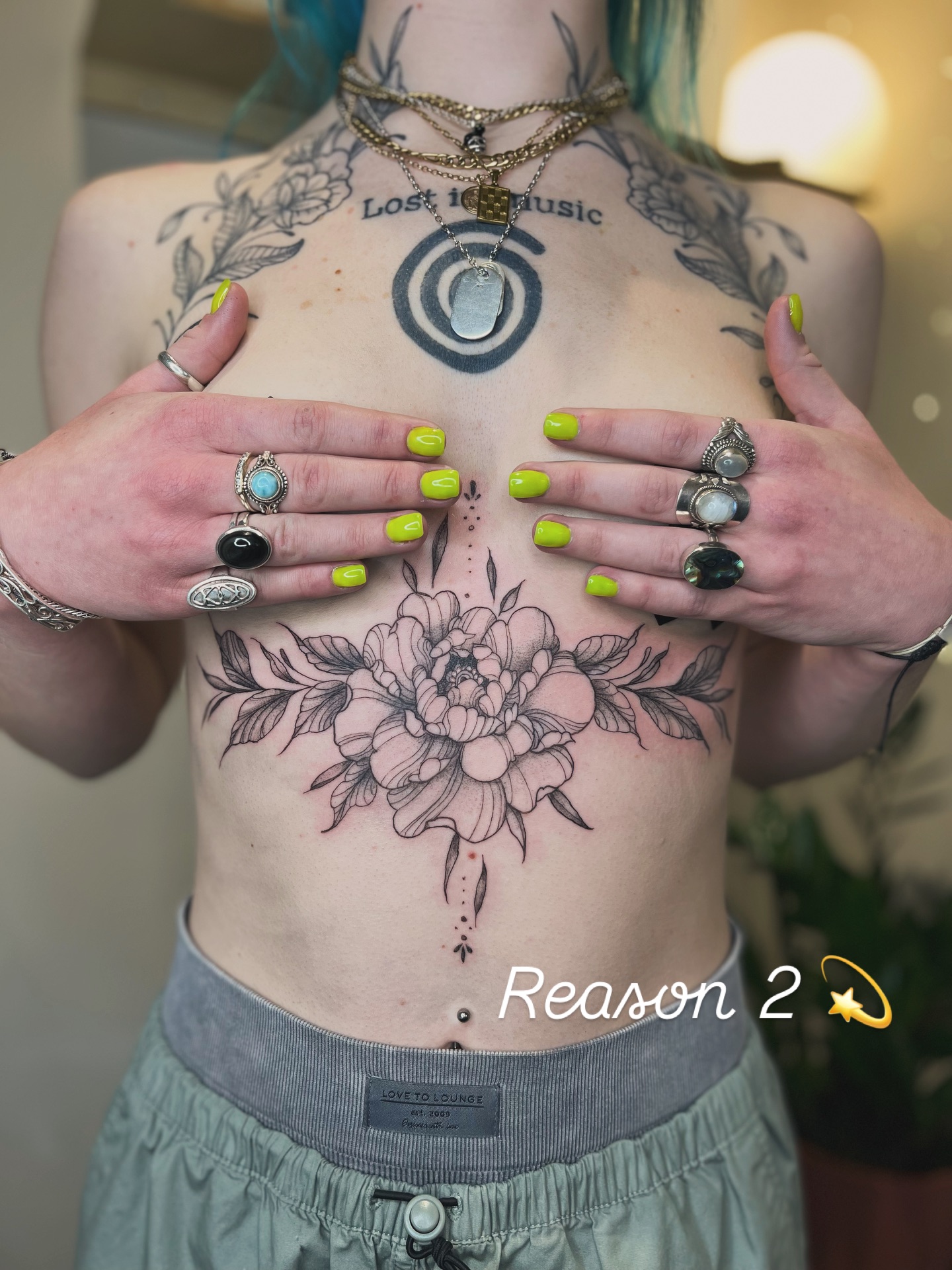
A small neck tattoo is the most visible piece of small work you can get, and that single fact should shape every decision you make about it. Size, placement and line weight all matter more here than they would on a forearm.
I have sat with a lot of people who wanted something dainty on the neck and walked out with something slightly larger than they planned, because the artist knew a two-centimetre design would close up within a few years.
That is the tension worth understanding before you book. The neck rewards restraint, but it punishes designs that are genuinely too small to hold their detail.
Below are 21 ideas I keep coming back to, grouped roughly from the most discreet to the boldest, along with honest notes on pain, healing and how each one tends to age. If you want the wider view first, our overview of neck tattoos for women covers larger pieces too.
Which Small Neck Placement Is Right for You?
The four spots below behave very differently, and most of the regret I hear about comes from choosing the wrong one rather than the wrong design.
| Placement | How visible | Relative pain | Best suited to |
|---|---|---|---|
| Behind the ear | Hidden by most hair worn down; visible when tied up | Sharp but brief — thin skin over bone | Very small symbols, single motifs, first neck tattoos |
| Nape (back of neck) | Easy to cover with hair or a collar | Moderate — the flattest, most forgiving neck skin | Symmetrical designs, short rows, wider motifs |
| Side of the neck | Openly visible in most clothing | High near the collarbone and jaw | Script, vines, anything that follows a vertical line |
| Under the jaw / throat | Always visible; hardest to cover | Highest of the four for most people | Experienced collectors, bold simple shapes |
What Actually Affects How a Small Neck Tattoo Ages
Neck skin is thinner than the skin on your arms and it moves constantly, which is the short version of why small work here needs a little more room than you expect.
In my experience the single biggest predictor of a good five-year outcome is line weight. A design drawn with slightly heavier lines at 5 cm will almost always look better in a decade than the same design crammed into 2.5 cm.
Ink spreads a little over time in every tattoo, and tight internal gaps are the first thing to close. That is why dense mandalas and heavily detailed animals rarely work at a genuinely small neck size.
Sun exposure is the other factor people underestimate. The nape and the side of the neck catch a lot of daylight, and unprotected black linework fades to a softer grey faster there than on covered skin.
None of this is a reason to avoid the neck. It is a reason to let the artist set the minimum size rather than negotiating them down to the smallest version they will agree to.
21 Small Neck Tattoo Ideas for Women
1. Fine Line Floral Behind the Ear
A single stem — lavender, a small rose, a sprig of baby’s breath — tucked behind the ear is the design I see requested more than any other, and for good reason.
It follows the natural curve of the skull, it disappears completely under hair worn down, and it does not need much width to read clearly.
Ask for the stem to run vertically rather than diagonally. Diagonal florals behind the ear tend to look tilted once the piece settles.
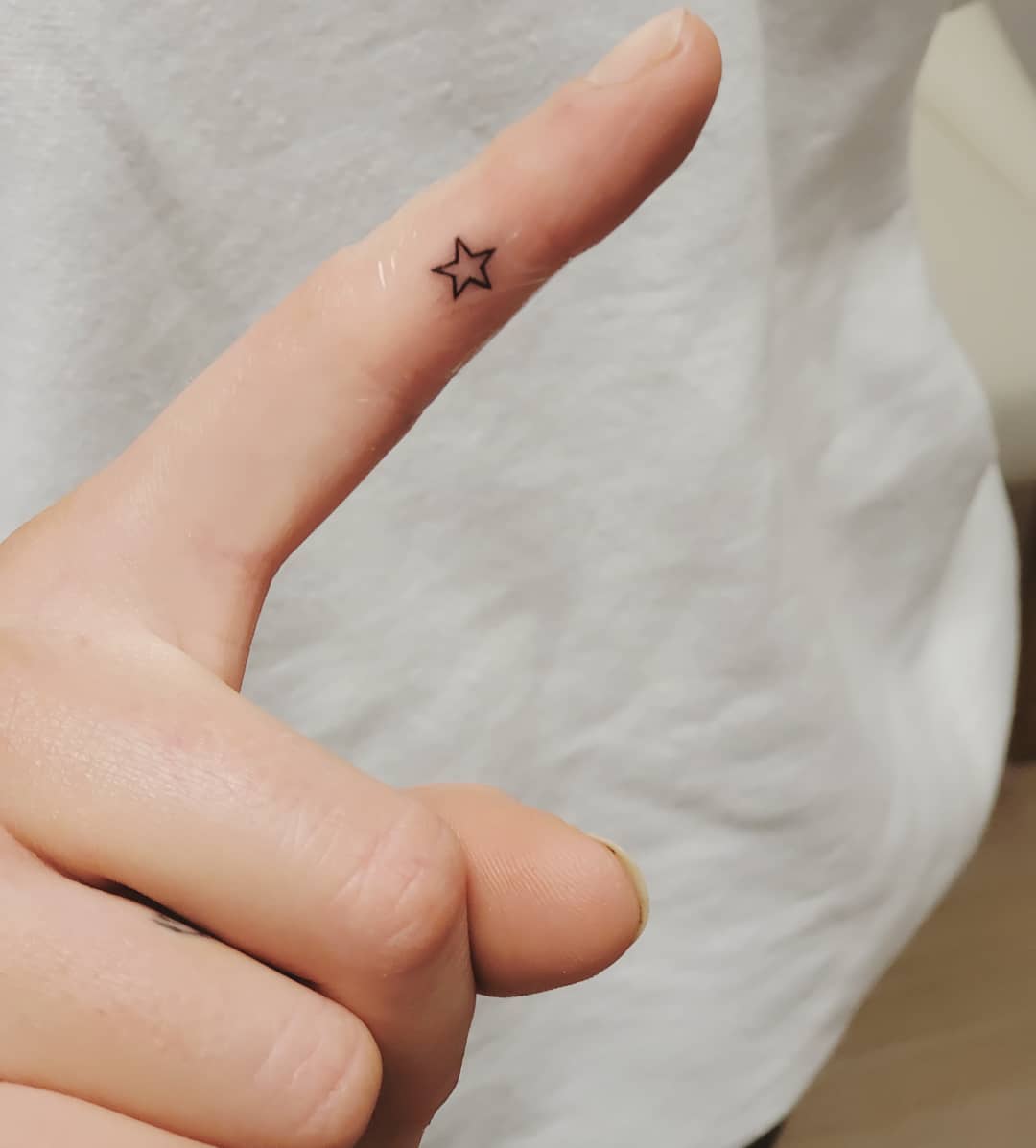
2. Small Star or Constellation
A short constellation — three to seven dots with thin connecting lines — is one of the few genuinely tiny designs that ages predictably.
There is no internal detail to close up, so the worst that happens is the dots soften slightly.
If you want a specific star pattern, bring a reference image. Most artists will not know your birth constellation from memory, and an approximate version is not what you are paying for.
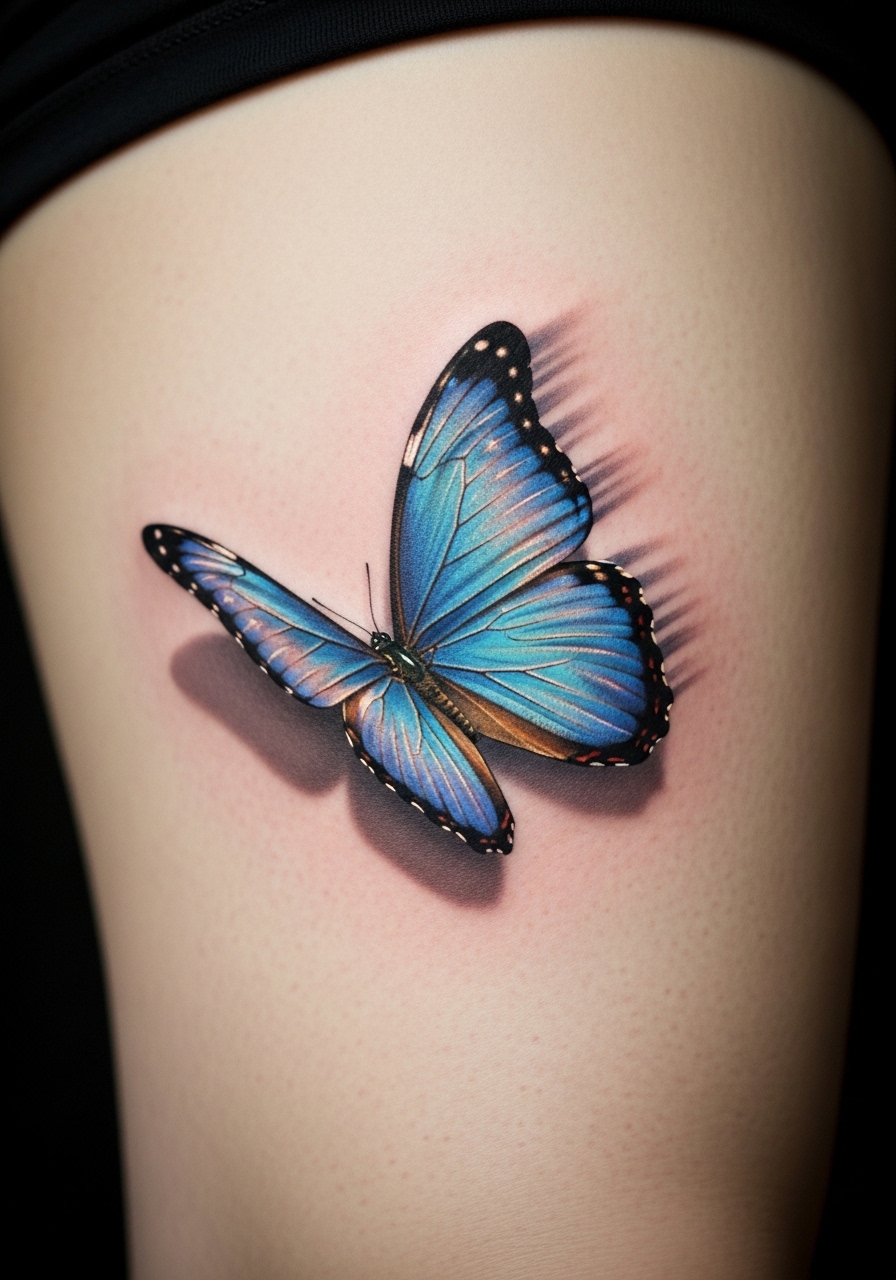
3. Nape Butterfly
A butterfly centred on the nape is symmetrical, which suits the placement well because the spine gives the artist a natural centre line.
Keep the wing detail simple. The lace-style butterflies that look stunning on a thigh lose their internal pattern quickly at neck scale.
If the symbolism matters to you, our piece on what a butterfly tattoo means is worth a read before you commit to a style.
4. Script Quote on the Neck
Short script down the side of the neck is striking, but it is also the design I would push back on hardest if it were more than three or four words.
Letters need space between them or they merge. Every artist I have asked says the same thing: cut the quote down, then cut it again.
A single word or a name in a clean italic will outlast a full sentence in a delicate hand-lettered script by a wide margin.
5. Tiny Moon Phase
Three to five moon phases in a row across the nape is a design that holds up unusually well, because the shapes are simple and the spacing is generous by definition.
I would avoid rendering the crescents with heavy stippling. Solid black fills and clean outlines both age better than dot shading at this size.
It also scales: you can start with three phases and add to the row later without the piece looking patched together.
6. Vine or Tendril
A thin vine running from behind the ear down toward the collarbone is flattering because it follows the direction the neck already moves in.
Vines are forgiving. The eye reads the overall flow rather than individual leaves, so a little softening over the years barely registers.
Ask for the leaves to vary slightly in size. Perfectly identical leaves make the whole thing look printed rather than drawn.
7. Bird in Flight
A single small bird — a swallow, a swift, a simple silhouette — is about as small as a recognisable figure can go on the neck.
One bird almost always looks better than three. The trio of shrinking birds was everywhere for a decade and the smallest one is usually the first thing to blur.
There is more on this in our guide to the bird tattoo on the neck if you want to see the range.
8. Small Infinity Symbol
The infinity symbol is simple enough to work at almost any size, which is both its strength and the reason it is worth thinking twice about.
If you want it, I would ask for a slightly irregular hand-drawn version rather than a perfect mathematical loop. It reads as a tattoo rather than a decal.
Adding a name or date through the loop is common, but it reintroduces the spacing problem that script has. Keep the text short.
9. Tiny Crown
A small crown behind the ear stays hidden under most hairstyles and carries a lot of meaning in very few lines.
Three or five points work better than a detailed heraldic crown, which loses its shape quickly at this scale.
Our minimal crown tattoo guide has more shape options if you want something less traditional.
10. Lotus Bud
A closed lotus bud is a smarter small-scale choice than an open lotus, because an open bloom needs internal petal separation to read at all.
Centred on the nape it lines up neatly with the spine, which makes minor asymmetry much less noticeable.
In my experience this one suits people who want something with meaning but do not want it obviously readable to strangers.
11. Initial or Monogram
A single initial behind the ear is quiet, personal and easy to place. It is also the design most likely to be drawn too small.
Serif letterforms hold up better than thin copperplate script, because the internal counters — the gaps inside letters like a and e — stay open longer.
Two initials side by side is usually the practical limit before you need to move to a larger placement.
12. Small Cross
A plain cross is one of the very few designs that essentially never dates, which is a real advantage for a visible placement.
Even line weight matters more than size here. An uneven cross looks wrong in a way that an uneven flower does not.
Behind the ear and low on the nape are both common. The side of the neck makes it considerably more visible day to day.
13. Hummingbird
Hummingbirds are beautiful and genuinely difficult small. The wings carry the whole design and they need real space to work.
If you love the motif, I would go slightly larger than your instinct says — usually 6 cm or more — or accept a simplified silhouette instead.
This is a good example of a design where the artist saying “not at that size” is them protecting your tattoo, not upselling you.
14. Lavender Sprig
Lavender running along the nape is one of my favourite small neck designs because the shape is naturally long and thin, which suits the placement exactly.
The individual buds can be simplified to short dashes without losing the plant. That simplification is what makes it age well.
It also pairs easily with later additions if you decide to build outward toward the shoulders.
15. Roman Numeral Date
A date in Roman numerals is compact, personal and not immediately legible to strangers, which many people like.
Keep the stroke weight even and the numerals upright. Slanted Roman numerals on a curved surface tend to look crooked rather than stylised.
Double-check the conversion before your appointment. I have seen more than one incorrect numeral and it is an expensive thing to fix.
16. Small Feather
A feather is a soft, flowing shape that suits the neck, but the delicate barb detail is exactly the sort of thing that blurs.
Ask for the barbs to be drawn as distinct separated strokes rather than fine hatching. It looks bolder on day one and far better in year eight.
Our feather tattoo ideas cover a range of styles if you want to compare before deciding.
17. Snake Curling Behind Ear
A small snake curling around the base of the ear uses the shape of the skull as part of the composition, which is a clever use of the placement.
Simple scale suggestion — a few curved lines rather than a full pattern — is the right call at this size.
It reads bolder than most designs on this list, so it suits people who want something visible rather than discreet.
18. Small Geometric Shape
A triangle, a thin circle, a small diamond outline. Geometric work is clean and modern and it sits well on the flat part of the nape.
The catch is that geometry is unforgiving: a slightly wobbly circle is obvious in a way that a slightly wobbly leaf is not.
Ask to see healed photos of the artist’s geometric work specifically, not just fresh ones. Straight lines are where technique shows.
19. Wave or Water Line
A single curved wave line across the nape is about as minimal as this list gets, and it works because there is nothing to lose.
It suits people who want the feeling of a tattoo without a recognisable object attached to it.
Consider extending it slightly wider than feels necessary. Very short abstract lines can read as accidental rather than intentional.
20. Semicolon
The semicolon has become a widely recognised symbol of continuing your own story, associated with Project Semicolon, and it is small enough to place almost anywhere on the neck.
Because it is so small, the two marks need clear separation or they merge into a single blob over time.
If the meaning behind it is something you are currently working through, a conversation with a counsellor or doctor is worth having alongside the tattoo rather than instead of it.
21. Moth
A moth spread across the nape is the largest design most people would still call small, and the symmetry of the nape suits it perfectly.
Luna moths and death’s-head moths are the two most requested. The luna’s long tails give it a graceful vertical line down the neck.
Keep the body detail simple and let the wing shape carry it. Wing pattern is the first thing to soften on any moth tattoo.
Variations Worth Considering
If none of the 21 is quite right, these three directions cover most of what people end up choosing instead.
Micro Placements Instead of Micro Designs
Rather than shrinking a design, move it somewhere smaller-looking. A normal-sized motif tucked into the hollow behind the earlobe reads as tiny without actually being tiny.
This is the single most useful piece of advice I give people who want something “really small”. You get the discretion without the ageing problem.
Colour and Fine Line Alternatives
Soft colour — muted greens, dusty pinks, pale amber — can work on the neck, though it generally needs more frequent touch-ups than black.
Fine line black remains the safest choice for small neck work. If you want colour, ask the artist how their colour work has healed on necks specifically, since the answer varies a lot by technique and by skin tone.
Building a Piece Over Time
Several of these designs — moon phases, vines, constellations — are additive by nature. Starting with one element and extending it over a few years is a genuinely good strategy.
Plan the eventual shape with your artist at the first session, even if you only get a third of it. Retrofitting a composition around an existing piece is much harder than designing for it. Our roundup of dainty designs for women has more options that extend well.
Aftercare and Healing for a Neck Tattoo
Neck tattoos heal in roughly the same two to four weeks as anywhere else on the body, but they are harder to protect because you cannot see them and everything touches them.
Hair, collars, seatbelts, pillowcases and hair products all land on a healing neck tattoo. In my experience the people who have the smoothest heals are the ones who tied their hair up for a fortnight and switched to a clean pillowcase every couple of nights.
Wash gently with fragrance-free soap, pat dry, and apply a thin layer of whatever your artist recommended. The American Academy of Dermatology and its guidance on keeping new tattoos clean and moisturised is a reliable starting point.
Once healed, sunscreen is the thing that actually preserves the line work. The US Food and Drug Administration notes that sun exposure is a common cause of tattoo fading and irritation, and the neck gets more of it than almost anywhere else.
If you notice spreading redness, swelling, heat, pus or a fever, stop treating it as a normal heal and contact a doctor. Infections and allergic reactions to tattoo ink are uncommon but real, and neither is something to manage from a blog post. The Mayo Clinic has a plain-language overview of the risks worth reading before you book.
Still Not Sure? Common Mistakes to Avoid
Going too small is the mistake I see most often, and it is almost always driven by nerves rather than by design preference.
Choosing the side of the neck when you meant the nape is the second. Sit in front of a mirror with a temporary marker and look at it from the angles other people see you from, not just straight on. Our guide to back of the neck placements is useful for picturing the difference.
Picking a design for the placement rather than for the meaning is the third. If the symbol matters, start from small meaningful tattoos and then find a placement that fits it.
And underbudgeting. A small neck tattoo usually costs more than the same design on a forearm because of the difficulty of the surface — our breakdown of what a small tattoo costs explains how artists price small work.
Frequently Asked Questions
How painful is a small neck tattoo?
Most people describe the neck as more intense than the arm but shorter in duration, simply because small designs do not take long. Behind the ear is sharp because the skin is thin over bone, while the nape is usually the most tolerable of the neck placements. The throat and the area under the jaw are generally reported as the hardest. Pain varies a lot between individuals, so treat any ranking as a rough guide rather than a promise.
How small is too small for a neck tattoo?
There is no universal number, but many artists set a practical floor somewhere around three to four centimetres for anything with internal detail. Below that, gaps between lines start to close as the ink settles over the years. Simple shapes like a semicolon, a dot cluster or a plain cross can go smaller because there is nothing inside them to lose. The honest answer is to let the artist set the minimum for your specific design.
Will a small neck tattoo affect my job?
That depends entirely on your industry and employer, and policies have loosened in many fields without disappearing. Behind the ear and low on the nape are covered by most hairstyles and collars, which is why they are the common choice for people with a professional concern. The side of the neck and the throat are not realistically coverable. If you are unsure, check your workplace policy before booking rather than after.
How long does a small neck tattoo take to heal?
The surface usually looks settled in about two to three weeks, with the deeper layers continuing to settle for a couple of months. Necks can feel itchier than other placements during the peeling stage because hair and collars keep brushing the area. Keeping it clean, moisturised and out of the sun covers most of what matters. If anything looks or feels wrong rather than just uncomfortable, speak to your artist or a doctor.
Do small neck tattoos need touch-ups more often?
Somewhat, yes. Thin skin, constant movement and sun exposure mean neck work often needs attention a little sooner than a comparable piece on a covered area. Many artists include one free touch-up within the first few months, so ask what is covered when you book. Consistent sunscreen use is the thing most likely to delay the next one.
Quick Summary
- Let the artist set the minimum size — going smaller than they advise is the most common regret with neck work.
- Behind the ear and the nape are the easiest placements to cover; the side of the neck and throat are not.
- Simple shapes with open internal space (constellations, moon phases, crosses) age best at small sizes.
- Script needs generous letter spacing, so cut the quote down to a word or two.
- Vines, lavender and moon phases can be extended over time if you want to build gradually.
- Tie your hair up and change pillowcases often during the first two weeks of healing.
- Sunscreen after healing is the single biggest factor in how long the linework stays crisp.
- Signs of infection or allergic reaction need a doctor, not a home remedy.