Cute is the most underrated quality in tattooing, and the hardest one to get right. A tattoo does not have to be confrontational, symbolic, or technically enormous to be worth the money and the healing.
Some tattoos exist because you like looking at them. In my experience that is a perfectly durable reason, and it holds up better over a decade than a meaning you chose to justify the appointment.
What follows is 22 cute tattoo ideas for women, all of them small, none of them generic. I have grouped them by mood rather than listing them flat, because that is closer to how people actually choose. If you want the wider small-scale field first, the tiny tattoo ideas guide covers the same territory with a different emphasis.
Every design below is between roughly 2cm and 6cm, and every one of them can be executed badly at that size. The section after the ideas explains how to avoid that.
Which Cute Tattoo Style Is Right for You?
Cute reads differently depending on how it is drawn. The same strawberry can look like a childhood memory or a piece of contemporary illustration depending on the style you pick.
Here is how the four styles I see most often at small scale actually behave, including how they hold up over time.
| Style | Best For | Typical Size | How It Ages | Watch Out For |
|---|---|---|---|---|
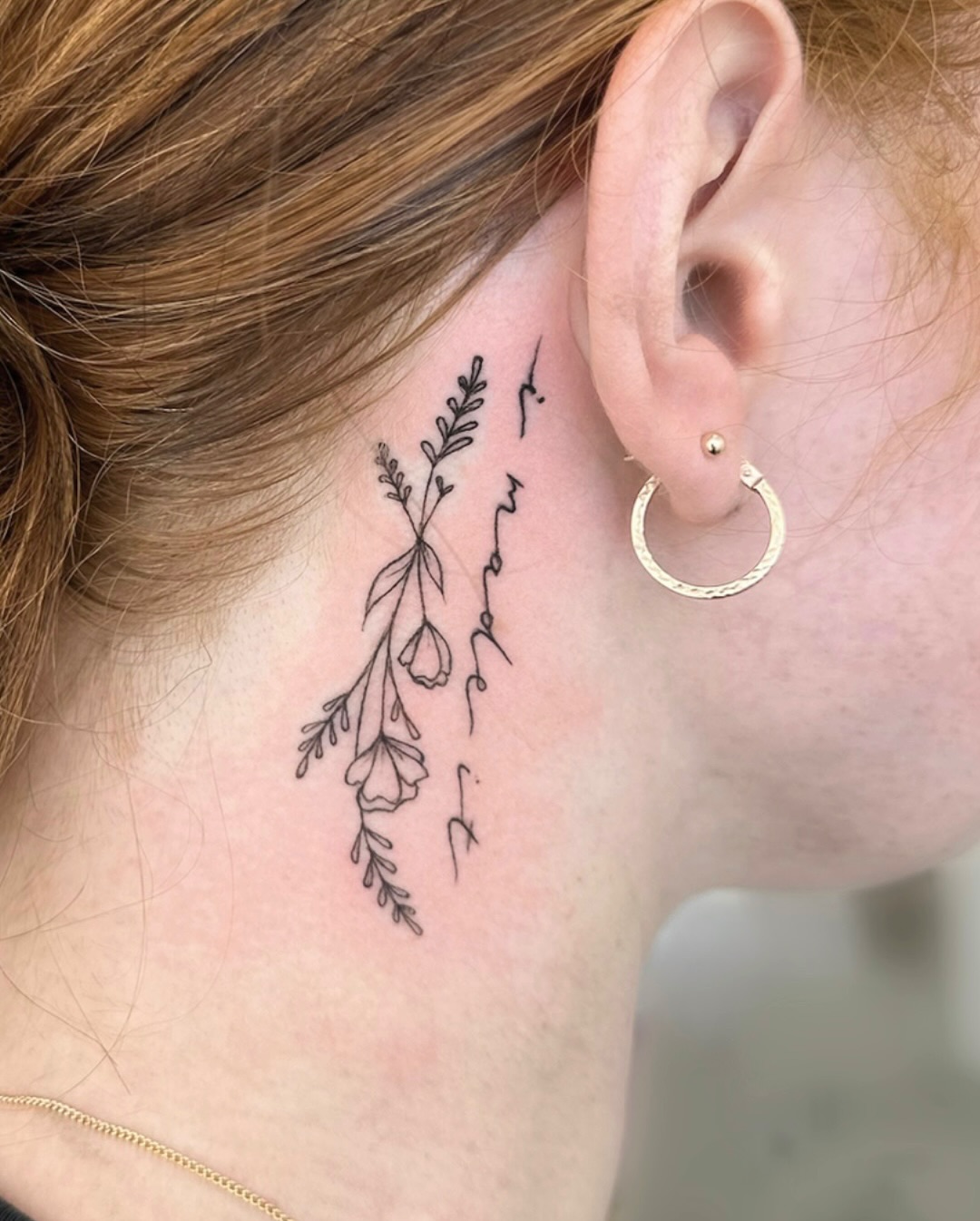
| Fine line black | Botanicals, objects, delicate creatures | 2–4cm | Lines soften and spread slightly; detail can close up | Over-detailing a design that is too small to hold it |
| Bold line / neo-traditional | Fruit, animals, anything you want legible from a metre away | 4–6cm | Usually the most forgiving of the four | Can read heavier on the body than expected |
| Micro colour | Cherries, ladybirds, sweets, anything defined by its colour | 2–4cm | Saturation fades faster than black, especially on sun-exposed skin | Pale colours on deeper skin tones may not read well |
| Soft shading / no outline | Clouds, moons, dreamy subjects | 3–5cm | Can lose edge definition without an anchor line | Needs an artist who does this specifically, not occasionally |
What Separates Cute From Forgettable
Specificity. That is the whole answer, and it is worth spelling out because it changes what you ask your artist for.
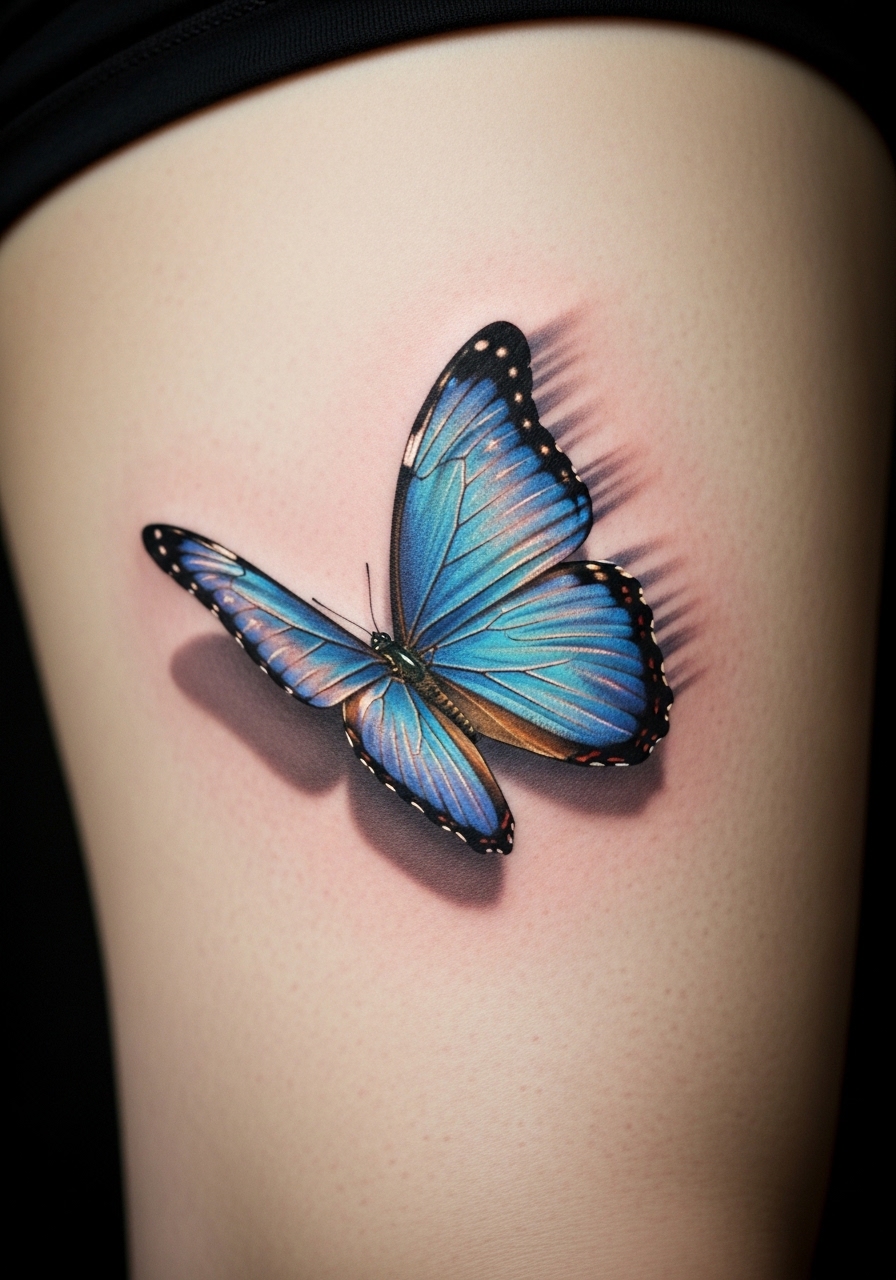
A generic butterfly is forgettable. A butterfly drawn from a particular species, with that species’ wing pattern rendered accurately, is not. A generic star is one of a thousand. A star cluster arranged as the sky looked on a date that matters is yours alone.
The difference is almost never size or complexity — it is whether the design came from somewhere real. When I have asked artists what makes a small piece satisfying to tattoo, the answer is nearly always the same: a clear reference and a clear reason.
This matters practically, too. A specific reference gives your artist something to draw from, which means fewer generic flash decisions made on the day. If you are drawn to delicate work, the fine line tattoo guide explains what that style can and cannot do at this scale.
Cost tends to follow the minimum shop charge rather than the design at these sizes, so a more considered piece rarely costs more than a rushed one — the small tattoo cost breakdown covers the usual ranges.
22 Cute Tattoo Ideas for Women, Grouped by Mood
Each group below shares a feeling rather than a subject. Read the ones that sound like you and ignore the rest.
1–4. Tiny Creatures With Real Anatomy
The small bee, the tiny frog, the hedgehog and the fox all work for the same reason: they are drawn as animals, not as cartoons of animals.
A bee at 2–4cm with correct wing venation and a properly striped abdomen rewards close attention in a way that a rounded yellow blob never will. The fox needs directional fur texture in the tail. The hedgehog needs its spines drawn as individual strokes with direction, not as a scribbled mass.
The frog is the exception and the most forgiving of the four — at small scale its pose carries the design, so a simple silhouette in a good posture beats an over-rendered one. In my experience the anatomy-first versions of these are the ones people still like at year five.
All four take well to the forearm, the back of the upper arm, or the calf. I would avoid the very edge of the wrist for the hedgehog specifically, since the spine detail closes up fastest where skin moves most.
5–7. Fruit and Sweet Things
Cherries, a strawberry and a single cookie. These are the designs most often dismissed as trivial, and they are also the ones that photograph best and age most predictably.
Two cherries on a shared stem is the strongest of the three as a shape: compact, high-contrast, and readable at any distance. It sits well on the wrist, the collarbone, or the inner arm.
The strawberry lives or dies on the seed stippling. Without it you have a red triangle. The cookie needs enough crumb texture to avoid reading as a coin — that is a genuinely hard thing to draw at 3cm, and worth asking to see in a portfolio before you book.
Colour is doing most of the work in this group, which means these fade more visibly than black work over a decade of sun. Not a reason to skip them, just a reason to be honest about touch-ups.
8–11. Small Wonders From the Forest Floor
The snail, the acorn, the caterpillar and the ladybird belong together. Each one is small in life, which means the tattoo is roughly life-sized and the proportions read correctly without any effort.
The snail’s shell spiral gives the artist somewhere to put real detail, which is why it holds up better than most 3cm designs. The acorn works on contrast — the rough textured cap against the smooth nut is the entire composition.
The caterpillar is the quiet favourite here. It tells the same transformation story as a butterfly, earlier in the arc, and almost nobody has one. The ladybird is the smallest of the four and the only one I would happily put on a finger, because it is bold enough to survive there.
The mushroom that opened this article belongs to this group too — fly agaric and hen-of-the-woods both carry enough folklore weight to feel considered rather than decorative.
12–16. Sky, Space and Weather
The small planet, the crescent moon with a face, the cloud, the hot air balloon and the hummingbird. This is the dreamiest group and the one where style choice matters most.
Keep the ringed planet simple. The ring is a single continuous line passing behind a sphere, and it is the first thing to blur if the design is crowded. The crescent moon with a face needs an expression drawn in perhaps four lines — ask to see the artist’s previous small faces, because this is a specific skill.
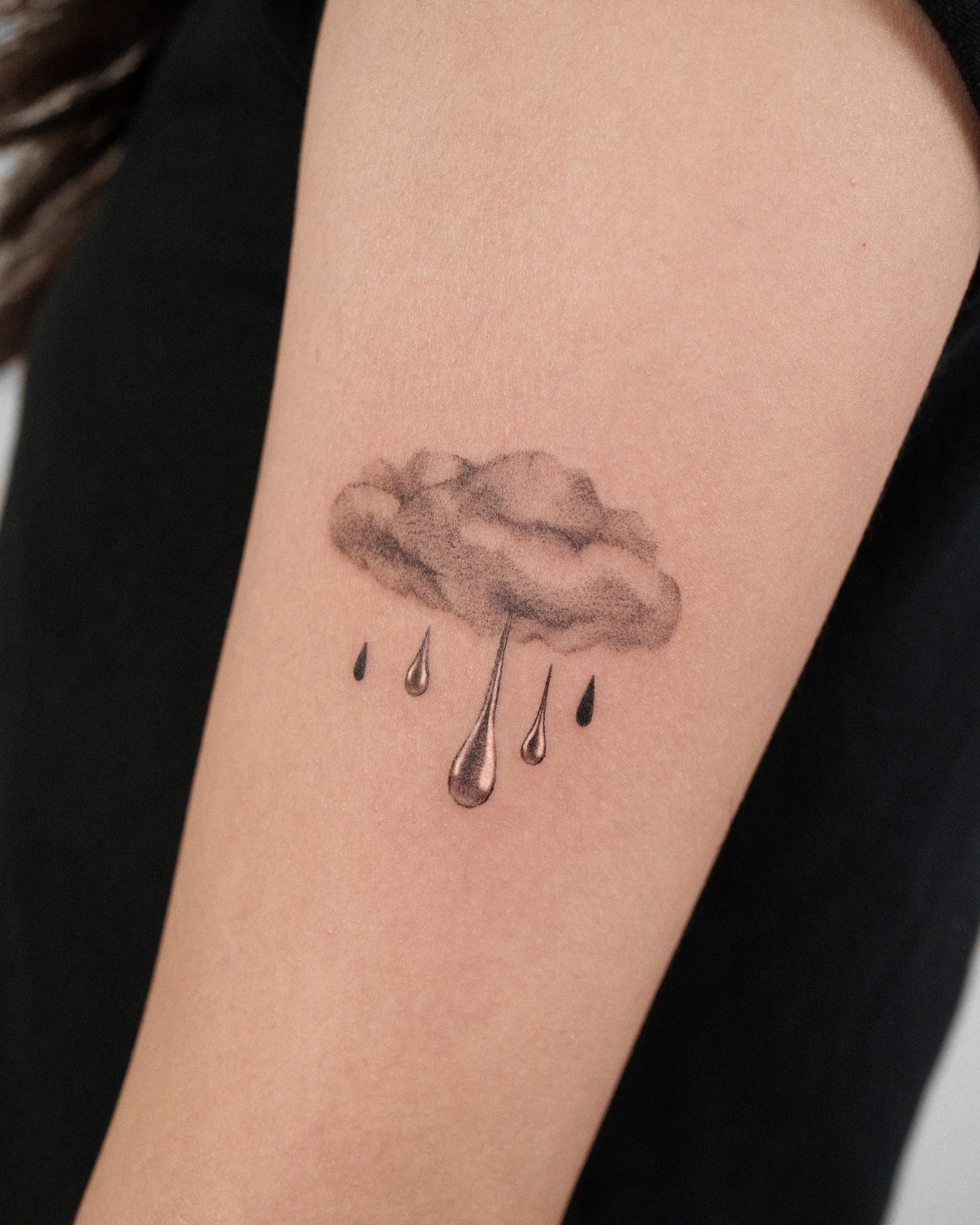
The cloud is the one design here I would deliberately have done without an outline. Soft grey shading with no hard edge is what makes it read as a cloud rather than a bubble, and it needs an artist who does that regularly. If phases appeal more than a single crescent, the moon phase tattoo guide runs through the arrangements that work in a line.
The hot air balloon needs a visible basket or the silhouette flattens into a lightbulb. The hummingbird is the most technically demanding piece in this entire list — the wing blur is the design, and a static hummingbird is just a small bird.
17–20. Objects With a Story
The teacup, the tiny lighthouse, the small candle and the tiny book. Object tattoos carry meaning without announcing it, which is why they suit people who do not want to explain their tattoo at work.
A teacup with a steam curl holds an entire daily ritual in about 3cm. The lighthouse works at small scale only if the beam is implied by a few short rays rather than drawn as a solid cone.
The small candle is the one entry in this list I could not find a strong reference image for, so I have left it unillustrated rather than pad the page. Drawn well it is a lit taper with a soft halo, ideally 3–4cm, and it belongs in the soft-shading column of the table above.
The tiny book is the most personal thing here. An open book, or a spine with an actual title visible in fine line. Which book is the entire decision, and it should be the one that changed something rather than the one that sounds impressive.
21–22. Ribbon, Bow and Soft Ornament
The small bow closes the list, along with any of its ornamental relatives — a ribbon tail, a tied lace, a simple pearl strand.
A bow is deceptively hard. The loops need to be asymmetrical enough to look tied rather than drawn, and the tails should follow the natural line of the limb so the design sits with the body instead of across it.
Placement is doing more than the design here. On the back of the arm, at the ankle, or centred on the spine, a 3cm bow reads as jewellery. Placed carelessly it reads as a sticker.
This is a good moment to think about location more broadly — the tiny wrist tattoo guide is a useful cross-check if you are set on a visible spot.
Variations Worth Considering Instead
If nothing above landed exactly, these are the adjacent directions I would suggest next.
Make It Two Pieces Instead of One
A cherry on one wrist and its stem-mate on the other. A cloud on the ankle and a tiny rain drop below it. Splitting a design across two placements gives a small tattoo more presence without making either half larger.
Add One Colour to an Otherwise Black Design
A black fine line fox with one small patch of orange. A black line ladybird with red spots only. This ages more gracefully than a fully coloured piece and still gives you the pop that makes a cute tattoo feel warm rather than clinical.
Go Smaller Than You Think
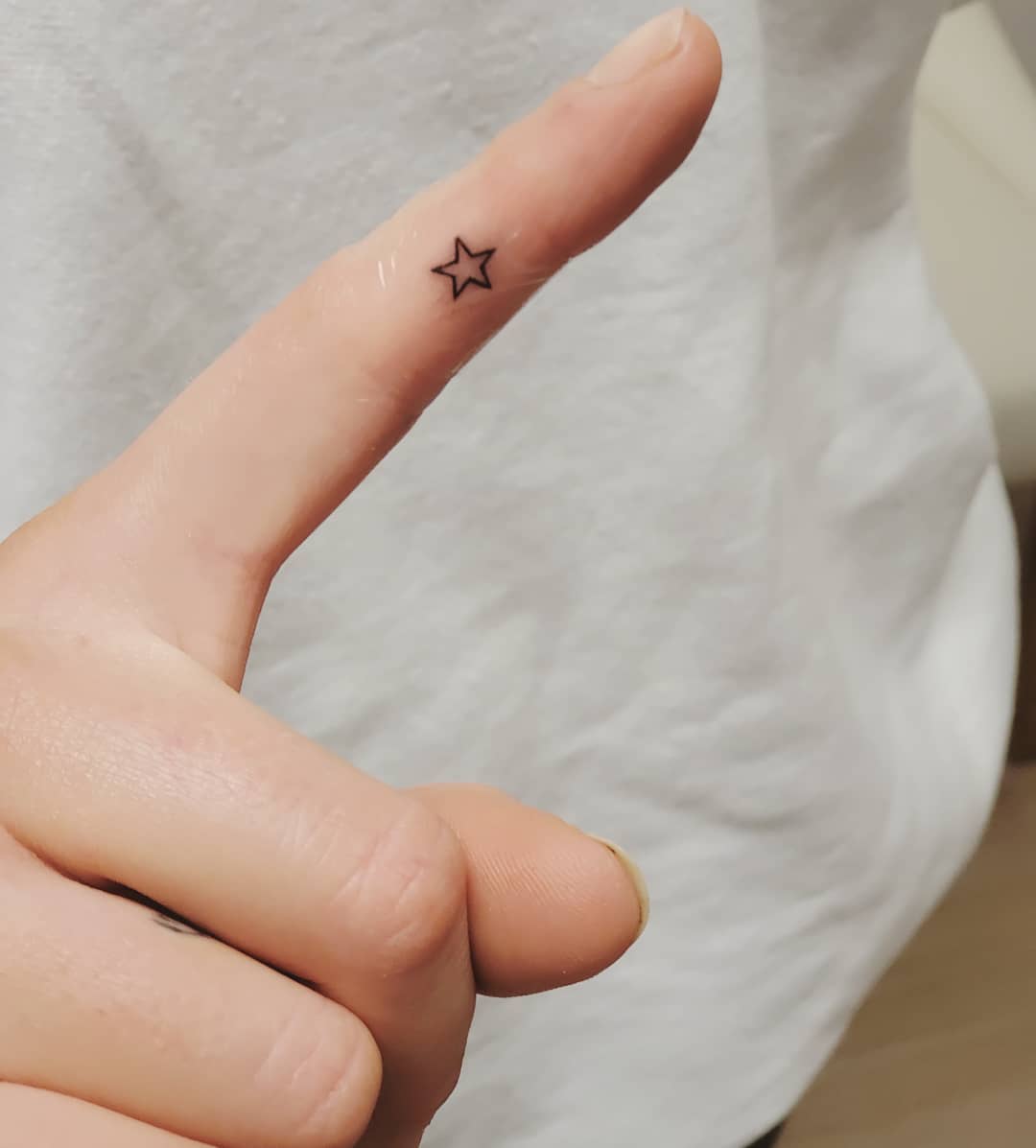
Finger and side-of-finger placements suit the ladybird, the bow and the cherries well. They also fade faster and need touch-ups more often — the finger tattoo guide is honest about that trade-off.
Choose the Animal You Actually Live With
A specific pet, drawn from your own photo, beats any generic creature on this list for long-term satisfaction. If that is where you are heading, the cat tattoo collection is a better starting point than a flash sheet.
Small Doesn’t Mean Quick: Practical Advice
Small tattoos require precise execution. At 2–4cm there is no room for hesitation in linework or inaccuracy in proportion, and in some ways a small fine line piece is more demanding than a large bold one.
Choose your artist on their small-scale portfolio specifically, not their overall following. Ask to see healed photos of work this size — fresh photos hide everything that matters, because fresh lines always look crisp.
Expect a session of 30 to 90 minutes for most designs here, and expect the shop minimum to apply regardless of how quick it is. Budget for a touch-up at the six to twelve month mark for anything coloured or on a high-friction spot.
On healing: follow the aftercare your artist gives you rather than advice from the internet, keep the area clean and out of direct sun, and do not pick. Our tattoo aftercare guide covers the general routine, and the American Academy of Dermatology has plain guidance on caring for new tattoos and on what a reaction looks like.
If you develop spreading redness, swelling that worsens after the first few days, pus, fever, or a rash in the tattooed area, see a doctor rather than waiting it out. The US Food and Drug Administration also publishes what is known and not known about tattoo ink safety, which is worth reading once before your first piece.
Common Mistakes and How to Avoid Them
The most frequent one is asking for too much detail in too little space. A design that looks beautiful on paper at 10cm can turn into a grey smudge at 3cm within a few years, because ink spreads slightly in the skin over time.
The second is choosing placement for the photograph rather than for the skin. Fingers, feet, the outer wrist edge and the ribs all move, rub, or see a lot of sun, and all of them fade faster than the inner arm.
The third is booking with whoever is available. Small work is a specialism. If you are not sure how to assess a portfolio, how to find a tattoo artist walks through what to look for.
And the fourth is treating cute as a lesser category that does not deserve thought. It deserves exactly as much as anything else — if you want the meaning spelled out more directly, small meaningful tattoos for women approaches the same size range from that angle.
Frequently Asked Questions
How small can a cute tattoo actually be?
Most of the designs in this list work between 2cm and 6cm. Below about 2cm you start losing the detail that makes a design specific rather than generic, and fine lines placed very close together can blur into each other as they heal and age. If an artist tells you a design needs to be bigger to work, that is usually technical advice rather than an upsell. Ask them to show you the same design at both sizes before you decide.
Do small tattoos fade faster than large ones?
The size itself is not the issue — line weight and placement are. A fine line piece has less ink in it than a bold one, so the same amount of natural spread and fading is more visible. Fingers, feet, palms and the outer wrist fade fastest because of friction and sun exposure. On the inner arm or upper back, a well-executed small tattoo can hold up for many years with minimal change.
Does a small tattoo hurt less?
It hurts for less time, which is not quite the same thing. The sensation depends far more on placement than on size — ribs, sternum, ankle and the tops of the feet are commonly reported as sharper than the outer forearm or thigh. Most of the pieces here take under an hour, so even on a tender spot the session is short. If it is your first tattoo, choosing a forgiving placement matters more than choosing a small design.
Should I get colour or black ink?
Black holds its edges longer and suits fine line work, botanicals and anything defined by shape. Colour is worth it when the colour is the point — cherries, a ladybird, a strawberry. Be aware that pale and pastel colours read differently on different skin tones, and a good artist will tell you honestly which pigments will show well on yours. Expect coloured pieces to want a refresh sooner than black ones.
Can I get more than one of these in a single session?
Usually yes, and it is often cheaper than booking separately because you only pay the shop minimum once. Two or three small pieces in one sitting is common. What I would not do is decide on the second and third designs in the chair — bring your references, agree the placements before the stencil goes on, and give yourself permission to come back another day for the rest.
Quick Summary
- Specificity is what separates a cute tattoo from a forgettable one — bring a real reference, not a vibe.
- Most designs here work best between 2cm and 6cm; below 2cm, detail starts closing up as the tattoo ages.
- Fine line black suits botanicals and objects; bold line suits anything you want readable from a distance.
- Colour is worth it when the colour is the subject, but expect it to fade sooner than black.
- Choose your artist on healed small-scale work, not on fresh photos or follower count.
- Placement drives fading more than size does — fingers, feet and outer wrists are the fastest to soften.
- Budget the shop minimum plus a possible touch-up at six to twelve months for coloured or high-friction pieces.
- Follow your artist’s aftercare, keep it out of the sun, and see a doctor for spreading redness, pus or fever.