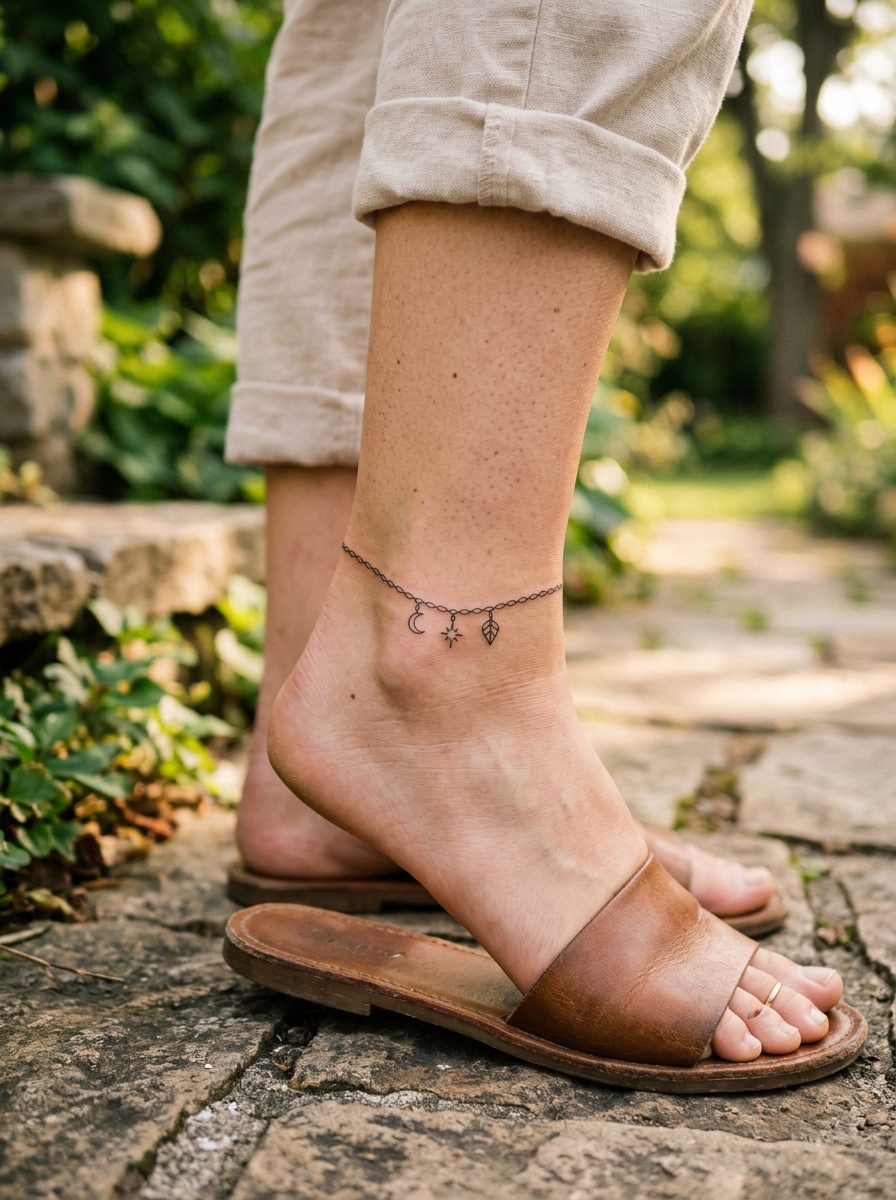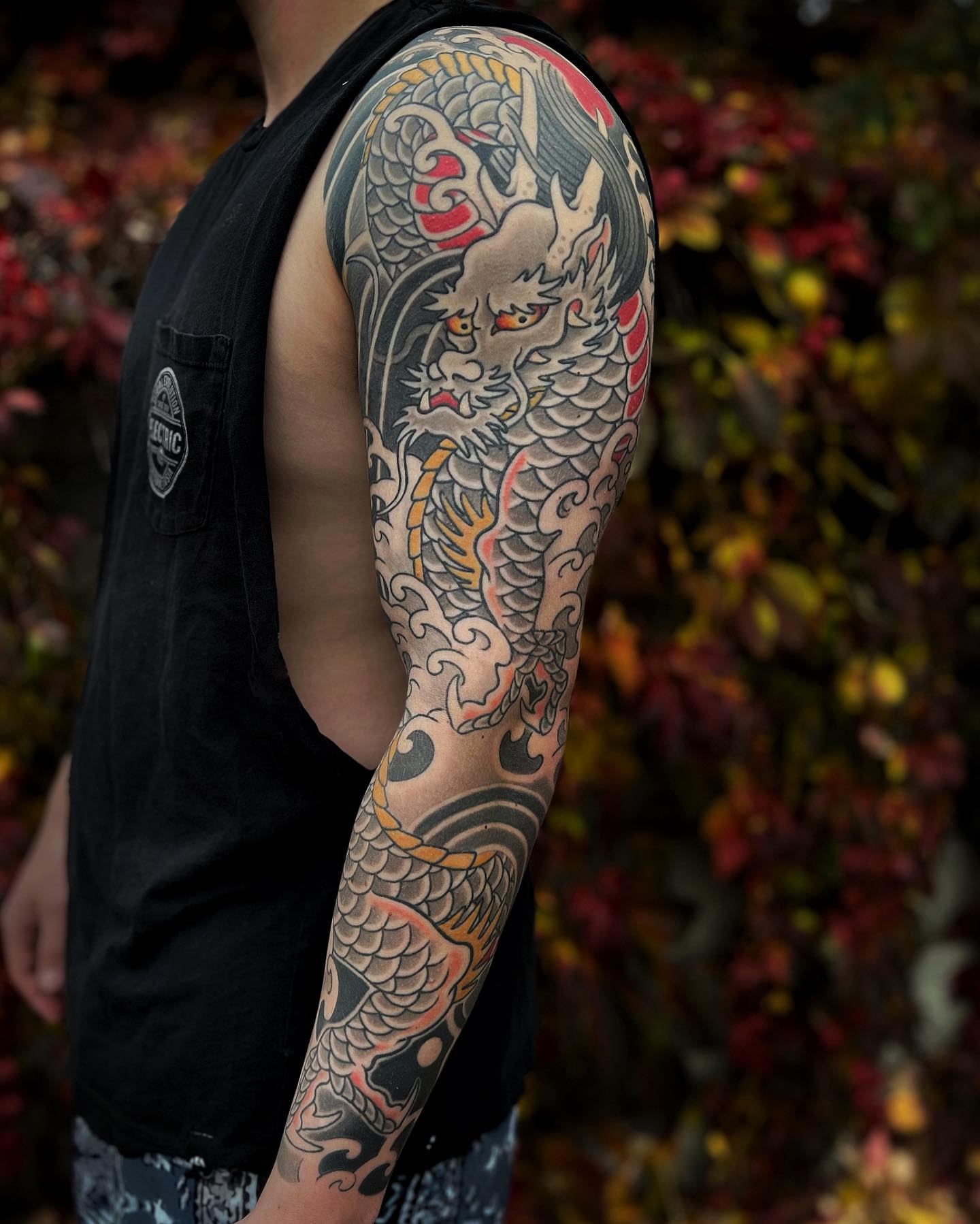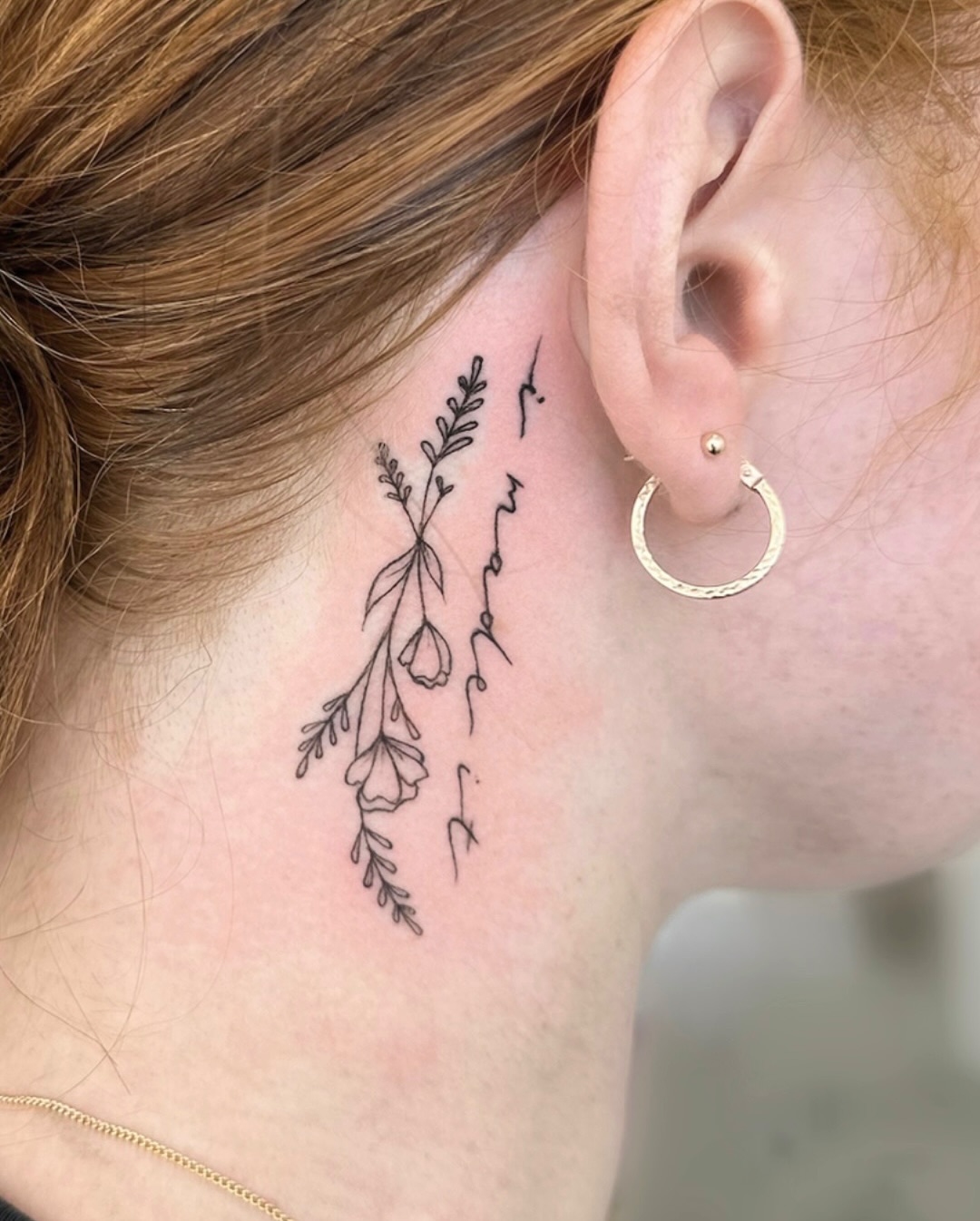
I have watched a lot of people walk into a studio holding a phone with a photo of something roughly the size of a postage stamp, then watch their face fall when the artist says it needs to be bigger. The hardest thing about a tiny tattoo is not choosing the design — it is choosing a design that will still look like itself in ten years.
Small does not mean simple, and it definitely does not mean cheap or painless. It means every single line has to earn its place, because there is nowhere for a mistake to hide.
The 22 ideas below are ones I have seen hold up well at genuinely small scale. If you want to go even smaller than this, the micro tattoo approach is a slightly different craft with its own rules.
I have also flagged which ones age gracefully and which ones need a specific kind of artist, because those two things matter more than the picture itself.
Which Tiny Tattoo Style Is Right for You?
Most tiny tattoos fall into one of four technical styles. They age differently, so it is worth knowing which one you are actually asking for.
| Style | Best For | How It Ages | What To Ask For |
|---|---|---|---|
| Fine line / single needle | Delicate botanicals, script, thin symbols | Softens and can lighten; may need a touch-up | A healed-work portfolio, not fresh photos |
| Bold line / micro-traditional | Icons, anchors, hearts, crowns | The most forgiving option long term | Slightly thicker lines and generous spacing |
| Dotwork / stippling | Moons, geometric shapes, soft gradients | Dots can merge if placed too close | Wider dot spacing than the drawing suggests |
| Micro-realism | Bees, feathers, animals, portraits | Detail blurs first; needs a specialist | Healed photos at one year or older |
Why Tiny Tattoos Are Harder Than They Look
Ink does not sit still. Over years it spreads very slightly inside the skin, which is why old tattoos look softer and slightly thicker than they did on day one.
That spread is invisible on a large piece and obvious on a small one. Two lines sitting a millimetre apart can become one line, and a face the size of a pea can become a smudge.
This is the reason a good artist will push back on your reference photo. In my experience, the ones who say yes to anything at any size are the ones whose work you see being covered up later.
There is also a cost misunderstanding. Tiny does not mean fifteen minutes of easy money — precision work is slow, and most studios have a minimum charge regardless of size.
If you are budgeting, our guide to what a small tattoo actually costs explains where shop minimums come from and why they are usually fair.
Fine-Line Classics That Never Date
These are the designs I see most often on people who have had them for a decade and still like them.
1. Single Dot
One dot, usually on the inside of a wrist, a finger, or just below the collarbone. It is the smallest tattoo that can genuinely mean something.
People use it as a full stop — the end of a chapter, or a marker for a person. Because it is a solid shape rather than a fine line, it holds its edge well over time.
Ask for it slightly larger than feels right. A dot that is too small can fade to almost nothing within a couple of years, and re-tattooing the exact same spot is fiddly.
2. Tiny Heart Outline
A single unbroken line forming a heart, often with something hidden in the negative space.
The version below tucks a cat into the curve, which is the trick I would suggest to anyone worried that a plain heart is too generic. One extra detail changes it from a symbol into your symbol.
Keep the outline continuous where you can. Line work with lots of small breaks tends to look untidy once the skin settles.
3. Small Initial
One or two letters, no border, no flourish. This is quietly one of the best small tattoo choices because letters are shapes we are trained to read even when they blur.
Serif fonts hold up better than very thin script at this size — the thicker parts of the letterform give the design something to stand on.
Placement matters here more than usual. The hip, the ribs, and the inner bicep all move less than fingers or feet, so the letters keep their proportions.
4. Tiny Star
A four-point sparkle or a simple five-point star, usually no wider than a thumbnail.
I have seen these used as a marker for a person who has died, and also chosen for no reason at all beyond liking them. Both are fine reasons.
A star with slightly tapered points reads better at small scale than one drawn with even, uniform strokes.
5. Fine Line Arrow
A bow and arrow, or just the arrow on its own, drawn in one thin pass.
The meaning most people attach to it is forward motion, or the idea that you have to pull back before you launch. It sits nicely along a thigh, a forearm, or the outer edge of a foot.
Watch the fletching. Three tight lines at the tail is where these pieces most often blur, so ask your artist to space them wider than the drawing.
6. Tiny Moon
A crescent, a hairline thin, on the back of the arm or the inside of the wrist.
It is probably the most requested small design I have come across, and it is popular for a good reason — it survives being tiny better than almost anything else. If you want more than a single crescent, moon phase designs scale up the same idea into a row.
A solid crescent will outlast an outlined one. The filled version keeps its shape as the ink softens.
Symbols With Movement and Meaning
These carry a bit more visual weight, which in practice makes them slightly safer bets.
7. Small Infinity Loop
The figure-eight, often with something threaded through the crossing point — a music note, a name, a heartbeat line.
On its own the infinity symbol has become common enough to feel a little anonymous. The added element is what saves it.
Ask for the loop to be drawn with a slight variation in line weight rather than one uniform thickness. It stops the shape looking like clip art.
8. Tiny Feather
Soft black and grey shading rather than hard outlines, which is what gives a small feather its weightlessness.
This is a piece I would only take to someone who shades well at small scale. Done badly, the barbs merge into a grey blob within a few years.
Look for healed photos of the artist’s soft shading specifically. Fresh work always looks crisp; healed work tells you the truth.
9. Small Wave
A few overlapping lines suggesting water, sometimes with a tiny moon above the crest.
It wraps well around the upper arm or the ankle because the design is naturally horizontal and does not need a rectangle of flat skin.
Simplify more than you think you need to. A wave made of four lines reads as water forever; a wave made of twelve becomes a grey band.
10. Tiny Lotus
Open petals in fine line, placed on the ribs, the sternum, or the back of the neck.
The lotus is associated with growth through difficulty in several traditions, which is why it turns up so often on people marking recovery. There are more scaled-up versions in our lotus tattoo ideas for women guide.
The key at small scale is space between the petals. A crowded lotus fills in and turns into a shaded triangle.
11. Small Bee
A properly detailed bee, wings and all, roughly the size of a real one.
This is micro-realism rather than fine line, and it is genuinely difficult. If you like the subject but want an easier version, the simpler outlines in our bee tattoo designs collection hold up with less risk.
Bees carry a lot of meaning — community, work, loyalty to a group — without needing any explanation, which is part of why they suit small placements.
Botanicals, Words, and Personal Marks
This group is where tiny tattoos get specific to one person, which is usually when they are at their best.
12. Single Word, Very Small
One word, lowercase, in a font you can actually read at a glance from a metre away.
The mistake I see most often is choosing a beautiful thin script that turns into a wavy line within five years. A simple serif or a clean sans-serif survives much better.
Print the word at true size on paper first and look at it from across a room. If you cannot read it there, it is too small or too thin.
13. Tiny Dandelion Seed Head
A dandelion drawn with the lightest possible hand, sometimes with a few seeds breaking away.
It is a good example of a design where the empty space around the piece is doing half the work. Crowding it against another tattoo kills the effect.
Ask for fewer seeds than the reference photo shows. Seven or eight strands read as a dandelion; twenty read as a grey circle.
14. Small Eye
An almond outline with a filled iris, usually no wider than a fingertip.
People choose it for protection, awareness, or in memory of someone. It is one of the few tiny designs that still feels a bit confrontational, which some people want.
Keep the lashes minimal. Three or four is enough — a full lash line at this size becomes a solid black wedge.
15. Tiny Plant Sprout
Two leaves on a stem, occasionally with a couple of small stars scattered around it.
Of all the ideas here, this is the one I have most often heard described as marking a fresh start — after a move, a recovery, a divorce.
The inner forearm suits it well because the skin there is relatively stable and easy to keep out of the sun while it heals.
16. Small Geometric Shape
A triangle, a diamond, a hexagon, or a pair of intersecting lines. Clean, abstract, and open to whatever meaning you give it.
Straight lines are less forgiving than curves — any wobble is obvious, and so is any deviation from true horizontal on your body.
I would ask to see the stencil on your skin while standing naturally, not while your arm is stretched out on the armrest. That is where crooked geometry comes from.
Bold Little Icons With Staying Power
If you want the version most likely to still look sharp in fifteen years, it is in this group.
17. Tiny Bird in Flight
One bird, or two spaced apart, across the shoulder blade or the upper back.
The spacing is the design. Two birds with a good gap between them look intentional; two birds crammed together look like a single smudge from a distance.
Silhouettes age better than detailed feathering here, unless you have found a genuine micro-realism specialist.
18. Small Crown
A bold black crown on the wrist or the inner forearm, drawn with proper line weight rather than hairlines.
The wrist takes a lot of friction from sleeves, watches, and washing, so heavier lines are the sensible choice in that spot.
It is a design that reads as confident rather than delicate, which makes a nice change if everything else on your shortlist is a thin botanical.
19. Morse Code Dot-Dash
A line of dots and dashes spelling a word, a name, or a date that nobody else can read.
I like these because they are genuinely private. To everyone else it is an abstract pattern, and you never have to explain it at a party.
Check the code twice with two different sources before the needle goes in, and keep the dot and dash spacing generous so the pattern stays legible as it softens.
20. Tiny Lightning Bolt
A single zigzag, solid black, usually behind the ear, on a finger, or on the ankle.
It is one of the few shapes that is basically immune to blurring, because it is all sharp angles and solid fill.
If you want something small that requires zero maintenance and no touch-ups, this is close to the safest choice on the list.
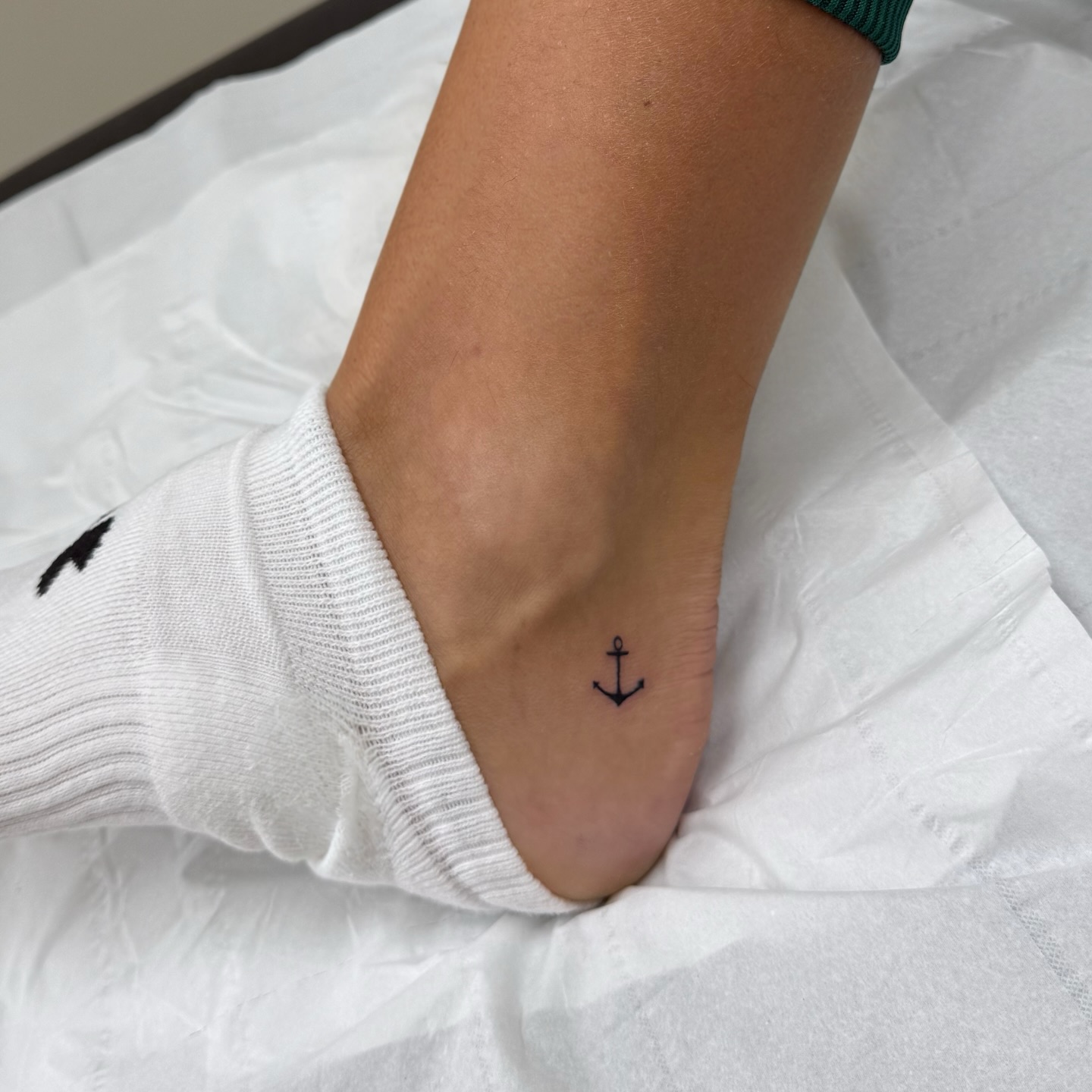
21. Small Anchor
A simple anchor on the side of the ankle or the back of the arm — stability, or a link to the sea, or to someone in the navy.
The traditional anchor shape has survived a century of tattooing precisely because it is readable when it is small and slightly blurred.
Feet and ankles do fade faster than most placements, mainly from socks, shoes and sunlight, so expect a touch-up at some point.
22. One Star, Very Specific Placement
The same simple star as idea four, but chosen for where it sits rather than what it is.
The outer shoulder, the nape, the back of an upper arm — spots that a tank top shows and a work shirt hides.
When a tattoo is this small, placement carries most of the meaning. Spend more time deciding where than deciding what.
Placements That Actually Age Well
Two identical tattoos placed in different spots can look completely different after five years. This is the part most people underthink.
Low-friction, low-sun spots (the safest)
Inner bicep, ribs, sternum, shoulder blade, and the back of the upper arm. These see less sunlight and less rubbing than anywhere else.
If you want fine line work to stay fine, this is where to put it.
Wrists and forearms (very good, with sunscreen)
Highly visible and easy to look at, which is the point for a lot of people. Our tiny wrist tattoo ideas page covers sizing for this spot in more detail.
The main enemy here is UV. Daily sunscreen once healed genuinely does extend the life of the line work.
Fingers, feet and hands (beautiful, high maintenance)
Skin on the hands regenerates faster and takes constant friction, so ink drops out. Finger tattoos often need touching up within a year or two, and some artists will not do them at all.
Go in expecting patchiness rather than being disappointed by it. If that is unacceptable to you, choose a different spot.
Behind the ear and the nape
Discreet, and the skin there is fairly stable. The trade-off is that these spots are awkward to keep clean while healing, especially with long hair.
Tie hair back for the first week and be honest with yourself about whether you will actually do that.
Aftercare That Protects Small Line Work
Tiny tattoos heal fast, which is exactly why people get careless with them. A small piece that heals badly loses a much larger share of its detail.
The surface usually looks settled in two to three weeks, with the deeper layers taking a couple of months. Our full tattoo aftercare guide walks through the whole timeline.
Keep it clean, keep it lightly moisturised rather than smothered, and do not pick the flaking. The American Academy of Dermatology has straightforward guidance on caring for tattooed skin, including why sun protection matters long after healing.
If you see spreading redness, swelling that worsens after a few days, pus, or a fever, see a doctor rather than asking the internet. Infections and allergic reactions to pigment do happen, and the FDA fact sheet on tattoo inks is worth reading before you commit — particularly if you are considering coloured ink, which is more often associated with reactions than black.
Nothing here is medical advice. Your artist and your doctor are the people to ask about your own skin.
Still Not Sure? Avoid These Five Mistakes
Almost every regret I have heard about a small tattoo traces back to one of these.
- Going smaller than the artist recommends. They are not upselling you — they are telling you what will still be readable later.
- Choosing hair-thin script. Thin lettering is the single most common thing that needs redoing.
- Picking a spot for how it looks today. Fingers, feet and the outside of the hand all fade fastest.
- Booking on price alone. A cheap tiny tattoo from the wrong artist costs far more to fix than it saved.
- Crowding it. A small tattoo needs empty skin around it, or the whole effect disappears.
If you want more designs to compare before you commit, our roundups of small meaningful tattoos for women and simple tattoo ideas both go wider than this list.
And if you are worried about how much it will hurt, most of these placements are on the milder end — though the ribs and sternum are honestly not. The Mayo Clinic overview of tattoo risks covers what to check for in a studio before you sit down.
Frequently Asked Questions
How small is too small for a tattoo?
There is no universal number, but most artists I have spoken to get uncomfortable below roughly a centimetre for anything with internal detail. A solid shape like a dot, a heart, or a lightning bolt can go smaller because there are no fine gaps to close up. The test is whether any two lines in the design sit close enough to merge as the ink softens. If your artist says it needs to be bigger, that is usually the honest answer rather than an upsell.
Do tiny tattoos fade faster than large ones?
They do not fade faster in absolute terms, but the fading matters more. The same amount of softening that is invisible on a large piece can erase a meaningful share of a tiny one. Placement drives this more than size — hands, fingers and feet lose ink fastest because of friction and skin turnover. Sun exposure is the other big factor, and sunscreen on healed tattoos genuinely helps.
Are tiny tattoos cheaper?
Not usually as much as people expect. Almost every studio has a minimum charge that covers setup, sterile supplies and the artist’s time, so a five-minute tattoo often costs the same as a forty-minute one. Precision at small scale is also slower work than it looks. Budget for the shop minimum and treat anything less as a pleasant surprise.
Do tiny tattoos hurt?
Yes, though usually briefly. A small piece may only take a few minutes of actual needle time, so most people find the anticipation worse than the event. Placement changes things a lot — the outer arm and thigh are generally mild, while ribs, sternum, feet and fingers are notably sharper. If you are anxious, book earlier in the day and eat beforehand.
Will I need a touch-up?
Quite possibly, and that is normal rather than a sign something went wrong. Fine line work, very small dots, and anything on hands or feet are the most likely candidates. Many artists include one free touch-up within a set window after healing, so ask about that policy when you book. Wait until the tattoo is fully healed before judging it — freshly peeled skin always looks patchier than the final result.
Quick Summary
- Choose a design with space between its lines — that gap is what keeps it readable in ten years.
- Solid shapes and bold lines age better at tiny scale than hairline fine work.
- Serif letterforms survive small sizing far better than thin script.
- Low-friction, low-sun placements — inner bicep, ribs, shoulder blade — protect detail best.
- Fingers, hands and feet look great and will need touch-ups; decide if that is acceptable first.
- Ask any artist for healed photos, ideally a year old or more, not fresh work.
- Expect a shop minimum charge regardless of how small the piece is.
- Watch for spreading redness, worsening swelling or fever while healing, and see a doctor if they appear.