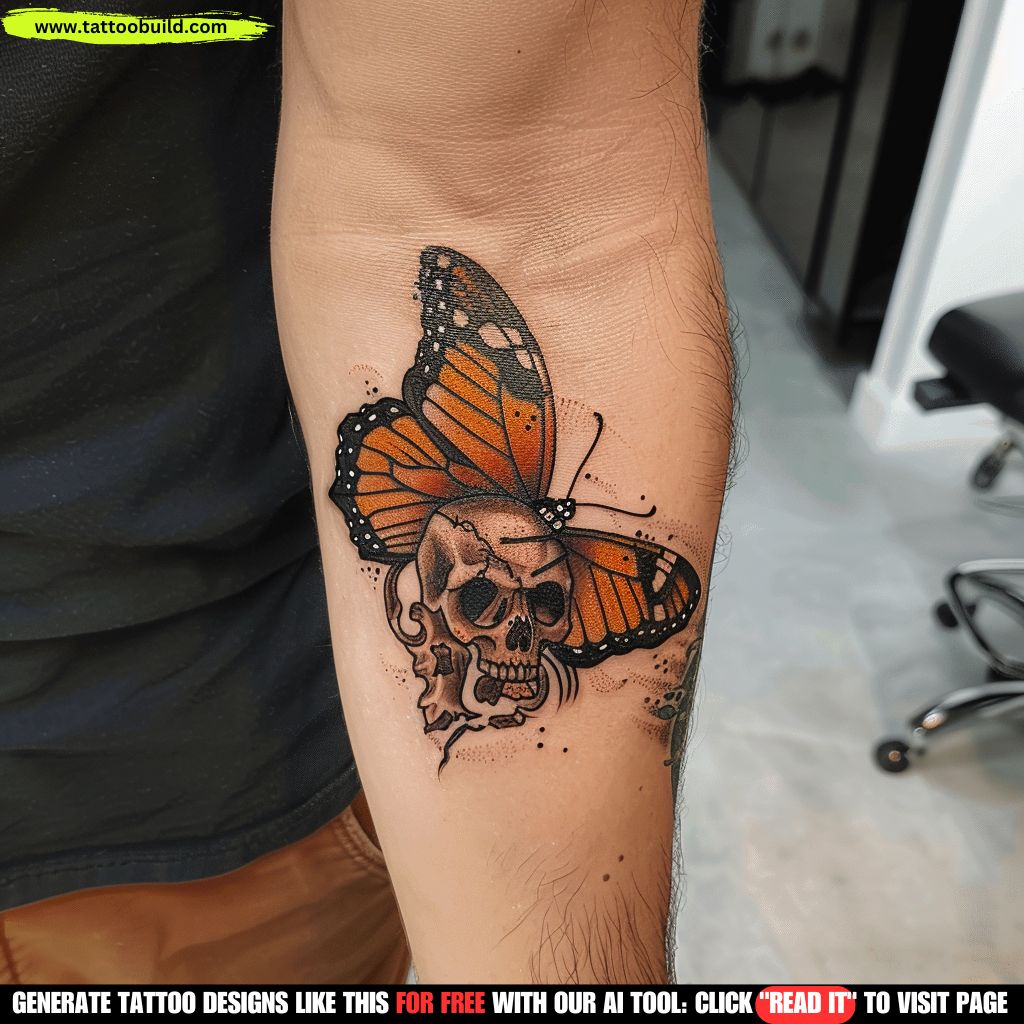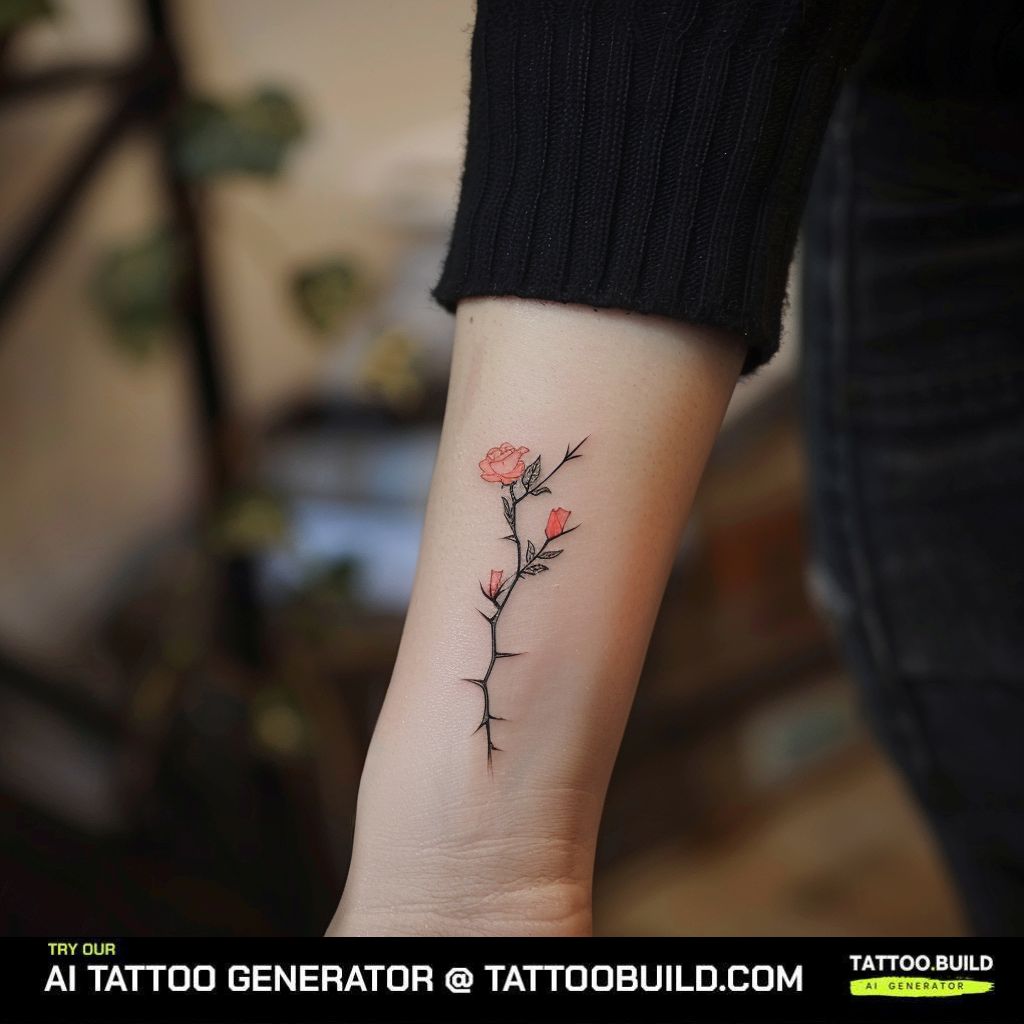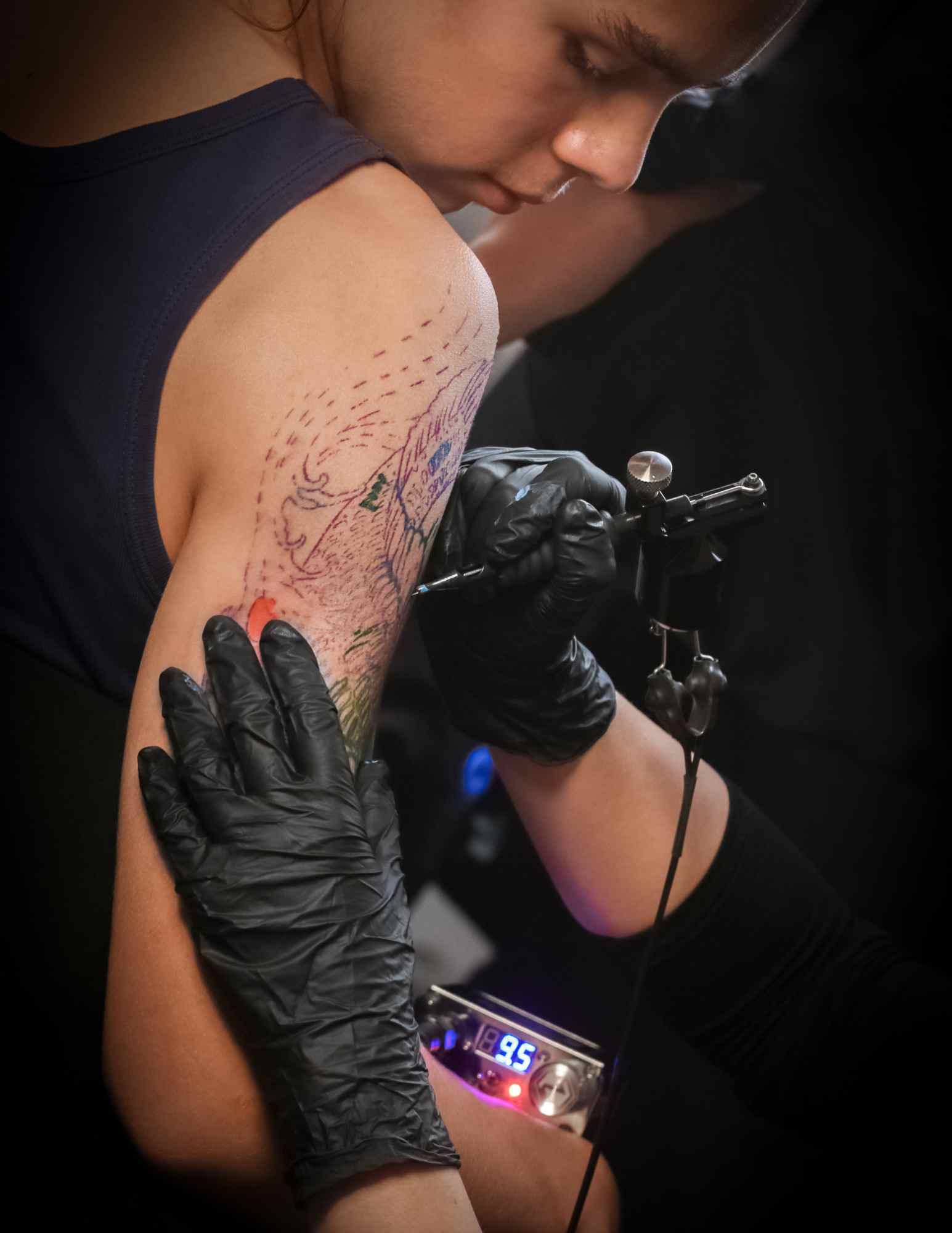
Bee tattoos have quietly become one of the most requested small-scale designs I see in my consultation notes, and the reasons run far deeper than trend. In my experience, clients arrive with a bee in mind because it holds a promise — loyalty to a person, a place, a version of themselves they are working toward.
The bee has carried meaning since ancient Egypt, where royal titles borrowed its wings, and in Manchester, England, where the worker bee has stood for civic grit long before it became a global symbol of resilience after 2017.
What makes bee tattoos so versatile is scale. A honey bee can live behind your ear at the size of a pea, or ride a full forearm as the anchor of a wildflower sleeve. Every artist I have asked keeps at least a handful of bee flash on the wall because the demand is steady across every age group.
This 2026 guide walks through symbolism, the styles trending right now, placements that actually heal well, honest aftercare, and the mistakes I see most often — all drawn from years of watching bee tattoos age (some gracefully, some not). If you are still gathering ideas, our broader bee tattoo designs gallery is a good next stop.
Which Bee Tattoo Style Fits You Best?
Below is the shortlist I hand new clients when they cannot decide between the four styles I get asked about most. Prices and healing windows are rough averages from my own studio and three colleagues I compared notes with, not a national survey.
| Style | Best For | Typical Size | Ages Well? |
|---|---|---|---|
| Fine Line | First tattoo, discreet placements | 1–2 in | Softens by year 5–7, may need a refresh |
| Neo-Traditional | Bold statement pieces, sleeve anchors | 3–6 in | Excellent — heavy lines hold shape |
| Watercolor | Colorful, painterly effect | 2–4 in | Fair — splashes fade first, plan for touch-ups |
| Geometric / Dotwork | Symmetrical designs, blackwork lovers | 2–5 in | Very good if dot density is right |
Why Bee Symbolism Resonates Today
At the surface, bees mean hard work, community, and loyalty. Dig a layer down and every culture I have researched adds its own thread — the Egyptians read them as tears of the sun god Ra, the Greeks tied them to Artemis and Demeter, and in Celtic tradition bees were messengers between our world and the spirit realm.
For a lot of the people I tattoo, the modern meaning is quieter. It is a nod to a grandmother who kept hives, a small gesture toward pollinator conservation, or a private reminder to protect a chosen family the way a colony protects its queen.
Bees also read as feminine strength without leaning on obvious florals. In my experience, clients who want a symbol of protective, quietly powerful femininity often land on a bee before they land on a lioness or a wolf.
And there is the ecological layer. Bee populations are stressed across most of North America and Europe — the IUCN Red List and reporting from the Xerces Society both make that clear — so a bee tattoo can also stand as a small, permanent act of attention.
Trending Bee Tattoo Styles in 2026
Bee tattoos work in almost every style, but a handful have taken over my booking calendar this year. Here is what I am seeing walk through the door and, honestly, what tends to hold up over time.
Fine Line Bees
Fine line bees are the entry point for most first-timers. A single needle or 3RL configuration draws the wings and thorax in hairline strokes, no color, minimal shading.
The trade-off is longevity. When I tested how three of my fine-line bee pieces looked at the four-year mark, all three had softened around the wing joints — still lovely, but not as crisp. Plan for a light touch-up somewhere around year five if you want the original definition. If you like this direction, browse more fine line tattoo ideas before locking in your artist.
Neo-Traditional Bees
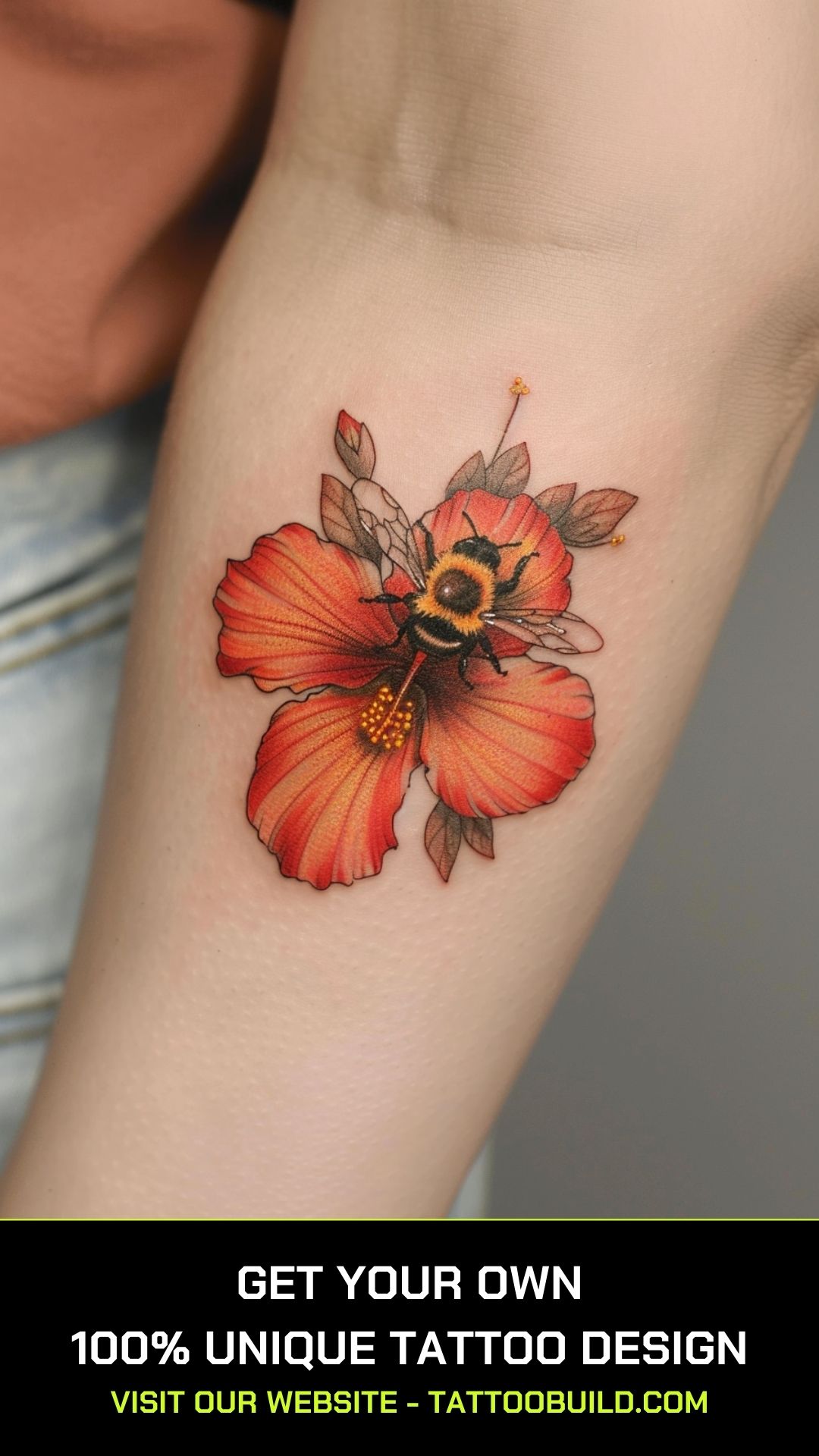
Neo-traditional is where the bee really flexes. Bold outlines, saturated yellows and oxbloods, ornate wings, sometimes a crown or a honeycomb halo behind the body. These pieces are meant to be seen from across the room.
In my experience, neo-trad bees age the best of any style I do. The heavy black lines act as a scaffold that keeps the shape intact for a decade or more, and the palette — mostly reds, yellows, and blacks — is exactly what tattoo pigments were originally engineered around.
Watercolor Bees
Watercolor bees layer soft washes of yellow, coral, and sometimes lavender around a lightly outlined body, mimicking pigment bleeding on wet paper. The results can be genuinely beautiful in the healed photo.
Honesty first: watercolor is the most demanding style to keep looking good. The splashes without an underlying black anchor tend to lift the fastest. If you want this look for the long haul, book with an artist who has a healed portfolio going back at least three years, and be ready for touch-ups. Our watercolor tattoo ideas guide has more examples to compare.
Geometric & Blackwork Bees
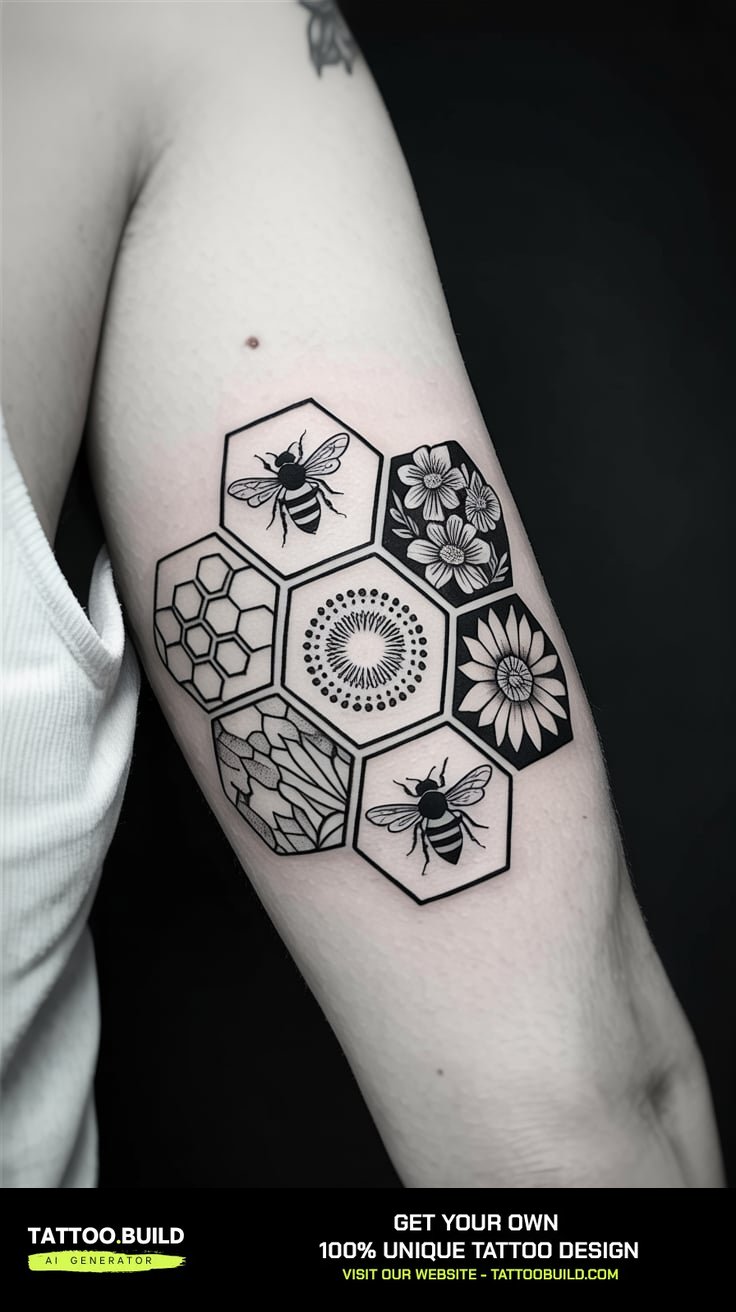
Geometric bees pair the insect with hexagons, sacred-geometry frames, or dotwork mandalas. Because the bee body itself is symmetric, it slots into geometry more naturally than most other animals.
Dotwork adds a soft, printed quality that hides small imperfections and ages beautifully when the dot density is even. Ask to see the artist’s dotwork healed at year three before you book — uneven density is one of the few things that gets worse, not better, with time.
Realistic Honey Bees
Realism is the biggest single-session commitment on this list. A palm-sized realistic honey bee, done well, is a two-to-four-hour piece minimum — the wing venation and thorax fuzz are what sell the illusion, and both take time to layer.
Realism holds up if the artist knows how to work with the body’s tendency to blur small detail over years. In my experience, realistic bees look best on flat, low-friction areas: outer forearm, calf, upper back. I would not recommend it for fingers or ribs.
Bee and Flower Combinations
The pairing of a bee with a flower is arguably the most requested variation. Sunflowers, lavender, daisies, and wildflowers dominate my booking notes, and each carries its own quiet meaning stacked on top of the bee.
A bee on a sunflower reads as joy plus industry; a bee on lavender reads calm and healing; a bee on a scatter of wildflowers reads freedom and pollinator love. Talk about which combination fits your story before your artist starts sketching.
Queen Bee and Symbolic Motifs
Adding a crown, a tiara, or the words “Queen Bee” shifts the whole meaning of the tattoo toward leadership, self-possession, and matriarchal pride. It is a design I see chosen most often by clients marking a milestone — a promotion, a divorce, a fortieth birthday.
If you are considering it, keep the crown small relative to the bee. When the crown starts to compete with the body for visual weight, the piece reads as heraldry rather than nature, which may or may not be what you want.
Placements and Size Variations
Where you put a bee changes the design as much as the style does. Below are the placements I book most, with honest notes on how each one heals.
Wrist, Ankle, and Finger Bees
Micro placements are romantic on paper and tricky in practice. Wrists and ankles heal well but sit close to bone, so expect a sharper session. Fingers I gently steer people away from — they lose 30 to 50 percent of ink brightness within a year or two, and the joint creases blur small details.
If you love the wrist look, browse tiny wrist tattoo ideas to see how other pieces have aged in similar spots.
Forearm and Shoulder Placements
The inner forearm is my personal favorite for bee tattoos of any size. The skin is flat, low-friction, and rarely gets sun-hammered if you wear long sleeves at work. Shoulders and upper arms give you a bigger canvas for neo-trad and realistic pieces without losing detail.
If you are open to a larger scale, some of the most striking bee compositions I have seen use the shoulder as the launching pad for a small floral cascade down the outer arm.
Back, Ribs, and Thigh Placements
These are the placements for people who want a piece with breathing room. The back and thigh let a bee grow into a full 5- or 6-inch composition without feeling crowded, and the skin here is stable and low-stretch, which is kind to fine detail over time.
Ribs are the exception — beautiful for the right person, but genuinely one of the more painful placements, and the skin flexes more than you expect during healing. Bring snacks and a friend.
Aftercare and Longevity Tips for Bee Tattoos
Bee tattoos, especially the fine-line and watercolor kinds that dominate this style, are less forgiving of aftercare mistakes than a bold traditional piece. The details are small, so anything that lifts even a little pigment shows up quickly.
For the first two weeks, follow whatever aftercare protocol your artist gives you — that is the only rule that matters more than any generic advice. Most reputable studios now recommend the second-skin method for the first three to five days, then a fragrance-free lotion two to three times a day until the tattoo stops feeling tight.
Long-term, the single biggest factor for how a bee tattoo looks in ten years is sun exposure. Once fully healed — usually four to six weeks — apply SPF 30 or higher any time the piece is uncovered outdoors. The American Academy of Dermatology has a good overview of sunscreen selection if you are not sure which product to buy.
If anything feels off during healing — spreading redness, warmth, pus that is not the normal clear plasma, or a fever — call your artist and a doctor. Tattoo infections are uncommon but real, and this is not a place to self-diagnose.
Common Bee Tattoo Mistakes I See Most Often
Every artist I have asked keeps a mental list of the same handful of mistakes. Here are the ones that come up on my consultation table almost weekly.
Going too small on the first tattoo. A quarter-sized bee with three color passes is going to blur no matter how good the artist is. If you want a tiny piece, ask for a single-color fine line design and accept that it will need a refresh.
Choosing the artist by price. A bee tattoo priced at $60 in a walk-in shop is not the same product as a $250 piece from an artist with a healed portfolio. You are paying for the year-five photo, not the year-zero one.
Skipping the consultation. Book the design conversation as a separate appointment when you can. In my experience, the tattoos my clients love most are the ones we redrew at least once before ink hit skin.
Copying an exact photo. Bring reference, but respect the artist enough to let them make it their own. If you love a photo enough to want an exact copy, hire the artist who made it. Our guide on minimalist tattoo ideas is a good place to gather references without falling into copy-paste territory.
If you are still torn on style or placement, the broader butterfly tattoo ideas gallery is worth a look — the design considerations for winged insects overlap almost entirely.
Frequently Asked Questions
How much does a bee tattoo usually cost?
Cost varies enormously by size and artist. In my experience, a small fine-line bee runs $80 to $200 as a shop minimum piece, while a palm-sized neo-traditional or realistic bee lands somewhere between $250 and $600. Anything with a full color pass past four inches, or with heavy floral surroundings, will price hourly — typically $150 to $250 an hour in major North American cities, more for artists with waiting lists.
Do bee tattoos hurt more than other small tattoos?
Not because of the design itself. Pain is almost entirely about placement. A wrist bee will feel about the same as any other wrist tattoo, and a ribs bee will be as uncomfortable as any ribs piece. The wing detail can add a few extra minutes of small-needle work at the end, which some people find tickly rather than sharp.
Are bee tattoos considered feminine?
They are frequently chosen by women, but they are not exclusively feminine. Manchester’s post-2017 bee movement was worn across genders, and neo-traditional and blackwork bees read as masculine easily. Every artist I have asked reports a nearly even split among current requests. Style, size, and placement do more to code a tattoo than the subject alone.
Can I get a bee tattoo if I’m allergic to bee stings?
Yes — tattoo pigment does not contain bee proteins, so a bee sting allergy is not a contraindication. That said, tattoo pigment allergies (mostly to red and yellow) are their own thing, and if you have known pigment sensitivities you should ask your artist to do a small test patch first. If you have a history of severe allergic reactions, mention it during consultation for safety planning.
What’s the best age to get a first bee tattoo?
Legally, eighteen in most of North America. Practically, I recommend clients wait until they can articulate why they want the design, not just that it looks good. In my experience, the bee tattoos that clients still love a decade later are the ones with a story attached — a memorial, a milestone, a value they want to keep in front of them.
Quick Summary
- Bee tattoos symbolize hard work, community, loyalty, and quiet resilience.
- The four styles most requested right now: fine line, neo-traditional, watercolor, and geometric or dotwork.
- Neo-traditional and geometric bees age the best; fine line and watercolor will need touch-ups.
- Inner forearm, shoulder, and outer thigh are the most forgiving placements over time.
- Bee + flower combinations (sunflower, lavender, wildflower) layer extra meaning without visual clutter.
- Aftercare and lifelong SPF matter more than the artist’s price for how the tattoo looks at year ten.
- Book a separate consultation and expect at least one round of redraw before ink hits skin.
- A bee sting allergy does not prevent you from getting a bee tattoo — pigment allergies are a different concern.