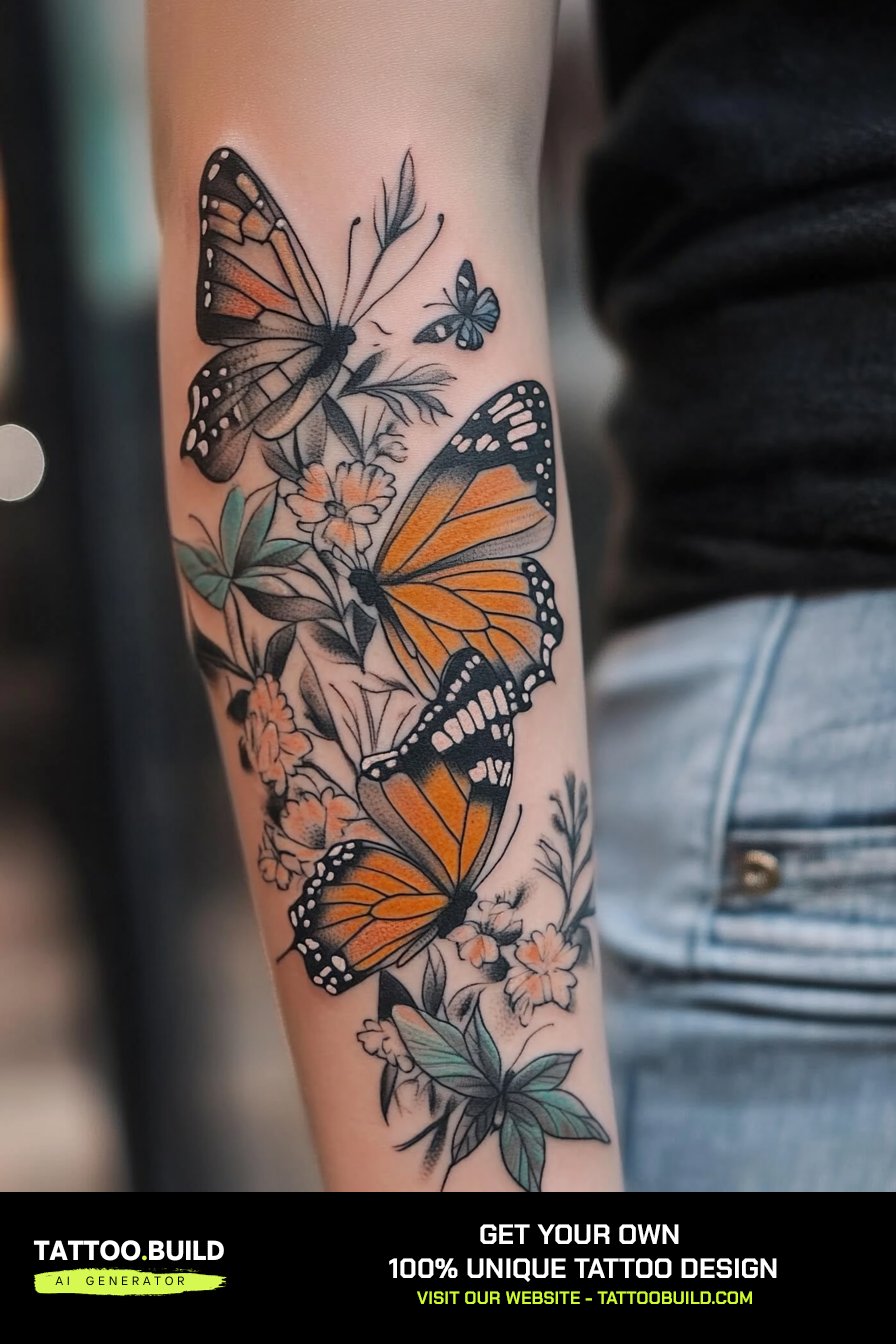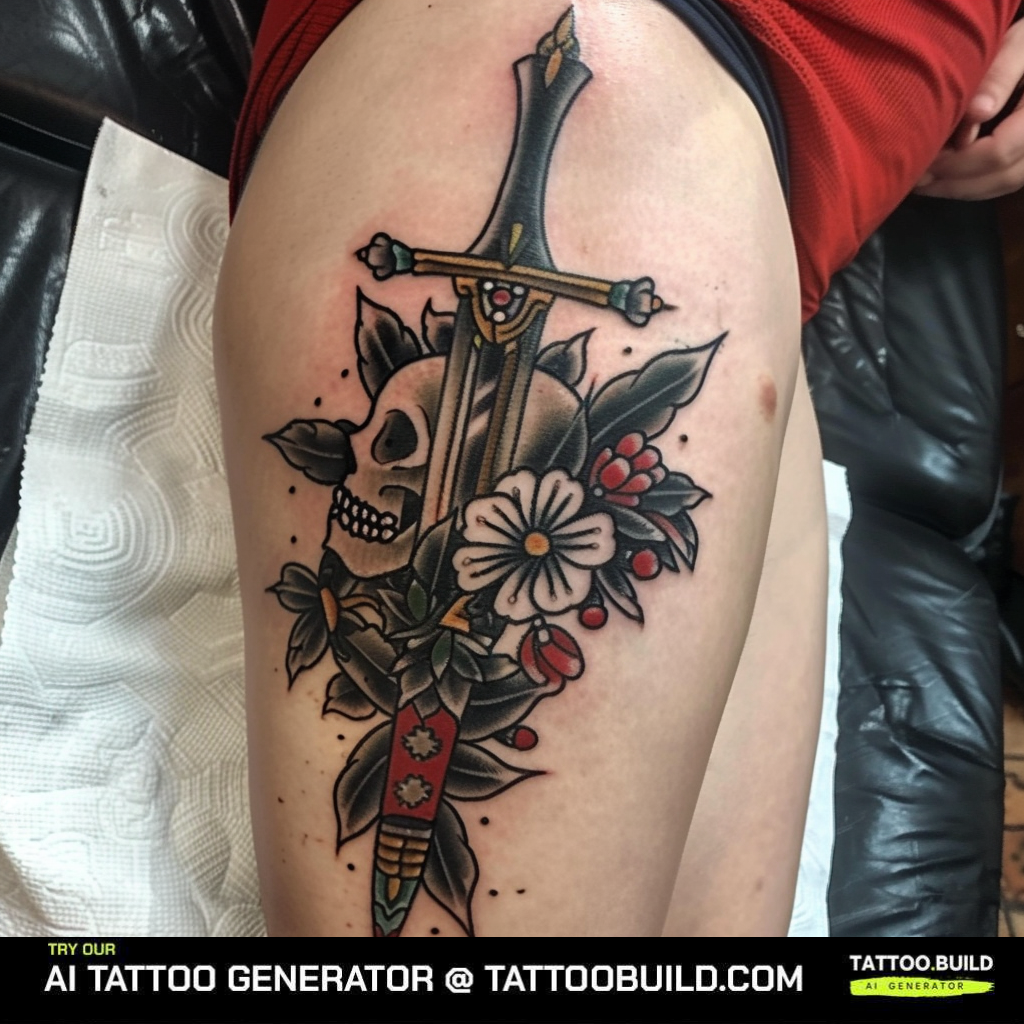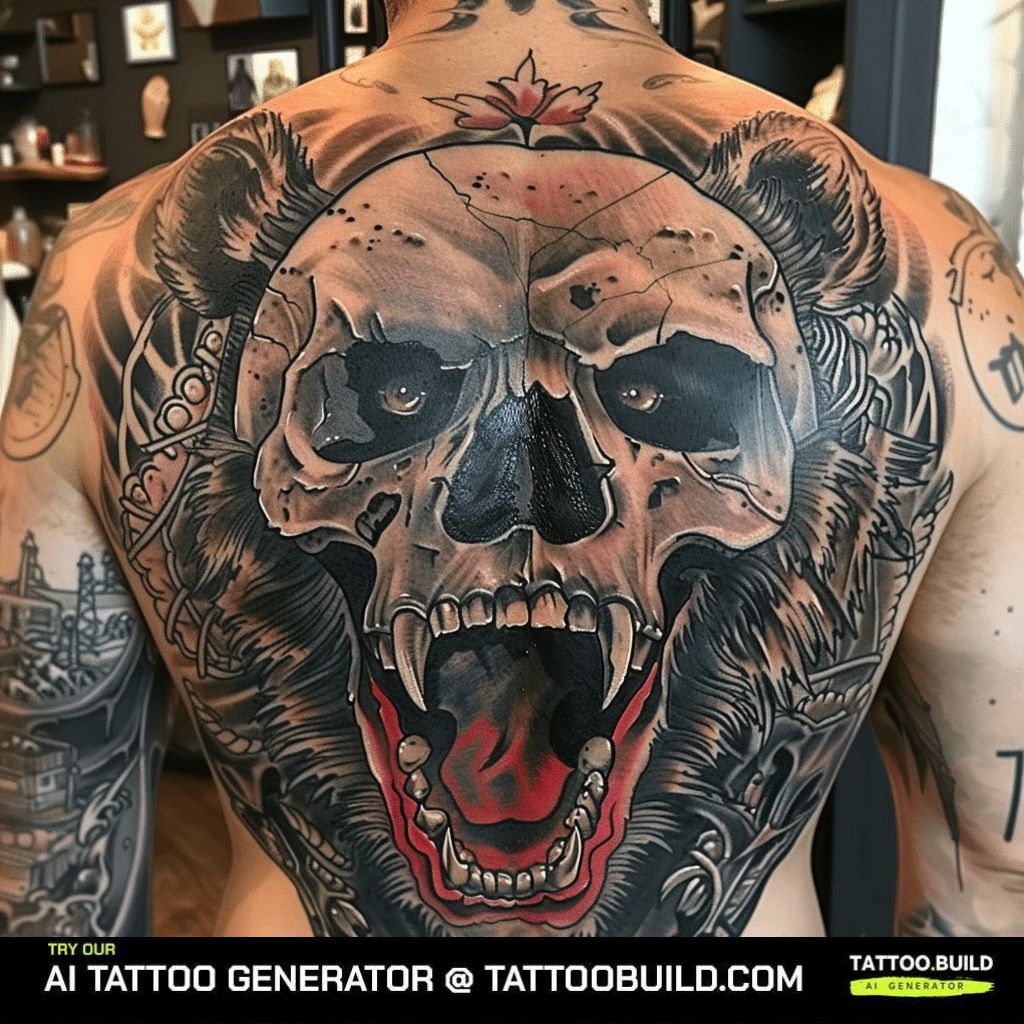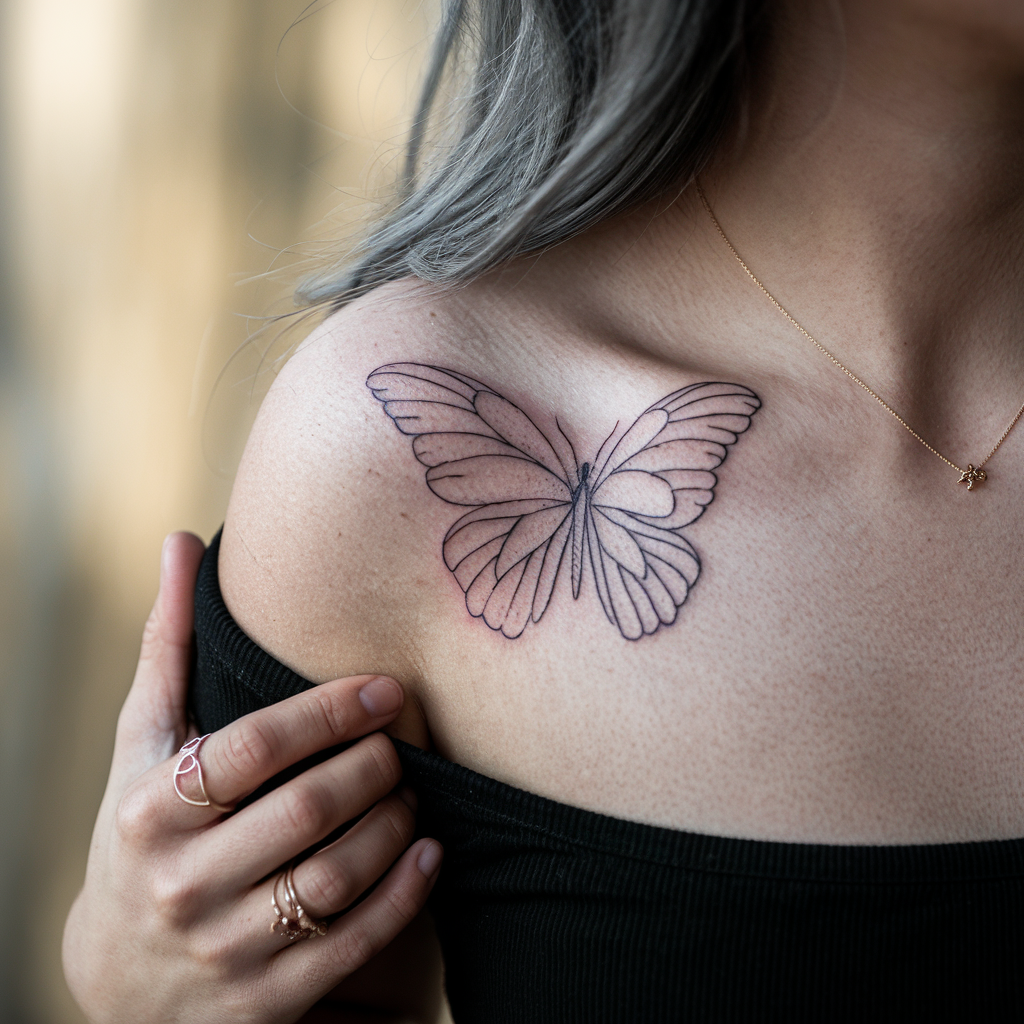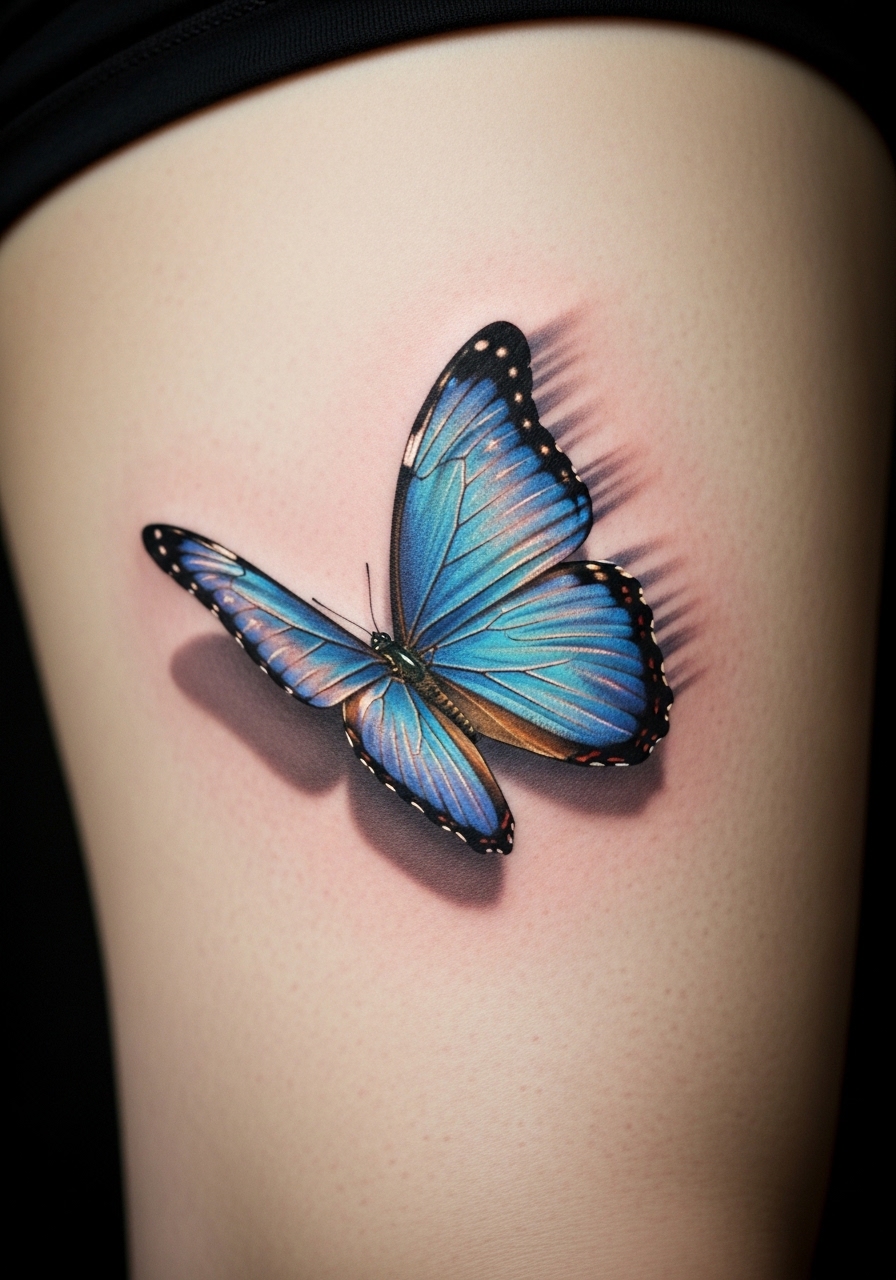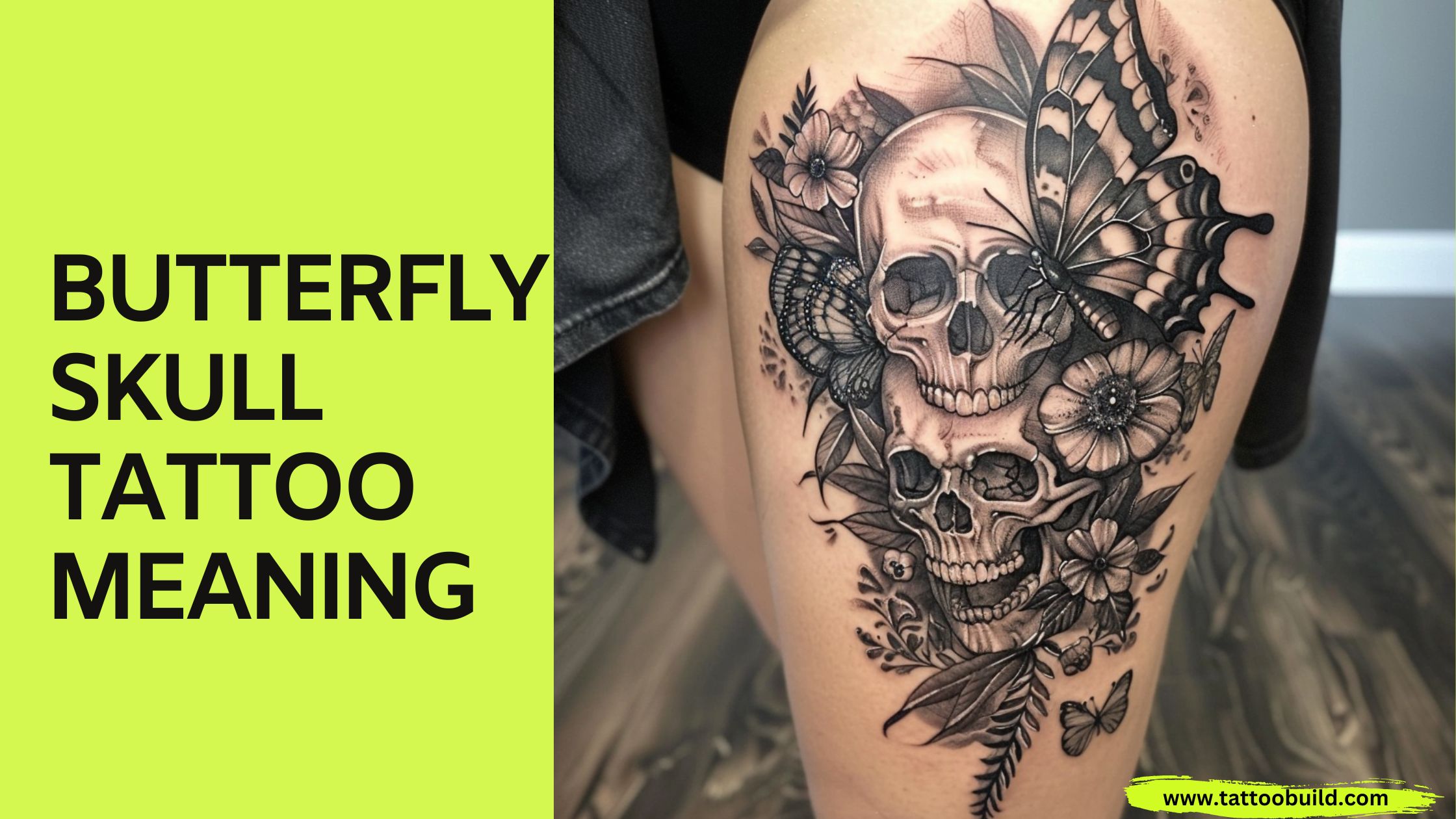
A butterfly skull tattoo works because it refuses to pick a side. One half of the image is fragile and short-lived, the other is the part of us that outlasts everything else.
I have watched this design move from a niche request to something artists now sketch almost weekly, and the reason is not trend cycles. It is that people want one tattoo that holds both grief and survival at the same time.
If you are still deciding between this and a straightforward butterfly tattoo, the difference is tone. The skull adds weight, and that weight is either exactly what you want or exactly what you should avoid.
Below I have pulled together the meanings that actually come up in consultations, the style choices that age well, and the mistakes I see people regret a year later.
Which Butterfly Skull Style Is Right for You?
Style choice matters more than subject here, because the same skull can read as delicate or menacing depending entirely on line weight.
| Style | Reads As | Best Size | How It Ages |
|---|---|---|---|
| Fine line | Delicate, quiet, personal | 2–4 in | Softens fastest; expect a touch-up in 5–8 years |
| Black and grey realism | Serious, memorial, heavy | 5–8 in | Holds well if the artist keeps true black anchors |
| Blackwork / bold traditional | Graphic, confident, loud | 4–7 in | The most forgiving over decades |
| Neo-traditional | Decorative, floral, stylised | 5–9 in | Good, provided colour is saturated not pastel |
| Dotwork / stippled | Ethereal, slow, meditative | 3–6 in | Dots merge over time; needs spacing discipline |
| Watercolour | Soft, modern, painterly | 4–7 in | Weakest long term unless built on a black skeleton |
If you are drawn to the top and bottom rows at once, ask for a fine line butterfly over a solidly shaded skull. That hybrid is the single most requested version I have seen in the last two years.
Why the Butterfly Skull Keeps Coming Back
The pairing is not a modern invention. European vanitas painting put butterflies beside skulls for centuries, using the insect as the soul and the skull as the body it leaves behind.
That is the whole idea in one image, and it is why the design survives trend cycles that kill off other mashups.
It also solves a practical problem. A skull alone can read as aggressive in a workplace, and a butterfly alone can read as slight, but together they land somewhere more adult — which is exactly why it dominates the dark feminine tattoo category right now.
The composition helps too. Wings give an artist a symmetrical frame, and a skull gives them a high-contrast focal point, so the design almost builds itself on the body.
The honest caveat is that popularity has a cost. Because so many versions exist, a generic one will look like a flash sheet pull, and the only defence is a personal detail somewhere in the wings.
What a Butterfly Skull Tattoo Actually Means
Meaning is never fixed, but these are the readings people bring into the chair most often. Pick the one that is true for you and tell your artist, because it changes the drawing.
Transformation Through Loss
This is the reading I hear most: something ended, and the person who came out the other side is not the same one who went in.
The butterfly carries the metamorphosis, the skull carries what had to die for it. Neither half means much without the other.
When someone tells me this is their reason, I suggest the wings emerge from the skull rather than sitting behind it. A butterfly that grows out of the eye sockets or the jawline tells the story visually, where a butterfly merely overlapping a skull just looks like two stickers on the same patch of skin.
Artists often add a chrysalis shape into the skull’s nasal cavity for the same reason. It is subtle, and most viewers never consciously notice it, but it makes the piece feel intentional.
The Duality of Life and Death
Some people want the tattoo to say nothing autobiographical at all. They just find the two-things-at-once idea honest.
This is the same instinct behind the flower and skull tattoo, and the design logic overlaps heavily.
If duality is your angle, symmetry is your friend. A perfectly mirrored composition, with the skull dead centre and identical wings either side, reads as a statement rather than a story.
I would push you toward heavier contrast here too. Duality shows best when the darkest black and the untouched skin sit right next to each other.
Rebirth After Addiction, Illness, or Burnout
A large share of these tattoos mark a recovery of some kind, and the butterfly does a lot of quiet work in that context.
It says the change was slow and involuntary, which is closer to how recovery actually feels than a phoenix rising in flames.
People commonly ask to hide a date inside the design — along a wing vein, or in the cracks of the cranium. In my experience that ages better than a date banner underneath, which starts to look dated as styles shift.
If you are marking sobriety or a serious diagnosis, give yourself a few months between the decision and the appointment. Nothing about this design gets worse by waiting, and the artists I trust say the same thing.
Feminine Strength Without Softening It
There is a long-standing assumption that feminine tattoos should be pretty and masculine ones should be hard. This design sits deliberately across that line.
Every artist I have asked about it says the same thing: clients requesting it are usually rejecting the choice between delicate and tough, not picking one.
Placement carries a lot of this. A sternum or spine piece reads very differently from the same design on a forearm, even at identical size.
If that is your intent, look at butterfly thigh tattoo placements before you settle on an arm. The curve of the thigh flatters wing shapes in a way flat panels do not.
Memory and Memorial
Used as a memorial, the skull stops being ominous and becomes the person, while the butterfly becomes what remains of them.
It is a gentler memorial than a portrait, and far less risky — portraits are the hardest thing in tattooing to get right, and a bad one is heartbreaking. Browsing memorial tattoo ideas first helps you see what the alternatives look like.
A detail I like: matching the butterfly species to something the person loved, or to a species native to where they lived. It carries meaning nobody else has to decode.
Avoid stacking too many memorial elements. A skull, wings, a name, a date, a birth flower, and a quote will fight each other for space and none of them will win.
Memento Mori and Protection
The skull has served as a reminder of mortality in Western art for centuries, a tradition usually filed under memento mori.
Worn on skin, that reminder flips from morbid to motivating for a lot of people. It is less about death and more about not wasting the time before it.
A smaller group treat the skull as apotropaic — warding rather than warning. That reading is more common in designs that borrow from Day of the Dead imagery than in plain anatomical skulls.
Whichever way you lean, say it out loud at the consultation. An artist drawing a warning builds a different face than one drawing a guardian.
Popular Variations and Who They Suit
If the standard version feels too familiar, these are the departures that still hold the original idea intact.
Moth Skull Instead of Butterfly
Swapping the butterfly for a death’s-head hawkmoth is the most meaningful change you can make, not just a cosmetic one.
Moths carry heavier associations — night, obsession, drawn-to-the-flame — and the species already wears a skull pattern on its thorax. The meaning of moth tattoos diverges enough from butterflies that it is worth reading before you commit.
Visually, moth wings are broader and better suited to filling a chest or back panel. Butterfly wings are cleaner at small sizes.
Floral Butterfly Skull
Adding flowers softens the piece and gives the artist somewhere to put colour without touching the skull itself.
Roses and peonies are the defaults, but birth-month flowers make the tattoo specific to you at no extra cost in space.
One warning: flowers eat room fast. A design that needed four inches suddenly needs seven, and cramming it is how you end up with a piece that turns into a grey blob by year ten.
Wings-Only Silhouette
Here the skull is implied by negative space between the wings rather than drawn outright.
It is the most elegant version and the hardest to execute, because the illusion collapses if the spacing is off by a few millimetres.
Only book this with someone whose healed work you have seen. Fresh photos hide exactly the kind of spread that ruins negative-space designs.
Sugar Skull Crossover
Replacing the anatomical skull with a decorated calavera changes the mood completely, from solemn to celebratory. If you are considering it, read up on sugar skull tattoo traditions first.
This imagery belongs to a living cultural practice, so it is worth understanding what you are wearing rather than treating it as a pattern choice.
Minimal Wrist or Ankle Version
Scaled down to an inch or two, the design becomes a private marker rather than a statement.
Simplify aggressively at this size. Two eye sockets, a suggestion of teeth, and clean wing outlines will still read at arm’s length, where a detailed cranium will blur into a smudge within a few years.
Placement, Size, and Pain
The symmetry of this design makes placement less flexible than it first appears.
Centred spots — sternum, spine, back of the neck, centre forearm — suit it best, because an off-centre symmetrical image looks accidental.
On curved or wrapping placements, ask for a slightly asymmetrical drawing. It will look symmetrical once it sits on the body, which is what actually matters.
For pain, the ribs and sternum are the hardest sell here. They are also where the design looks best, which is an unfair trade-off but a real one.
Budget four inches minimum for anything with a detailed skull. Anything smaller and you are paying for detail that will not survive.
Healing and Aftercare That Protects the Detail
This design is detail-dependent, so sloppy healing costs you more than it would on a bold traditional piece.
Follow whatever your artist tells you over anything you read online, including this. General guidance from the American Academy of Dermatology is a reasonable baseline, and the tattoo healing stages guide covers what normal looks like week by week.
Keep it out of direct sun during healing and use high-SPF sunscreen on it for life afterwards. Sun is the main reason fine linework fades early.
Never pick or scratch flaking skin over the wings. Pulling a scab out of a thin line takes the ink with it, and patch touch-ups rarely blend invisibly.
If you see spreading redness, heat, swelling that worsens after day three, pus, or a fever, contact a doctor rather than your artist. Infections and allergic reactions are medical problems, not tattooing problems, and they are treatable when caught early.
Still Not Sure? Common Mistakes to Avoid
The regrets I hear about are almost never about the concept. They are about execution decisions made in the twenty minutes before the needle started.
Going too small is the number one mistake. A skull has internal structure, and structure needs room.
The second is picking an artist by portfolio breadth rather than depth. Someone with fifty blackwork designs healed and photographed is a safer bet than someone who does a bit of everything.
The third is copying a reference exactly. Bring three or four images, tell the artist what you like in each, and let them draw something that fits your body.
And if you are genuinely torn between this and something lighter, sit with butterfly wrist tattoo options for a week. Wanting the skull after that week is a much better signal than wanting it today.
Frequently Asked Questions
Does a butterfly skull tattoo have to be about death?
No. Most people I have spoken to about theirs describe it as being about change rather than death specifically. The skull functions as the before, the butterfly as the after, and that framing works for recovery, leaving a relationship, or any ending you chose. If you want to steer the reading away from mortality, adding flowers or colour shifts the tone noticeably. Telling your artist your intent matters more than any single design element.
Where does this design look best on the body?
Centred, symmetrical placements suit it best — sternum, spine, centre forearm, or the back of the calf. The forearm is the most practical starting point because it heals easily and you can see it. Ribs and sternum give the most dramatic result but are among the more painful spots for most people. Avoid high-friction areas like the inner wrist edge or the side of a finger, where fine linework breaks down fastest.
How much should I expect to pay?
Pricing varies enormously by city and artist demand, so treat any number you read as a rough anchor. A small, simple version is usually a shop-minimum or single short-session job, while a detailed black and grey piece typically runs a half day or more. Most reputable artists quote by the session or by the piece rather than strictly by the hour for work like this. Ask for the quote in writing before you book, and expect a deposit that comes off the final total.
Is fine line or bold shading better long term?
Bold shading ages better, and it is not close. Fine lines spread gradually as skin changes, so a hairline detail at year one can be noticeably softer by year eight. That does not make fine line the wrong choice — it just means planning for a touch-up rather than being surprised by one. A common compromise is fine linework on the wings over a solidly shaded skull, which keeps the delicacy where it shows and the durability where it counts.
Can I add a name, date, or birth flower?
Yes, and it is one of the better ways to make a common design specific to you. Integrated elements last better than added ones — a date hidden along a wing vein will look intentional in a decade, where a separate banner underneath often does not. Keep additions to one or two at most, because crowding is what turns detailed pieces into indistinct shapes over time. Show your artist everything you want included at the consultation, not on the day.
Quick Summary
- The butterfly skull pairs impermanence with what endures — a pairing borrowed from centuries of vanitas art, not a modern mashup.
- The most common personal meaning is transformation through loss, followed by recovery, memorial, and plain duality.
- Wings that emerge from the skull tell the story far better than wings placed behind it.
- Blackwork and black and grey realism age best; watercolour and fine line will need touch-ups sooner.
- Centred, symmetrical placements suit the design — sternum, spine, and centre forearm lead the list.
- Four inches is a sensible minimum for any version with a detailed skull.
- Hide dates and names inside the design rather than adding banners underneath.
- Protect the healing tattoo from sun and picking, and treat any sign of infection as a medical issue, not a tattoo issue.