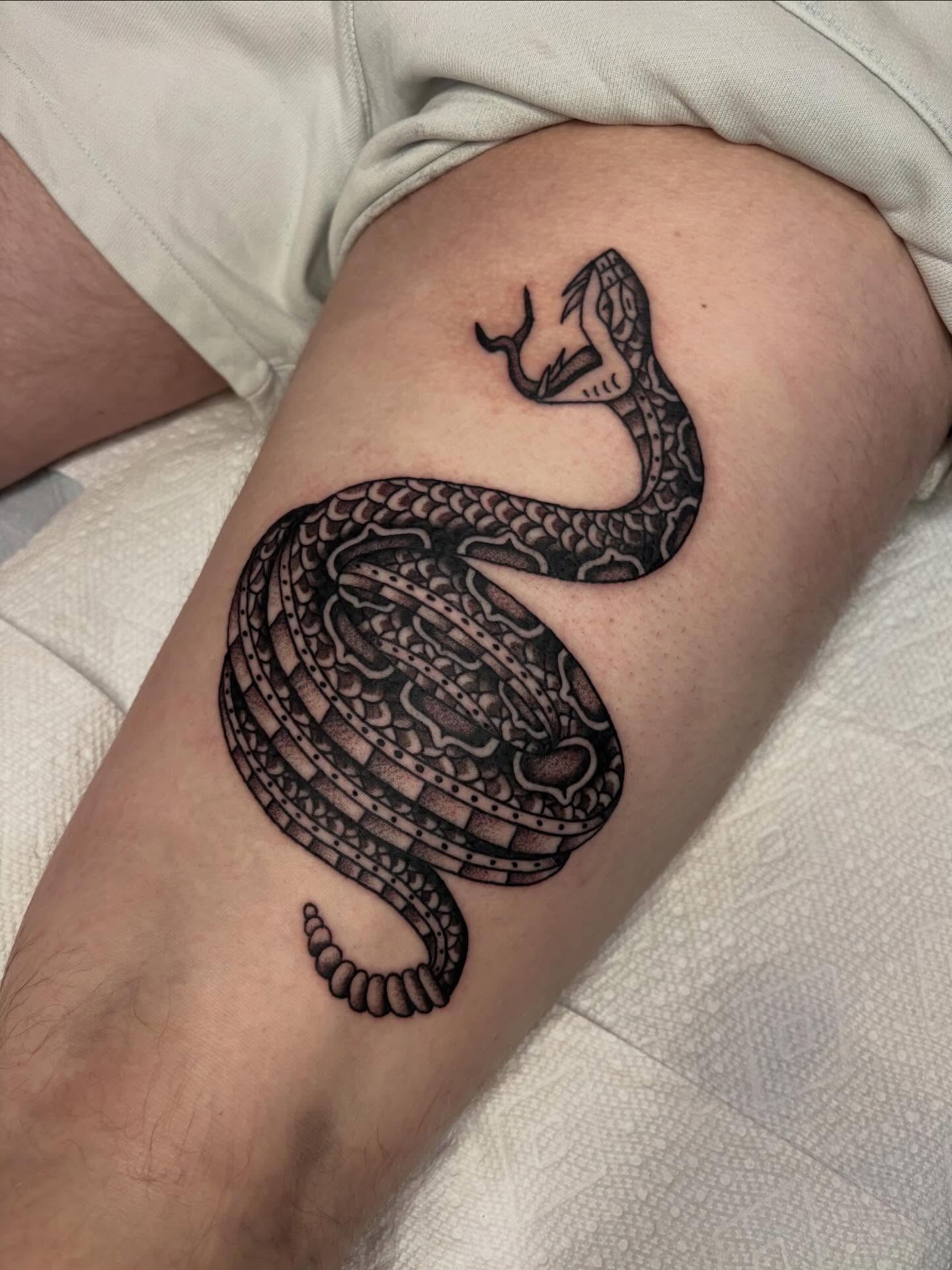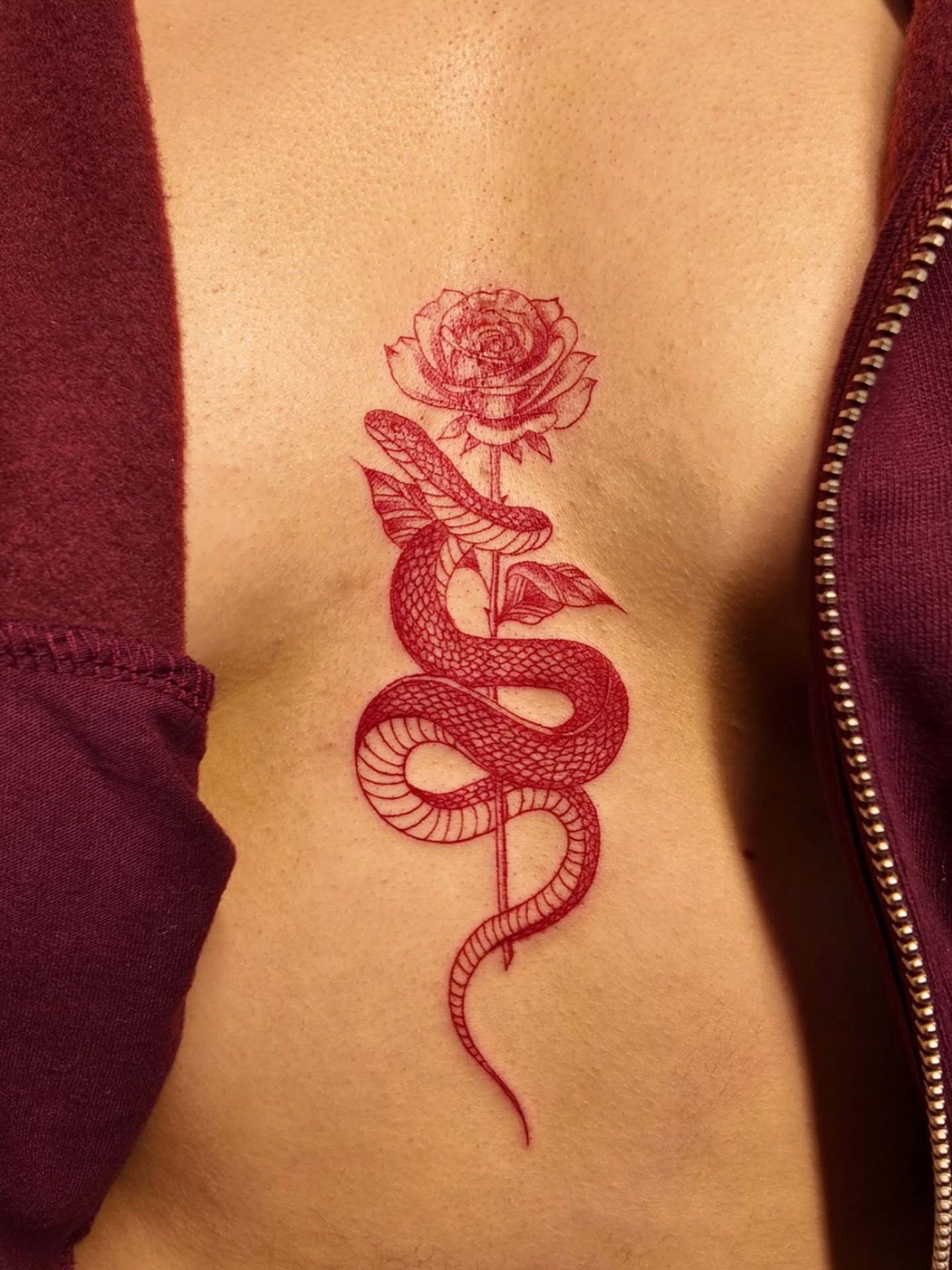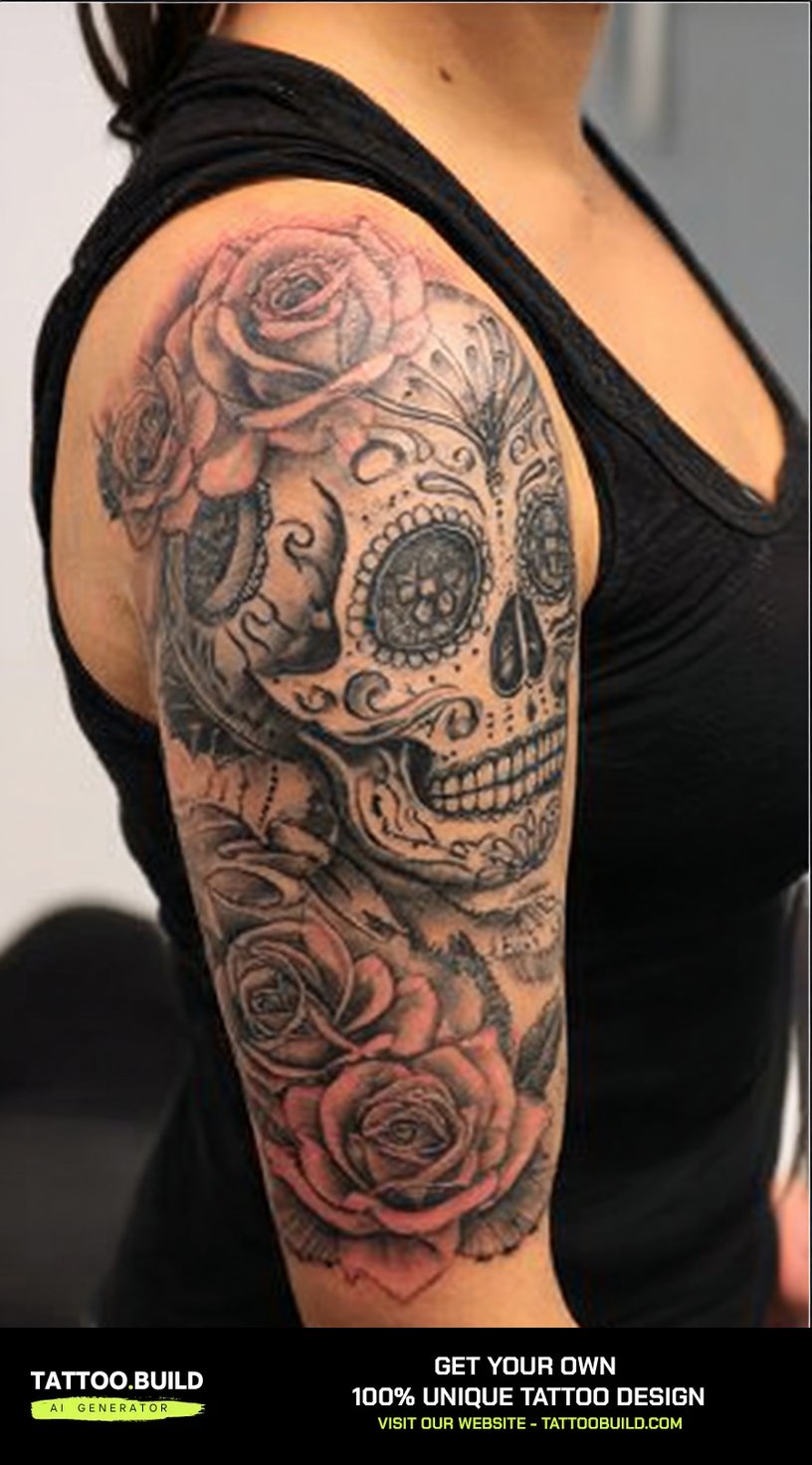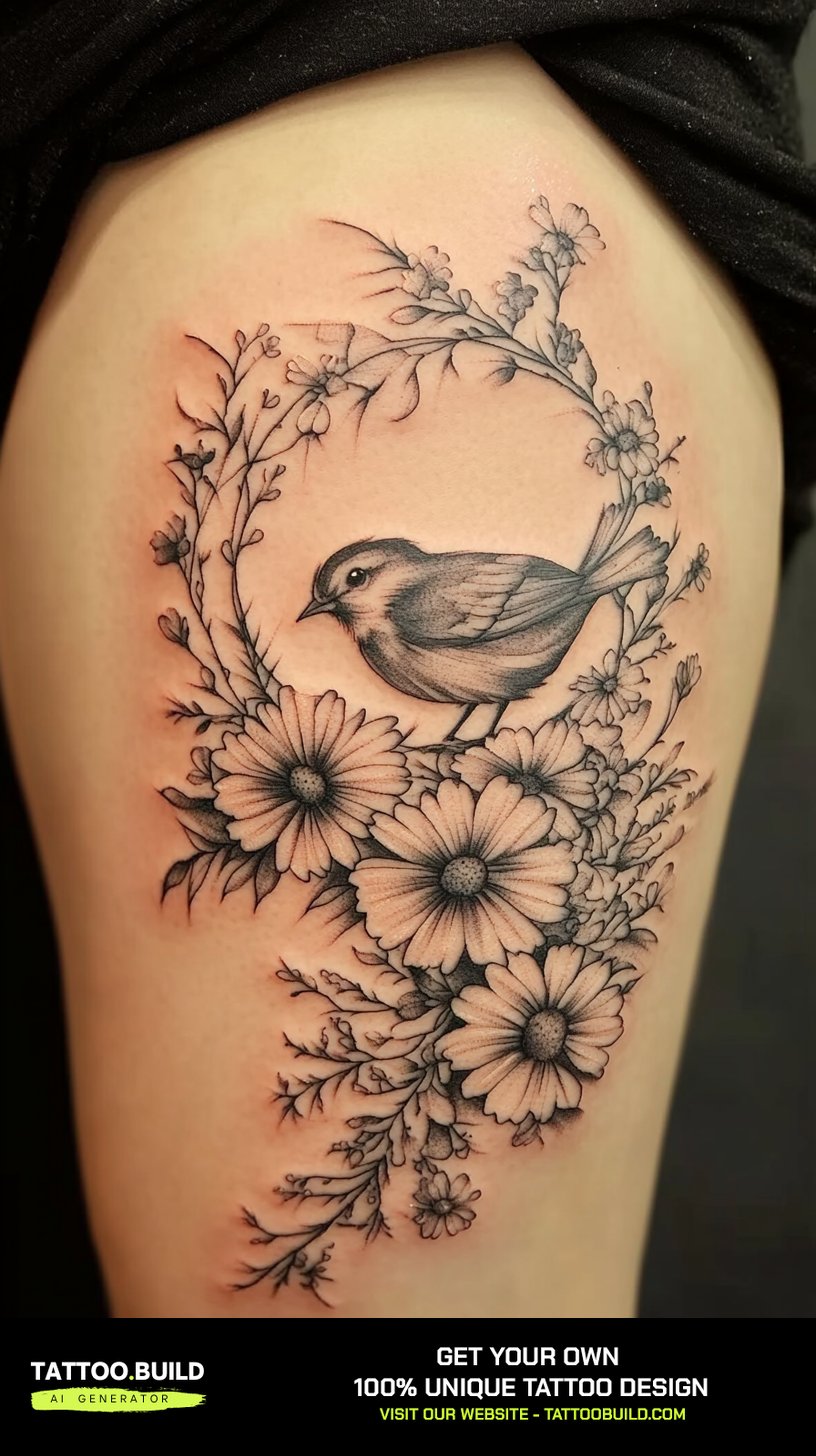
I have been collecting reference photos of black-ink work for years, and the same thing happens every time I show a client a folder of it: they go quiet for a second, then start pointing. Blackwork is the one tattoo style that reads clearly from across a room and still holds up under a magnifying glass.
The idea is simple. No colour, no soft grey wash in the traditional sense — just black ink used as both the line and the shape, with your bare skin doing the work of the highlight.
That simplicity is deceptive. In my experience, blackwork is the least forgiving style an artist can take on, because there is nowhere for a wobbly line or a patchy fill to hide.
Below are more than 90 blackwork tattoo designs pulled from real work, sorted by the kind of thing you might actually be looking for. If you are weighing black ink generally, my guide to forearm black and white tattoos is a useful companion piece.
Which Blackwork Style Is Right for You?
Blackwork is not one look. These are the five directions I see people choose between most often, and the honest trade-offs of each.
| Blackwork approach | Best suited to | Typical sitting | Ages like |
|---|---|---|---|
| Ornamental / geometric | Chest, sternum, forearm, spine | 3–6 hours per panel | Very well — symmetry hides line softening |
| Dotwork & stipple shading | Mandalas, moons, soft gradients | 4–8 hours, often multiple visits | Fades softer than solid fill; may need a touch-up |
| Illustrative / etching | Animals, botanicals, portraits of objects | 2–5 hours for a mid-size piece | Depends heavily on line weight choices |
| Tribal & neo-tribal | Shoulders, arms, thighs, full sleeves | Multi-session for anything large | Excellent — the boldest option long-term |
| Blackout / heavy fill | Cover-ups, statement sleeves | Many sessions, slowest to heal | Bold, but needs a skilled hand to stay even |
If you are unsure, start with the row that matches the body part you already have in mind. Placement narrows the field faster than style preference does.
What Makes Blackwork Different From Everything Else
Colour tattoos rely on hue contrast to separate one shape from another. Blackwork throws that tool away and works entirely with value, weight and negative space.
That is why a good blackwork piece looks composed rather than drawn. The artist is deciding where black goes and, just as importantly, where it deliberately does not.
Every artist I have asked about this says the same thing: the hardest part is not the linework, it is the packing. A solid black area that heals patchy will need a second pass, and sometimes a third.
The style also has genuinely deep roots. Heavy black tattooing appears in Polynesian, Maori, Berber, Dayak and Filipino traditions long before it was ever a Western studio trend, and several of those practices are still living traditions rather than historical footnotes.
Worth knowing before you book: blackwork is usually more expensive per hour of visible result than fine-line work, because the same square inch takes far more passes to fill.
Blackwork Tattoo Designs Worth Considering
1. Geometric and Mandala Blackwork
Mandalas are the entry point for most people, and for good reason. The radial symmetry gives the artist a built-in guide, and the eye forgives a lot when a shape repeats cleanly.
The versions I like best keep one dense black core and let the outer rings breathe. When every ring is equally heavy, the design reads as a grey blob from three feet away.
Sternum, spine and the inside of the forearm all suit this well because those areas are roughly symmetrical to begin with. If you want more structured options, my roundup of geometric tattoo designs goes deeper on the grid-based end of things.
One honest limitation: a mandala placed over a joint will distort. Ask your artist to draw it on freehand rather than working from a flat printed stencil.
2. Abstract Patterns and Ornamental Fill
Abstract blackwork is the most personal category here because there is no reference object to get right or wrong.
When I tested a few of these ideas as temporary transfers before committing, the ones that worked were the ones with a clear flow direction — the pattern moving along the limb rather than sitting on it like a sticker.
Ornamental fill is the close cousin: filigree, lace and scrollwork borrowed from metalwork and textile design, used to frame bare skin instead of covering it.
These age well because there is no likeness to lose. A slightly softened line in an abstract piece just looks like a slightly softer abstract piece.
3. Blackwork Animal Portraits
Animals in blackwork are usually rendered in an etching or woodcut style — parallel hatching instead of smooth shading.
Wolves, ravens, stags and big cats dominate, partly because their fur and antler structure gives the artist natural places to break up black mass.
In my experience this is the category where artist selection matters most. A blackwork animal that is even slightly off in the eyes will bother you forever. If wolves in particular are your thing, there are more directions in my wolf tattoo ideas collection.
Ask to see healed photos, not fresh ones. Fresh etching-style hatching always looks crisp; healed work at six months tells you whether the line spacing was actually sustainable.
4. Botanical and Floral Blackwork
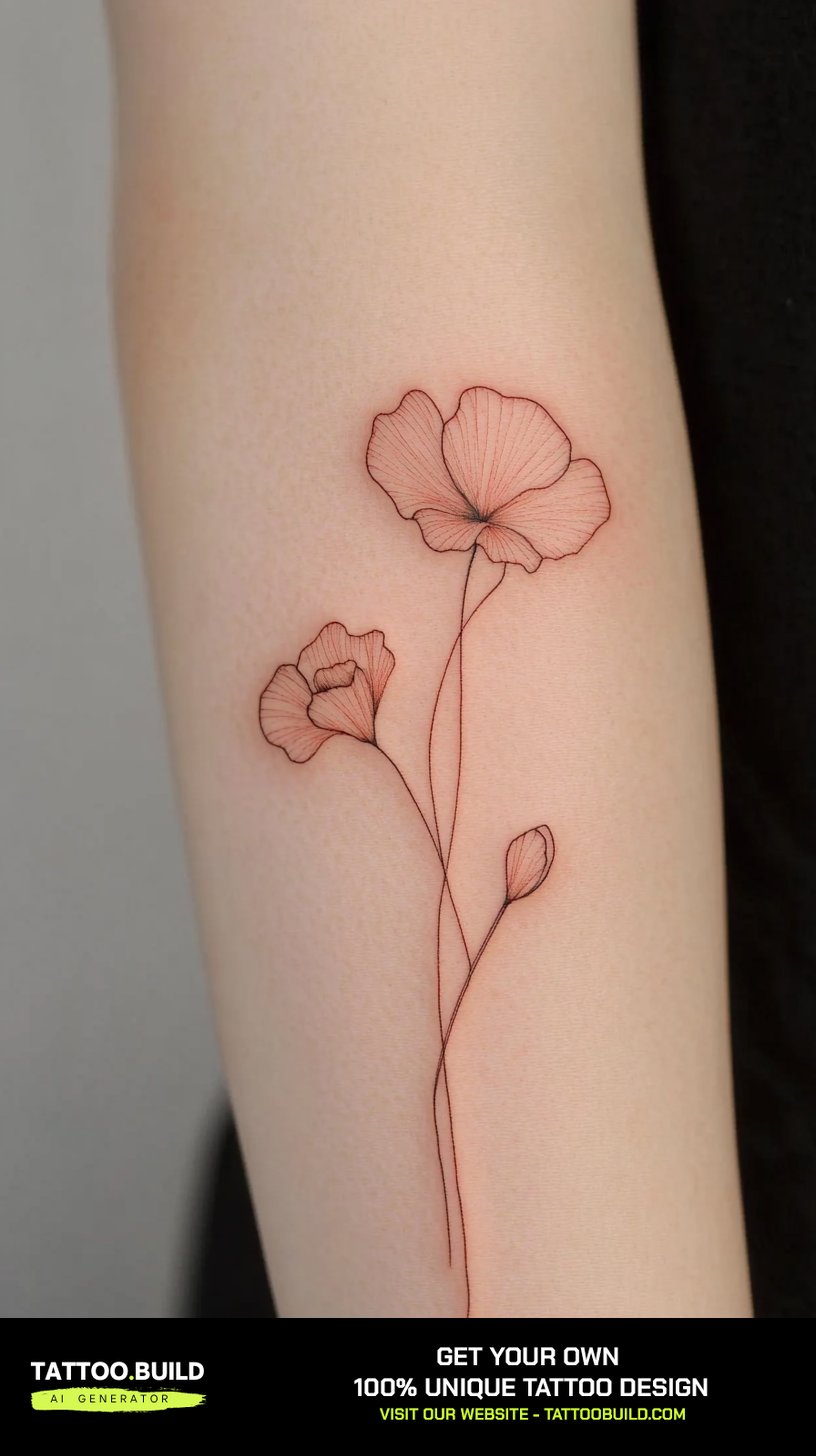
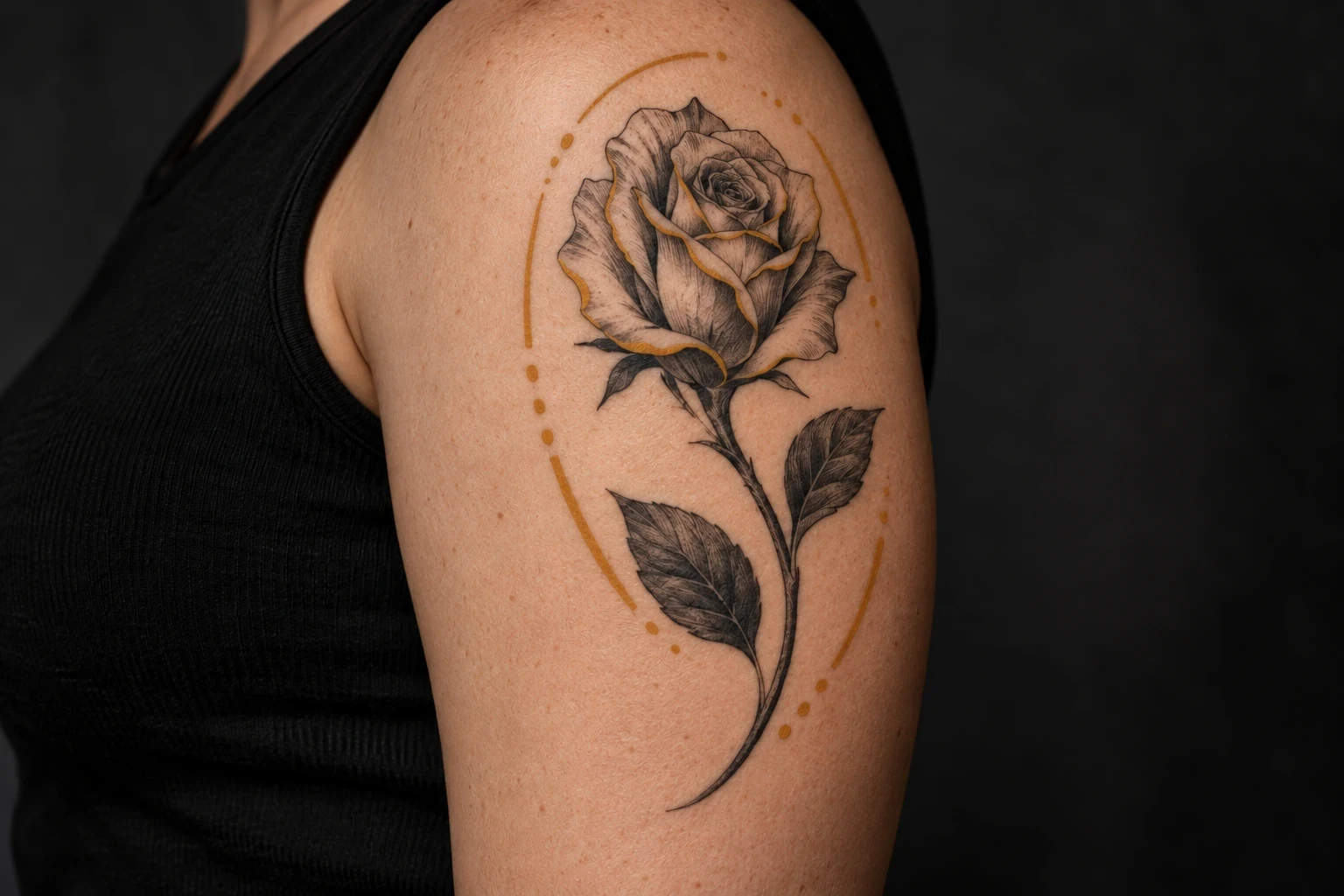
Botanical blackwork softens the style without abandoning it. Stems, leaves and petals give you organic curves against all that hard black.
Moths and butterflies paired with flowers have been one of the most requested combinations I have seen over the last few years, and they work because the wing pattern is already a natural blackwork subject.
Realistic botanicals need more line weight variation than people expect. A leaf drawn with one uniform line thickness looks flat no matter how well it is executed.
Placement-wise these flow beautifully down a forearm or up a ribcage. For more floral direction, my flower tattoo drawings gallery has plenty of line-based starting points.
5. Blackwork Skulls
Skulls are almost a default subject in black ink because the form is already built from light and shadow.
The strongest versions I have seen leave the cheekbone and brow ridge as bare skin and let the eye sockets carry the heaviest black. Reverse that and the whole thing muddies.
Skull-and-flower pairings remain popular for the contrast of hard and soft, and they give the artist an excuse to break up an otherwise heavy composition — there is a whole gallery of them in my skull and flower tattoos post.
If you want something darker, horror-leaning blackwork sits comfortably next to these; a few of those pieces appear further down.
6. Blackwork Sleeves
A blackwork sleeve is the biggest commitment in this article and the one I would slow down on the most.
These are almost never done in one sitting. Expect a planned sequence of sessions, usually spaced three to six weeks apart so each section fully heals before the next.
The thing people underestimate is composition. A sleeve is a wrap-around surface, so the design has to work from four viewing angles, not one flat drawing.
Themed sleeves — ocean, pirate, geisha, mythology — give the artist a spine to hang the layout on. If you are budgeting, my breakdown of full sleeve tattoos covers the planning side.
7. Mythological Creatures
Dragons, krakens, minotaurs and horned figures are natural blackwork subjects because myth art was mostly monochrome to begin with.
Japanese-influenced dragons in particular translate well, since the traditional style already uses heavy black outlines and defined scale patterns.
The trap here is detail density. A dragon with every scale individually rendered will read as texture noise once it settles into the skin.
8. Nature Scenes and Landscapes
Landscape blackwork — pine forests, mountain ranges, a deer standing in a treeline — has been a steady favourite for years.
These work best in a contained frame: a circle, an arch, a rectangle. Without a border the scene tends to drift into the surrounding skin.
When I tested a forest-scene stencil on the outer forearm, the version with a hard black sky and negative-space trees read far better at distance than the reverse.
Alternatives and Variations Worth Knowing
If none of the above is quite it, these five directions cover most of the remaining ground.
Tribal and Neo-Tribal Blackwork
This is where blackwork actually comes from, and it deserves more care than a Pinterest save.
Maori ta moko, Samoan pe'a and Filipino batok are culturally specific practices with rules about who wears what. Many artists working in those traditions will discuss meaning with you first, and I would treat that conversation as part of the process rather than an obstacle.
Neo-tribal is the modern, non-attributed version: the same bold sweeping black shapes without borrowing a specific cultural motif. It is the honest choice if the visual language is what draws you. My tribal tattoo ideas post has a wider spread.
Blackwork Armbands and Bands
A solid black band is the cleanest statement in the whole style, and one of the fastest to sit for.
Bands also cover well. I have seen several used to bury an old faded piece rather than pay for laser removal, though that only works if the original is small and the band is genuinely solid.
Floral or ornamental bands split the difference: same silhouette, less commitment to a full block of black.
Fantasy Art Blackwork
Fantasy blackwork pulls from book illustration and tabletop art — castles, swords, cloaked figures, celestial motifs.
It suits people who want narrative rather than pattern. The risk is that narrative pieces date faster than abstract ones.
Mechanical and Steampunk Blackwork
Gears, pistons, exposed clockwork and biomechanical forms all rely on hard edges, which is exactly what black ink does best.
These pieces need real perspective drawing skill. Ask specifically whether the artist draws mechanical work regularly, because it is a distinct skill from organic linework.
Whimsical and Illustrative Blackwork
Not all blackwork is severe. Storybook characters, playful creatures and loose sketchy linework all sit comfortably in the style.
This category is the most forgiving for a first tattoo, because a slightly imperfect line reads as charm rather than error.
Horror and Dark Blackwork
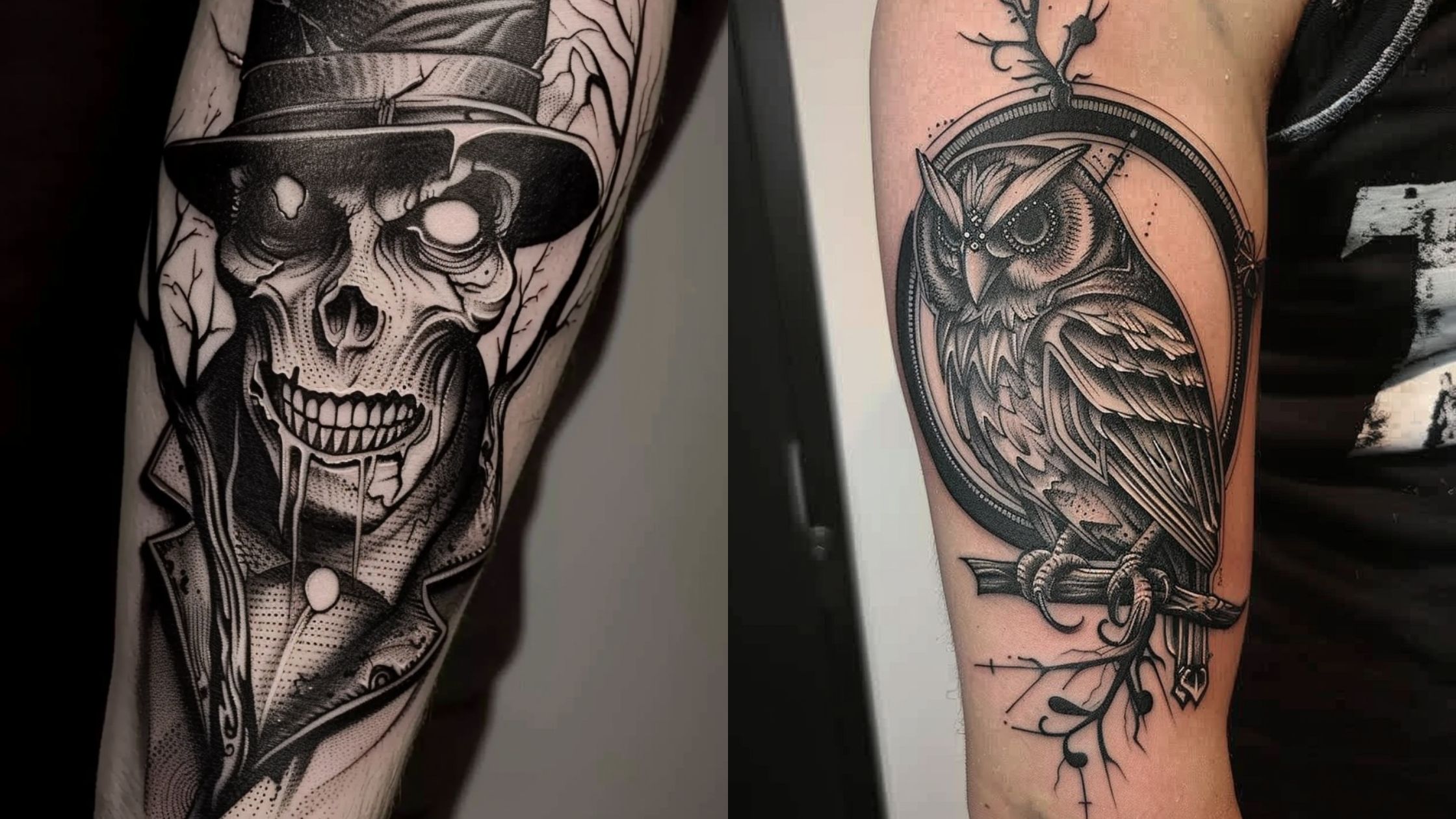
At the opposite end, horror blackwork leans on heavy negative space and deliberately unsettling composition.
These are the pieces that benefit most from restraint. The scariest ones I have seen show less, not more.
Blackwork Aftercare and Practical Advice
Heavy black fill is a bigger wound than a fine-line piece of the same size, and it behaves differently while healing.
Expect more plasma weeping in the first two days, more swelling, and a heavier scab. Your artist will give you a specific protocol — follow theirs over anything you read online, including this page.
General dermatology guidance is to keep new work clean, moisturised and out of direct sun, and to avoid soaking it in pools or baths until it has fully closed. The American Academy of Dermatology publishes plain-language aftercare advice worth reading before your appointment.
Anything that looks like infection is a doctor question, not a forum question. Spreading redness, heat, pus, or a fever after a tattoo needs medical attention promptly — the Mayo Clinic lists the warning signs clearly. Allergic reactions to black ink are less common than to colour pigments but they do happen, sometimes months later.
Common Mistakes and Still Not Sure?
The most frequent regret I hear is not about the design. It is about going too big too early, before knowing how your skin takes solid black.
A close second is choosing an artist by price. Blackwork rewards experience more than almost any other style, and a cheap patchy fill costs more to correct than it saved.
The third is ignoring placement. Solid black over a high-friction area — palm side of the wrist, finger sides, feet — will need touch-ups regardless of who does it.
Still weighing options? Compare against Maori tattoo ideas if the cultural linework is what pulls you, or read up on what a sleeve tattoo costs before committing to anything full-arm. Ink formulation and safety oversight vary by country; the US FDA maintains a consumer fact sheet on tattoo inks.
Frequently Asked Questions
Does blackwork hurt more than other tattoo styles?
In most cases yes, but not because the needle is different. Solid black areas require the artist to go over the same skin repeatedly to pack the ink evenly, so the session is longer and the area gets more irritated. People I have spoken to describe large fill work as duller and more tiring rather than sharper than line work. Bony areas and the inner arm remain the toughest spots regardless of style.
How long does a blackwork sleeve take to finish?
Almost always multiple sessions across several months. A common pattern is a full-day outlining session followed by fill sessions spaced three to six weeks apart so each area heals before the next. The total depends on density, your pain tolerance and your artist’s schedule. Anyone promising a full blackwork sleeve in one sitting is worth a second look.
Will blackwork fade badly over time?
Solid, well-packed black generally ages better than colour or fine grey wash, because there is more pigment sitting in the skin. That said, all tattoos soften over decades, and dotwork or very fine hatching will blur sooner than bold fill. Sun exposure is the biggest controllable factor. Sunscreen on healed work genuinely helps.
Can blackwork cover an existing tattoo?
Often, and it is one of the more reliable cover-up approaches because black covers black. But it depends on how dark and how large the original is, and a heavy cover-up limits what you can do in that area later. A consultation with photos is the only way to know. Some artists will recommend a few laser sessions first to lighten the base.
Is blackwork more expensive than other styles?
Usually, when measured per square inch of finished tattoo. The ink cost is negligible; you are paying for chair time, and packing black takes considerably more of it than outlining. Rates vary hugely by city and artist reputation, so get quotes from two or three studios. Do not treat the lowest one as the default choice.
Quick Summary
- Blackwork uses only black ink and bare skin — no colour, no reliance on grey wash.
- Pick your direction first: ornamental, dotwork, illustrative, tribal or blackout.
- Placement narrows the field faster than style preference does.
- Solid fill costs more chair time than fine-line work of the same size.
- Ask every artist for healed photos, not fresh ones.
- Large pieces are multi-session by nature; plan three to six weeks between fills.
- Heavy black heals slower and weeps more — follow your artist's aftercare, and see a doctor for signs of infection.
- Tribal blackwork carries cultural meaning; neo-tribal is the honest alternative if the look is what draws you.