A wolf is one of the few animals that works at almost any size, in almost any style, and still reads instantly as a wolf. That is a large part of why it has stayed near the top of the request list for as long as I have been writing about tattoos.
I have spent a lot of time going through wolf pieces from studios in different countries, and the pattern is consistent. The designs people love years later are almost never the most complicated ones.
They are the ones where the artist picked a single clear idea, a lone howl, a pack, a face dissolving into a forest, and gave it enough room to breathe. If you are still at the sketching stage, it is worth also browsing wolf tattoo design ideas before you settle on a direction.
Below are the styles that keep coming back, what each one actually costs you in time and healing, and the honest trade-offs nobody mentions at the consultation.
Which Wolf Tattoo Style Is Right for You?
Style choice affects your session length, your budget and how the piece looks in ten years far more than the subject does. Here is how the main options compare.
| Style | Best for | What to expect |
|---|---|---|
| Black & grey realism | Portraits, pack scenes, forest backgrounds | Longest sessions and the highest artist skill requirement; usually needs the most space |
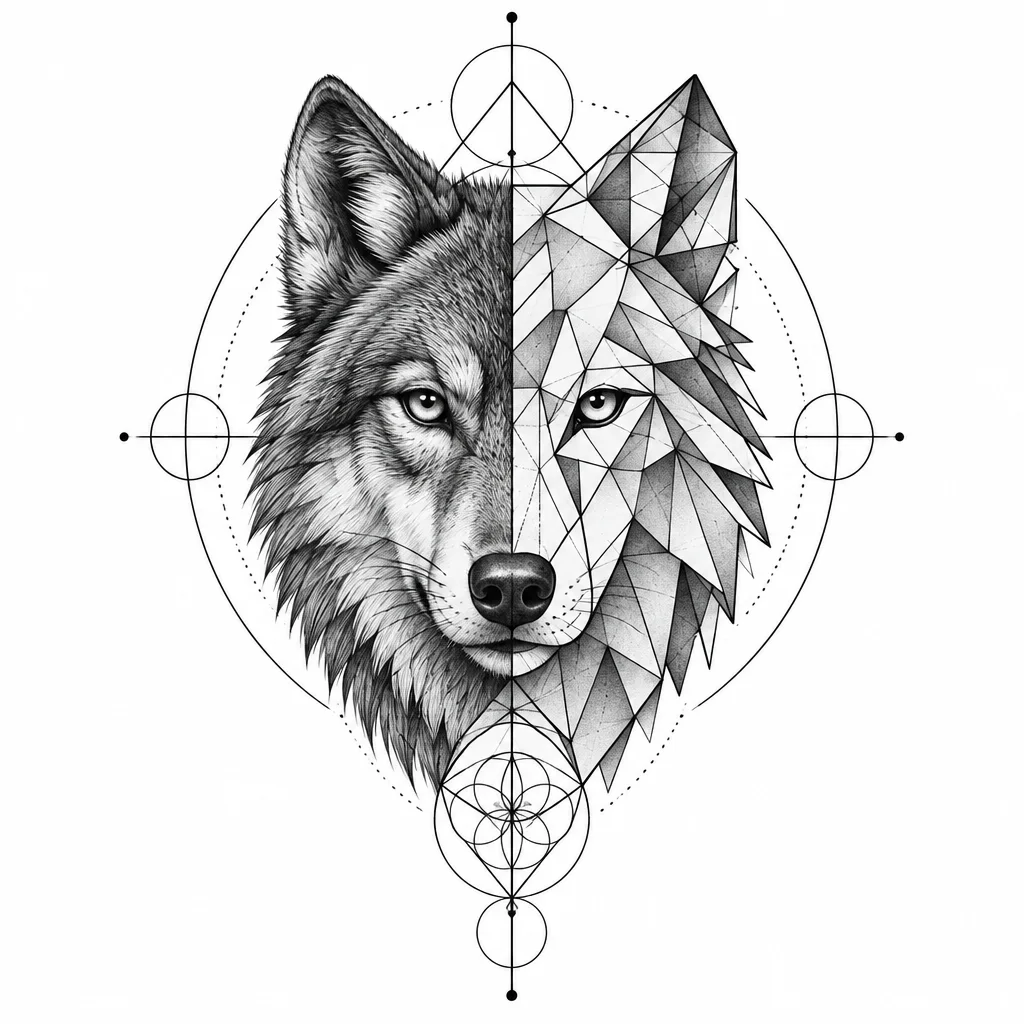
| Fine line & geometric | Forearms, calves, thighs, smaller budgets | Fast to tattoo and clean on day one; thin lines soften more than bold ones over the years |
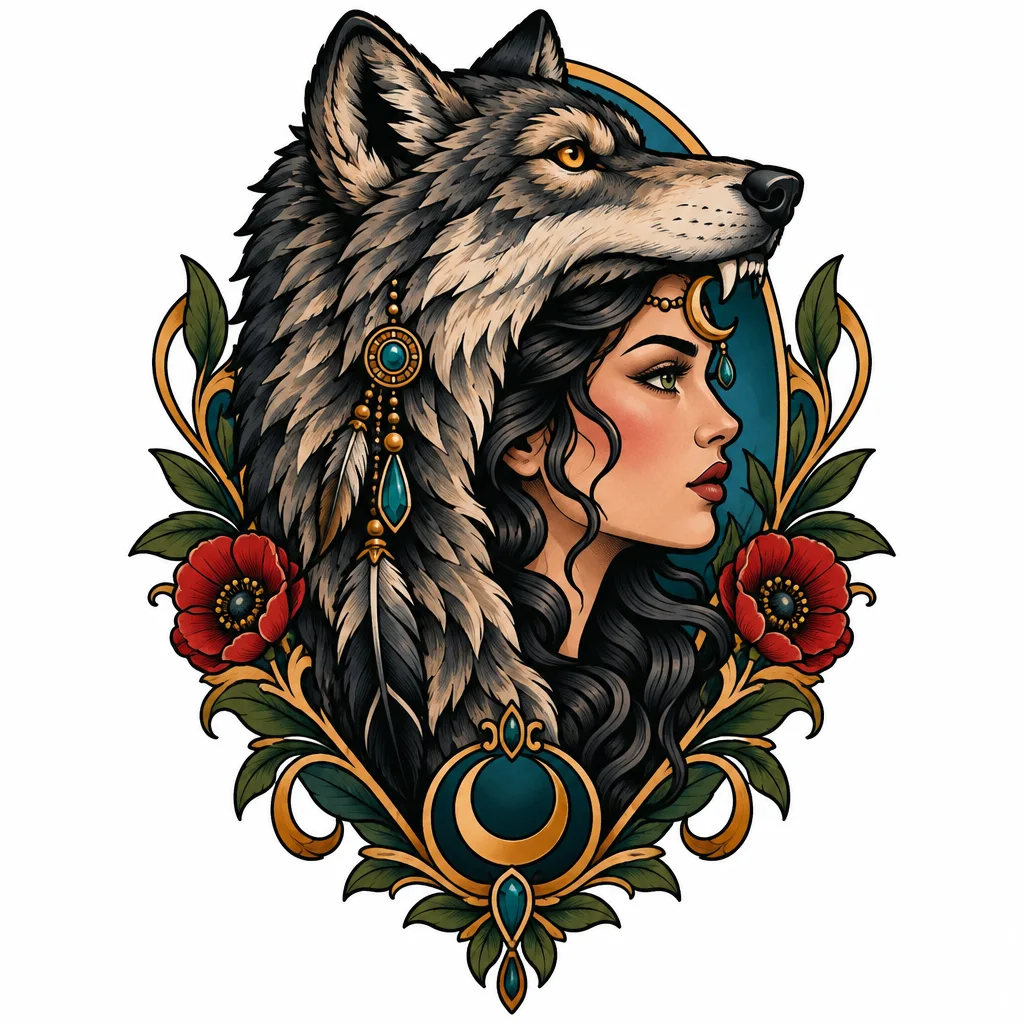
| Neo-traditional | Upper arms and thighs, muted colour palettes | Strong shapes with softer shading; ages better than most colour work |
| American traditional | Anyone who wants the design readable from across a room | Bold outlines and flat colour; typically the most durable option long term |
| Watercolour | Colour lovers who want movement around the wolf | Beautiful fresh; splashes without any line or black anchor tend to fade fastest |
| Celtic & Norse knotwork | Heritage pieces and shoulder or chest placements | Heavy black; spacing between the strands matters more than the strands themselves |
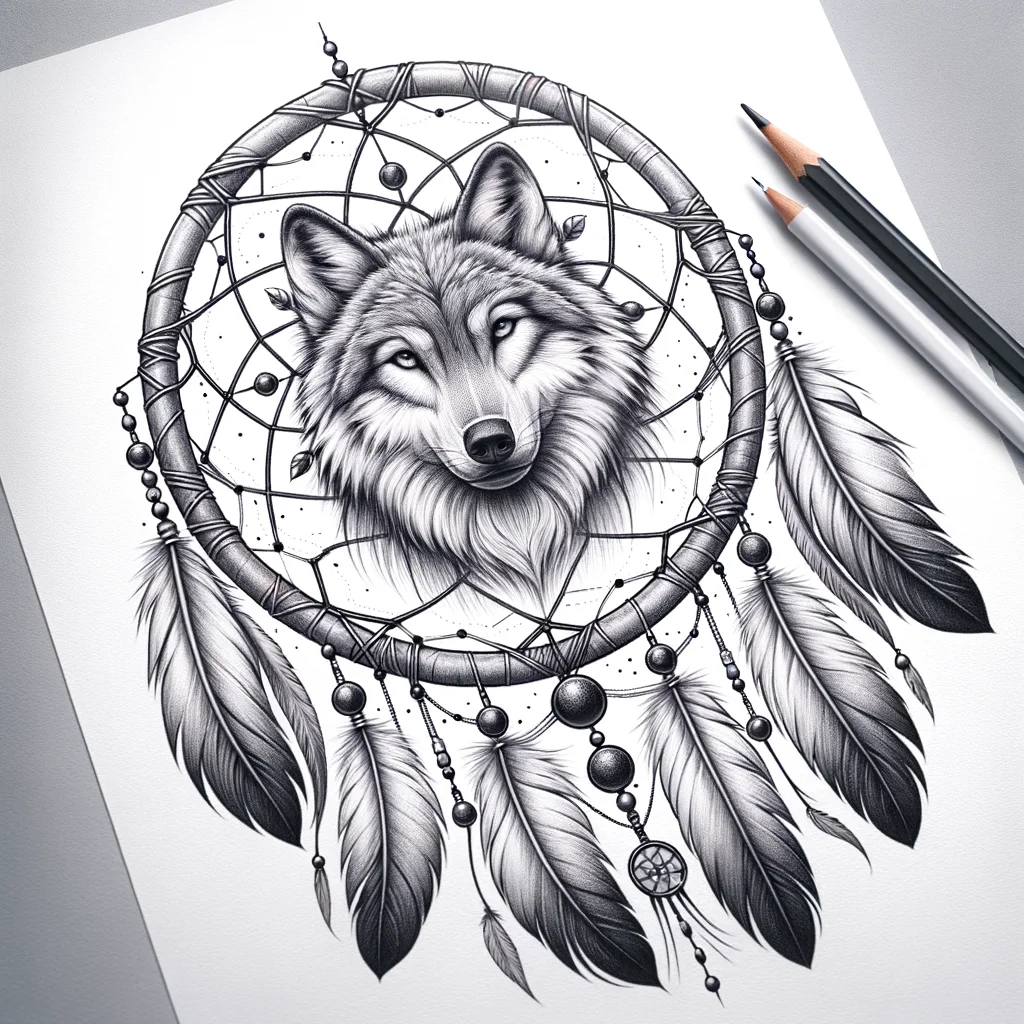
| Sketch & outline | First tattoos and smaller, quieter placements | Short sessions and low cost; deliberately unfinished-looking by design |
None of these are rules. They are the patterns I keep seeing when I compare fresh photos with healed ones from the same artists.
What a Wolf Tattoo Actually Means
There is no single meaning, and any article that gives you one is flattening several thousand years of very different stories.
In Norse material the most famous wolf is Fenrir, the monstrous son of Loki who is bound by the gods and breaks free at Ragnarok. That is a symbol of restrained power and inevitability, not of loyalty.
Roman tradition runs the other way, with the she-wolf who raises Romulus and Remus standing for protection and origin. Celtic and various Indigenous traditions add their own readings again, which is why the same silhouette can mean guardian in one context and destroyer in another. If Norse symbolism is where you are headed, Norse mythology tattoo ideas covers that ground in more depth.
The modern reading most people bring in is simpler. Wolves are social animals that hunt medium and large hoofed animals like moose, elk and deer, according to the U.S. Fish & Wildlife Service, and that mix of family structure and self-sufficiency is what most clients are actually pointing at.
My advice is to pick your meaning before you pick your style, because a lone howling wolf and a wolf with pups are not interchangeable designs even though both are wolves.
Wolf Tattoo Ideas by Style
These are the seven directions that come up most often, roughly ordered from the most demanding to the most forgiving.
Realistic Black-and-Grey Wolf Portraits
This is the hardest version to get right and the most impressive when it works. A realistic wolf lives or dies on the eyes and the transition from fur into open skin.
When I have watched artists work on these, the bulk of the session goes into shading that most people would not consciously notice, the soft grey around the muzzle and the way the chest fur breaks up rather than stopping at a line.
Expect several sessions for anything larger than a hand’s width. Ask your artist directly whether portrait realism is their main lane, because a technically good traditional artist is not automatically a good realism artist and most will tell you honestly if you ask.
Look for healed photos, not fresh ones. Fine grey shading is where the difference between a strong realism artist and an average one shows up two years later.
Howling Wolves and the Moon
The howl-and-moon pairing is the most requested wolf composition, and it is popular for a practical reason as well as a symbolic one.
A raised muzzle gives the artist a strong diagonal, and a circular moon behind it gives the whole design a natural border, which makes it much easier to place cleanly on an upper arm or shoulder.
The variation that matters is how the moon is handled. A stippled or fine-line moon keeps the piece light, while a heavy black sky with smoke makes the wolf pop but commits you to a lot of solid shading and a longer heal.
If the lunar half of the design is doing as much work as the wolf, it is worth looking through moon tattoo ideas to see how other artists have handled the same problem.
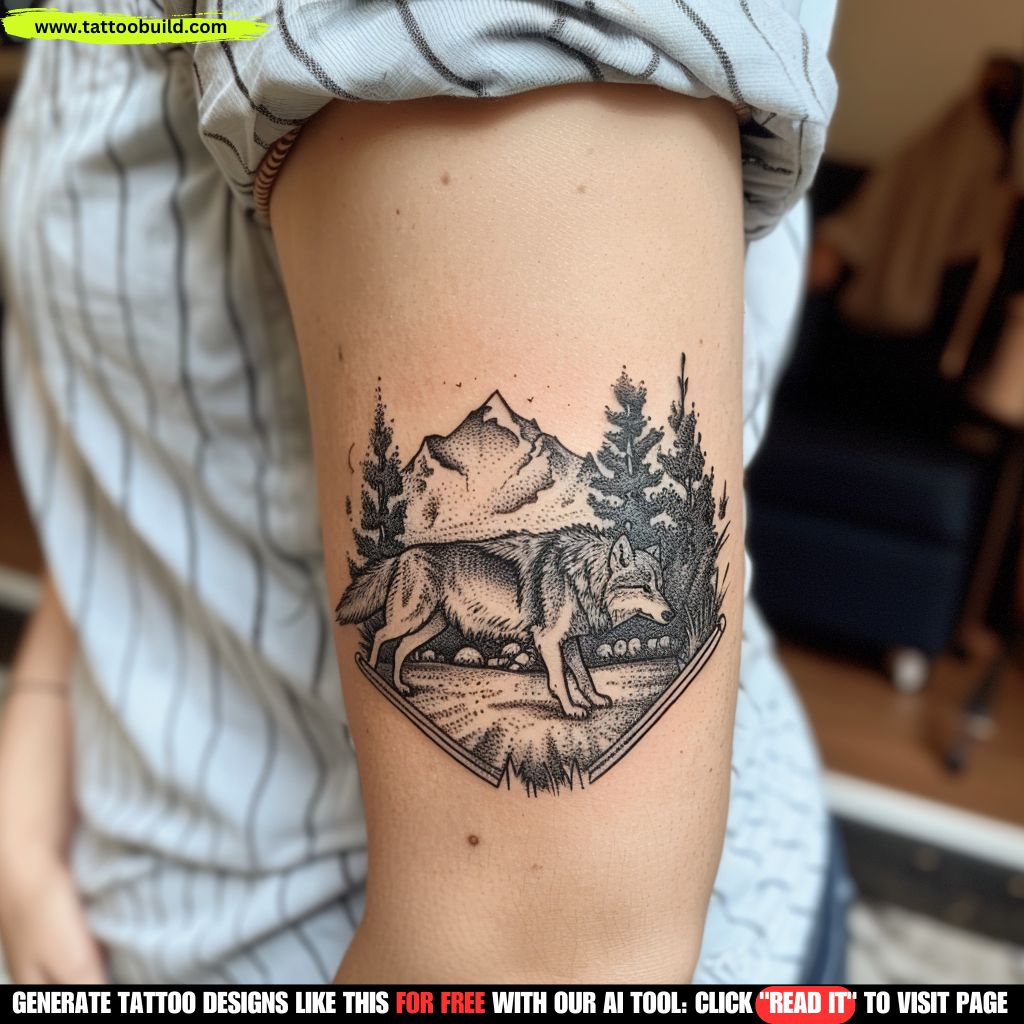
Wolves Blended Into Forest and Landscape
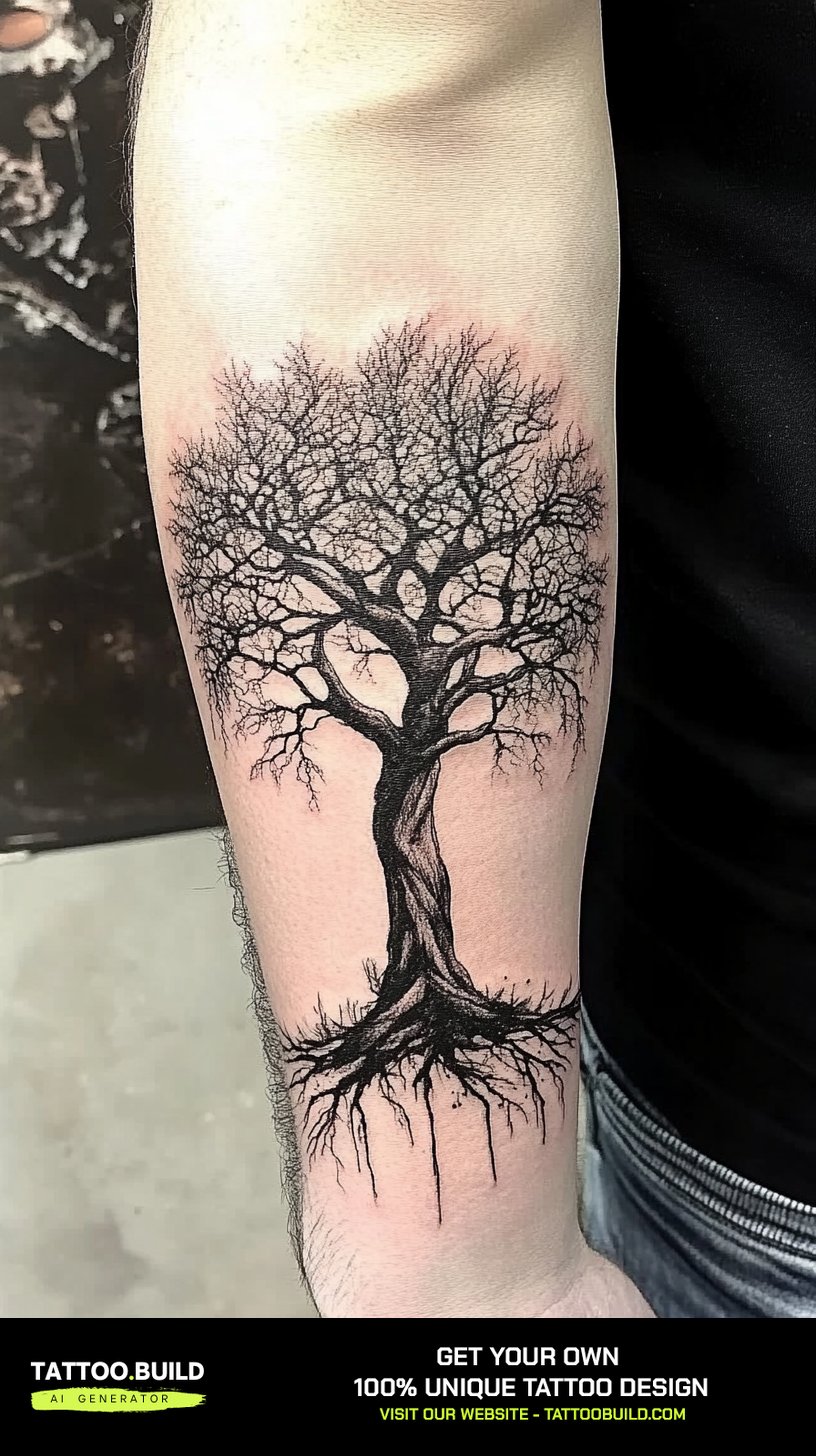
Double-exposure pieces, where the wolf’s head contains or dissolves into a treeline and mountains, have been one of the strongest trends of the last several years.
They work best on forearms and calves because those limbs give you a long vertical canvas, which is exactly what a pine forest wants.
The risk is density. When every part of the design is textured, the eye has nowhere to rest and the tattoo turns into a grey smudge from three metres away.
Every artist I have asked about this says the same thing: leave open skin deliberately, usually in the sky or across the lower third, and resist the urge to fill it later.
Pack and Family Wolf Tattoos
If the meaning you want is family rather than solitude, multiple wolves say it far more directly than a single one.
The stacked-heads layout is a clean solution for a forearm, since three profiles running down the arm fit the shape of the limb without needing a wide background scene.
Some people use one wolf per family member, which is a nice idea but worth thinking through, because adding a fourth head later usually means redesigning the composition rather than simply extending it.
Geometric and Fine-Line Wolves
Geometric wolves trade realism for graphic impact, and they suit people who want something clearly stylised rather than photographic.
The split design, half rendered fur and half faceted planes, has become something of a modern classic, and it is a genuinely clever way to show two sides of a personality without spelling it out.
Be realistic about longevity. Very thin lines and isolated dots spread slightly as skin ages, so a design that relies entirely on hairline strokes will look softer in a decade than it does on day one.
Ask your artist to build in at least a few heavier lines as anchors. For more of this approach, geometric wolf tattoo ideas is a good place to keep looking.
Watercolour and Illustrative Colour Wolves
Colour opens up options that black and grey cannot reach, from arctic blues and snowflakes to a full autumn palette wrapped around the arm.
The best colour wolves I have seen keep the animal itself in grey or muted tones and let the colour live in the background. That way the wolf stays readable even as the brighter pigments settle.
Watercolour splashes with no linework underneath are the ones that tend to disappoint people after a few years, since there is nothing structural holding the shape.
If you love the look anyway, ask for a light line or grey wash under the splashes. Watercolor tattoo ideas shows how different artists solve that balance.
Neo-Traditional and American Traditional Wolves
If you want a tattoo that will still read clearly from across a room in twenty years, this is the most reliable answer on the list.
American traditional uses bold outlines and flat colour, which is precisely the combination that holds up as skin changes. Neo-traditional keeps the strong shapes but allows softer shading and a wider palette.
The trade-off is that these styles are stylised by definition. You are getting an interpretation of a wolf rather than a photograph of one, and that is the point rather than a limitation.
Variations Worth Considering
A few directions sit outside the main styles but come up often enough to deserve their own mention.
Celtic, Norse and Tribal Wolves
Knotwork and tribal wolves are built from shape and negative space rather than shading, which makes them a completely different commission.
With interlaced knotwork, the spacing between the strands matters more than the strands themselves, because black lines spread slightly over time and a design packed too tightly can lose its weave.
Heritage matters here too. If you are drawing on a specific tradition, it is worth reading a little about its actual context first, and Celtic knot tattoo ideas is a reasonable starting point for the Celtic side.
For the heavier all-black approach in general, blackwork tattoo ideas covers the technique more broadly.
Sketch, Outline and Small Wolf Tattoos
Sketch-style wolves keep the construction lines visible, as if the drawing were caught mid-process, and the effect is deliberately unfinished.
They are quick, relatively affordable and forgiving, which makes them a sensible first tattoo. They also scale down better than realism does.
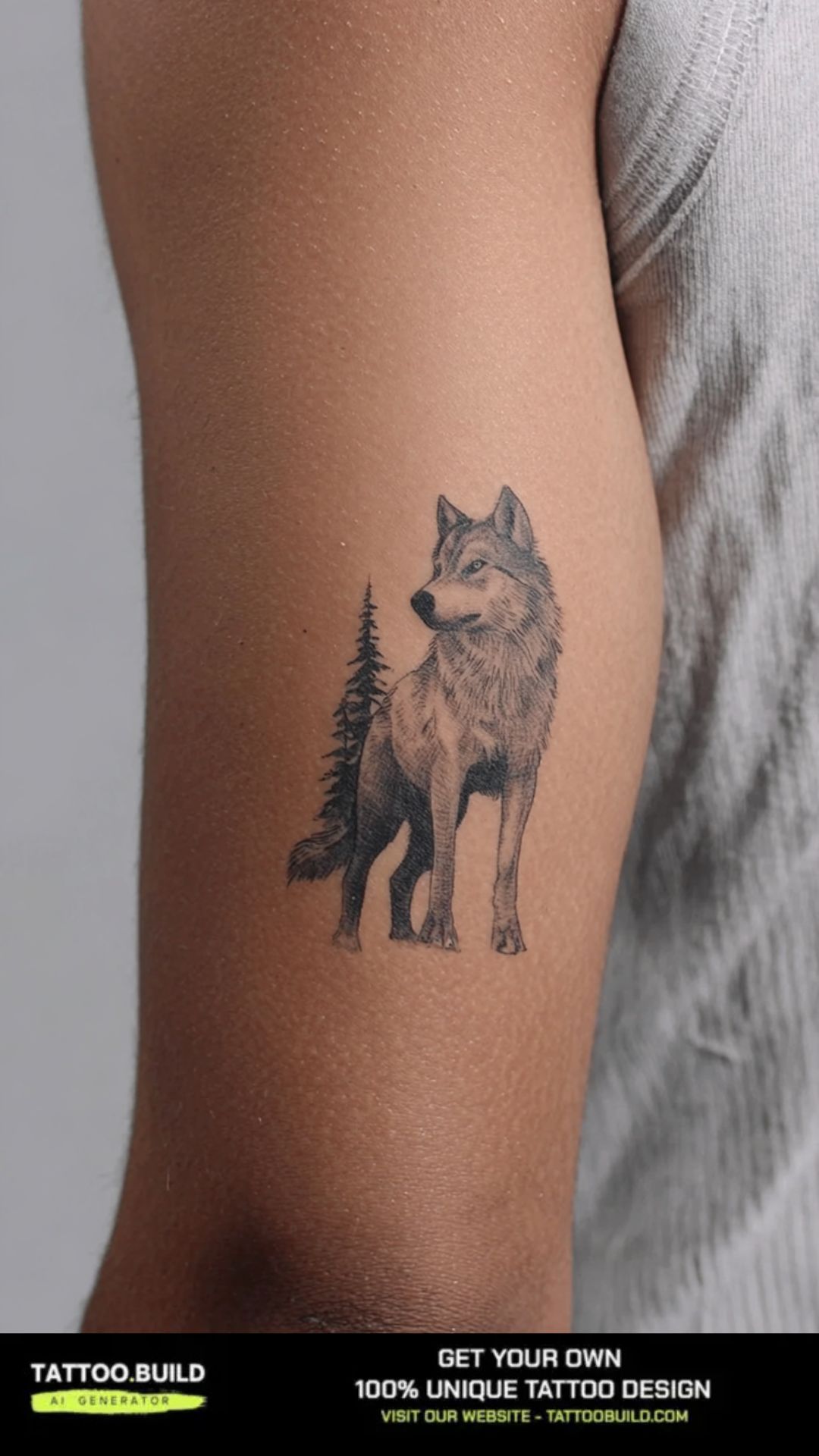
A small standing wolf with a light treeline sits comfortably on an upper arm or inner forearm and stays legible, whereas a shrunken realistic portrait usually loses the detail that made it worth doing.
Placement, Size and Aftercare Tips
Wolves suit long, roughly rectangular canvases, which is why forearms, calves and outer thighs come up again and again in this collection.
Before you commit, have your artist apply the stencil and then walk around for a minute and look at it in a mirror at arm’s length. A composition that looks perfect flat on paper can sit awkwardly once it wraps a limb.
Placement also decides how the session feels. Outer forearms and calves are generally easier than ribs, sternum or the inner arm, and the tattoo pain chart gives a more detailed breakdown if you are deciding between spots.
For healing, follow the specific instructions your artist gives you rather than a routine you found online, since studios differ on wrapping and washing. Our tattoo aftercare guide covers the general principles, but your artist’s advice wins where the two differ.
One thing that is not negotiable: anything that looks like an infection or an allergic reaction belongs with a doctor, not a comment section. Spreading redness, worsening swelling after the first few days, pus or a fever are all reasons to get medical attention quickly.
Common Mistakes to Avoid
The first mistake is booking a realism piece with an artist whose portfolio is mostly something else. Style specialism is real, and most artists will happily point you to a colleague if the work is outside their lane.
The second is going too small for the amount of detail. A wolf portrait with individual fur strokes needs room, and compressing it into a wrist-sized space means those strokes merge into grey within a few years.
The third is planning piecemeal. If there is any chance you will extend into a sleeve, sketch the full layout now, even if you only tattoo part of it, so the wolf is not stranded halfway up your arm with nowhere to go.
The fourth is picking symbolism you have not thought about. If you want a compass or a dagger paired with your wolf, look at how those combinations actually read first, such as in wolf compass tattoo designs, rather than stacking meaningful objects and hoping.
Frequently Asked Questions
How much does a wolf tattoo usually cost?
Price depends far more on size, style and your artist’s day rate than on the wolf itself. A small outline wolf on the forearm is often a single short session, while a realistic wolf-and-forest half sleeve is usually booked as several full days. In my experience the honest way to budget is to ask the studio for their hourly rate and their realistic estimate of hours, then add a little margin, because detailed black and grey almost always takes longer than people expect. Ask for the quote in writing before you book.
Do wolf tattoos hurt more than other designs?
The design does not change the pain, but the placement and the shading do. Outer forearms, outer thighs and calves are generally the easier spots, while ribs, sternum, inner arm and the top of the foot are reported as much harsher by most people I have talked to. Large areas of solid black or heavy smoke shading mean more passes over the same skin, which is what people usually remember as the worst part. Eating properly beforehand and booking a shorter first session helps more than any numbing claim you read online.
Does a wolf tattoo mean you are a lone wolf?
Not necessarily, and plenty of people choose the opposite meaning. A single howling wolf is often read as independence or grief, while a wolf with pups or a stacked pack of heads is usually chosen to represent family and loyalty. Because wolves show up in Norse, Celtic, Roman and many Indigenous traditions, the same animal carries very different weight depending on the culture you are drawing from. The meaning that matters most is the one you can explain in a sentence when someone asks.
What is the best placement for a wolf tattoo?
The forearm and calf suit wolves particularly well because both are long, roughly rectangular canvases that match a wolf’s head-and-chest shape. Upper arms and shoulders work well for round compositions like a moon backdrop or a knotwork head. If you want a full scene with forest, mountains and a pack, you generally need a half sleeve, a thigh or a back piece to fit it without crowding. Ask your artist to draw the stencil on your skin and walk around with it for a minute before you commit.
How long does a wolf tattoo take to heal?
The surface usually looks settled in roughly two to three weeks, while the deeper skin typically keeps settling for a couple of months, and larger black and grey pieces often sit at the longer end of that. Follow the aftercare your artist gives you rather than advice from a forum, since studios differ on wrapping and washing routines. If you see spreading redness, swelling that worsens after the first few days, pus or a fever, that is a matter for a doctor and not for a tattoo blog. Any rash or persistent itching in one colour is also worth having a medical professional look at.
Quick Summary
- Decide the story first: a lone howling wolf, a pack, or a wolf blended into a landscape all read very differently.
- Match the style to the placement, since long shapes like forearms and calves suit wolf heads and chests naturally.
- Black and grey realism is the most demanding option and needs both space and a specialist portrait artist.
- Fine line and geometric wolves cost less and heal fast, but expect the thinnest lines to soften over the years.
- Colour work looks best when the wolf itself is anchored in solid black or grey rather than floating in splashes.
- Book a consultation with a portfolio review; ask specifically to see healed photos, not just fresh ones.
- Plan for the whole piece up front if you might extend it later, so the wolf is not stranded mid-arm.
- Take aftercare seriously and take anything that looks like infection or an allergic reaction to a doctor.