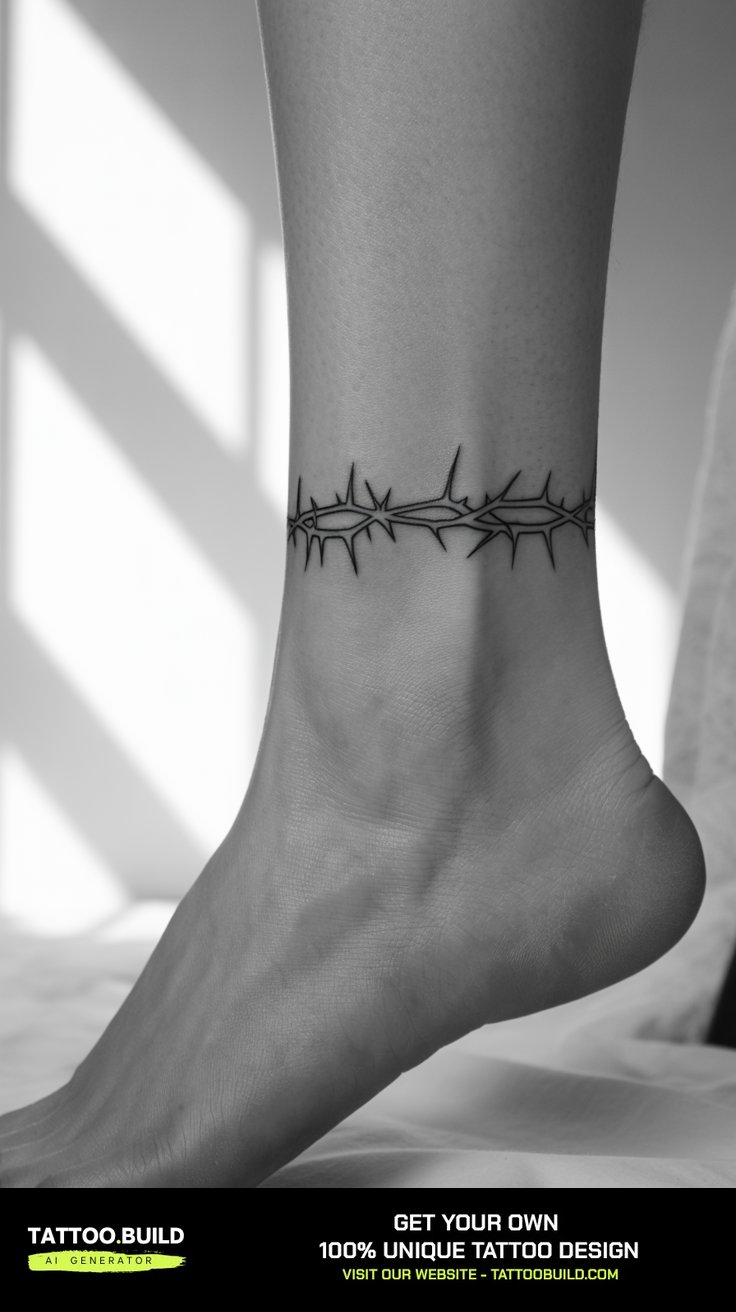
The ankle is one of the few placements I have never seen anyone regret choosing for the wrong reason. It is small enough to stay private, visible enough to enjoy, and shaped in a way that flatters almost any design you put on it.
I have spent years looking at how tattoos sit on the lower leg, and the ankle keeps proving itself. The bone gives a design an anchor point, the curve gives it movement, and a pair of jeans hides it entirely when you need them to.
What follows is a working guide rather than a gallery scroll. There are twenty designs below, but there is also the part nobody puts in the caption — how much it hurts, how it ages, and which shapes actually survive a decade of shoes. If you want a broader view of small tattoo ideas for women first, that guide pairs well with this one.
Everything here comes from watching these designs go on, heal, and settle.
Which Ankle Tattoo Style Is Right for You?
Style is not just an aesthetic choice on the ankle — it decides how long the tattoo stays sharp. Here is how the main options compare in practice.
| Style | Best Placement on the Ankle | Typical Session | How Well It Ages |
|---|---|---|---|
| Fine-line botanical | Outer ankle or inner ankle, away from the bone | 1–2 hours | Softens noticeably; often wants a touch-up in a few years |
| Bold small blackwork | Anywhere, including directly over the bone | 45 minutes to 1.5 hours | Very well — solid shapes hold their edges |
| Anklet or wrap band | Full circle just above the ankle bone | 2–3 hours | Good, though the back of the ankle can fade first |
| Colour realism | Outer ankle flowing onto the calf or foot | 3–5 hours, sometimes split over two sittings | Colour on the lower leg tends to dull faster than elsewhere |
| Ornamental / mandala | Wrapping from the ankle onto the instep | 2–4 hours | Dense linework can blur; spacing matters more than detail |
| Micro script | Inner ankle, vertical or along the bone | 30–60 minutes | The weakest performer — tight letters close up over time |
If you want one takeaway from that table, it is that solid shapes outlast fine detail on this placement. That is not an argument against fine line, which is beautiful; it is an argument for expecting a touch-up eventually.
What Makes the Ankle Different From Other Placements
The ankle has almost no fat between skin and bone. That single fact explains most of what is unusual about tattooing it.
It means the sensation is sharper than on a thigh or an outer arm, and it means the skin does not have much give for the artist to work against. Both are manageable; neither is a surprise to anyone who tattoos regularly.
It also means the surface is not flat. The ankle bone protrudes, the tendon runs behind it, and the skin folds every time you flex your foot. A design drawn flat on paper has to be redrawn to sit on that geometry, which is why good artists stencil ankles more slowly than most placements.
Then there is friction. Socks, boots, trainers and hiking shoes all rub the same few square inches, every day, for years. In my experience this is the real reason ankle tattoos fade — not sun, not ink quality, just relentless low-grade abrasion.
None of this makes the ankle a bad choice. It makes it a placement worth planning for. The designs that thrive there are the ones drawn with that in mind, and the ones that struggle are usually the ones that ignored it.
20 Women’s Ankle Tattoo Ideas Worth Considering
These are grouped by what they are, not by trend. Every group below includes real examples so you can see the scale and line weight rather than guessing at it.
1. Floral and Botanical Designs
Flowers remain the single most requested subject for the ankle, and it is easy to see why — a stem naturally follows the leg’s line, and a bloom gives the ankle bone something to sit beside.
Peonies and roses work particularly well because they have enough internal structure to survive being scaled down. Smaller wildflowers can also work, but they need more space between petals than most people expect.
Fine-line botanicals are the most popular treatment right now. They look extraordinary fresh, and they do soften over a few years, so ask your artist to weight the outer lines slightly more heavily than the internal ones.
If a flower is going to carry personal meaning, birth flower tattoos are a natural fit here. There is also a dedicated collection of flower ankle tattoos on the site if you want to compare more examples side by side.
2. Butterflies, Small and Otherwise
Butterflies are the second-most requested ankle subject I encounter, and they suit the placement for a practical reason: a butterfly is roughly ankle-shaped.
A single butterfly on the outer ankle is the safest version of this idea and the one most likely to still look good in fifteen years. Two or three at staggered angles reads as movement rather than repetition.
The thing to avoid is stacking too much wing detail into something under two inches. Wings that look intricate on the stencil can close into solid grey as the tattoo settles.
There is a much larger set of butterfly tattoo ideas elsewhere on the site if you want to compare wing styles before committing.
3. Anklet and Wrap-Around Bands
A band that circles the ankle is the design most specific to this placement — it does not translate anywhere else on the body.
The literal version is a chain with a pendant, which mimics jewellery closely. The looser version borrows the shape without the object: a wave, a thorn branch, a line of small stars.
Wraps take longer than clients expect. A simple band is usually a two-to-three-hour sitting once you account for stencilling it level, which requires you to stand up while it is applied.
Ask where the join will sit before you agree to the design. Most artists hide it at the inner ankle, and a well-hidden join is the difference between a band and an obvious seam.
For more of this specific shape, the ankle bracelet tattoo ideas collection goes deeper.
4. Animals and Creatures
Animals on the ankle work best when the animal’s natural shape matches the space available.
An owl sits upright and fills the inner ankle neatly. A snake does the opposite — it uses the ankle-to-foot transition as a path and turns an awkward curve into the point of the design.
Small mammals and faces need bolder handling. A panda works precisely because it is built from solid black patches; the same face rendered in thin grey wash would lose its structure within a few years.
Every artist I have asked says the same thing about animal pieces here: pick one that already has strong silhouette. Recognisability at arm’s length is what you are protecting.
5. Symbolic and Personal Pieces
This is the category where the ankle earns its reputation as a placement for private meaning.
Hot air balloons, a heart paired with a butterfly, a paper aeroplane with a short line of script — these are small, low-commitment shapes that mean something specific to the person wearing them.
Micro script is the one to be careful with. Letters set close together will thicken and eventually merge, so give it generous spacing and accept that it will be slightly larger than you pictured.
In my experience, the pieces in this category are the ones people are still happy with a decade later, because the meaning was never dependent on the style being fashionable.
6. Ornamental and Statement Designs
Not every ankle tattoo has to be discreet. The ankle can carry a substantial piece if you are willing to let it flow onto the foot or up the calf.
Ornamental mandala work with dangling linework is the most striking version — it reads as jewellery that moves with you. A shaded wing spanning ankle and instep is the boldest.
These are longer sittings, usually two to four hours, and they need spacing discipline. Dense ornamental linework is the pattern most likely to blur, so the empty space between elements is doing as much work as the lines themselves.
If a design is going to cross onto the instep, read up on foot tattoo ideas too — the foot heals differently and the aftercare is stricter.
Alternatives If the Ankle Is Not Quite Right
Sometimes the ankle is close but not the answer. A few adjacent options worth weighing.
Move Up to the Lower Calf
Two inches higher gives you a flatter surface, less friction from shoes, and a noticeably gentler session. You lose the anklet effect but keep most of the visibility.
Move Down to the Foot
The instep offers more open canvas for ornamental work. It is a harder heal and a fussier aftercare period, but the design space is genuinely larger.
Try the Inner Ankle Only
The inner ankle is flatter, less bony, and easier to conceal. In my experience it is the most comfortable part of the whole area to sit through.
Consider a Wrist or Behind-the-Ear Piece
If what you actually want is something small and discreet rather than something on the ankle specifically, those placements offer the same discretion with easier healing.
Aftercare That Actually Matters for Ankle Tattoos
Ankle aftercare is standard tattoo aftercare with three additions, and the additions are where most problems start.
The first is footwear. Plan for open shoes or very loose trainers for at least the first week — anything with a firm collar sits directly on the healing area and will rub the scab off. This one change prevents most patchy heals I have seen.
The second is elevation. Ankles swell, and circulation at the extremities is weaker than elsewhere, so healing runs a little slower than an arm piece. Getting the foot up for part of each evening in the first few days makes a visible difference.
The third is sun. Once healed, this is one of the most sun-exposed spots on the body during warm months, and UV is what turns crisp black into soft grey. Daily sunscreen on the area is not fussy advice; it is the single highest-return habit for keeping the design sharp.
One honest caveat: healing advice is general, and skin is not. If you notice spreading redness, heat, swelling that worsens after day three, or any discharge, contact your artist and speak to a doctor. Read your studio’s aftercare sheet as the primary instruction and treat anything online, including this article, as secondary. The American Academy of Dermatology publishes plain-language guidance on caring for tattooed skin that is worth reading before your appointment.
Common Mistakes and What to Do Instead
A few patterns come up again and again with ankle pieces, and all of them are avoidable at the planning stage.
Going too small for the amount of detail. This is the most common one by a wide margin. If a design has internal linework, give it the extra half-inch rather than shrinking it to fit a mental picture.
Underestimating the sitting. The ankle is genuinely one of the tenderer spots on the body, and people who booked expecting a painless twenty minutes tend to have a harder time than people who arrived prepared. It helps to look at a tattoo pain chart beforehand and see where the ankle actually ranks, or read through the most painful tattoo spots guide for context.
Choosing colour without asking about longevity. Colour on the lower leg dulls faster than colour on the upper arm. That is not a reason to avoid it, but you should hear it from your artist before the appointment rather than after.
Picking a style before picking a subject. Decide what the tattoo is of first. If you land on something delicate, browsing fine-line tattoo ideas will tell you what that style can and cannot hold at small scale.
Frequently Asked Questions
Do ankle tattoos hurt more than other placements?
For most people, yes. The ankle sits close to bone with very little fat or muscle to cushion the needle, and the area directly over the ankle bone and along the Achilles tendon is usually the sharpest part. That said, ankle designs are typically small, so the discomfort is short — a simple piece often runs under an hour. If pain is your main concern, choosing the inner ankle rather than the bone itself makes a real difference.
How long does an ankle tattoo take to heal?
Surface healing usually takes about two to three weeks, with deeper settling continuing for a couple of months. Ankles heal a little slower than upper-body placements because circulation is weaker at the extremities and shoes, socks and swelling all rub the area. Keeping the foot elevated when you can and wearing open shoes for the first week genuinely helps. If you see spreading redness, heat or discharge, contact your artist and a doctor rather than waiting it out.
Will an ankle tattoo fade faster than one on my arm?
Ankles and feet are among the faster-fading placements, mostly because of constant friction from footwear and regular sun exposure in warm months. Fine lines and light colours show it first. A design built with slightly heavier linework and some breathing room between elements will hold up better than one packed with tiny detail. Daily sunscreen once healed is the single most useful habit for keeping it crisp.
Can I wrap a tattoo all the way around my ankle?
Yes, and a full wrap is one of the most popular ankle requests. Your artist will usually place the join at the inner ankle or the back, where it is least noticeable, and may ask you to stand during stencilling so the band sits level rather than sloping. Full wraps take longer than they look, often two to three hours. The back of the ankle is the tenderest part of the circle for most people.
What size works best for an ankle tattoo?
Most ankle pieces land somewhere between two and four inches, which fits the natural flat panels on either side of the bone. Going smaller than about an inch and a half is possible but risky for anything with fine internal detail, since lines that sit that close together tend to merge as the tattoo settles. If you want a lot of detail, extending onto the foot or up the lower calf buys you room without leaving the placement.
Quick Summary
- The ankle has very little padding over bone, which makes it sharper to sit through than most placements but keeps sessions short because designs are small.
- Solid, bolder shapes outlast fine internal detail here — friction from footwear is the main cause of fading, not ink quality.
- Most ankle designs land between two and four inches; going under about an inch and a half risks detail merging over time.
- Florals, butterflies and anklet-style bands are the three most requested categories, and all three suit the ankle’s natural curve.
- A full wrap needs to be stencilled while you are standing, and you should ask where the join will sit before agreeing to it.
- Colour on the lower leg dulls faster than colour higher up the body — worth knowing before you choose, not after.
- Open shoes and an elevated foot for the first week prevent most patchy heals; daily sunscreen once healed keeps lines crisp.
- If you want more room, moving onto the instep or up to the lower calf keeps the look while easing the constraints.
Whatever you land on, take the stencil seriously and look at it standing up. The ankle rewards planning more than almost any other placement.
For general safety guidance on tattooing and what to check before booking a studio, the U.S. Food and Drug Administration maintains a consumer overview worth a read.