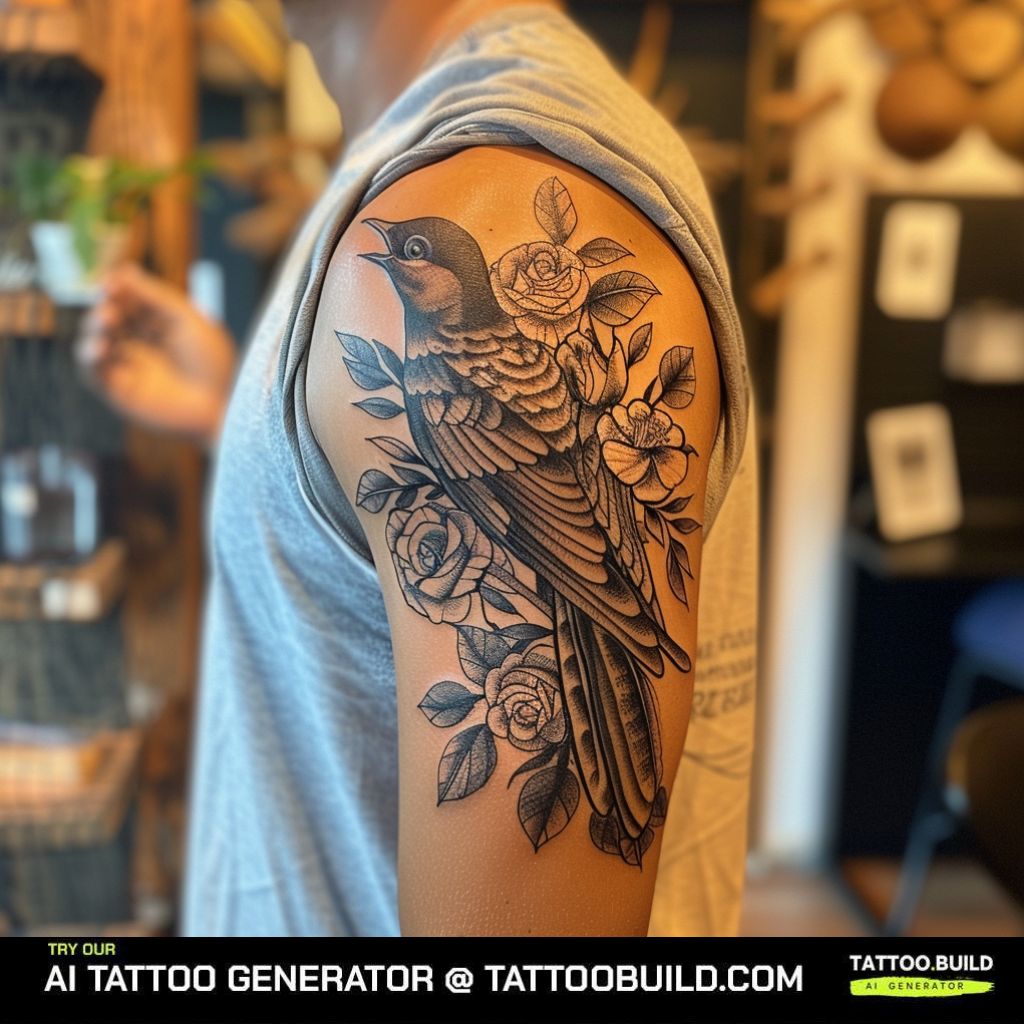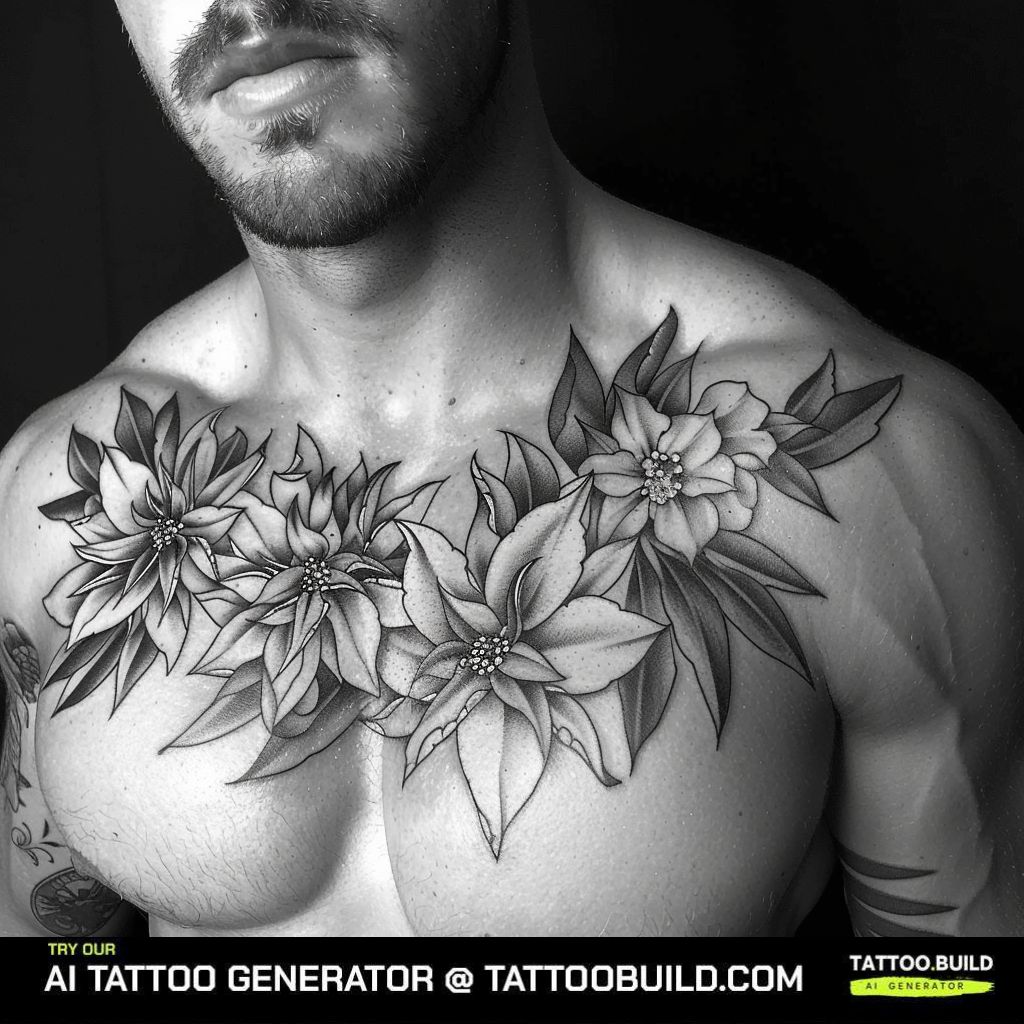
A birth flower tattoo is the rare piece of body art that carries a fixed personal meaning without a single word of text. Every calendar month has at least one flower attached to it, and that flower becomes a quiet stand-in for a birthday, a person, or a date you do not want to spell out on your skin.
I have been collecting and documenting floral tattoo work for years, and birth flower designs are the request I see grow fastest every spring. Clients arrive with a month, not a picture, which gives the artist far more room than a photo reference ever does.
This guide walks all twelve months, shows what each bloom actually looks like as a tattoo, and covers the practical parts most galleries skip — sizing, placement, colour choices, and how these designs age. If you want a broader shortlist first, our wildflower tattoo ideas collection is a good companion piece.
Every design below is a real tattoo, not a rendering. Use them as a starting point for a conversation with your artist rather than a page to copy line for line.
Which Birth Flower Tattoo Style Is Right for You?
The flower is only half the decision. The style you pick decides how the piece reads from across a room and how it will look a decade from now.
Here is how the four styles I see most often on birth flower work actually compare.
| Style | Best For | Typical Size | How It Ages | Touch-Up Outlook |
|---|---|---|---|---|
| Fine line | Single stems, wrists, ribs, behind the ear | 2–4 inches | Lines soften and can blur slightly over the years | Most likely of the four to want a refresh |
| Illustrative black and grey | Forearms, thighs, shoulder pieces | 4–8 inches | Holds shape well thanks to varied line weight | Usually low maintenance |
| Watercolour | Soft, painterly bouquets and month clusters | 3–6 inches | Soft edges fade sooner, especially without a black anchor | Plan for periodic colour work |
| American traditional | Bold single blooms, upper arm, calf | 3–6 inches | Ages best of the four — heavy outlines hold everything in | Rarely needed for years |
In my experience, people who want the flower to stay recognisable at a glance in twenty years are happier with a bold outline, even if fine line looks better in the healed photo taken at week three.
Why Birth Flower Tattoos Have Taken Over Floral Work
The birth flower tradition is usually traced to Victorian floriography, the coded language of flowers popular in nineteenth-century Britain, where a bloom stood in for a sentiment you could not say out loud.
Modern month-to-flower lists are not standardised. British, American and florist-industry lists disagree on several months, and some months have two accepted flowers — so treat any chart, including this one, as a common version rather than the definitive one.
That flexibility is a feature, not a problem. If you dislike your assigned flower, the secondary option for your month is just as legitimate.
The practical appeal is that a flower reads as decorative to strangers and specific to you. Every artist I have asked about memorial work says the same thing: clients want meaning that does not invite questions.
It also scales. One stem works on a wrist; four stems for four family members fill a forearm without looking like a collage.
Birth Flower Tattoo Ideas for Every Month
Below is each month with its most widely accepted flower, what the bloom traditionally signifies, and how it behaves as a tattoo. The design notes come from what I have seen hold up on healed skin, not from a stock illustration.
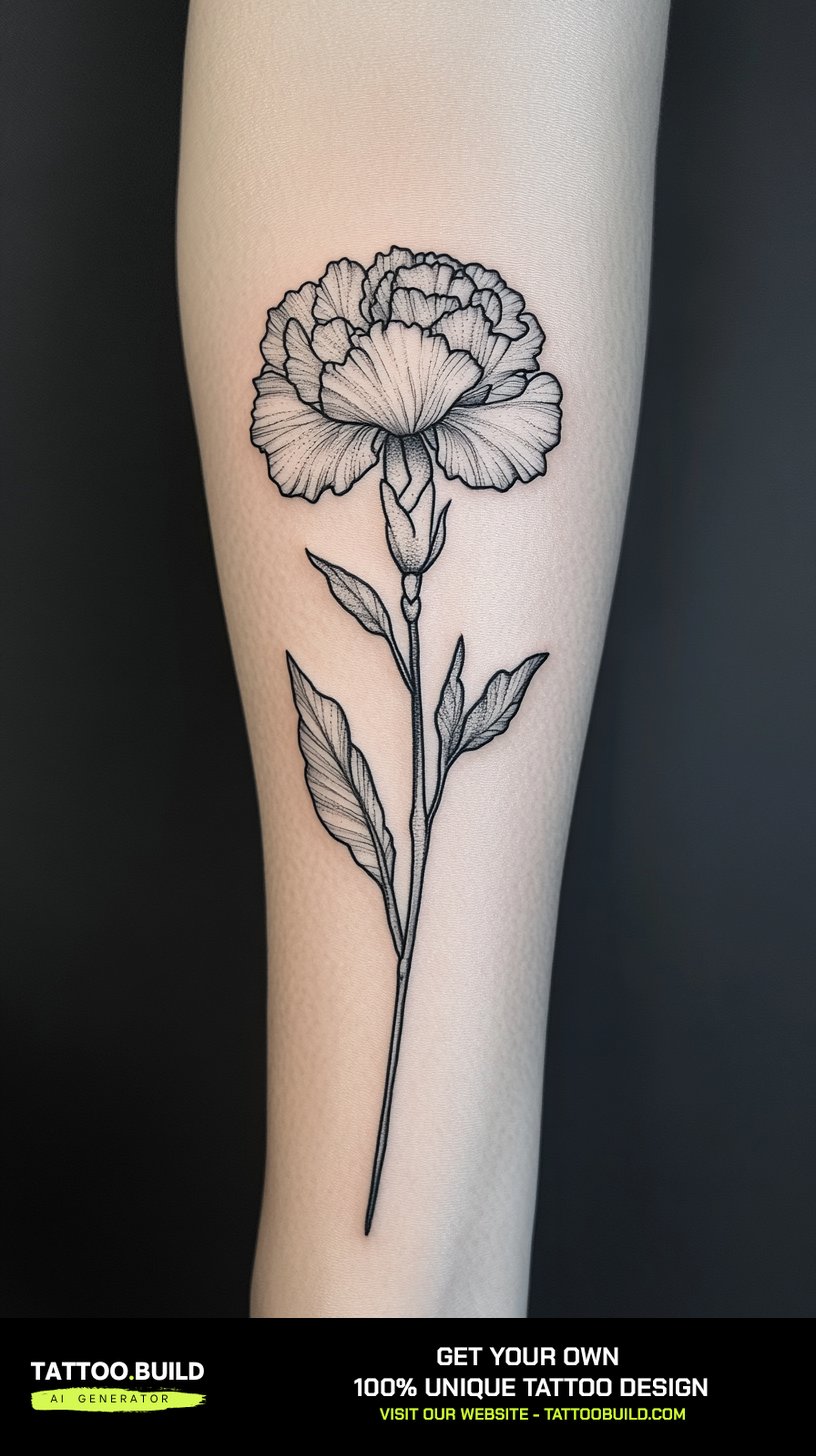
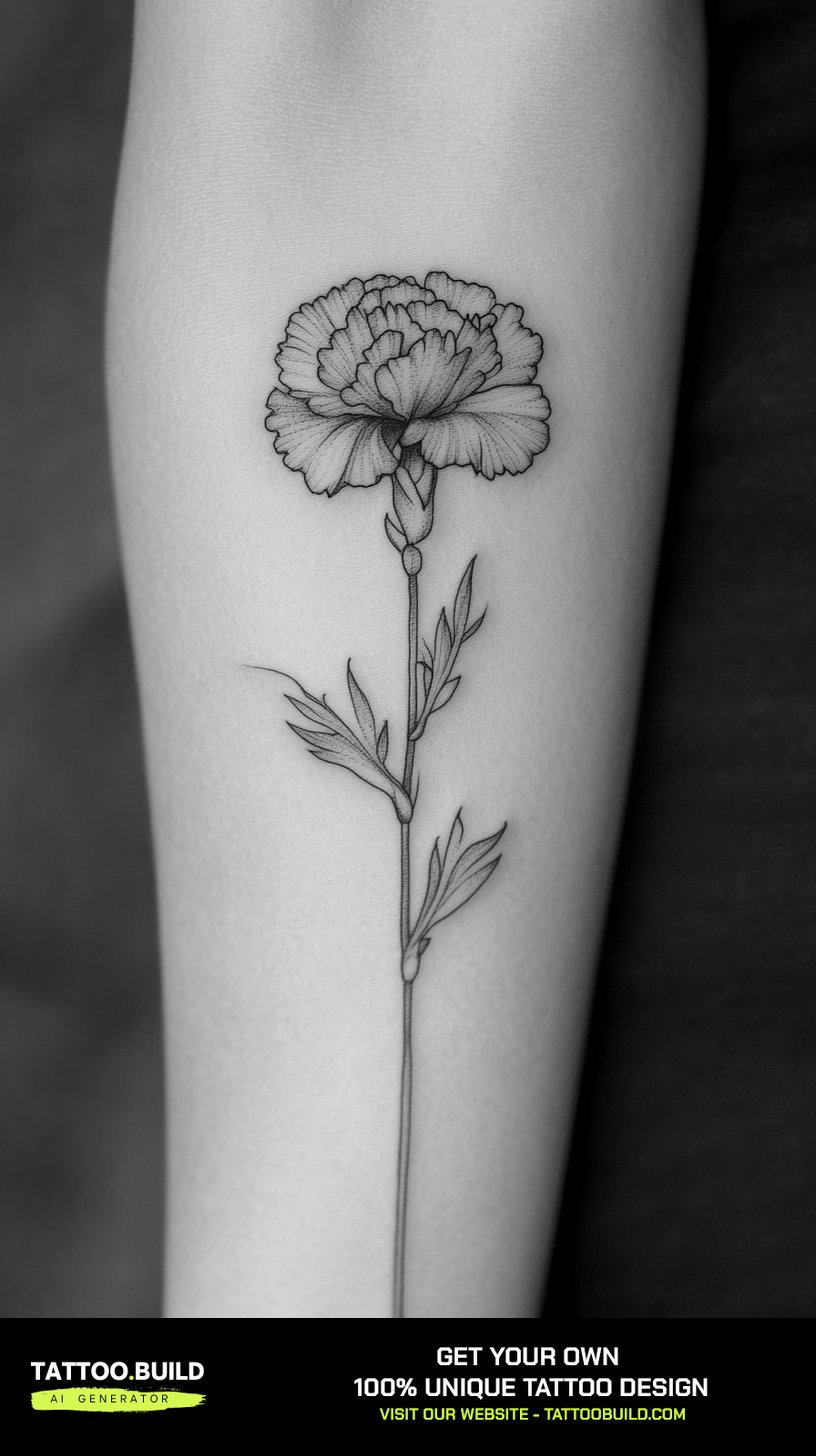
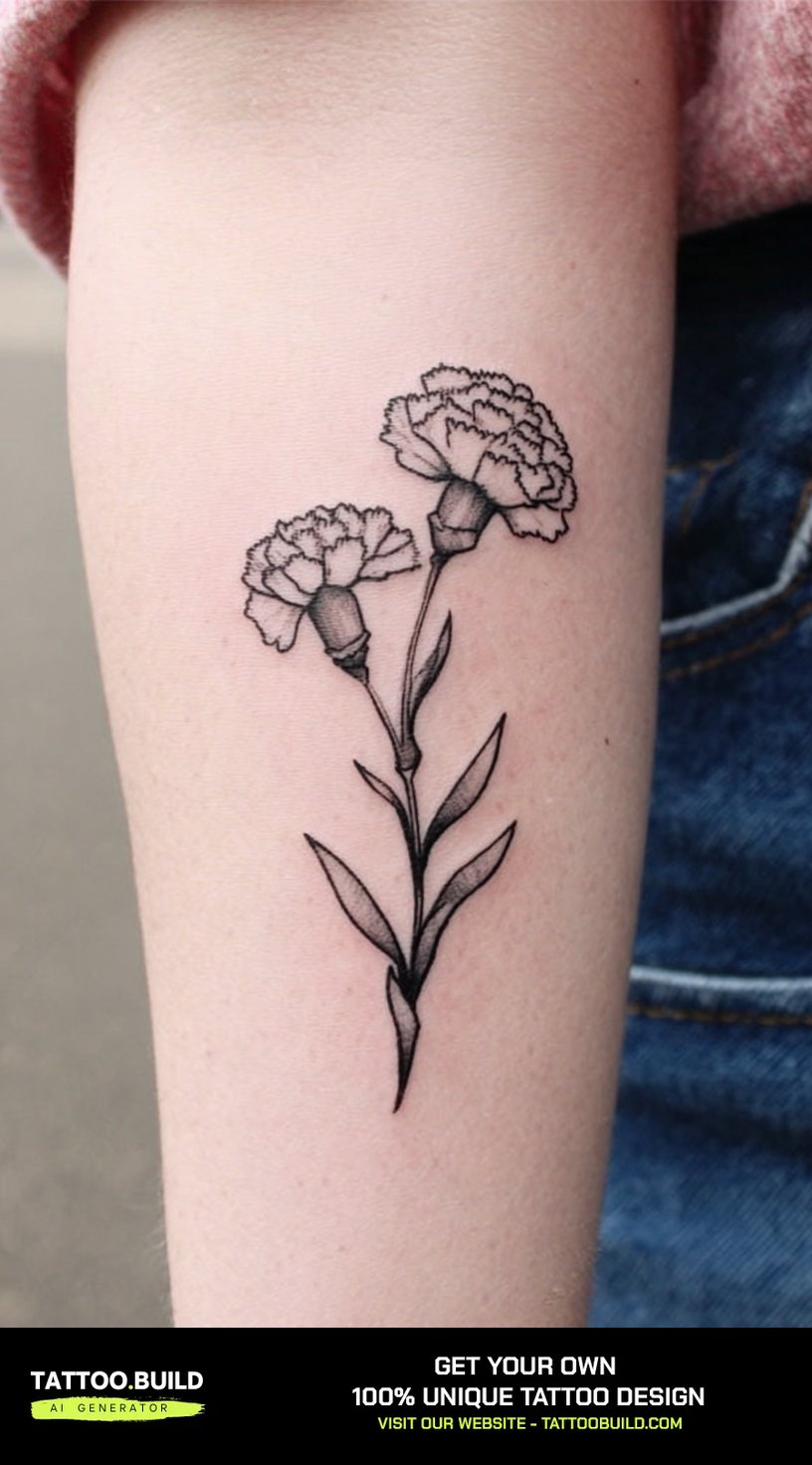
January Birth Flower Tattoo: Carnation
The carnation is traditionally tied to admiration, devotion and deep love, with colour changing the tone — red for affection, pink for gratitude, white for remembrance. Second flower: snowdrop.
As a tattoo, the carnation is one of the friendliest flowers to ink because its ruffled, layered petals give an artist somewhere to hide healing irregularities. That texture reads well in black and grey and does not need colour to look finished.
I usually steer people toward a three-quarter side view rather than a flat face-on bloom. The face-on version tends to flatten into a pom-pom shape once the lines settle, while the side view keeps the layered petal structure legible.
For a small piece, a single stem on the inner forearm at around three inches works. For anything under two inches, ask the artist to reduce the petal count rather than shrink every line — crowded detail is what turns small florals into a grey smudge after a few years.
February Birth Flower Tattoo: Violet
Violets carry associations with modesty, faithfulness and quiet wisdom, and the primrose is linked to young love. Second flower: primrose.
Violets are small, five-petalled and simple, which makes them one of the best candidates for genuinely tiny tattoos. Where most flowers lose their identity below two inches, a violet stays readable at about an inch.
The trap is colour. Purple pigment sits lighter in the skin than black and can read washed out on deeper skin tones, so I always suggest testing the shade against your own skin rather than against paper.
A cluster of three violets on the ankle or the back of the arm is my most-recommended February layout. If you want colour that will hold, ask for a soft black or deep sepia outline underneath — it keeps the shape when the purple softens.
March Birth Flower Tattoo: Daffodil
The daffodil signals new beginnings, renewal and unwavering optimism — it is often the first thing to push through frozen ground. Also called narcissus.
The trumpet centre gives a daffodil an unmistakable silhouette, and that shape is what makes it work as a tattoo. Even at small scale, the profile alone tells you what flower it is.
In my experience daffodils look best drawn at a slight angle rather than straight on, so the trumpet has depth. Straight-on daffodils have a habit of reading as a fried egg once healed, which is not the vibe anyone is after.
Yellow is the obvious choice and the risky one: yellow is among the least durable tattoo pigments and fades noticeably faster than black under sun exposure. A black and grey daffodil with a single warm accent is the version I see holding up best.
April Birth Flower Tattoo: Daisy
Daisies stand for innocence, purity and new starts, and sweet peas traditionally mean blissful pleasure or a fond goodbye. Second flower: sweet pea.
The daisy is the most-requested small floral I come across, and there is a practical reason: radial petals around a solid centre are extremely forgiving. The eye reads the pattern even when individual petals blur.
It scales up and down better than almost any other birth flower. A single daisy behind the ear at an inch works; a chain of daisies wrapping a forearm works just as well. Our daisy tattoo ideas gallery goes deeper on layouts.
One thing worth saying plainly: a solid black centre is what holds a daisy together long-term. Artists who leave the centre open with fine stippling produce a beautiful fresh tattoo that loses its focal point within a few years.
May Birth Flower Tattoo: Lily of the Valley
Lily of the valley is associated with returning happiness, humility and sweetness, and it is a traditional May Day flower across much of Europe. Second flower: hawthorn.
This one is the vertical specialist of the birth flower list. The arching stem hung with small bells suits narrow placements — the spine, the outer forearm, the back of the calf — better than any other month’s flower.
The bells need negative space between them to stay distinct. When I see a lily of the valley that has aged badly, it is almost always because the bells were drawn too close together and merged into a solid strip.
Ask for the stem to curve rather than run dead straight; a straight stem on a curved limb looks bent in the wrong direction once the skin moves. Anyone considering the spine should read our feminine spine tattoo guide first, because that placement hurts more than people expect.
June Birth Flower Tattoo: Rose
The rose is the most loaded flower on the list — love, passion, beauty, and with thorns, the idea that the two come together. Second flower: honeysuckle.
June has an advantage no other month does: every tattoo artist alive can draw a rose. It is the single most-tattooed flower in Western tattooing, which means the reference library is enormous and technical execution is reliable.
That ubiquity is also the challenge. A generic rose is the easiest birth flower tattoo to end up regretting, not because it ages badly but because it stops feeling personal.
The fix is specificity: a particular variety, a particular era of tattooing, or an unusual crop. Our rose tattoo ideas for women collection is worth browsing before you commit to a shape.
July Birth Flower Tattoo: Larkspur
Larkspur is linked to an open heart, strong attachment and lightness — and the colour shifts the reading, with pink for fickleness and white for a happy nature. Also listed as delphinium; second flower: water lily.
Larkspur is the tall spire of the birth flower list, a vertical stack of small blooms up a single stem. That makes it a natural fit for the same narrow placements as lily of the valley, but with far more visual weight.
Because the florets stack, larkspur needs a minimum size to work — I would not go below four inches. Under that, the individual blooms compress into a lumpy column.
It is one of the better birth flowers for a colour piece, since the blue-to-violet range sits nicely in tattoo pigment and the stacked shape keeps a strong silhouette even as the colour softens.
August Birth Flower Tattoo: Gladiolus
The gladiolus takes its name from the Latin for sword and traditionally represents strength of character, integrity and remembrance. Second flower: poppy.
This is the most underrated birth flower in the whole list. The sword-shaped leaves and the tall ranked blooms give an artist real structure to work with, and it does not look like everyone else’s tattoo.
Gladiolus needs length. It is a genuinely large-format flower — think outer thigh, full forearm, or the length of the calf — and squeezing it into a wrist piece wastes what makes it distinct.
If you prefer August’s second flower, the poppy is far more compact and works small. Our poppy flower tattoo ideas page covers that route, including its strong remembrance associations.
September Birth Flower Tattoo: Aster
Asters are tied to wisdom, patience and enduring love, and were historically associated with charm and daintiness. Second flower: morning glory.
The aster is a many-petalled star, which means it reads as texture at a distance and as detail up close. It is the closest thing on this list to a daisy with the volume turned up.
That petal density is the thing to manage. In my experience an aster wants either committed detail at four inches and up, or an honest simplification at small sizes — the halfway version, with lots of thin petals crammed small, is what blurs.
Purple and lavender are the traditional colours, and the same caution applies as with February’s violet: give it a dark underline so the shape survives the colour softening.
October Birth Flower Tattoo: Marigold
Marigolds carry warmth, creativity and fierce affection, and in Mexican tradition the cempasúchil guides spirits home during Día de Muertos. Second flower: cosmos.
That cultural weight matters. If your design leans on Día de Muertos imagery, it is worth understanding the tradition you are borrowing from rather than treating the marigold as generic orange filler.
As a tattoo, the marigold is a dense ball of ruffled petals — visually closest to the carnation, and just as forgiving. It handles being tucked into a larger composition better than most.
Orange is the natural colour and holds better than yellow, though not as well as red. A black and grey marigold with heavy internal shading is the version I have seen look best at the ten-year mark.
November Birth Flower Tattoo: Chrysanthemum
Chrysanthemums represent loyalty, longevity and joy, and carry deep significance in Japanese and Chinese art — in Japan the flower is a symbol of the imperial family. Second flower: peony in some lists.
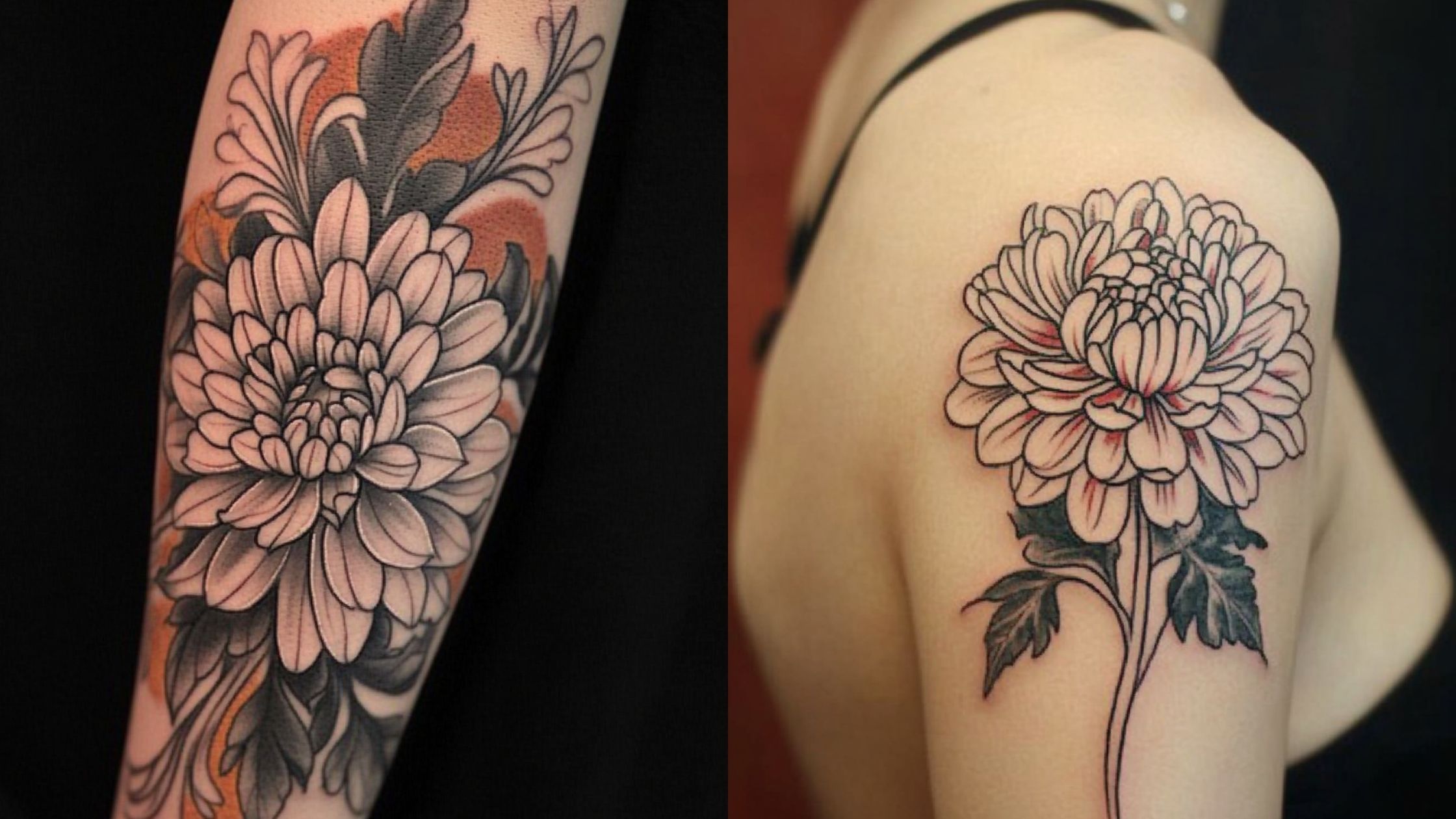
This is the birth flower with the strongest existing tattoo tradition behind it. Japanese-style kiku work has centuries of design language to draw from, and the layered spiral of petals is built for shading.
It is a large-format flower done properly. A traditional kiku sits comfortably as a shoulder cap, a thigh piece, or an anchor in a sleeve, and rarely works below four inches.
If you want the November flower at small scale, a simplified western chrysanthemum is the better route. Our chrysanthemum tattoo ideas gallery shows both approaches side by side.
December Birth Flower Tattoo: Poinsettia
Poinsettia is linked to celebration, good cheer and success, and holly traditionally signals protection and domestic happiness. Second flower: holly or narcissus.
December is the hardest month to tattoo well, and it is worth being upfront about that. The poinsettia’s red parts are technically bracts, not petals, and they are broad, flat and pointed — which can read as a generic star shape without careful shading.
The saving detail is the small yellow cluster at the centre. Insist on it. Without that centre, a poinsettia is just a red star, and the flower loses its identity entirely.
Many December clients I have talked to end up choosing holly instead: the berries and the sharp glossy leaves are unmistakable, they hold at small sizes, and the shape survives fading far better.
Variations Worth Considering
The single-stem version is the default, but it is far from the only way to wear a birth month flower.
Combined family bouquets
The most common request I see now is not one flower but several — one per child, sibling or parent, arranged into a single bouquet or a loose vertical stack.
This works best when one flower is clearly the anchor and the others support it. Four flowers of equal size and equal weight read as a wreath, not a family.
Birth flower and birth month pairings
Some people pair the flower with the month’s birthstone rendered as a small faceted gem, or with a zodiac glyph tucked into the stem.
Keep the second element small. When both elements compete for attention the piece stops reading as a flower and starts reading as a logo.
Outline-only and negative space
A pure outline birth flower with no shading is the lightest-commitment version, and it heals fastest. It is also the one most likely to want a touch-up, because there is no shading to hide line softening.
Negative space designs — a solid black shape with the flower cut out of it — hold up remarkably well, but they are a significant amount of black ink and not easily reversed or covered.
Placement-led designs
Let the placement pick the flower rather than the other way round. Narrow spots suit lily of the valley and larkspur; round open areas suit chrysanthemum, aster and marigold.
If you are still deciding where it goes, our floral back tattoo ideas guide covers the large-format end, and the small-scale end is mostly a question of how much detail your artist can hold.
Getting a Birth Flower Tattoo That Lasts
Bring the month, not the picture. Artists produce far better birth flower work when they are given the flower and the placement and left to draw, rather than handed a screenshot to copy.
Ask to see healed photos, not fresh ones. A fresh fine line floral looks perfect on everyone; a healed one at two years tells you whether the artist’s line weight actually survives.
Size up rather than down if you are torn. Almost every regret I hear about small florals is that the detail closed in, and the fix — going bigger — means reworking the piece.
Aftercare matters more for florals than for bold work because there is less ink holding the shape. Follow your artist’s written instructions, keep the piece out of direct sun while it heals, and use sunscreen on it for life once healed — the American Academy of Dermatology advises a broad-spectrum SPF 30 or higher on tattooed skin, because UV light fades some tattoo inks.
If a healing tattoo becomes increasingly painful, hot, swollen or starts weeping after the first few days, that is not normal healing — contact your artist and see a doctor. The US Food and Drug Administration notes that infections and allergic reactions to tattoo ink can appear soon after or even years later, and both need medical attention rather than home treatment.
Nothing on this page is medical advice. A licensed artist and, where relevant, a doctor are the right people to ask about your own skin.
Still Not Sure? Common Birth Flower Mistakes
The mistake I see most often is picking the flower from a chart without ever looking at how it behaves as a tattoo. A poinsettia and a violet demand completely different sizes and placements.
The second is over-detailing at small scale. If your artist is drawing individual stamens on a two-inch flower, ask what it will look like in ten years and listen carefully to the answer.
The third is colour without a plan. Yellow and pale purple are the two least durable pigments in this list of flowers, and both appear in several months — commit to periodic touch-ups or build in a black anchor.
If the assigned flower simply does not appeal, borrow from an adjacent style instead of forcing it. Browse fine line tattoo ideas for the delicate route, minimalist tattoo ideas for the simplest possible version, or lily tattoo ideas if you want a bloom with a similar feel to May’s.
Frequently Asked Questions
What is my birth flower?
Each month has at least one traditional flower: carnation for January, violet for February, daffodil for March, daisy for April, lily of the valley for May, rose for June, larkspur for July, gladiolus for August, aster for September, marigold for October, chrysanthemum for November and poinsettia for December. Most months also have an accepted second flower, so you often have two legitimate options. The lists vary between British, American and florist traditions, which is why you will see different charts online. Pick the version that speaks to you rather than searching for a single correct answer.
How much does a birth flower tattoo cost?
Cost depends on size, placement, style and your artist’s rate rather than on the flower itself, so a small single-stem piece and a full thigh gladiolus can differ by an order of magnitude. Most artists work to a shop minimum for anything small, and hourly or by-piece pricing above that. The honest answer is to ask two or three artists in your area for a quote on your specific idea. Shop minimums in most cities cover a piece of this size, so the flower you choose rarely changes the price much.
Do birth flower tattoos have to be in colour?
Not at all, and in my experience black and grey birth flower tattoos are the ones that look best after a decade. Colour reads more literally and identifies the flower faster, which matters if you want strangers to recognise it. Black and grey relies on shape and shading, which ages more gracefully and works on every skin tone. Many people compromise with a black and grey flower and one small colour accent.
What size should a birth flower tattoo be?
It depends heavily on which flower you have. Violets, daisies and small carnations hold up from around one to two inches, while gladiolus, chrysanthemum and larkspur generally want four inches or more to keep their structure. As a rule of thumb, the more separate elements a flower has, the bigger it needs to be. Your artist should tell you the minimum size at which their linework will stay clean on your skin.
Can I combine multiple family members’ birth flowers?
Yes, and it is one of the most popular ways to wear these designs. The practical limit is usually four or five flowers before the composition gets crowded, though a skilled artist can handle more across a larger area like a forearm or thigh. Give one flower visual priority so the eye has somewhere to land. It also helps to plan for additions from the start if more family members might join later.
Quick Summary
- Every month has a traditional birth flower — and most months have a second option, so you are not stuck with the first one you find.
- Style matters as much as the flower: bold outlines age best, fine line looks best fresh, watercolour needs the most upkeep.
- Small-friendly flowers include violet, daisy and carnation; gladiolus, chrysanthemum and larkspur need scale to work.
- Yellow and pale purple pigments fade fastest, so build in a dark anchor or plan for touch-ups.
- Let the placement guide the design — narrow spots suit vertical flowers, open areas suit round blooms.
- Family bouquets work when one flower anchors the composition rather than all of them competing.
- Bring your month and placement to the artist and let them draw, instead of handing over a screenshot.
- Sun protection is the single biggest factor in how a floral tattoo looks in ten years.