I have lost count of how many consultations have started with someone pulling up a photo of a single stem on their phone and saying, “this is my birth month.” A birth flower tattoo takes a date that means everything to you and turns it into a botanical shape that means nothing to a stranger — which is exactly why it works so well as a permanent piece.
Every calendar month has one or two flowers traditionally attached to it, the same way months have birthstones. The tradition is old and a little inconsistent, but the design payoff is modern: twelve genuinely different silhouettes, each with its own line weight, negative space and personality.
In my experience the people who love their birth flower tattoo five years later are the ones who picked it for the shape first and the symbolism second. A daffodil and a chrysanthemum age very differently on skin, and that difference matters more than any meaning you read on a list.
Below I have gone month by month, with honest notes on which flowers are easy to tattoo small, which ones need room to breathe, and how to combine several without ending up with a crowded bouquet. If you want a broader look at delicate botanical work first, our guide to fine line tattoo ideas covers the technique side in more depth.
Which Birth Flower Tattoo Style Is Right for You?
Style changes how a birth flower tattoo reads far more than the flower itself does. Here is how the four approaches I see most often actually compare in the chair.
| Style | Best for | Typical size & sitting | How it ages |
|---|---|---|---|
| Fine line | Single stems, wrists, ribs, behind the ear | 2–4 in, usually under 90 minutes | Softens fastest; expect a touch-up in a few years |
| Illustrative blackwork | Two or three flowers together, forearms, shoulders | 4–7 in, one to two sessions | Very well — solid blacks and varied line weight hold up |
| Watercolor / soft colour | Pastel flowers like violets, asters, lily of the valley | 3–6 in, one to two sessions | Light washes fade first; a line anchor helps a lot |
| Neo-traditional | Bold flowers — roses, marigolds, gladiolus | 5–9 in, often two sessions | The most forgiving of the four over decades |
If you are torn between two rows, I would push you toward the one with the heavier line work. Weight is what keeps a small botanical readable after a decade.
Why Birth Flower Tattoos Matter to People
The birth month flower tradition is largely Victorian in its popular form, tied to the floriography craze of the nineteenth century, and the lists still vary between sources. The Old Farmer’s Almanac keeps one of the most commonly cited versions, which you can read in their birth month flowers guide.
That variation is not a problem. It means you can choose the flower on your list that you actually like the look of, rather than being stuck with one you find ugly.
What makes these tattoos land emotionally is that they are legible only to you. A rose on someone’s arm is a rose to everyone else; to them it is their daughter born in June.
I have tattooed a lot of parents who wanted a child’s birth flower rather than a name, and almost all of them said the same thing afterwards — it felt less like a label and more like a keepsake.
The practical upside is flexibility. You can add a stem years later without redesigning anything, which is much harder to do with a date or a portrait.
Birth Flower Tattoo Ideas for Every Month
Here is the month-by-month run-through, with the traditional flower, what it usually symbolises, and my honest read on how it behaves as a tattoo.
1. January: Carnation
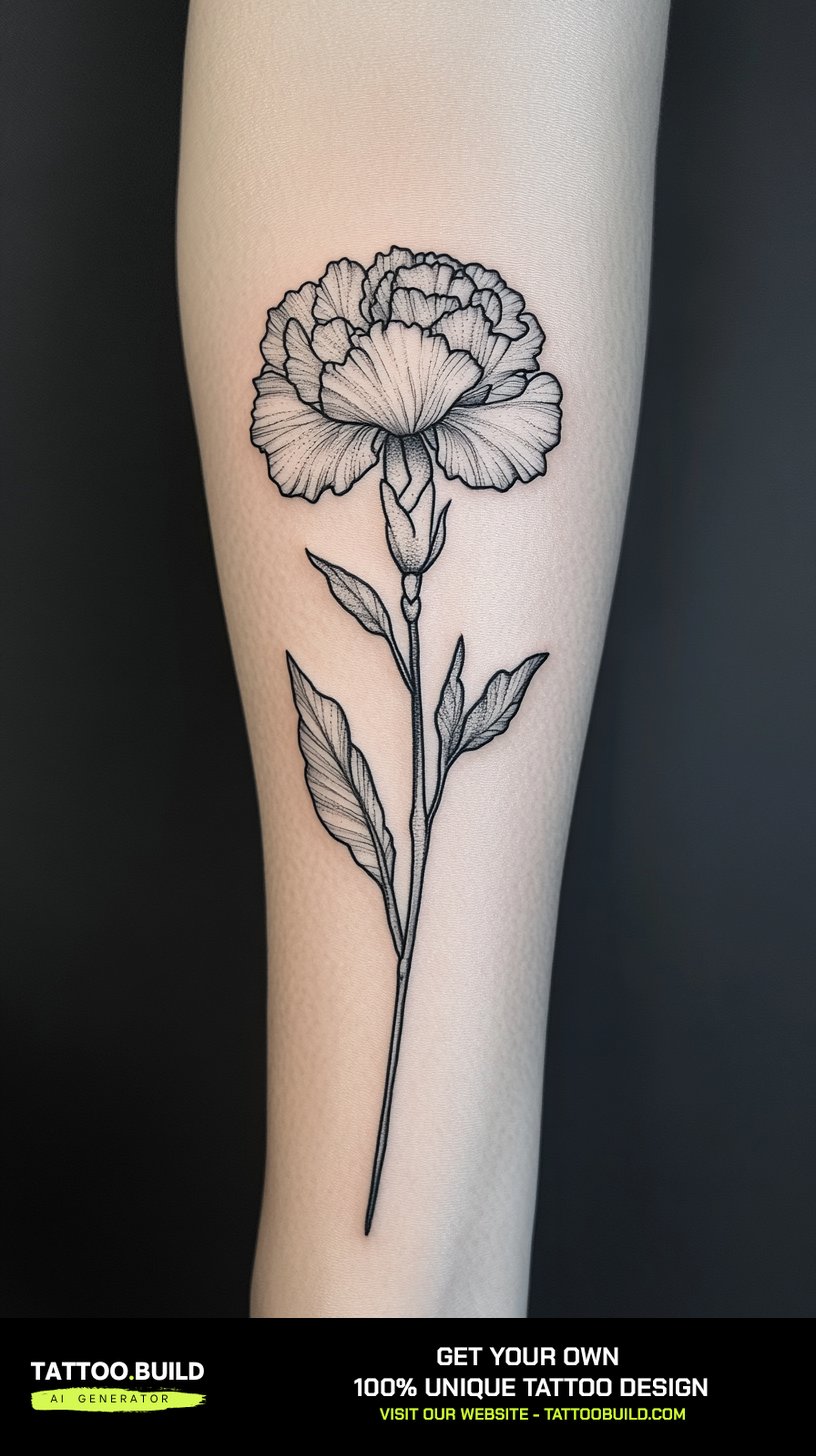
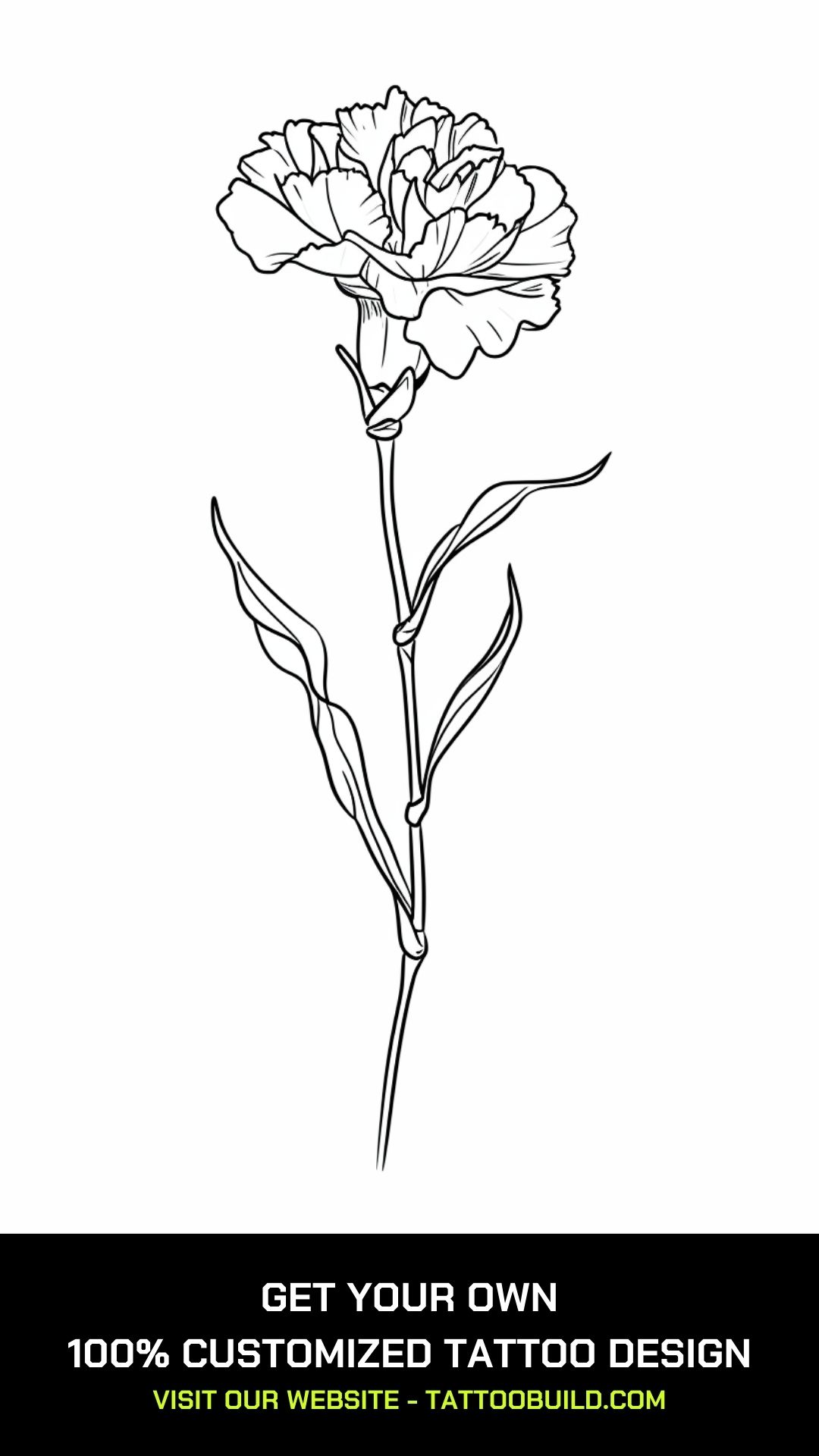
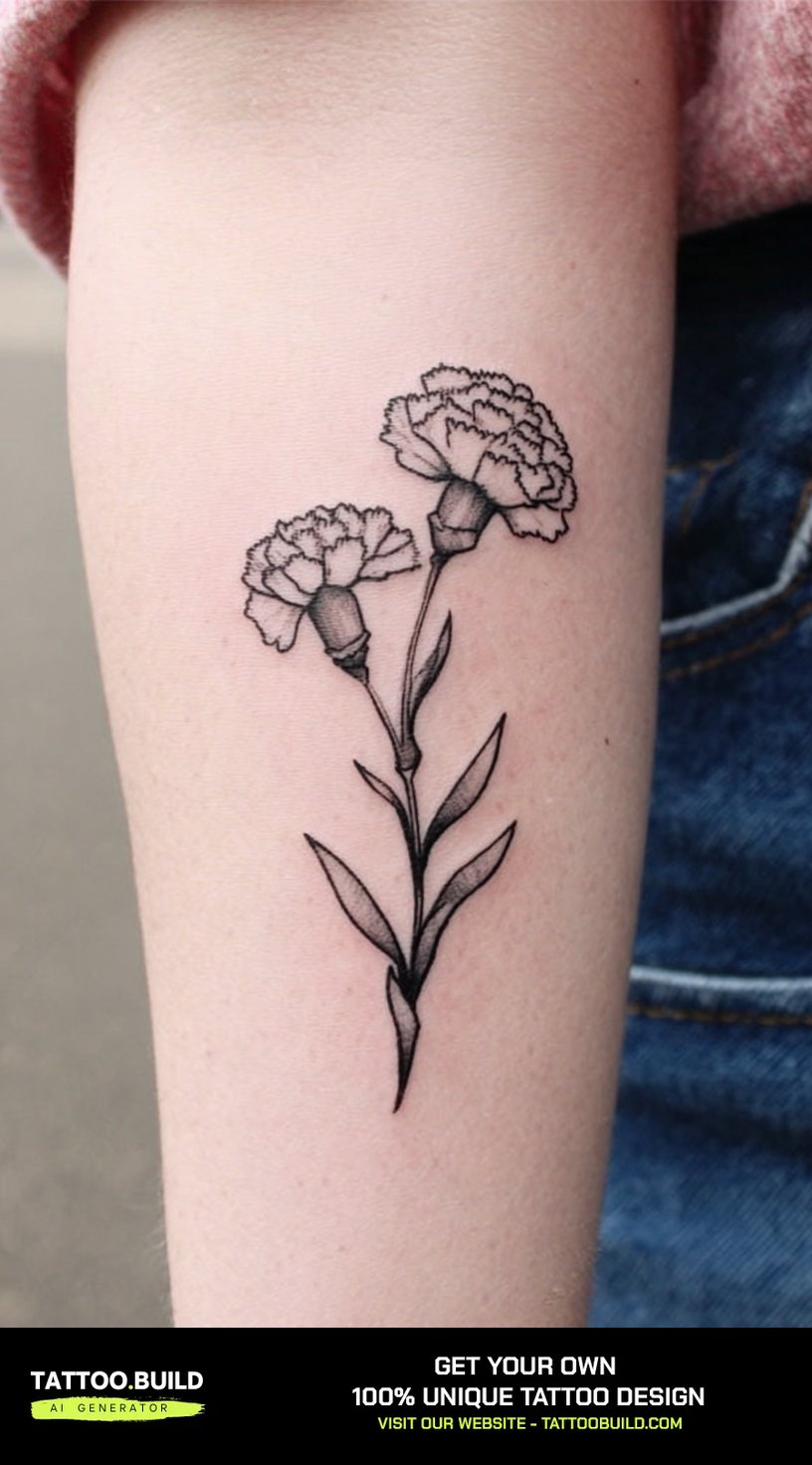
January’s flower is the carnation, traditionally read as devotion and deep affection. Its ruffled, layered petals are the interesting part — and the tricky part.
A carnation is essentially a ball of overlapping edges, so at very small sizes it turns into a grey blob. In my experience anything under about two inches needs the petal count deliberately reduced, which most artists are happy to do. Above three inches it becomes one of the better black-and-grey subjects on this list, because all those folds give a shader something to work with. Snowdrop is the common alternative for January if you want something far simpler and more linear.
2. February: Violet
February gets the violet, associated with modesty and quiet loyalty, with primrose as the usual second option.
Violets are small, flat-faced and genuinely easy to tattoo at miniature scale, which is why I see them so often on wrists and ankles. Their five-petal shape reads clearly even at an inch across. If you want colour, violet is one of the few flowers where a soft purple wash still looks intentional rather than muddy after healing — though I would still ask for a fine outline underneath it. A cluster of three violets on a single stem is a design I have done repeatedly and it has never looked crowded.
3. March: Daffodil
March belongs to the daffodil, a flower tied to new beginnings and, fittingly, to the end of winter.
The daffodil has one big design advantage: that trumpet-shaped centre gives you a natural focal point and a natural place to put shadow. It is the flower I recommend most often to people who want something recognisable from across a room. The downside is that a daffodil viewed straight on can look flat, so ask for a three-quarter angle. Line-weight variation on the trumpet edge does more for this flower than any amount of shading.
4. April: Daisy
April’s daisy stands for innocence and straightforwardness, and the shape is about as friendly as flowers get.
Daisies are the most forgiving flower on this entire list. Radial petals, a solid centre, no ambiguity — it works at half an inch and it works at eight inches. I have used daisies more than once as filler between larger elements in a botanical sleeve for exactly that reason. If you want it to feel less generic, ask for a side profile or a bent stem rather than the standard face-on view. Sweet pea is the traditional alternative for April.
5. May: Lily of the Valley
May’s lily of the valley symbolises sweetness and returning happiness, and it is quietly one of the most elegant tattoos here.
Those little bell-shaped blooms hanging down an arched stem create a shape that follows the body beautifully — along a collarbone, down a spine, around a wrist. It is my go-to suggestion for anyone who wants a birth flower that does not look like a stock botanical. The catch is that the bells need space between them; packed too tightly they blur into a caterpillar shape as the ink settles. One real-world note: the plant itself is toxic to eat, which sometimes matters to people choosing symbolism.
6. June: Rose
June has the rose, and the meaning shifts with colour — red for love, white for remembrance, yellow for friendship.
The rose is the single most tattooed flower in the world, which cuts both ways. Every artist can do one, the techniques are extremely well developed, and it ages better than almost anything. But it takes real work to make yours not look like everyone else’s. I usually push people toward an unusual angle — a bud, a rose from behind, a single dropped petal. If you want to go deeper on this one specifically, our rose tattoo ideas for women and black rose tattoo guides both cover the variations.
7. July: Larkspur
July’s larkspur represents an open heart and strong attachment, and its tall spike shape is unlike anything else on the list.
Larkspur is the vertical flower. That single upright spire of small blooms is made for forearms, spines, and the outside of a calf, and it is one of the few birth flowers that genuinely wants to be tall and narrow rather than round. In my experience it needs at least four inches of length to read as larkspur rather than as an abstract stem. Water lily is the alternative for July if you want something horizontal instead.
8. August: Gladiolus
August gets the gladiolus, tied to strength of character — its name comes from the Latin for sword.
Gladiolus is a big, dramatic flower and it does not shrink well. Multiple large trumpet blooms stacked up one stalk need room; below about five inches you lose the individual flowers. Where it excels is as the backbone of a larger piece, especially in neo-traditional work where bold outlines carry the structure. Poppy is the common secondary flower for August and is far easier to do small.
9. September: Aster
September’s aster carries meanings of wisdom and patience, and it looks like a many-petalled daisy with attitude.
The aster has dozens of narrow petals radiating from a small centre, which makes it a texture flower rather than a shape flower. At small sizes an artist will thin the petal count — that is normal and necessary, not a shortcut. It is one of the nicer candidates for a soft colour wash, since the petal tips give the colour somewhere to fade out naturally. Morning glory is September’s alternative and brings a vine you can wrap around a limb.
10. October: Marigold
October’s marigold is associated with warmth and remembrance, and it carries strong cultural weight in Día de los Muertos imagery.
Marigolds are dense, ruffled and unapologetically bold. They are excellent in colour and surprisingly good in solid blackwork, because those tight petal layers give you an obvious pattern of light and dark. If the Día de los Muertos association is part of why you want it, say so at the consultation — it changes the palette and often the companion elements. Cosmos is the gentler October alternative.
11. November: Chrysanthemum
November’s chrysanthemum means loyalty and long friendship, and in Japanese traditional work it carries considerable significance of its own.
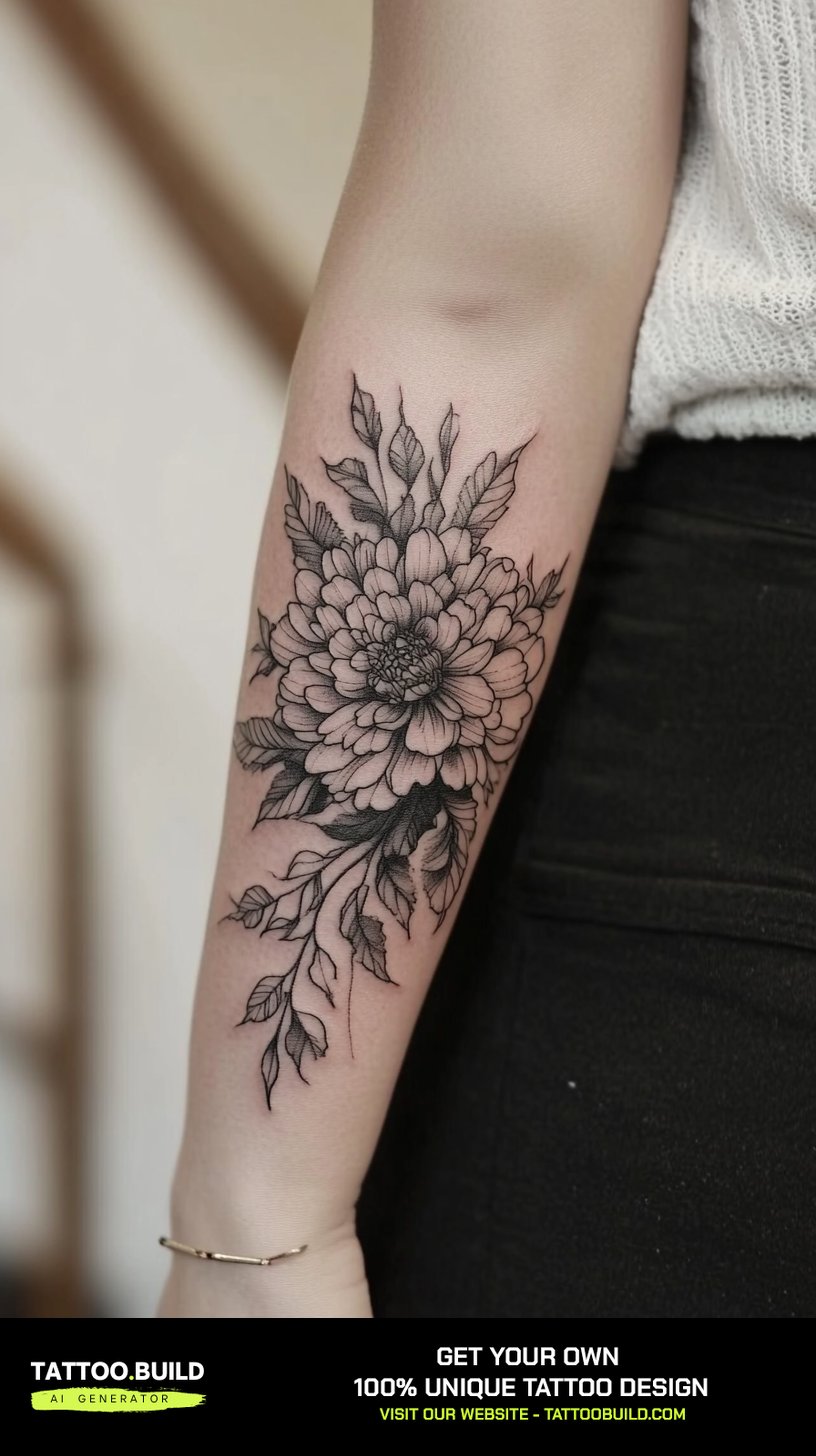
The chrysanthemum is the flower I would pick if I wanted one botanical tattoo to last forty years. Those spiralling layered petals are built for bold line work and heavy black, which is exactly why Japanese traditional uses it so heavily. It needs size — five inches and up — and it needs an artist comfortable with that petal structure. If you are drawn to it, look at artists whose portfolios show Japanese-style florals rather than fine line work.
12. December: Holly
December closes the year with holly, read as protection and resilience, with narcissus and poinsettia as alternatives.
Holly is unusual here because the memorable element is the leaf, not the flower. Those sharp, glossy, wave-edged leaves plus a cluster of berries make an extremely graphic shape that works small and works in pure black. It is also one of the few birth flowers where a tiny spot of red does a lot of work. In my experience holly reads better as a sprig wrapping a wrist or ankle than as a single centred motif.
Style Variations Worth Considering
Once you have settled on the flower, the style decision is what actually determines how the tattoo looks in ten years. These are the three routes I see chosen most often.
Fine Line and Single-Needle Botanicals
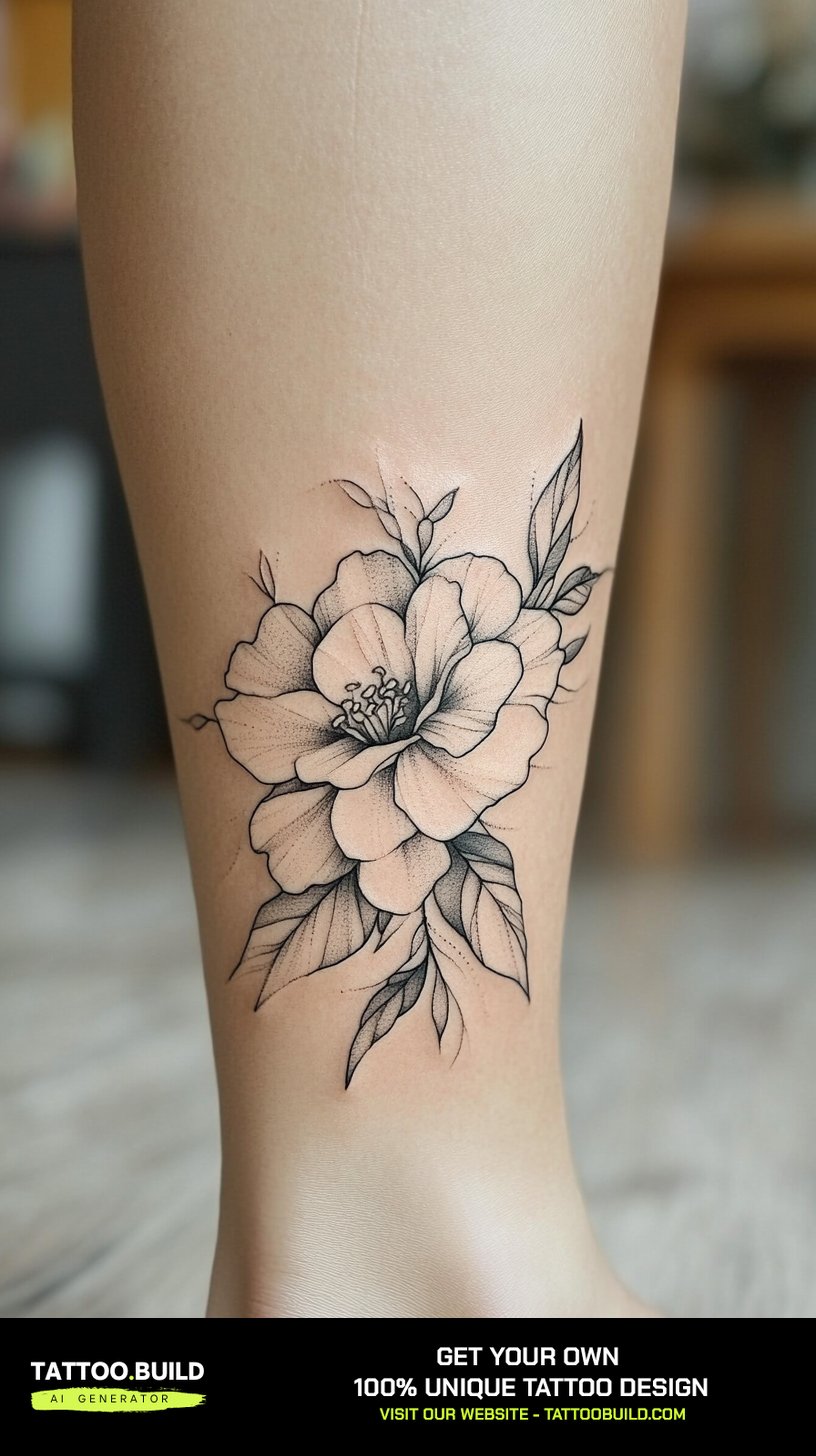
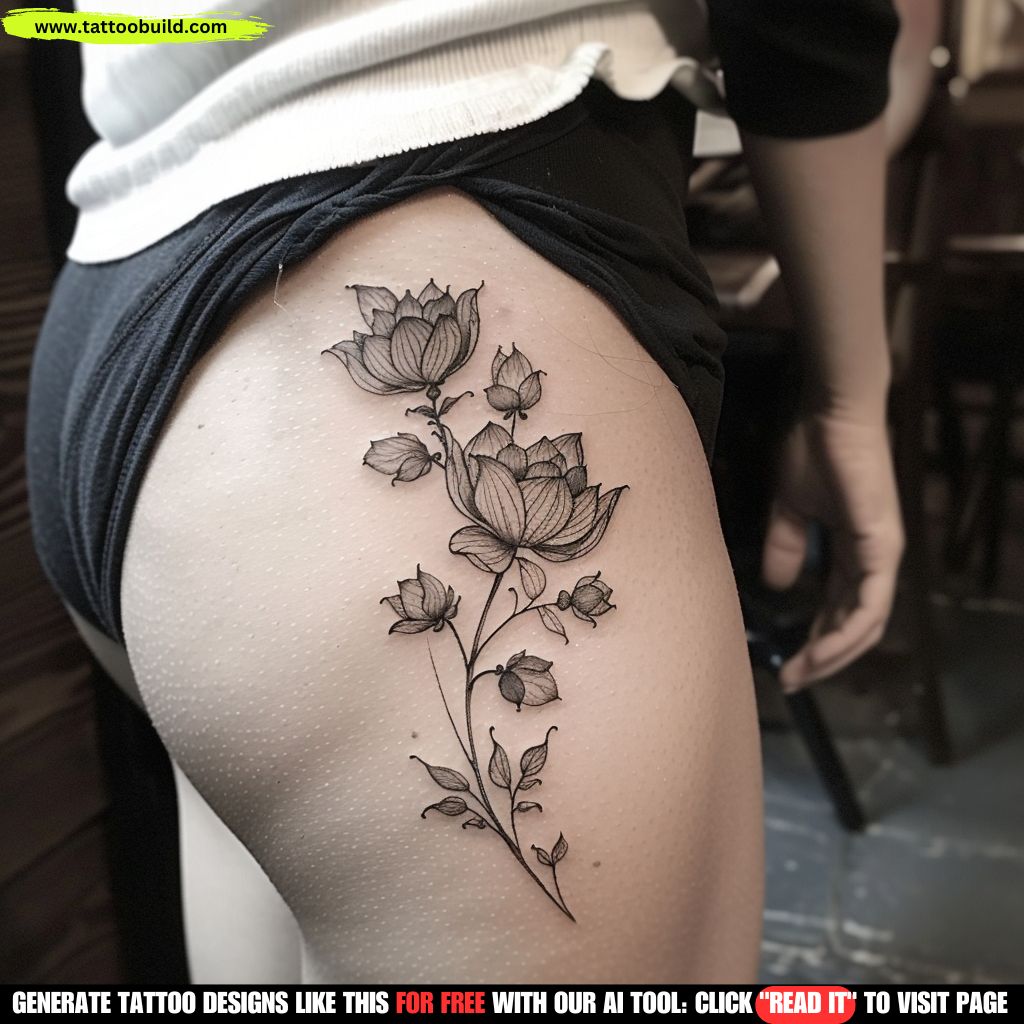
This is the dominant look for birth flower tattoos right now, and for good reason — a hairline stem with a few petals is quiet, elegant and easy to place almost anywhere.
The honest caveat is longevity. Single-needle work sits shallow and thin, and fine lines spread and soften more than heavier ones do over the years. Plan for a touch-up rather than being disappointed by one.
If this is your direction, look closely at healed photos in an artist’s portfolio, not fresh ones. Our minimalist tattoo ideas and small tattoo ideas round-ups are good places to see the range.
Illustrative Blackwork and Botanical Etching
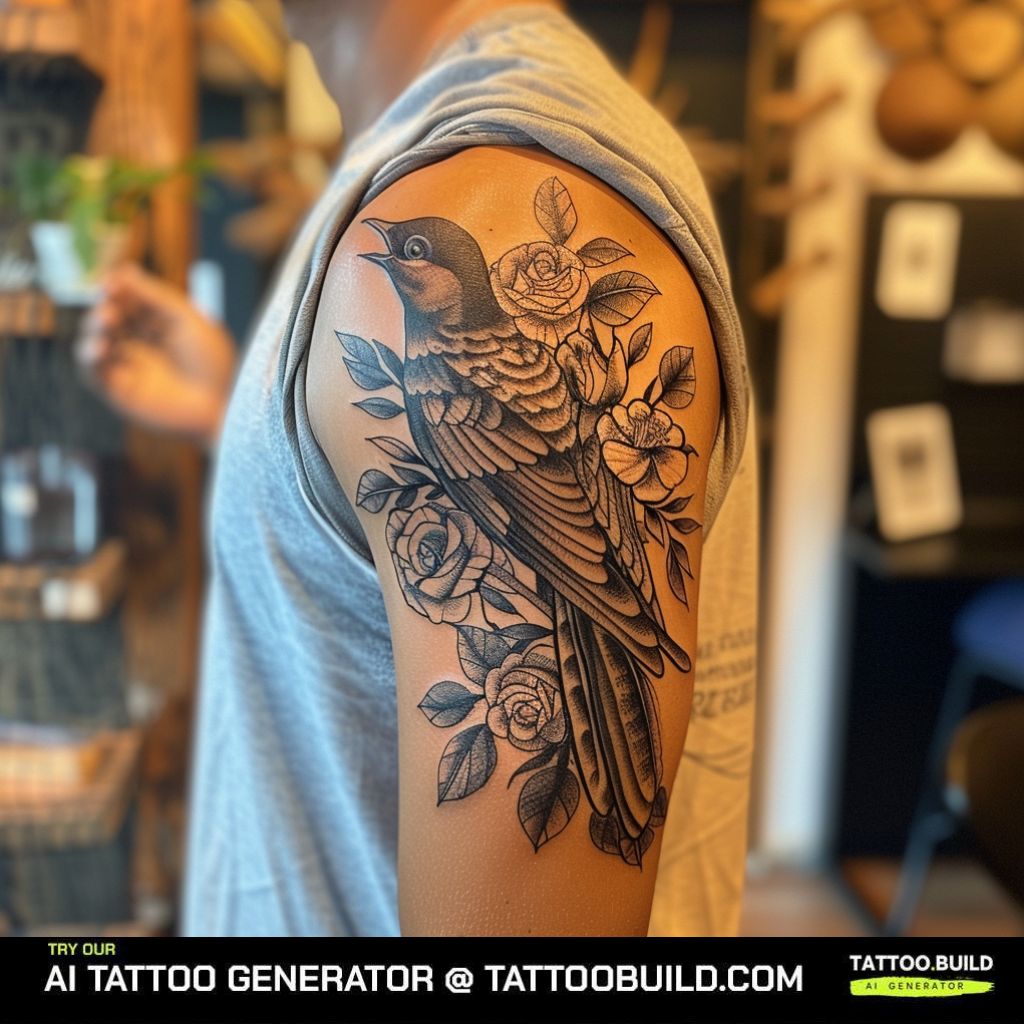
Etching-style work borrows from old botanical engravings: varied line weight, dot shading, no solid fills. It is my favourite compromise between delicate and durable.
Because the structure comes from line weight rather than from grey wash, it holds its shape far longer than fine line does at the same size.
It also handles multiple flowers well. Two or three stems in etching style stay readable where the same arrangement in hairlines would merge into texture.
Soft Colour and Watercolour Washes
Colour makes a birth flower unmistakable — a violet is obviously a violet in purple — and for pastel flowers it can be genuinely beautiful.
The trade-off is fade. Light washes without a line anchor lose definition faster than any other approach on this page, particularly on sun-exposed placements.
My standard advice is to keep a black or dark-toned outline underneath the colour, so the design still has a skeleton when the wash softens. Our watercolor tattoo ideas guide goes into how artists handle that.
How to Personalise Your Birth Flower Tattoo
This is where most of the design conversation actually happens. Three approaches cover almost everything people ask for.
Combining Several Birth Flowers
Family bouquets are the most requested version I see — one stem per person, gathered or tied. They work, but only with planning.
Pick one flower to be the visual anchor and let the others sit behind it. Four flowers of equal weight in one composition is how you end up with a shape nobody can read.
Also check the shapes are compatible before you commit. A gladiolus and a daisy are very different scales, and forcing them to match usually flatters neither.
Adding Personal Elements
Initials tucked into a stem, a birth date in small script along a leaf, a birthstone rendered as a small geometric shape — these all read well when they are subordinate to the flower.
The mistake is making the text the same visual weight as the botanical. Script should whisper next to a flower, not compete with it.
If the piece is for someone who has died, that framing changes the design brief and often the placement too; our memorial tattoo ideas guide covers that territory properly.
Placement That Fits the Flower
Match the flower’s natural geometry to the body part. Tall spikes like larkspur belong on forearms and spines; round faces like daisies and asters suit shoulders and the back of an arm.
Wrists and inner forearms take small single stems well and heal quickly, which is why they remain the most popular choice — see our female wrist tattoo ideas and forearm tattoo ideas for females round-ups for placement inspiration.
Ribs, feet and hands hurt more and generally fade faster. They are still valid choices — just go in knowing that, not surprised by it.
Practical Tips and Aftercare
Bring reference photos of the actual plant, not just other tattoos. Artists design better botanicals when they can see how the flower really sits on its stem.
Ask to see healed work in the exact style you want. Fresh photos flatter fine line tattoos in a way that healed photos do not, and the difference is the whole point.
For aftercare, follow the instructions your artist gives you rather than something you read online — they know their ink, their machine and your skin. As general background, the American Academy of Dermatology has a plain-language guide to caring for tattooed skin.
If you develop spreading redness, swelling, heat, pus or a fever, that is a matter for a doctor, not a forum. Allergic reactions to specific pigments — red ones especially — can also appear well after healing; the FDA tattoo fact sheet covers what is and is not regulated.
Sunscreen once healed is the single cheapest thing you can do for a fine line botanical. UV exposure is what turns crisp stems into soft ones.
Common Mistakes — and What to Do If You Are Still Not Sure
The most common mistake is choosing the flower from a meaning list without ever looking at a photograph of the plant. You are going to look at the shape every day; look at it now.
The second is going too small for the flower. Carnations, asters, marigolds and chrysanthemums all have dense petal structures that need size, and no artist can fix that with skill alone.
The third is treating the traditional list as fixed. Sources disagree, most months have a second option, and picking the alternative is not cheating.
If you like the botanical look but the birth-month framing feels forced, that is worth listening to. Plenty of people end up happier with a flower they simply love — our floral tattoos for women guide is a good place to browse without the calendar attached.
And if you are still undecided after all that, wait. A birth date is not going anywhere, and the design will still be there in six months.
Frequently Asked Questions
What is my birth flower?
Each calendar month has one or two traditional flowers: carnation for January, violet for February, daffodil for March, daisy for April, lily of the valley for May, rose for June, larkspur for July, gladiolus for August, aster for September, marigold for October, chrysanthemum for November and holly for December. Most months also have a widely accepted alternative, such as snowdrop for January or poppy for August. The lists vary between sources because the tradition was never formally standardised. That gives you a legitimate second choice if the primary flower does not appeal to you visually.
How much does a birth flower tattoo cost?
Price depends far more on size, placement and the artist’s rate than on the flower itself. A small single-stem fine line piece is usually a shop-minimum job, while a multi-flower forearm arrangement in illustrative blackwork can run into multiple sessions. Rates vary enormously by city and by artist experience, so the only accurate number is the quote you get at consultation. Be wary of anyone significantly cheaper than everyone else in your area.
Do birth flower tattoos fade quickly?
Fine line and light colour work do soften faster than heavier styles, which is a property of the technique rather than of the subject. Placement matters too — hands, feet and anywhere with heavy sun exposure or friction will fade sooner. Daily sunscreen once the tattoo is fully healed makes a real difference. Most fine line botanicals benefit from a touch-up at some point, and that is normal rather than a sign something went wrong.
Can I combine several family members’ birth flowers in one tattoo?
Yes, and it is one of the most popular versions of this tattoo. The key is composition: choose one flower as the visual anchor, let the others sit behind or beside it, and check that the shapes and scales are compatible before committing. Three or four stems is usually the practical limit before the arrangement becomes hard to read. Bring photos of every plant to the consultation so your artist can build a balanced design.
Which birth flowers work best as small tattoos?
Daisy, violet, holly and lily of the valley all hold up well at small sizes because their shapes are simple and distinct. Carnation, aster, marigold and chrysanthemum have dense layered petals that blur when shrunk too far, so they generally want three inches or more. If your birth flower is one of the complex ones and you want something small, ask your artist about a simplified version with fewer petals — that is a standard and legitimate adaptation.
Quick Summary
- Every month has a traditional birth flower, and most have a second option — pick the one you actually like looking at.
- Choose for shape first and symbolism second; the silhouette is what you live with day to day.
- Simple flowers — daisy, violet, holly, lily of the valley — work small; carnation, aster, marigold and chrysanthemum need room.
- Fine line is the current default look but softens fastest; illustrative blackwork is the most durable compromise.
- Colour makes the species obvious but fades sooner without a black line anchor underneath it.
- Match the flower’s geometry to the placement — tall spikes on forearms and spines, round faces on shoulders.
- For family bouquets, anchor the composition with one dominant flower and keep it to three or four stems.
- Follow your artist’s aftercare instructions, use sunscreen once healed, and see a doctor for any sign of infection or reaction.