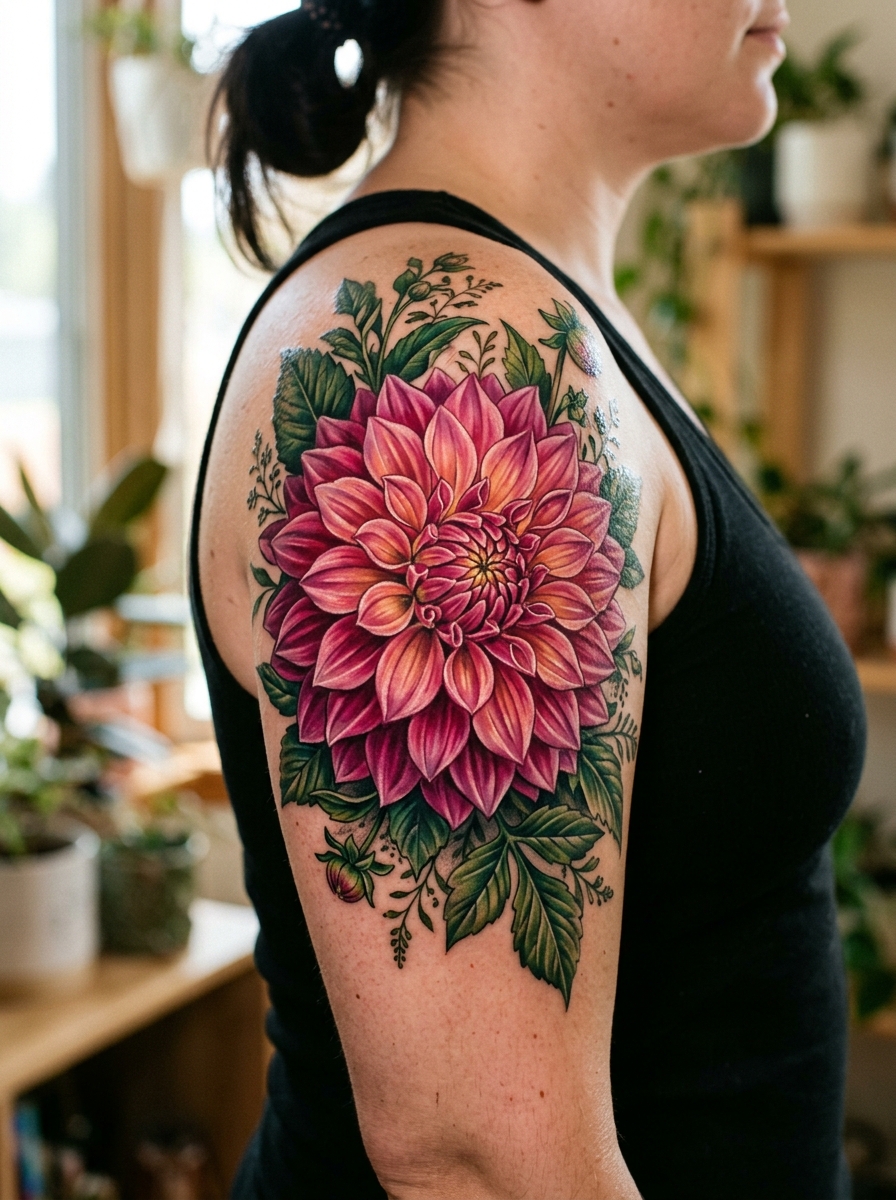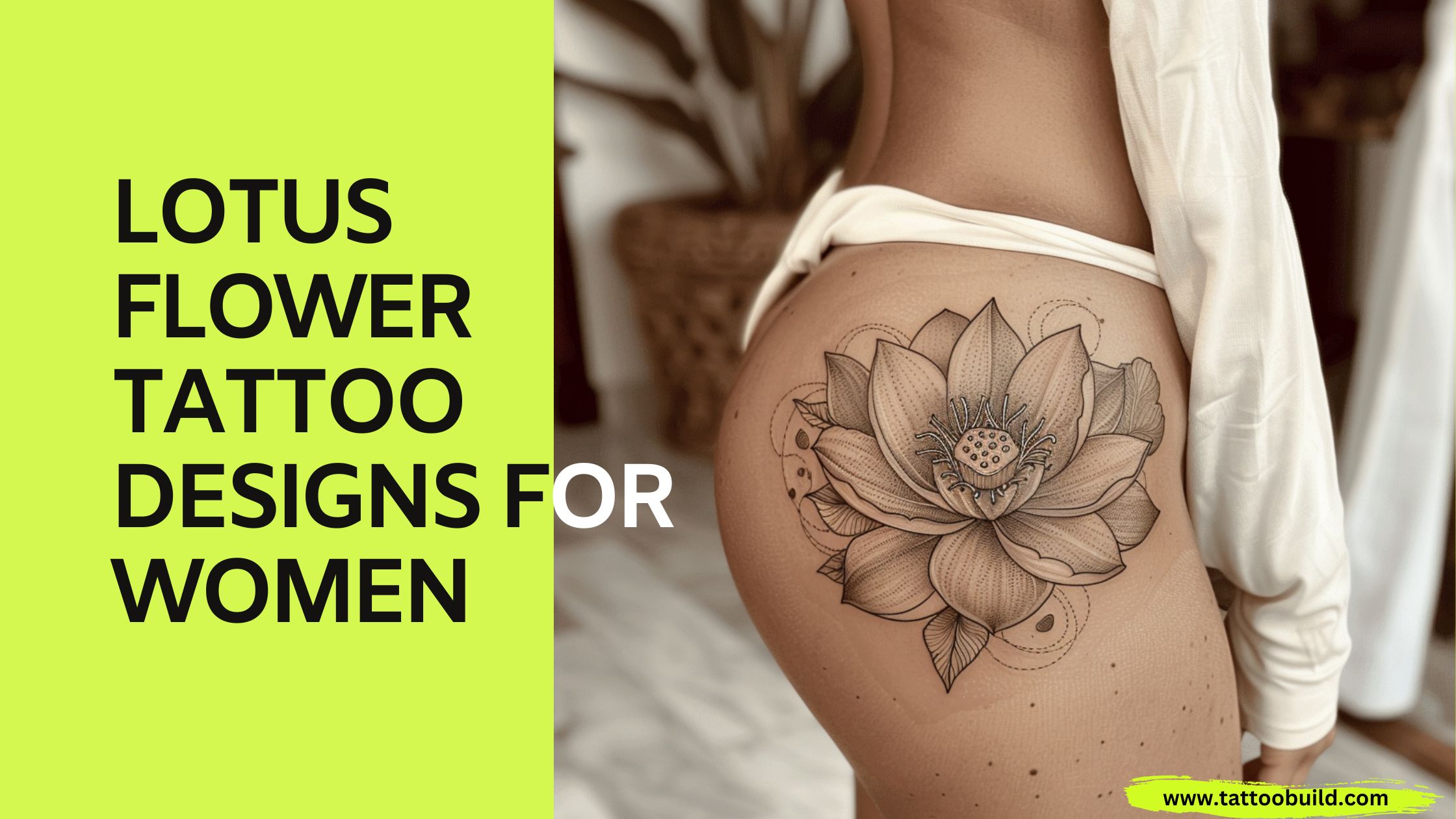
A lotus is one of the few tattoo subjects that works just as well at two inches as it does at two feet. That scalability is the reason it has never really gone out of fashion.
I have been collecting and writing about floral tattoo work for years, and the lotus comes up in more consultations than any other flower except the rose. Most of the women I speak to arrive with the same two questions: how simple is too simple, and where will it still look good in ten years.
This guide answers both. Below you will find 40 lotus designs across every major style, along with the practical trade-offs — pain, cost, ageing, placement — that decide whether a design you love on a screen actually works on skin.
If you are still weighing flowers in general, our roundup of flower tattoo drawings is a good place to compare silhouettes before you commit.
Which Lotus Tattoo Style Is Right for You?
Style choice drives everything else: session length, price, and how the piece ages. Here is the honest comparison I give people.
| Style | Typical size | Sitting time | How it ages | Best for |
|---|---|---|---|---|
| Fine-line / minimalist | 1–3 in | 30–60 min | Softens fastest; may need a touch-up in a few years | A first tattoo, or a discreet placement |
| Mandala lotus | 4–10 in | 2–5 hrs | Very well if the linework is spaced properly | Spine, back, outer thigh |
| Watercolour | 3–6 in | 2–4 hrs | Softest edges over time; anchoring linework helps | Inner arm, collarbone, shoulder |
| Geometric | 3–8 in | 2–4 hrs | Excellent — straight lines stay readable | Forearm, calf, sternum |
| Blackwork / ornamental | 5–12 in | 3–6 hrs | Best of any style; heavy black holds for decades | Thigh, upper arm, full back |
| Realistic / shaded | 4–10 in | 3–6 hrs | Good, but soft grey wash can lighten | Shoulder, calf, upper back |
What the Lotus Flower Really Means
The lotus grows out of silt and opens clean above the waterline. That single botanical fact is the whole of its symbolism, and it is why the flower carries weight in Buddhist and Hindu iconography long before it was ever a tattoo.
Britannica notes that the sacred lotus, Nelumbo nucifera, has been cultivated and revered across Asia for millennia — the meaning attached to it is genuinely old, not a tattoo-shop invention.
In practice, most women I have spoken to choose it for one of three reasons: coming through something difficult, a spiritual practice, or simply because the shape is beautiful. All three are legitimate.
Colour shifts the reading slightly. White is associated with purity, pink with the Buddha and devotion, blue with wisdom and restraint over desire, and red with the heart and compassion.
I would not over-think this. The large majority of lotus pieces I see are black and grey, and nobody reads those as a colour statement — they read as a lotus.
Popular Lotus Flower Tattoo Styles for Women
These six styles cover almost everything you will see in a portfolio. Each one has a different failure mode, which is the part most guides leave out.
Minimalist & Fine-Line Lotus
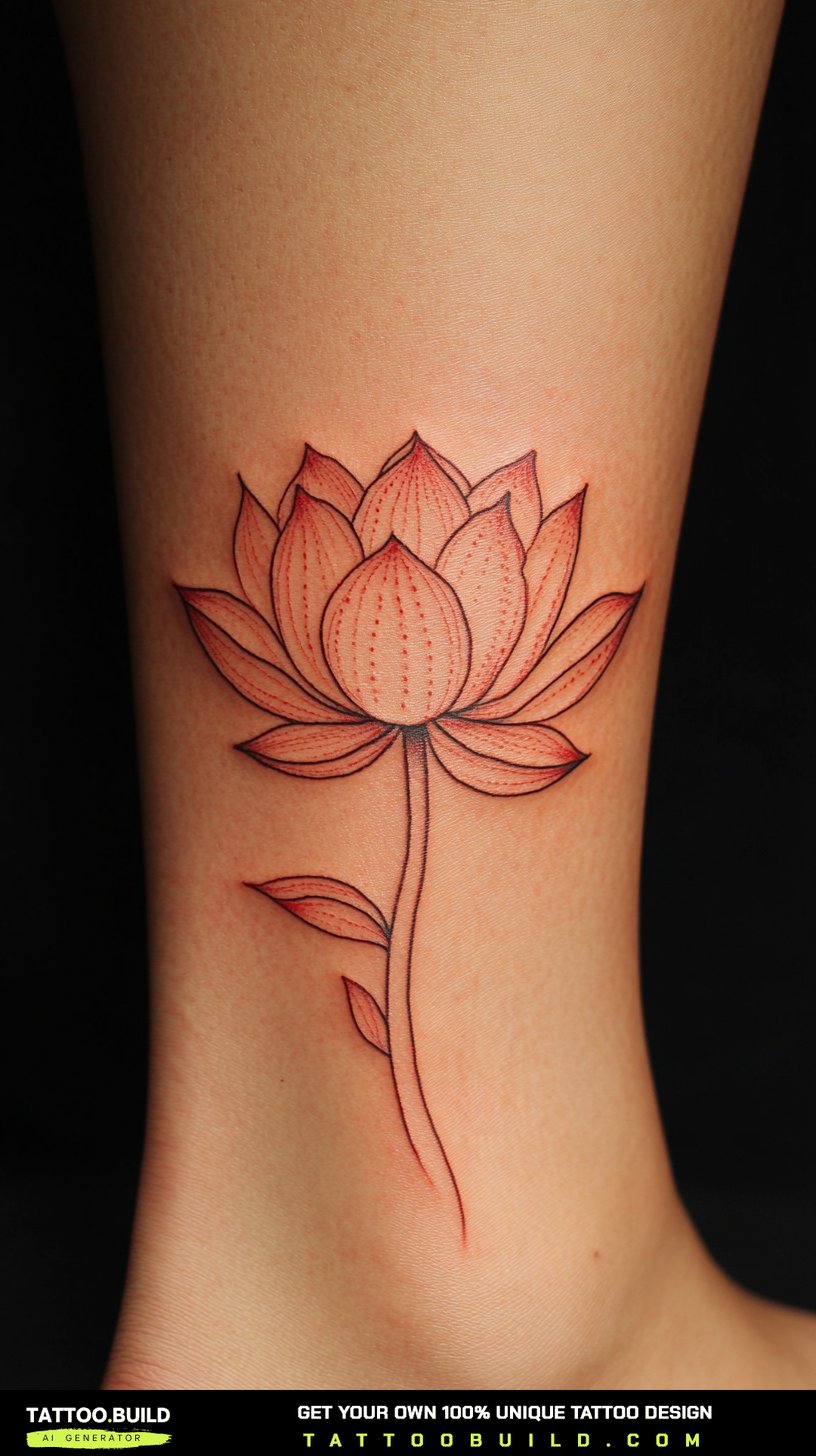
A single continuous outline, no shading, usually under three inches. It is the most requested lotus and the most likely to be someone’s first tattoo.
The appeal is obvious — it sits anywhere, heals in about two weeks, and rarely takes more than an hour in the chair.
The trade-off is longevity. Fine lines spread as the ink settles into the dermis, so a design with lines placed closer than roughly a needle-width apart can blur together over the years.
When I have asked artists about this directly, the advice is consistent: go slightly larger than you think you need, and leave breathing room between petals. A two-inch lotus with eight petals ages better than a one-inch lotus with fourteen.
Mandala Lotus
The mandala lotus wraps the flower in concentric geometric rings, often with dotwork shading between them. It is the most common large-scale lotus for women.
This style suits the spine and centre-back better than almost anything else, because the body’s own symmetry does half the design work for you.
Expect a real commitment. A detailed mandala running along the spine is usually two to three sessions, and the linework demands an artist who specialises in it — a freehand mandala drawn on the body by someone who does them weekly looks noticeably better than one stencilled from a flat drawing.
If you are drawn to this placement, our guide to feminine spine tattoos covers how the shape wraps the vertebrae.
Watercolour Lotus
Soft washes of colour, splashes that run past the outline, and often no black containment line at all. It reads as painted rather than drawn.
I love how these look freshly healed. I am more cautious about how they look at year eight.
Colour without a black anchor line is the part that fades. The artists I trust most on this build in a faint grey or black skeleton under the wash, so that when the pigment softens there is still a lotus underneath.
Ask to see a healed photo of a watercolour piece that is at least three years old before you book. Any artist who does this style well will have one.
Geometric Lotus
Straight lines, hard angles, and often a mirrored or faceted petal structure. It is the lotus for someone who wants the symbol without the softness.
Of every style here, geometric ages the most predictably. Straight lines stay straight, and a slight spread on a hard edge is almost invisible.
The catch is that geometric work is unforgiving of a shaky stencil. A petal that is two degrees off will bother you forever, so placement mapping matters more than in any other style.
The catch is aesthetic as much as technical: geometric lotus work reads as modern and graphic, so it pairs oddly with very soft florals if you plan to extend the piece later.
Lotus & Om or Unalome
Pairing the lotus with an unalome — the spiralling line representing the path to enlightenment — is one of the most requested combinations for the spine and forearm.
The unalome sits above the flower, its spiral loosening into a straight line and finishing in a small crown of dots.
A word of care here: these are living religious symbols, not decoration. If the meaning matters to you, it is worth reading about it properly — and if it does not, there are plenty of secular lotus designs that will serve you just as well.
Our dedicated guide to unalome tattoo ideas goes deeper into the symbol and its orientation.
Realistic & Ornamental Blackwork Lotus
At the heaviest end: full black petals, deep shading, ornamental filigree bleeding out from the flower.
Blackwork is the single best-ageing style in tattooing. Solid saturated black laid down well stays legible for decades with essentially no maintenance.
It is also the hardest to change your mind about. Cover-ups over heavy black are limited, and laser removal of dense blackwork takes many more sessions than fine-line work.
Sit with a blackwork design for a few months before you book it. Every artist I have asked says the same thing, and none of them are joking.
Choosing the Right Placement
Placement decides pain, price and how often you will actually see the tattoo. It deserves as much thought as the design.
Back & Spine
The spine is the natural home for a vertical mandala or unalome lotus. It is also one of the more demanding sits — the skin is thin and the vibration over bone is distinctive.
Most people describe the lower spine as manageable and the area between the shoulder blades as noticeably sharper. It is usually broken across sessions for that reason.
Wrist & Forearm
The inner forearm is the easiest large-ish placement on the body: flat, low pain, easy to heal, and easy to cover with a sleeve.
The wrist itself is bonier and stings more than people expect, but a small fine-line lotus there is typically a twenty-minute job. See our female wrist tattoo ideas for sizing.
Ankle & Foot
An ankle lotus is discreet and easy to show or hide, but it is a high-friction zone — socks, shoes and swelling all work against a clean heal.
Expect a slower, fussier healing period here than on the arm, and plan to keep it out of shoes for the first few days. There are more options in our female ankle tattoo ideas.
Ribcage & Side
Beautiful placement, genuinely painful. Thin skin directly over bone, plus the fact that you cannot stop breathing, makes this one of the harder areas on the body.
The upside is a long, uninterrupted vertical canvas that suits a stem-and-bloom lotus perfectly. Our rib tattoos for women guide has realistic expectations on the sit.
Thigh
If you want size without much pain, the outer thigh is the answer. It has fat and muscle padding, a large flat surface, and it is entirely private when you want it to be.
It is where I would send anyone who wants an ornamental or blackwork lotus at real scale. More ideas in our classy feminine thigh tattoo collection.
Lotus Tattoo Combinations & Variations
The lotus is a generous base design. These three pairings come up most often, and all of them work at a range of sizes.
Lotus & Moon
A crescent or full moon behind the bloom, sometimes with the moon phases running vertically above it. It is the most popular spine variation after the plain mandala.
Keep the moon lighter than the flower or it will compete for attention — the lotus should still be the subject.
Lotus & Koi Fish
Traditionally an East Asian pairing: the koi swimming upstream and the lotus rising from the mud tell essentially the same story of persistence.
This one needs scale. A koi and lotus below about six inches loses the fish’s scale detail almost immediately, so think thigh, calf or upper back. Our koi fish tattoo design gallery shows the proportions that work.
Lotus Bouquets & Florals
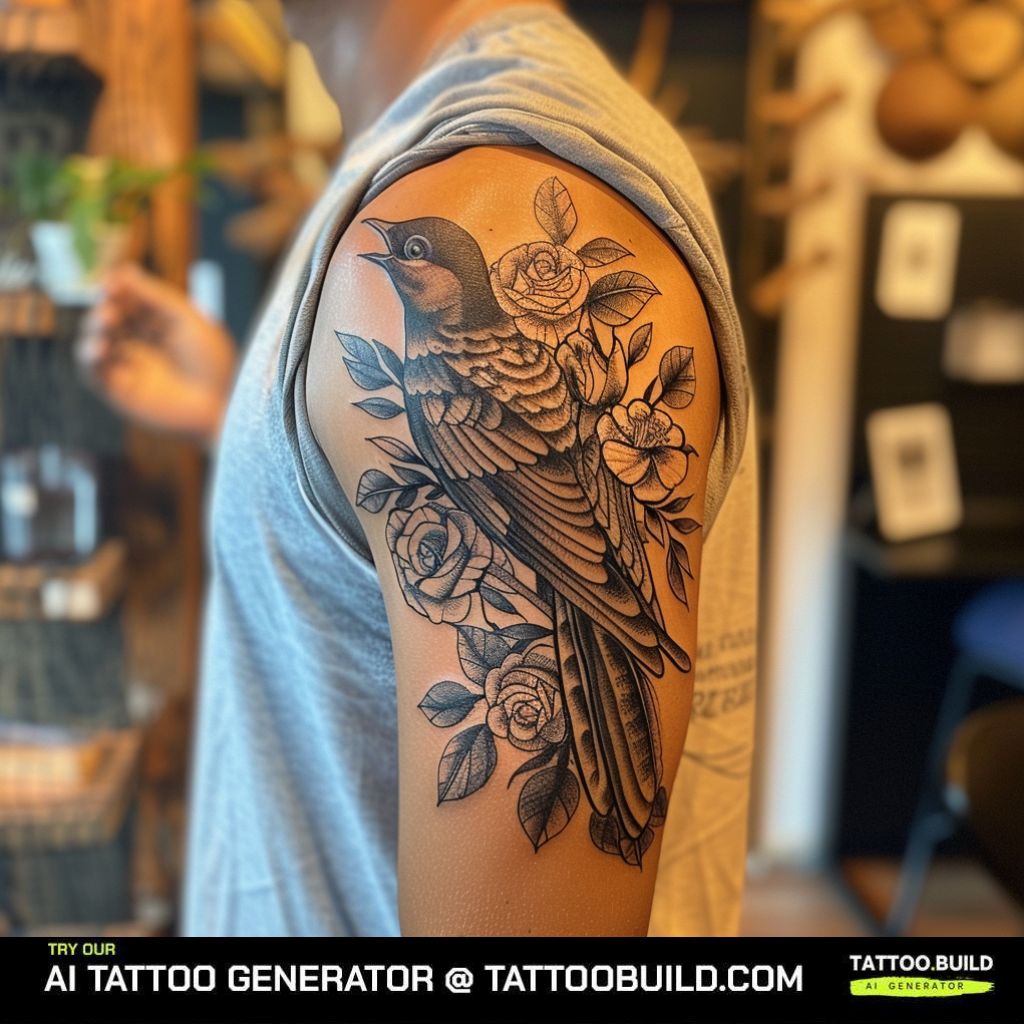
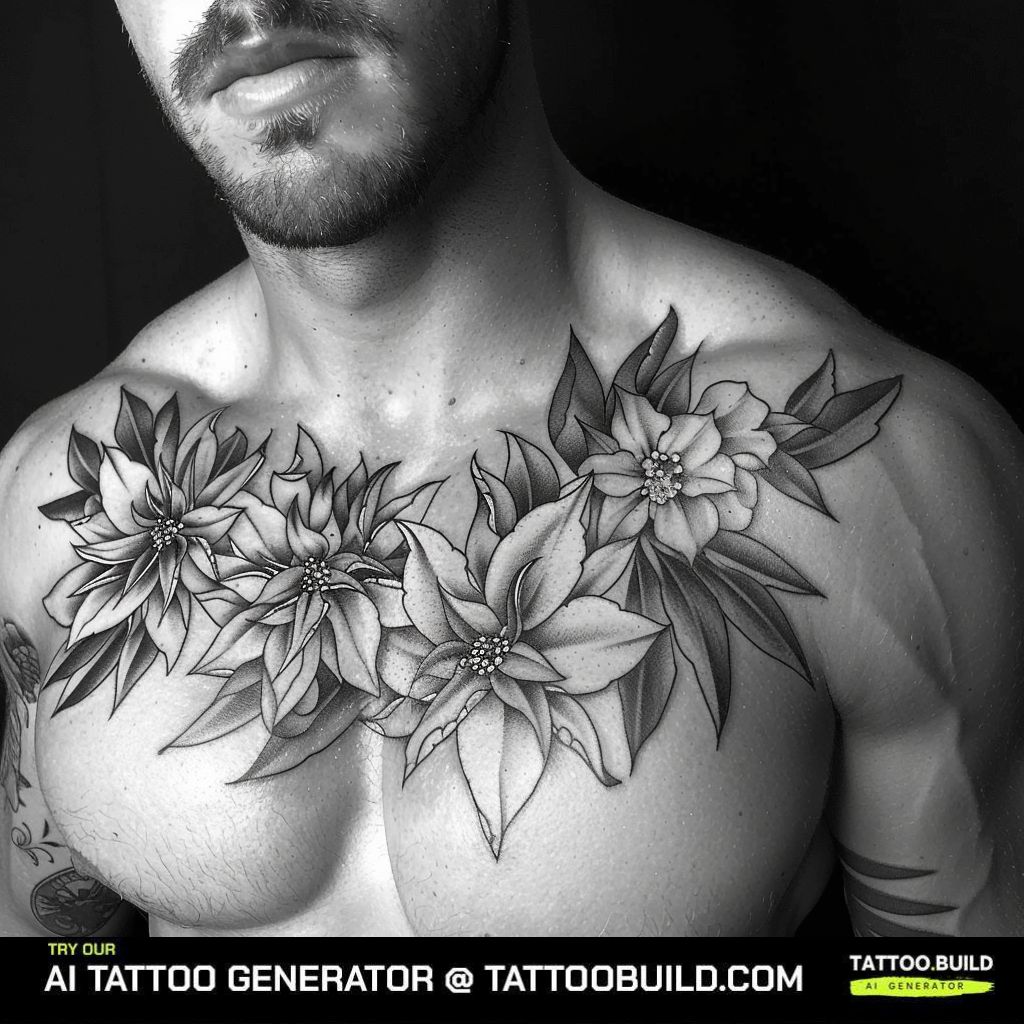
Combining the lotus with roses, peonies or a birth flower turns a symbol into a composition, and it is the easiest way to extend a piece later.
Design the whole composition before the first needle touches skin, even if you only tattoo part of it now. Adding a flower to a finished piece afterwards almost always looks added.
Caring for Your Lotus Tattoo
Aftercare is where good tattoos are lost, and fine-line lotus work is especially sensitive to it.
Follow the instructions your artist gives you over anything you read online, including this page — they know what ink, needle and technique they used.
The broad consensus is simple: keep it clean with unscented soap, keep it lightly moisturised rather than smothered, and keep it out of direct sun. The American Academy of Dermatology has a plain-language guide to caring for a new tattoo and to the warning signs of a problem.
No swimming, no baths and no gym sweat for roughly the first two weeks. Ankle and rib placements in particular need the extra patience.
Sunscreen is the single best thing you can do for a black-and-grey lotus long term. UV exposure breaks down pigment faster than anything else on this list.
If the area becomes hot, swollen, increasingly painful after the first few days, or starts weeping pus, that is not normal healing — contact your artist and see a doctor. Allergic reactions to certain pigments are uncommon but real, and the US Food and Drug Administration publishes current information on tattoo ink safety.
This article is not medical advice. For anything involving infection, a reaction or removal, talk to a licensed professional rather than the internet.
More Lotus Flower Tattoo Ideas for Women
The rest of the collection, grouped so you can scan styles side by side. Save the two or three that keep pulling you back — that shortlist is what you bring to a consultation.
Still Not Sure? Avoid These Common Mistakes
Four things account for most of the lotus tattoos people later regret.
Going too small for the detail. A mandala lotus shrunk to two inches will not hold its rings. If you want that level of detail, you need the size to carry it.
Choosing the artist by price rather than portfolio. Fine-line, mandala and watercolour are three separate skill sets, and very few artists are genuinely strong at all three.
Picking a reference image without checking it healed. A crisp photo taken ten minutes after the session tells you almost nothing about how that work holds up.
Rushing the placement. Sleep on the stencil position if you are unsure — a good artist will re-place it as many times as you need. If you are weighing a spine piece specifically, read are spine tattoos dangerous first.
Frequently Asked Questions
What does a lotus flower tattoo symbolize?
The lotus symbolises rising above difficulty, because the plant roots in mud and opens clean above the water. In Buddhist and Hindu tradition it also carries associations with purity, spiritual growth and rebirth. Colour adds nuance — white for purity, pink for devotion, blue for wisdom, red for compassion. Most people choose it for personal reasons rather than strict religious ones, and that is perfectly normal.
Where is the best place for a woman to get a lotus tattoo?
For a first tattoo, the inner forearm and the outer thigh are the easiest places to sit through and the easiest to heal. The spine and sternum suit vertical mandala designs beautifully but are among the more painful areas. Ankle and wrist work well for small fine-line pieces, though both take a little more care while healing. Choose the placement that fits the design’s size rather than forcing a large design into a small spot.
Do lotus tattoos hurt a lot?
It depends almost entirely on placement rather than on the design itself. Fleshy areas like the outer thigh and the outer upper arm are generally the most comfortable. Bony, thin-skinned areas — ribs, spine, sternum, ankle, the top of the foot — are consistently described as sharper. A small fine-line lotus on the forearm is usually over in under an hour, which keeps the whole experience very manageable.
How much does a lotus flower tattoo cost?
Most shops charge either an hourly rate or a shop minimum, and the minimum is what small pieces fall under. A small fine-line lotus typically costs no more than one shop minimum, while a detailed mandala or blackwork piece is priced by the hour across multiple sessions. Rates vary widely by city and by the artist’s experience, so ask for a quote at consultation rather than assuming. Our guide to how much tattoo designs cost breaks the pricing down further.
Will a fine-line lotus tattoo fade quickly?
Fine-line work does soften more than heavier styles, but “fade quickly” overstates it. The usual outcome is that lines spread slightly and very tight details close up over a number of years. Sun exposure is the biggest accelerator, so daily sunscreen once the tattoo is healed makes a real difference. Many people schedule a touch-up eventually, and that is a normal part of owning delicate work rather than a sign something went wrong.
Quick Summary
- The lotus scales beautifully — it works at two inches on a wrist and at full length down a spine.
- Fine-line is the easiest entry point, but leave space between petals so the design ages well.
- Mandala and blackwork lotus designs age best; they also cost the most and take multiple sessions.
- Watercolour looks stunning healed fresh — ask to see a piece at least three years old before booking.
- Outer thigh and inner forearm are the most comfortable placements; ribs, spine and ankle are the sharpest.
- Match the size to the detail: shrinking a mandala below its natural scale is the most common regret.
- Sunscreen after healing is the single most effective thing you can do for longevity.
- For anything involving infection, a reaction or removal, see your artist and a doctor — not a blog.