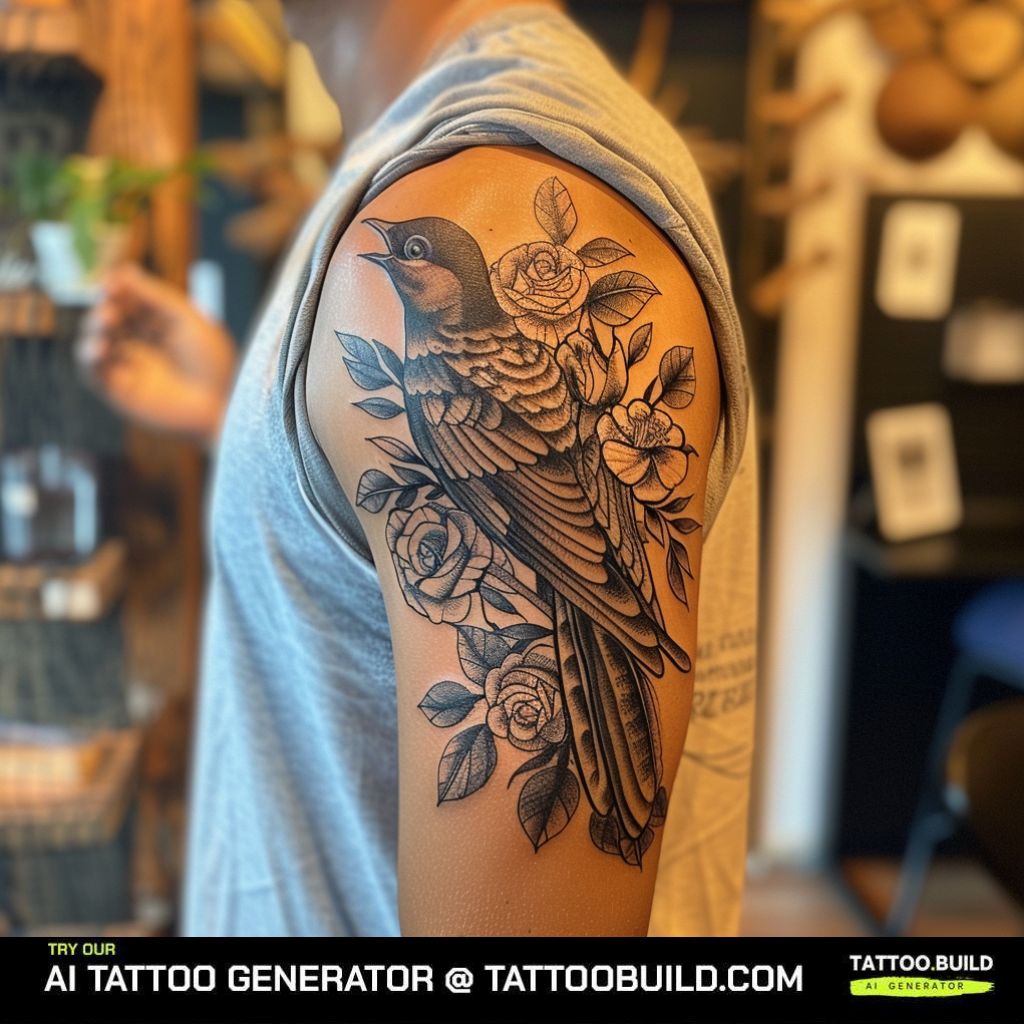
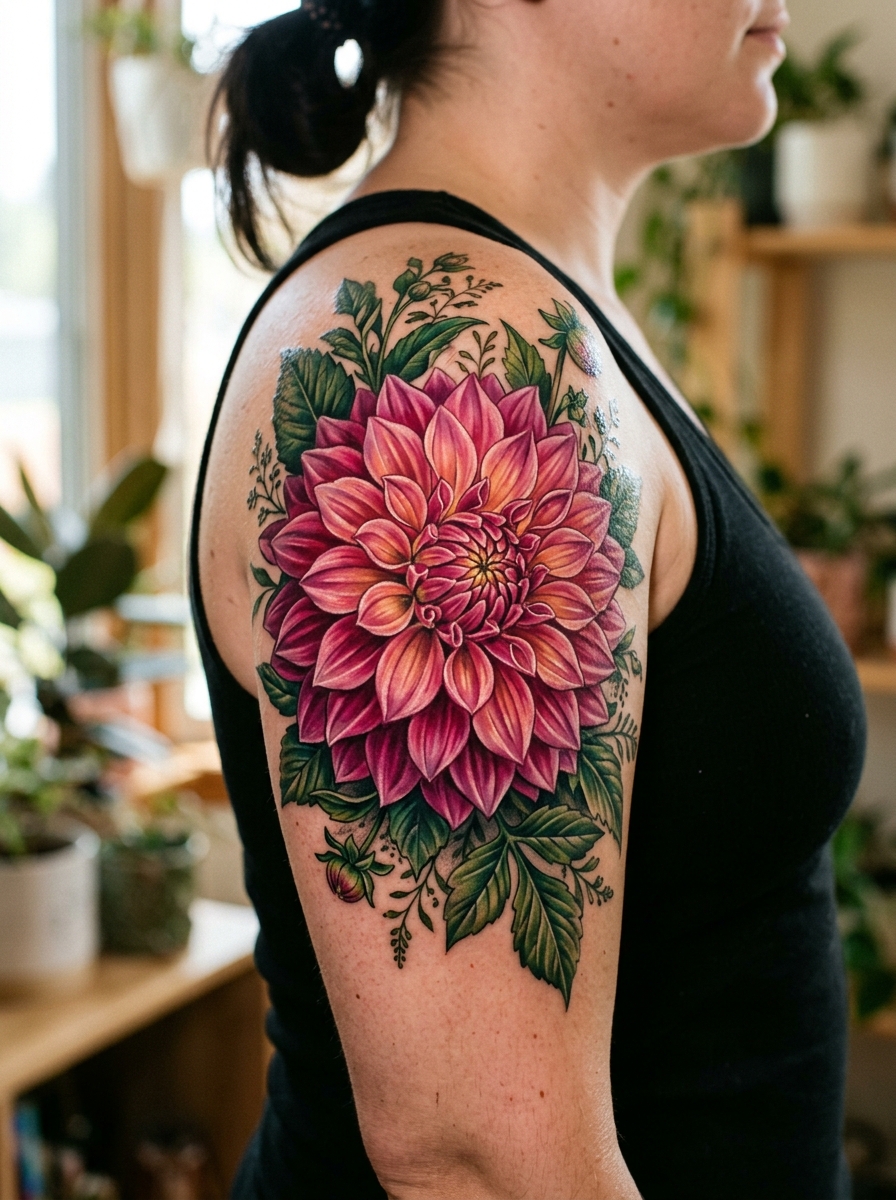
I have watched a lot of guys talk themselves out of a flower chest tattoo, and almost always for the same reason: they think petals will read as soft. A flower chest tattoo for male skin works because the chest is a wide, curved, symmetrical canvas, and flowers are one of the few subjects flexible enough to follow that shape instead of fighting it.
The chest gives you room. A rose that looks cramped on a forearm can stretch across a pec and finally breathe.
In my experience the guys happiest with their chest pieces are the ones who picked a flower for a reason — a birth month, a name, a place — rather than picking whatever looked good on a flash sheet. The design ages better when it means something.
Below are twelve directions I keep seeing work, plus the placement and healing details that actually matter. If you are still weighing the whole area rather than the subject, it is worth browsing broader chest piece tattoo ideas for men first.
Which Flower Suits Your Chest Tattoo?
This is the shortlist I walk people through before they book a consult. None of it is a rule — it is just what tends to hold up on chest skin.
| Flower | Reads As | Best Chest Placement | Holds Up Long-Term |
|---|---|---|---|
| Rose | Classic, bold, hard to date | Across one pec, or centered sternum | Very well — strong outline, clear petal structure |
| Lotus | Calm, symmetrical, meditative | Dead-center sternum | Well, if petals are not packed too tight |
| Peony | Dense, decorative, Japanese-leaning | Full pec or half-chest | Well at larger sizes; blurs if made small |
| Chrysanthemum | Traditional Japanese, structured | Upper chest panel into shoulder | Very well — built for bold line work |
| Wildflowers | Loose, natural, personal | Spread across collarbone to pec | Depends on line weight; fine stems soften |
| Single stem | Minimal, quiet, modern | Over the heart or along the sternum | Good if lines are not hairline thin |
Why Flower Chest Tattoos Work So Well on Men
The chest is one of the largest flat-ish surfaces on the body, and it is roughly symmetrical. That combination is rare, and flowers take advantage of it better than most subjects.
A bloom has a natural center and radiating petals. Put that center on the sternum and the design mirrors the body instead of sitting awkwardly across it.
Masculine or not has almost nothing to do with the flower and almost everything to do with the line weight, contrast and scale. The same rose drawn with heavy outlines and deep black shadow reads completely differently than one drawn in hairline single-needle work.
Every artist I have asked about this says the same thing in different words: pick the mood first, then the flower. If you want the reasoning in more depth, this breakdown of masculine flower tattoo styling covers the contrast question well.
The other advantage is coverage. Chest skin is easy to keep out of the sun and easy to hide under a shirt, which matters both for healing and for work environments that still care.
Flower Chest Tattoo Ideas for Men
Twelve directions, ordered roughly from simplest to most involved. Sitting times below are what I have seen quoted most often — your artist’s estimate is the one that counts.
1. Single Rose Across the Pec
This is the design I would point a first-timer toward. One rose, angled so the stem runs toward the sternum and the bloom sits over the outer pec.
The angle is the whole trick. A rose drawn straight up and down on a chest looks pinned on; angled along the muscle line, it looks like it grew there.
When I have watched artists lay this one out, they usually stencil it two or three times before committing, shifting it an inch at a time while you stand up straight. Chest skin moves a lot between sitting and standing, so do not accept a stencil you only saw while seated.
Expect somewhere in the range of three to five hours for a palm-to-hand-sized rose with full black and gray shading. It is a realistic single-session piece for most people.
2. Black and Gray Floral Shading
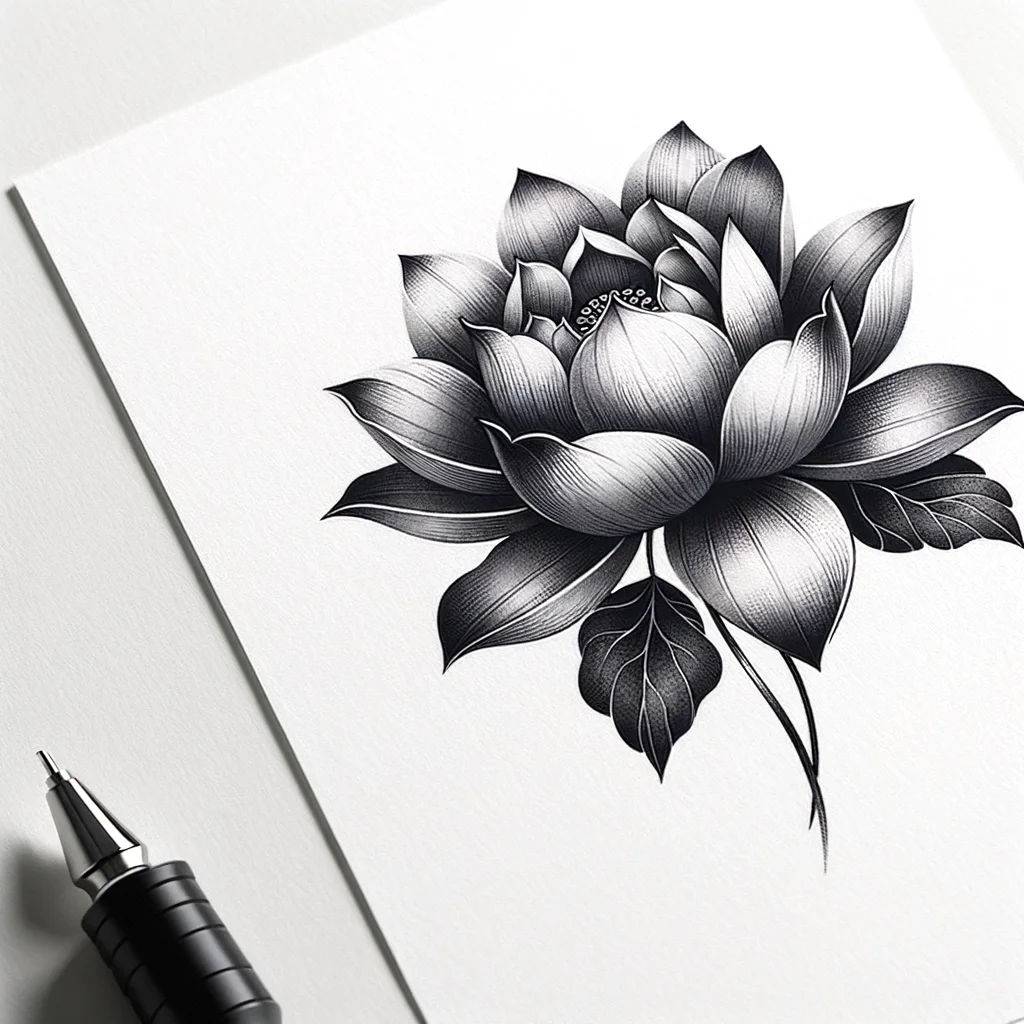
Skipping color entirely is not a compromise — for a lot of chest pieces it is the stronger choice.
Black and gray holds contrast as it ages. Grey wash softens over the years, but the darks stay dark, so the flower keeps its shape long after color work would have gone flat.
It also sits more quietly under a shirt collar, which matters if you want the piece to be yours rather than a conversation starter every summer.
If this is the direction you are leaning, the range of men’s rose tattoo black and gray work is a good reference set to bring to a consult.
3. Full-Color Chest Bloom
Color on the chest can be spectacular, and it is the option that asks the most of you afterward.
Reds and oranges saturate well on most skin tones. Pale yellows and whites are the ones that tend to disappear first, so I would not build a design that depends on them.
The single biggest factor in how a color chest piece looks in ten years is sun exposure, not ink quality. A shirt is cheap insurance.
Plan for multiple sessions. Color packing over a wide area is slow, and most artists will split it rather than push through a seven-hour sitting.
4. Minimal Single-Stem Flower
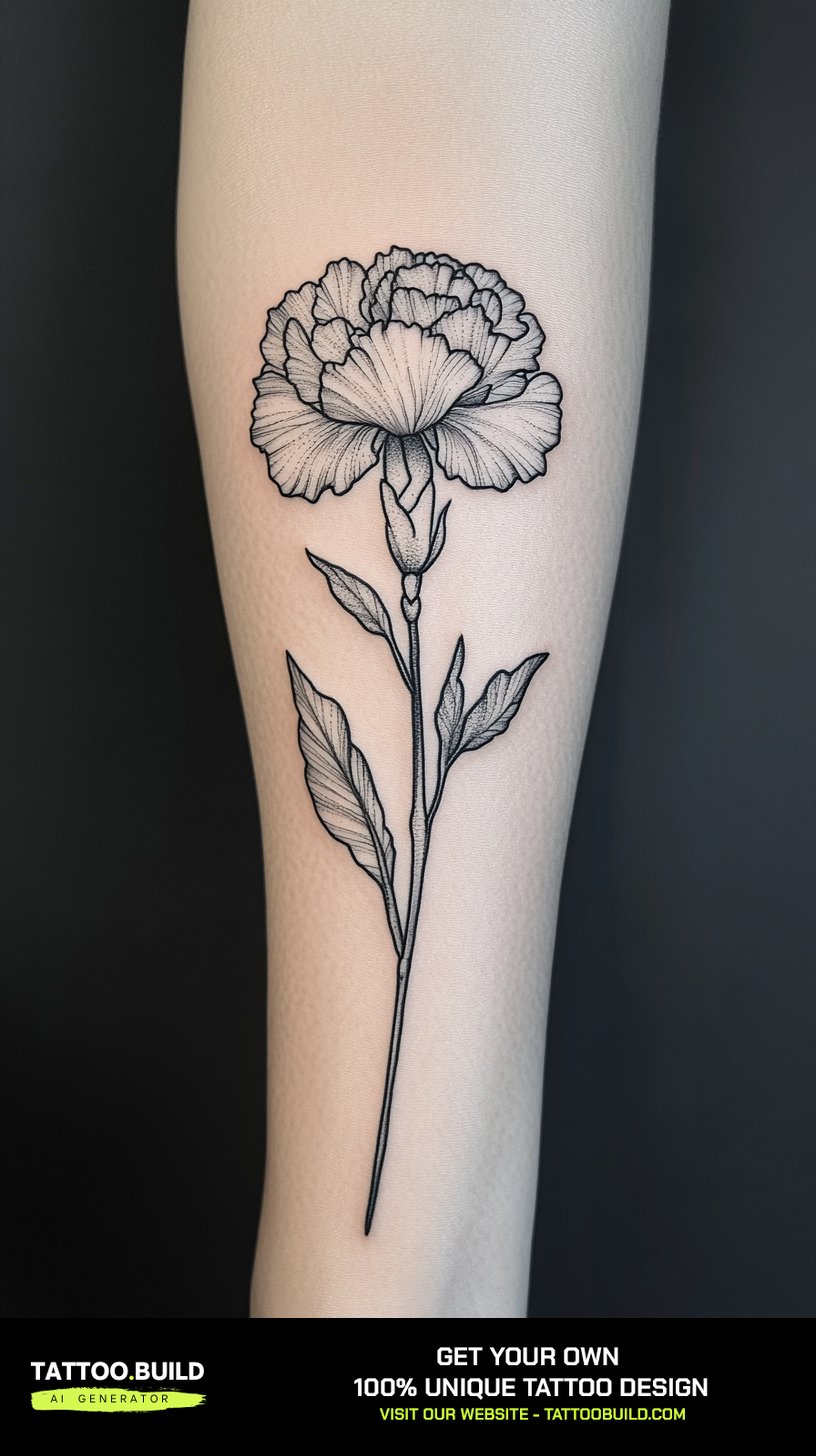
One stem, a few leaves, one bloom, no shading. It sounds like less tattoo, and it is — that is the point.
Minimal work on the chest reads well because the surrounding skin stays blank, so the design has room. On a crowded arm the same piece would get lost.
The honest caveat: very thin lines on the chest do spread over time, especially near the sternum where skin creases. Ask for a slightly heavier line than you think you want. In my experience people regret too-thin more often than too-thick.
5. Rose and Filler Sternum Piece
Centered on the sternum, a rose with soft filler around it — smoke, leaves, dot shading — makes the design feel anchored instead of floating.
Filler is doing structural work here. Without it a lone sternum flower can look like a sticker.
Fair warning on comfort: the sternum is thin skin directly over bone and is widely reported as one of the sharper spots on the torso. It is manageable, but it is not the pec.
If you want the placement without committing to a full chest piece, the sternum tattoo ideas collection shows how far that narrow strip can be pushed on its own.
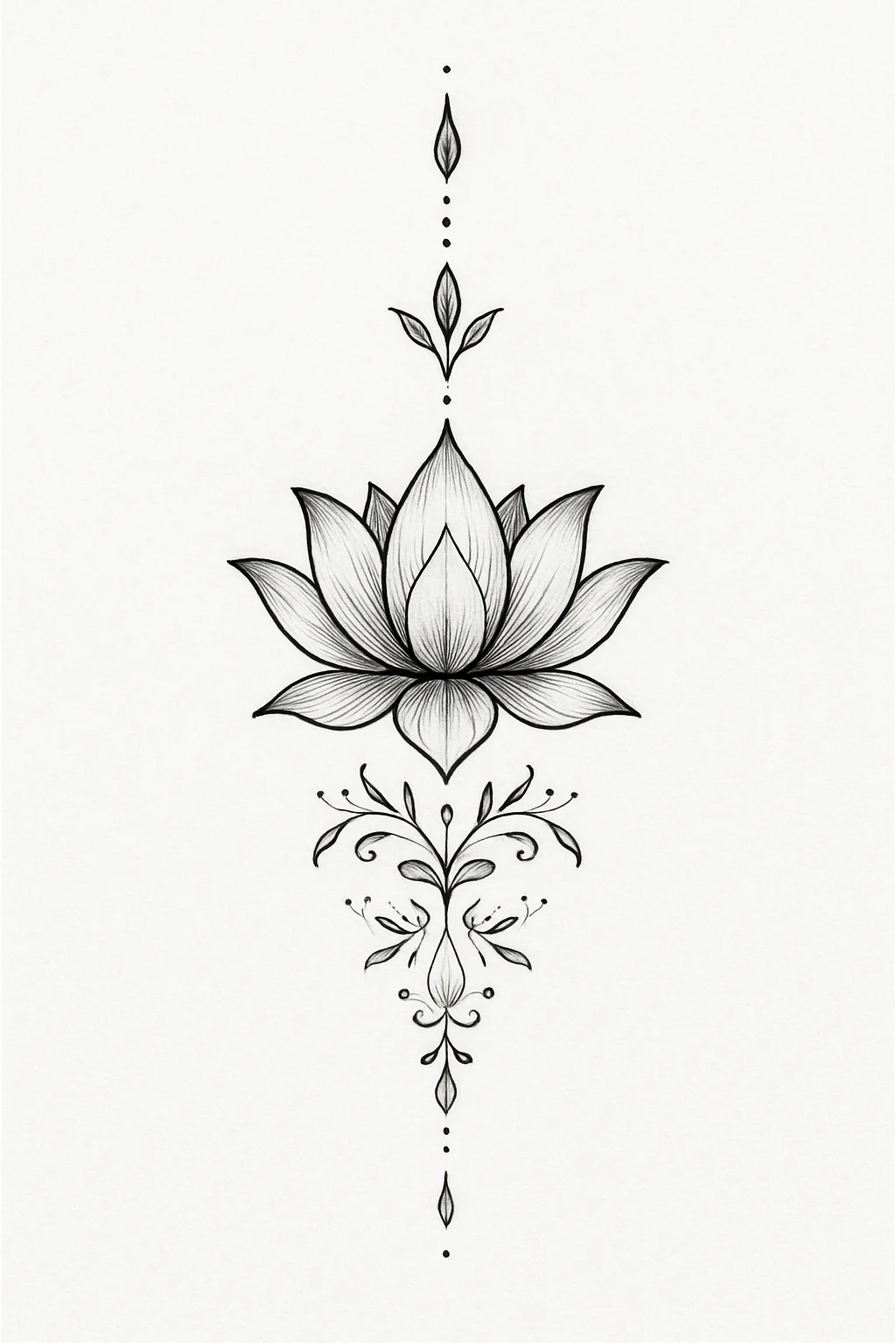
6. Lotus for Symmetry and Calm
The lotus is the most naturally symmetrical flower in common tattoo use, which makes it the easiest to center.
Symmetry on the chest is unforgiving. Anything slightly off-center is visible in a mirror forever, so a design with a clear mirror line is genuinely easier to get right.
Meaning-wise the lotus carries strong associations with renewal and coming through something difficult across several Asian traditions. If that is why you want it, say so at the consult — it changes how an artist draws it.
There are a lot of ways to build one; these lotus flower tattoo designs cover the main structural variations.
7. Wildflower and Nature Blend
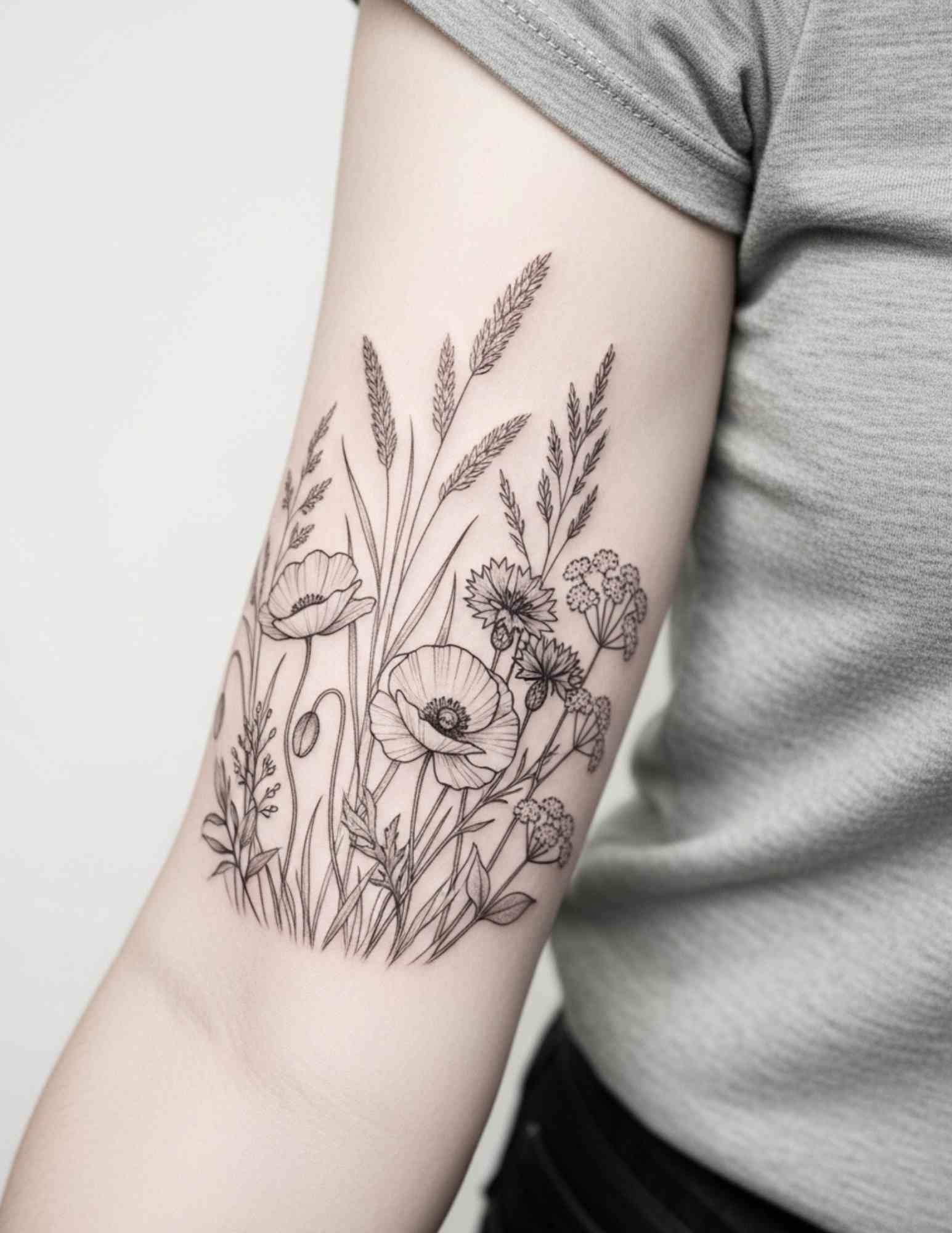
Mixed stems, seed heads, grasses, maybe a small bird or insect worked in. Looser and more personal than a single showpiece bloom.
This is the one I recommend when someone wants specific flowers that do not naturally go together — a wildflower arrangement gives you a reason to put them in the same frame.
The risk is clutter. When I have seen these go wrong it is because every stem got equal weight, so the eye has nowhere to land. Ask your artist to pick one dominant element and let the rest support it.
8. Small Flower Over the Heart
Two or three inches, left side, over the heart. Easy to hide, quick to sit for, and the placement carries the meaning so the design does not have to.
This is the most common memorial flower placement I have come across, usually a birth flower for someone who has died.
Because it is small, keep the design simple. A detailed bloom shrunk down to two inches will fill in over the years and lose the detail you paid for.
9. Japanese Chrysanthemum Panel
In traditional Japanese tattooing the chrysanthemum — kiku — is a long-standing motif associated with the imperial family and with longevity.
Structurally it is built for tattooing: bold outlines, layered petals, clear light and dark. That is exactly what survives decades of skin ageing.
It also plays well with a background. Wind bars or waves behind a chrysanthemum let the piece extend onto the shoulder later without looking bolted on.
If you are drawn to the traditional look specifically, these chrysanthemum tattoo ideas show how the petal structure is usually handled.
10. Peony for Bold Coverage
The peony is the choice when you want to cover real estate. It is dense, layered, and reads as one solid shape from a distance.
That density makes it the strongest cover-up flower on this list. A peony can absorb an older tattoo in a way a thin-petaled design cannot.
It needs size to work. Under about four inches the layered petals stop reading as separate and the whole thing turns into a dark blob within a few years.
Worth browsing peony tattoo ideas at different scales before you decide how big to go.
11. Fine Line Botanical
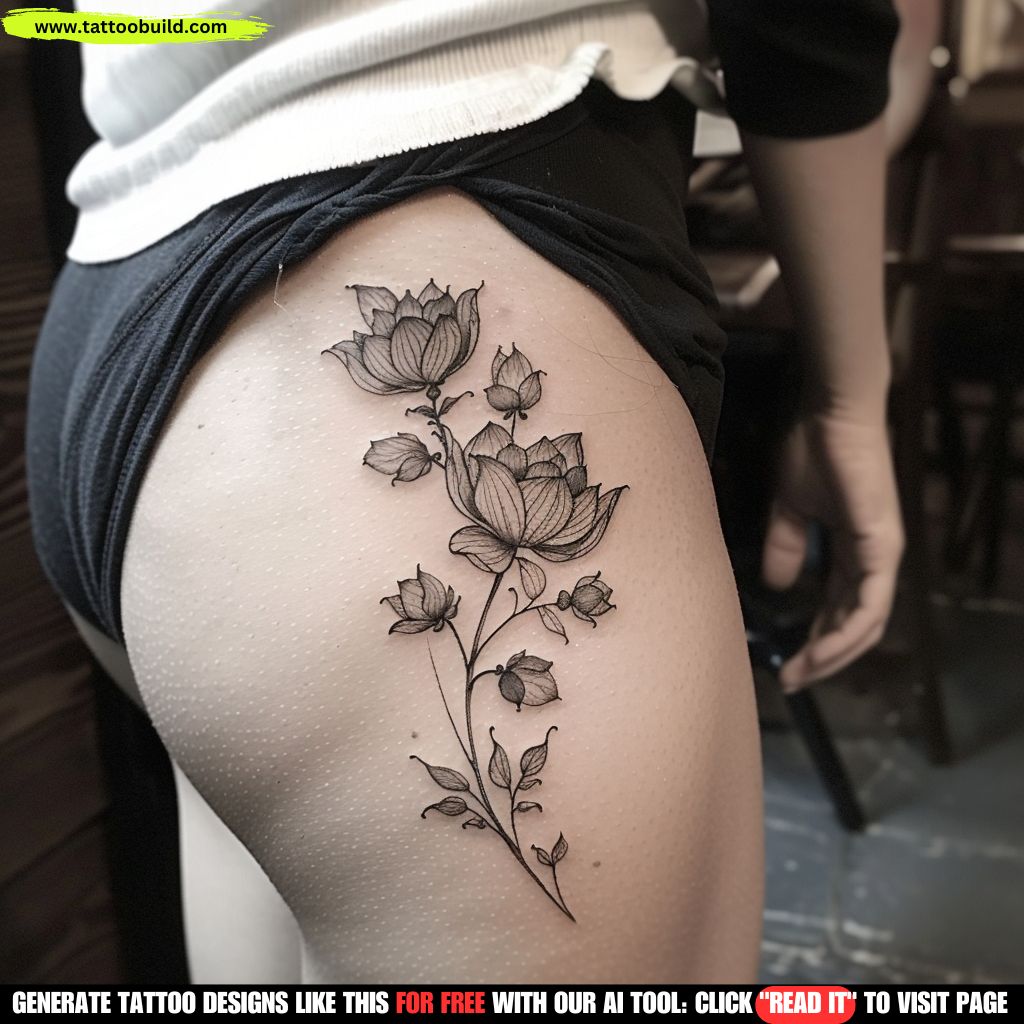
Fine line botanicals — a branch, an olive sprig, a single detailed stem — have gone from niche to everywhere in the last several years.
On the chest they look clean and modern, and they sit comfortably alongside lettering if you want a date or a name.
The honest limitation: fine line is the style most dependent on the artist. Not every shop does it well, and a fine line piece healed badly is much harder to fix than a bold one. Look for healed photos, not fresh ones.
12. Floral Half-Chest Into Sleeve
If you suspect you will want a sleeve eventually, design the chest piece as the start of one rather than a standalone.
That means leaving the outer edge open and giving the design a direction of flow toward the shoulder.
I have seen more people regret a closed-off chest piece than an open one. Closing it later is easy; opening it up is not.
Budget accordingly — a chest-to-sleeve project is measured in many sessions across months, not weeks.
Placement and Style Variations to Consider
Once you have a flower in mind, these are the three decisions that actually change the finished piece.
Add Meaning With Symbols
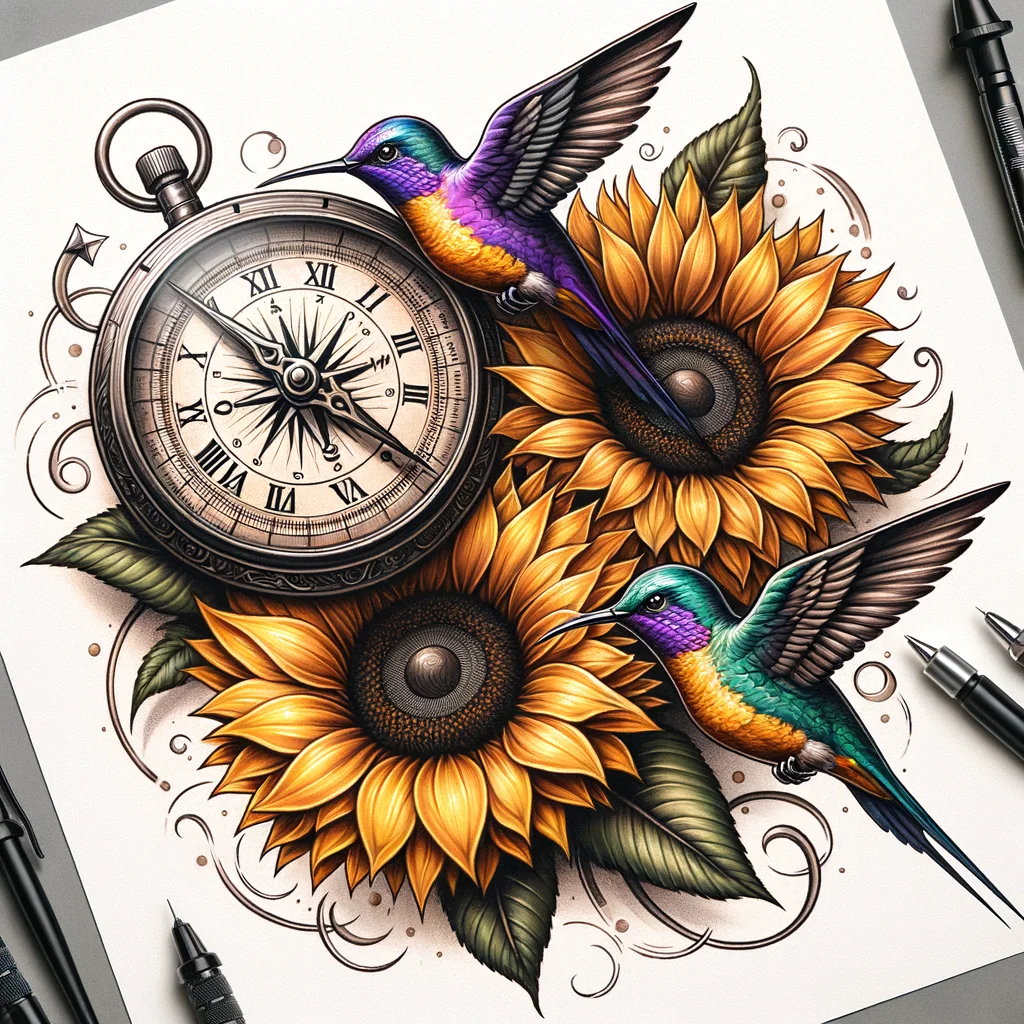
A compass, a set of coordinates, a small animal, a date in Roman numerals — one added element usually strengthens a floral chest piece rather than cluttering it.
Two or more added elements usually does clutter it. In my experience one is the sweet spot.
Match It to a Birth Flower
Every month has an associated flower, and using one for yourself, a partner or a child gives the design a built-in reason to exist.
It also solves the hardest problem — choosing — without defaulting to a rose. The full month-by-month list is laid out in these birth flower tattoo ideas.
Go Bigger or Stay Contained
A contained piece stops at a clear edge. An open piece is designed to grow.
Neither is better, but you should decide deliberately, because the layout your artist draws depends entirely on which one you picked.
Aftercare and What to Expect While Healing
Chest tattoos heal reasonably well compared to hands or feet, but the location has two quirks worth knowing about.
First, seatbelts. A fresh chest piece under a seatbelt strap is genuinely uncomfortable for the first week, and the friction can pull at a scabbing area.
Second, chest hair. If you have it, it will be shaved for the session and will grow back through the healed tattoo without damaging it — but it does change how the piece reads day to day.
Follow your artist’s written aftercare over anything you read online, including this page. They know what ink and process they used.
For the general medical baseline, the American Academy of Dermatology publishes plain guidance on tattoo safety and healing, and the Mayo Clinic overview of tattoo risks covers what to watch for.
Spreading redness, swelling that worsens after the first few days, pus, a fever, or a rash are all reasons to contact a doctor rather than wait it out. Allergic reactions to pigment are uncommon but real, and red inks are the ones most often named. Never try to treat or remove a tattoo yourself — see your artist or a physician.
On pain: the pec is soft tissue and usually tolerable, while the sternum, collarbone and ribs are sharper. This tattoo pain chart gives a useful sense of how the chest compares to other placements.
Common Mistakes and How to Avoid Them
The mistake I see most often is sizing down to save money. A chest piece made small to fit a budget almost always gets reworked bigger later, at a higher total cost.
The second is ignoring symmetry. If the design crosses the midline, look at the stencil in a mirror before you agree to it — your eye catches things in a mirror that it misses looking down.
The third is booking on style rather than artist. A fine line specialist and a Japanese traditional artist are not interchangeable, and a portfolio full of healed work in the style you want is the only reliable filter.
Still not sure? If the chest feels like too much commitment, floral work translates well to other placements — a floral half sleeve tattoo gives you similar scale with an easier exit.
Frequently Asked Questions
Do flower tattoos look feminine on men?
Not inherently — the read comes from execution rather than subject. Heavy outlines, strong black shading and larger scale push a floral design toward a bold, traditional look, while hairline linework and pastel color push it softer. The same rose can land either way depending on how it is drawn. Bring reference images of the feeling you want, not just the flower you want.
How much does a flower chest tattoo for a male hurt?
It varies by exactly where on the chest it sits. The pec is soft tissue and most people describe it as moderate and manageable, while the sternum, collarbone and lower ribs are thin skin over bone and are consistently reported as sharper. Session length matters as much as location — hour four is harder than hour one anywhere. Eat beforehand and tell your artist when you need a break.
How long does a flower chest tattoo take to finish?
A single palm-sized rose in black and gray is commonly a three to five hour sitting. A full-color half-chest is usually split across two or more sessions, and a chest-into-sleeve project runs across months. Your artist will give you a realistic estimate once they have drawn the design, and that number is far more reliable than any range online. Sessions are usually spaced a few weeks apart to let each area heal.
Black and gray or color for a chest flower?
Black and gray generally holds its contrast longer and needs less touch-up work over the years. Color gives you more impact up front but is more sensitive to sun exposure, and lighter shades tend to fade first. If you spend a lot of time outdoors without a shirt, black and gray is usually the safer long-term choice. Either way, sunscreen on a healed tattoo makes a real difference.
What flower is best for a first chest tattoo?
A rose, most of the time. It has a clear structure that reads well at almost any size, it suits both black and gray and color, and it is a design essentially every experienced artist has drawn hundreds of times. If a rose feels too expected, a lotus or a birth flower gives you the same structural advantages with a more personal reason behind it. The best flower is still the one you can explain why you chose.
Quick Summary
- The chest is wide, curved and roughly symmetrical, which suits flowers better than most tattoo subjects.
- Masculine or soft is decided by line weight, contrast and scale — not by which flower you pick.
- A single rose angled across the pec is the most reliable first chest piece, usually three to five hours.
- Black and gray holds contrast longest; color hits harder up front but needs sun protection to last.
- Center symmetrical flowers like the lotus on the sternum, and check the stencil in a mirror before you commit.
- Peonies cover the most skin and make the best cover-ups, but they need about four inches or more to read properly.
- If a sleeve is even a possibility, leave the outer edge of the chest design open from the start.
- Follow your artist’s aftercare, keep it out of the sun, and see a doctor for spreading redness, pus or fever.