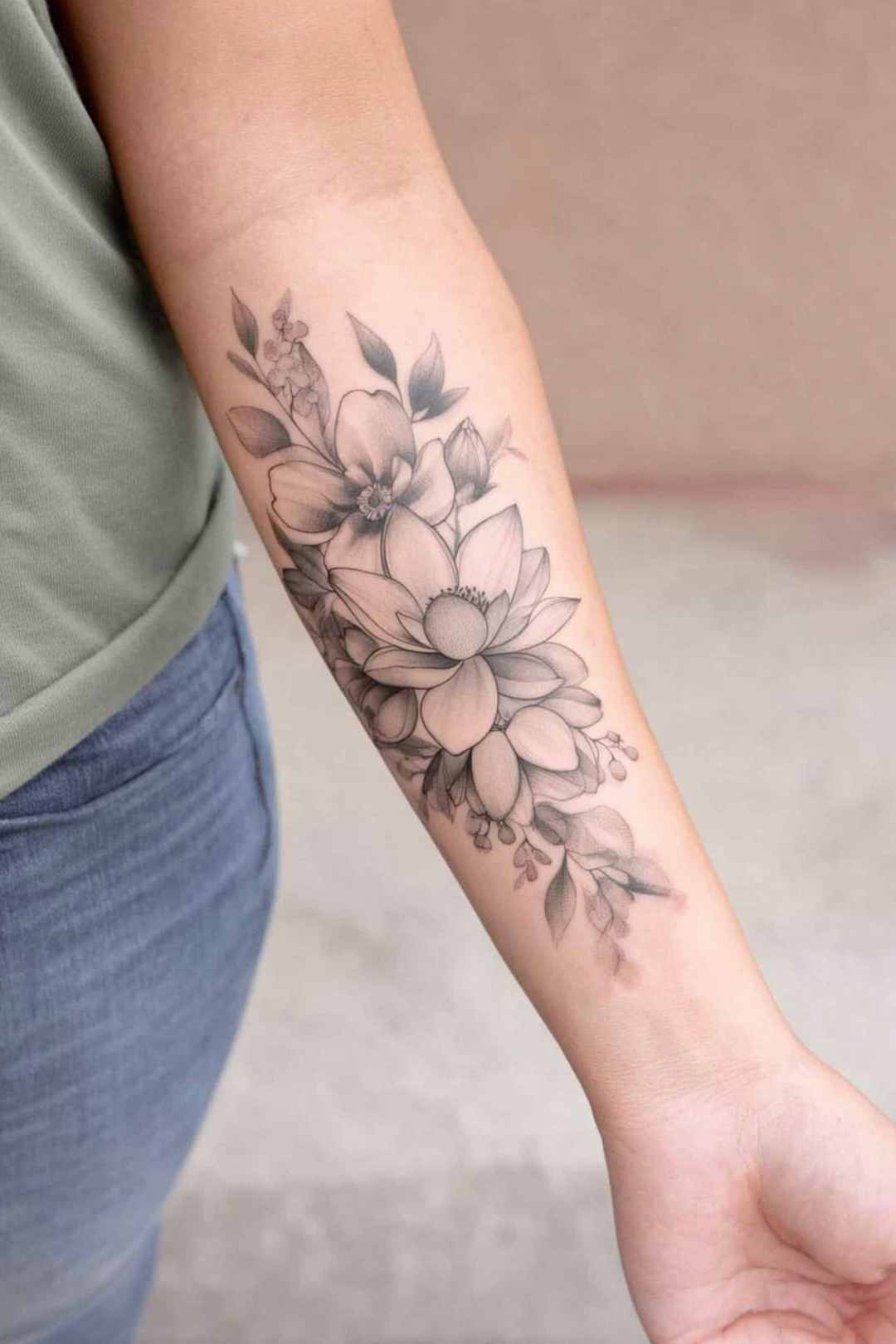
A floral half sleeve tattoo on the forearm is one of the few large pieces you can wear every day without it running your whole look. It covers roughly from the elbow to the wrist, which is enough space for real botanical detail but small enough that a long sleeve hides it completely.
I have sat for two forearm pieces myself and consulted on far more, and the pattern is always the same: people arrive with twelve saved photos and no idea how they fit together.
That is the actual problem this guide solves. Not which flower is prettiest, but how to turn a folder of screenshots into one design that flows around a curved limb and still reads clearly in five years.
If you are still deciding between arm placements, it is worth comparing this against a floral upper arm design before you book anything.
Which Floral Style Is Right for You?
The style you pick affects cost, session length and how the tattoo ages far more than the specific flower does.
| Style | Typical Sessions | How It Ages | Best For |
|---|---|---|---|
| Fine line botanical | 1–2 | Softens fastest; may need a touch-up in a few years | Subtle, delicate looks |
| Black and grey realism | 3–5 | Holds well if contrast is strong | Roses, peonies, dramatic depth |
| Neo-traditional | 2–4 | Ages best of the group; bold outlines hold | Colour and long-term clarity |
| Illustrative / sketch | 2–3 | Good, if line weights vary | Wildflowers, loose arrangements |
| Ornamental with mandala | 2–4 | Dotwork can blur; needs spacing | Lotus and symmetrical layouts |
In my experience the neo-traditional and bold-outline pieces are the ones that still look intentional a decade later, but fine line remains the most requested by a wide margin.
What Actually Makes a Forearm Half Sleeve Work
The forearm is not a flat canvas. It is a tapered cylinder that twists when you rotate your wrist, and a design drawn flat on paper will distort once it is wrapped.
Good artists solve this with a flow line, usually a diagonal spiral running from the inner elbow down to the outer wrist. Every flower then hangs off that spine.
The second thing that matters is size hierarchy. You want one dominant bloom, two or three mid-size supporting flowers, and filler like leaves, buds or small petals.
When I tested a design with five equally sized flowers, it read as wallpaper from three feet away. Nothing pulled the eye anywhere.
Finally, leave skin visible. Roughly a quarter to a third of the area should stay open, or the piece turns into a dark mass as the ink spreads slightly over time.
Best Floral Half Sleeve Tattoo Forearm Ideas
These are the arrangements I see requested and executed most often, with the practical trade-offs of each.
Rose-Led Half Sleeves
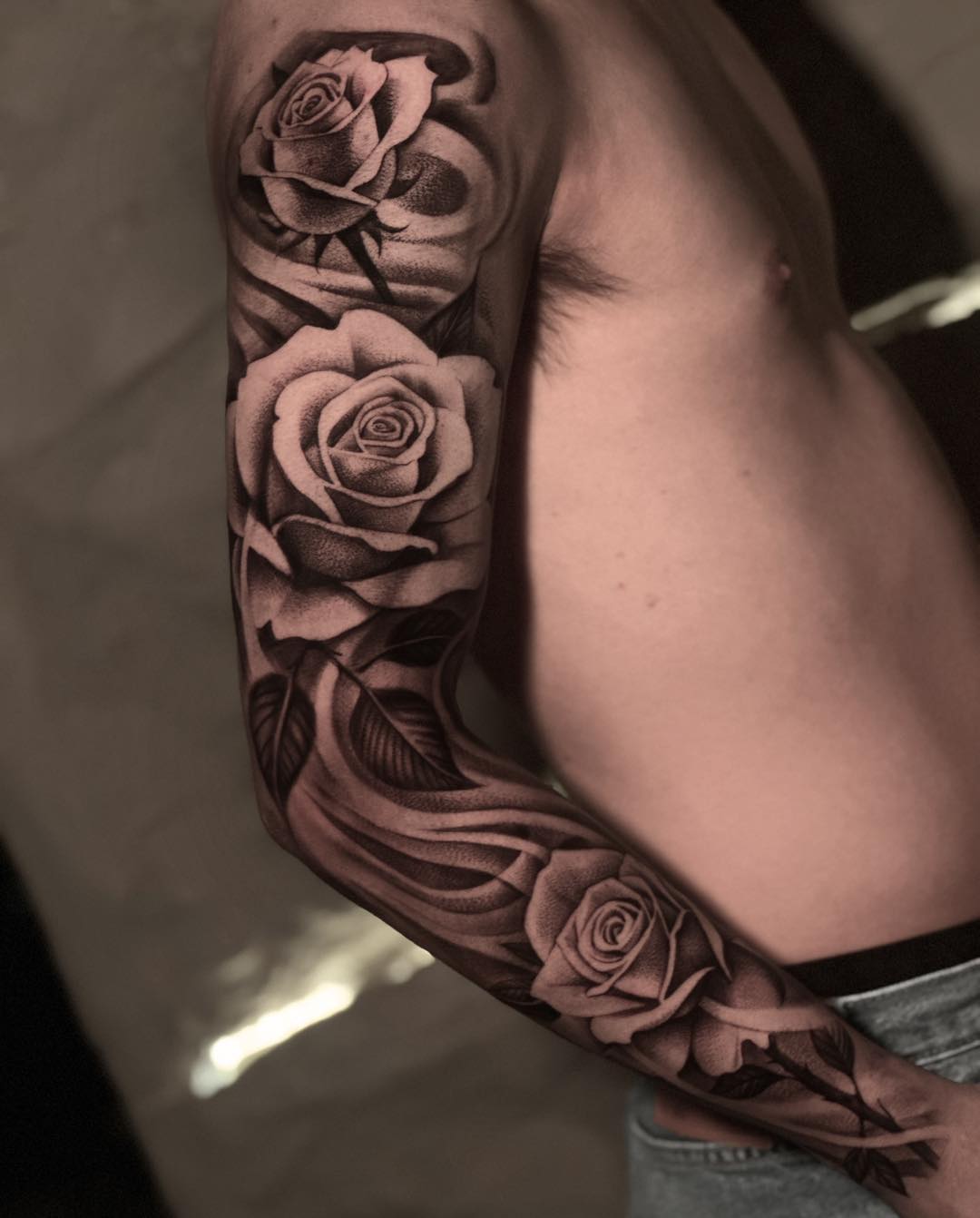
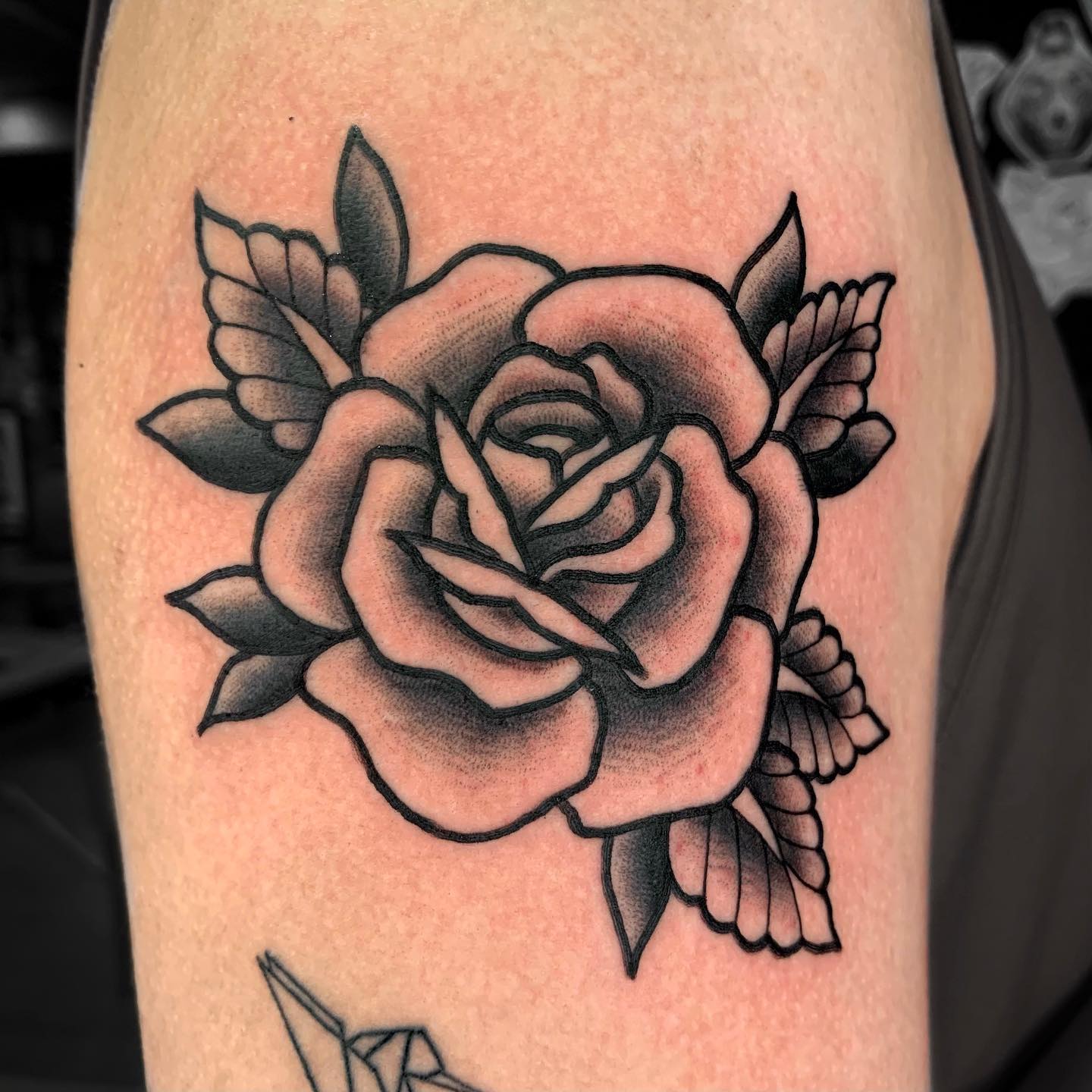
Roses are the default for a reason: layered petals give an artist somewhere to put shadow, which is what creates the illusion of depth on a curved arm.
A single large rose near the inner elbow with two smaller buds trailing toward the wrist is the most reliable layout I have seen.
Colour meaning is real but often overstated. Red reads as love and passion in most Western contexts, white as purity, yellow as friendship, though nobody looking at your arm will decode it.
Roses forgive touch-ups better than almost any flower, because added shading blends into existing petal work instead of standing out.
Expect three to five hours for a well-shaded rose-led forearm piece, more if you want photorealistic dewdrops or thorn detail. If roses are your main draw, browse wider rose tattoo ideas before committing to one composition.
Peony Arrangements
Peonies are my quiet recommendation for anyone who wants volume without the rose cliche. The ruffled petal structure fills space fast.
In East Asian tattoo tradition the peony is associated with prosperity and honour, and it appears throughout Japanese irezumi as a companion to lions and dragons.
Because peonies are naturally large and round, one or two of them can carry an entire forearm with only leaves as filler.
The catch is that peonies need a confident shader. Flat or timid grey wash turns those ruffles into an indistinct blob.
Every artist I have asked about peonies says the same thing: they want reference photos of real blooms, not other tattoos, so the petal folds stay believable.
Lotus and Mandala Combinations
The lotus carries genuine meaning in Buddhist and Hindu traditions, where it represents growth toward clarity from muddy beginnings.
Its symmetry is the design advantage. A lotus sits naturally on the flat inner forearm where a rose would look squashed.
Pairing it with mandala linework and dotwork gives a geometric counterweight to all the organic curves elsewhere in the piece.
One honest warning: dense dotwork blurs more than solid black over the years. Ask your artist to space the dots wider than looks right on day one.
Cherry Blossom Branches
Cherry blossoms are the best answer when you want a half sleeve that stays light rather than heavy.
A branch works with the forearm’s shape instead of against it, curving around the limb so the tattoo looks different from every angle.
In Japanese culture the blossom is tied to impermanence, the idea that beauty matters partly because it does not last.
Practically, blossoms are small, which means the individual flowers need spacing or they merge into a pink or grey smear.
I would push anyone considering blossoms toward a slightly larger flower size than their reference photo shows. Small delicate work is the first thing to soften.
Wildflowers and Daisies
Wildflower half sleeves suit people who want something that looks gathered rather than designed.
Daisies, cosmos, chamomile and small stems mixed together give a loose, meadow-like feel that reads as casual rather than formal.
This is also the friendliest option for adding to later. New stems tuck into gaps without needing to redraw the whole composition.
The risk is that loose arrangements can look unplanned if the artist does not vary line weight between foreground and background stems.
If a single flower type appeals more than a mixed meadow, the dedicated daisy tattoo guide covers standalone options.
Fine Line Botanical Work
Fine line is the most requested style I encounter, and the one people most often misjudge.
It looks stunning fresh: thin, precise, almost drawn on. It is also the style most vulnerable to ink spread, since a hairline stroke has nowhere to blur into.
That does not mean avoid it. It means plan for a touch-up and accept a slightly softer look over time as normal, not as bad work.
Choose an artist whose healed fine line photos you have seen, not just fresh ones. Any artist worth booking will have healed shots on request.
Black and Grey Realism
Realism turns the forearm into a small photograph, with petals rendered in smooth grey gradients rather than outlines.
It is the most technically demanding option here and the one where artist choice matters most. There is no bold line hiding a weak shade.
Sessions run long, often four hours or more at a time, and most realistic forearm pieces take at least three sittings.
Strong contrast is what keeps realism readable, so resist asking for everything softer and lighter than the design shows.
For a sense of how this style handles the rest of the arm, the black and white forearm tattoo collection is a useful comparison.
Flowers Combined With Animals or Insects
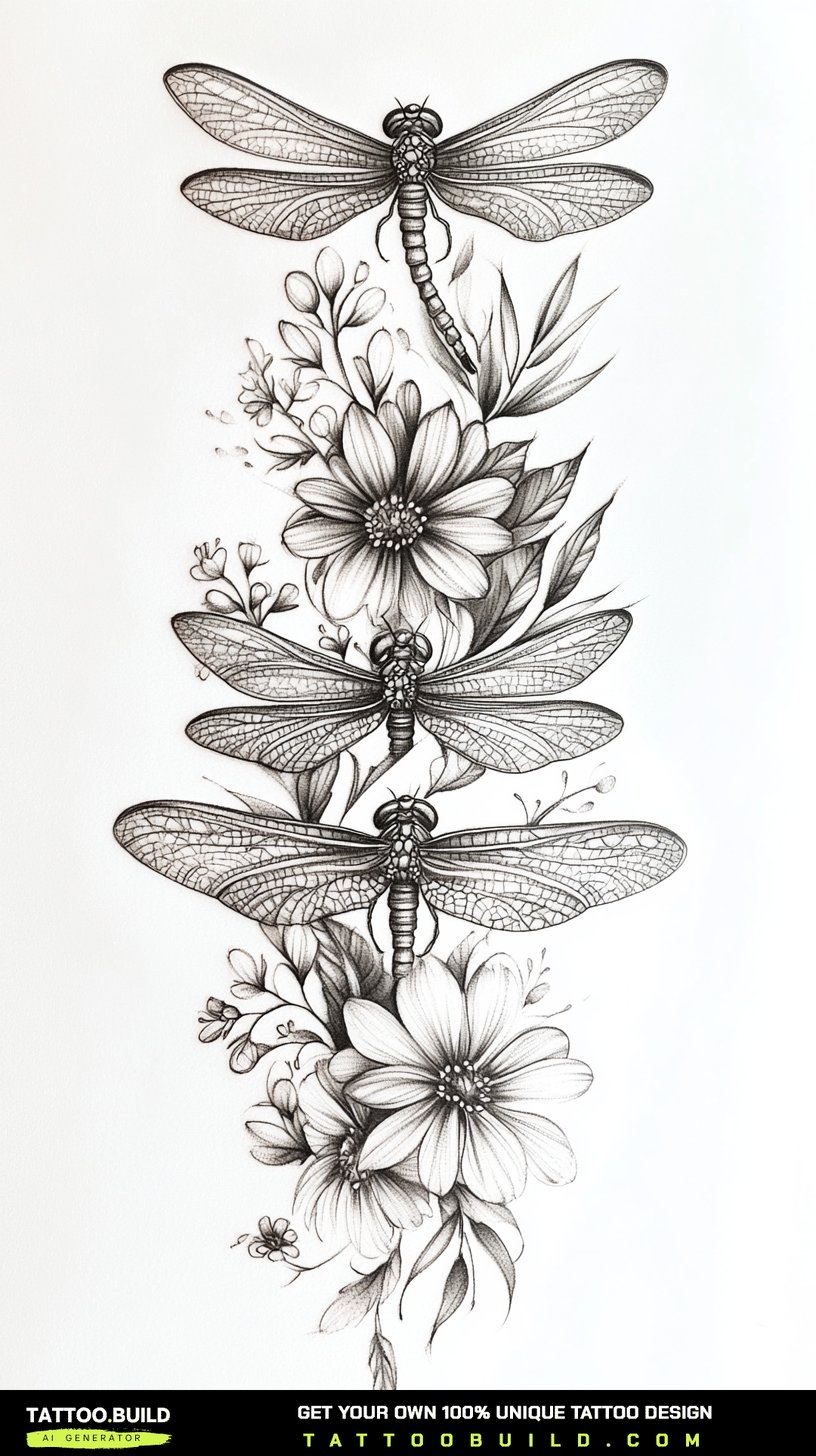
Adding a butterfly, moth, bird or small animal gives the eye a focal point that pure botanical work sometimes lacks.
The rule I have watched artists apply is one non-floral element per half sleeve. Two competing figures split the attention.
Placement matters: put the creature slightly off-centre, usually on the outer forearm where it is visible when your arm hangs naturally.
Butterflies and moths sit best because their wings echo petal shapes, so the addition does not feel bolted on.
Variations Worth Considering
If a full half sleeve feels like too much for a first large piece, these are reasonable steps down.
The Quarter Sleeve
Elbow to mid-forearm only. It gives you the same design language with roughly half the cost and healing time.
Inner Forearm Panel
A vertical strip on the inner arm, hidden in most social and professional situations but fully visible when you choose.
Wrap-Around Vine
A single continuous vine spiralling from elbow to wrist, with flowers spaced along it. Less ink, similar coverage impression.
Colour Accents Only
Black and grey base with one or two flowers picked out in colour. It ages better than a fully coloured sleeve and costs less.
Anyone weighing a bigger commitment should look at full sleeve options for women for how these ideas extend past the elbow.
Booking, Sitting and Aftercare
Book a consultation before the tattoo appointment. Any artist doing multi-session work will expect this, and it is where design problems get caught.
Eat properly beforehand and plan for the inner forearm to be more tender than the outer. Nerves sit closer to the surface there.
For healing, general medical guidance is consistent: wash gently twice a day with mild soap, pat dry, apply a thin layer of moisturiser, and avoid sun, swimming and soaking for about two weeks, as Mayo Clinic outlines.
Take infection and allergic reaction seriously rather than waiting them out. The FDA fact sheet on tattoos notes that unsterile equipment can transmit infections, and reactions to ink, red especially, can appear well after the tattoo heals.
If you see spreading redness, heat, pus, fever or a rash, contact a doctor rather than your group chat. This article is design guidance, not medical advice, and your artist and a physician are the right people for anything that is not healing normally.
Common Mistakes and How to Avoid Them
The most expensive mistake is booking the first available artist instead of the right one. Waiting three months for a specialist is cheaper than a cover-up.
The second is designing flower by flower. Approve the whole composition as one drawing before any needle touches skin.
The third is going too small on individual elements, which is the single most common cause of a piece that looks muddy after five years.
The fourth is filling every gap. Negative space is a design decision, and removing it is not.
Still not sure this placement is the one? Compare against lower arm floral designs, half sleeve tattoos for women, and the broader forearm tattoo ideas guide before you commit.
If you want the flowers to carry personal meaning rather than just look good, birth flower tattoos are a straightforward way to build that in.
Frequently Asked Questions
How long does a floral half sleeve tattoo on the forearm take?
Most floral forearm half sleeves take between two and five sessions, depending on style and detail. Fine line work can sometimes be finished in one or two sittings of three to four hours. Realism and heavily shaded pieces usually need three or more sessions, spaced two to four weeks apart so the skin recovers between them. Your artist will give a realistic estimate at the consultation once the design is settled.
Does the forearm hurt more than other placements?
The outer forearm is generally considered one of the more tolerable placements because there is muscle and tissue between skin and bone. The inner forearm is noticeably more sensitive, and the area near the wrist and inner elbow tends to be the sharpest. Pain is individual, so treat other people’s reports as a rough guide only. Long sessions are usually harder than the pain itself, which is why multi-session plans are standard.
Should I choose colour or black and grey?
Black and grey generally ages more predictably and needs fewer touch-ups over the years. Colour gives more impact but fades faster, particularly lighter tones like yellow and pale pink, and it shows differently on different skin tones. A common middle path is a black and grey base with one or two colour accents. Ask your artist to show healed photos of both approaches on skin similar to yours.
Can I add to a floral half sleeve later?
Yes, and floral designs are among the easiest to extend, which is one of their real advantages. Tell your artist at the first consultation that you may expand later so they leave the composition open at the edges. Adding to a design that was closed off at the wrist or elbow is much harder and can look grafted on. Ideally use the same artist so the style stays consistent.
What does a floral forearm half sleeve typically cost?
Cost varies enormously by location, artist reputation and hours involved, so any single figure would be misleading. Most artists charge either an hourly rate or a flat day rate, and a multi-session forearm piece is priced accordingly. The reliable approach is to get quotes from two or three artists whose work you actually want. Be cautious of quotes far below local norms, since experienced specialists rarely discount heavily.
Quick Summary
- Decide on style first — fine line, black and grey realism, neo-traditional or ornamental — because it drives cost, sessions and how the piece ages.
- Build the design around one dominant flower, two or three supporting blooms and filler foliage.
- Ask your artist for a flow line that spirals from inner elbow to outer wrist so the design works on a curved limb.
- Leave roughly a quarter to a third of the skin open; negative space keeps the tattoo readable long term.
- Pick flowers for meaning if you want it, but choose the artist for their healed portfolio, not their fresh photos.
- Expect two to five sessions and plan for the inner forearm to be the more sensitive area.
- Follow standard aftercare: gentle washing twice daily, light moisturiser, no sun or soaking for about two weeks.
- See a doctor for spreading redness, pus, fever or a rash rather than waiting it out.