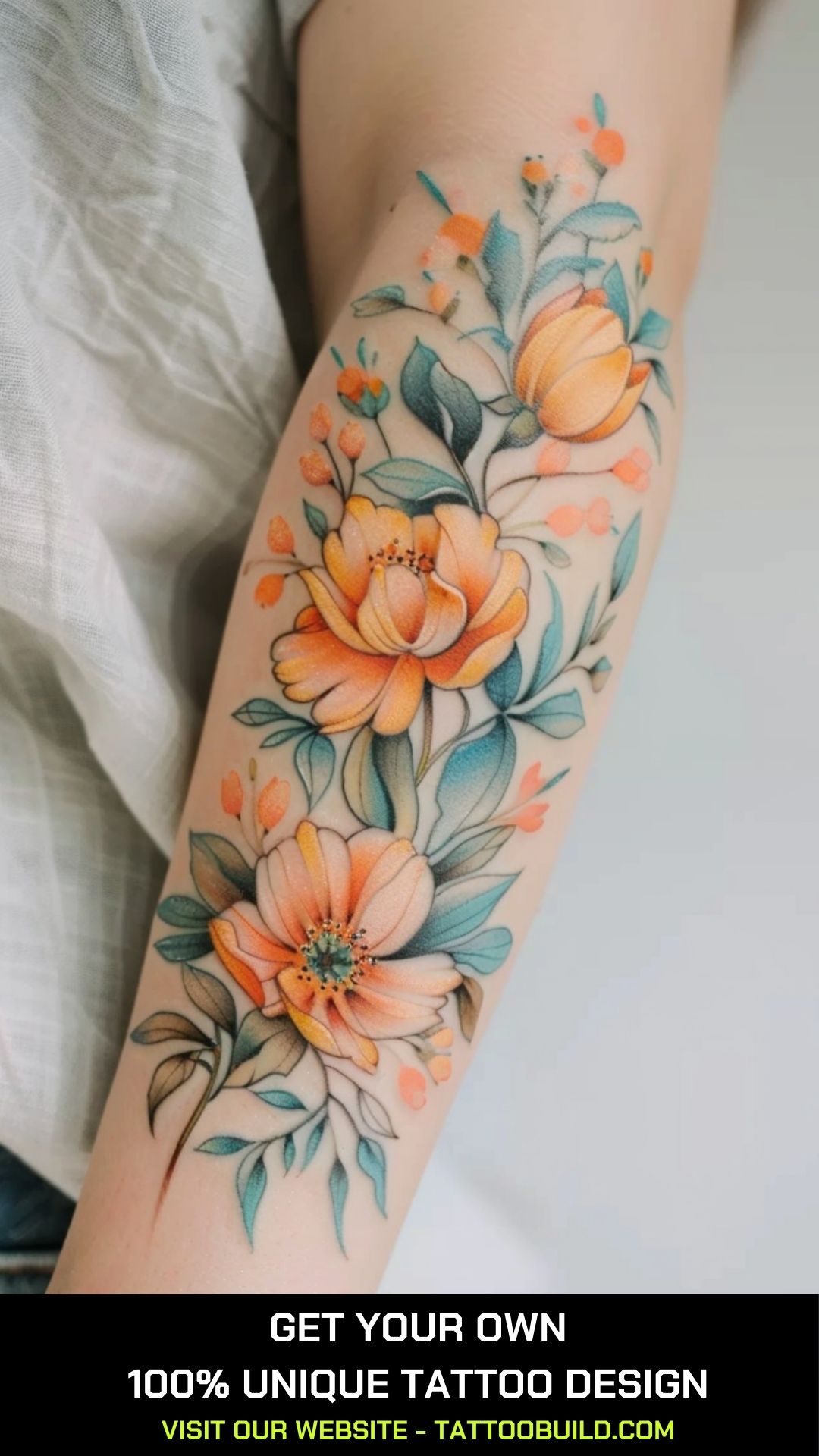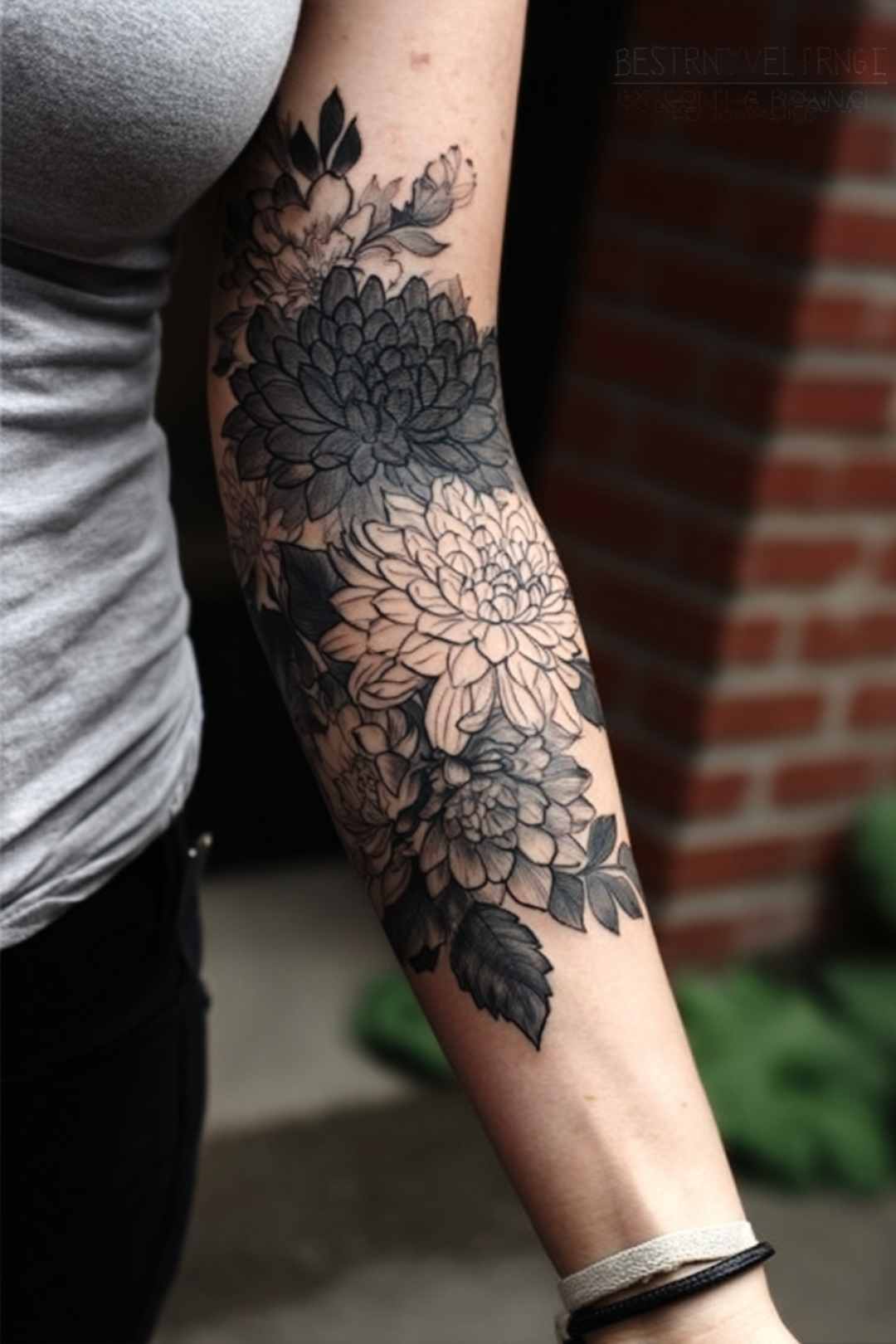
A floral half sleeve on the forearm is the most forgiving large tattoo you can commit to, because the flowers can be spaced, resized and extended long after the first session ends.
I have watched people agonise over a full sleeve for years, then book a forearm half sleeve on a Tuesday and never regret it. The forearm is flat enough to draw on cleanly and curved enough to give the composition movement.
Most of the pieces I have seen work well share one thing: the artist treated the arm as a single flowing shape rather than a column of separate flowers. That is the difference between a sleeve and a sticker collection.
Below are nineteen forearm floral sleeves I keep coming back to, plus what I have learned about how these designs actually age, what they cost in chair time, and where they go wrong. If you are still deciding between arm placements, the wider floral half sleeve tattoo guide is a useful companion.
Which Floral Half Sleeve Style Is Right for You?
Style choice matters more than flower choice. A rose done in fine line and a rose done in neo-traditional will look like different tattoos in ten years.
| Style | Best For | Typical Chair Time | How It Ages |
|---|---|---|---|
| Fine line botanical | Delicate, airy sleeves with lots of bare skin | 6–10 hours | Softens noticeably; usually needs a touch-up within a few years |
| Black and grey realism | Roses, peonies, dahlias with real depth | 12–20 hours | Holds well when the artist keeps strong contrast in the shading |
| Neo-traditional | Bold colour, heavy outlines, graphic blooms | 10–16 hours | Among the most durable; outlines keep the shapes legible |
| Watercolour | Soft washes of colour behind line work | 8–14 hours | Fades fastest without a line structure underneath it |
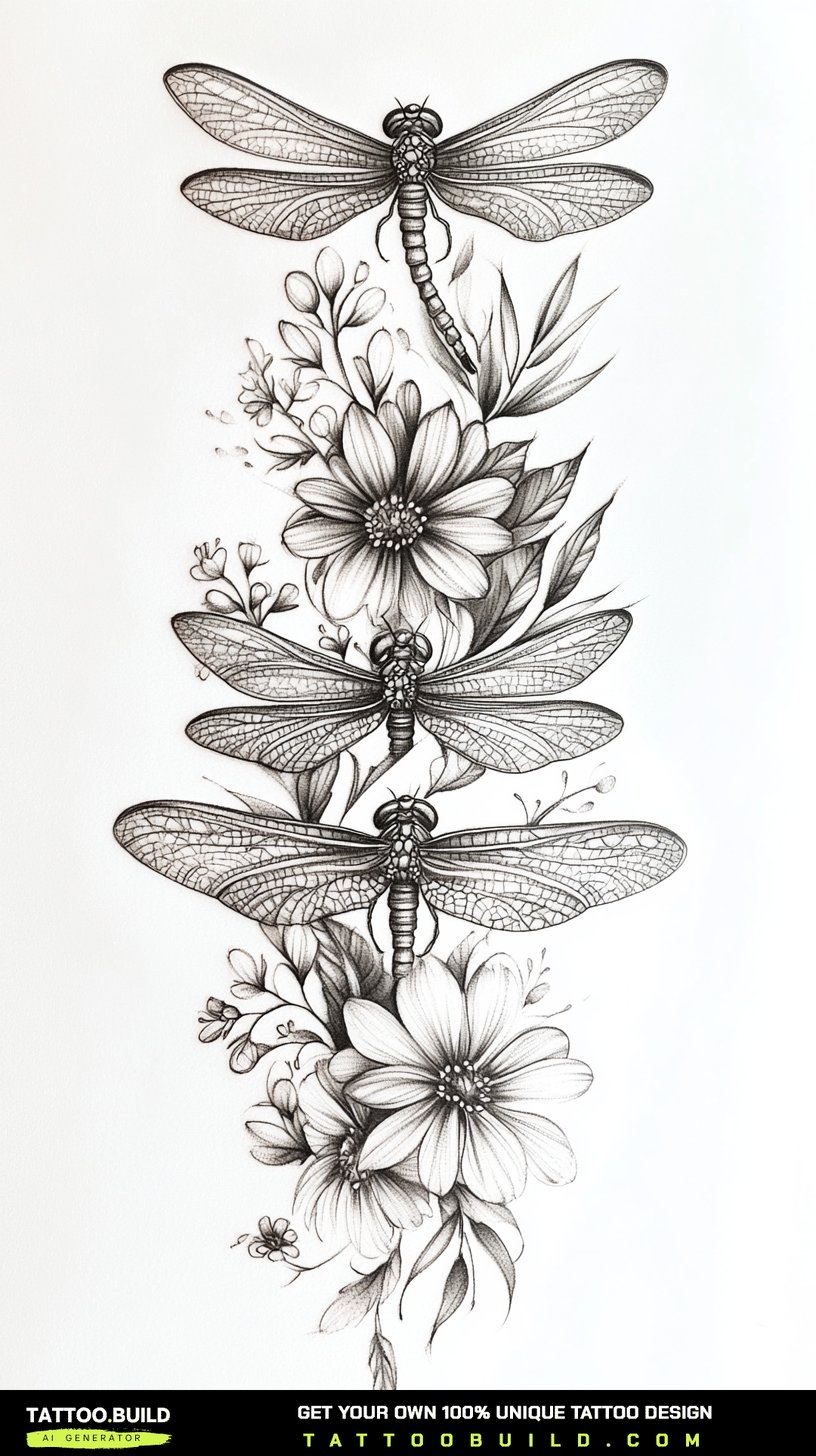
| Illustrative / etched | Wildflowers, eucalyptus, botanical-plate looks | 8–14 hours | Good, provided the stippling is not packed too tightly |
If you want the softest possible look, the fine line sleeve tattoo ideas collection shows how much bare skin fine line sleeves tend to leave.
What Actually Affects How a Forearm Floral Sleeve Ages
Every artist I have asked about longevity says the same thing before they say anything else: line spacing.
Ink spreads slightly under the skin over the years. Two lines drawn a millimetre apart can merge into one thicker line, which is why very tight petal detail tends to blur first.
Placement on the forearm matters too. The outer forearm takes sun and friction, while the inner forearm has thinner, softer skin that often holds fine detail slightly less crisply.
Sun exposure is the variable you actually control. Consistent sunscreen on a healed sleeve does more for it than any touch-up schedule.
Skin tone changes the plan as well. On deeper skin tones, contrast and line weight generally do more work than colour saturation, and a good artist will design around that rather than fight it. The black and grey tattoo ideas gallery is a helpful reference for contrast-led designs.
Floral Half Sleeve Forearm Designs Worth Considering
These are grouped by flower and structure rather than by style, because the flower usually gets chosen first and the style follows.
1. Cascading Lotus Garden From Wrist to Elbow
A lotus garden works on the forearm because the flower’s shape is naturally wide at the top and narrow at the base, which mirrors the arm.
The version I like starts with a small closed bud near the wrist and opens into a full bloom just below the elbow crease. The eye travels upward automatically.
In my experience these read best with soft grey shading rather than heavy black. The lotus already carries a lot of visual weight in its petal count.
Keep the leaves loose. When artists pack lotus pads tightly around the flowers, the negative space disappears and the whole sleeve goes muddy within a few years. If lotus symbolism is what drew you in, the lotus flower tattoo designs roundup covers the variations.
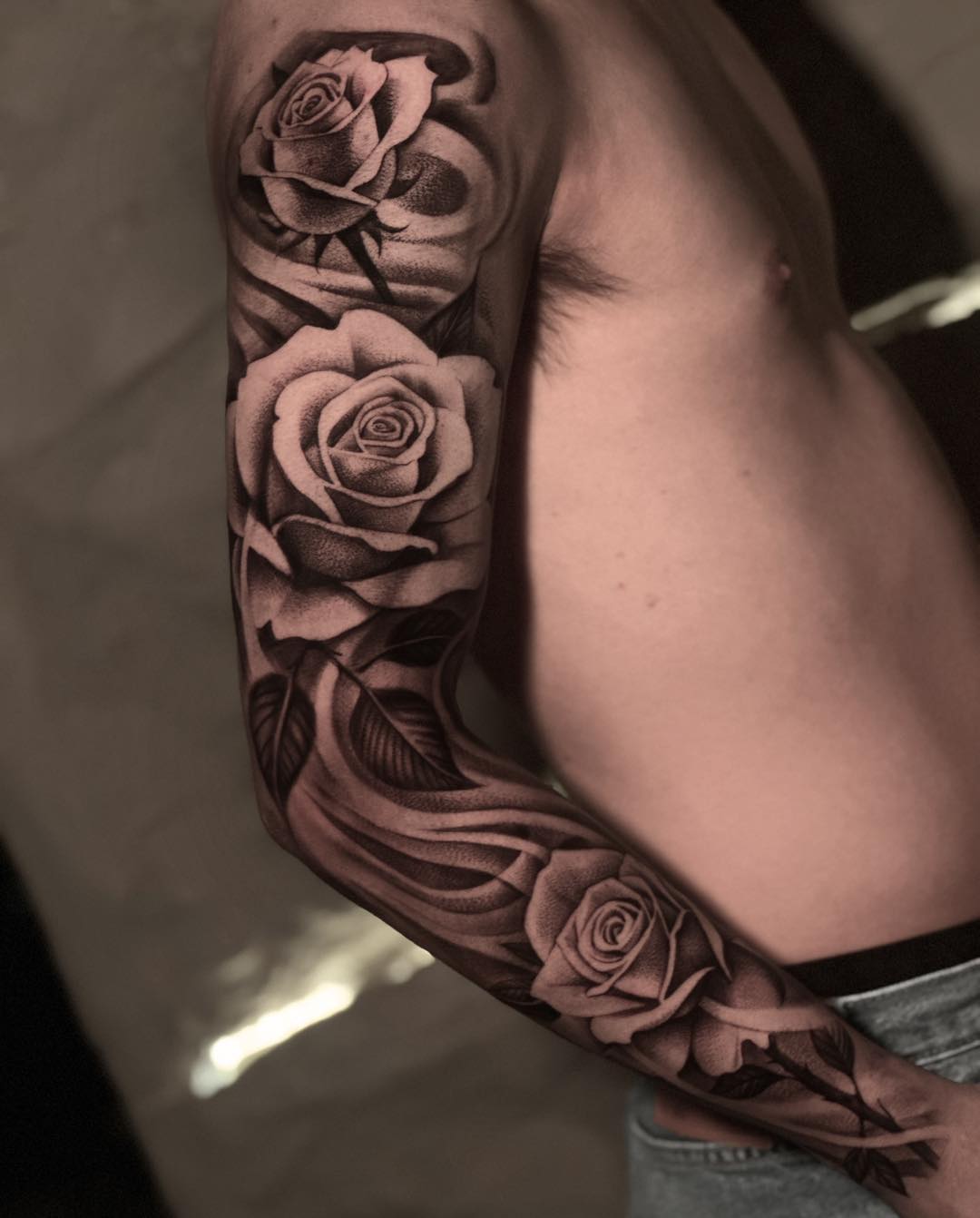
2. A Cascading Bouquet of Roses
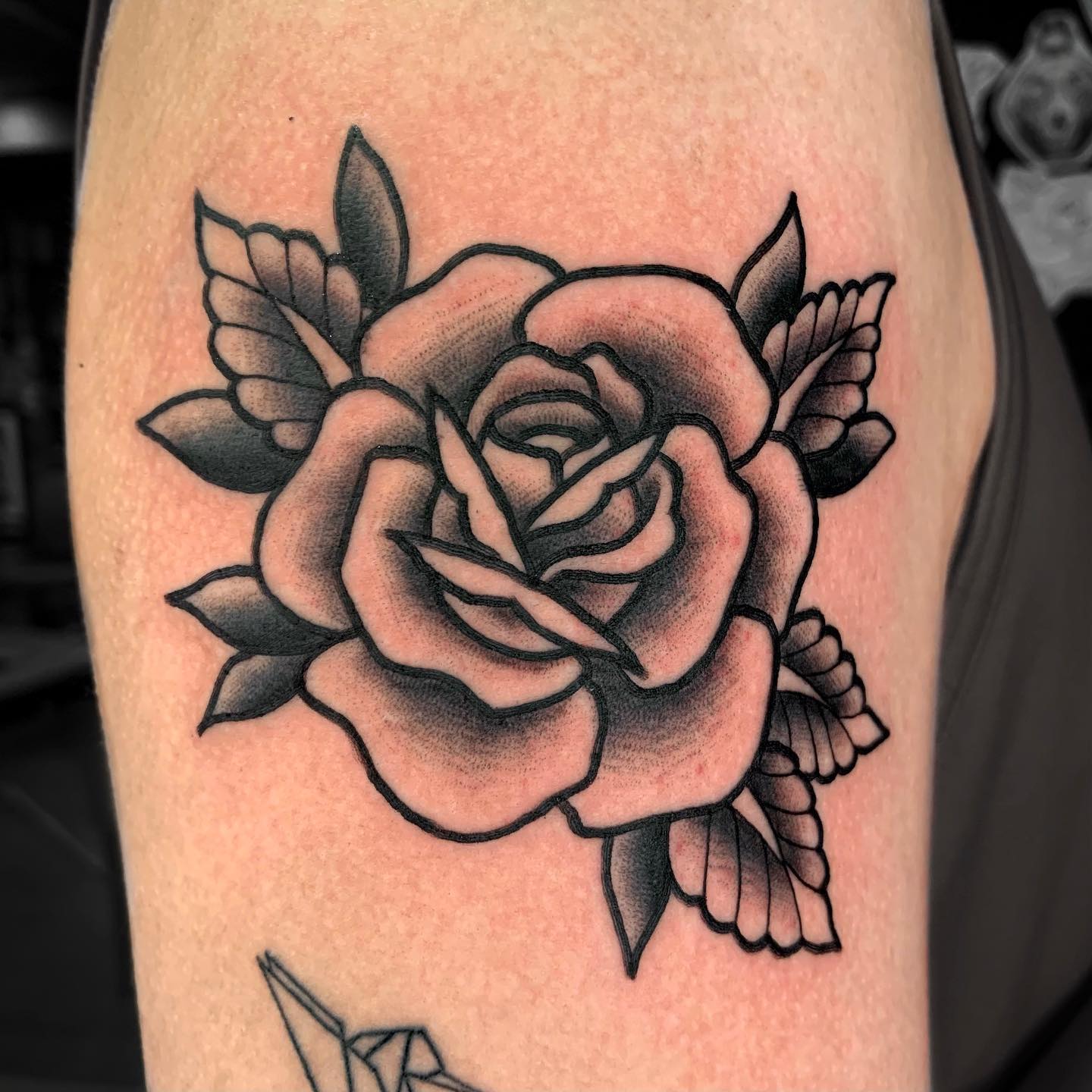
Roses are the default for a reason. They have obvious focal points, they scale up and down cleanly, and almost every artist has drawn hundreds of them.
The strongest forearm rose sleeves I have seen use exactly one dominant open bloom, usually placed on the outer forearm where it is most visible, with buds and half-open flowers filling downward.
Three roses of the same size stacked in a line is the most common mistake here. Vary the scale.
Black and grey roses tend to age better than colour roses on the forearm, mostly because they depend on smooth gradients rather than pigment saturation. For colour-led alternatives, see the rose sleeve tattoo ideas gallery.
3. Peonies With Layered Petals and Bold Shading
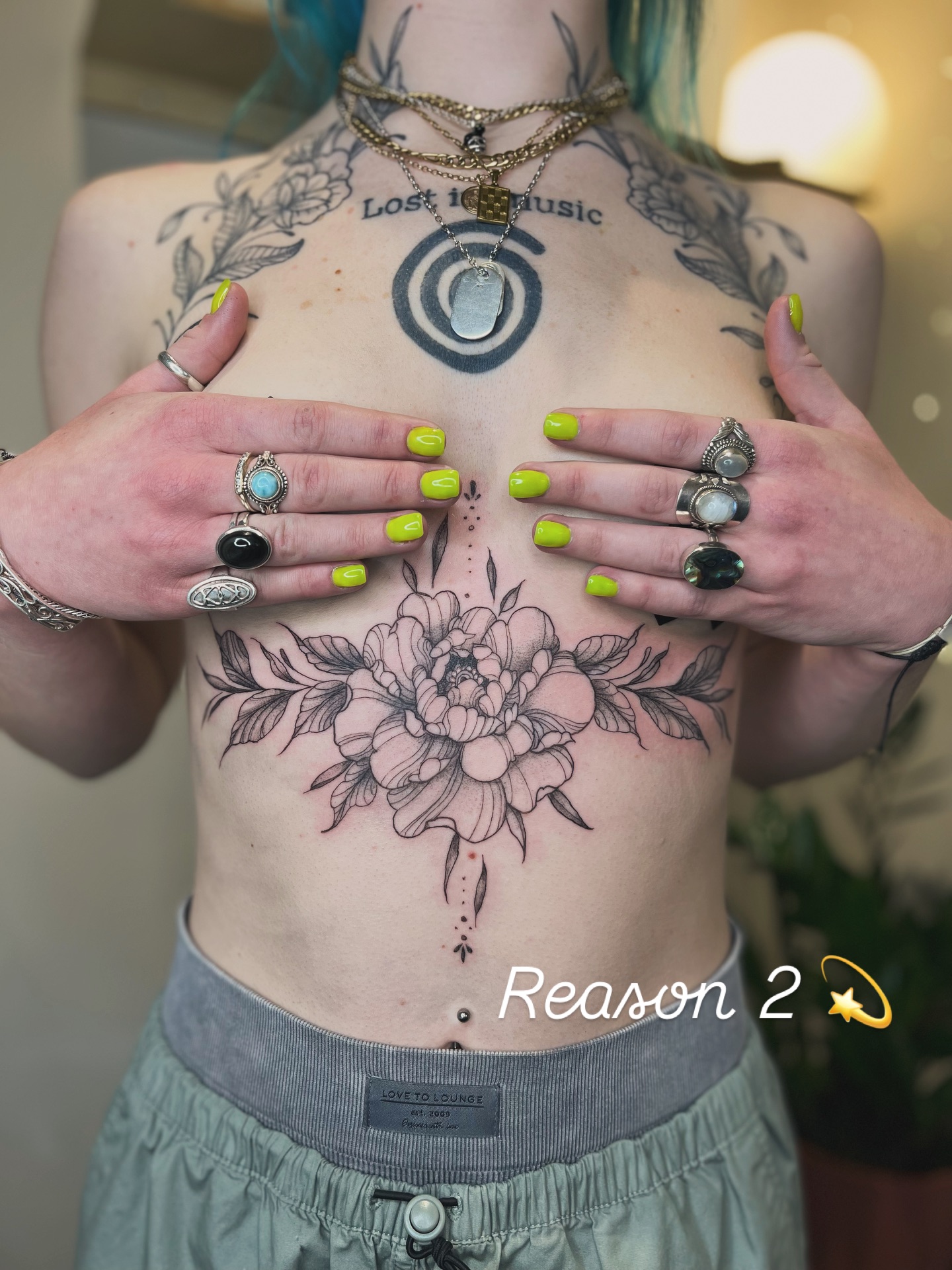
Peonies are the flower I recommend most often to people who want something dramatic without going fully realistic.
Their ruffled petals give an artist somewhere to put contrast, and a single peony can fill a third of the forearm on its own.
They need space. A peony crammed next to three other blooms loses the layered look that makes it worth choosing.
When I have seen peony sleeves fail, it is almost always because the petal folds were drawn too finely for the size of the tattoo. Larger, simpler folds hold up. The peony tattoo ideas collection shows the range of scales that work.
4. Wildflowers Spiralling Up the Forearm
A wildflower sleeve is the least formal option here, and often the most personal one.
The spiral layout — stems wrapping around the arm rather than sitting flat on one side — means the tattoo reads from more angles than a front-facing bouquet does.
It is also the easiest design to extend later, because there is no fixed border to work around.
Birth-month flowers fit naturally into this structure, and I have seen people add one bloom per family member over several years. The wildflower tattoo ideas guide is a good place to see which flowers hold up at small scale.
5. Lilies and Roses in One Flowing Composition
Mixing two flower types is harder than it looks, and it is where most forearm sleeves start to feel disjointed.
The trick is a single consistent line weight across both flowers, plus a shared shading approach. The shapes can differ; the rendering should not.
Lilies bring long, sweeping petals that pull the eye lengthwise, which balances the roundness of roses nicely.
In practice I would ask the artist to draw the whole arm as one stencil before starting, not flower by flower across separate sessions.
6. Orchids With Subtle Line Work Leaves
Orchids are underused on forearms and they suit the placement unusually well.
Their petals are already elongated and asymmetric, so they fill an arm without needing filler leaves crammed into every gap.
This is one of the few florals where a genuinely fine line approach holds together, because the shapes are large even when the lines are thin.
Expect to plan for a touch-up. Fine line florals usually soften within the first few years, and most artists will say so upfront.
7. A Mandala Base With Lotus Flowers Expanding Upward
A mandala anchor near the elbow or wrist gives a floral sleeve a clear structural starting point.
It also solves a real problem: floral sleeves often trail off awkwardly at the ends, and geometry gives you a deliberate edge instead.
The balance has to be decided early. Either the mandala dominates and the flowers decorate it, or the reverse — trying to make both equal usually produces a busy, unreadable arm.
Geometric line work is unforgiving of drift, so this is worth booking with someone whose healed geometric work you have actually seen.
8. Cherry Blossoms and Botanical Sprigs
Cherry blossom branches drifting along the forearm give you movement without heavy coverage.
Deliberate gaps between clusters are the point here — the empty skin is part of the design, not a space waiting to be filled.
Botanical sprigs like eucalyptus and lavender sit in a similar territory. They read as illustration plates rather than traditional tattoo flash, which is exactly what some people want.
I would keep these single-session or two-session pieces. Their charm depends on restraint, and long projects tend to accumulate additions. If you do want to fill gaps eventually, the tattoo sleeve filler ideas guide covers what works between blooms.
Alternatives and Variations Worth Considering
A forearm half sleeve is not the only way to wear a floral piece of this scale.
Upper Arm Half Sleeve Instead
The upper arm gives you more uninterrupted surface and far more control over visibility at work.
The trade-off is that you will rarely see it yourself, which matters more to people than they expect.
Quarter Sleeve as a First Step
A quarter sleeve — roughly elbow to mid-forearm — is a reasonable way to test the commitment.
It can be extended into a full half sleeve later, provided the artist designs the first stage with that in mind rather than closing off the composition.
Wrap-Around Versus Front-Facing
A front-facing panel is cheaper, quicker and easier to cover. A true wrap-around costs more chair time but avoids the flat, pasted-on look.
Most of the sleeves above sit somewhere between the two, wrapping partway rather than fully.
Aftercare and Practical Advice for a Forearm Floral Sleeve
Forearms bump into things constantly, and that is the main practical challenge with healing one.
Follow whatever aftercare your artist gives you rather than advice from the internet — including this page — because they know what ink, needle configuration and wrap they used. General guidance from the American Academy of Dermatology is a reasonable sanity check on the basics.
Book sessions with real gaps between them. Large floral work is usually spread across multiple sittings, and rushing back before the previous section has settled makes the artist’s job harder.
If you notice spreading redness, increasing pain after the first few days, discharge or a fever, that is a doctor visit, not a forum question. Allergic reactions to specific pigments are also possible; the FDA tattoo and permanent makeup fact sheet covers what is and is not regulated in tattoo inks.
Common Mistakes, and What to Do If You Are Still Not Sure
The most expensive mistake is choosing an artist by price rather than by healed portfolio. Ask to see photographs of work that is at least a year old.
The second is filling every gap. Negative skin is what makes a floral sleeve readable from across a room.
The third is deciding the flowers before the layout. Ask your artist to draw the arm shape first and slot flowers into it, rather than the other way around.
If you are still weighing it up, budget is usually the deciding factor, and the sleeve tattoo cost breakdown will give you a realistic starting range before you book a consultation.
Frequently Asked Questions
How long does a floral half sleeve on the forearm take?
Most forearm floral half sleeves take somewhere between two and five sittings, depending on style and detail. Fine line botanical work sits at the shorter end, while black and grey realism with heavy shading takes considerably longer. Artists usually cap a single session at four to six hours because both of you lose accuracy after that. Ask for a session estimate at the consultation rather than a total hour count, since the estimate will change once the stencil is drawn.
Does the inner forearm hurt more than the outer forearm?
Most people report the inner forearm being more uncomfortable, because the skin is thinner and sits closer to nerves. The outer forearm is generally described as one of the easier large placements. Pain is genuinely individual, though, so treat any ranking as a rough guide rather than a promise. Eating properly beforehand and scheduling sessions when you are rested makes a real difference for most people.
Can I add to a floral half sleeve later to make it a full sleeve?
Yes, and it is common — but it works far better when the original artist knew that was the plan. Tell them at the first consultation so the composition stays open at the elbow rather than closing with a border. Returning to the same artist keeps the style consistent, which matters more than most people realise. If that artist is unavailable, bring healed photographs to whoever takes over.
Will a fine line floral sleeve blur over time?
Fine line work does soften with time, though how much varies with skin type, sun exposure and how closely the lines were spaced. Most artists working in this style will tell you upfront to expect a touch-up at some point. Wider line spacing during the design stage is the single biggest factor in how well it holds. Daily sunscreen on the healed tattoo is the other.
Are colour floral sleeves a bad idea on the forearm?
Not at all, but they need a stronger structure underneath than black and grey pieces do. Colour without solid line work or shading tends to lose definition faster, which is why neo-traditional colour work usually outlasts pure watercolour. Sun exposure affects colour more visibly than it affects grey wash. If you want colour, ask your artist how they build the underlying structure before they lay pigment down.
Quick Summary
- Design the arm as one flowing composition before choosing individual flowers.
- Vary bloom scale — one dominant flower, with buds and foliage tapering away from it.
- Leave negative skin between clusters; it is what keeps the sleeve readable.
- Black and grey generally ages more predictably on the forearm than watercolour.
- Peonies and orchids need space; wildflowers and blossoms tolerate tighter layouts.
- Tell your artist at the consultation if you may extend it into a full sleeve later.
- Sunscreen on healed skin does more for longevity than any touch-up schedule.
- Choose the artist on healed photographs, not on price or fresh-ink shots.