Black and grey is the most forgiving tattoo style I have ever recommended to a first-timer, and the one that ages with the least drama.
Strip out the colour and everything rests on shading, contrast and negative space — which is exactly why a good black and grey piece still reads clearly from across a room ten years later.
In my experience, the women who love their tattoos longest are usually the ones who chose a single strong idea and let the artist render it in grey wash rather than cramming in five colours.
Below are eleven real designs I keep coming back to, plus the practical stuff nobody tells you: what shading actually costs you in sitting time, where these pieces fade first, and how to brief an artist so you get depth instead of a flat grey smudge. If you want to see how these ideas scale up, our roundup of the coolest sleeve tattoos for women is a good companion piece.
Which Shading Approach Is Right for You?
“Black and grey” is an umbrella term. These four approaches sit under it, and they behave very differently on skin.
| Approach | Best For | How It Ages | Sitting Time |
|---|---|---|---|
| Grey wash realism | Portraits, animals, landscapes | Softest gradients lift first; usually needs a touch-up within a few years | Longest — shading is slow work |
| Blackwork / solid black | Geometric, ornamental, tribal-influenced designs | Very stable, though large solid fills can look patchy if packed unevenly | Moderate, but the packing is uncomfortable |
| Fine line black | Botanicals, script, delicate spine and rib pieces | Thin lines soften and can blur; the least durable of the four | Shortest |
| Whip shading / dotwork | Illustrative pieces with texture rather than photo realism | Holds well because the contrast is built from spacing, not tone | Moderate to long |
Most of the designs further down mix two of these. A floral sleeve is often fine line outlines carrying grey wash fill, and that combination is where black and grey looks most feminine without becoming fragile.
Why Black and Grey Ages Better Than Most People Expect
Colour pigments and black pigment do not behave the same way in skin. Black is the most stable of the standard inks, which is the main reason a black and grey piece tends to stay legible while a bright colour piece can go muddy.
That does not mean black and grey is immune to fading. What fades in a black and grey tattoo is contrast, not colour — the pale greys lift, the darks stay, and the piece slowly loses the depth that made it look three-dimensional.
Every artist I have asked about longevity says roughly the same thing: the pieces that survive are the ones with real blacks in them. A design that lives entirely in the light-grey range has nothing to anchor it once a few years of sun exposure have done their work.
Sun is genuinely the biggest variable here. UV exposure breaks down tattoo pigment over time, and the American Academy of Dermatology recommends broad-spectrum sunscreen on healed tattoos for exactly this reason.
Placement matters almost as much. Hands, fingers, feet and the outer forearm take the most friction and light; ribs, inner arm and the back of the thigh keep their contrast noticeably longer.
Statement Pieces: Sleeves, Backs and Thighs
1. Geometric Cyberpunk Sleeve
This one runs from the shoulder down the upper arm in solid black — abstract shapes and intersecting lines that read like a circuit board wrapped around the limb.
What makes it work is asymmetry held in balance. Parallel lines, scattered dots and small component-like shapes cluster around one larger central form, so your eye lands somewhere instead of wandering.
I like this style for anyone who wants scale without imagery. There is no portrait, no flower, nothing to explain — just structure that follows the contour of the arm. If the aesthetic appeals, we have a whole gallery of geometric cyberpunk tattoo ideas in the same vein.
One honest warning: crisp geometric linework is unforgiving. A wobble that would vanish inside a floral design is obvious here, so this is a design to book with a specialist rather than whoever has the earliest opening.
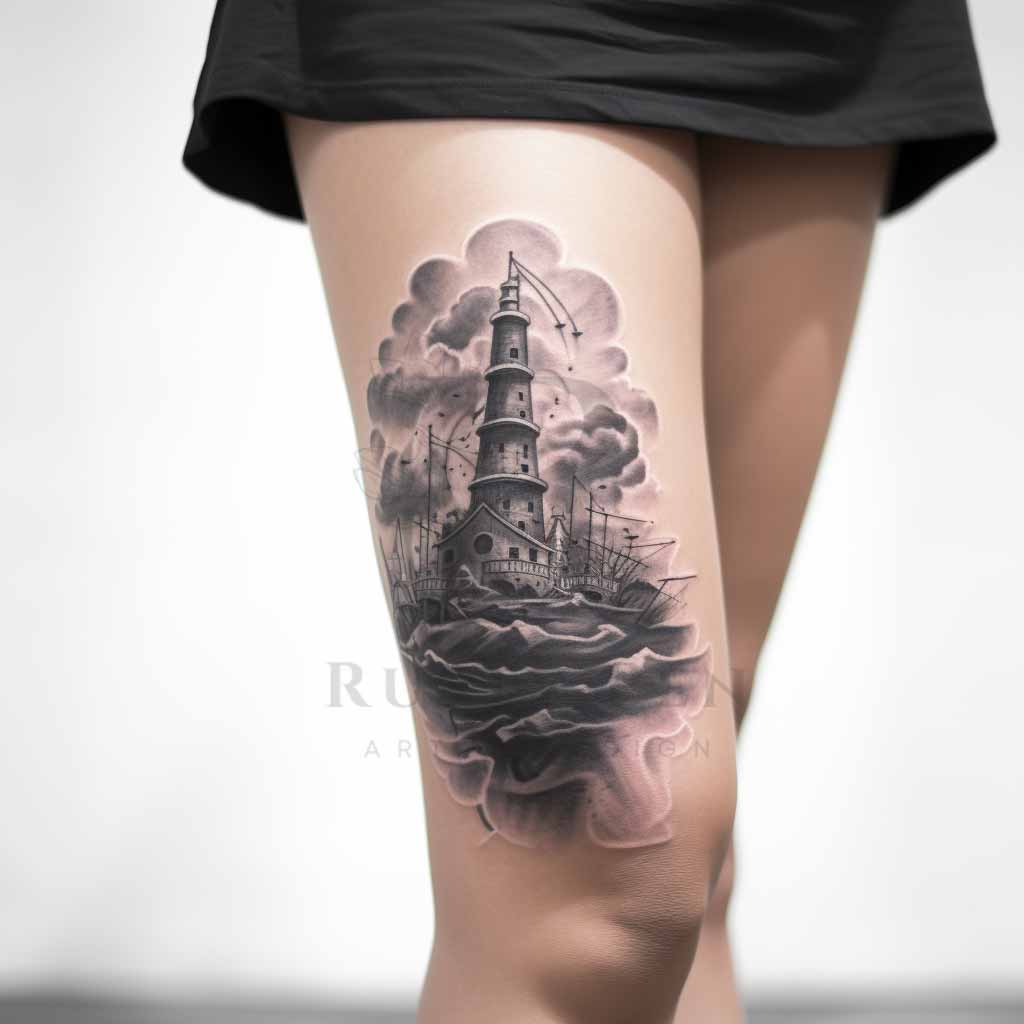
2. Lighthouse Thigh Piece
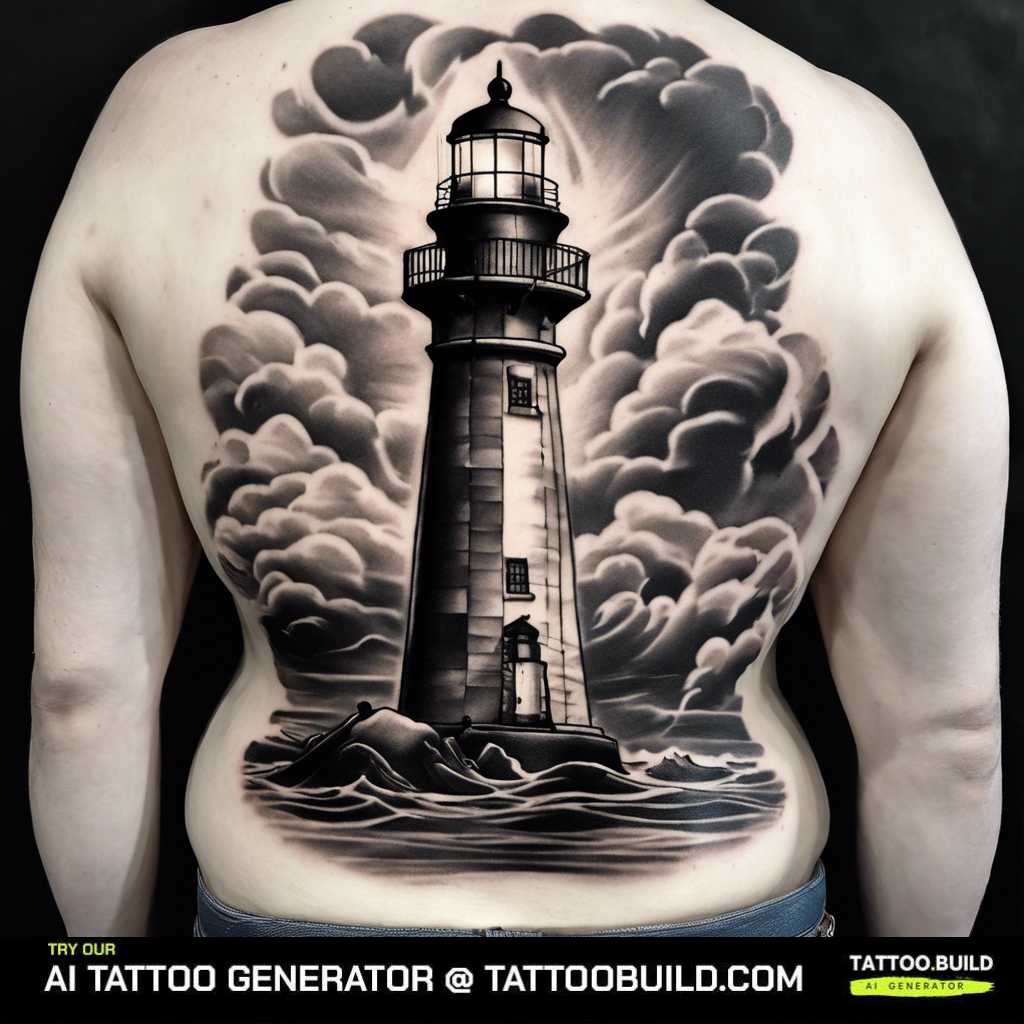
A lighthouse on a rocky outcrop, waves breaking around the base, tall ships with visible masts sitting in the background haze.
The storm clouds above are doing the heavy lifting. They give the artist somewhere to put deep blacks, and that darkness is what makes the white of the sea foam read as brightness rather than blank skin.
The circular framing is the clever part — it turns the thigh’s natural curve into a porthole. When I have seen this composition attempted as a rectangle it loses most of its charm.
Thighs are one of the better spots for realism like this: plenty of flat surface, decent padding, and clothing covers it while it heals. More variations sit in our women’s lighthouse tattoo ideas collection.
3. Soft-Shaded Windmill on the Back
A detailed windmill — windows, sails, the lot — set against faint clouds, with trees and distant hills filling out a countryside scene.
What sets this apart is the near-absence of hard outlines. The artist has built the whole image out of soft shading, which gives it a dream-like, slightly faded-photograph quality.
That outline-free approach is the riskiest choice in black and grey. It looks beautiful fresh, but with nothing dark holding the edges it relies entirely on the artist’s control of tone to stay readable in a decade.
When I have asked artists about pieces like this, the usual advice is to accept it as a style with a maintenance schedule — plan on a touch-up rather than expecting it to hold indefinitely.
4. Botanical Thigh Panel
Large-headed flowers with deeply shaded petals, arranged to run with the length of the thigh rather than across it.
Florals are the safest entry point into black and grey, and I say that as someone who has watched a lot of first tattoos age. The forms are organic, so slight softening over time just reads as more depth.
Ask for variation in petal tone. A panel where every bloom sits at the same mid-grey looks flat within a year; one dark flower behind two lighter ones gives the whole thing dimension.
Our guide to floral thigh tattoos for women covers composition and sizing in more detail if this is the direction you are leaning.
5. Elephant Across the Back
An elephant’s head and trunk, rendered with the wrinkled skin texture that makes or breaks this subject.
Elephants suit black and grey better than almost any other animal because the real animal is already grey. There is no colour information being lost in translation.
The eye is where you should judge the artist’s portfolio. A well-rendered elephant eye carries the whole piece emotionally; a flat one turns a striking tattoo into a decoration.
Back placement gives you the canvas size this subject needs — and if you would rather bring it round onto the arm, elephant sleeve tattoo ideas shows how the composition adapts.
6. Portrait-and-Floral Sleeve
A woman’s face with expressive eyes and lips sits at the centre, framed by flowers and leaves with petals woven into the hair.
A geometric band near the shoulder acts as a transition, and below it the blooms get larger as the design runs down the arm — a simple trick that keeps a sleeve from looking like separate tattoos stuck together.
Portraits are the hardest thing to ask for in black and grey. Skin tone is entirely tonal, so any error in value shows up as a face that looks slightly wrong without you being able to say why.
If you want one, look for an artist whose portfolio has healed photos of faces, not just fresh ones. Fresh work flatters everybody.
7. Lion and Portrait Full Sleeve
A large lion’s head at the top of the arm, roses and leaves filling the space around it, and a calm woman’s face below with her hair flowing into the negative space.
Stacking two focal points like this only works because the roses act as connective tissue. Remove them and you have two unrelated tattoos sharing an arm.
This is multi-session work. In my experience a piece of this density is realistically four to eight sittings depending on your pain tolerance and the artist’s pace, and it is worth budgeting for that before you start rather than halfway through.
Quieter Black and Grey Ideas
8. Geometric Spine Column
A narrow column of geometric forms running down the spine, following the vertebrae rather than sitting on top of them.
The spine is the one placement where symmetry is genuinely tested, because any drift is measured against the body’s own centre line. A good artist will stencil this with you standing, not lying down.
Expect the upper spine and the area over the tailbone to be sharper than the middle. That is normal — the ink sits close to bone in both places.
Our feminine spine tattoo gallery has more options if you like the placement but want something less angular.
9. Ornamental Thigh Design
Fine ornamental linework with soft grey fill, laid out to wrap the outer thigh and hold its shape when you move.
Ornamental work is underrated. It carries no subject matter to date badly, and because the pattern repeats, small imperfections disappear into the rhythm.
It is also the easiest style to extend later. I have seen plenty of women start with a single ornamental panel and grow it into a full leg over several years without the additions ever looking bolted on.
10. Vine Along the Spine and Neck
A thin, trailing vine with small leaves running up the spine and continuing onto the back of the neck. All black, no grey fill.
This is the most delicate piece in the list and the one I would give the most honest warning about. Very thin lines in a high-movement area are the classic candidates for blurring over time.
If you love the look, ask the artist to vary the line weight slightly — a marginally heavier stem with lighter leaves survives better than a design drawn entirely at one hairline thickness.
See more of the placement in our vine spine tattoos for females guide.
Variations Worth Considering
Black and Grey With One Colour Accent
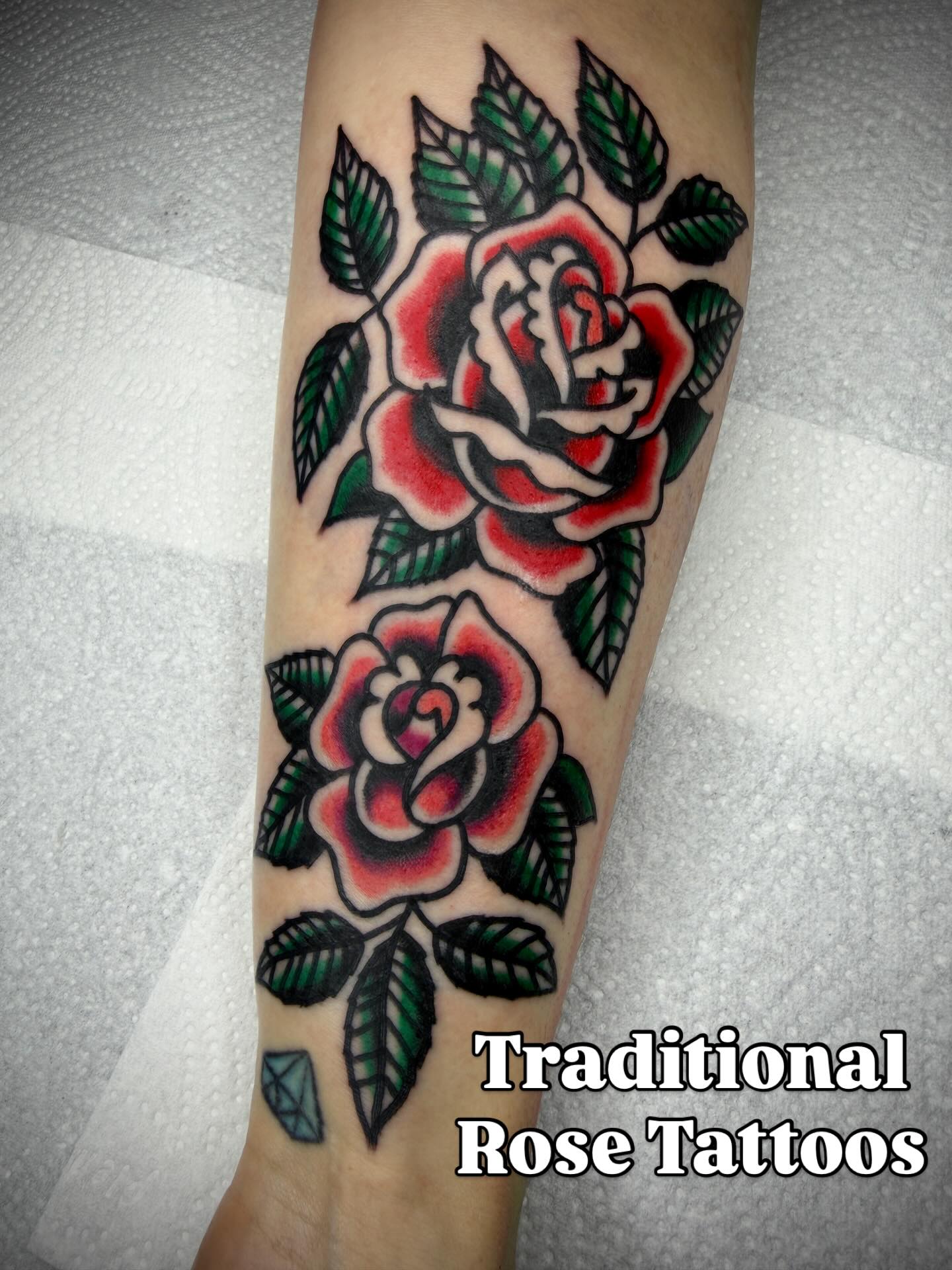
A single red bloom in an otherwise grey floral, or one blue eye in a portrait. Done sparingly it draws the eye exactly where you want it.
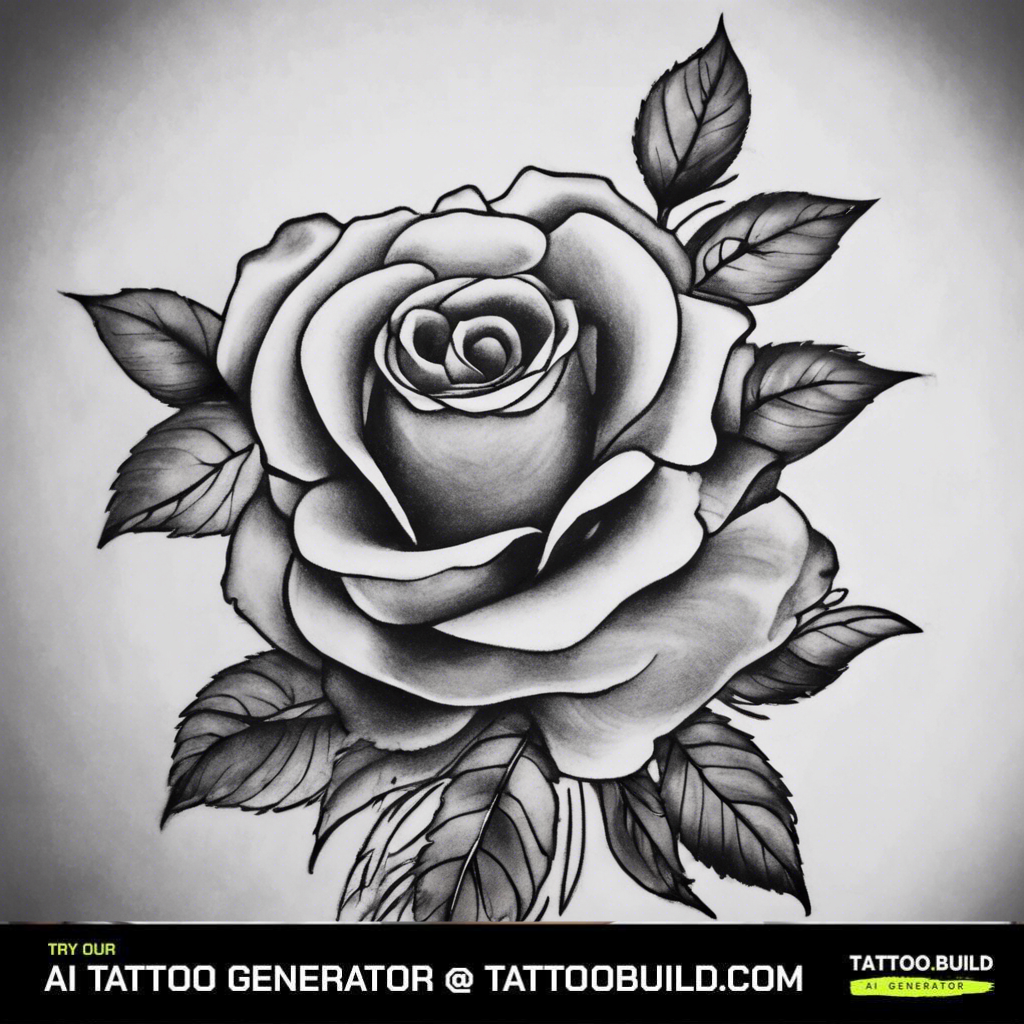
Be aware that the coloured element will usually be the first thing to need attention, since colour pigment generally fades faster than black. Our piece on black shaded rose tattoos shows how much drama you can get without adding colour at all.
White Highlights
White ink used as a highlight on top of grey wash can add real sparkle to water, glass or an eye.
It is also the least predictable ink in the tray. On some skin it holds for years, on others it yellows or disappears entirely — treat it as a bonus rather than something the design depends on.
Negative Space as a Design Element
Leaving bare skin inside a heavily shaded area is one of the most striking things black and grey can do, and it costs nothing in sitting time.
It only works if the surrounding blacks are genuinely dark. Half-hearted mid-grey around a gap just looks unfinished.
Getting the Best Out of a Black and Grey Tattoo
Brief your artist in terms of contrast, not detail. Saying “I want deep blacks in the background so the light areas pop” gets you a better result than listing every element you want included.
Book shading sessions when you can protect the area afterwards. Freshly shaded skin is one large scabbing surface, and a week of loose clothing makes a visible difference to how evenly it heals.
Follow the aftercare your artist gives you rather than something you read online — instructions vary by studio and by the wrap they used. Keep it clean, keep it moisturised without smothering it, and do not pick.
Once healed, sunscreen is the single highest-return habit for keeping contrast. And take the risks seriously: tattooing breaks the skin, so infection and allergic reaction are real possibilities. The Mayo Clinic and the US Food and Drug Administration both publish plain-language guidance. If a healing tattoo becomes hot, increasingly painful, swollen or starts weeping after the first few days, see a doctor — that is not something to manage from an article.
Common Mistakes — and What to Do If You Are Still Not Sure
The most common mistake I see is going too small for the amount of detail requested. Shading needs room; a portrait squeezed into a palm-sized space turns grey and indistinct within a couple of years.
The second is choosing an artist on price. Black and grey is a shading discipline, and shading skill varies far more between artists than linework does.
The third is skipping the healed-work check. Always ask to see photographs of the artist’s pieces at least a year old before you book anything large.
If you are undecided on placement rather than style, our guides to classy feminine thigh tattoos and what a sleeve tattoo actually costs are the two most useful next reads.
Frequently Asked Questions
Do black and grey tattoos hurt less than colour tattoos?
Not inherently — the needle is the same. What changes is the type of discomfort: colour packing tends to be a concentrated sting in one area, while grey wash shading is a broader, duller burn spread over more skin. Many people find shading more tolerable minute to minute but harder over a long session, because the area being worked is larger. Placement affects your experience far more than the style does.
How long does a black and grey tattoo take to heal?
The surface usually settles within two to three weeks, but the deeper layers keep repairing for a couple of months. Heavily shaded pieces often look cloudy or dull around weeks two to four — that is the healing skin over the ink, not a failed tattoo, and it clears. Judge the result at the two-month mark, not the two-week mark. Ask your artist when they want to see it for a touch-up assessment.
Will a black and grey tattoo turn blue or green over time?
Older tattoos sometimes take on a blue-green cast as black pigment particles disperse in the skin and the surrounding tissue scatters light. Modern black inks used by reputable studios are more stable than the inks behind most of the faded tattoos you have seen on older generations. It is still fair to expect some softening of tone over decades. Sun protection is the main thing within your control.
Is black and grey a good choice for a first tattoo?
In my experience it is one of the best, provided you start with a moderately sized piece rather than a full sleeve. It suits every skin tone, it does not date the way colour trends do, and it is easier to extend later because you are not trying to match a specific colour palette. A small ornamental or botanical piece on the forearm or thigh is a sensible first commission.
How often will a black and grey tattoo need touching up?
It depends heavily on placement, sun exposure and how light the shading is. Bold designs with strong blacks on protected skin can go many years untouched, while soft grey wash on a forearm may want attention sooner. Most artists will do a small correction shortly after healing at no charge, and treat later refreshes as new work. Ask about their touch-up policy before you book.
Quick Summary
- Black and grey covers four distinct approaches — grey wash realism, blackwork, fine line and dotwork — and they age very differently.
- What fades is contrast, not colour, so insist on real blacks somewhere in the design.
- Florals and ornamental work are the most forgiving starting points; portraits and hairline vines are the least.
- Thighs, backs and inner arms hold contrast longer than hands, feet and outer forearms.
- Give shading room to breathe — going too small for the level of detail is the most common regret.
- Judge an artist on healed photographs of shading work, not fresh shots.
- Sunscreen on healed skin is the cheapest way to keep a black and grey piece sharp.
- Any sign of infection during healing is a doctor’s call, not an internet one.