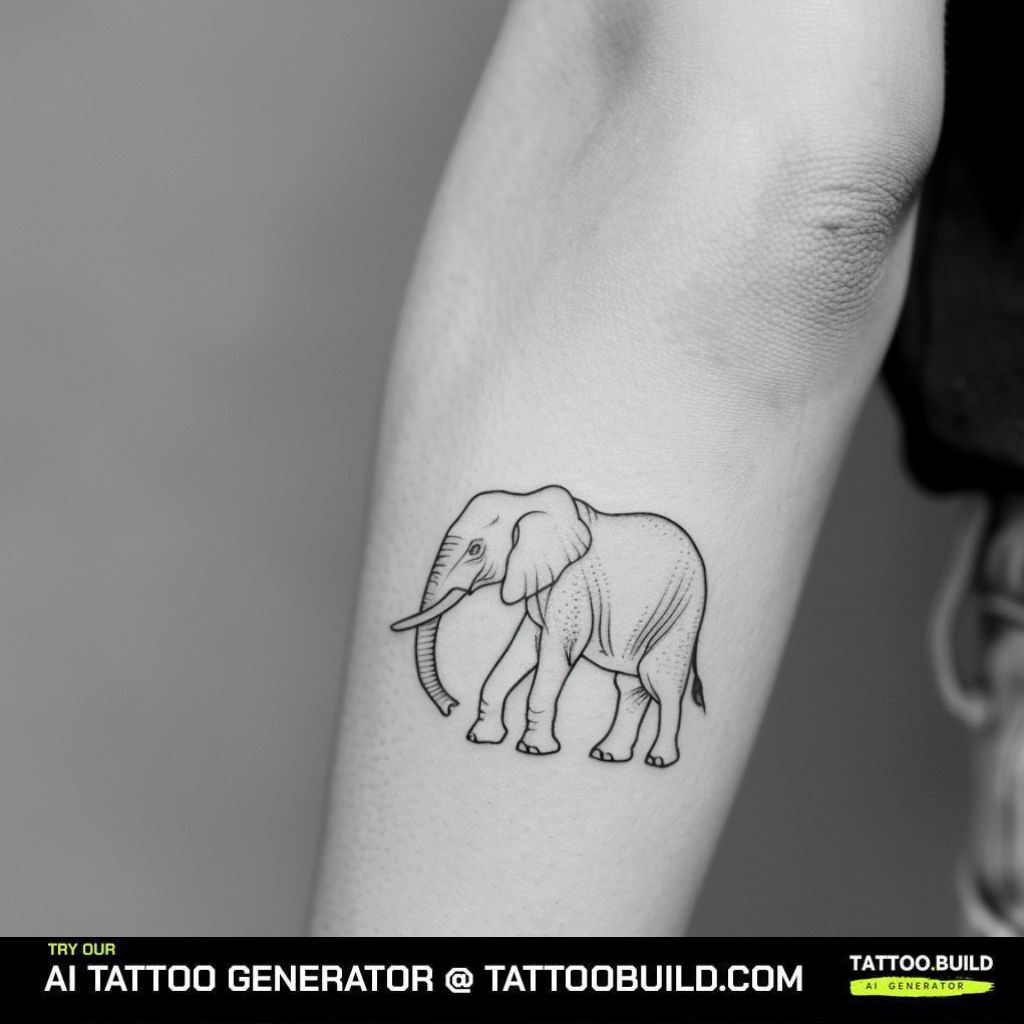
I have watched a lot of people walk into a shop wanting an elephant and walk out with a design that would have worked better as a single forearm piece. An elephant sleeve tattoo lives or dies on one decision: whether the elephant is the sleeve, or whether the elephant is a character inside a scene that fills the sleeve.
Those are two different tattoos, two different price brackets, and two very different conversations with your artist. Getting that straight before the stencil goes on saves a lot of regret.
Elephants suit arms unusually well. The head is wide and heavy, the trunk is a natural line that can travel down toward the wrist, and the ears give an artist a big soft surface to shade — which is exactly what a sleeve needs to stop it reading as a sticker on skin.
Below are seven elephant sleeve directions I keep coming back to, plus the practical parts nobody puts on Instagram: how many sittings this usually takes, what ages badly, and roughly what you are committing to. If the budget question is already nagging at you, it is worth reading how much a sleeve tattoo costs before you fall in love with a design.
Which Elephant Sleeve Style Is Right for You?
Style is not just a look — it decides how the piece ages, how many sittings it takes, and how easily it can be added to later.
This is the comparison I sketch out for people who are stuck between two directions.
| Style | Best for | Typical sittings | How it ages |
|---|---|---|---|
| Black & grey realism | A single dominant elephant portrait, wrinkles and eye detail | Four to eight full days for a full sleeve | Softens over the years; fine grey wash needs the most care |
| Blackwork / tribal | Bold silhouettes, pattern-led sleeves, darker skin tones | Three to six days, depending on fill | The most forgiving of the lot — solid black holds its shape |
| Ornamental / mandala | Symmetry, headdress detail, wrapping patterns around the arm | Three to six days | Good, as long as the linework is not packed too tightly |
| Neo-traditional colour | Stylised elephants, jewellery, flowers, storybook feel | Four to eight days | Strong outlines carry it; colour needs sun protection |
| Fine line / dotwork | Quiet, delicate sleeves and mixed nature scenes | Three to five days | The least forgiving — thin lines can blur and need touch-ups |
If the bold end of that table is pulling at you, the same logic runs through most blackwork tattoo ideas — heavy, simple shapes are the ones still readable a decade later.
And if the symmetry column is what caught your eye, browsing mandala sleeve tattoo ideas will show you how ornamental pattern actually wraps a limb.
Why Elephants Work So Well as Sleeve Subjects
Part of it is meaning. Elephants get read as memory, patience, protection and family — and unlike a lot of animal symbolism, most people land on roughly the same reading, so you are not forever explaining your arm.
That family association is not invented. WWF describes elephant herds as complex social groups of females and calves led by a matriarch, with bulls living alone or in small bachelor groups.
It is also why mother-and-calf sleeves carry so much weight for people marking a parent, a child, or a loss. The symbolism is doing real work, not decoration.
The other half is pure geometry. A sleeve needs a subject big enough to anchor the whole arm, and an elephant head is one of the few animal shapes that fills a bicep without looking stretched.
There is a conservation dimension too, and it is worth knowing what you are wearing. WWF puts African elephant numbers at around 400,000 today, down from an estimated 12 million a century ago.
7 Elephant Sleeve Tattoo Ideas Worth Stealing
Each of these is a working direction rather than a design to copy exactly — bring the idea to your artist and let them draw it for your arm.
1. Majestic Elephant Portrait
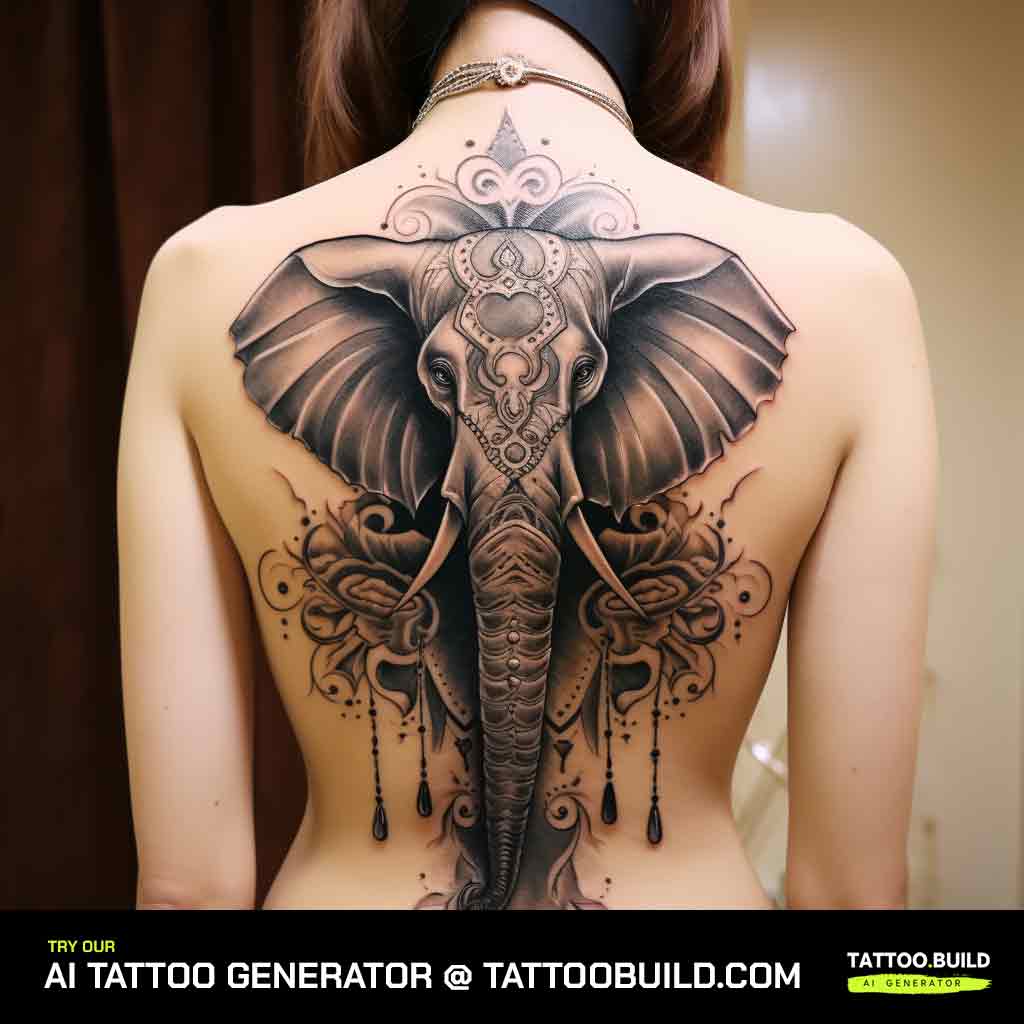
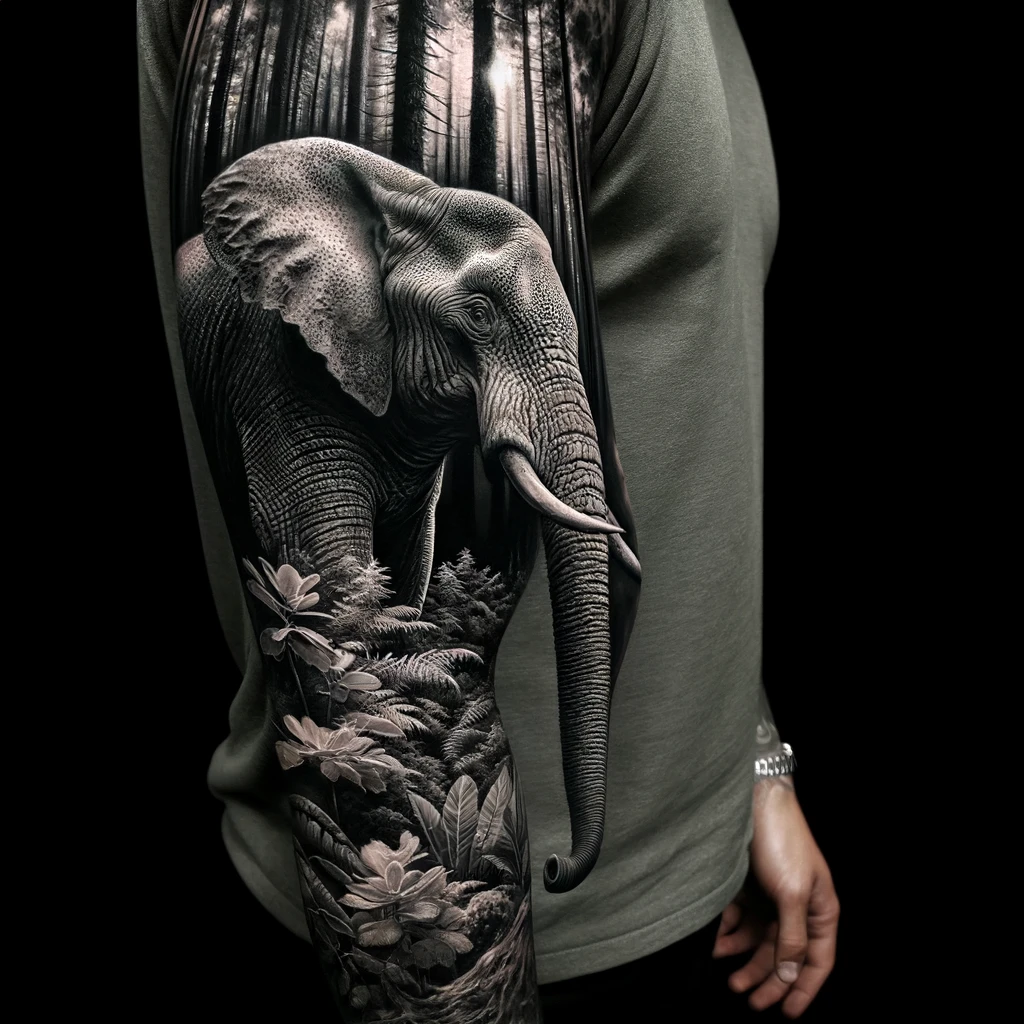
This is the classic: one enormous head, angled slightly so the trunk falls across the inner arm, with the ears bleeding out into soft grey.
It works because the eye has a single place to land. Every time I have seen a sleeve fail, it is because three medium-sized elements are competing and none of them wins.
The version in the photo above adds a faint tree line behind the head. That background is doing something specific — it stops the ears from ending in a hard edge, which is what makes a portrait look pasted on.
Ask your artist for a value sketch before the stencil. If the design reads clearly as light and dark shapes at arm’s length, it will read on skin.
2. Serene Elephant Gaze
Instead of the whole animal, this crops in hard: eye, brow, part of the trunk, and not much else.
When I tested this idea against a full-body composition on the same arm, the cropped version won easily at a distance. Detail you cannot see from three feet away is detail you paid for twice.
It suits an inner-arm or upper-arm focus, and it leaves room lower down for filler later — smoke, foliage, or plain negative space.
The one caution: the eye is the whole tattoo. Look through your artist’s healed portfolio, not their fresh work, before you book this one.
3. Elephant Emerging From Shadow
Here the elephant pushes forward out of a wash of solid black, with no outline on the shadow side at all.
It is a favourite of mine because it solves the hardest sleeve problem — where does the tattoo end? A black field can fade into the arm instead of stopping at a border.
Every artist I have asked about this style says the same thing: the black has to be packed properly in the first pass or it heals patchy and needs a full re-do.
Expect this one to be sore. Long stretches of saturated black across the inner bicep are among the more unpleasant sittings you will book.
4. Tribal Elephant Inside a Map
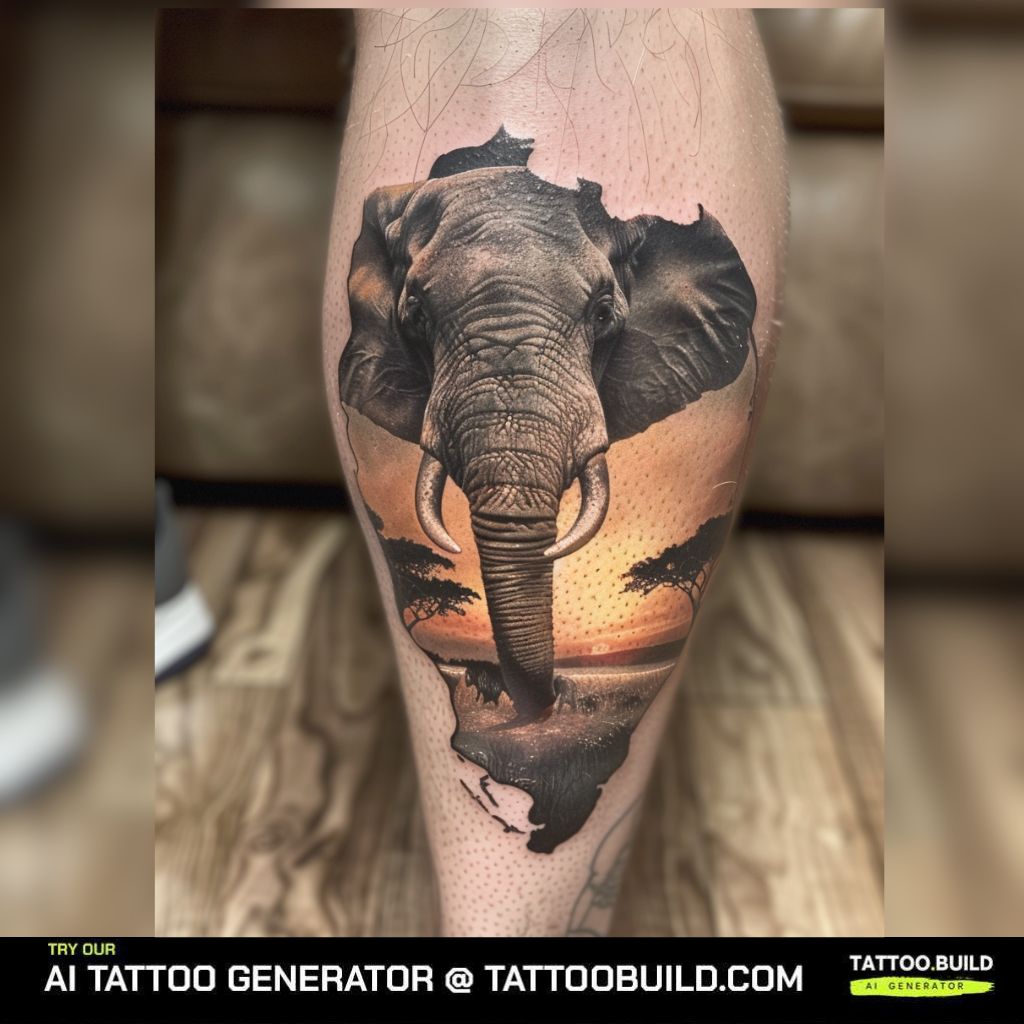
A strong-lined elephant framed inside the outline of a country or continent — most often Africa — reads as heritage or a journey rather than just an animal.
The map silhouette gives the composition a hard shape to sit in, which is genuinely useful on a forearm where the arm tapers.
Keep the internal pattern simple. In my experience, tribal fills that look intricate on paper turn into a grey smudge on skin within about five years if the gaps are too tight.
If you like this direction but want it less graphic, an abstract elephant tattoo approach keeps the boldness while loosening the linework.
5. Ornate Elephant Over a Landscape
This stacks two ideas: a decorated elephant head at the top of the arm, and a landscape — mountains, trees, water — running down toward the wrist.
It is the most ambitious layout on this list and the one most likely to go wrong without a full-arm drawing done in advance.
The trap is scale. The landscape should be noticeably smaller in detail than the elephant, or the two halves fight and the sleeve reads as two separate tattoos.
Budget for more sittings than you think. Every ornamental sleeve like this I have followed took at least one extra day beyond the original estimate.
6. Gentle Giant With Florals
Softer grey shading, a lowered head, and flowers breaking up the base — this is the version people usually mean when they say they want something meaningful rather than intimidating.
Flowers are also the most practical filler on a sleeve. They bend around the arm, they hide the join between sessions, and they can be added to for years.
Pick blooms with real structure — peony, magnolia, lotus — rather than tiny scattered petals that will blur together.
If you want the same warmth in a stylised, outlined style, look at how an American traditional elephant tattoo handles the same subject with far fewer greys.
7. Forest Wanderer
An elephant moving between tall trunks, with mist made from untouched skin rather than white ink.
That last point matters. White highlights tend to dull with time, while blank skin stays exactly as bright as your skin is.
This composition is the easiest of the seven to extend. Trees keep going, so the sleeve can grow from a half to a full without redrawing anything.
It also hides age well — a slightly softened forest still looks like a forest, which is not true of a slightly softened portrait.
Variations Worth Considering Before You Commit
A full sleeve is not the only way to wear this. These are the alternatives I suggest most often when someone is not ready for a whole arm.
Half sleeve first, full sleeve later
Start shoulder-to-elbow with the elephant, and leave the forearm blank for a year. You will know very quickly whether you actually want the rest.
Design it so the lower edge is organic — foliage, smoke, water — rather than a straight band, so it can be continued cleanly.
Mother and calf
Two elephants, one large and one small, walking in the same direction. It is the single most requested meaningful variation I come across.
Keep the calf small enough to stay a supporting element. When both animals are the same visual weight, the story disappears.
Elephant and mandala combined
A geometric mandala sitting behind or above the head gives the piece a centre of symmetry, which suits people who want structure rather than a scene.
It is also easier to place than a landscape, because a mandala can be scaled to fit whatever gap is left.
Leg sleeve instead of arm
A calf or thigh gives you a longer, flatter canvas and lets a full-body elephant work without distortion.
It hurts differently rather than less, and healing takes more discipline because of trousers and movement.
Colour accents on a black and grey base
A single colour — usually in the flowers or the sky, never the elephant — keeps the piece calm while giving it a focal point.
Sketching the idea first helps here. Working from a clean elephant tattoo drawing makes it much easier to see where a colour accent belongs.
Planning, Sittings and Aftercare
Book a consultation before you book the tattoo. A good artist will want to see your arm, measure it, and talk about how the design wraps before they draw anything.
Expect a full elephant sleeve to run across several full-day sittings spread over months, not weeks. Skin needs time between sessions, and the pain is cumulative — the tattoo pain chart is a reasonable guide to which parts of the arm will test you.
Aftercare is where most sleeves are won or lost. Follow the plan your artist gives you rather than the internet’s, and if you want a general overview first, our tattoo aftercare guide covers the basics of washing, moisturising and sun protection.
Take healing seriously rather than casually. The FDA fact sheet on tattoos notes that infections and allergic reactions to pigment do happen, and that a reaction can appear long after the tattoo has healed.
If you see spreading redness, heat, swelling that worsens after the first few days, pus, or a fever, contact your artist and see a doctor. This article is design advice, not medical advice, and a sleeve is a large enough wound to be worth a professional opinion.
Common Mistakes — and What to Do If You Are Still Not Sure
The most common mistake is collecting reference images of finished sleeves and asking for all of them at once. Pick one idea and let the artist build around it.
The second is designing on a flat drawing. An arm is a cylinder, and a composition that looks balanced on paper can hide a third of itself when you stand normally.
The third is filling every gap immediately. Negative space is a design element, and a sleeve with room to breathe usually looks more expensive than one packed edge to edge.
If you have space you genuinely do not know what to do with, our guide to tattoo sleeve filler ideas is a better starting point than adding another animal.
And if you are still not settled on a direction, you can rough out a few concepts with Tattoobuild’s AI tattoo generator and take the results to your consultation. It is a communication tool, not a design your artist should copy.
Frequently Asked Questions
How long does an elephant sleeve tattoo take?
Most full sleeves are built across several full-day sittings rather than one marathon session. A detailed black and grey elephant sleeve commonly runs to four to eight days of work, spaced weeks apart so each section can heal. Simpler blackwork or ornamental versions usually sit at the lower end of that range. Your artist’s estimate after seeing your arm will be far more accurate than any number online.
Does an elephant sleeve tattoo hurt more than other sleeves?
The subject does not change the pain — the placement and the amount of solid black do. Inner bicep, elbow ditch and the wrist end are the parts most people find hardest, and heavy black fill is generally more uncomfortable than light grey shading. Long sittings hurt more toward the end regardless of design. Eating properly beforehand and scheduling shorter sessions helps more than anything else.
What does an elephant sleeve tattoo usually mean?
Most people choose it for memory, patience, strength, protection or family. The family reading is the most common, and it fits: elephant herds are matriarchal social groups, which is why mother-and-calf designs carry so much weight. Some wearers also choose it for good fortune, drawing on the elephant’s place in several Asian traditions. There is no fixed meaning, so what matters is the one you can explain in a sentence.
Can an elephant sleeve be done in colour?
Yes, though the majority are black and grey because greyscale suits the animal’s skin texture. Neo-traditional colour versions work well when the elephant is stylised rather than realistic, with strong outlines holding the shapes. A common middle path is a black and grey elephant with colour reserved for flowers or background. Colour needs consistent sun protection to stay bright, so factor that in.
Should I start with a half sleeve or go straight to a full one?
Starting with a half sleeve is the safer choice for most first-timers, and it is what I usually suggest. It lets you find out how you handle long sittings and whether you actually want the commitment, without leaving a design that looks unfinished. The key is to plan the lower edge so it can be extended later. Tell your artist at the first consultation that a full sleeve is possible, so they compose for it from the start.
Quick Summary
- Decide first whether the elephant is the sleeve or sits inside a larger scene — everything else follows from that.
- Black and grey realism gives the most detail; blackwork ages the best; fine line needs the most upkeep.
- One dominant element beats three competing ones, every time.
- Use organic edges — foliage, smoke, mist — so a half sleeve can grow into a full one later.
- Negative space is part of the design; leave gaps you can fill deliberately later.
- Plan for several full-day sittings spread over months, and consult before booking.
- Follow your artist’s aftercare plan, protect it from the sun, and see a doctor if healing goes wrong.