An American traditional elephant tattoo works because the style and the animal want the same thing: weight, silhouette and a shape you can read from across a room.
I have been collecting and writing about old school flash for years, and the elephant is one of the few large animals that survives the translation almost untouched. The ears, the trunk and the tusks are already a bold graphic before an artist draws a single line.
That is also why it sits so comfortably alongside the rest of the American traditional animal tattoos canon — the panther, the eagle, the swallow. Same rules, bigger body.
Below are 24 designs pulled from real flash and real placements, grouped by where they sit on the body, plus what I have learned about how each one ages.
Which Elephant Placement Is Right for You?
Placement changes the design more than the colour palette does. Here is how the six placements in this guide actually compare.
| Placement | Typical size | Rough sitting time | Best for | How it ages |
|---|---|---|---|---|
| Forearm | 4–6 inches | 2–4 hours | A first bold piece you want to see daily | Very well; low friction, easy to shade |
| Full back | 12–18 inches | Multiple sessions over months | A centrepiece with banners and filler | Excellent; least sun exposure of any panel |
| Shoulder cap | 5–8 inches | 3–5 hours | Curving the elephant around a round surface | Well, though the outer deltoid catches sun |
| Leg / calf | 6–10 inches | 3–6 hours | Tall, upright poses with a raised trunk | Well; shin work stings more than calf work |
| Ankle | 1.5–3 inches | Under 90 minutes | A small, simplified silhouette | Needs simple linework; fine detail closes up |
| Full sleeve | Shoulder to wrist | Many sessions | Building a themed collection around one elephant | Very well when the layout is planned first |
Sitting times above are the ranges artists have quoted me and vary a lot with your artist’s speed and the amount of solid colour packing involved.
Why the Elephant Suits American Traditional So Well
American traditional — old school, sailor style, whatever your shop calls it — is built on three constraints: a heavy black outline, a small colour palette, and enough negative space that the design still reads in twenty years.
Most animals fight at least one of those constraints. A wolf needs fur texture. A tiger needs stripe detail that turns to mush at small sizes.
The elephant does not. Strip it back to ears, trunk, tusk and a suggestion of skin folds and you still unmistakably have an elephant — the same economy that makes a traditional swallow readable at two inches.
The palette is the other half of it. Classic old school leans on black, red, yellow, green and a muted blue, and a grey elephant sits between those saturated colours without competing with them.
There is history here too. Circus and menagerie imagery ran through early American flash for the same reason nautical imagery did — tattooers drew what travelling working people brought through the door.
24 American Traditional Elephant Tattoo Ideas by Placement
1. The Flag-Bearing Pachyderm
This is the most literally American of the set: a grey elephant, trunk raised, holding a flag, usually with a bed of orange and green flowers along the bottom.
The flag does real design work. It gives the artist a block of saturated red and blue to balance against all that grey, which stops the piece looking washed out from a distance.
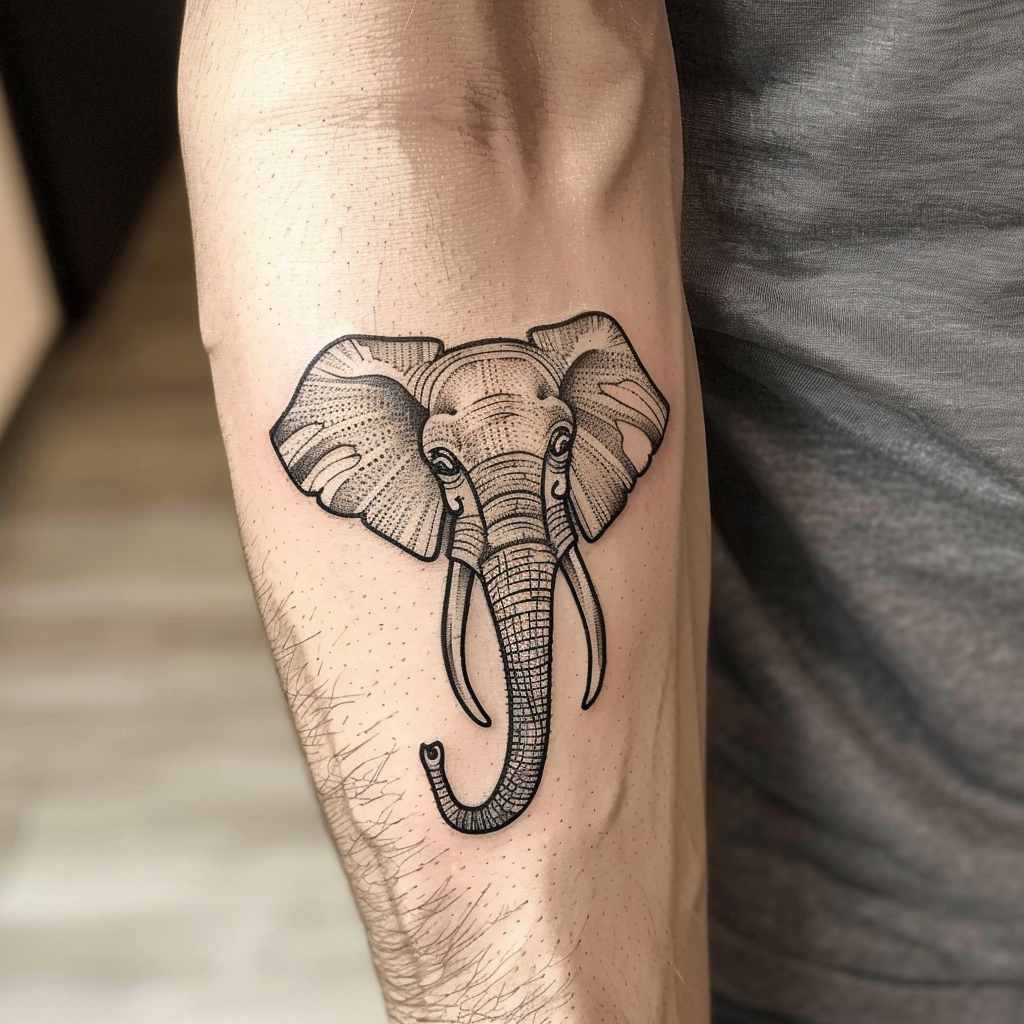
In my experience this is the version people want on the forearm, and it is a sensible choice — a mid-sized elephant arm tattoo gives the ears room without wrapping awkwardly.
If you want it smaller, ask your artist to drop the flowers before they simplify the elephant. The florals are filler; the animal is the point.
2. The Circus Elephant Balancing on a Ball
The circus elephant is the oldest recognisable version of this design in American flash, and it is still the one I see most often on shop walls.
The formula is fixed: elephant on a ball, decorated cloth over the back and head, scattered stars for movement.
What makes it work is the ball. It anchors a heavy animal on a single point, which creates tension in a way a standing elephant never does.
Every artist I have asked prefers this one at 5 inches or more. Below that the cloth pattern and the star field start crowding the outline.
3. Full Back Elephant Pieces
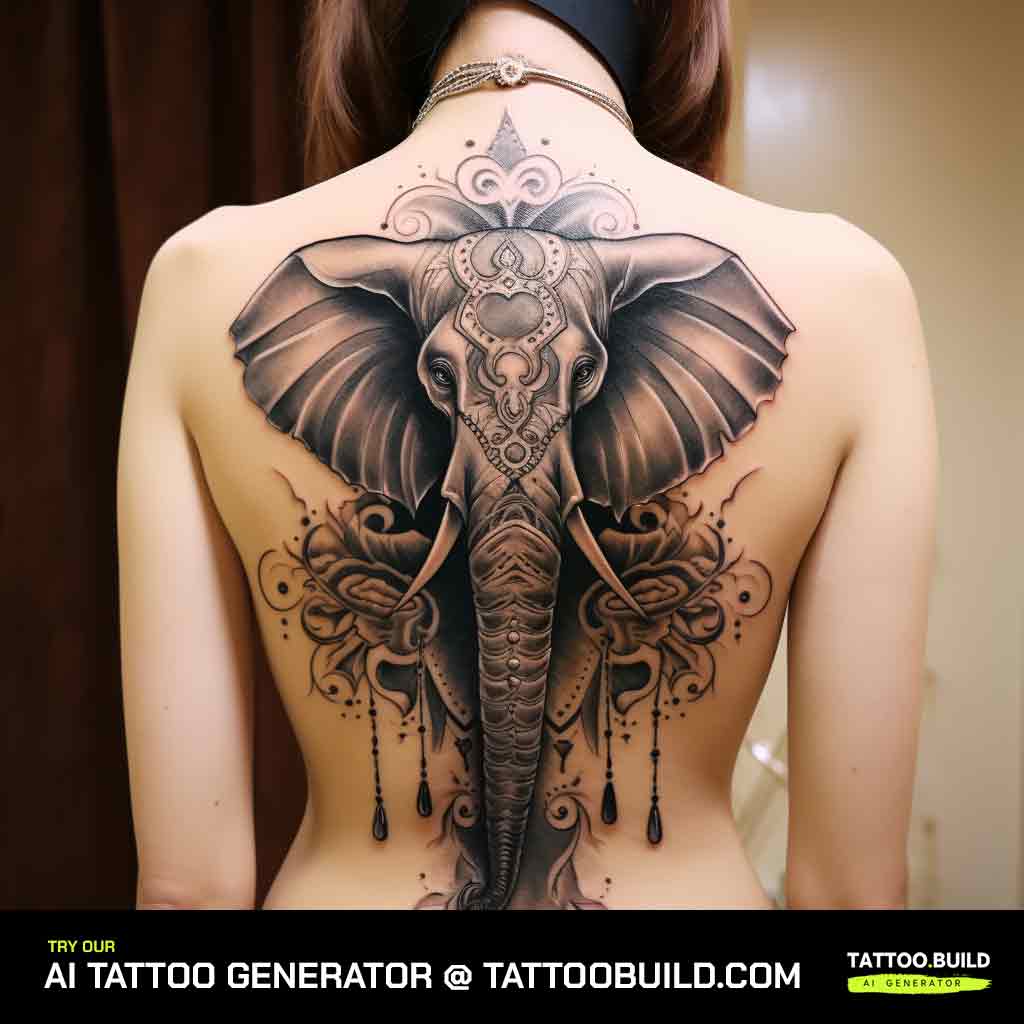
A back piece changes the maths entirely. You are no longer fitting an elephant onto a limb; you are designing a symmetrical panel around one.
Front-facing poses win here. The ears spread across the shoulder blades and the trunk drops down the spine, which uses the body’s own symmetry instead of fighting it.
Expect this across several sessions rather than one. Solid colour packing over that surface area is slow work, and rushing it is how you end up with patchy saturation.
The upside is longevity — a back piece sees less sun and less friction than almost anywhere else on the body.
4. Shoulder Cap and Upper Arm Designs
The shoulder is a rounded surface, which means a flat design will look distorted from at least one angle.
Good artists solve this by curving the elephant’s back along the deltoid so the animal follows the muscle rather than sitting on top of it.
A shoulder placement also gives you a natural stopping point if you later want to extend into a half or full sleeve.
When I tested how these read in photos, the versions with a red and gold headdress held up best — the ornament gives the eye something to land on where the shoulder curves away.
5. Leg and Calf Elephants
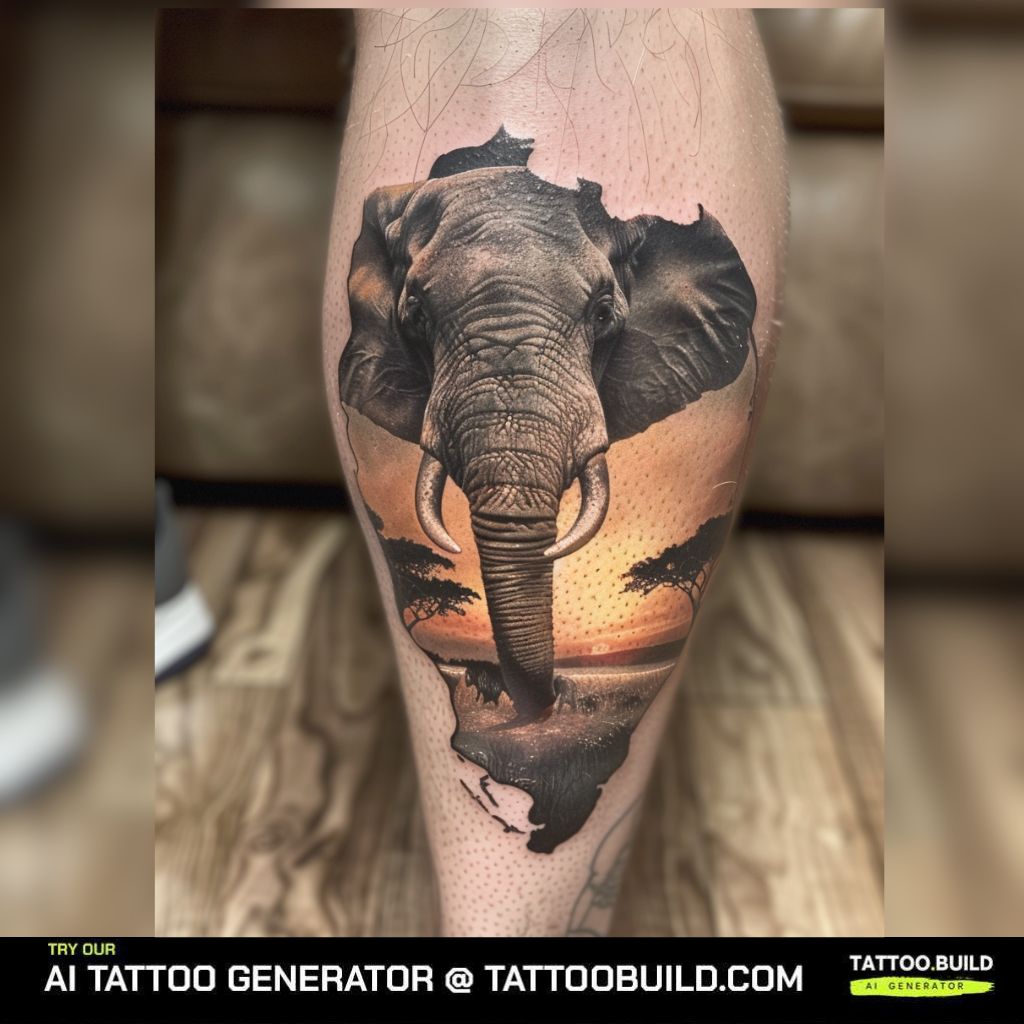
Legs suit upright poses. A raised trunk fills vertical space that would otherwise need filler on an arm.
The calf is the friendliest spot on the leg for a piece this size, and it is where most elephant leg tattoo designs end up for good reason — it is fleshy, it heals predictably, and it holds colour well.
The shin is a different conversation. It is thin skin over bone, it usually hurts more, and I would not choose it for a first large piece.
Traditional flowers around the base are worth keeping on a leg. They soften the transition where the design meets bare skin, which matters more on a curved limb.
6. Small Ankle Elephants
Small is where American traditional earns its reputation, because the style was designed to survive being small.
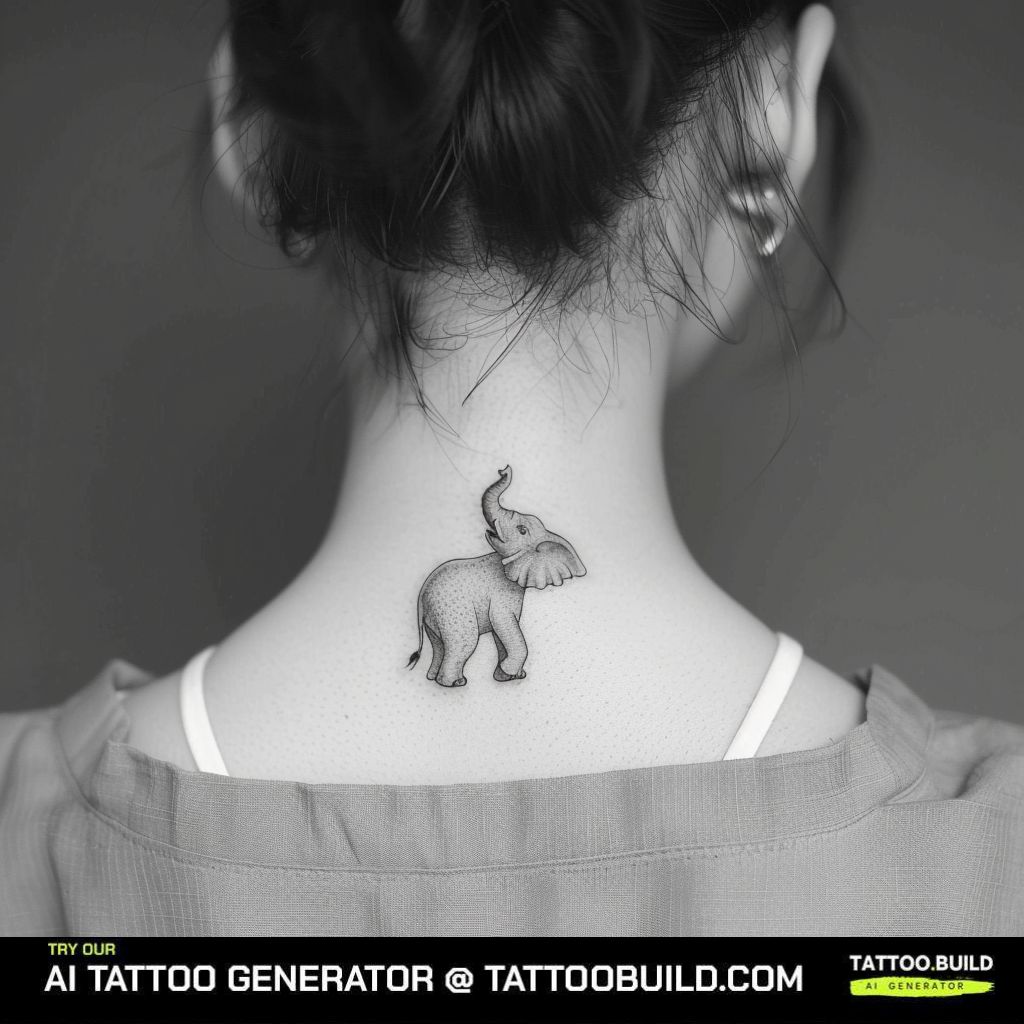
At ankle size you are drawing a silhouette: ears, trunk, one tusk, minimal internal detail. Everything else has to go.
The most common mistake here is asking for a detailed design at a size that cannot hold it. If you want charm rather than detail, look at simplified cute elephant designs instead of shrinking a circus piece.
Ankles also sit right where socks, shoes and boot tops rub, so the first two weeks of healing need more attention than a forearm would.
7. The Full Sleeve Elephant
A sleeve is not one elephant made bigger. It is one elephant used as an anchor and then surrounded by supporting flash.
Plan the whole layout before the first session. Elephant sleeve designs that were built piece by piece almost always end up with awkward gaps that need filler later.
The usual arrangement puts the elephant on the outer upper arm where it is most visible, with roses, banners or stars filling the inner arm and forearm.
Variations Worth Considering
Trunk Up Versus Trunk Down
A raised trunk is the more common choice and is widely associated with good fortune, which is the reason most people give me for asking for it. There is more on that reading in this guide to trunk up elephant tattoos.
A lowered trunk changes the composition rather than the meaning — it makes the design wider and shorter, which suits a forearm or a chest panel better than a calf.
Black and Grey Traditional
You can keep every old school rule and drop the colour. Bold outline, heavy black shading, limited grey wash.
It ages differently. Black holds longer than most pigments, so a black and grey piece tends to look closer to its original state after a decade — though it loses the punch that makes traditional work carry across a room.
Neo-Traditional Crossover
Neo-traditional keeps the bold outline but allows a wider palette, more shading depth and more ornamental detail.
It suits elephants well because there is genuinely a lot of texture to render. Just be aware it usually costs more and takes longer than a straight traditional piece.
Ornamental and Ceremonial Elements
Decorated head plates, draped cloth, bells and tassels all come from ceremonial elephant imagery.
If you are drawing on a living cultural or religious tradition rather than circus flash, it is worth talking that through with your artist first so the design is respectful as well as good-looking.
Getting the Best Result From a Bold Traditional Piece
Pick an artist whose healed work you have seen, not just their fresh photos. Solid colour packing looks great on day one in almost anyone’s portfolio; healed shots are where the difference shows.
Sun is the main enemy of a saturated traditional tattoo. Once it is fully healed, sunscreen on the piece is the single highest-value habit — the American Academy of Dermatology covers day-to-day care for tattooed skin in more detail.
Follow your artist’s aftercare instructions rather than anything you read online, including this. If you want to know what is normal week by week, our guide to tattoo healing stages walks through it.
See a doctor rather than a tattoo forum if you get spreading redness, increasing pain after the first few days, fever, or a rash in the tattoo. Reactions to specific pigments are uncommon but real, and the FDA fact sheet on tattoos and permanent makeup explains why. Nothing here is medical advice, and never attempt to tattoo or remove a tattoo yourself.
Still Not Sure? The Mistakes I See Most Often
Going too small for the design. This is the big one — a circus elephant with a patterned cloth simply does not fit on a wrist, and shrinking it just guarantees a blurred blob in ten years.
Asking for photorealistic skin texture inside a traditional outline. The two approaches fight each other, and the outline always wins as the piece ages.
Choosing placement before design. Decide what you want the elephant to do first, then find the panel that fits it — browsing elephant tattoo ideas by placement rather than by style tends to lead people the wrong way round.
Skipping the consultation. Fifteen minutes with the artist ahead of time is usually the difference between a design that fits your body and one that fits a piece of paper.
Frequently Asked Questions
Do American traditional elephant tattoos have a specific meaning?
There is no single fixed meaning attached to the style itself. Elephants are widely read as symbols of strength, memory, family and protection, and a raised trunk is commonly associated with good luck. American traditional adds its own layer of association — circus and travelling-show imagery from early twentieth century flash. In practice most people I have spoken to pick the design for the look first and settle on the meaning afterwards, which is a perfectly reasonable order to do it in.
How much does an American traditional elephant tattoo cost?
It depends almost entirely on size, colour packing and your artist’s rate, so any number quoted online will be wrong for someone. A small ankle piece is typically a shop-minimum job, while a full back piece runs across multiple sessions and is priced accordingly. The best approach is to bring a reference image to two or three local shops and ask for a quote on that specific design. Rates vary a lot by city and by artist demand.
Does the grey of an elephant fade faster than the colours?
Grey wash and lighter tones generally soften sooner than heavy black, and that is true in any style. The reason traditional pieces age so well is that the bold outline and solid black shading carry the design even after the mid-tones lighten. Sun exposure accelerates fading in all pigments, so daily sunscreen once healed makes a real difference. If a piece does soften over the years, a touch-up from your artist usually restores it.
What placement is best for a first elephant tattoo?
The forearm and the outer calf are the two I would suggest most often. Both are fleshy enough to be tolerable, both heal predictably, and both give you enough room for a mid-sized design without needing to simplify it. The ankle is fine if you specifically want something small, but it rubs against footwear during healing. Talk placement through with your artist before you commit, since they can see how a design will sit on your particular anatomy.
Can an existing tattoo be reworked into a traditional elephant?
Sometimes, and it depends heavily on how dark and how large the existing piece is. Traditional style is actually one of the better cover-up options because its heavy black outlines and solid colour hide old work well. That said, a cover-up usually has to be larger and darker than the original, so you may lose some flexibility on the design. Take clear, well-lit photos of the existing tattoo to a consultation and let the artist tell you what is realistic.
Quick Summary
- American traditional suits elephants because the animal’s silhouette survives being reduced to bold lines and a limited palette.
- The flag-bearing pachyderm and the circus elephant on a ball are the two classic flash arrangements.
- Forearm and calf are the easiest placements for a first mid-sized piece.
- Back pieces allow front-facing, symmetrical designs and age better than almost any other panel.
- Ankle and other small placements need a simplified silhouette, not a shrunken detailed design.
- Sleeves should be laid out in full before the first session, with the elephant as the anchor.
- Grey and mid-tones soften before heavy black does, so sunscreen and occasional touch-ups keep it sharp.
- Book a consultation and see healed work before you commit — and see a doctor, not a forum, for anything that looks infected.