I have lost count of how many elephant references clients have shown me over the years, and the pattern is always the same: they want the animal to look gentle, not grand. A cute elephant tattoo works because it takes an animal built for scale and shrinks it down to something soft, rounded and easy to live with.
The tricky part is that “cute” is doing a lot of work in that sentence. Cute comes from proportion — a big head, short legs, a curled trunk — not from adding hearts and sparkles to a realistic elephant.
In this guide I have pulled together 13 designs that actually hold up on skin, along with the placement, sizing and style notes I wish more people heard before their first consultation. If you want the symbolism side of things, the trunk-up elephant tattoo guide covers the good-luck folklore in more depth.
Every design below is a starting point, not a stencil. Bring one to an artist and let them redraw it for your body.
Which Cute Elephant Tattoo Style Is Right for You?
Style choice matters more than the pose. The same baby elephant looks completely different in fine line than it does in bold traditional, and the two age very differently.
| Style | Works Best At | Good Placements | What to Expect Long Term |
|---|---|---|---|
| Fine-line outline | 2–4 in | Inner forearm, ankle, behind the ear | Softens fastest; expect a touch-up within a few years |
| Illustrative / cartoon | 3–5 in | Upper arm, calf, thigh | Holds shape well if the linework is not too thin |
| Mandala / ornamental | 5 in and up | Thigh, upper back, outer arm | Dotwork can blur; density matters more than detail |
| Watercolour | 4 in and up | Shoulder, upper back, ribs | Fades sooner than black work, especially without sunscreen |
| Bold traditional | 3 in and up | Forearm, calf, upper arm | The most durable of the group by a wide margin |
If you are torn, my honest advice is to go one size up and one line weight heavier than feels necessary. I have never had a client regret that; I have had plenty regret the opposite. The American traditional elephant tattoo shows how much thicker linework changes the same animal.
Why Elephants Show Up So Often in Tattoo Work
Elephants carry meaning almost everywhere they appear, which is a large part of why the request never slows down.
Wild elephant herds are led by an older female, and the family group stays together for years — conservation groups like Save the Elephants document those bonds in detail. That is the source of the “family” reading most clients are reaching for.
In parts of South and Southeast Asia the elephant is also tied to Ganesha, the remover of obstacles, which is where a lot of the good-luck association comes from. Worth knowing if the design is going to borrow religious imagery.
There is also the trunk-up superstition — the idea that an upward trunk holds good fortune. Treat it as folklore rather than fact, because plenty of artists and clients read it the other way around.
And sometimes there is no symbolism at all. Some people just like elephants, and that is a perfectly good reason to get one.
13 Cute Elephant Tattoo Ideas Worth Stealing
Each of these has been on skin, not just on paper. I have noted where I would change the size or placement.
1. Simple Elephant Outline Tattoo
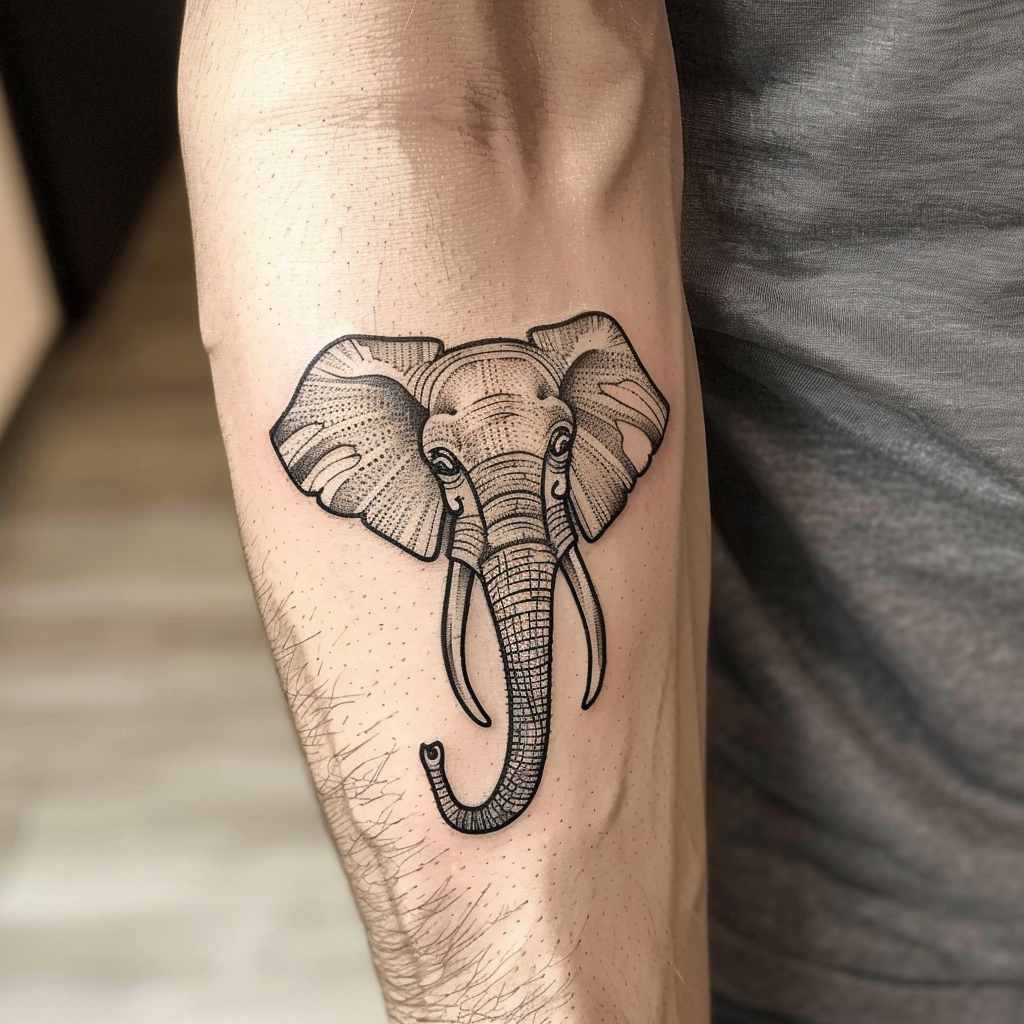
This is the version I recommend most often to first-timers, and it is the design in the photo above.
One continuous line, no shading, no filler — just the silhouette with a curled trunk. It reads as an elephant from across a room, which is the only test that matters at this size.
In my experience the mistake here is going too small. Under about two inches the ear and the trunk start to merge as the ink settles, and what you are left with is a grey blob with legs.
Ask for a line weight that looks slightly heavy in the stencil. Skin softens everything by a year or two.
Inner forearm and outer ankle are the placements that have held up best for the clients I have followed up with.
2. Elephant with Heart and Stars Tattoo
Here the elephant sits inside a loose heart with a scatter of small stars, and the whole thing works because the extras stay smaller than the animal.
When I have seen this go wrong, it is because the heart was drawn at full weight and started competing with the elephant for attention.
The fix is simple: heart in a lighter line, elephant in the heaviest line on the piece. Let the hierarchy do the work.
It is a popular choice for a first tattoo marking a person rather than an event — a grandparent, a partner, a child.
Keep it to one accent element. Hearts and stars and a name and a date is three ideas fighting for four inches of skin.
3. Playful Elephant and Crescent Moon Tattoo
A small elephant balanced on or curled inside a crescent is one of the most forgiving compositions on this list, because the moon gives the design a frame.
That frame matters more than people expect. A floating elephant with nothing around it can look unfinished; give it something to stand on and the piece feels intentional.
I usually suggest the moon in a solid or dotted fill and the elephant in clean outline, so the two never blur into each other.
It sits well on the inner bicep, the back of the calf and the shoulder blade — anywhere the curve of the crescent can follow the curve of the body.
If the celestial angle is what pulls you in, there are more directions to take it in the moon tattoo ideas collection.
4. Majestic Elephant Side Profile Tattoo
A side profile trades some of the cuteness for presence, and it is the design I would pick if you want the piece to still look good at six inches.
The profile view keeps the ear, the tusk line and the trunk on separate planes, so there is nothing for the eye to untangle.
This one benefits from a bit of soft shading behind the ear and along the trunk folds. Flat outline works, but the profile is where a little grey earns its keep.
Every artist I have asked about elephant portraits says the same thing: the wrinkles are the design. Skip them and you have drawn a grey horse.
Outer arm and thigh give it the room it needs.
5. Elephant with Flowers Tattoo
Florals around an elephant are the most requested variation I see, and there is a practical reason beyond the look.
Flowers give the piece somewhere to grow. If you add a second element later, the botanical frame absorbs it without the composition having to be redrawn.
I would keep the flowers to two species maximum — peonies and small filler blooms, or lotus and leaves. Three or more starts to read as wallpaper.
Birth flowers work nicely here if you want the piece to point at a person without lettering.
On the forearm, run the florals along the limb rather than across it. Across-the-arm compositions get distorted every time you bend your wrist.
6. Baby Elephant with Red Balloon Tattoo
This is a storybook design and it needs to be treated like one — slightly exaggerated proportions, oversized head, short legs.
The balloon is the only colour on the piece in most versions I have seen, and that single spot of red is what makes it work.
One thing worth knowing: red pigment is the most common culprit in tattoo pigment reactions, so mention any history of skin sensitivity to your artist before the needle goes in. If you have reacted to a tattoo before, talk to a dermatologist rather than guessing.
The string is the detail people skip. A slack, curving string looks alive; a straight line looks like a stick.
It sits beautifully on the ribs, the shoulder blade and the back of the arm.
7. Elephant Family Line Tattoo
Two, three or four elephants walking trunk to tail, sized largest to smallest. I have tattooed a lot of parents with this one.
The size difference has to be obvious — at least a third smaller each step down — or from a metre away it just looks like three identical elephants.
Think ahead about whether the family might grow. Leaving space at the end of the line is much easier than squeezing a fourth elephant in later.
A straight forearm or the length of the spine both work. Along the collarbone is striking but it limits you to two or three figures.
If you want more ways to mark the same thing, the family tattoo ideas guide has options that are not animal-based.
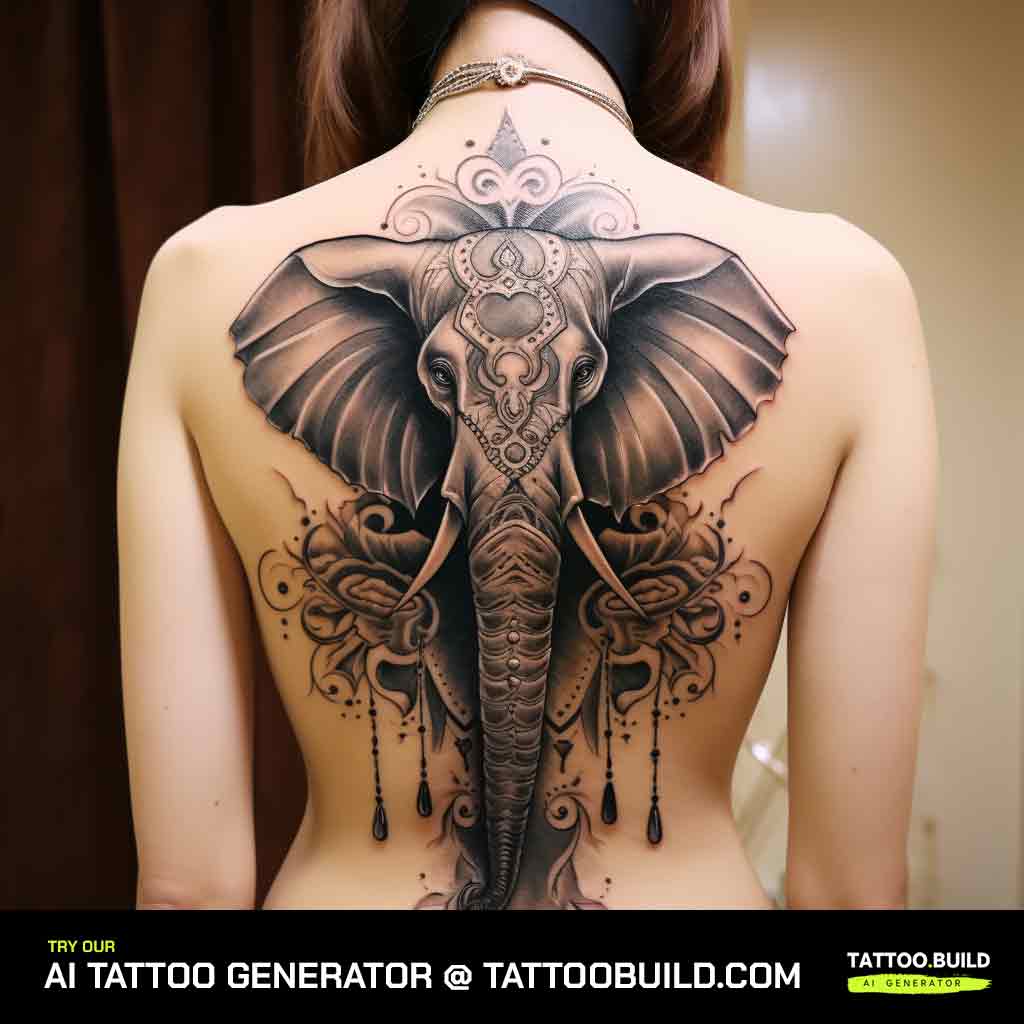
8. Elephant and Floral Back Tattoo
This is the scaled-up version of idea five, and the back is where a cute elephant tattoo can stop being small without stopping being soft.
At this size the florals carry most of the detail, which lets the elephant stay simple. That contrast is the entire trick.
In my experience back pieces need a proper layout session — stencil on, mirror check, adjust, stencil again. Do not let anyone rush that part.
Expect two sittings for anything over about eight inches with this much line work.
The upper back also holds ink well, since it gets less sun and less friction than an arm.
9. Elephant with Musical Notes Tattoo
Notes trailing from a raised trunk is a small idea with a lot of personality, and it solves a real design problem: static poses.
The notes create a diagonal, and a diagonal makes the whole piece feel like it is moving.
Keep the notes irregular — different sizes, uneven spacing, a couple tilted. Evenly spaced notes look like sheet music, not music.
I have seen this done with a specific song’s opening bars instead of generic notes. It is lovely, but get the notation checked by someone who reads music first.
Forearm and calf both suit the vertical drift of the notes.
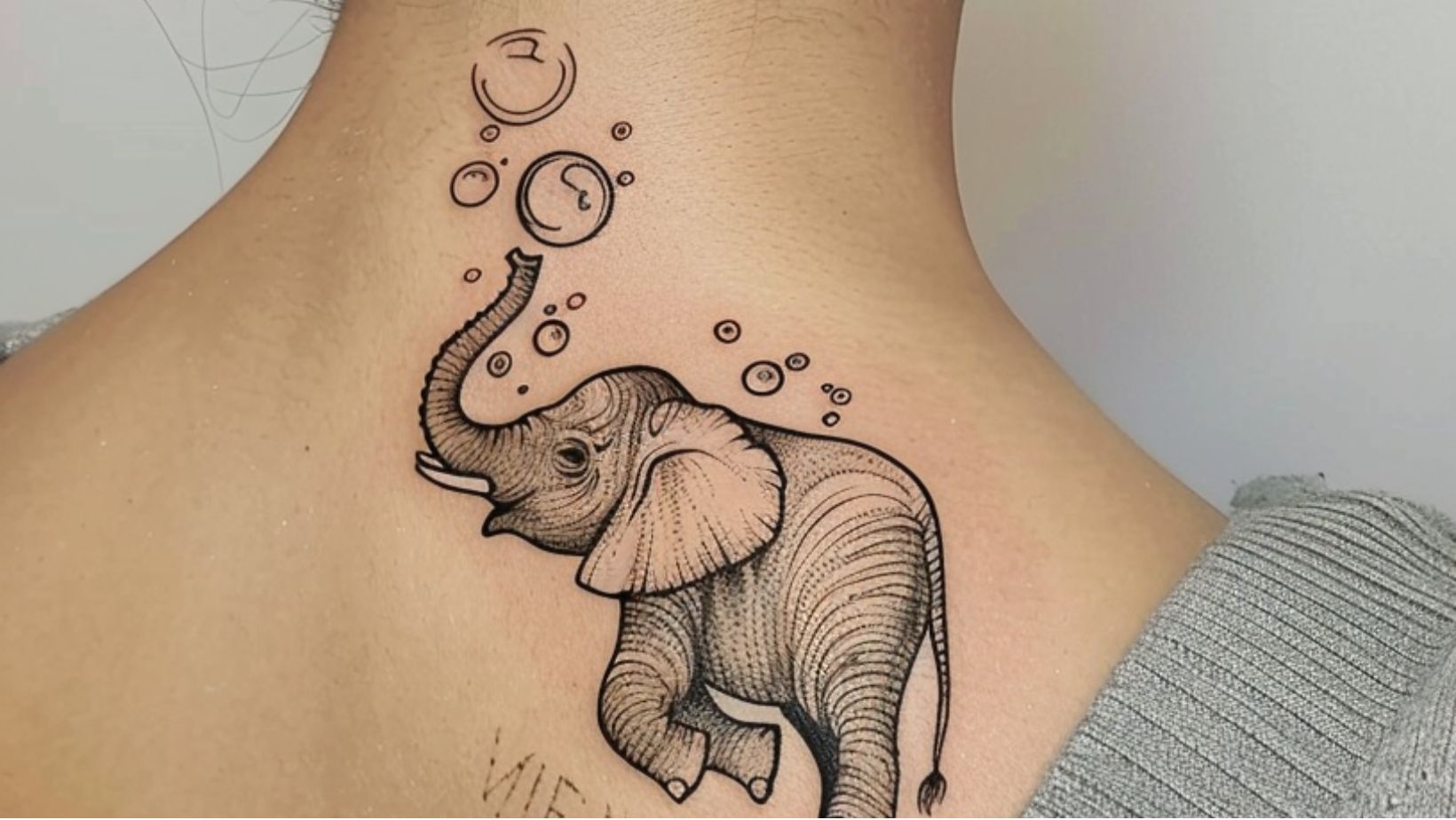
10. Bubbles and Elephant Neck Tattoo
A little elephant spraying bubbles from its trunk, usually placed behind the ear or on the side of the neck.
Bubbles are ideal for curved placements because they do not need to line up with anything. They scatter, and scattering hides the distortion a curve introduces.
Be honest with yourself about the placement first, though. The neck is visible in most workplaces and the pain is genuinely on the higher end — check the tattoo pain chart before you commit.
Small circles also need clean lines. If your artist’s bubble work looks wobbly in the portfolio, it will look wobbly on you.
Behind the ear is the gentler version if you want the design without the visibility.
11. Two Elephants Trunk to Trunk Tattoo
Two elephants facing each other with trunks touching or intertwined — the strongest non-verbal way I know to show a bond in a tattoo.
It works for partners, siblings and best friends, and it works as a matching pair split across two people.
If you do split it, get both halves drawn on the same day by the same artist. Matching tattoos done months apart rarely match.
The point where the trunks meet is the focal point, so that is where the heaviest line and any shading should go.
It sits well on the inner forearm, where the natural resting position of your arms brings the two elephants toward each other.
12. Superhero Elephant with Stars Tattoo
A cartoon elephant in a little cape with stars scattered around it. Pure fun, and I have tattooed it on more adults than kids’ parents.
Cartoon proportions are actually the technically safer choice at small sizes, because exaggerated features survive the softening that comes with age.
Keep the cape simple — two or three folds, not a full flowing drape. Detailed fabric is the first thing to blur.
Stars should vary in size and sit off-centre. Symmetry kills the playfulness here.
This is one of the few designs on the list where a bit of flat colour genuinely improves it.
13. Mandala Cute Elephant Tattoo
The most ambitious design here, and the one that most often gets ordered too small.
Mandala patterning inside or behind the elephant needs space to breathe. Under about five inches the dots merge and you lose the pattern entirely within a few years.
I would ask specifically for an artist who does dotwork regularly, not just an artist who is willing to try it. The spacing is a skill on its own.
Thigh, outer upper arm and upper back are the placements that give it the room it wants.
For pattern references beyond the elephant, the mandala tattoo ideas gallery is a good place to start.
Variations Worth Considering
If none of the 13 is quite right, these are the directions clients most often end up taking instead.
Origami and Geometric Elephants
Folded-paper elephants built from flat facets are having a long moment, and they hold up well because every shape is a straight line.
They read as modern rather than sweet, so they are a good compromise if “cute” feels too soft for you.
Silhouette with a Fill
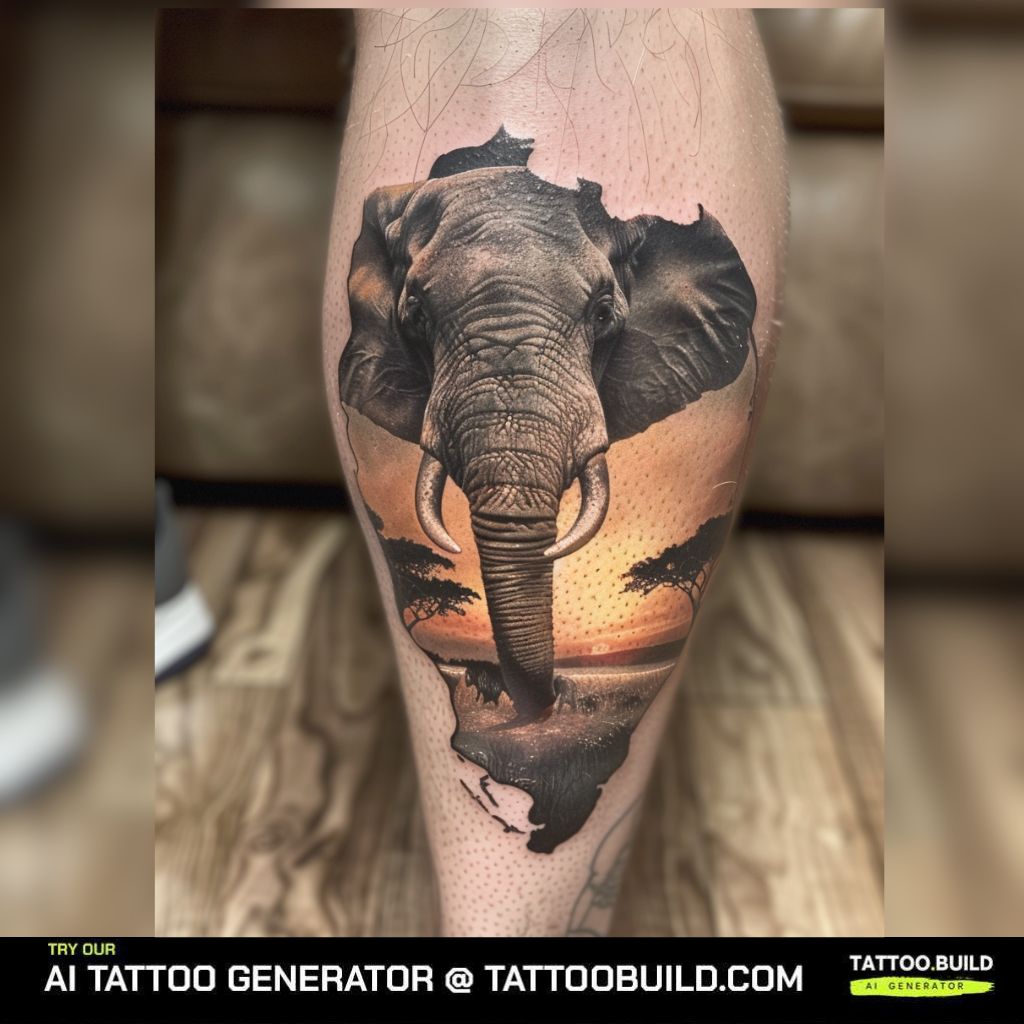
A solid black elephant shape with a landscape, a night sky or a colour wash inside it. Bold from a distance, detailed up close.
Just be aware that solid black takes longer to heal than outline work and looks patchy for the first couple of weeks. That is normal.
Scaling Up to a Sleeve
A single small elephant can be the anchor point for a much larger piece later, if it is placed with that in mind.
If there is any chance you will go bigger, tell your artist now — placement changes completely. The elephant sleeve tattoo gallery shows what that expansion can look like.
Abstract and Brushstroke Elephants
Loose, gestural elephants drawn in a few strokes suit people who want the animal implied rather than illustrated.
They are harder to execute than they look, and the abstract elephant tattoo guide is worth browsing before you brief an artist.
Getting a Cute Elephant Tattoo That Lasts
The single biggest factor in how a small elephant looks in ten years is line weight, not aftercare. That said, aftercare is the part you control.
Most artists I work with recommend keeping a fresh tattoo covered for the first day, then washing it gently twice daily with unscented soap and applying a thin layer of fragrance-free moisturiser. Follow your own artist’s instructions over anything you read online, including this.
Surface healing usually takes two to three weeks, though the deeper layers keep settling for a couple of months. Do not judge the final look before then — ink often looks slightly dull as the first skin layer flakes off.
Sun is the long-term enemy, particularly for anything with colour. Once healed, sunscreen on the piece whenever it is exposed. The American Academy of Dermatology has more general reference on how skin reacts to tattoo pigment.
If a tattoo stays red, swollen, hot or painful past the first few days, or if you develop a raised itchy rash around the ink, see a doctor. Infections and pigment allergies are both treatable, and neither is something to wait out.
Common Mistakes — and What to Do Instead
Almost every disappointing elephant tattoo I have seen came from one of these four decisions.
Going too small. A design with a trunk, an ear, four legs and a tail needs room. If you want something genuinely tiny, pick a simpler subject — the tiny wrist tattoo ideas has shapes that survive at that scale.
Copying a reference exactly. Bring three or four references and let the artist draw something new from them. Artists draw better when they are designing, not tracing.
Choosing the placement before the design. Decide what you want first, then find the spot that fits it. Doing it the other way around forces the design to shrink.
Budgeting by the inch. Small does not mean cheap — shop minimums exist for good reason, and a tiny detailed piece can cost more per inch than a large simple one.
Frequently Asked Questions
How big should a cute elephant tattoo be?
For a simple outline I would not go under about two and a half inches, and three is safer. Anything smaller and the trunk, ear and legs start to close up as the ink spreads over the years. Mandala and floral versions need five inches or more to keep their detail. Your artist can show you the stencil at two sizes so you can compare on skin before committing.
Does a cute elephant tattoo have a specific meaning?
Not a fixed one. The most common readings are family loyalty, memory, strength and good luck, and which one applies depends entirely on the wearer. The trunk-up-for-luck idea is folklore rather than any established tradition, so do not feel bound by it. If the meaning matters to you, decide what it means before you book, not after.
Where does a small elephant tattoo hurt least?
The outer forearm, outer thigh and upper arm are generally the most comfortable spots, since they have more muscle and fewer nerve endings close to the surface. Ribs, sternum, feet, ankles and the neck sit at the painful end. Pain tolerance varies a lot between people, so treat any pain chart as a rough guide rather than a promise.
How long does a cute elephant tattoo take to finish?
A small outline is usually done in under an hour, including stencil time. A detailed four-inch piece with shading or florals typically runs two to three hours. Large mandala or back pieces often need more than one session. Ask for a time estimate when you book so the deposit and the appointment length match the work.
Will a fine-line elephant tattoo blur over time?
Some softening is normal for any tattoo, and fine line shows it soonest because there is less ink holding the shape. A well-executed fine-line piece on a good placement can still look sharp for years, but expect a touch-up at some point. Sun exposure and high-friction placements speed the process up. Heavier linework is the trade-off if longevity is your priority.
Quick Summary
- Cuteness comes from proportion — big head, short legs, curled trunk — not from added hearts or stars.
- Go one size up and one line weight heavier than feels necessary; nobody regrets that choice.
- Fine line is the softest option but ages fastest; bold traditional lasts longest.
- Mandala and dotwork elephants need five inches or more to keep their pattern readable.
- Family lines need an obvious size drop between elephants, and space left for future additions.
- Pick the design first, then the placement — not the other way around.
- Follow your artist’s aftercare instructions, and see a doctor for anything red, hot or swollen past a few days.
Generate Your Next Tattoo Design
Still shaping the idea? Our AI Tattoo Image Generator lets you describe the elephant you have in mind and see it drawn in seconds.
It is a sketching tool, not a replacement for an artist. Use it to get the pose and composition roughly right, then hand the result to a tattooer who can redraw it properly for your body.