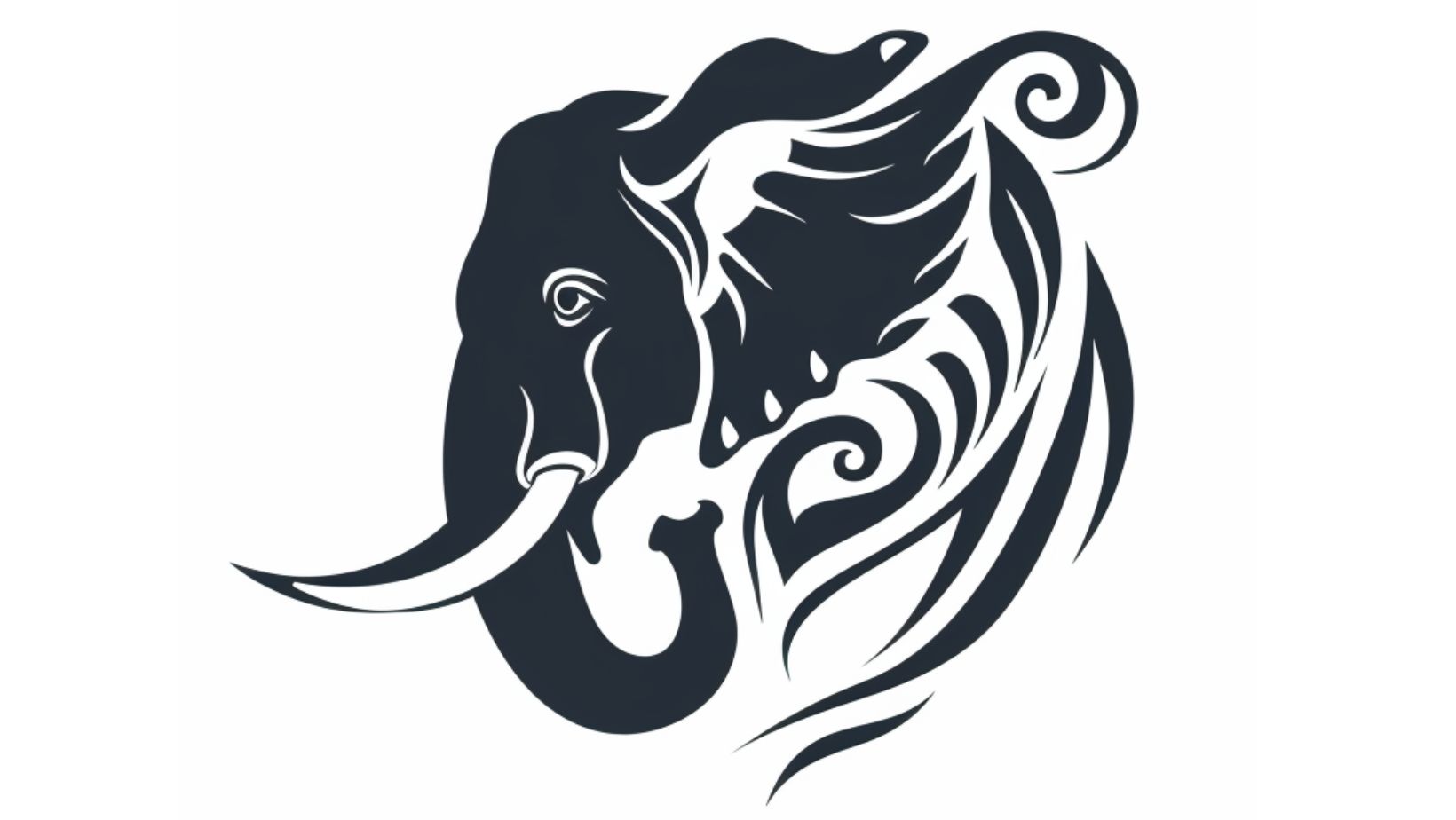
I have looked at a lot of elephant tattoos over the years, and the realistic ones start to blur together after a while. The abstract ones never do.
An abstract elephant tattoo keeps the animal recognisable while letting the artist strip, fracture or reassemble everything else — and that gap between shape and suggestion is exactly where the design gets interesting.
Every artist I have asked about these designs says the same thing: the elephant is one of the easiest animals to abstract because the silhouette does so much work. Trunk, ears, tusks. Three shapes and the brain fills in the rest.
That means you can go as loose as you like — a few brush strokes, a scatter of dots, a broken geometric grid — and it will still read as an elephant from across a room. If you want the broader picture first, my guide to abstract tattoo ideas covers how this approach works across other subjects too.
Below are the designs I keep coming back to, sorted by the technique behind them rather than by body part, plus what I have learned about how each one actually ages.
Which Abstract Elephant Style Is Right for You?
The five approaches below are the ones I see most often in portfolios. They are not equally forgiving over time, which is the part most people skip past.
| Style | Best suited to | Rough session time | How it tends to age |
|---|---|---|---|
| Geometric / fractured | Forearm, calf, outer thigh | 3–5 hours for a palm-sized piece | Very well — solid lines and shapes hold their edges |
| Brushstroke / ink-wash | Upper arm, shoulder blade, ribs | 2–4 hours | Softens noticeably; the lightest washes fade first |
| Dotwork / stippled | Bicep, back, sternum | 4–7 hours — dotwork is slow | Good if dots are spaced; tight clusters can blur together |
| Blackwork / negative space | Forearm, thigh, chest | 4–6 hours | Excellent — the boldest of the group |
| Single continuous line | Inner arm, wrist, ankle | 1–2 hours | Depends entirely on line weight; hairline work spreads |
Session times are what artists have quoted me for mid-size work — your artist’s estimate for your specific design is the one that counts.
Why Abstract Works So Well on an Elephant
Abstraction only succeeds when the subject has a silhouette strong enough to survive being taken apart. The elephant has one of the strongest in the animal kingdom.
When I tested this on friends with rough sketches, almost everyone named the animal from the trunk curve alone, even when the ears and body were reduced to a handful of disconnected marks.
That is the whole engine behind these designs. The artist can delete two-thirds of the information and the piece still reads clearly — which is not true of, say, a horse or a deer. My collection of elephant tattoo drawings shows how much variation that single silhouette can absorb.
There is a meaning layer too, though I would not overstate it. Elephants are widely associated with strength, memory, family bonds and protection across a range of cultures, and in Hindu tradition Ganesha is the elephant-headed remover of obstacles.
What abstraction adds is room for your own reading. A photorealistic elephant means what an elephant means. A fractured one means whatever you decide the fractures are about — which is why so many people choose this route for pieces tied to grief, recovery or family.
In most cases the people I have spoken to picked abstract for aesthetic reasons first and found the personal meaning afterwards. That is a perfectly honest order to do it in.
Abstract Elephant Tattoo Ideas by Technique
The Abstract Elephant Face Study
This is the entry point for most people, and for good reason: the face carries the animal’s whole character.
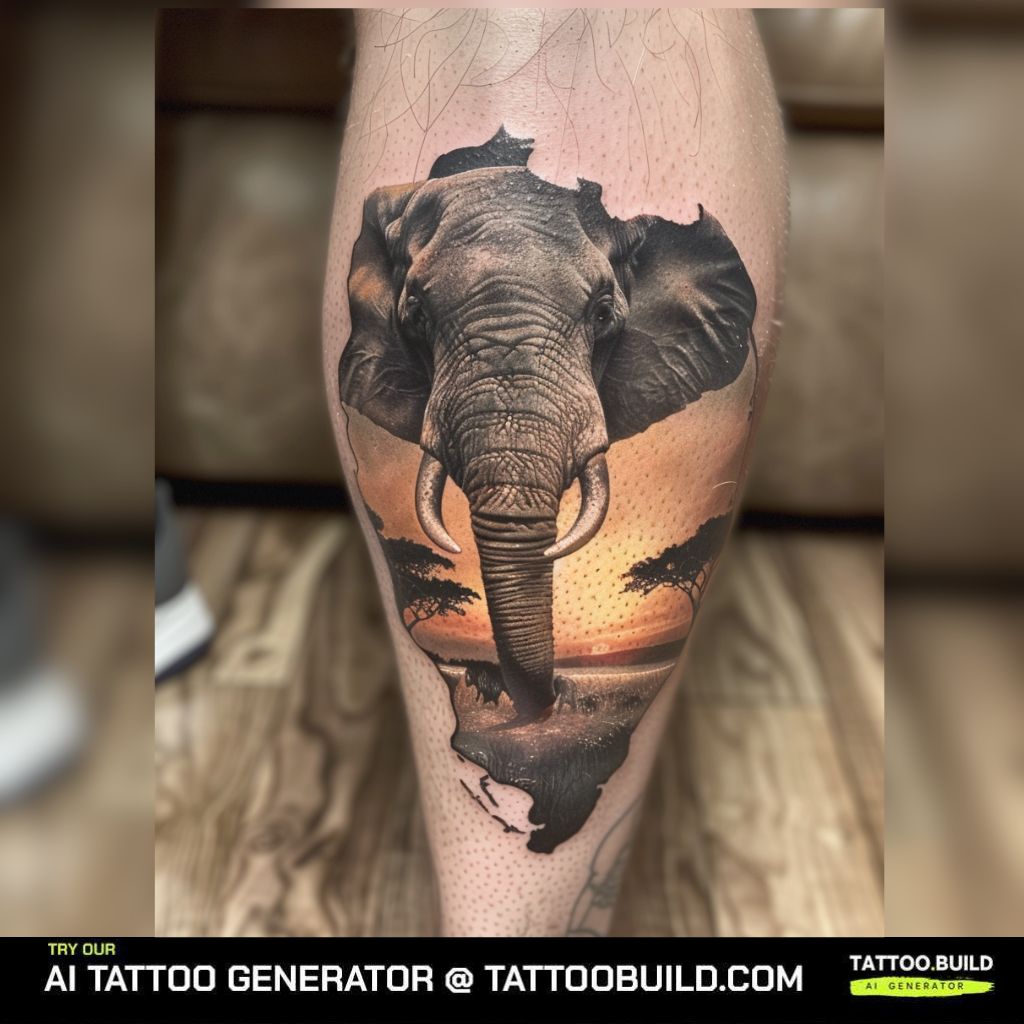
The strongest versions I have seen keep the eye and the trunk wrinkles rendered with real precision, then let everything outward from there dissolve — the ears especially.
What makes it abstract rather than realistic is that dissolve. The artist gives your eye one anchor of detail and asks it to do the rest of the work.
A practical note: the eye is the make-or-break element. If it is placed even slightly wrong the whole piece looks off, and no amount of good shading elsewhere rescues it. Ask to see healed photos of faces specifically, not just fresh ones.
Wrapped placements suit this well. On a calf or a bicep the curve of the limb does some of the work of the trunk, so the design sits on the body instead of being pasted onto it.
Geometric and Fractured Elephants
This is the most durable option in the group. Straight lines, hard angles and clean solid fills hold up better over a decade than anything soft, which is also true of geometric tattoo designs generally.
The usual approach breaks the elephant into planes — think low-poly modelling — or overlays it with a grid of triangles and arcs that only partly follow the animal’s real anatomy.
The trick is deciding which edges stay closed. If every plane is outlined the piece reads as busy; if too many are left open it stops holding together as an animal.
I have found the best geometric elephants keep the trunk and one ear fully closed as shapes, then let the body break apart. Your eye locks onto the two solid areas and forgives the rest.
Bicep and outer forearm placements are the natural fit here because both give you a broadly flat panel to work on. Curved, high-movement areas fight the straight lines.
Dotwork and Stippled Elephants
Stippling builds tone out of thousands of individual dots rather than solid shading, and on an elephant it does something no other technique manages: it mimics the actual texture of the skin. If the technique appeals, my dotwork tattoo ideas guide goes deeper on it.
Be realistic about the time. Dotwork is genuinely slow — a mid-size stippled elephant is usually a multi-session piece, and artists who specialise in it tend to book out further than average.
It is also the technique where artist choice matters most. Even dot spacing is a craft skill, and uneven spacing shows up years later as patchy grey rather than smooth gradient.
Ask specifically for healed dotwork photos at least two years old. Fresh stippling looks crisp on everyone; two-year-old stippling separates the specialists from the rest.
Blackwork and Negative Space
Here the artist fills large areas with solid black and lets your untattooed skin become the elephant. It is bold, it is graphic, and it is far and away the best-ageing option — the same reason blackwork designs stay legible for decades.
The catch is permanence of a different kind. Large solid black areas are the hardest thing to cover up or lighten later, so this is the style to be most certain about before you sit down.
Composition-wise, the strongest negative-space elephants I have seen use one continuous black mass rather than several patches. Broken-up black tends to read as a mistake rather than a choice.
Healing is also slightly more demanding. Densely packed black areas take more passes, which means more trauma to the skin and usually a little more oozing in the first few days.
The Full-Body Abstract Elephant
Everything above focuses on the head. Committing to the whole animal is a different proposition — you need real estate, and you need the pose to be worth it.
Profile poses work best because they show trunk, ear, tusk and leg silhouette all at once. Front-on elephants lose the trunk curve and tend to look flat.
The version I like most uses hard black patches for shadow and leaves the lit side almost untouched, so the animal appears to be stepping out of the dark rather than sitting on the skin.
Thigh, upper back and the outside of the calf are the usual homes for these. In my experience anything under about six inches tall loses the leg detail and stops being worth the extra surface.
Mandala and Pattern-Filled Elephants
This branch fills the elephant’s body with ornamental pattern — lotus forms, repeating petals, concentric rings — instead of shading it. It sits closest to the mandala tattoo tradition.
The pattern is not decoration for its own sake. Symmetry inside an asymmetric silhouette creates a tension that a plain black elephant simply does not have.
Where it goes wrong is density. Pattern packed edge-to-edge blurs into grey mush as it ages, so good artists leave deliberate breathing room between motif clusters.
If you like this direction, be honest with your artist about how much detail you want and let them talk you down. Every artist I have asked would rather simplify at the stencil stage than watch a piece close up over five years.
Variations Worth Considering
If none of the five main routes fits, these adjacent options come up often enough to be worth naming.
Single-Line Elephants
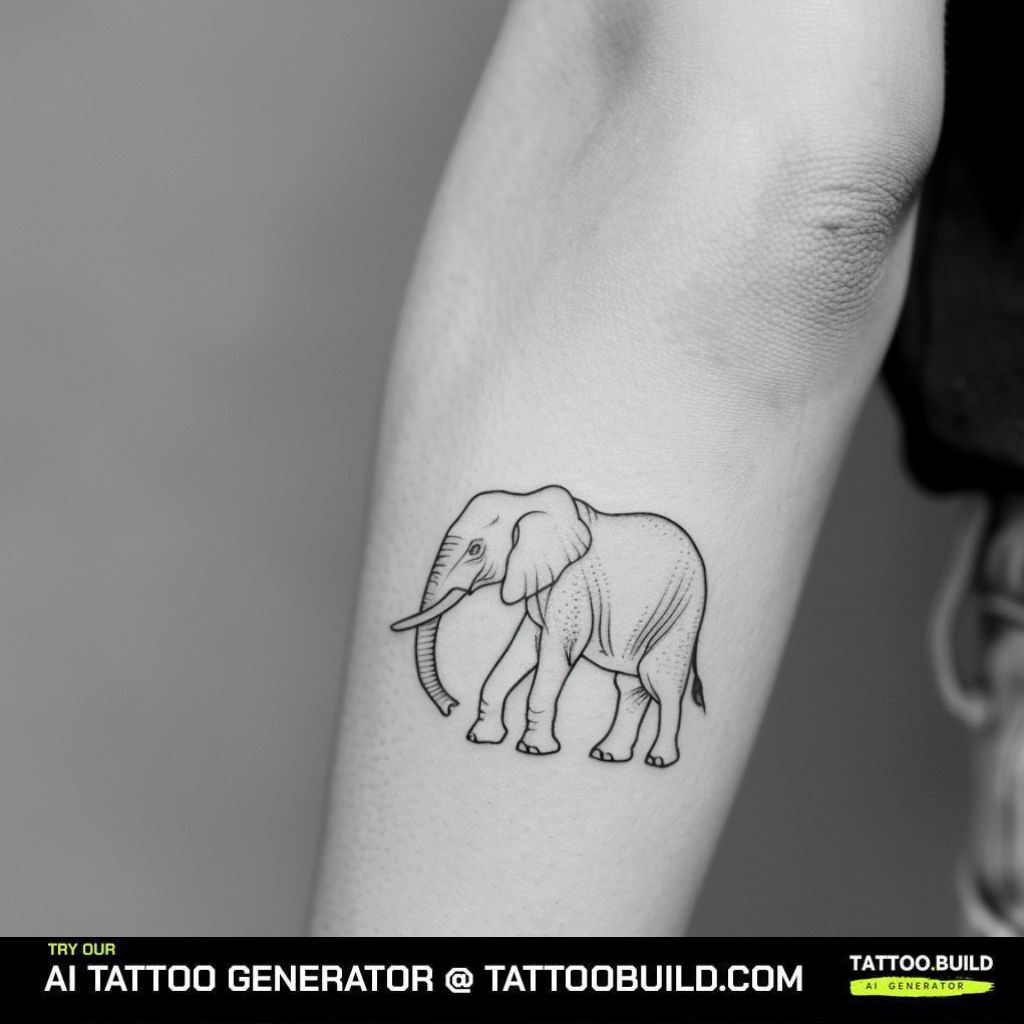
One unbroken line describes the entire animal. It is quick, it is elegant, and it suits small placements — the same logic behind most single line tattoo ideas.
The honest caveat: very fine single lines spread over time. Ask for a slightly heavier weight than looks right on paper, because paper does not blur.
Watercolour Splash Elephants
Colour washes bleeding out behind a black elephant silhouette. Striking on day one, and the most demanding to maintain of anything here.
Washes without a black anchor underneath fade fastest, so if you go this way insist on structural linework holding the shape together.
Elephant and Botanical Hybrids
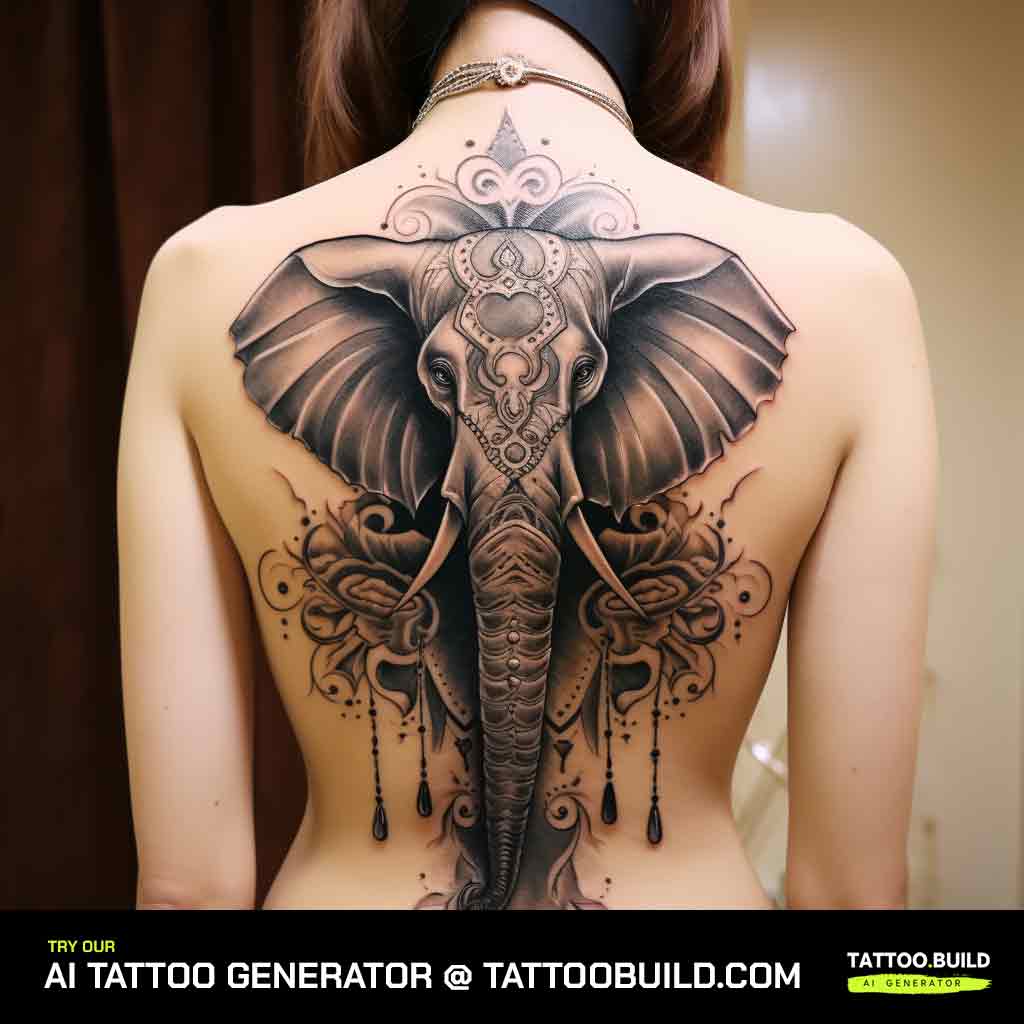
Trunks that resolve into branches, ears that become leaf shapes, tusks made of stems. This is where the leaf-style drawings in the images above come from.
It works best when one element wins — either the elephant reads first and the plants are texture, or the reverse. Fifty-fifty hybrids tend to read as neither.
Small Abstract Elephant Symbols
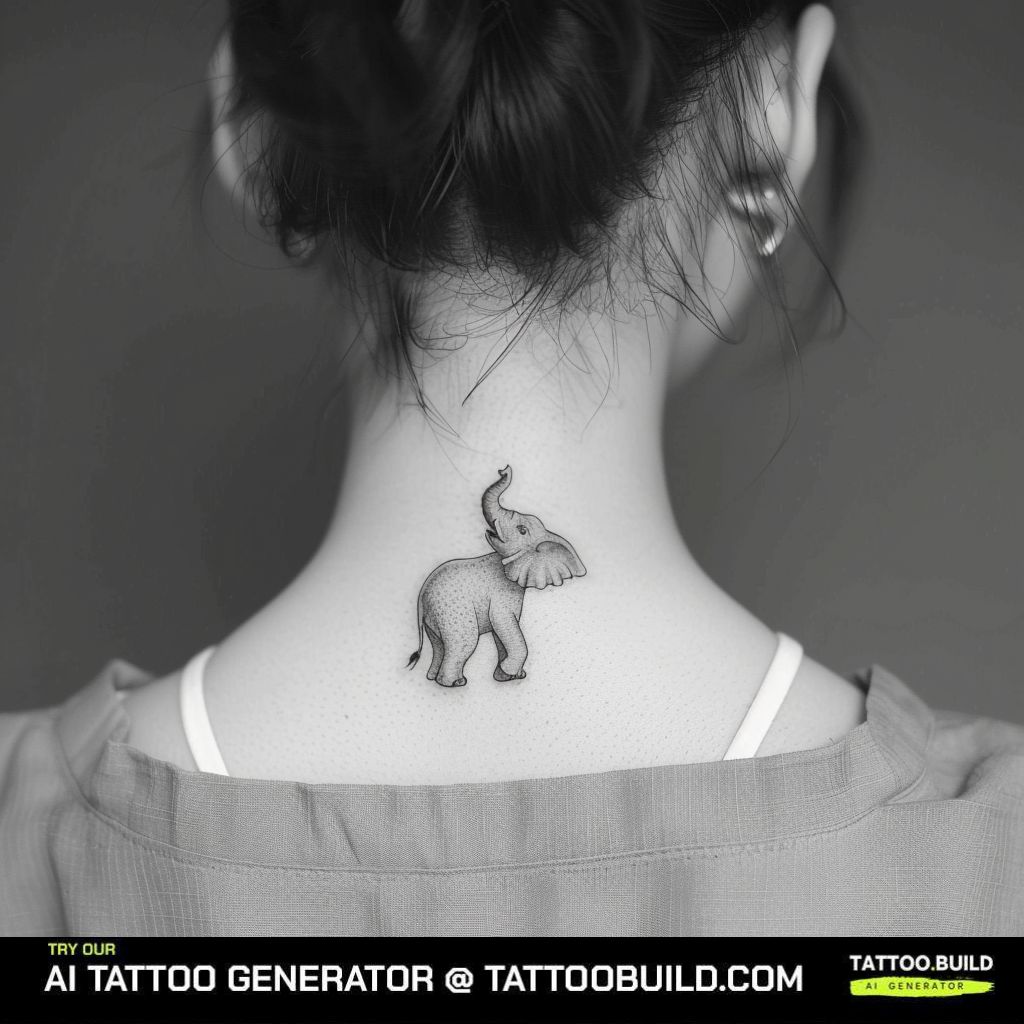
A trunk curve, an ear outline, a suggestion of tusks. Under two inches you are working with symbol rather than animal, which is fine if that is the intent.
Keep it to three or four marks. Small designs that try to carry detail are the ones people bring back for touch-ups first.
Practical Advice Before You Book
Placement drives pain more than style does. Fleshy areas like the outer thigh and bicep are consistently easier than ribs, sternum and the inside of the arm — the tattoo pain chart breaks it down by area if you are choosing between spots.
Bring reference images that show what you want and what you do not want. Telling an artist “abstract but not messy” means nothing without pictures attached.
For healing, follow whatever aftercare instructions your artist gives you rather than advice from the internet, including mine. The American Academy of Dermatology publishes general guidance that is worth reading alongside it, and the surface usually settles within a few weeks while deeper healing takes longer.
If you develop spreading redness, swelling that worsens after the first few days, pus, or a fever, stop treating it yourself and see a doctor — infections and ink reactions are both real and both treatable early. Mayo Clinic lists the risks in plain language, and the FDA covers ink safety and reactions. Nothing here is medical advice.
Never attempt a tattoo or a removal at home. Both belong with a licensed professional, and DIY removal in particular causes scarring that is far harder to fix than the original tattoo.
Still Not Sure? Common Mistakes to Avoid
The most frequent one is bringing a Pinterest image to a general artist rather than an abstract specialist. Abstraction is a compositional skill, not just a rendering style.
The second is going too small for the technique. Dotwork and mandala fill both need room; compressed into a two-inch space they become a grey blob within a few years.
The third is ignoring how the piece will sit with future work. If a sleeve is anywhere in your plans, think about flow now — sleeve filler work are far easier to plan around an existing anchor piece than to retrofit.
And if the abstract route is not landing for you, there are other directions with the same subject. The American traditional elephant tattoo keeps the same symbolism while being far bolder and more literal.
Test Your Design Before You Commit
The single most useful thing I do before any consultation is generate a rough visual of the idea, purely so I have something concrete to point at.
Tattoobuild’s AI tattoo generator produces both mockups on skin and plain-background designs, which is handy when you are trying to judge scale.
Treat the output as a conversation starter, not a stencil. Your artist should redraw anything you bring them — that redraw is a large part of what you are paying for.
Frequently Asked Questions
Do abstract elephant tattoos age well?
It depends almost entirely on the technique rather than the subject. Blackwork and bold geometric pieces hold up best, keeping their edges for decades with reasonable sun protection. Fine single lines, light watercolour washes and tightly packed dotwork are the ones most likely to soften or blur. Ask your artist to show you healed work in the specific style you want, ideally several years old.
How much does an abstract elephant tattoo cost?
Pricing varies enormously by artist, region and design complexity, so any figure quoted online will be wrong for someone. What is consistent is that dotwork and mandala fill take the most chair time, and chair time is what you are paying for. A palm-sized geometric piece is usually a single session, while a full-body abstract elephant on the thigh is often two or more. Get a quote in person after the artist has seen your reference.
Where is the best placement for an abstract elephant tattoo?
Forearm, bicep, outer thigh and calf are the most common, and all four suit the vertical proportions of an elephant’s head and trunk. Flatter areas work better for geometric designs because straight lines distort less. If you want the full animal rather than a head study, you generally need the thigh, upper back or a similarly large panel. Ribs and sternum are options too, but they are among the more painful spots.
What does an abstract elephant tattoo mean?
Elephants are widely linked to strength, memory, family loyalty and protection, and in Hindu tradition the elephant-headed Ganesha is associated with removing obstacles. Abstraction adds a personal layer on top of that, because the fragmented or incomplete forms invite your own interpretation. Many people I have spoken to read the broken elements as something they have come through. There is no fixed meaning — yours is the one that counts.
How long does an abstract elephant tattoo take to heal?
The outer skin usually settles within a couple of weeks for most people, while the deeper layers continue healing for longer, and heavy blackwork or dense dotwork often takes at the slower end of that range. Follow the aftercare instructions your own artist gives you, since they know exactly what they put into your skin. Keep it clean, keep it out of the sun, and do not pick at it. If you see spreading redness, worsening swelling, pus or a fever, see a doctor rather than waiting it out.
Quick Summary
- The elephant silhouette is strong enough that abstraction still reads clearly — trunk and ears do most of the work.
- Geometric and blackwork designs age best; fine lines, light washes and dense dotwork age hardest.
- The face study is the most popular starting point, and the eye placement makes or breaks it.
- Dotwork looks incredible but is slow and unforgiving — only book a genuine specialist.
- Negative-space blackwork is the boldest option and also the hardest to cover up later.
- Full-body designs need real estate; under about six inches the leg detail disappears.
- Flat panels like the forearm and bicep suit geometric work; curved areas suit flowing brushstroke styles.
- Follow your artist’s aftercare, and see a doctor for spreading redness, worsening swelling, pus or fever.