An elephant tattoo is one of the few animal designs that looks equally right at two inches and at two feet, which is why it keeps showing up on women’s arms, backs and ribs year after year.
I have sat in on more elephant consultations than I can count, and the conversation almost always starts the same way: she knows she wants an elephant, and she has no idea how big it should be.
That is the real decision. Not the meaning, not the style — the size, because size dictates which style is even possible on your skin.
This guide walks through what the design actually means, where it sits well on a female body, which styles hold up over a decade, and what it tends to cost. If you already know you want it on your arm, the elephant arm tattoo guide goes deeper on that placement alone.
Which Elephant Tattoo Style Is Right for You?
Every style below can be done well. The differences that matter are how much space it needs and how it looks in ten years.
| Style | Smallest size that works | Best placements | How it ages | Typical sitting |
|---|---|---|---|---|
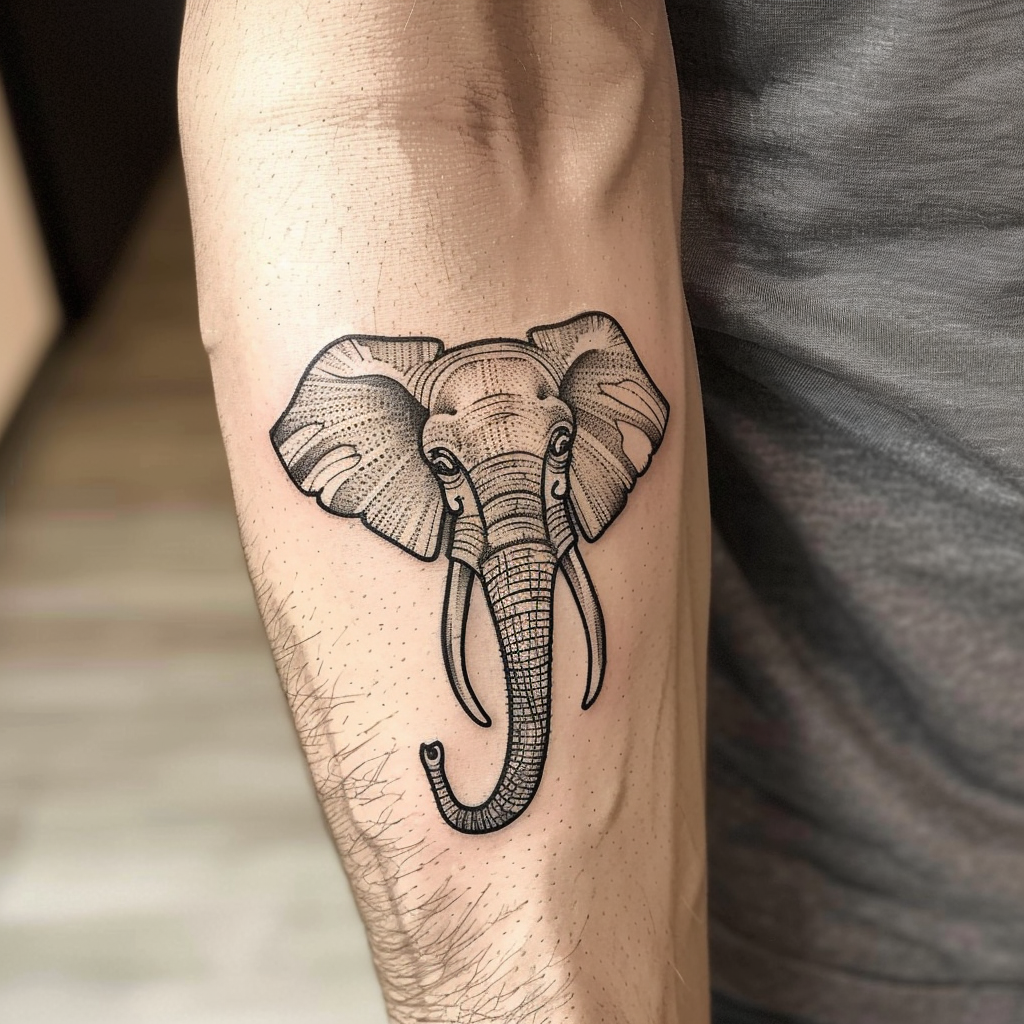
| Fine-line outline | 2–3 inches | Forearm, wrist, behind the ear | Softens noticeably; expect a touch-up | 1–2 hours |
| Ornamental / mandala | 4–5 inches | Thigh, upper back, outer arm | Very well if dots are spaced | 3–5 hours |
| Geometric | 3–4 inches | Forearm, calf, shoulder | Strong, if the linework is solid | 2–4 hours |
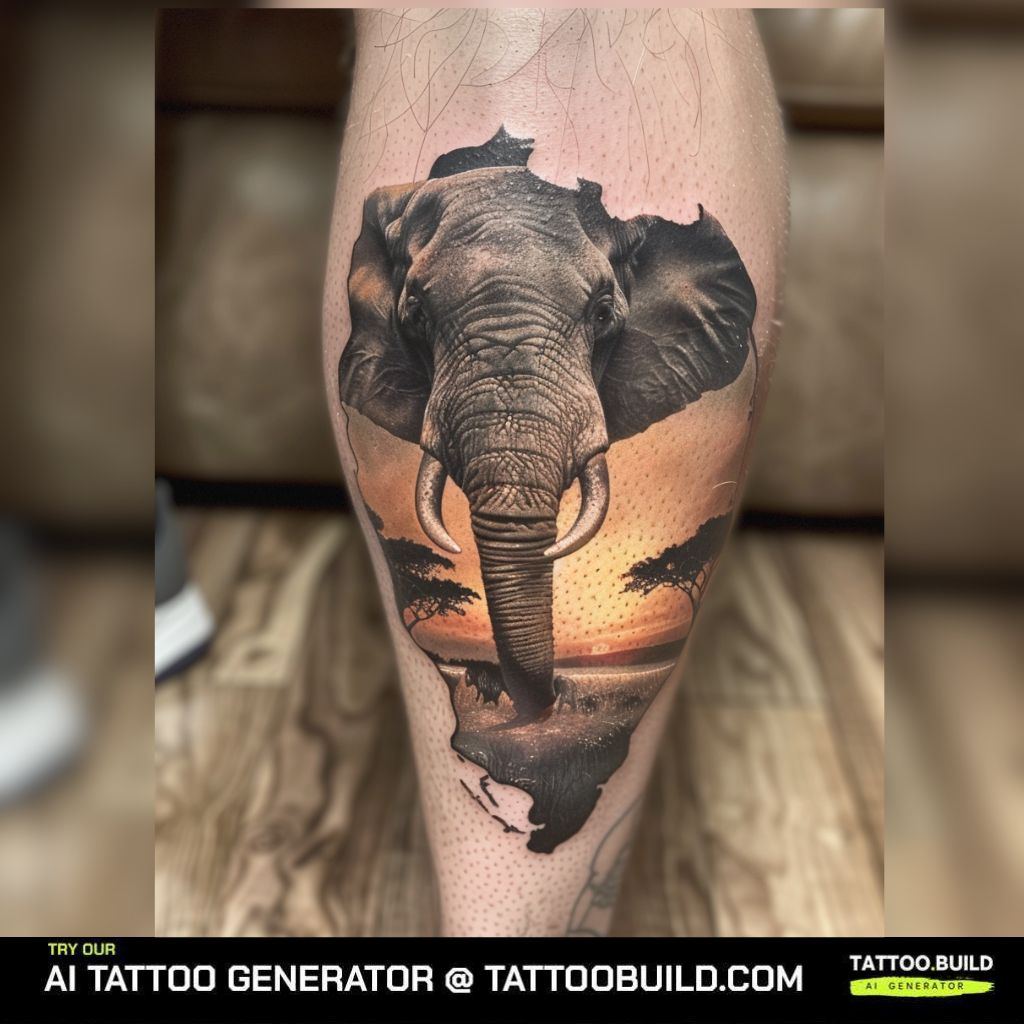
| Black-and-grey realism | 6 inches and up | Back, thigh, full upper arm | Best of the group, if shaded properly | 5–10+ hours, often multiple sessions |
| Neo-traditional colour | 4–5 inches | Thigh, upper arm, ribs | Bold and durable; colour needs sunscreen | 4–6 hours |
| Watercolour | 4 inches | Shoulder blade, thigh | Fades fastest of the six | 3–5 hours |
If you are choosing between two rows, pick the one with the larger minimum size. Elephants shrink badly — the ear and trunk detail is the first thing to blur.
What Elephant Tattoos Actually Mean for Women
The short answer most people give is strength, memory and family, and that is fair, but it flattens something more specific.
Elephant herds are matriarchal. The oldest female leads, remembers where the water is, and the group follows her through drought. That is the detail women bring up most often when I ask why they chose this animal.
So the symbolism women tend to mean is not raw power. It is protective authority — the kind that carries other people through a bad stretch.
There is also the Hindu association with Ganesha, the remover of obstacles. If that is your reason, say so at the consultation, because a Ganesha piece has its own iconography and is not interchangeable with a naturalistic elephant. Conservation groups such as Save the Elephants are also a common reason people cite, and some clients ask for a specific rescued elephant as reference.
One honest caveat: there is no single agreed meaning. Anyone who tells you an elephant tattoo means exactly one thing is selling you a design, not a symbol.
Trunk direction is the one convention worth knowing. A raised trunk is widely read as good fortune, which is covered in detail in the trunk up elephant tattoo guide.
The Best Placements for an Elephant Tattoo
Placement is where most regret comes from, not style. Here is how each area actually behaves.
1. Back and Spine
The back is the most forgiving canvas on the body for this design — flat, broad, and mostly out of the sun.
An elephant’s silhouette is wide at the ears and long at the trunk, which maps naturally onto shoulder width. Centring the head on the spine and letting the ears fill toward the shoulder blades is the layout I see work most often.
The trade-off is obvious: you will rarely see it yourself, and it needs a second person for aftercare. If a full back feels like too much, the ladies back tattoo ideas guide shows smaller ways to use the same space.
Pain on the spine itself is sharp because the bone sits close to the surface. The flat area either side of it is considerably easier.
2. Arm and Forearm
The forearm is the placement I recommend most to women getting their first meaningful tattoo.
You can see it every day, it heals quickly, and it takes fine-line work better than almost anywhere else.
Wrap the design around the arm rather than sitting it flat on the front — a flat elephant on a curved limb looks distorted from every angle except dead-on. Good elephant outline designs are built for exactly this.
The main limitation is sun exposure. Forearms fade faster than covered placements, and daily sunscreen genuinely extends the life of the linework.
3. Upper Arm and Shoulder
The upper arm is the compromise placement: visible when you want it, covered by a t-shirt when you do not.
It is also one of the least painful areas, because there is real muscle between the needle and the bone.
The shoulder cap curves in two directions at once, so the stencil has to be placed with your arm in a neutral position and checked while you move. The elephant shoulder tattoo guide covers how artists handle that curve.
Keep the elephant angled slightly rather than perfectly upright here. A vertical design on a rounded shoulder always looks like it is sliding off.
4. Thigh and Calf
The thigh is the most underrated placement for a large elephant piece, and it is the one I suggest when someone wants realism but is nervous about pain.
There is more surface area on an outer thigh than on most backs, the skin is thick, and it is fully covered by default.
The calf takes heavy black shading well and sits on flat muscle, so it holds detail over time. Both options are covered in the elephant leg tattoo guide.
Be realistic about healing. Legs swell more than arms, and sitting through a work day with a fresh thigh piece under jeans is genuinely unpleasant for the first three days.
5. Ribs and Sternum
Ribs give you a long vertical space, which suits an elephant standing in profile or a trunk curving downward.
It is also the most painful placement on this list by a wide margin. Thin skin, bone directly underneath, and the movement of breathing all work against you.
Plan for shorter sessions than you think you need. Most people manage two to three hours here before the skin stops taking ink cleanly.
Rib work also stretches with weight change more than arms or calves do, which is worth factoring in if that is likely for you.
6. Wrist, Ankle and Behind the Ear
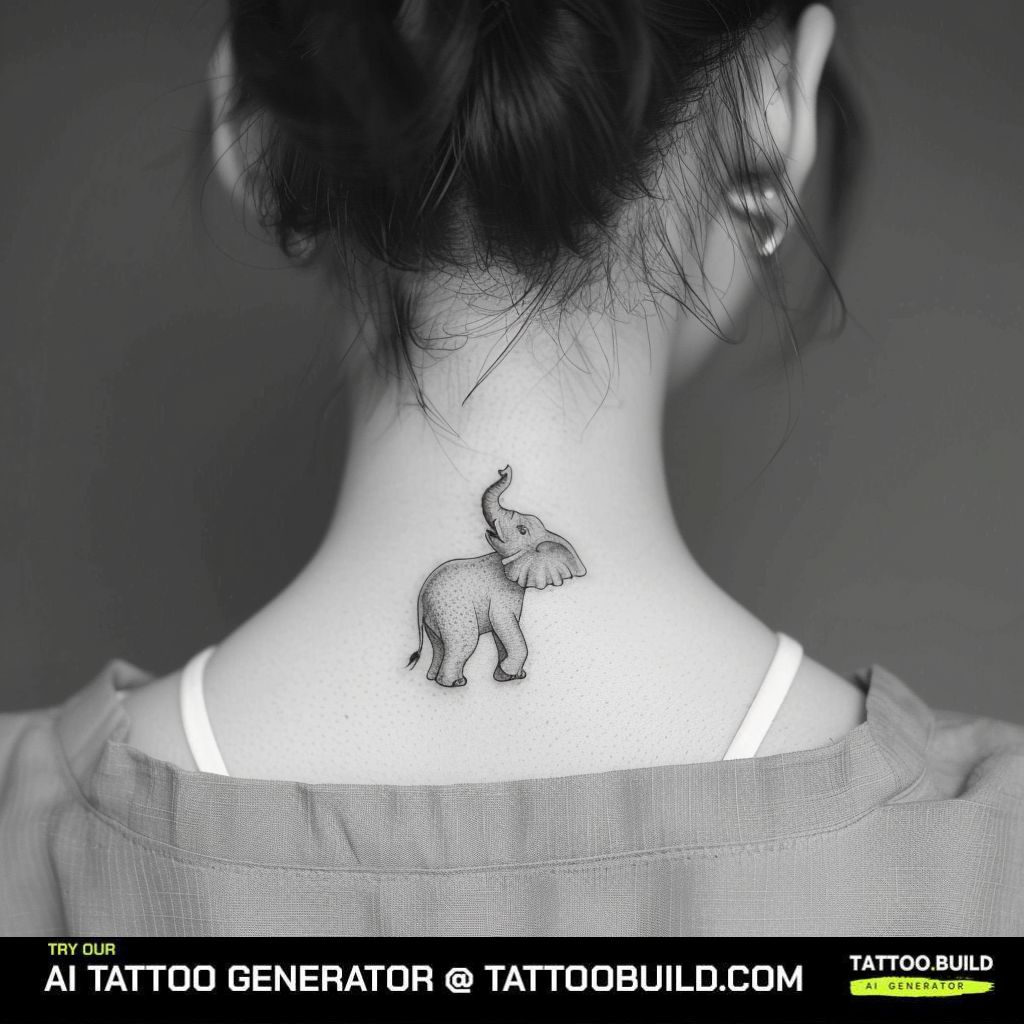
These are the placements for a small, simple elephant — and the word simple is doing real work in that sentence.
At this size you get an outline, maybe a suggestion of an ear fold, and nothing else. Any attempt at shading will close up within a few years.
Hands, wrists and ankles also fade faster than anywhere else because of constant friction and washing. The cute elephant tattoo ideas page is built around designs that survive at this scale.
If you love the idea of a tiny elephant, ask your artist to draw it at the size you want rather than shrinking a larger design. Those are not the same drawing.
Popular Elephant Tattoo Styles and Variations
These five come up in almost every consultation I have watched.
Elephant and Lotus
This is the most requested combination, and it works because the shapes complement each other — the round ear against the pointed petals.
The lotus adds a second layer of meaning: growth out of difficult conditions. If you want to understand what you are pairing it with, the lotus flower tattoo designs guide breaks down the variations.
The common mistake is giving both elements equal weight. Pick one as the focal point and let the other frame it, or the design reads as two separate tattoos sharing skin.
Ornamental and Mandala
Here the elephant’s ear becomes a panel for dotwork, and the design shifts from animal portrait to decorative object.
It ages better than most people expect, on one condition: the dots must be spaced. Tight stippling merges into a grey smudge over ten or fifteen years, and there is no fixing it afterwards.
Ask to see a healed photo of the artist’s dotwork, not a fresh one. Fresh dotwork always looks crisp.
Geometric
Geometric elephants break the form into triangles and hard lines, usually with the trunk as the strongest diagonal.
It suits people who want something meaningful without it looking literal, and it holds up well because clean straight lines age predictably. The geometric tattoo designs guide shows how the underlying grids are built.
The risk is coldness. A purely geometric elephant can lose the softness that made you want an elephant in the first place, so many artists keep one organic element — usually the eye.
Black-and-Grey Realism
This is the most demanding style on the list and the one where artist choice matters more than anything else in this article.
Realistic elephant skin is all folds and texture. An artist who cannot render that will give you a grey blob with tusks. Look specifically at healed animal work in a portfolio, not flowers. The black and grey tattoo ideas gallery is a reasonable starting reference.
Expect multiple sessions and a real price. Good realism is not a one-afternoon tattoo.
Baby Elephant and Mother-Calf Pairs
A mother walking with a calf is the design women most often choose to mark a child, a sibling or a parent.
It reads clearly even at moderate size because the silhouette does the storytelling — you do not need facial detail for the relationship to land.
If you are planning to add more calves later, tell the artist now. Composition that leaves room is easy; retrofitting it is not.
Aftercare and Practical Tips
Aftercare is the part clients skim and then regret. It is also the only stage where you, not the artist, control the outcome.
Follow the written instructions your studio gives you — they know their inks and your local climate. General guidance from the American Academy of Dermatology is a sensible cross-check, and the FDA fact sheet on tattoo inks is worth reading if you have reactive skin.
Keep it out of the sun for the first month and out of submerged water — baths, pools, hot tubs, lakes — until it has fully closed over. Showers are fine.
Some redness, warmth and clear weeping in the first couple of days is normal. Spreading redness, swelling that worsens after day three, pus, or a fever is not. See a doctor rather than asking your artist or the internet — infections are a medical problem, not a tattoo problem.
If you have a history of ink allergies, keloid scarring, or you are on medication that affects healing, raise it before you book. A good artist would far rather patch-test than fix a reaction.
Still Not Sure? Common Mistakes to Avoid
These are the five I watch people walk into most often.
Going too small for the style you picked. A realistic elephant at three inches is not a small realistic elephant — it is a blur waiting to happen.
Choosing the artist by price rather than portfolio. A cheap elephant costs the price of the tattoo plus the price of the cover-up, and the second bill is always the bigger one.
Bringing a single reference image and asking for a copy of it. Bring three or four, explain what you like in each, and let the artist draw something that fits your body.
Booking a rib or spine piece as a first tattoo. It is doable, but starting somewhere forgiving teaches you how you handle the needle before you commit to eight hours on bone.
Forgetting sunscreen once it is healed. Sun is the single biggest cause of faded linework, and it is entirely preventable.
Frequently Asked Questions
What does an elephant tattoo mean for a woman?
Most women choose it for strength, memory, protection and family bonds, drawn from the matriarchal structure of real elephant herds where the oldest female leads the group. In Hindu tradition the elephant is also linked to Ganesha, the remover of obstacles. Some people add a raised trunk specifically as a good-luck symbol. There is no single fixed meaning, though — in my experience the meaning is whatever you bring to it, and your artist should be building the design around your reason rather than a generic one.
Where is the best place for a woman to get an elephant tattoo?
The forearm and upper arm are the easiest starting points: visible, moderately painful, and quick to heal. For anything detailed or realistic, the back and outer thigh give the design room to work, which matters more than almost any other factor. Ribs and the spine look striking but hurt considerably more. If you want something small, stick to the wrist, ankle or behind the ear and keep the design to a clean outline.
How much does an elephant tattoo hurt?
It depends far more on placement than on the elephant itself. Upper arm, outer thigh and calf are the gentlest areas because muscle sits between the needle and the bone. Ribs, spine, sternum, ankle and the inner arm are noticeably sharper since the skin is thin and bone is close. Most people describe a manageable scratching burn rather than sharp pain, and eating properly beforehand makes a real difference to how long you can sit.
How much does an elephant tattoo cost?
Shops usually price either by the hour or by a flat rate for the piece, and rates vary enormously by city and by artist demand. A small outline is typically a shop minimum job; a detailed black-and-grey back or thigh piece runs into multiple sessions and a much larger total. Ask for a written quote at the consultation, including whether a touch-up is included. Be wary of a quote that is far below everyone else’s — that gap usually shows up in the healed result.
Are small elephant tattoos a good idea?
Yes, as long as the design is drawn for that size rather than shrunk down from a larger one. At two or three inches you get an outline and very little else, so anything with fine internal shading will blur within a few years. Ask your artist to sketch it at actual size on paper first and look at it on your skin. Small tattoos on hands, wrists and feet also fade faster because of constant friction and washing, so budget for a touch-up.
Quick Summary
- Decide size before style — realism needs six inches or more, fine line works from two or three.
- Elephants symbolise strength, memory, protection and family, rooted in matriarchal herd behaviour.
- Forearm and upper arm are the most forgiving placements; back and thigh give detailed work the room it needs.
- Ribs, spine and ankle look excellent but are the most painful options by a clear margin.
- Elephant-and-lotus, ornamental mandala, geometric and black-and-grey realism are the four most requested styles.
- Judge an artist on healed animal work in their portfolio, not on fresh photos or price.
- Keep it out of sun and submerged water while healing, and see a doctor — not a forum — for any sign of infection.
- Sunscreen after healing is the single cheapest thing you can do to keep the linework sharp.