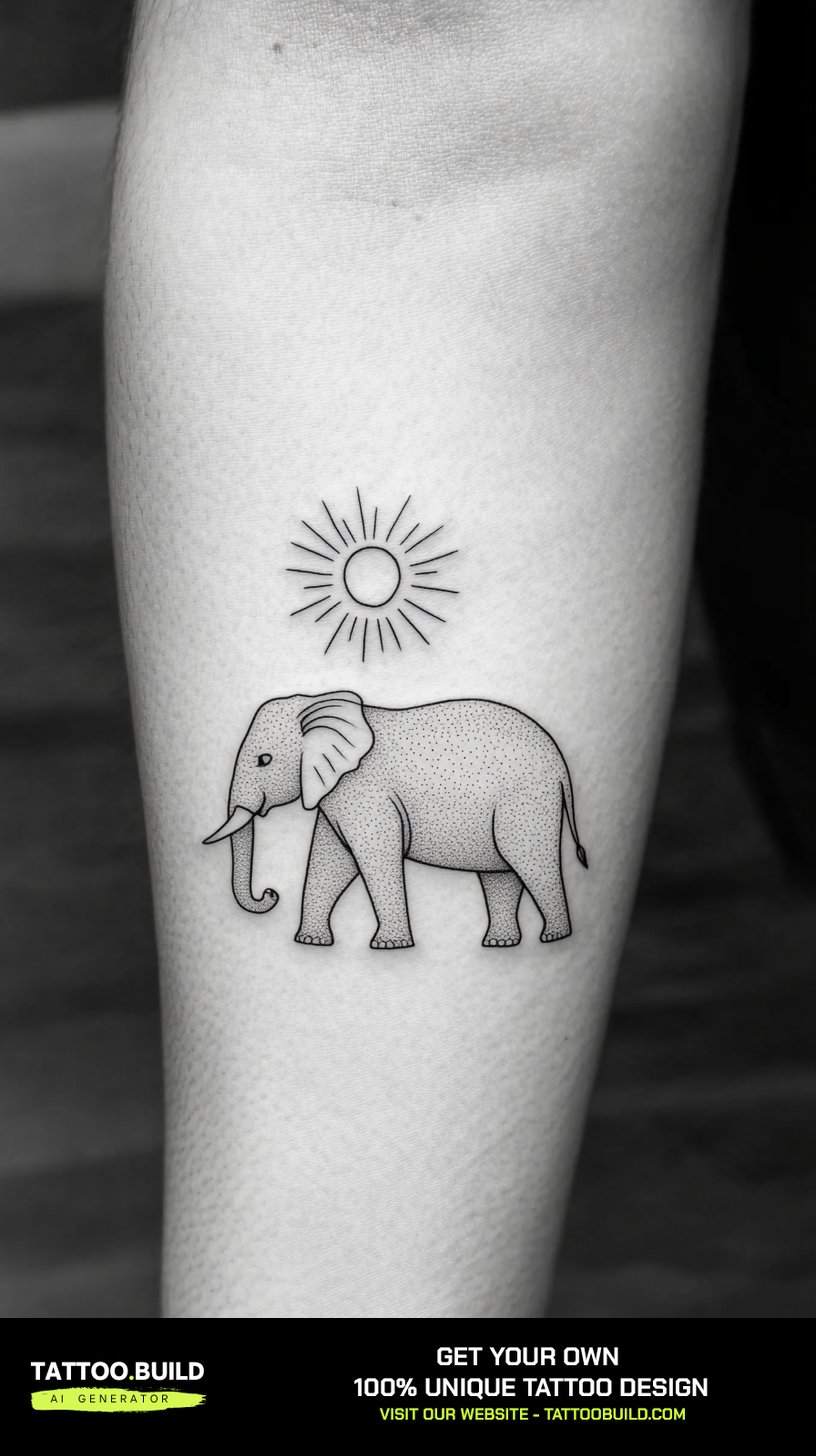
I have spent a lot of time looking at elephant tattoos, and the ones that hold up years later are almost never the heavily shaded ones. An elephant outline tattoo works because the animal already has one of the most recognisable silhouettes on earth — the ears, the arc of the back, the trunk — and outline work lets that shape do all the talking.
Strip away the rendering and you are left with the thing that made you want the tattoo in the first place.
This guide collects thirty-four outline elephant designs I have gathered and sorted, from two-inch wrist pieces to full thigh portraits. Along the way I will be honest about which ones age well, which ones need a bigger canvas than people expect, and where the linework tends to fail first. If you like this approach in general, the same logic runs through most good fine-line tattoo ideas.
Save the ones that stop you, then take three or four to your artist. That is a far more useful conversation than walking in with a single reference and hoping.
Which Elephant Outline Style Is Right for You?
Before scrolling through designs, it helps to know which family you are actually shopping in. These four cover most of what people end up booking.
| Style | Smallest size that works | Rough session time | Best for | Ages |
|---|---|---|---|---|
| Minimal silhouette | 2–3 in | 30–60 min | First tattoos, wrists, ankles | Very well |
| Fine-line portrait | 4–5 in | 2–4 hrs | Forearms, upper arms | Needs touch-ups |
| Geometric / dotwork | 4 in | 2–5 hrs | Thighs, calves, outer arms | Well, if spaced |
| Ornamental / mandala | 6 in+ | 5–10 hrs | Backs, thighs, shoulders | Well at scale |
The size column is the one people argue with and then regret ignoring. Every artist I have asked has the same complaint: clients bring in a detailed reference and ask for it at half the size the drawing needs.
Why Outline Work Suits Elephants So Well
Elephants are unusually forgiving subjects for line-only tattoos, and it comes down to structure.
The ears give you two large, simple shapes. The trunk gives you a single sweeping curve. The tusks give you contrast. That is a complete composition before you have drawn a single detail.
Compare that to something like a wolf or a lion, where the whole read depends on fur texture — remove the shading and you often lose the animal entirely. An elephant survives the reduction.
There is also the meaning side, which I think matters more here than with most animals. Elephants are genuinely long-lived, highly social animals with well-documented family bonds and memory, as the World Wildlife Fund describes. Most people getting one are thinking about family, memory or resilience rather than aesthetics alone.
And practically speaking, less ink means less trauma to the skin, shorter sessions and usually a lower price. In most cases an outline piece heals faster than a comparable filled design, though that varies by placement and by person.
Elephant Outline Tattoo Ideas, Sorted by Style
Here is the full set, grouped so you can jump to whichever direction you are leaning.
1. Minimal Single-Line Silhouettes
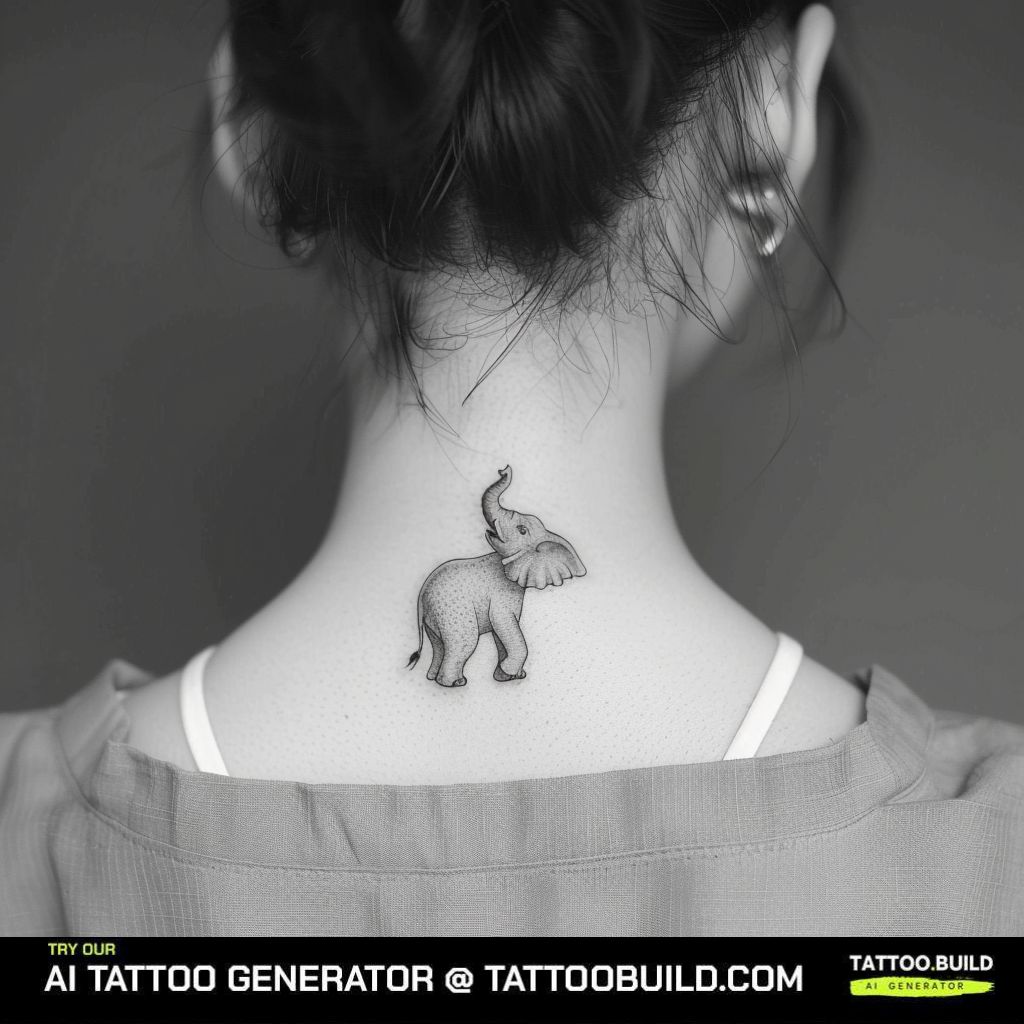
This is the smallest, cheapest and most durable version of the idea, and it is where I usually point people who are nervous.
A profile elephant drawn in one consistent line weight will still read clearly in twenty years, because there is nothing fine enough to blur. Most of these sit comfortably at two to three inches.
The mistake to avoid is adding “just one more” detail. Every extra line in a small piece is a line that will eventually merge with its neighbour as the ink spreads slightly under the skin.
When I tested a few of these against the same designs at half scale on paper, the difference was obvious immediately — the small versions lost the leg separation first. If you want more in this direction, browse minimalist tattoo ideas and cute elephant tattoo designs.
2. Elephants and Trees
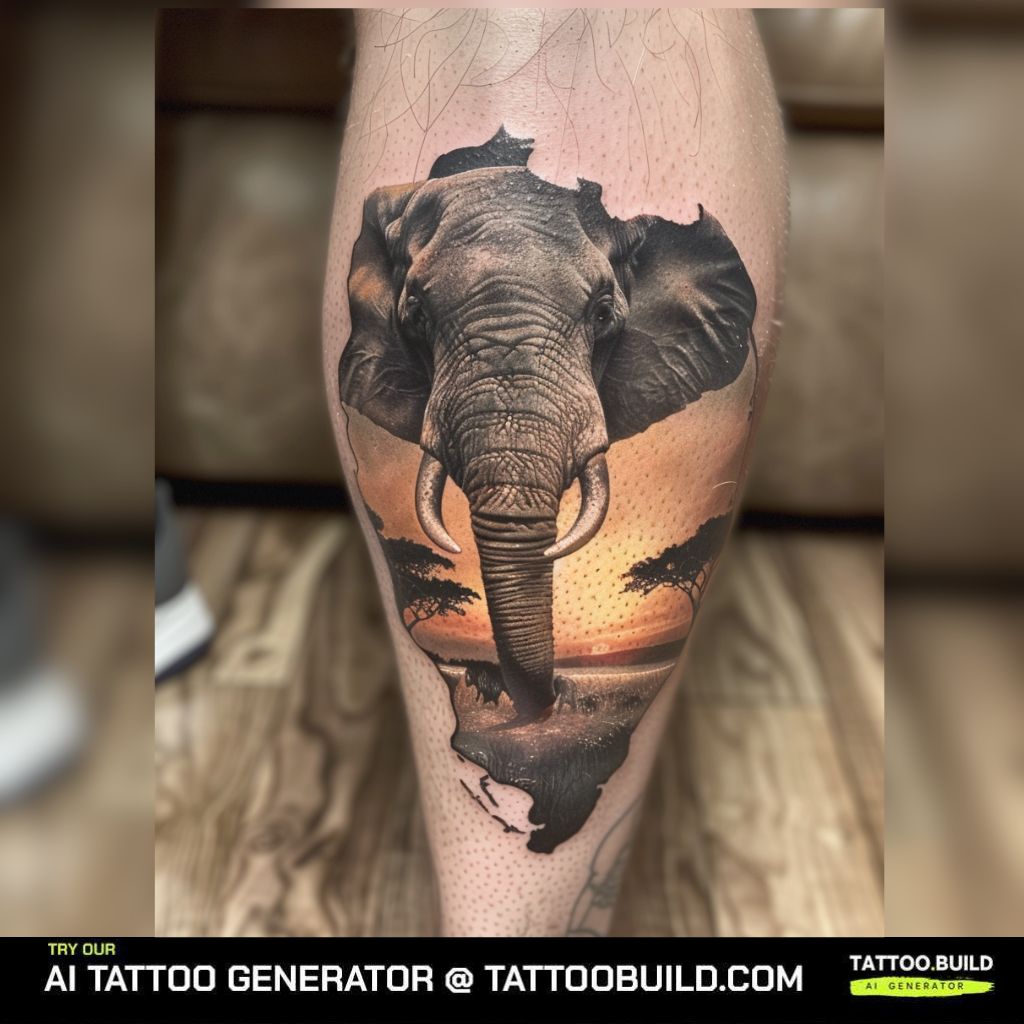
Pairing an elephant with a tree is the most common narrative version of this tattoo, and it is popular for a reason.
The tree gives you somewhere to put visual density without touching the elephant. Canopy detail can be as heavy as you like while the animal itself stays clean.
Acacia silhouettes read as savanna instantly. Broader canopies read more like a family tree, which is why this version turns up so often in memorial and family pieces.
Scale this one generously. In my experience, tree-and-elephant scenes under four inches turn into a grey smudge with an animal-shaped hole in it.
3. Geometric and Dotwork Outlines
Geometric elephants replace shading with structure — faceted panels, radiating lines, dotted gradients.
Done well, it is striking. Done carelessly, it looks like a low-polygon render, and the difference is entirely in how deliberately the junctions are placed.
Ask to see healed photos specifically, not fresh ones. Dotwork is the technique where the gap between “looks incredible on day one” and “looks muddy at year five” is widest.
Every artist I have asked about this says the same thing: leave more space between dots than feels right, because the ink will fill some of that gap on its own. There is more range in geometric tattoo designs and in abstract elephant tattoo styles.
4. Ornamental and Mandala Elephants
This is the maximalist end of outline work, and it is where the ears earn their keep.
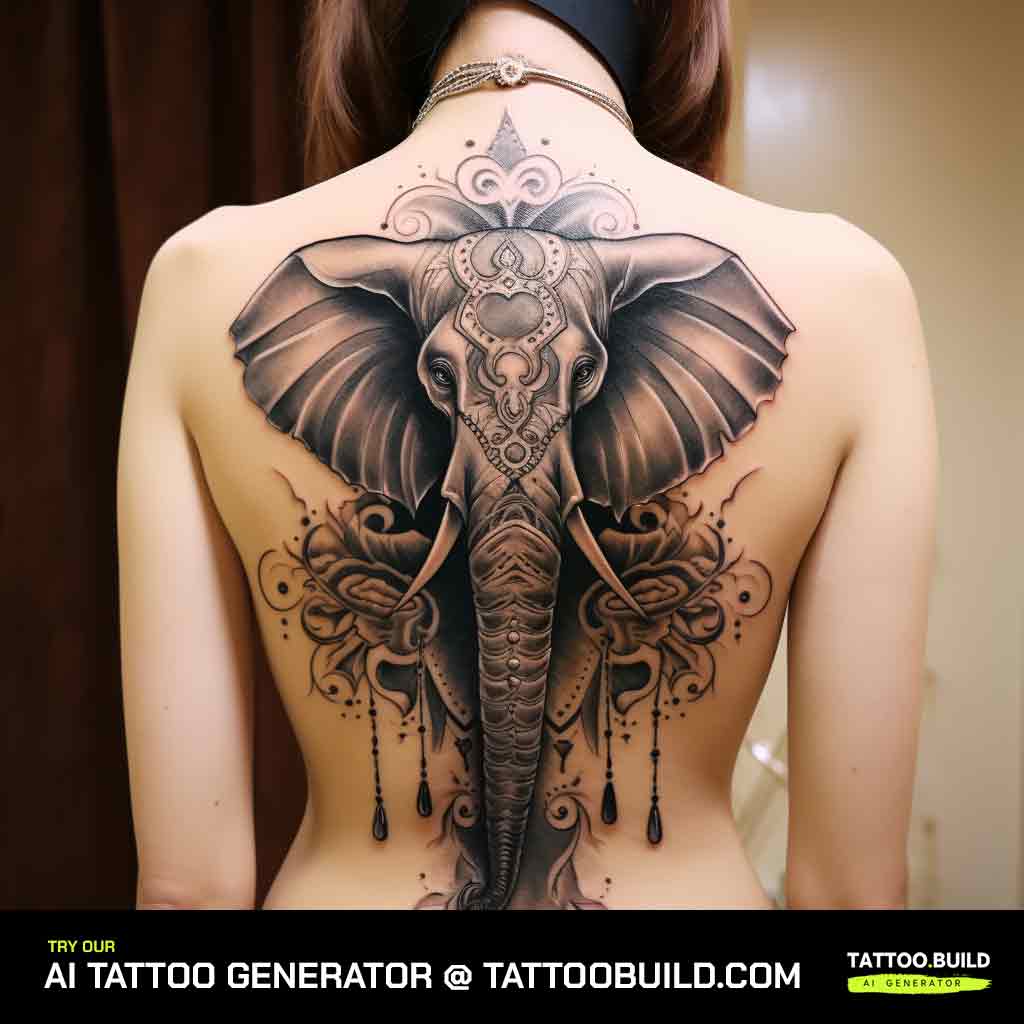
Patterning across the ears and forehead turns the elephant into a frame for ornamental detail. It draws on decorative traditions where elephants are already richly adorned, and it suits large flat placements — upper back, outer thigh, shoulder.
Be realistic about commitment. These are multi-session pieces, usually five hours and up, and they need an artist who works in ornamental specifically rather than one who is willing to try.
A circular frame around the design is the simplest way to make one feel resolved rather than unfinished.
5. Floral Elephant Portraits
If there is one dominant version of the elephant outline tattoo right now, this is it: a front-facing head with flowers growing around or over the ears.
It works because flowers and elephant ears are both large, soft, curved shapes, so they interlock naturally instead of competing.
The detail that separates a good one from a forgettable one is layering. Flowers placed on top of the ears keep the silhouette intact; flowers placed behind them flatten the whole thing.
Draw the blooms larger than feels necessary. Petal detail is the first thing to close up as a tattoo settles, and oversized flowers buy you years.
The same idea scales up beautifully onto the shoulder cap, where there is room for the florals to open out rather than being squeezed into a narrow limb.
6. Mother and Calf Designs
Two elephants, usually a larger head and a smaller one leaning into it. This is the version people book for a parent, a child or a sibling.
It is also the version most often ruined by placement. Two heads need width, and a forearm frequently does not have it without shrinking both animals past the point where either has personality.
Ask your artist to draw the stencil directly on the skin before you commit to the angle — the tilt of the calf’s head changes the emotional read of the whole piece more than anything else in it.
Shoulders and upper arms handle this composition far more comfortably than wrists or ankles do.
7. Bold Front-Facing Head Portraits
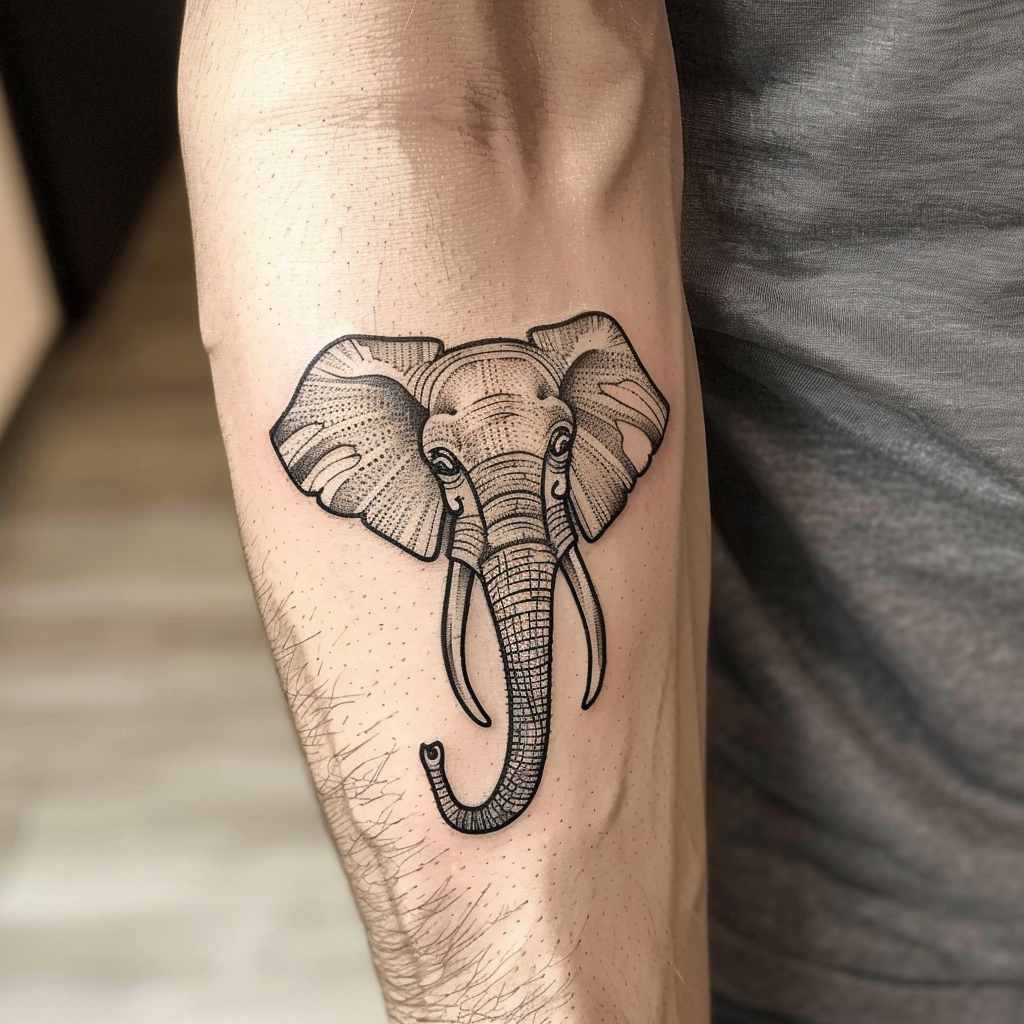
Stripped-back symmetrical heads: two ears, two tusks, a trunk down the centre and very little else.
These are harder to execute than they look. Symmetry is unforgiving, and any wobble in one ear is immediately visible next to the other.
The trade-off is that they age exceptionally well, because there is nothing delicate to lose. If you want a piece you will not have to touch up, this is the family to shop in.
Placement note: symmetrical designs want a flat-ish, symmetrical canvas. The centre of the forearm, the outer thigh and the sternum all work; the outside of a bicep tends to distort them.
8. Elephants with Water, Waves and Movement
Adding a wave, a splash or a trailing ornament solves a specific problem: outline pieces can float on the skin with no clear top or bottom.
A cresting wave over the back gives the design direction. A hanging pendant beneath the trunk gives it an anchor.
These flourishes are also where an artist can add movement without adding fill, which keeps the piece consistent with the rest of the outline approach.
When I tested variations of this on the same base drawing, the versions with a bottom anchor consistently looked more intentional — the floating ones read as unfinished sketches.
Variations Worth Considering
Same subject, different execution. Two directions that come up often enough to deserve their own section.
Larger Thigh and Leg Placements
The thigh is the most under-used canvas for this tattoo, and it is the one I would recommend to anyone wanting detail.
You get a large, relatively flat, low-movement surface, which means overlapping florals stay legible instead of collapsing into each other.
It is also easy to keep covered while healing, which matters more than people expect during the first two weeks.
Softer Greyscale and Shaded Outlines
Not everything has to be pure black line. A light grey wash behind a clean outline gives depth without abandoning the style.
This sits between outline and full black-and-grey, and it needs an artist who can keep grey work from going flat as it heals.
It is a good compromise if you want softness but do not want to commit to a fully rendered piece. For the fully committed version, look at elephant sleeve tattoo ideas.
Placement, Sizing and Practical Advice
A few things I would tell a friend before they booked.
Size up, always. The single most common regret with outline work is going smaller than the drawing needed. Ink spreads slightly over the years, and detail packed into a small area is detail you are borrowing against.
Match the shape of the design to the shape of the limb. Vertical compositions — a head with a trunk running down the centre — suit forearms and calves. Wide compositions suit shoulders, thighs and backs.
Consider how much the area moves and how much sun it gets. Hands, feet and inner wrists take more abuse and typically need touch-ups sooner than an upper arm. If pain is a factor in the decision, this guide to the most painful tattoo spots is worth a read first.
And bring more than one reference. Bringing three designs and saying what you like about each gives your artist something to work with; bringing one and asking for a copy usually gets you a worse tattoo than either of you wanted.
Aftercare and Common Mistakes
Outline tattoos heal quickly compared with heavily filled work, which is exactly why people get careless with them.
Follow whatever aftercare instructions your artist gives you — they know their inks and their technique. In general, that means keeping the area clean, moisturised and out of direct sun, and not picking at it. The American Academy of Dermatology has straightforward guidance on caring for tattooed skin.
If you see spreading redness, swelling that increases after the first few days, pus, or you run a fever, contact a doctor rather than your artist. Those are signs of possible infection or an allergic reaction, and they are a medical matter, not a tattoo one. Nothing in this article is medical advice.
Sun is the long-term enemy of fine linework. Sunscreen on a healed tattoo is the cheapest touch-up prevention there is.
Finally: use a licensed, reputable studio that follows proper sterilisation practice, and never attempt to tattoo or remove a tattoo yourself. The US Food and Drug Administration outlines the risks involved, including infection and allergic reaction.
Still Not Sure Which Direction to Go?
If you want something small and low-commitment, start with the minimal silhouettes and look at smaller elephant designs.
If you are drawn to symbolism, the trunk-up elephant tattoo carries its own association with good fortune and is worth reading about before you decide on a pose.
If you already know you want something substantial, look at elephant shoulder tattoo placements to see how these compositions behave on a larger canvas.
The mistake I see most often is people choosing a design before choosing a placement. Do it the other way round — decide where it lives, then pick a composition that fits that space.
Frequently Asked Questions
Do elephant outline tattoos age well?
Generally yes, better than most heavily shaded work, because there is less ink to spread and no gradients to go flat. The exception is very fine linework at small scale, which can soften noticeably within a few years. The single biggest factor is size — a design given enough room usually holds its shape far longer than the same design cramped into a smaller area. Sun exposure is the other major variable, so sunscreen on a healed piece genuinely helps.
How much does an elephant outline tattoo cost?
It varies enormously by artist, city and size, so any specific figure would be misleading. What I can say is that outline work is usually cheaper than an equivalent filled piece because it takes less time in the chair. A small minimal silhouette is often a shop-minimum job, while an ornamental thigh piece may run multiple sessions. Always get a quote from the specific artist rather than working from an average.
Does an outline tattoo hurt less than a shaded one?
Usually a little, simply because there is less time under the needle and less repeated passing over the same skin. Placement matters far more than style, though — a small outline on the ribs will hurt more than a large one on the outer thigh. Pain is also highly individual, so other people’s reports are only a rough guide. If you are worried, pick a lower-pain placement rather than a smaller design.
What does an elephant tattoo symbolise?
Most people associate elephants with strength, memory, family bonds and patience, which reflects real characteristics of the animals — they are long-lived, highly social and have well-documented family structures. In some cultures, particularly across South and Southeast Asia, elephants carry additional religious and cultural significance. If you are drawing on a specific tradition, it is worth reading properly about it first. Otherwise, the meaning is whatever you bring to it.
Will a fine-line elephant tattoo need touch-ups?
Often, yes — fine-line work is the most likely style here to need attention, typically somewhere in the first few years depending on placement and sun exposure. Many artists include one free touch-up within a set window, so ask before you book. Areas with more friction and movement, like inner wrists and hands, tend to need it soonest. A bolder line weight is the trade-off if you want to avoid touch-ups entirely.
Quick Summary
- Elephants suit outline work because the silhouette — ears, trunk, back arc — is recognisable without any shading.
- Minimal silhouettes are the safest starting point: cheap, quick and the most durable over decades.
- Tree scenes let you add density around the elephant instead of on it, but they need four inches or more.
- Geometric and dotwork pieces look best with generous spacing — always ask to see healed photos, not fresh ones.
- Floral portraits are the most popular version; draw the blooms oversized and layer them over the ears, not behind.
- Mother-and-calf designs need width, so favour shoulders and upper arms over forearms and ankles.
- Size up — going smaller than the drawing needs is the most common regret with outline tattoos.
- Choose placement first, then pick a composition that fits it, and see a licensed artist or a doctor for anything health-related.