An elephant shoulder tattoo works because the shoulder is one of the few flat, curved canvases on the body big enough to hold an animal that reads as heavy. Put an elephant on a wrist and it shrinks into a smudge. Put it on the deltoid and it finally has room to stand.
I have watched this design go through three distinct phases in the studios I visit — heavy blackwork in the early 2010s, mandala crowns for most of the last decade, and now a swing back toward loose, sketchy linework.
Every artist I have asked about elephants says the same thing first: the ears and the trunk are where the piece is won or lost. Skin texture is forgiving. Proportion is not.
Below are nine designs I keep coming back to, plus what I have learned about sizing, style choice and healing on this specific shoulder tattoo placement. Screenshot the ones you like and take them to your consultation.
Which Elephant Tattoo Style Is Right for Your Shoulder?
Style decides almost everything downstream — how long you sit, what it costs, and how it looks in ten years.
This is the comparison I sketch out for friends before they book anything.
| Style | Best For | Typical Sitting | How It Ages |
|---|---|---|---|
| Fine line / minimalist | First tattoos, small footprint, subtle placement | 1–2 hours | Softens fastest; expect a touch-up in a few years |
| Mandala & dotwork | Ornamental look that follows the shoulder curve | 3–6 hours, often two sessions | Dots can blur together if packed too tightly |
| Black and grey realism | Portrait-style elephants with real texture | 5–10 hours across sessions | Very well when contrast is built in from day one |
| Full colour / neo-traditional | Bold statement pieces with flowers | 4–8 hours | Bright colours need sun protection to hold |
| Blackwork silhouette | Maximum readability from across a room | 2–4 hours | The most durable option by a wide margin |
Why the Shoulder Suits an Elephant So Well
The deltoid is a rounded, muscular surface with very little movement crease running through it. That matters more than most people expect.
An elephant’s silhouette is wide at the ears and tapers at the trunk — almost exactly the shape of the shoulder cap itself. The design and the anatomy agree with each other.
Coverage is the second advantage. A shoulder piece disappears under a t-shirt, which still matters in plenty of workplaces, and it is easy to extend later into a half sleeve if you catch the bug.
Pain here is generally on the lower end for most people compared with ribs, sternum or the inner arm, because there is muscle between the needle and the bone. That said, the outer edge near the collarbone and the back of the shoulder blade both sting more than the meaty centre.
One honest caveat from watching healed work: the very top of the shoulder catches direct sun year after year. If you want colour to stay bright, this placement asks more of you than a thigh or a rib piece would.
9 Elephant Shoulder Tattoo Ideas Worth Showing Your Artist
The family procession at the top of this article is the first of the nine — elephants sized largest to smallest, marching trunk to tail. It is the design most often chosen to represent a family, and the count of elephants usually matches the number of people it stands for.
Here are the other eight, with what each one actually demands from the artist.
1. Ornamental Pattern Elephant
This one turns the whole animal into a surface for decoration — circles, chevrons, and rows of dots running from the crown of the head all the way down the trunk.
What makes it work is restraint in the negative space. When I have seen it go wrong, the artist filled every gap and the elephant stopped reading as an elephant from more than a metre away.
Ask to see healed photos of ornamental work specifically, not fresh ones. Fine ornamental lines placed too close together are the single most common cause of blurring I hear artists complain about.
Budget three to five hours for a piece at this density on an average shoulder. It is not a lunch-break tattoo.
2. Minimalist Single Elephant
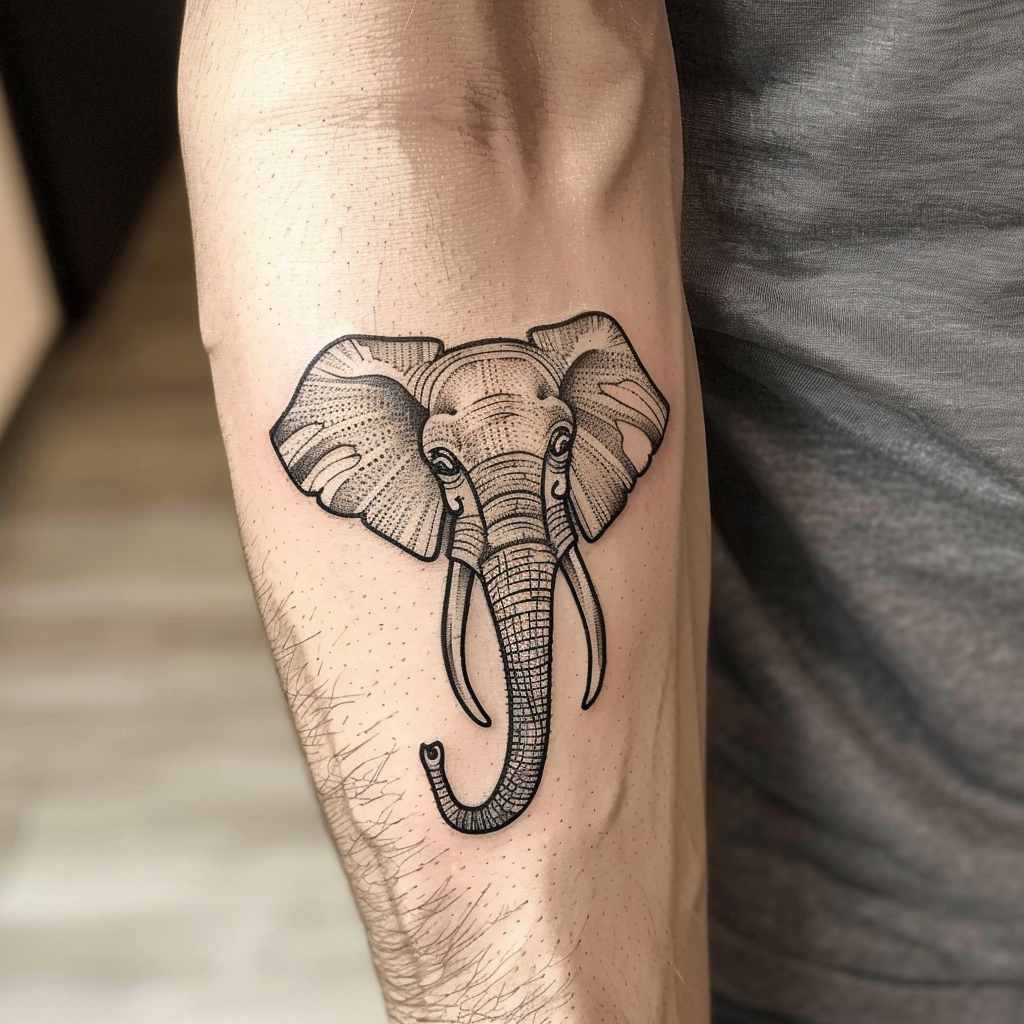
A single elephant, head high, ears open, drawn in clean bold outline with almost no shading inside it.
This is the design I recommend most often to people getting their first tattoo. It sits comfortably at palm size, takes an hour or two, and it is the easiest of the nine to add to later.
The trap is going too thin. Hairline outlines look beautiful on the day and soften noticeably over the years, so I would push for a slightly heavier line weight than the reference photo shows.
If you like this direction, there are more elephant outline tattoo ideas worth saving before you book.
3. Floral Elephant in Warm Colour
Here the elephant stays grey and the flowers do all the shouting — orange and yellow blooms spilling out from behind the head and around the trunk.
The grey-plus-warm-colour split is a smart structural choice. The eye lands on the flowers first and then finds the animal, which keeps a busy design from feeling chaotic.
Warm yellows and oranges are the first colours to fade under sun exposure, and the top of the shoulder gets plenty of it. Daily sunscreen on a healed piece is not optional if you want this one to keep its punch.
Anyone drawn to this combination should also look through floral shoulder tattoos for women for flower shapes that follow the deltoid curve.
4. Savanna Herd Scene
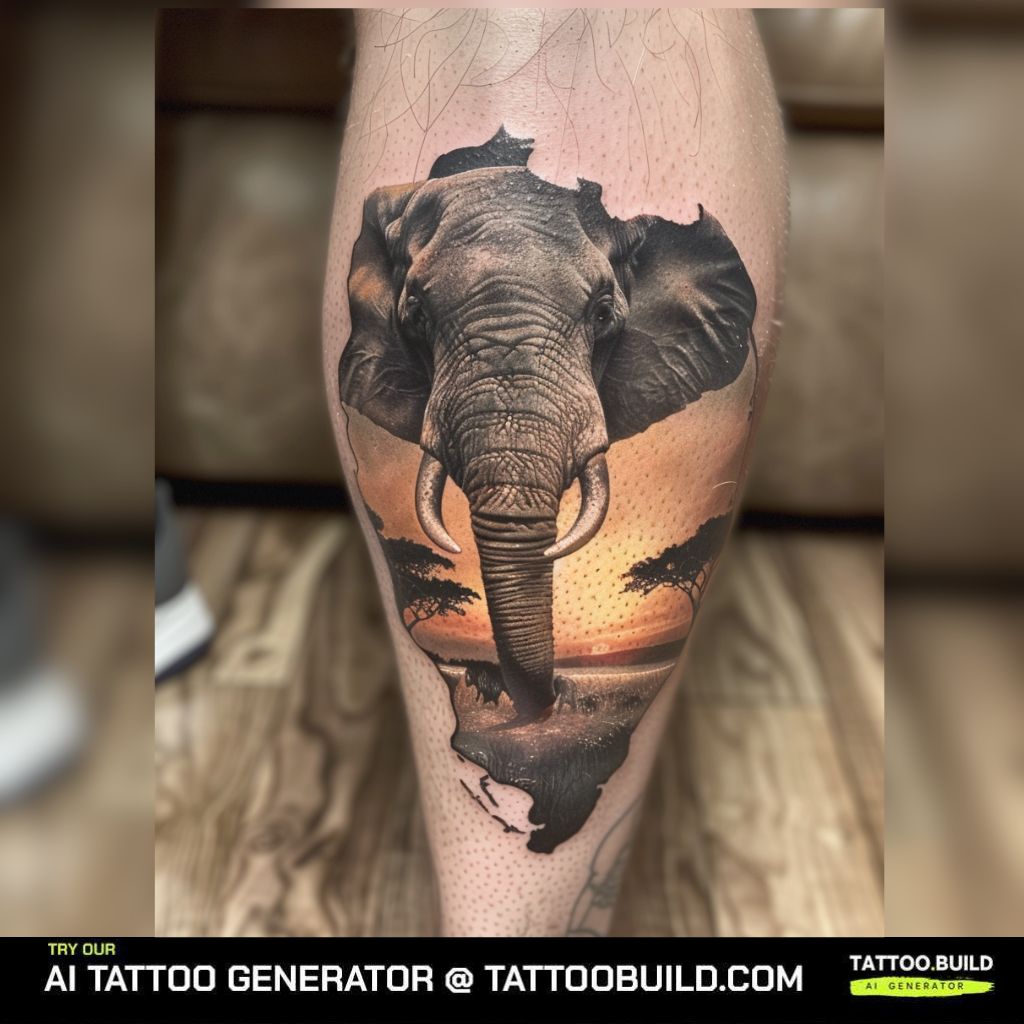
A full scene rather than a single subject: one large matriarch in the centre with smaller elephants gathered around her on open ground.
Real elephant herds are led by the oldest female, which is why this composition reads as protective rather than simply decorative. The World Wildlife Fund’s elephant profile is a good short read if you want the biology behind the symbolism.
Scenes need room. I would not attempt this under about fifteen centimetres of height — below that the background swallows the animals and everything turns grey.
Ask your artist to keep the background lighter than the elephants themselves. That contrast gap is what keeps a scene legible after it has settled.
5. Mandala Elephant in Fine Line and Dotwork
A geometric mandala sits over the elephant’s head like a headdress, built from fine line and stippled dots rather than solid black.
This has been the most requested elephant variation in the shops I have visited over the last several years, and it is not hard to see why — the radial symmetry of a mandala mirrors the roundness of the shoulder.
Dotwork is slow. Stippling by hand takes far longer than shading the same area with a mag needle, so expect a longer sitting and price the piece accordingly.
Find an artist whose portfolio is genuinely full of geometric work. It is a specialism, and a generalist’s mandala usually shows wobble in the outer rings.
6. Layered Mandala Crown
The heavier cousin of the design above — blackwork instead of fine line, with a mandala crown built from several stacked layers.
Where the fine line version feels airy, this one feels solid. It holds up better at a distance and it is the more durable of the two over decades.
The layered crown is also easy to extend. Every artist I have asked treats this as a natural starting point for a larger piece, since the mandala can grow outward toward the collarbone or down the arm.
If growing it later appeals, look at elephant sleeve tattoo ideas now rather than after the first session — planning the extension early saves awkward joins.
7. Vibrant Colour Elephant with a Flower Headdress
Full saturation: a red, orange and yellow flower crowning the head, with blues and pinks worked through the ears and trunk.
This is the loudest design on the list and the one that most needs a colour specialist. Packing saturated colour evenly is a different skill from black and grey shading, and the difference shows in healed photos.
Colour tattoos frequently need a touch-up after healing, and many shops include one free within a set window. Ask about that policy before you book rather than after.
On darker skin tones, ask specifically to see the artist’s colour work on skin like yours. Pigment reads differently and a good artist will adjust the palette rather than pretend it doesn’t matter.
8. Shaded Protector Framed in Flowers
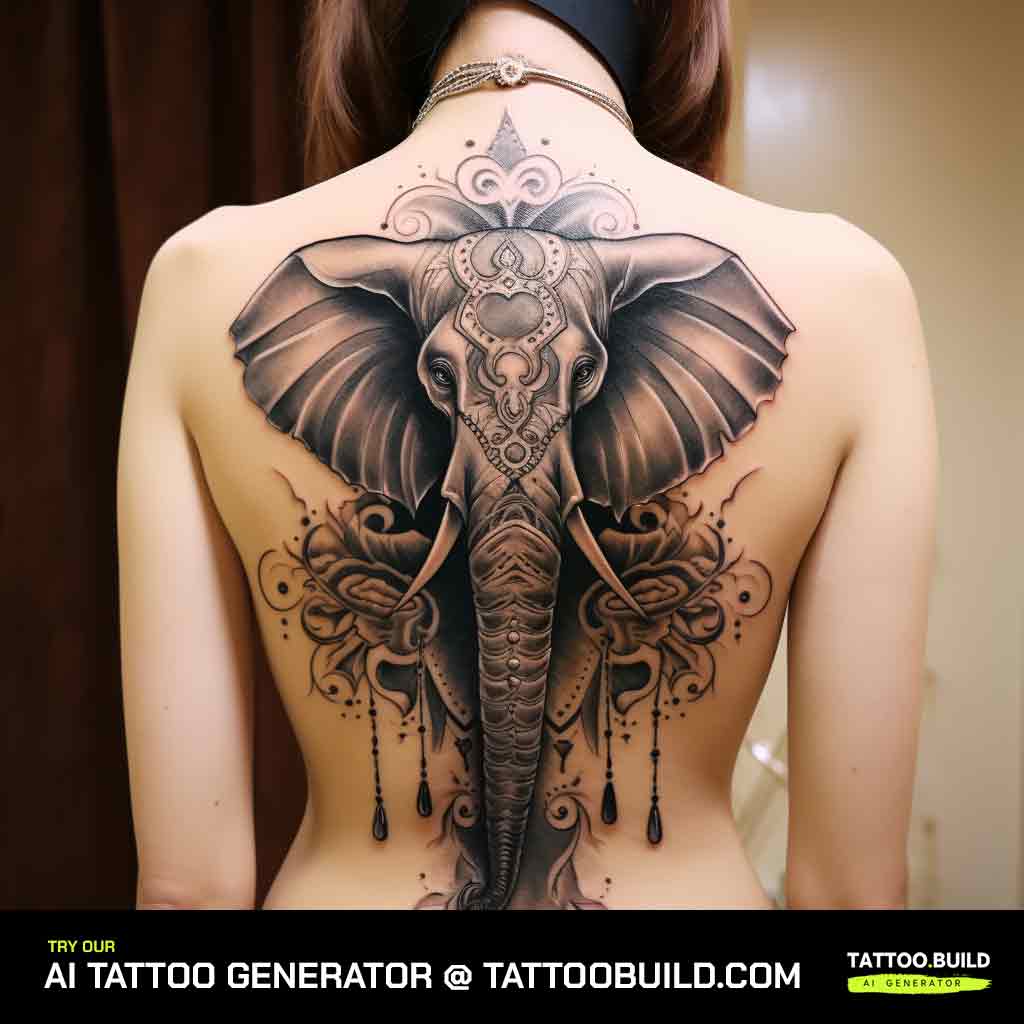
Black and grey throughout, with flowers and leaves framing a calm-faced elephant that carries small symbols across its forehead.
The shading here is what carries it — genuine dark-to-light transitions rather than flat grey fill. That range is what makes an elephant’s hide look like hide.
It fills the shoulder without spilling past it, which is my favourite quality in a first large tattoo. You get presence without committing to a sleeve.
For similar shaded work sized to the deltoid, browse classy shoulder tattoos for females and note how the good ones stop at the natural edge of the muscle.
Variations Worth Considering Before You Commit
The nine above are the mainstream. These four variations come up constantly in consultations and rarely make it onto inspiration boards.
Trunk Up Versus Trunk Down
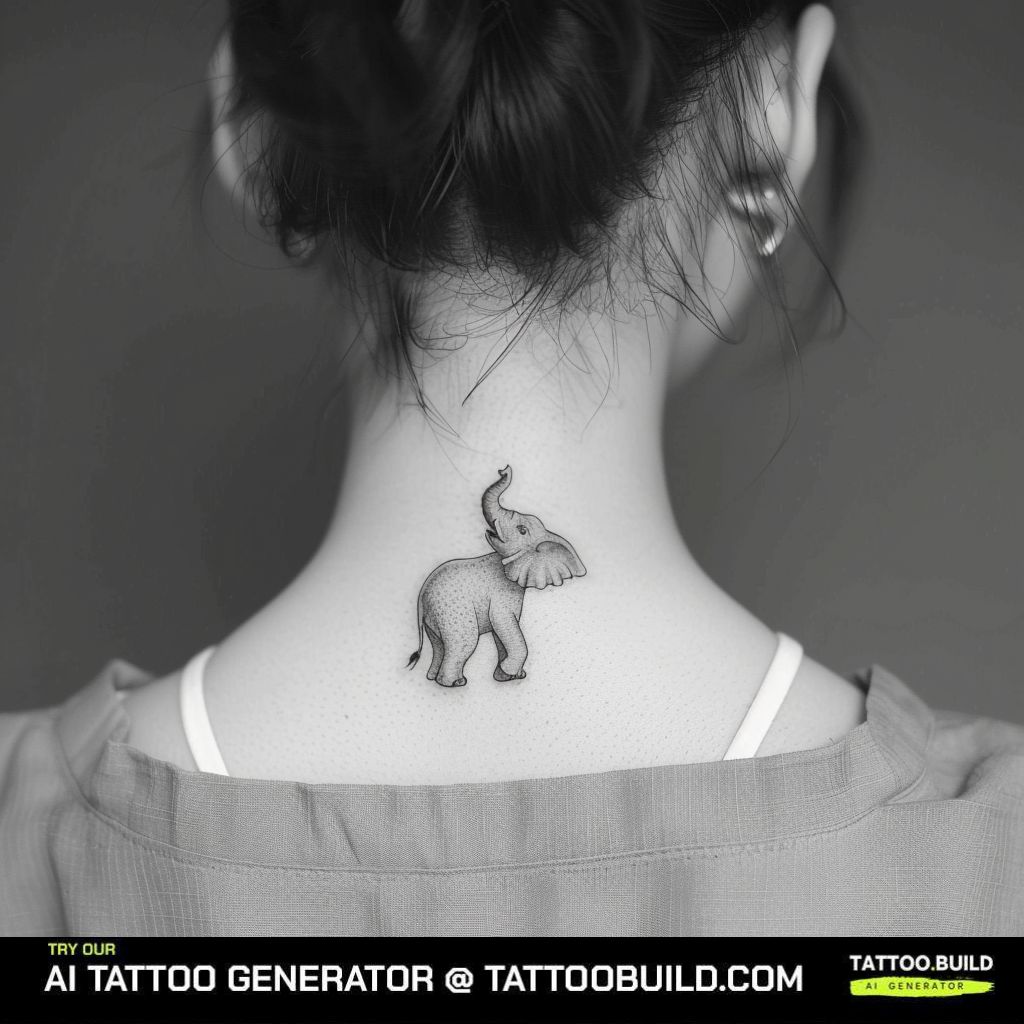
A raised trunk is widely read as a symbol of good fortune, and it is the version most people ask for by default.
A lowered trunk usually reads as calm or grounded instead. Neither is more correct — but decide deliberately, because it changes the whole mood of the piece. There is a fuller breakdown in our guide to the trunk up elephant tattoo.
Abstract and Brushstroke Elephants
Instead of rendering the animal fully, the artist suggests it — a few loaded strokes for the head, a gap where the body should be, and your eye completes the shape.
These age unpredictably because there is no fallback structure if the strokes soften. When they work, though, nothing else on this list looks as modern. See more in our abstract elephant tattoo collection.
American Traditional Elephants
Bold black outlines, a limited palette, heavy shading — the style built specifically to survive decades in skin.
Circus and ceremonial elephants have been part of the traditional flash canon for a long time, so there is a deep well of reference to draw from. The American traditional elephant tattoo is the choice I would make if I only cared about how it looks in thirty years.
Wrapping the Shoulder Cap
Rather than sitting flat on the front of the deltoid, the design curves over the top so part of it is visible from behind.
This looks excellent in person and terrible in photographs, which is the honest trade-off nobody mentions. Decide which one you actually care about.
Aftercare and Healing on the Shoulder
The shoulder is one of the easier placements to heal, mostly because it is not a joint you bend constantly and it does not sit against a chair or a waistband.
The complications I hear about most are sleep position and bag straps. If you side-sleep, plan to sleep on the other side for the first week or so, and switch a backpack to a single-strap bag until the surface has closed.
Follow the written aftercare instructions your artist gives you over anything you read online, including this page — they know what ink and technique they used. General guidance from the American Academy of Dermatology is a reasonable sanity check: keep it clean, moisturise lightly with a fragrance-free product, and protect it from the sun once healed.
Some redness, warmth and swelling in the first couple of days is normal. Spreading redness, increasing pain after day three, pus, or a fever is not — see a doctor rather than waiting it out, and do not try to treat a suspected infection yourself.
Allergic reactions to pigment are uncommon but real, and red pigments are the ones most often implicated. Persistent itching, bumps or a raised rash weeks after healing is worth a dermatologist’s opinion, not a home remedy.
Common Mistakes and How to Avoid Them
Sizing down to save money is the mistake I see most often. A detailed elephant shrunk to fit a budget loses the ears and eyes first, and those are the parts that made you want it.
Bringing a single reference photo is the second. Bring five or six, and tell your artist what you like about each one — that is far more useful than asking for a copy of somebody else’s tattoo.
Choosing an artist by price rather than by portfolio is the third, and it is the expensive one. Covering or removing bad work costs far more than the difference between two artists’ rates.
Still weighing it up? Compare against elephant tattoos for females across other placements before you settle on the shoulder — sometimes the design you love wants a forearm or a thigh instead.
Design Your Own Elephant Shoulder Tattoo
The best consultations I have sat in on started with a rough visual, not a paragraph of description.
You can generate one in a couple of minutes with Tattoobuild’s AI Tattoo Generator — describe the elephant, the style and the placement, and it returns several options as mockups or on a plain background.
Treat the result as a conversation starter rather than a final stencil. Artists redraw it anyway, and they should — a generated image does not know how your shoulder is shaped.
Frequently Asked Questions
How much does an elephant shoulder tattoo hurt?
Most people rate the outer shoulder as one of the more tolerable placements, because there is a layer of muscle between the needle and the bone. The area closest to the collarbone and the back of the shoulder blade tend to be noticeably sharper. Pain is individual, though, and tiredness, hunger and anxiety all make it worse. Eat properly beforehand and tell your artist if you need a break.
How long does an elephant shoulder tattoo take?
A palm-sized minimalist outline is usually a one to two hour appointment. Mandala and dotwork pieces commonly run three to six hours, and detailed black and grey realism is often split across two or more sessions. Your artist will give a realistic estimate once they have drawn the design at actual size. Anyone who quotes a time before seeing the design is guessing.
What does an elephant tattoo symbolise?
Strength, memory, loyalty and family protection are the meanings that come up most often. Elephants also carry specific religious significance in Hinduism and Buddhism, so it is worth reading into that if you are drawing on those traditions rather than borrowing the imagery loosely. A herd design usually stands for family, and a single elephant more often for personal resilience. The meaning you assign it matters more than any dictionary definition.
Can an elephant shoulder tattoo be extended into a sleeve later?
Yes, and the shoulder is one of the best starting points for exactly that reason. Mandala, ornamental and black and grey pieces extend most gracefully because their patterns can flow outward. Tell your artist at the first session if a sleeve is even a possibility — they will position the piece differently. Retrofitting a sleeve around a badly placed shoulder tattoo is the harder, more expensive path.
Will a colour elephant tattoo fade on the shoulder?
The top of the shoulder gets more direct sun than most placements, and ultraviolet exposure is the main driver of fading in tattoo pigment. Warm colours such as yellow and orange generally lose their intensity first. Broad-spectrum sunscreen on the healed tattoo whenever it is uncovered makes a real difference over years. Black and grey work holds up better if sun exposure is unavoidable in your daily life.
Quick Summary
- The shoulder suits elephants because its rounded shape matches the animal’s wide-eared, tapering silhouette.
- Pain is generally moderate here, with the collarbone edge and shoulder blade being the sharper spots.
- Fine line and minimalist designs are the cheapest and fastest, but need heavier line weight than you think.
- Mandala and dotwork elephants are the most requested variation and require a genuine geometric specialist.
- Herd and savanna scenes need generous sizing — roughly fifteen centimetres of height or more.
- Colour pieces on the shoulder fade fastest; daily sunscreen on healed skin is the fix.
- Follow your artist’s written aftercare, and see a doctor for spreading redness, pus or fever.
- Plan for a future sleeve at the first session if there is any chance you will want one.