I have lost count of how many elephant designs I have watched people scroll past in a studio waiting room, and the leg is almost always where they end up putting one. The leg gives an elephant the one thing it needs most: enough uninterrupted room to look heavy, calm and real instead of cramped.
Elephants carry a lot of meaning — memory, family, patience, quiet strength — and none of that lands if the design is squeezed onto a spot that cannot hold it.
Below are ten elephant leg tattoo ideas I keep coming back to, plus the placement and healing details I wish more people asked about before they booked. If you are still deciding between body parts, it is worth comparing these against elephant arm tattoo ideas before you commit.
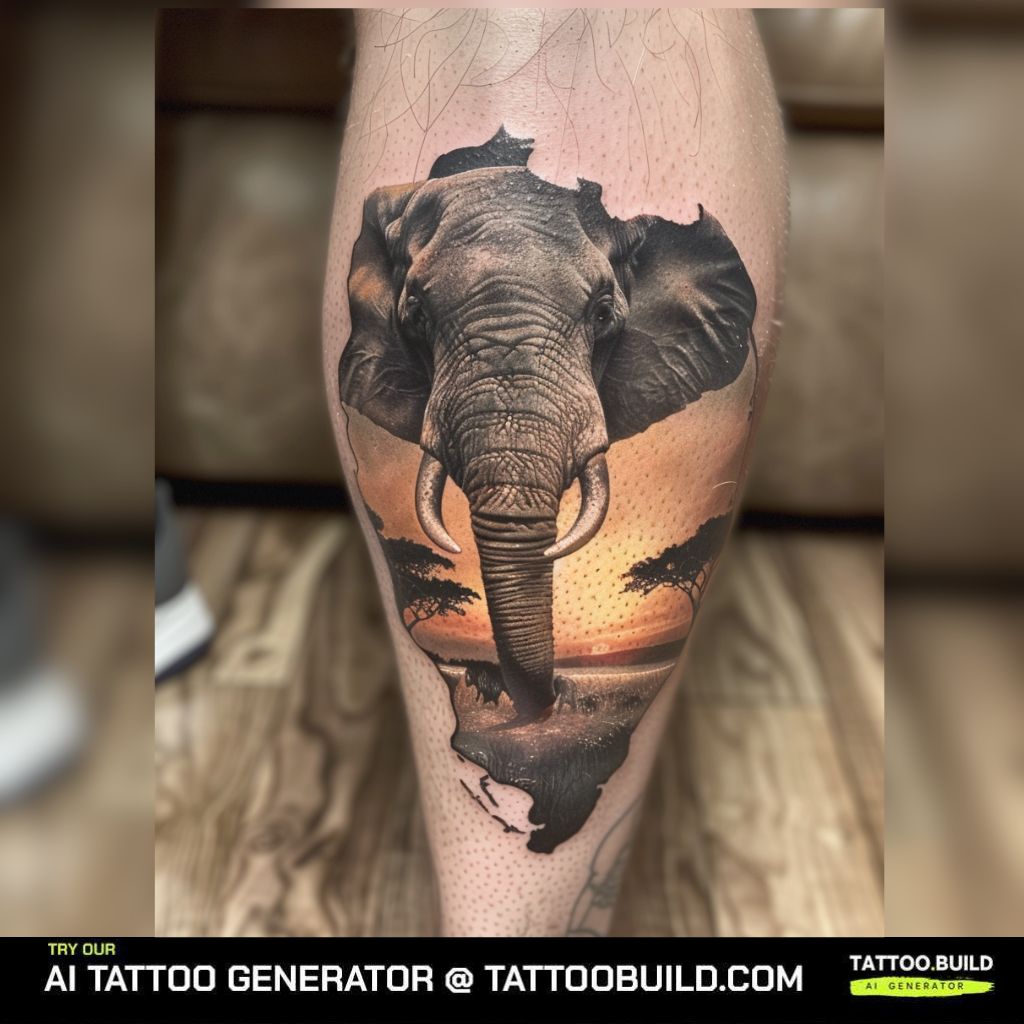
The piece below is a good example of why the calf works so well — the sun sits between the tusks and the whole scene still has room to breathe.

Which Part of Your Leg Is Right for You?
People say “leg tattoo” as if it is one placement, but the calf, thigh, shin and ankle behave completely differently under a needle.
Here is how I usually break it down for someone who has not decided yet.
| Placement | Best For | Comfort Level | Ages Well? |
|---|---|---|---|
| Outer calf | Detailed portraits, sunsets, full scenes | Generally the easiest leg spot to sit through | Very well — thick skin, low friction |
| Thigh | Large florals, mandalas, wrapping compositions | Easy on the outer thigh, sharper on the inner | Well, though weight change can shift it |
| Shin | Long vertical designs, trunk-down silhouettes | Bony and usually the most painful of the four | Well, but knocks during healing are common |
| Ankle | Tiny elephants, single-line outlines, charms | Sharp but short — most sessions are brief | Fine detail can blur faster than elsewhere |
Why Elephant Tattoos Mean So Much to People
Almost nobody I have spoken to picks an elephant purely because it looks good. There is usually a reason underneath it.
Elephants live in matriarchal herds and are famously protective of their young, which is why the mother-and-calf composition is the single most requested elephant design I see. It is a family tattoo that does not need a name or a date attached.
In Hindu tradition the elephant-headed deity Ganesha is associated with removing obstacles and with new beginnings, which is why some people choose one before a big life change.
Others come at it from conservation. Elephants are listed as threatened species by groups like the World Wildlife Fund, and a few clients have told me their tattoo is partly a reminder of that.
Direction matters too. A raised trunk is widely read as good luck, and there is a whole tradition around the trunk-up elephant tattoo — worth reading before you finalise the sketch, because reversing it later means a cover-up.
10 Elephant Leg Tattoo Ideas Worth Saving
1. Sunset Elephant on the Calf
The piece at the top of this page is the version of this idea I would show an artist as a reference.
The sun is placed between the tusks so the elephant appears to be carrying it, and the gradient behind it does the work that heavy black shading would normally do. Colour packing like this is the part that takes the time — expect a longer session than a linework piece of the same size.
One honest caveat from experience: warm oranges and reds are the first colours to soften on a lower leg that sees a lot of sun. If you want this to stay vivid, sunscreen on the healed tattoo is not optional.
2. Safari Scene With Faded Trees
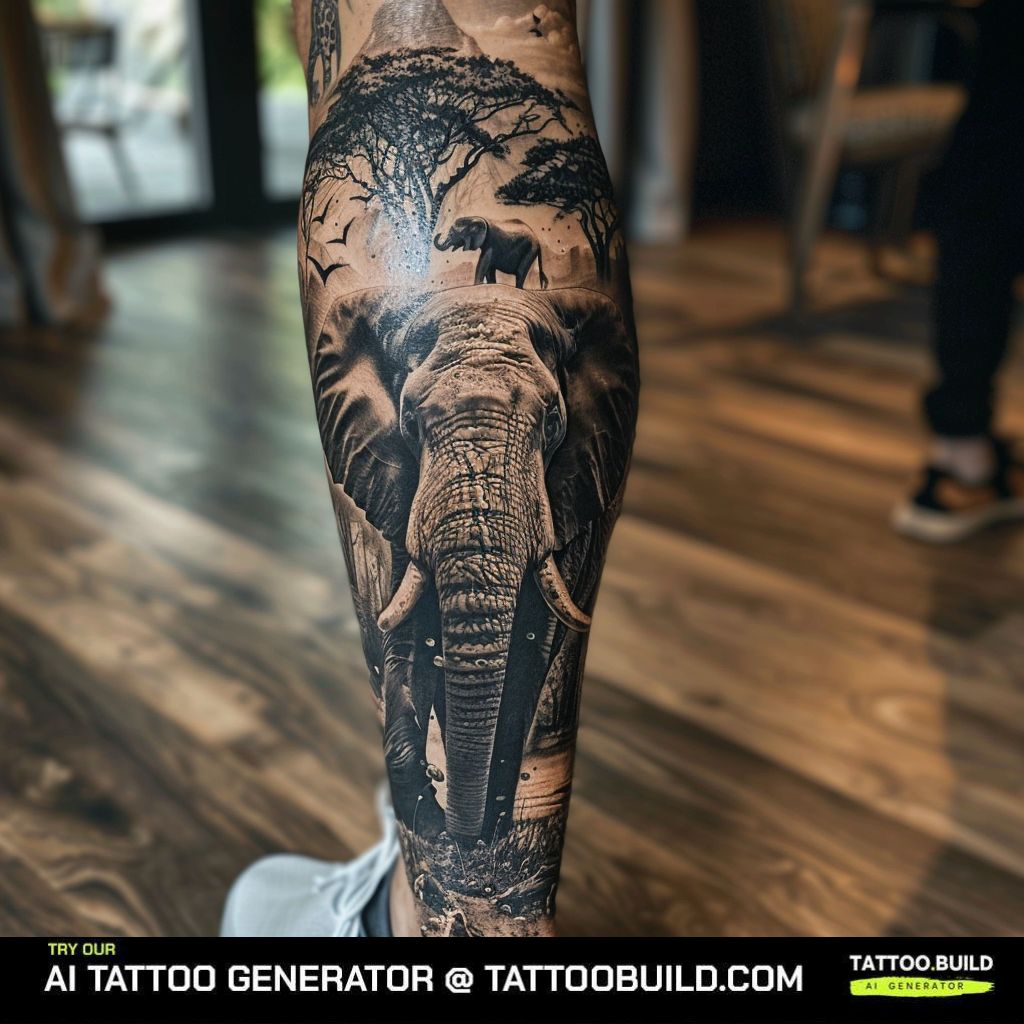
This one builds an entire landscape rather than a single animal. The big elephant walks forward, a smaller one sits behind, and the trees are rendered as soft shadow rather than hard outline.
The spray of water from the trunk is what sells it — it turns a static image into a caught moment. Every artist I have asked about scenes like this says the same thing: give it room. Compressed into a small area, the background reads as a smudge within a few years.
The outer calf or the outer thigh are the two placements I would suggest for it.

3. Tiny Elephant Above the Ankle
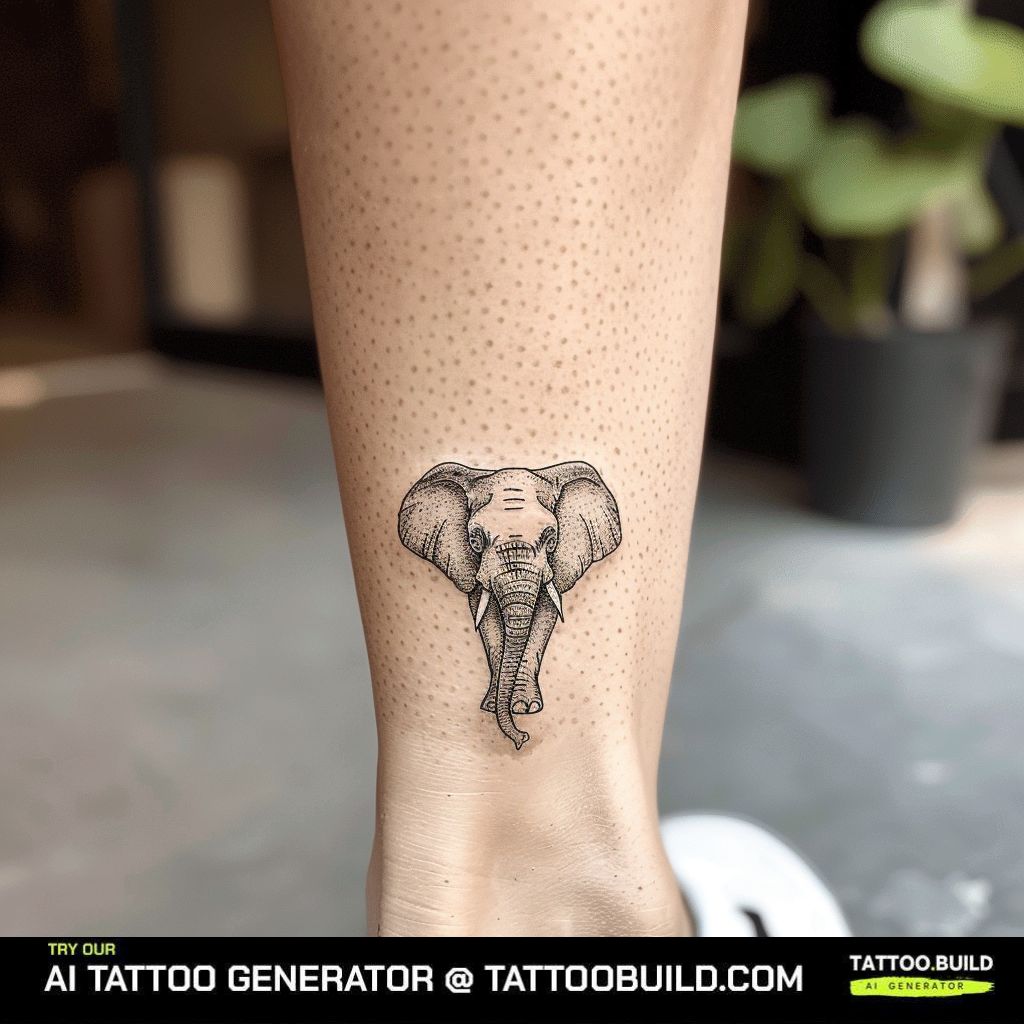
Just the head and trunk, drawn in fine lines, sitting small on the lower leg.
I like this one for first-timers because the session is short and the healing is straightforward. The trap is asking for too much wrinkle detail at a small scale — those closely spaced lines are the ones that spread and merge over time.
When I tested this idea against artists’ portfolios, the versions that still looked crisp after several years were the ones with fewer, more deliberate lines. If you want more small-scale options, the cute elephant tattoo collection has plenty in this size range.

4. Floral Elephant on the Thigh
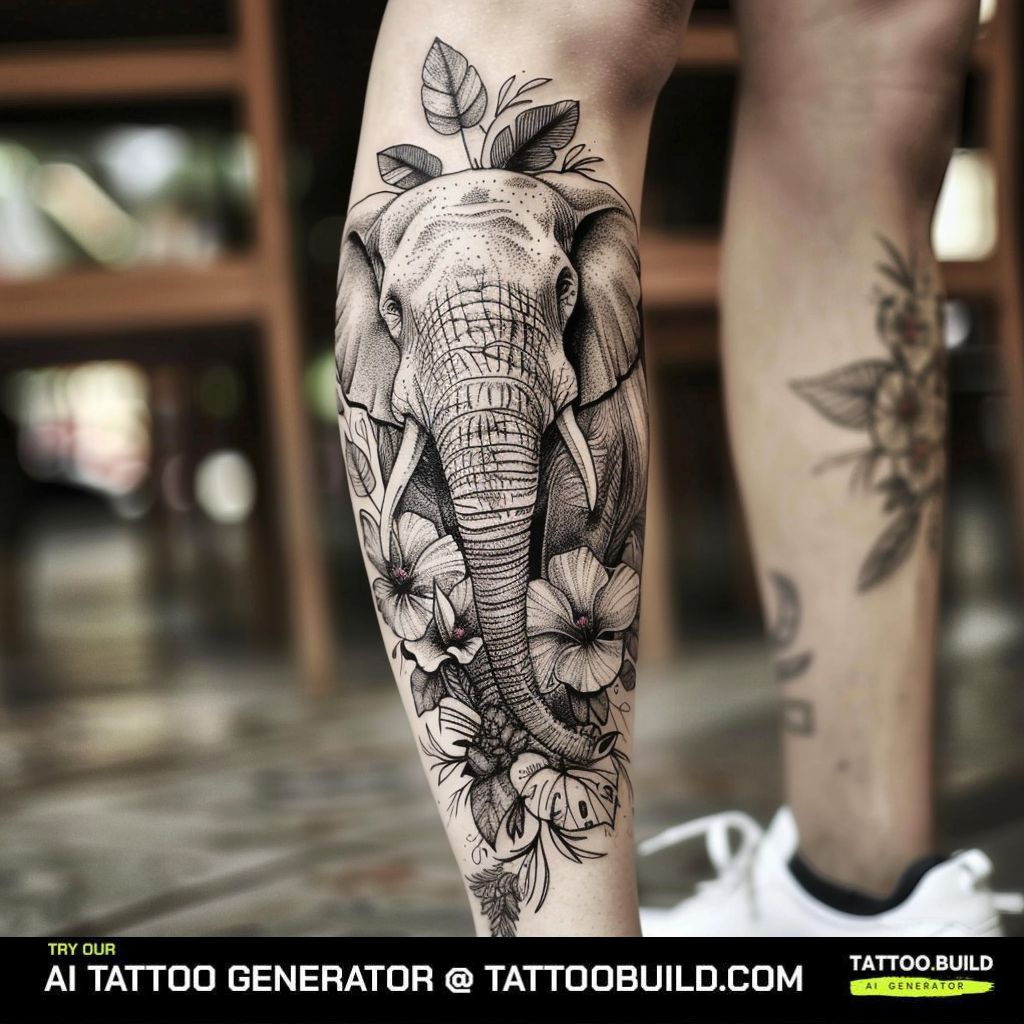
Pairing an elephant with flowers is the easiest way to soften a design that would otherwise read as very heavy.
The flowers also solve a practical problem: they fill the awkward space around the elephant’s back and legs so the composition sits naturally on a curved thigh instead of floating.
Choose the flower for meaning, not just for shape. Birth flowers, lotus and peony all show up constantly in these designs. If you want to build the botanical half properly, the floral leg tattoo designs guide is a good starting point.

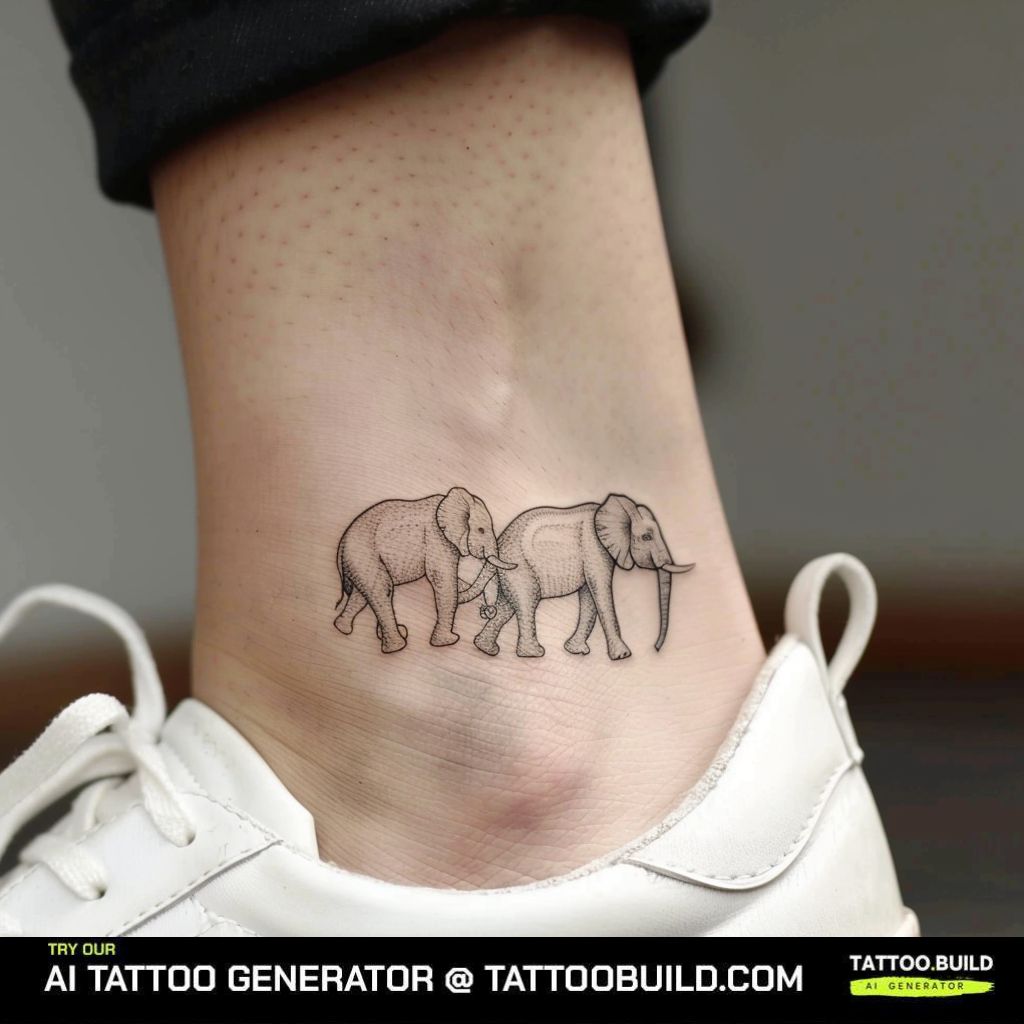
5. The Family March
A line of elephants walking in single file, adults first and calves behind.
This is the design people choose when they want to represent a specific family without spelling it out, and it scales beautifully — you can add a figure later if the family grows, which very few tattoo compositions allow.
My one piece of advice: plan the full row with your artist at the start, even the elephants you are not getting yet. Adding one to a design that was never spaced for it is the most common regret I hear about this style.

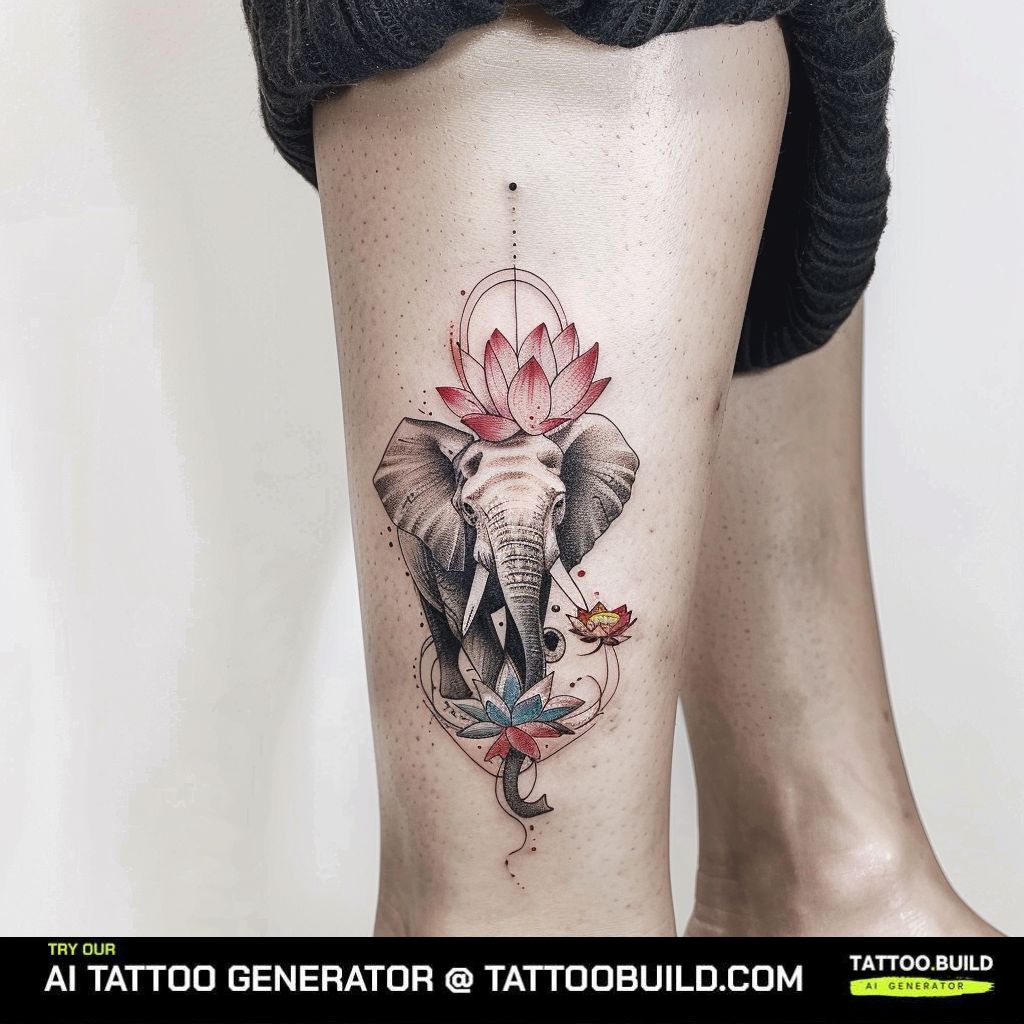
6. Lotus-Crowned Elephant
A red lotus sits on the elephant’s head like a crown, with smaller blooms and scattered dots beneath it.
The colour contrast is the whole point here — a single saturated red against grey wash makes the flower jump forward without any other colour in the piece.
It also wraps the calf rather than sitting flat, which is genuinely harder to draw than it looks. Ask to see healed photos of wrapped work before you book this one, because a design that curves badly is very hard to correct afterwards.

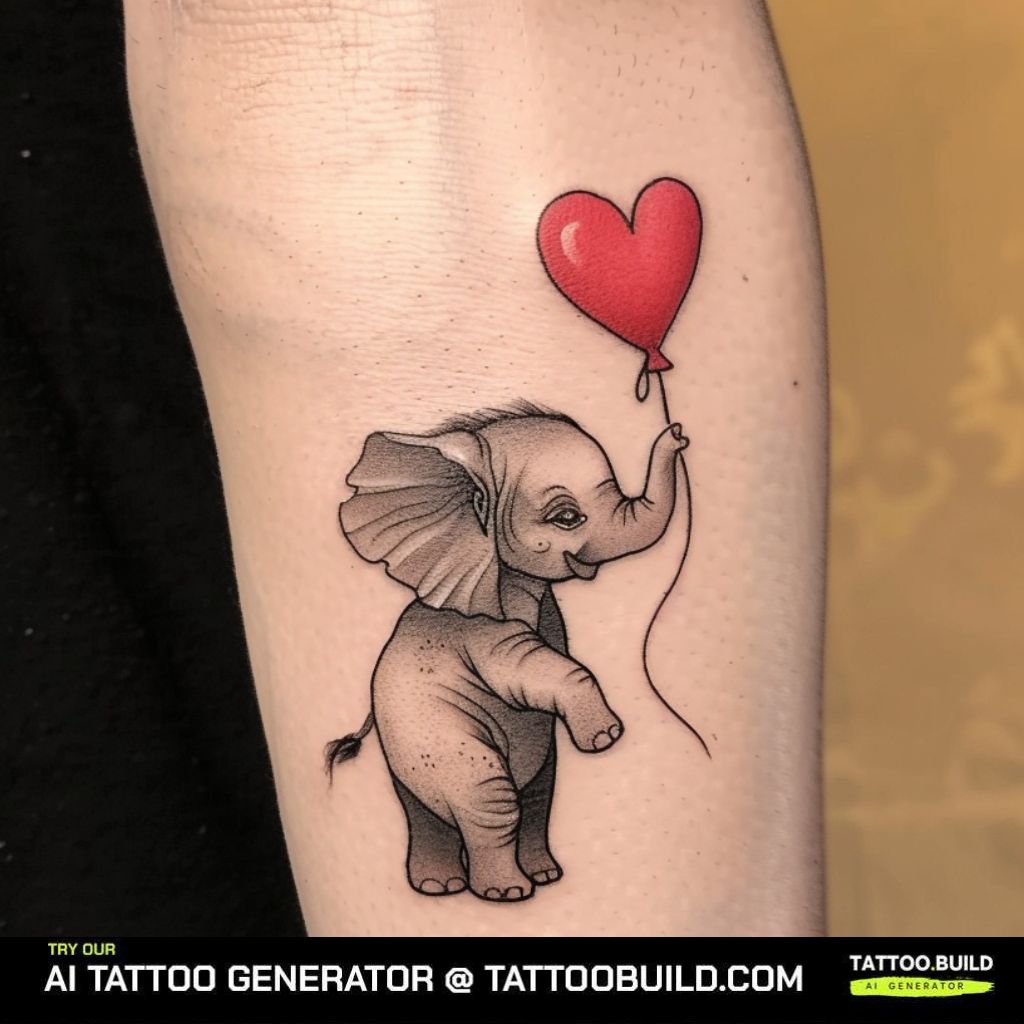
7. Joyful Elephant With a Heart Balloon
A small, smiling elephant holding a red heart balloon in its trunk, placed just above the ankle.
Not every elephant tattoo has to be solemn, and this is the clearest example of that. The oversized floppy ears push it into cartoon territory on purpose.
The single spot of red against grey is doing the same job as the lotus above — one colour, used once, reads as a deliberate choice rather than an unfinished piece.

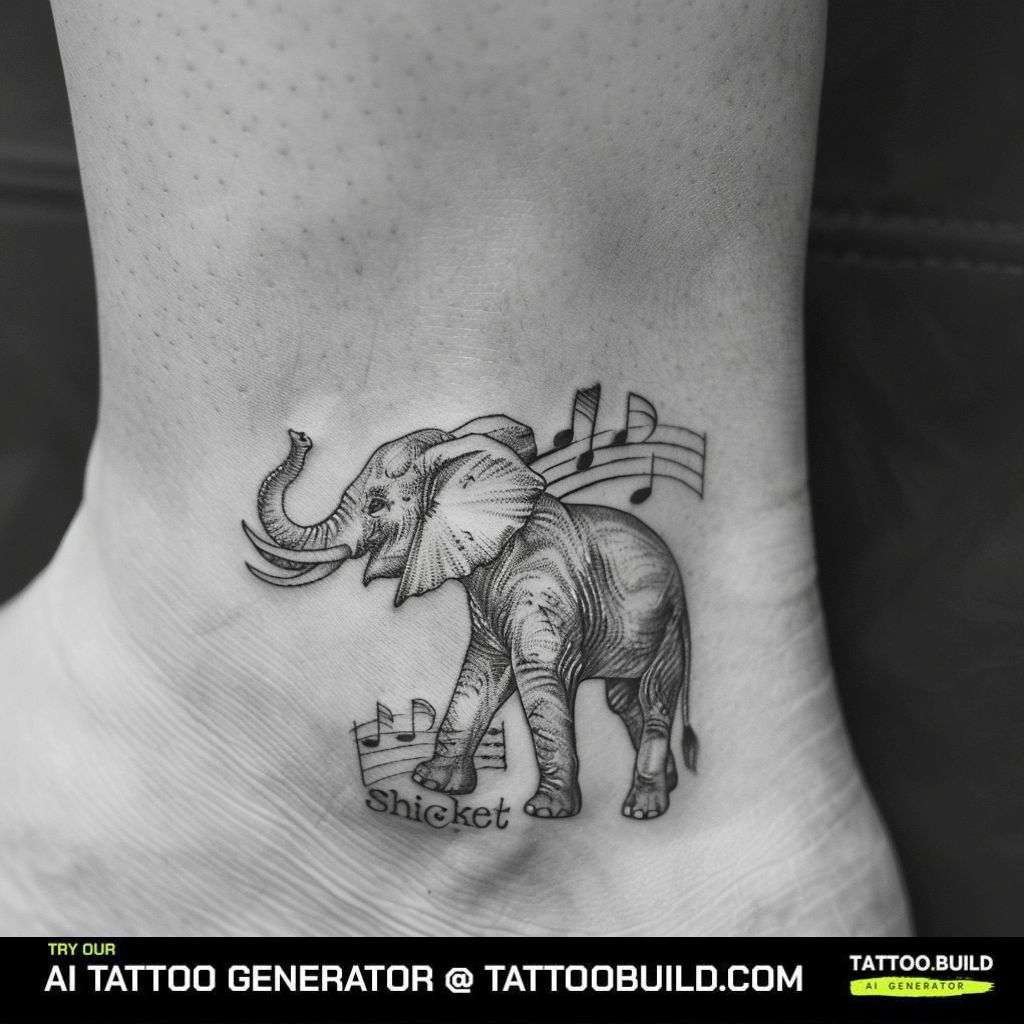
8. Elephant With Musical Notes
Here the elephant raises its trunk while a musical staff floats behind it and curls around the ankle.
This is the personalised category — a bar of music that means something to you, or a word worked into the notes. If you are including real notation or lettering, proof it twice with the artist before the stencil goes on.
Misspelled or mis-transcribed text is the one tattoo mistake that cannot be quietly lived with, and in my experience it happens far more often with custom lettering than with imagery.

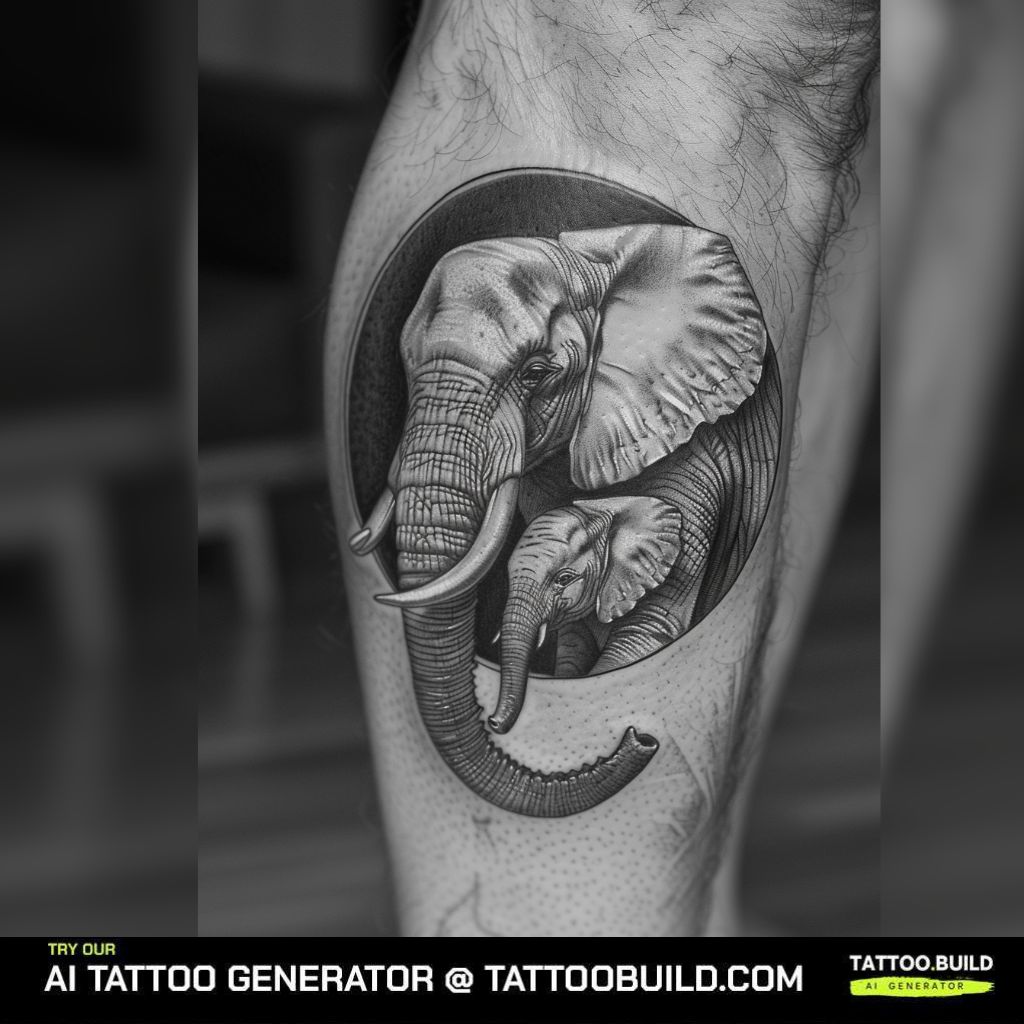
9. Mother and Calf Embrace
A mother curling her trunk around her calf, framed inside a circle on the calf muscle.
The circular frame is the smartest part of this design. It gives the artist a hard edge to work to, which stops a detailed piece from trailing off into vague shading at the borders.
The skin texture here is deep and heavily worked. That kind of realism needs an artist who specialises in it — this is not a design to hand to a generalist.

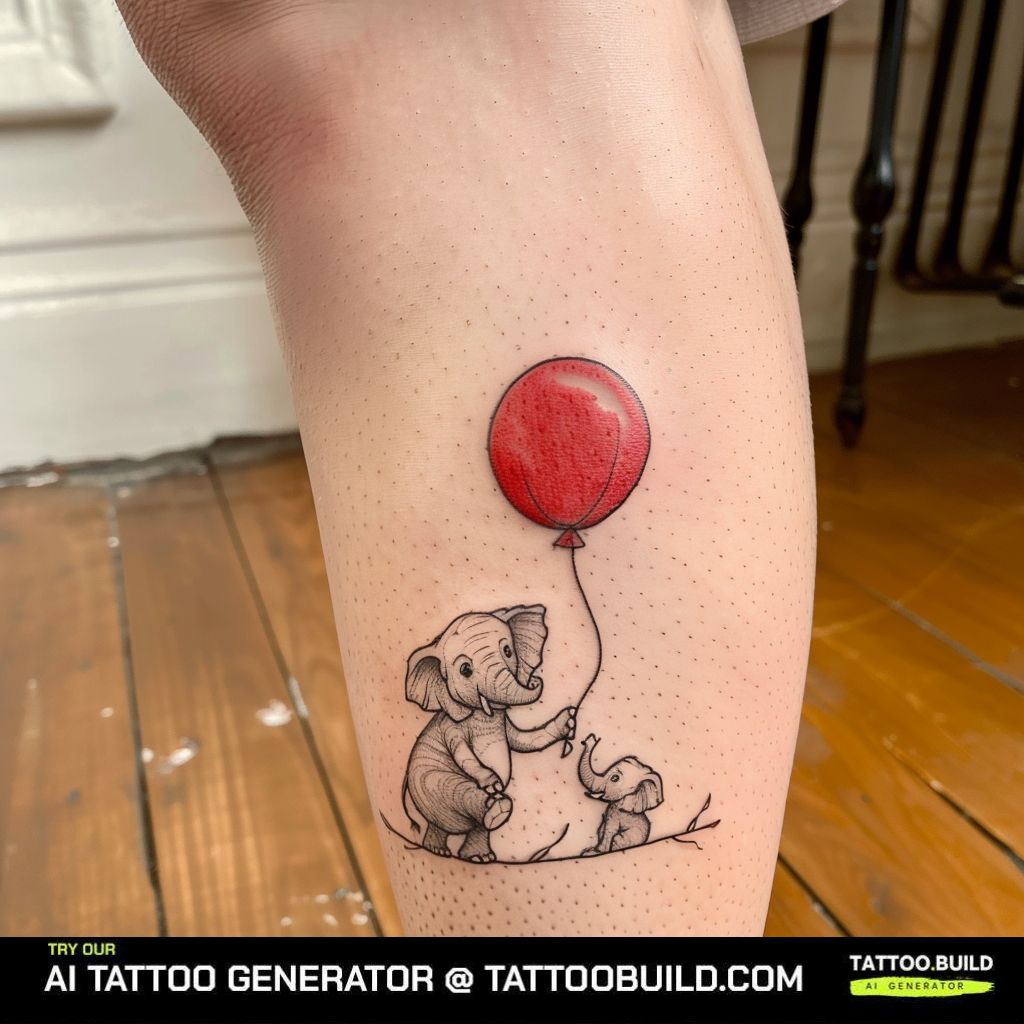
10. Elephant Duo With a Balloon
A young elephant holds a red balloon while a smaller one looks up at it.
Where the mother-and-calf piece is about protection, this one is about friendship — the two figures are peers, not parent and child, and the tilt of the smaller head does most of that work.
It is a good option for matching tattoos, since the composition splits cleanly into two halves that still make sense on separate legs.

Style Variations Worth Considering
The ten above cover the most common approaches, but the same subject changes completely depending on the style it is drawn in.
Geometric and Mandala Elephants
Ornamental patterning inside the elephant’s body, usually symmetrical, often built from dotwork.
These sit well on the thigh because a wide, flat-ish surface lets the symmetry read properly. On a curved calf, symmetrical patterns can look skewed from certain angles.
Blackwork and Single-Line Outlines
Stripped back to a silhouette or a single continuous line.
Bold blackwork is generally the most reliable style over decades because there is no fine detail to blur. The elephant outline tattoo collection is the best place to look for these.
Watercolour Elephants
Loose colour splashes behind a grey elephant, mimicking paint bleeding on paper.
I will be straight about this one: watercolour without any black anchoring tends to fade less gracefully than other styles. Most artists I have spoken with recommend keeping a black linework skeleton underneath.
Scaling Up to a Leg Sleeve
If one elephant is not enough, the leg is the easiest place on the body to grow a single piece into a full sleeve over multiple sessions.
Plan the whole map first, even if you only book the first panel. The elephant sleeve tattoo ideas guide shows how these compositions get stitched together.
Aftercare for a Leg Tattoo
Legs heal differently from arms, mostly because of clothing, movement and swelling.
Loose trousers or shorts for the first week make more difference than any ointment you buy. Denim rubbing a fresh lower-leg tattoo is the most common cause of patchy healing I have seen on this placement.
Some swelling in the ankle and foot after a long lower-leg session is normal and usually settles within a few days. Elevating the leg when you are sitting helps. Keep the area clean, follow the washing and moisturising routine your artist gives you, and skip swimming, baths and gyms until it is fully closed — the general aftercare advice from the American Academy of Dermatology is a reliable reference.
One thing I will not soften: this article is not medical advice. Spreading redness, heat, pus, or a fever after a tattoo are signs of possible infection or an allergic reaction, and those need a doctor — not a forum thread and not your own judgement. Talk to your artist about anything that looks wrong, and see a medical professional if it is more than surface irritation. Our tattoo healing stages guide covers what normal healing actually looks like week by week.
Still Not Sure? Mistakes to Avoid
A few patterns come up again and again with elephant leg tattoos.
Going too small for the level of detail requested is the biggest one. An elephant’s appeal is in its wrinkles and mass, and both of those need space.
The second is booking a shin piece without knowing what you are in for. The shin is bony with little padding, and it is consistently ranked among the sharper spots to sit through — the most painful tattoo spots guide is worth a look first.
The third is not checking the artist’s healed work. Fresh photos flatter everyone. Healed photos of grey wash and fine line work are the only reliable test, and any artist worth booking will have them ready.
If you want more inspiration before deciding, the elephant tattoos for females collection covers ground this article does not.
Generate Your Next Tattoo Design for Free

If you have an idea in your head but cannot find a reference that matches it, our free AI tattoo generator will draw it for you.

Describe what you want — “elephant family walking, fine line, calf placement” — and the Tattoo Image Generator will produce several versions, either as mockups on skin or on a plain background.
I would treat the output as a conversation starter rather than a stencil. Bringing three generated concepts to a consultation is far more useful to an artist than a folder of other people’s finished tattoos.
Frequently Asked Questions
How painful is an elephant leg tattoo?
It depends heavily on where on the leg it sits. The outer calf and outer thigh are usually described as among the more manageable spots on the body, because there is muscle and fat between the needle and the bone. The shin, the inner thigh, the ankle and the back of the knee are noticeably sharper. Pain is also personal, so treat any ranking as a rough guide rather than a promise.
What size should an elephant leg tattoo be?
Match the size to the detail, not the other way round. A simple outline or silhouette works fine at a few inches on the ankle. A realistic elephant with visible skin texture, or a full safari scene, generally needs most of a calf or thigh to stay readable as it ages. If your artist suggests going bigger than you planned, that is usually a legibility judgement rather than an upsell.
What does an elephant tattoo symbolise?
Most commonly strength, memory, wisdom, patience and family loyalty, drawn from how elephants actually live in matriarchal herds. In Hindu tradition the elephant-headed Ganesha is associated with removing obstacles and with new beginnings. A raised trunk is widely read as a symbol of good luck. The meaning is ultimately yours to assign, but these are the associations most people will read into it.
How long does a leg tattoo take to heal?
The surface usually closes over within about two to three weeks, while the deeper layers typically keep settling for a couple of months. Legs can be slower than arms because clothing rubs and because swelling collects lower down. Follow your artist’s specific instructions rather than generic internet advice. If you see spreading redness, heat, pus or a fever, see a doctor rather than waiting it out.
Should I get colour or black and grey?
Black and grey is the safer long-term choice for an elephant, because the subject is naturally grey and the style holds its contrast well as it ages. Colour is excellent for sunsets, florals and single accent details like a red balloon or lotus. A common compromise is a grey elephant with one colour used sparingly. Whichever you choose, sun exposure on a lower leg will fade it faster than the same tattoo on a covered area.
Quick Summary
- The outer calf and outer thigh are the most forgiving leg placements for a detailed elephant, in both comfort and how the design ages.
- Scenes, realism and heavy wrinkle detail need space — going small is the most common cause of an elephant tattoo blurring over time.
- Mother-and-calf and family-march compositions carry family meaning without needing names or dates.
- A raised trunk is widely read as good luck, so decide on trunk direction before the stencil is drawn.
- One saturated colour against grey wash — a red lotus, a red balloon — reads as deliberate and holds up better than full colour packing.
- The shin is bony and generally among the sharper spots to sit through; know that before you book it.
- Loose clothing for the first week matters more than any specific aftercare product, and spreading redness or fever means see a doctor.
- Always ask to see healed photos of the artist’s grey wash and fine line work, not just fresh ones.