A floral leg tattoo is one of the few designs that can grow with you — you can start with a single bloom on the ankle and, years later, still have somewhere sensible for the rest of the garden to go.
I have spent a lot of hours in tattoo studios, and the leg is the placement I hear artists recommend most often to people who are nervous about their first big piece.
The reasons are practical. There is a lot of surface area, the skin holds line work well on most of the leg, and you can cover the whole thing with a pair of trousers on a Monday morning.
This guide walks through the placements, the flowers and their meanings, what the sessions actually feel like, and the mistakes I keep watching people make. If you are still deciding on placement generally, our roundup of the best leg tattoos for women is a good companion piece.
Which Floral Leg Placement Is Right for You?
Placement changes almost everything: how much detail fits, how much it hurts, how well it ages, and how easily you can hide it.
The outer thigh is the most forgiving canvas on the entire body, and the shin and ankle are the least. Everything else sits somewhere between.
| Placement | Relative Pain | Room for Detail | Best Suited To |
|---|---|---|---|
| Outer thigh | Low to moderate | Very high — full bouquets, layered petals | First large piece, realism, colour work |
| Inner thigh | High | High, but the curve limits viewing angles | Private placement, softer fine line work |
| Calf | Low to moderate | High — vertical stems and trailing vines | Designs meant to be seen year round |
| Shin | High — bone is close to the surface | Moderate, long and narrow | Bold outlines, single stems, blackwork |
| Ankle | High | Low — one bloom or a thin band | Small, delicate, easily hidden pieces |
| Knee and behind the knee | Very high | Moderate — usually a connector, not a focal point | Bridging a thigh piece into a full sleeve |
| Full leg sleeve | Varies by zone | Highest — a composed, flowing scene | Multi-session projects with one artist |
If pain is your main worry, it is worth reading a proper breakdown of the most painful tattoo spots before you book anything near bone.
What Actually Affects How a Floral Leg Tattoo Ages
Every floral tattoo I have seen age badly failed for one of three reasons: the detail was too small, the placement rubbed, or the sun got to it.
Fine line florals are gorgeous on day one. The trouble is that ink spreads slightly in the skin over the years, and lines drawn a hair apart eventually touch.
Every artist I have asked about this gives the same advice — leave more negative space between petals than looks necessary on the stencil.
Friction matters more on legs than most people expect. Ankles take a beating from socks and boots, and the inner thigh rubs against itself when you walk in warm weather.
Sun exposure is the single biggest enemy of colour work on legs, because legs are the part of the body most likely to be bare in summer and least likely to get sunscreen. The American Academy of Dermatology recommends broad-spectrum sunscreen on healed tattoos for exactly this reason.
Floral Leg Tattoo Designs Worth Considering
These are the design families I see working again and again on legs, along with what each one demands from you and your artist.
Black and Grey Thigh Florals
This is the safest bet in the whole category, and I say that as a compliment.
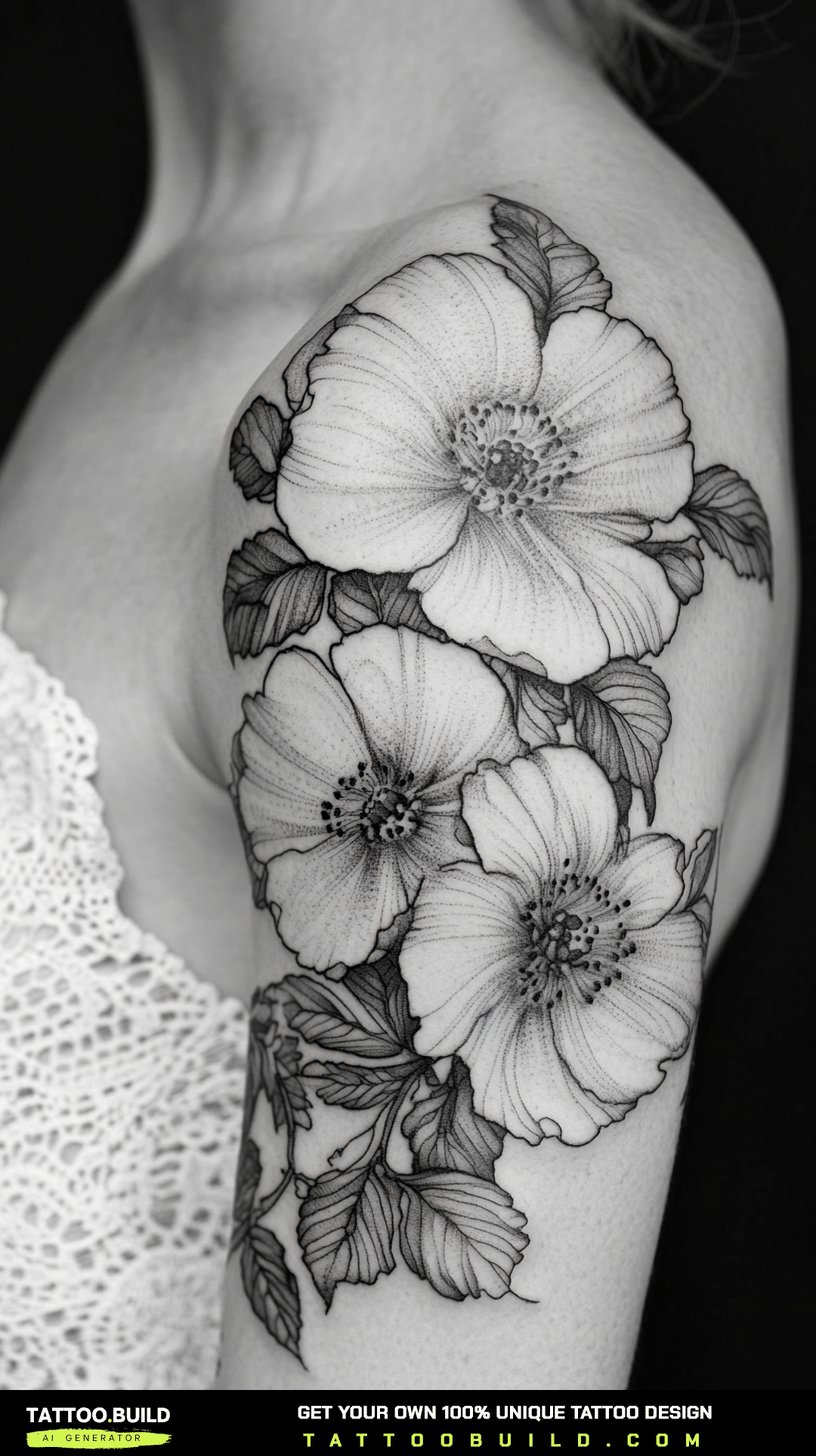
Roses, peonies and magnolias rendered in black ink with soft grey shading read clearly from across a room and stay readable for decades.
Grey wash ages more gracefully than almost any colour palette because there is no pigment to fade out of balance — it simply softens evenly.
The outer thigh gives an artist enough room to build layered petals and real depth rather than a flat outline. When I have watched these pieces being tattooed, most of the session goes into shading, not line work.
If this is the direction you are leaning, our gallery of floral thigh tattoos for women is worth a scroll before your consultation.
Full-Colour Botanical Thigh Pieces
Colour is where floral leg tattoos stop looking like tattoos and start looking like illustrations.
Oranges, corals and warm pinks sit beautifully on most skin tones, and greens give the composition somewhere to breathe between blooms.
The trade-off is honest: colour needs more upkeep than black and grey. Expect to be more disciplined about sunscreen, and accept that a touch-up somewhere down the line is normal rather than a failure.
In my experience, the pieces that hold up best are the ones with a strong black or dark green line underneath the colour, because the drawing survives even if the saturation drops.
Hip-to-Thigh Wraps
Running a floral design from the hip down over the upper thigh is a compositional trick more than a placement choice.
It follows the natural curve of the body, so the tattoo looks like it belongs there rather than like a sticker applied to a flat surface.
These pieces are usually dense — a full bouquet rather than a single stem — because the wrap needs enough visual weight to carry across two planes.
Ask to see the stencil while standing, sitting and walking. A design that reads perfectly on a tattoo bed can fold awkwardly when you stand up, and this is the one placement where I have seen that catch people out.
Calf and Shin Stems
The lower leg is long and narrow, which suits vertical designs — a single tall stem, a trailing vine, or two or three blooms stacked up the muscle.
The calf itself is comfortable to sit through. The shin is not, and I would not pretend otherwise: there is very little between the needle and the bone.
Bold lines beat fine detail on the shin, partly because of how the skin behaves there and partly because the sessions are shorter when there is less to render.
There is more inspiration in our collections of calf tattoos for women and girly shin tattoos if you want to see the difference side by side.
Delicate Ankle Florals
An ankle floral is the entry point most people take, and it is a sensible one.
A single lily, a small daisy, or a thin vine circling the joint takes well under an hour in most studios and hides under any sock.
Two honest warnings. It stings more than the size suggests, and it heals slower than the thigh because shoes rub it constantly.
Keep ankle designs simpler than you think you want. The pieces I have seen still looking crisp after five or six years are the ones with three or four clean elements, not twelve tiny ones.
Our guide to ankle tattoo ideas covers more of these small-scale options.
Wrapping Vines and Trailing Designs
Vines solve a problem that standalone blooms cannot: they connect placements.
A trailing stem can run from the ankle up the calf, cross behind the knee, and open into a larger arrangement on the thigh.
This is how most floral leg sleeves actually get built — one section at a time, with the vine acting as the through-line between sessions.
If a full sleeve is even a distant possibility, tell your artist at the first appointment. Placing that first ankle piece a few centimetres differently is free today and impossible to undo later.
Bold Outline and Neo-Traditional Blooms
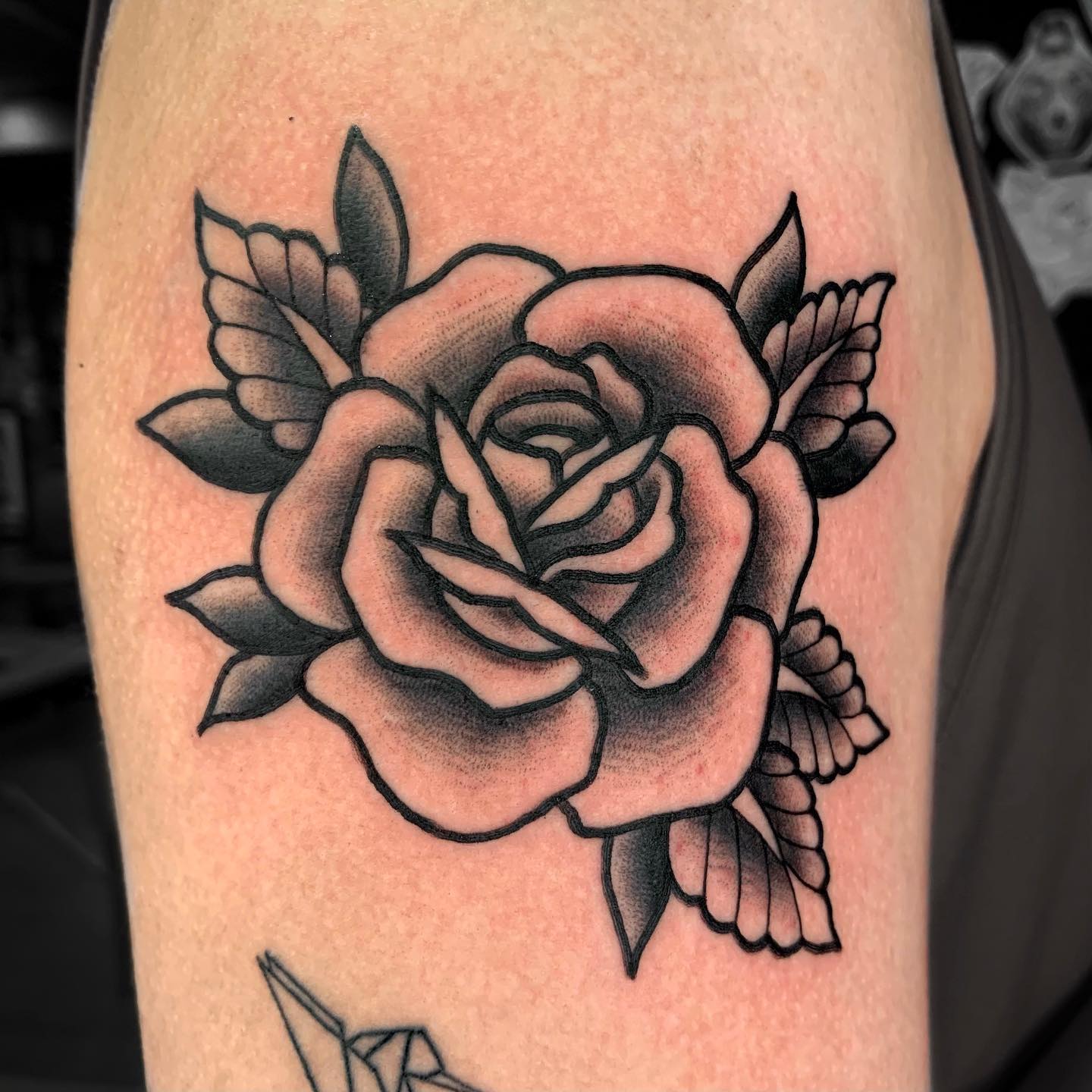
Neo-traditional florals use heavy outlines, limited colour palettes and stylised petals rather than photographic realism.
They are, in my view, the most reliable choice for anyone who wants a tattoo that still looks intentional in twenty years.
The thick linework holds its shape as the ink settles, and the flat colour fields fade evenly instead of going patchy.
This style also forgives skin that does not hold fine detail well, which is worth knowing if you scar easily or have textured skin on the shin.
Floral Leg Tattoos for Men
Florals are not a women’s category, and the men’s versions I see most often lean darker and more graphic.
Blackwork roses, dark peonies paired with geometric shapes, and dense vine work on the calf all sit comfortably in this space.
Skulls, daggers and snakes are common companions, mostly because the hard shapes give the soft petals something to push against.
The calf is the default placement here, since it takes ink easily and shows well in shorts without committing to a full sleeve.
Flower Meanings and Design Variations
Most people arrive at a studio with a placement in mind and no idea which flower they want. Meaning is the usual tiebreaker.
These associations come from a long tradition of floral symbolism rather than any single authority, so treat them as a starting point rather than a rulebook.
Roses and Peonies
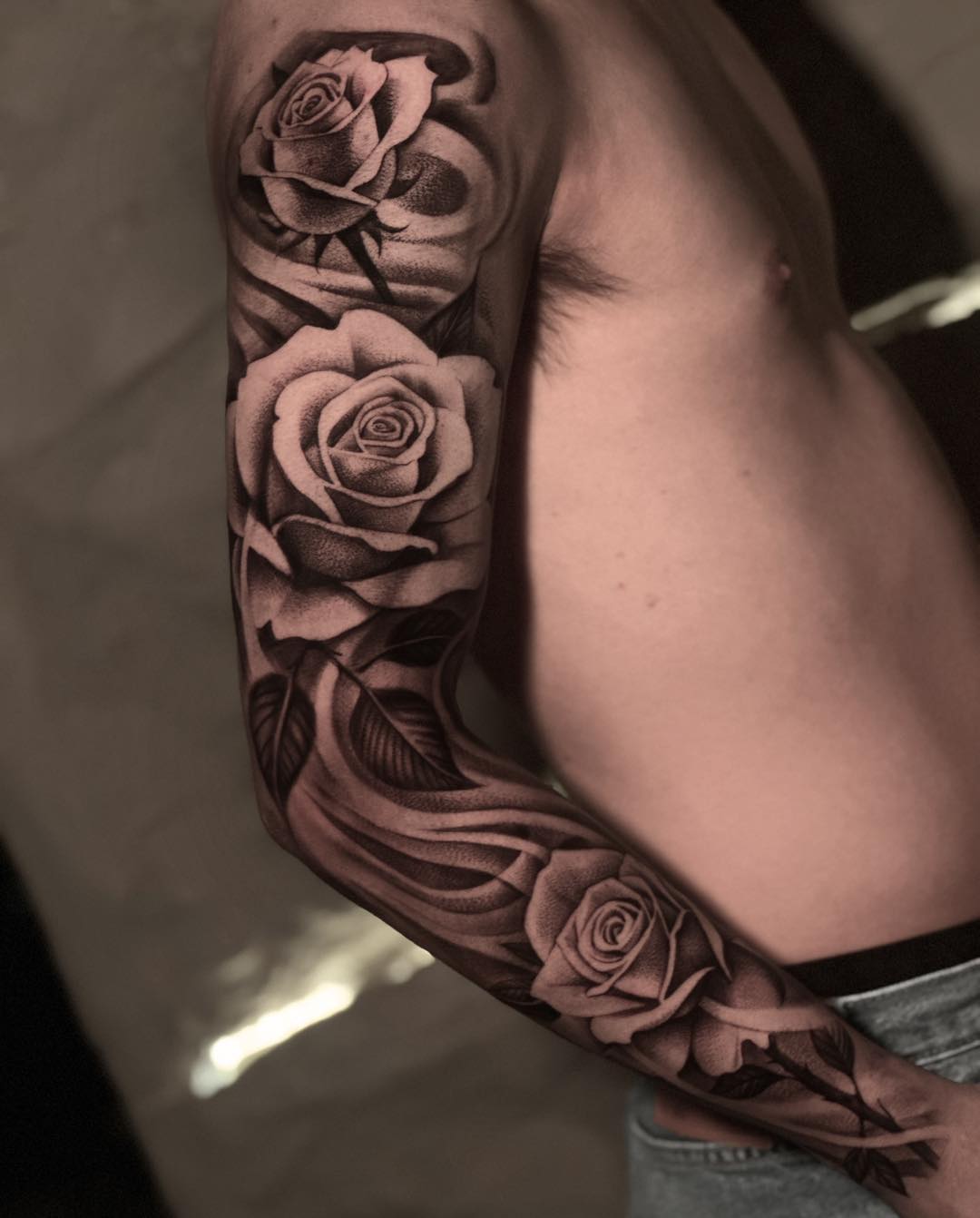
Roses carry love, passion and beauty, with colour shifting the reading — red for love, yellow for friendship, black for remembrance.
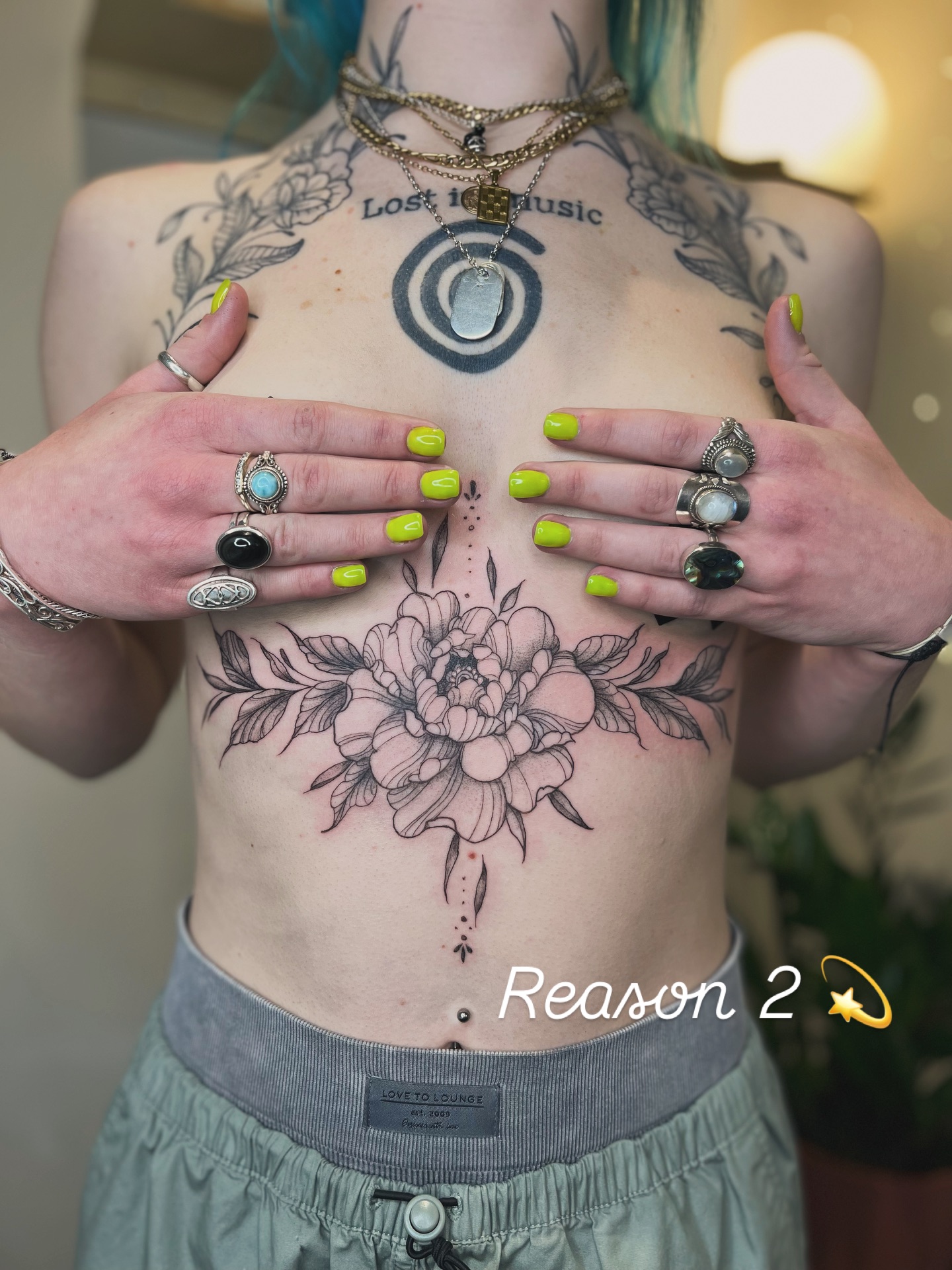
Peonies are associated with prosperity, good fortune and romance, and their layered petals give an artist far more to work with than a rose does.
If you like the density of a peony, our peony tattoo ideas gallery shows how much the styling changes the mood.
Lotus and Cherry Blossom
The lotus is tied to spiritual growth, purity and rebirth, largely because it flowers out of muddy water.
Cherry blossoms represent the fleeting nature of life and the value of the present moment, and they scatter beautifully along a calf or thigh.
Both suit symmetrical, centred compositions — see our lotus tattoo ideas for how that symmetry gets used.
Sunflowers, Daisies and Wildflowers
Sunflowers stand for happiness, positivity and loyalty. Daisies read as innocence, simplicity and new beginnings.
Loose wildflower arrangements have become one of the most requested leg designs I come across, because they look unplanned while actually being carefully composed.
They also scale well: a wildflower band works on an ankle and the same botanical language extends into a half leg sleeve without looking mismatched.
Birth Flowers and Personal Symbolism
Birth flowers let you tattoo people rather than concepts — one bloom per family member, arranged as a single bouquet.
Lilies are commonly linked to purity, commitment and motherhood, which is why they turn up so often in these family pieces.
The placement can carry meaning too. Plenty of people choose the leg specifically because legs represent movement, journey and standing your ground.
Aftercare and Practical Tips for Leg Placement
Legs heal well, but they have two quirks worth planning around: swelling and clothing.
Lower-leg tattoos often swell for the first few days, simply because gravity works against you every time you stand. Elevating the leg in the evenings helps more than anything else I have tried.
Loose trousers or shorts for the first week are not optional. Tight denim over a fresh thigh piece pulls at the healing surface every time you sit down, and I have watched that ruin otherwise clean line work.
Follow the aftercare instructions your own artist gives you rather than anything you read online, including this page — they know what ink and technique they used. General guidance on washing, moisturising and sun protection is available from the American Academy of Dermatology.
One safety note I will not soften: if the area becomes increasingly painful after the first few days, develops spreading redness, produces pus, or you run a fever, that is a matter for a doctor and not for a forum thread. Allergic reactions to specific pigments are uncommon but real, and the US Food and Drug Administration has a plain-language summary of the risks worth reading before a large colour piece.
Still Not Sure? Common Mistakes to Avoid
The mistakes below account for most of the regret I hear about, and every one of them is avoidable at the consultation stage.
Going too small for the amount of detail. A bouquet with eight distinct flowers needs real estate. Shrunk to palm size, it becomes a grey blur within a few years.
Booking a shin piece as your first tattoo. It is a rough introduction, and starting on the outer thigh or calf gives you a far better sense of whether you enjoy the process.
Choosing a design without checking the artist’s healed work. Fresh photos flatter everyone. Healed photos, one to two years on, tell you whether their fine line work actually survives.
Ignoring how the design sits when you move. Legs bend constantly, and a stiff, perfectly symmetrical arrangement can look odd the moment you sit down.
If you are still weighing designs, it is worth browsing wildflower tattoo ideas before committing to anything permanent.
Frequently Asked Questions
How much does a floral leg tattoo cost?
Cost depends far more on time than on the design itself, since most studios charge an hourly rate or a session rate. A small ankle bloom is usually a shop-minimum job, while a full thigh piece is a multi-hour booking and priced accordingly. Rates vary widely by city and by artist reputation, so the only reliable number is the quote you get at consultation. Ask whether touch-ups are included, because policies differ from studio to studio.
How painful is a floral leg tattoo?
It varies enormously by zone. The outer thigh and calf are among the more comfortable places on the body, because there is muscle and fat between the needle and the bone. The shin, ankle, knee and inner thigh are considerably sharper. Pain tolerance is also personal, so treat any pain chart as a rough guide rather than a promise.
How long does a floral leg tattoo take to heal?
The surface usually looks settled within two to three weeks, but the deeper layers keep healing for a couple of months after that. Lower-leg placements often take slightly longer because of swelling and constant contact with socks and shoes. Avoid swimming pools, baths and direct sun until the skin has fully closed. Your artist’s timeline for your specific piece beats any general figure.
Do floral leg tattoos fade faster than other placements?
Not inherently, but legs are exposed to sun more than most covered placements, and sun is the main driver of fading. Areas that rub against clothing — ankles especially — can also soften sooner. Consistent sunscreen on healed skin makes a genuine difference. Colour work generally needs more maintenance than black and grey.
Can a floral leg tattoo be extended into a full sleeve later?
Yes, and floral designs are among the easiest styles to extend because vines and stems give a natural way to connect sections. The key is telling your artist at the very first session that a sleeve might happen, so they can leave room and plan the flow. Extending a piece that was placed without that plan usually means awkward filler. Staying with one artist across the project also keeps the style consistent.
Quick Summary
- The outer thigh and calf are the most comfortable and forgiving spots for a first large floral piece.
- The shin, ankle, knee and inner thigh hurt considerably more and suit simpler, bolder designs.
- Black and grey ages more predictably than colour; colour needs stronger linework and more sun protection.
- Leave more space between petals than looks necessary, because ink spreads slightly over the years.
- Choose your flower for meaning if you are undecided — roses, peonies, lotus, sunflowers and birth flowers all carry established associations.
- Vines and trailing stems are the easiest way to connect separate pieces into a leg sleeve later.
- Ask to see the artist’s healed work, not just fresh photos, before booking.
- Follow your artist’s aftercare, keep clothing loose for the first week, and see a doctor for spreading redness, pus or fever.