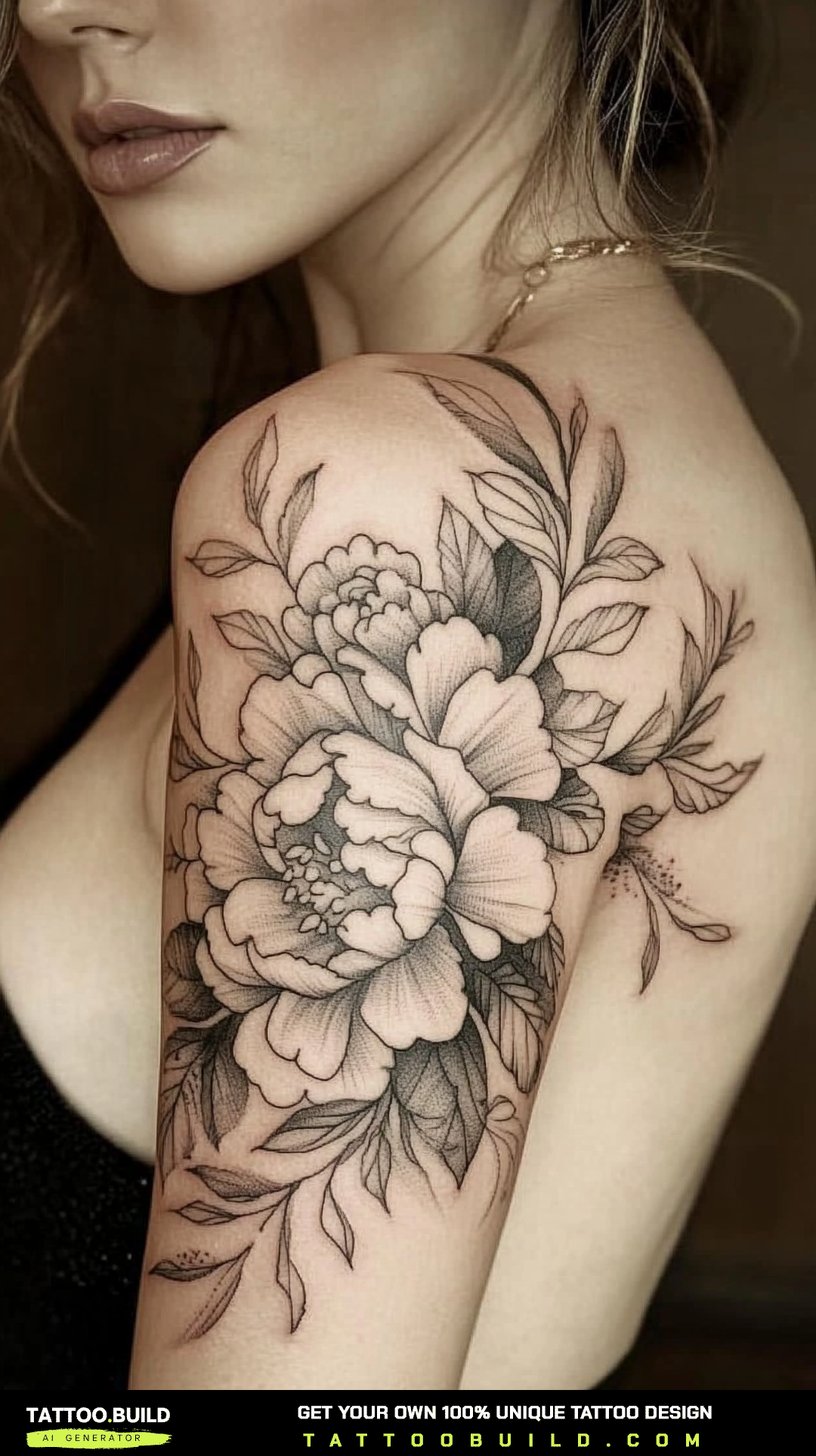
The shoulder is one of the few places on the body where you can wear a tattoo openly all summer and hide it completely under a blazer on Monday morning. That single fact — total control over who sees it — is why the shoulder has quietly become the default placement for women who want something elegant rather than loud.
I have spent a long time collecting and comparing shoulder work, and the pieces that still look good years later almost always share the same three traits: a composition that follows the curve of the deltoid, restrained line weight, and enough bare skin left around the design to let it breathe.
Every artist I have asked about this placement says roughly the same thing — the shoulder is generous. It gives you a rounded, mostly flat canvas with stable skin, and it tolerates everything from a single stem to a full floral cap. If you are starting smaller, our roundup of small shoulder tattoo ideas covers the same placement at a lighter scale.
Below are 24 designs I keep coming back to, grouped by style rather than listed at random, plus the practical notes on sizing, healing and cost that usually get left out of galleries like this.
Which Classy Shoulder Style Is Right for You?
Before scrolling the gallery, it helps to know which lane you are in. The differences below matter more for how the tattoo looks in five years than for how it looks on the day.
| Style | What It Looks Like | Best If You Want | Usual Sitting | How It Ages |
|---|---|---|---|---|
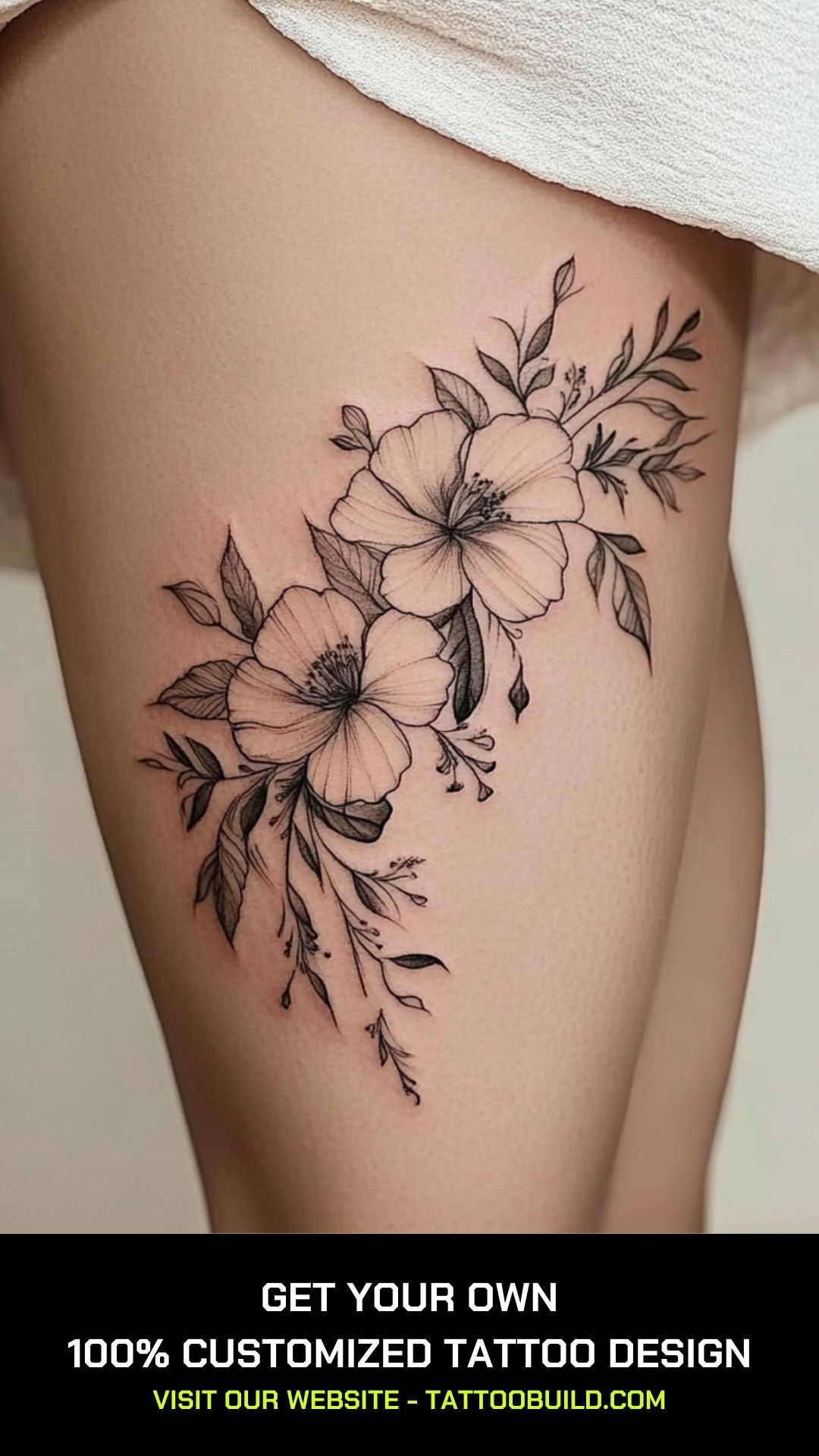
| Fine-line floral | Single-weight outlines, little or no shading | Something quiet you can cover easily | Roughly 2–3 hours | Softens fastest; usually needs a touch-up sooner |
| Black-and-grey botanical | Layered blooms with smooth grey wash | Depth and contrast without colour | Roughly 4–6 hours | Very well, if the shading was packed evenly |
| Illustrative colour | Saturated petals, defined outlines | A piece that carries across a room | Often two sessions | Depends heavily on sun exposure |
| Geometric or mandala | Symmetrical dotwork and repeated shapes | Structure rather than realism | Roughly 3–5 hours | Strong, though fine dotwork can blur |
| Minimalist / micro | A few small elements, lots of bare skin | A first tattoo or a discreet piece | Often under 90 minutes | Fine when kept simple; crowded micro work blurs |
The sitting times are approximate and vary hugely by artist speed and design size. Treat them as a rough planning guide, not a quote.
What Actually Makes a Shoulder Tattoo Look Classy
“Classy” is a vague word, but in tattooing it usually comes down to editing rather than adding.
The most common thing I see separating an elegant shoulder piece from a busy one is negative space. A design that leaves clear skin between its elements reads as deliberate; one that fills every gap reads as crowded, no matter how good the linework is.
Line weight is the second factor. A single consistent needle weight looks refined; mixing three or four weights without a reason makes a piece look assembled rather than designed.
The third is flow. The deltoid is a dome, not a wall, so a design drawn flat on paper often sits awkwardly once it is stencilled. Good artists redraw the stencil on your actual shoulder for exactly this reason, and it is worth the extra twenty minutes at the appointment.
Finally, subject matter. Florals dominate this placement for a practical reason — petals and leaves are irregular shapes that hide the distortion a curved surface causes. Straight lines and perfect circles do not have that luxury.
24 Classy Shoulder Tattoo Ideas, Grouped by Style
I have grouped these by what they actually are rather than numbering them one to twenty-four, because the grouping is the useful part when you are briefing an artist.
1. Fine-Line Florals That Stay Soft on the Skin
Fine-line work is where most people start, and for good reason: it is the least visually demanding style on this placement.
A single-weight outline of a few stems reads as jewellery rather than illustration. The trade-off is honest — fine lines soften faster than bold ones, and most fine-line pieces I have followed needed a touch-up somewhere between the second and fifth year.
If you want this style to last, keep the elements few and the gaps wide. Crowded fine-line work is the single most common thing artists ask to redraw. Our broader collection of fine-line tattoo ideas shows the same principle applied to other placements.
2. Bold, Layered Bouquets in Black and Grey
At the other end of the scale sits layered black-and-grey botanical work — several blooms stacked with smooth grey wash between them.
This is the style that ages best on the shoulder in my experience, because packed shading holds its shape as skin changes far better than isolated thin lines do.
It is also the bigger commitment. Expect a longer sitting, and expect your artist to want to place the largest bloom on the outer curve of the deltoid where it will read best from the front and side at once.
3. Peonies — The Shoulder’s Best-Fitting Flower
If I had to name one flower that suits this placement better than any other, it is the peony.
Peonies are round, layered and slightly irregular, which means they sit naturally on a rounded muscle and forgive the distortion that flattens a stencil against a curve.
They also scale in both directions: a single peony works as a modest shoulder cap, and three overlapping ones fill the whole deltoid without looking repetitive. Our dedicated peony tattoo ideas guide has more variations if this is the direction you are leaning.
4. Roses and Other Classic Blooms
Roses remain the most requested flower on the shoulder, and the reason is not just sentiment — the spiral centre gives an artist a natural focal point to build around.
The version that dates fastest is a lone rose floating in the middle of the shoulder with no surrounding elements. Adding leaves, a second smaller bloom, or a stem that trails toward the bicep anchors it to the body.
Traditional roses with bold outlines age particularly well. If you like the motif but not the classic execution, rose tattoos for women covers the softer illustrative treatments.
5. Birds, Butterflies and Blooms Together
Adding a creature to a floral piece gives the eye somewhere to land, which is exactly what a large arrangement needs.
The rule I have heard from more than one artist is that the animal should be the smallest element, not the largest. A bird tucked between two blooms reads as a detail; a bird the size of the flowers competes with them.
Butterflies and small songbirds are the usual choices because their outlines break up cleanly against petals. Heavier subjects tend to need their own space.
6. Lilies, Chrysanthemums and Less Common Flowers
If you would rather not have the same rose as everyone else, the shoulder handles longer-stemmed and more architectural flowers well.
Lilies stretch rather than cluster, which flatters a narrower frame and gives a vertical line down the arm. Chrysanthemums bring a denser, more decorative petal structure borrowed from Japanese traditional work.
Hibiscus and other tropical blooms sit somewhere between the two — large enough to carry a piece on their own, soft enough not to look heavy. Our wildflower tattoo ideas are also worth a look if you prefer something less formal again.
7. Ornate Work with Flourishes and Filigree
Filigree is the quiet trick behind a lot of shoulder pieces that look more expensive than they are.
Instead of adding more flowers to fill space, an artist extends the design with thin decorative flourishes that trail off toward the collarbone or bicep. The result covers more area without adding visual weight.
The one caution here is that very fine ornamental lines are the first thing to blur. Ask your artist to keep the flourishes at a workable weight rather than the thinnest possible.
8. Sculptural Compositions That Follow the Deltoid
The most sophisticated pieces in this whole collection are the ones that were clearly drawn for a shoulder rather than adapted to one.
You can spot them by the outer edge: the design sweeps in an arc that matches the muscle, and nothing is cut off by a straight border.
This is worth asking for specifically at consultation. In my experience the phrase that gets the result is “please draw it on me, not on paper” — most artists prefer working that way anyway.
Variations Worth Considering
Florals dominate this placement, but they are not the only way to do it well.
Geometric and Mandala Shoulder Pieces
Symmetrical work is beautiful on the shoulder but technically harder, because a dome distorts a circle.
A good artist compensates in the stencil, which is why mandala pieces on this placement usually take longer to set up than to tattoo. If this is the direction you want, our mandala designs collection covers sizing and symmetry in more detail.
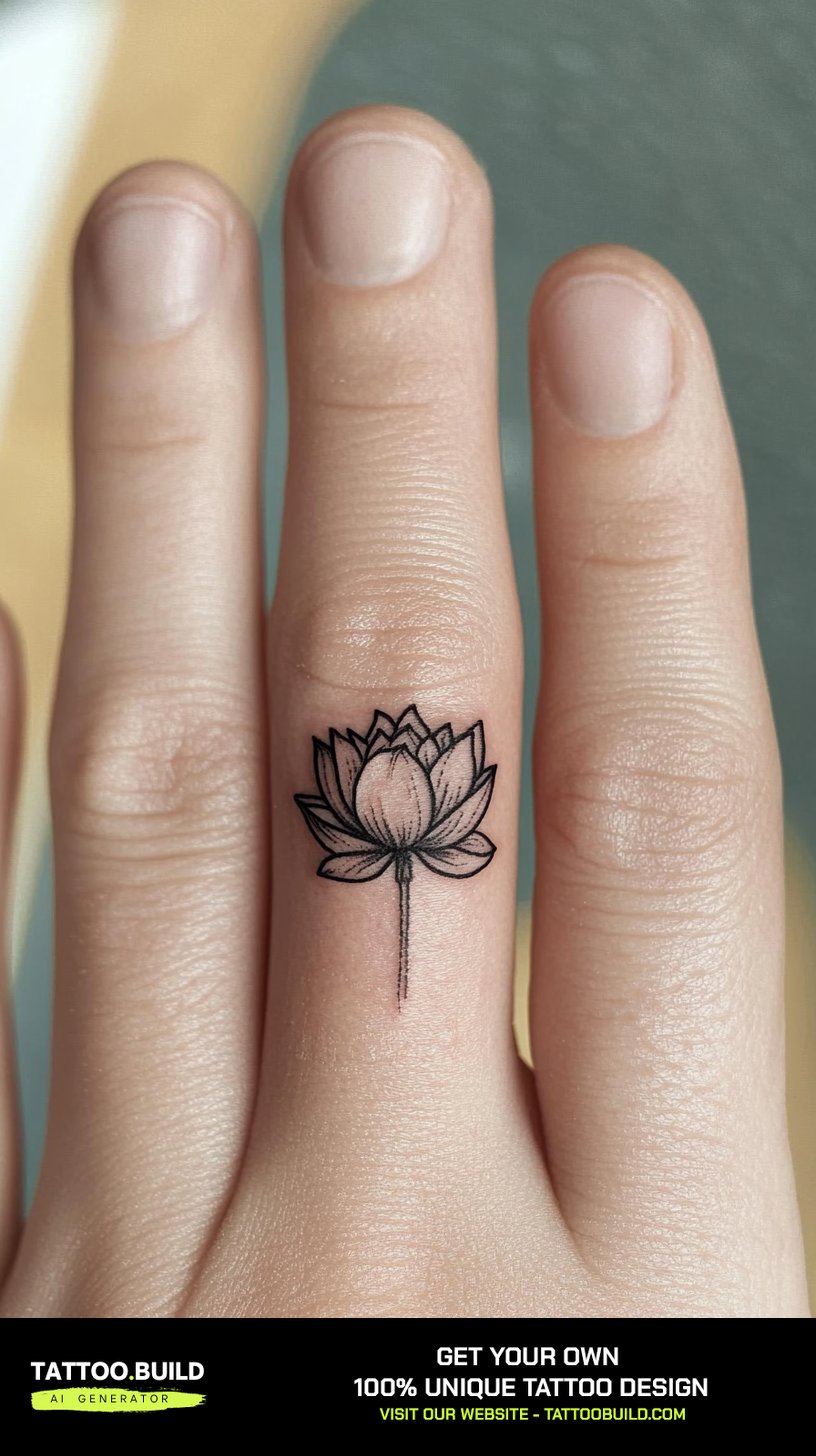
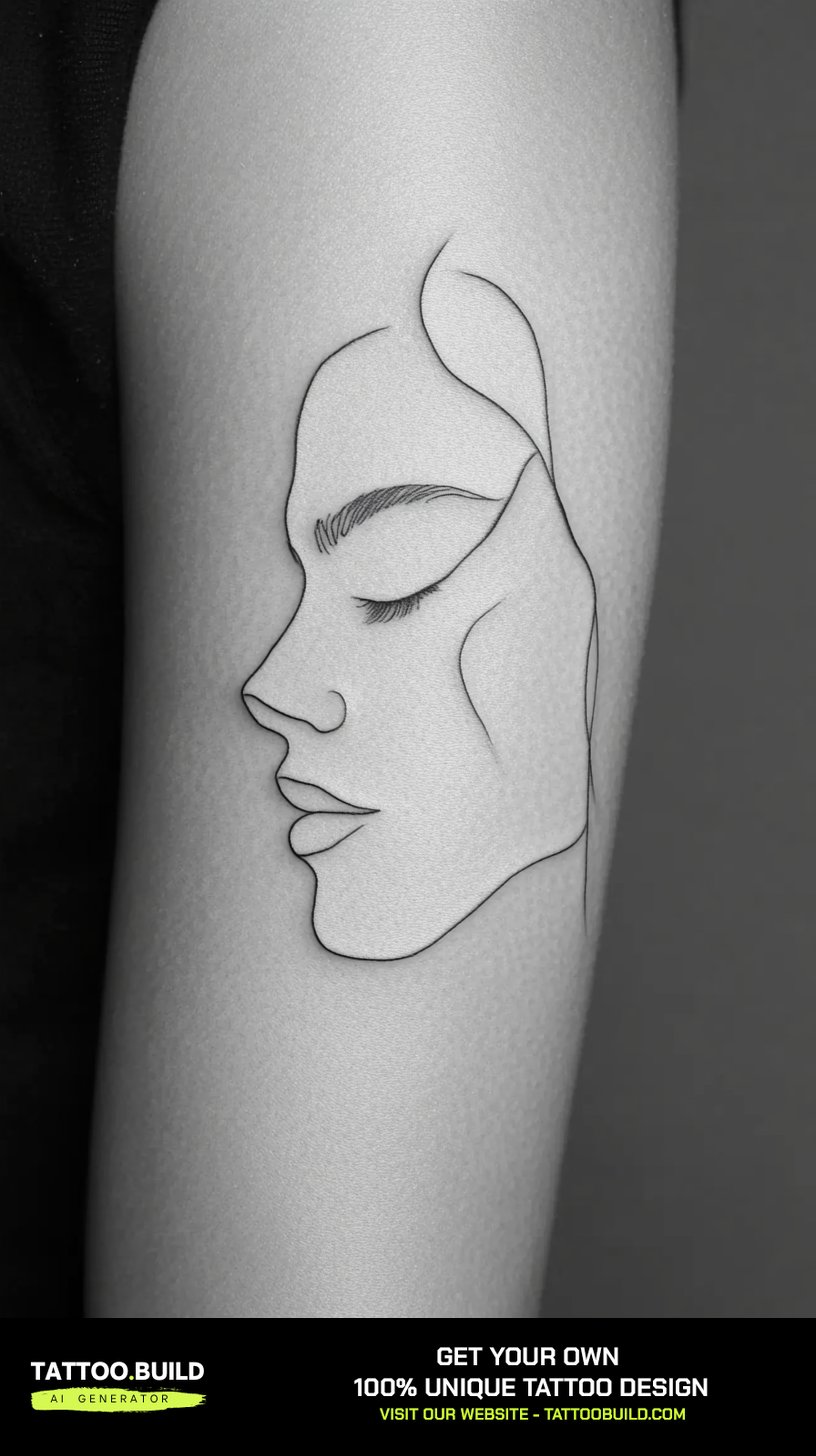
Minimalist and Micro Designs
A small piece placed high on the shoulder, close to the collarbone line, is one of the most discreet options there is.
Keep micro work genuinely simple. Detail that is smaller than roughly a grain of rice tends to close up as the tattoo settles, and no artist can prevent that entirely.
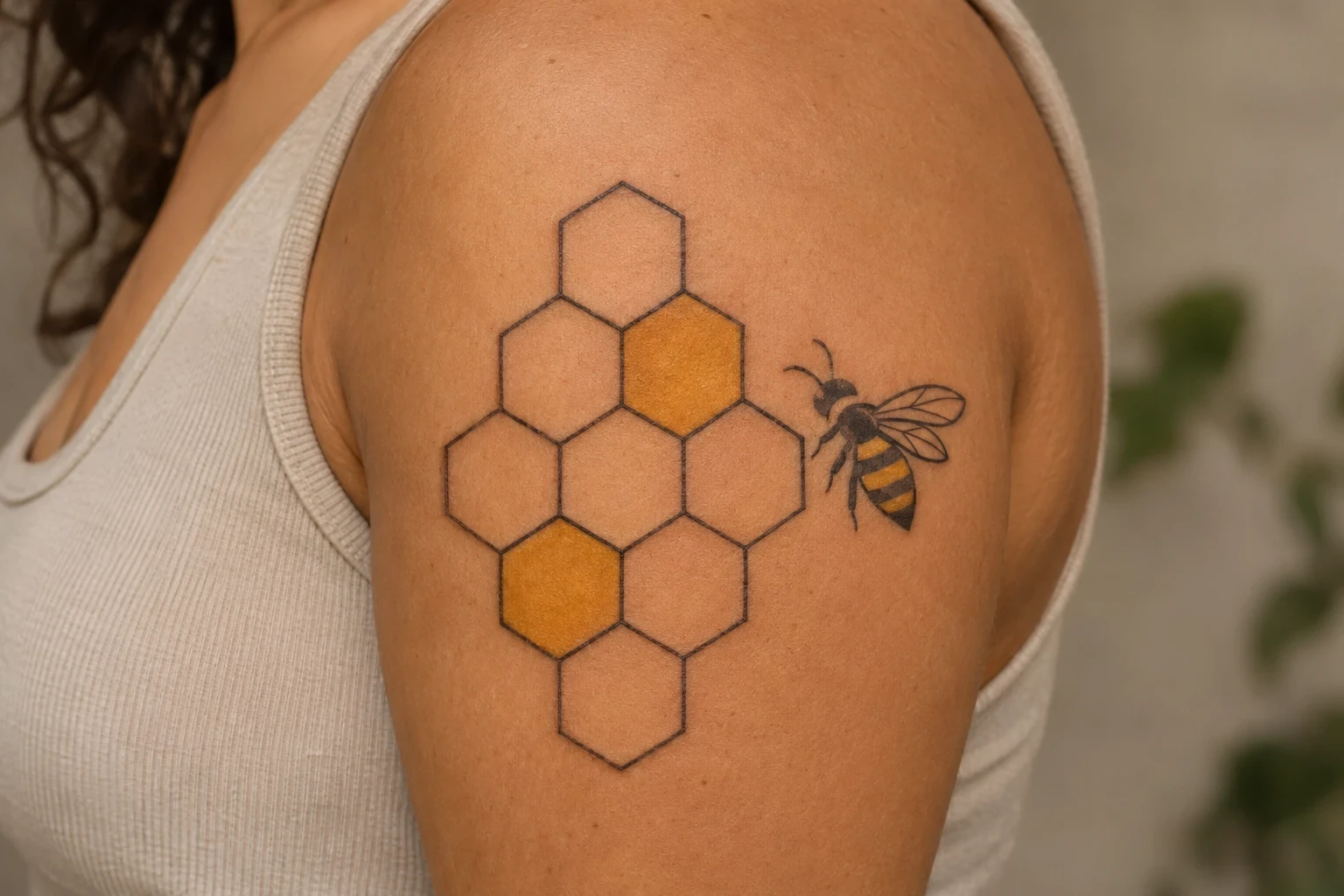
Playful and Unexpected Motifs
Not everything on this placement has to be serious. Tropical motifs, novelty objects and drifting dandelion seeds all work, and they age fine as long as the linework is solid.
Colour is the variable to think about. Saturated pieces on the shoulder look excellent and fade faster than black and grey if the area sees a lot of sun, which on this placement it usually does.
Wrap-Around and Cap Sleeve Extensions
A shoulder tattoo that continues slightly past the seam — toward the upper back or down into a cap sleeve — changes the whole silhouette.
If there is any chance you will extend it later, say so at the first appointment. Retrofitting a sleeve onto a hard-bordered shoulder piece is one of the more expensive fixes in tattooing.
Placement, Healing and Practical Tips
The outer shoulder is a comparatively forgiving spot to sit through, but the healing period is where people actually run into trouble.
Friction is the main risk. Bra straps, backpacks and tight sleeves all sit exactly where the tattoo is, and rubbing a healing tattoo is far more damaging than most people expect. Plan for loose clothing for the first week or two.
Sun is the long-term risk. Once healed, a shoulder tattoo will see more UV than almost any other placement, and UV is the main driver of fading. Sunscreen on the area, every time, is the single highest-return habit for keeping it sharp.
For anything health-related, go to a professional rather than a gallery post like this one. The Mayo Clinic outlines the general risks of tattooing, and the FDA tattoo and permanent makeup fact sheet covers ink safety and reactions. If you develop spreading redness, worsening swelling after the first few days, a rash, or a fever, see a doctor — do not try to manage a possible infection or allergic reaction yourself.
Still Not Sure? Common Mistakes to Avoid
The mistake I see most often is choosing a design from a photo taken on a completely different body. A piece that fits a broad shoulder can look cramped on a narrow one, and the reverse is equally true.
The second is sizing down to save money. A detailed floral shrunk by a third does not become a smaller version of itself — it becomes a blurrier one within a few years.
The third is booking before you have seen healed work. Portfolio photos taken the day of the appointment tell you very little; ask any artist for healed pictures of the same style.
If you are still weighing placements, it is worth comparing this one against classy shoulder designs for females and against lighter options like small shoulder tattoo ideas before committing.
Frequently Asked Questions
Do classy shoulder tattoos hurt more than other placements?
The outer shoulder and deltoid are among the more forgiving spots, because there is muscle underneath and few nerve clusters near the surface. Where it changes is the top of the shoulder toward the collarbone and anywhere the needle passes close to bone. In my experience most people describe the deltoid as an uncomfortable but manageable ache rather than sharp pain. If you want a fuller comparison, our guide to the most painful tattoo spots ranks placements side by side.
How much does a classy shoulder tattoo usually cost?
Price depends on size, style and your artist’s hourly rate, so any figure I gave you would be guesswork for your city. What I can say is that shoulder pieces are almost always quoted by the session rather than by the piece, and detailed black-and-grey florals often run into a second sitting. Ask for a quote range at consultation and confirm whether touch-ups are included. Booking a fast, cheap piece is the most common regret I hear about.
Will a shoulder tattoo stretch if my weight changes?
The shoulder is one of the more stable areas on the body, so moderate weight change usually has little visible effect. Significant changes, pregnancy, or heavy muscle gain can shift a design slightly, most often at the outer edge where it wraps. Designs built around the natural curve tend to move with the body better than rigid symmetrical ones. This is one reason artists often steer clients away from perfectly square borders on this placement.
What should I avoid while a shoulder tattoo heals?
Keep bra straps, backpack straps and tight sleeves off the area, since friction is the main thing that damages a fresh shoulder tattoo. Avoid swimming, soaking and direct sun until it has fully closed, and follow the aftercare your artist gives you rather than advice from the internet. The American Academy of Dermatology publishes general guidance on caring for tattooed skin. If you see spreading redness, swelling that worsens after a few days, or fever, contact a doctor rather than waiting it out.
Can a shoulder tattoo be extended into a sleeve later?
Yes, and it is one of the reasons the placement is so popular. A well-planned shoulder piece can grow downward into a half sleeve or across into the upper back, provided the original design has open edges rather than a hard border. Tell your artist at the first consultation if a sleeve is even a possibility, because it changes how they compose the piece. Our floral half sleeve guide shows how these extensions are usually staged.
Quick Summary
- The shoulder is popular because it is easy to cover and easy to show — you keep control of who sees it.
- Negative space, consistent line weight and a composition that follows the deltoid are what make a piece read as elegant.
- Florals dominate this placement because irregular shapes hide the distortion a curved surface causes.
- Peonies fit the shoulder better than almost any other flower, and scale up or down without redesigning.
- Fine-line work is the gentlest entry point but softens fastest; packed black-and-grey shading ages best.
- Ask your artist to draw the stencil directly on your shoulder rather than adapting a flat drawing.
- Friction from straps during healing and UV exposure afterwards are the two biggest threats to the finished piece.
- If a sleeve is even a possibility later, say so before the first line goes in.