A classy shoulder tattoo works because the shoulder is one of the few places on the body where you get to decide, every morning, whether the world sees your tattoo or not. A t-shirt hides it. A tank top frames it. That single fact is why it stays the placement I recommend most often to women getting their first serious piece.
I have spent a lot of time in studio waiting rooms looking at healed shoulder work, and the pattern is consistent: the pieces that still look expensive three or four years later are the ones that followed the shape of the deltoid instead of ignoring it.
The shoulder is also kind to skin. It is a rounded, fleshy area with relatively little movement compared with the hands, feet or ribs, which usually means cleaner healing and less line spread over time.
In this guide I have pulled together the styles that consistently read as elegant rather than dated, what each one actually costs you in chair time, and how to brief an artist so the design fits your body rather than a flash sheet. If you are still deciding on size, the ideas in my roundup of small shoulder tattoo ideas for women pair well with everything below.
Which Shoulder Tattoo Style Is Right for You?
Style choice matters more than size. A badly chosen style at two inches looks worse than a well-chosen one at eight.
Here is how the main options compare in practice. Session times are rough ranges based on what artists have quoted me and people I know for a shoulder-sized piece, not fixed prices.
| Style | Best For | Typical Session | How It Ages |
|---|---|---|---|
| Fine-line floral | A first tattoo that stays subtle under work clothes | 2–4 hours | Softens; needs spacing between lines to stay readable |
| Script or single word | Something personal you want to be able to read | 1–2 hours | Good if strokes are not hair-thin |
| Botanical branch | Following the natural slope of the shoulder | 2–4 hours | Very well; varied line weight hides softening |
| Butterfly or moth | A symmetrical focal point on the front of the shoulder | 3–5 hours | Depends entirely on shading quality |
| Celestial | Scattered, airy designs that can grow later | 1–3 hours | Well; gaps are part of the design |
| Ornamental mandala | A cap that mirrors the round shape of the deltoid | 4–7 hours | Strongly, when dotwork is evenly packed |
| Blackwork | Bold statements meant to be seen from across a room | 4–8 hours | Best of all, but touch-ups on solid fills are common |
Why Shoulder Placement Flatters Almost Everyone
The deltoid is a dome. Any design placed on it is seen curved rather than flat, which means the artist has to draw for a surface that bends away from the viewer.
Good artists use that. They let stems, wings and ornamental edges wrap slightly around the curve so the piece looks three-dimensional from the front and from the side.
Placement here also gives you an unusual amount of control. In my experience it is the single most common reason women choose the shoulder over the forearm, especially in workplaces with a conservative dress code.
There is a practical benefit too. The shoulder gets less sun than the forearm for most people, and dermatologists consistently name sun exposure as a major cause of faded, blurry tattoos.
Pain is usually moderate. The outer shoulder has enough tissue over the bone that most people I have asked describe it as a scratchy irritation rather than the sharp bite you get on the collarbone or ribs. Closer to the top of the shoulder, where bone sits nearer the surface, it does sting more.
Classy Shoulder Tattoo Ideas for Females, Style by Style
Each of the styles below works on a shoulder for a different reason. I have noted what to ask for and what tends to go wrong.
1. Fine-Line Florals That Follow the Deltoid
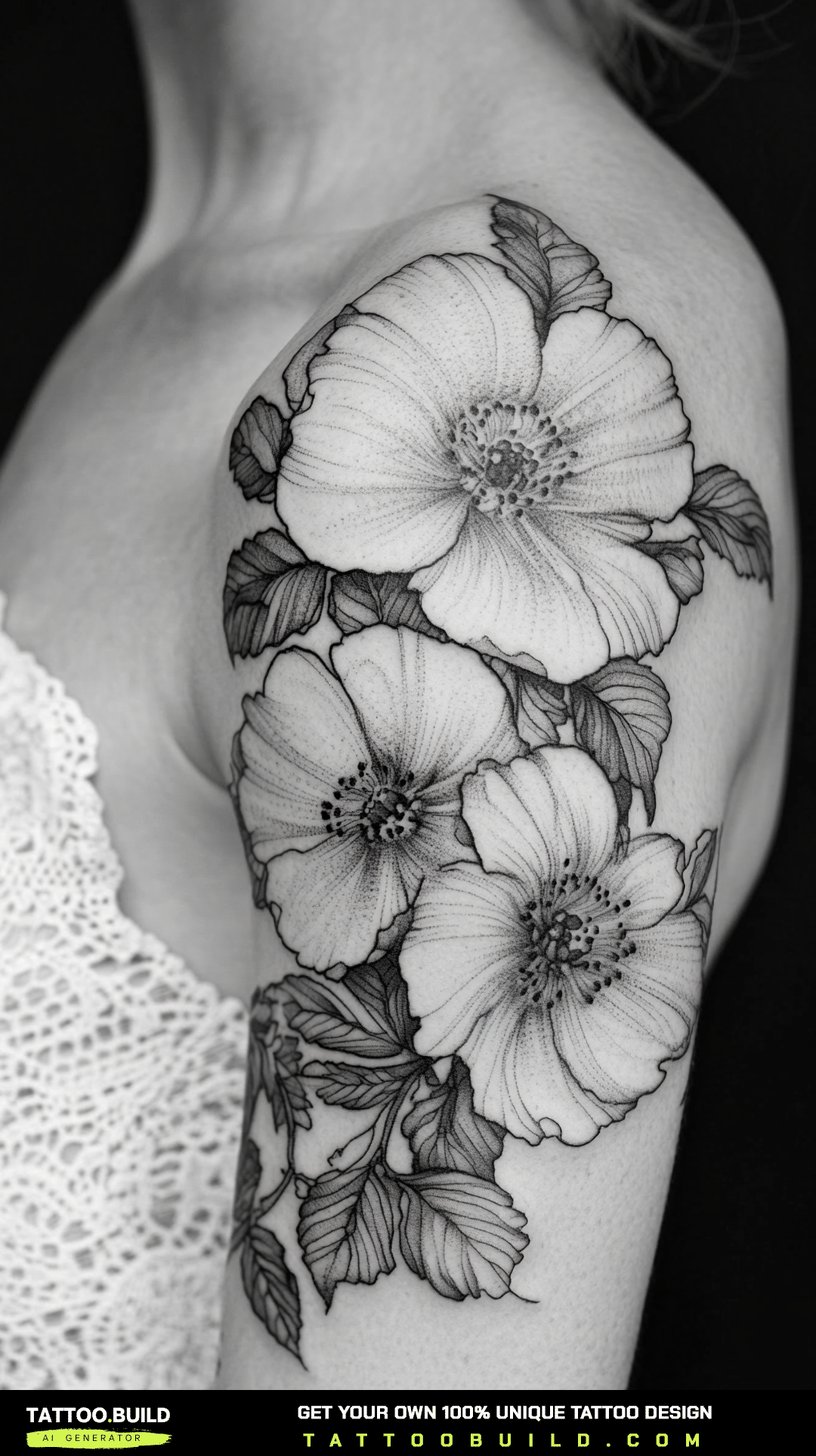
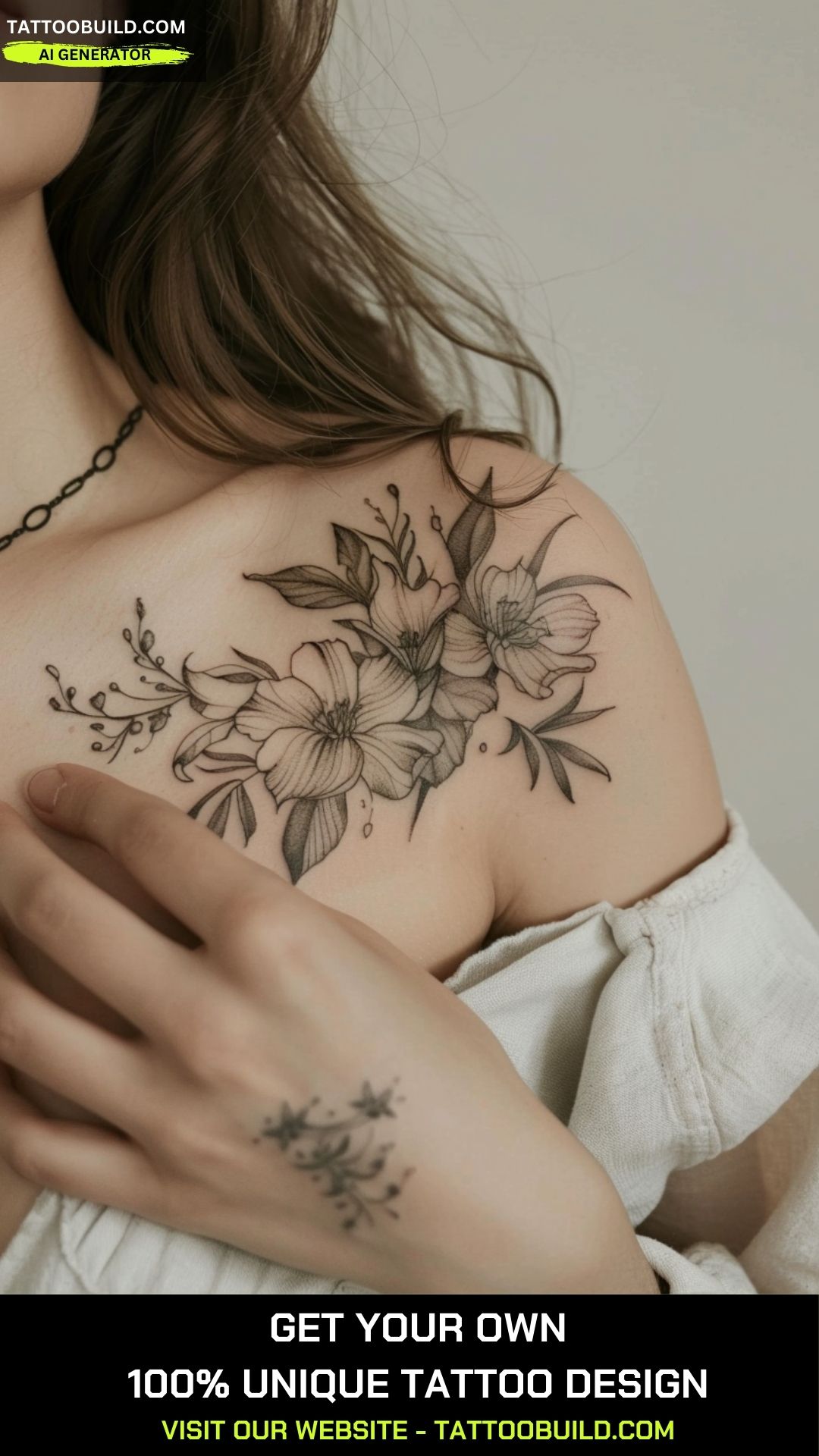
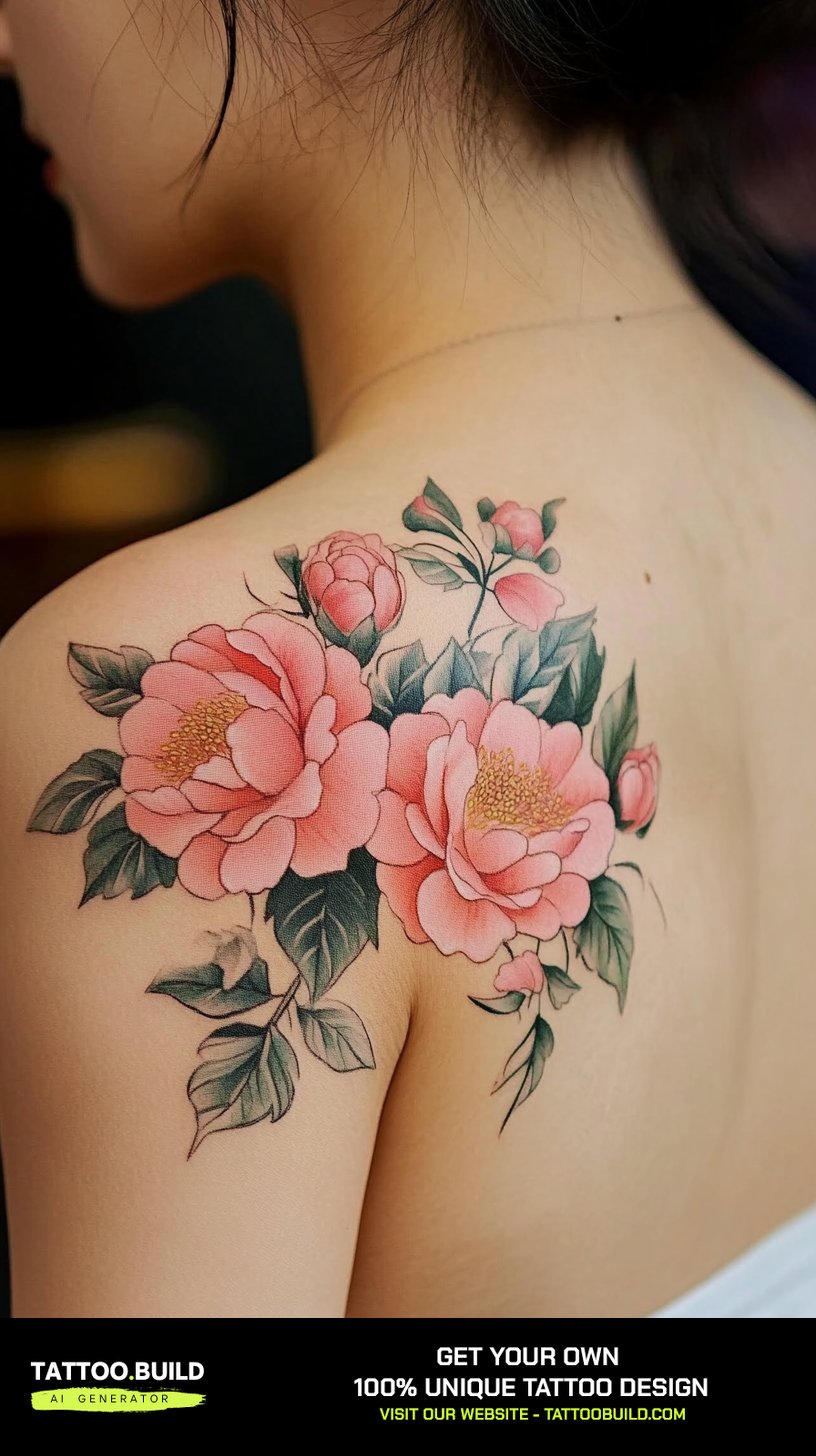
Fine-line floral work is the definitive classy shoulder tattoo for females, and it is the request I hear most often when someone says they want something elegant but not loud.
The technique uses a single needle or a very tight grouping to produce hairline outlines with minimal shading. On a shoulder, that reads as jewellery rather than as a tattoo.
The risk is line spread. Very thin lines placed close together can blur into each other after several years, which is why I always suggest leaving visible gaps between petals rather than packing them.
Ask your artist to show you healed fine-line work at least two years old. If they only show fresh photos taken the day of the appointment, that tells you something. For more on the technique itself, see my guide to fine-line tattoo ideas.
2. Delicate Script and Single-Word Tattoos
Script on the shoulder works best when it runs along the length of the shoulder, not across it, so the words stay level when your arm is at rest.
One word almost always beats a full sentence here. Short text ages better and photographs better, and it does not force the artist to shrink the letterforms to fit.
If you want a quote, consider dropping it onto the upper back or ribs and keeping the shoulder for a symbol instead. I have seen a lot of shoulder quotes that had to be squeezed and lost their spacing.
Whatever the wording, have the artist print a stencil at final size and hold it against your skin before anything is committed. Reading it in a mirror at real scale changes people’s minds surprisingly often.
3. Botanical Branches and Wildflower Sprays
A branch is the easiest shape to fit to a shoulder because it is already a curve. The artist just has to choose which way it flows.
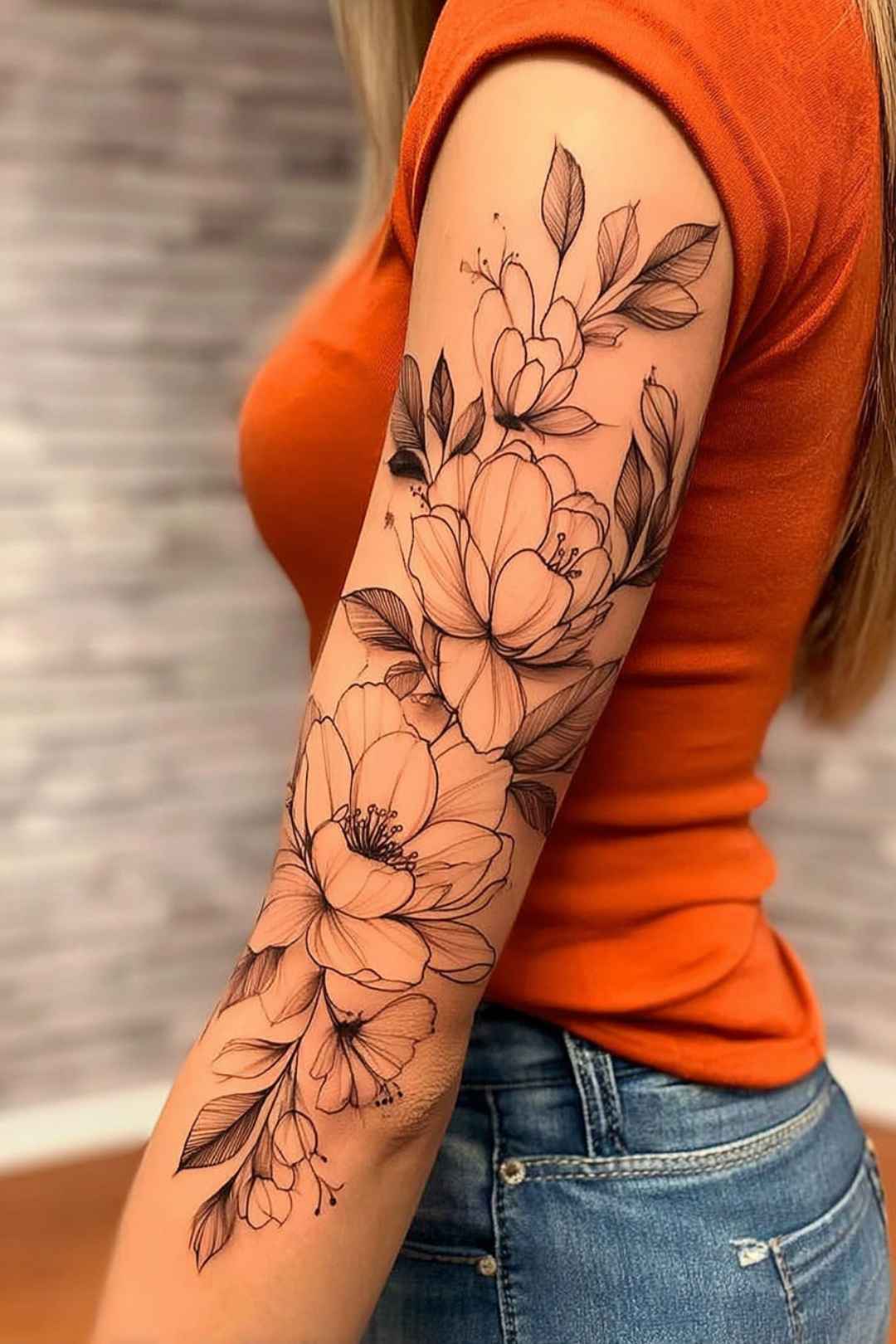
Wildflower sprays give the same benefit with more visual variety. Different bloom sizes let the artist vary line weight, and varied line weight is what keeps a piece looking sharp as it softens.
This is also the most extendable style on the list. A shoulder spray can grow down the arm into a half sleeve years later without redrawing anything, which is exactly what happened with two friends of mine.
If a specific flower matters to you, birth flowers are a natural fit here — there is a full set of options in my birth flower tattoo ideas collection.
4. Butterflies, Moths and Winged Motifs
Winged designs suit the front of the shoulder, where the skin moves less than it does over the back of the joint.
Symmetry is the whole game with a moth or butterfly. If one wing is fractionally larger than the other, the eye catches it immediately, and it cannot be fixed later without redrawing.
When I have watched artists tattoo these, the good ones spend a genuinely long time on stencil placement, walking around the client and checking from several angles before starting.
Ask to see the stencil from behind you in a second mirror. That angle is the one you will never see yourself but everyone else will.
5. Celestial Designs: Moons, Stars and Constellations
Celestial work is forgiving. The gaps between elements are part of the composition, so nothing needs to be packed tightly.
A crescent moon with a handful of scattered stars is one of the smallest pieces that still looks deliberate rather than accidental, which makes it a strong first tattoo.
Constellations need care. Tiny dots placed with a heavy hand can blow out under the skin and turn into small smudges, so this is not the style to bargain-hunt on.
Every artist I have asked about dotwork says the same thing: it is slower than it looks, and a rushed session shows within a year.
6. Ornamental and Mandala-Inspired Shoulder Caps
An ornamental cap mirrors the round shape of the deltoid, which is why it reads as tailored rather than stuck on.
These are longer sessions than most people expect. Evenly packed dotwork across a curved surface is painstaking, and it is normal to split it across two appointments.
The payoff is longevity. Dense, evenly spaced ornamental work holds its shape better than almost any other delicate style.
A cap also gives you a natural anchor point if you later want to build outward. Several of the compositions in my full sleeve tattoo ideas for women roundup started life as a single shoulder cap.
7. Blackwork and Bold Graphic Statements
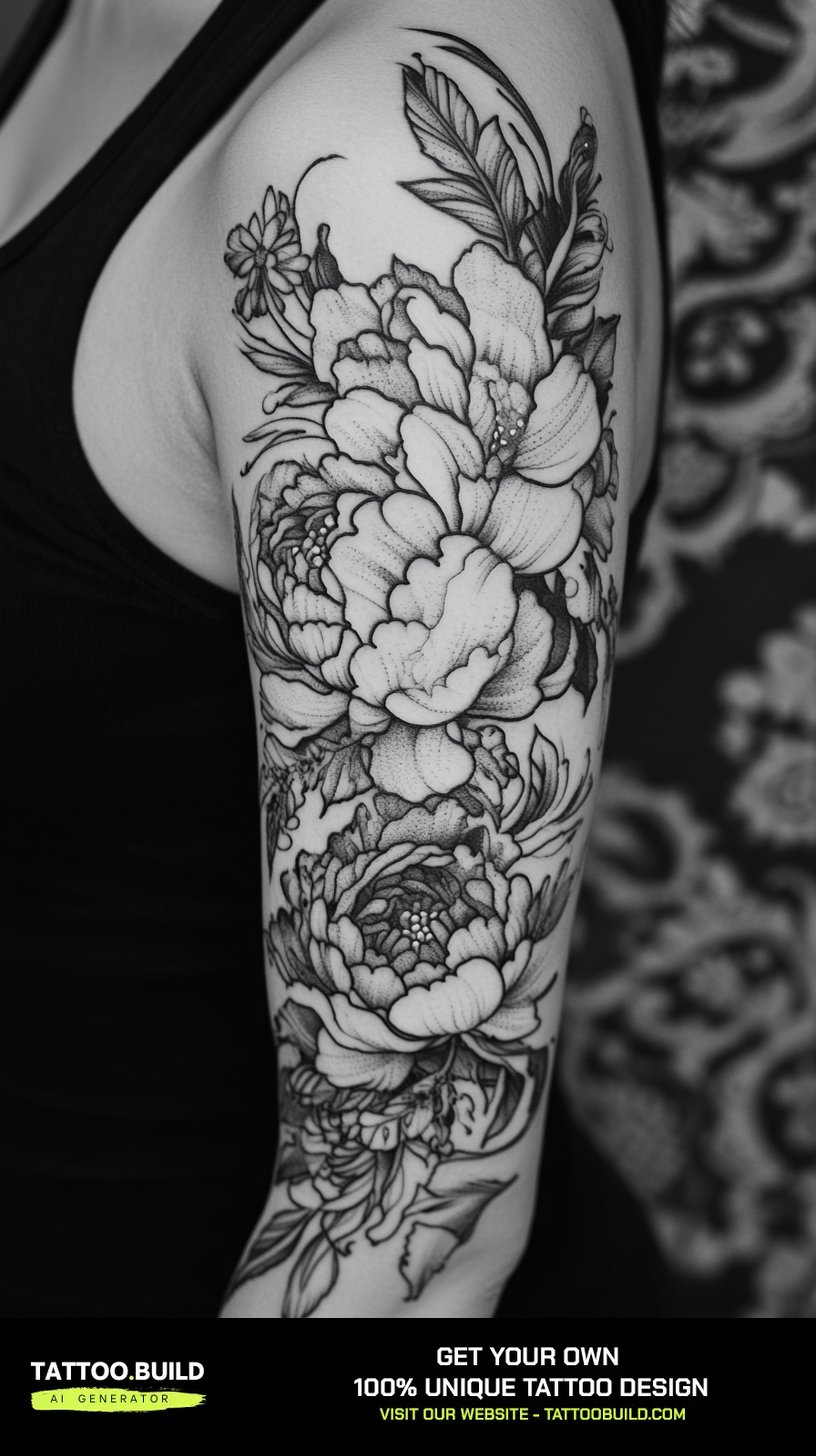
Classy does not have to mean small. Bold blackwork on a shoulder can be the most elegant thing in the room, especially with a strong neckline.
Solid black ages more predictably than fine linework because there are no thin lines to spread. What it does need is even saturation, and patchy fills usually require a touch-up.
Expect a longer, more uncomfortable session. Packing black is repetitive work over the same skin, and most people find the last hour harder than the first three.
Negative space is doing half the work in the best blackwork pieces, so resist the urge to fill every gap.
8. Cap-and-Trail Designs Toward the Collarbone
This is the composition that has grown fastest in the last few years: a shoulder cap that trails a few inches onto the upper chest.
It flatters wide and scooped necklines because the design follows the same line your top does. On a straight neckline it can look cut off, so bring photos of what you actually wear.
Be aware the collarbone stings considerably more than the outer shoulder. There is very little tissue over the bone, and people who breezed through the deltoid often ask for a break here.
If you like where this leads, the placement pairs naturally with the designs in my collarbone tattoo ideas guide.
Variations Worth Considering Before You Book
If none of the eight styles above feel right, these variations change the character of a shoulder piece without changing the placement.
Back-of-Shoulder Instead of Front
Moving the design behind the deltoid makes it almost completely private under most clothing, and it gives the artist a flatter surface to work on.
The trade-off is that you will rarely see it yourself, which some people love and some regret.
Wrapping Onto the Upper Arm
Letting a design spill an inch or two below the shoulder line makes it look grown rather than placed. It also future-proofs the piece if you ever want a sleeve.
Colour Instead of Black and Grey
Soft watercolour and muted botanical colour both work here, but colour generally fades faster than black, particularly lighter pastels and yellows.
If you go colour, sun protection stops being optional. It is the single biggest factor in whether the piece still looks good in five years.
Matching or Mirrored Shoulders
Mirrored designs on both shoulders look striking, but plan them together from the start. Adding a second one later almost never matches the first in weight or style.
Aftercare and Practical Advice for Shoulder Tattoos
Shoulder tattoos are easier to heal than most placements, but the position creates two specific problems: bra straps and sleeping.
Strap friction on a fresh tattoo is the complaint I hear most. For the first week or two, strapless or loose-strap options save a lot of irritation, and racerback styles that sit directly on the deltoid are the worst offenders.
Sleeping on the tattooed side sticks the healing surface to your sheets. Older cotton bedding you do not mind staining, plus a night or two on the other side, handles it.
Follow whatever aftercare your artist gives you rather than advice from the internet, including mine — they know the ink and technique they used. Surface healing usually takes about two to four weeks, while the deeper layers generally settle over two to three months.
If you see spreading redness, swelling that worsens after the first few days, pus or a fever, contact a doctor rather than waiting it out. Reactions to tattoo ink are uncommon but real, and the FDA notes that infections and allergic reactions can appear well after the appointment. Never attempt to treat, remove or rework a tattoo yourself; both medical guidance and any reputable artist will tell you the same.
Common Mistakes and How to Avoid Them
The mistakes I see repeated are rarely about the design itself. They are about process.
- Booking on price. A cheap fine-line piece that blurs costs more to fix than the good version cost in the first place.
- Choosing a reference image tattooed on a completely different body shape, then being surprised it sits differently on a curved shoulder.
- Going too small for the level of detail. Detail needs room; shrink it and the lines merge as they heal.
- Approving a stencil while sitting down, then discovering it sits crooked when you stand.
- Ignoring how it will look with the clothes you actually own, especially necklines.
- Planning a shoulder piece in isolation when you already know you want more work later.
If you are still weighing placement altogether, it is worth reading through first tattoo ideas for women and minimalist tattoo ideas before you commit. And if the shoulder feels like too much visibility, the smaller options in pretty small tattoo ideas for women cover the same styles at a quieter scale.
One last piece of advice: sit with your chosen design for a month. Every regretted tattoo I have heard about was booked within a week of the idea arriving.
Frequently Asked Questions
Do shoulder tattoos hurt more than arm tattoos?
For most people the outer shoulder is comparable to the outer upper arm and easier than the inner arm. There is enough tissue over the deltoid to cushion the needle, so the sensation is usually described as a persistent scratch rather than a sharp bite. Pain climbs as you move toward the top of the shoulder and the collarbone, where bone sits closer to the surface. Pain tolerance varies a lot between individuals, so treat this as a general pattern rather than a promise.
How long does a classy shoulder tattoo take to heal?
The surface usually looks healed in about two to four weeks, with peeling and flaking through the first two. The deeper layers generally take two to three months to fully settle, which is when the final colour and line quality become clear. Bra straps and sleeping position are the two things that most often slow shoulder healing. Follow your artist’s specific aftercare instructions, and speak to a doctor if you see signs of infection.
What size should a shoulder tattoo be?
Anything from roughly two inches for a small celestial or script piece up to a full cap covering the deltoid. The honest answer is that size should follow the detail level: intricate designs need more room or the lines merge as they heal. In my experience people more often regret going too small than too large. Have the artist print stencils at two or three sizes and compare them on your skin.
Will a shoulder tattoo stretch if my weight changes?
The shoulder is one of the more stable areas of the body, so moderate weight change usually has little visible effect. Large changes, significant muscle gain, or pregnancy-related shifts can alter surrounding skin more than the deltoid itself. Compared with the stomach, upper arms or thighs, it is a relatively low-risk placement in this respect. No placement is completely immune, though.
Can a shoulder tattoo be extended into a sleeve later?
Yes, and it is one of the main reasons artists like this placement. Botanical, ornamental and blackwork pieces extend particularly cleanly because their edges are irregular rather than framed. Tell your artist at the first appointment if a sleeve is even a possibility, so they can leave the composition open on the arm side. Retro-fitting a sealed, self-contained design is much harder.
Quick Summary
- The shoulder lets you choose daily whether the tattoo is visible, which is its biggest practical advantage.
- Designs that follow the curve of the deltoid look tailored; designs that ignore it look stuck on.
- Fine-line florals are the most popular classy option, but they need spacing between lines to age well.
- Script reads best running along the shoulder, and one word usually beats a full quote.
- Ornamental caps and blackwork take the longest but generally hold their shape the best.
- Pain is moderate on the outer shoulder and noticeably sharper near the collarbone.
- Surface healing usually takes two to four weeks; strap friction and sleeping position are the main obstacles.
- Tell your artist early if you might want a sleeve later, so the composition is left open on the arm side.