A birth flower tattoo is the rare piece of body art that arrives with its meaning already built in. You do not have to explain it, invent a symbol for it, or hope it still makes sense in fifteen years. Your birth month hands you a flower, and that flower carries several centuries of accumulated meaning before the needle ever touches skin.
I have watched this category quietly take over the flash walls of every shop I visit. What used to be a niche request is now one of the most common things people walk in asking for, usually alongside a screenshot and a vague hope that their month’s flower is one of the pretty ones.
The honest truth is that some months got luckier than others. A June rose practically designs itself; a November chrysanthemum takes real skill to keep from turning into a dark blob after a decade. This guide walks all twelve months and tells you which is which.
If you like the botanical look but are not attached to the calendar, the wildflower tattoo route gives you the same soft, organic feel with more freedom in the composition.
Which Birth Flower Tattoo Style Is Right for You?
Before the flower itself, the bigger decision is the style you render it in. This is the comparison I sketch out for friends who ask.
| Style | Best For | How It Ages | Typical Session |
|---|---|---|---|
| Fine line black | Small placements, single stems, delicate flowers like snowdrop and sweet pea | Softens noticeably; thin lines spread over the years | 1–2 hours |
| Black and grey illustrative | Daisies, asters, anything with layered petals | Very well; shading gives the design structure to lose | 2–3 hours |
| Soft colour wash | Violets, poppies, roses — flowers defined by their colour | Pale colours fade first; expect a touch-up eventually | 2–4 hours |
| Saturated traditional | Marigold, chrysanthemum, gladiolus | Best of the four; bold outlines hold the shape for decades | 3–5 hours |
What Actually Makes a Birth Flower Tattoo Work
The design succeeds or fails on whether the flower is still readable as that specific flower. That sounds obvious until you see a faded piece that could be a peony, a rose or a carnation depending on the light.
Each birth flower has one or two features that identify it. A daffodil has the trumpet at its centre. Lily of the valley has those hanging bells along a curved stem. Holly has the spiked leaf edge and the berry cluster.
Ask your artist to exaggerate that identifying feature slightly. It is the single most useful piece of direction I have learned to give, and it matters more in fine line work than anywhere else, because there is so little ink holding the shape together.
Scale is the other half of it. A design with fine internal detail needs roughly four inches of length to breathe. Squeeze that same drawing into a two-inch wrist piece and the detail closes up within a few years.
The reference lists themselves are not perfectly standardised, incidentally. Several months have competing traditions, and The Old Farmer’s Almanac birth month flower guide is the version most artists work from.
Birth Flower Tattoo Ideas for All Twelve Months
Here is every month, what the flower actually means, and how it behaves as a tattoo.
January — Carnation and Snowdrop
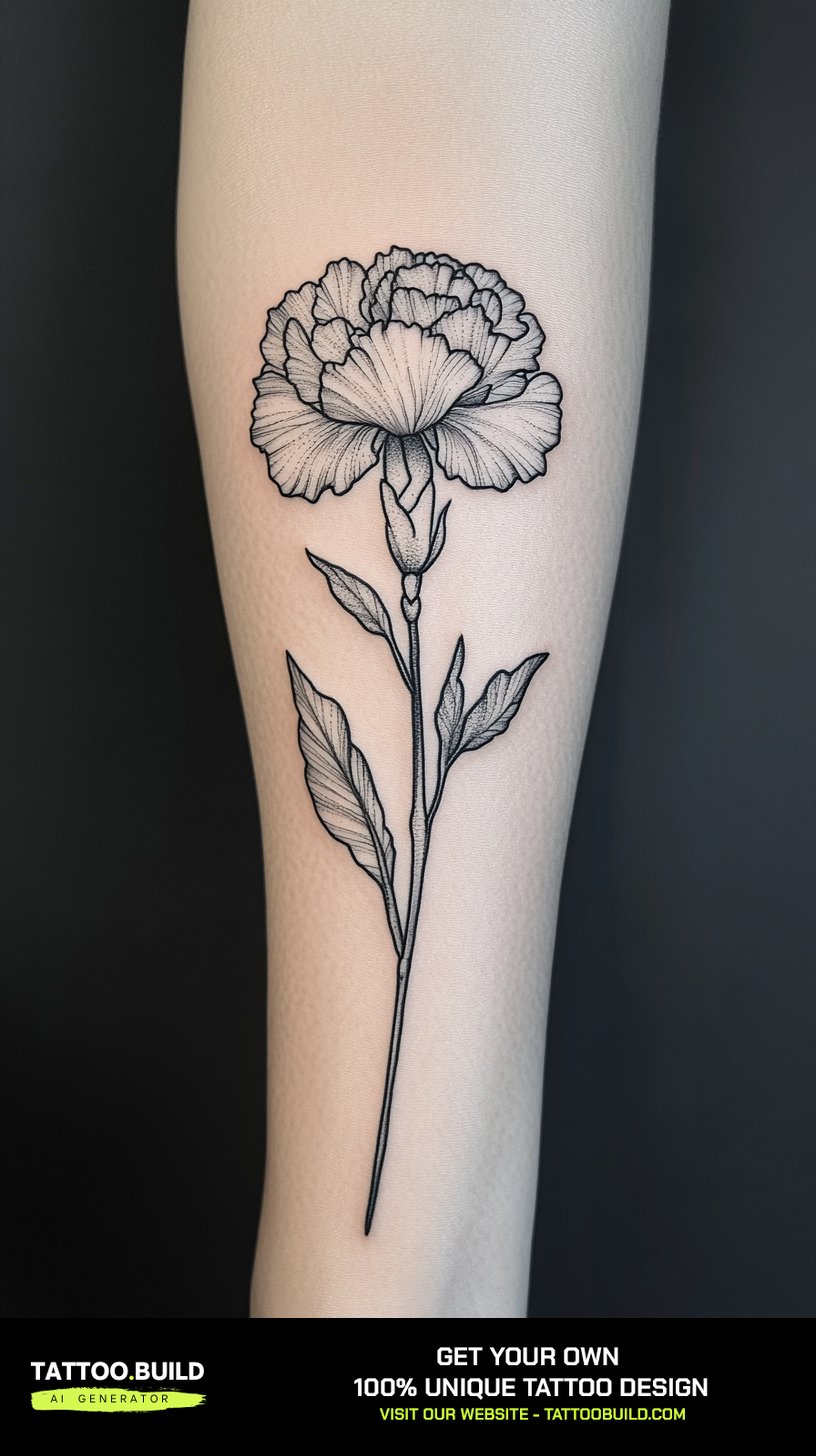
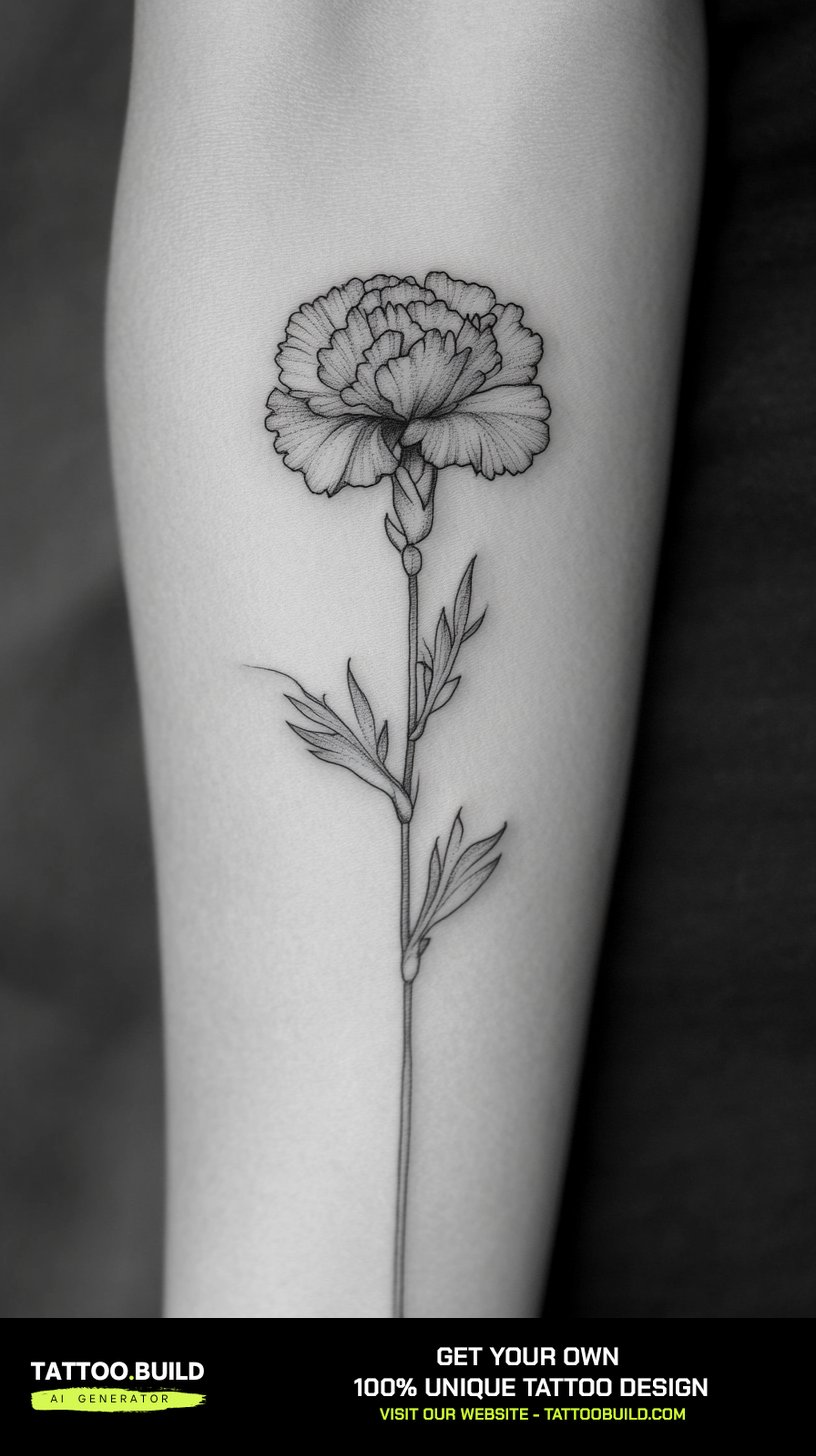
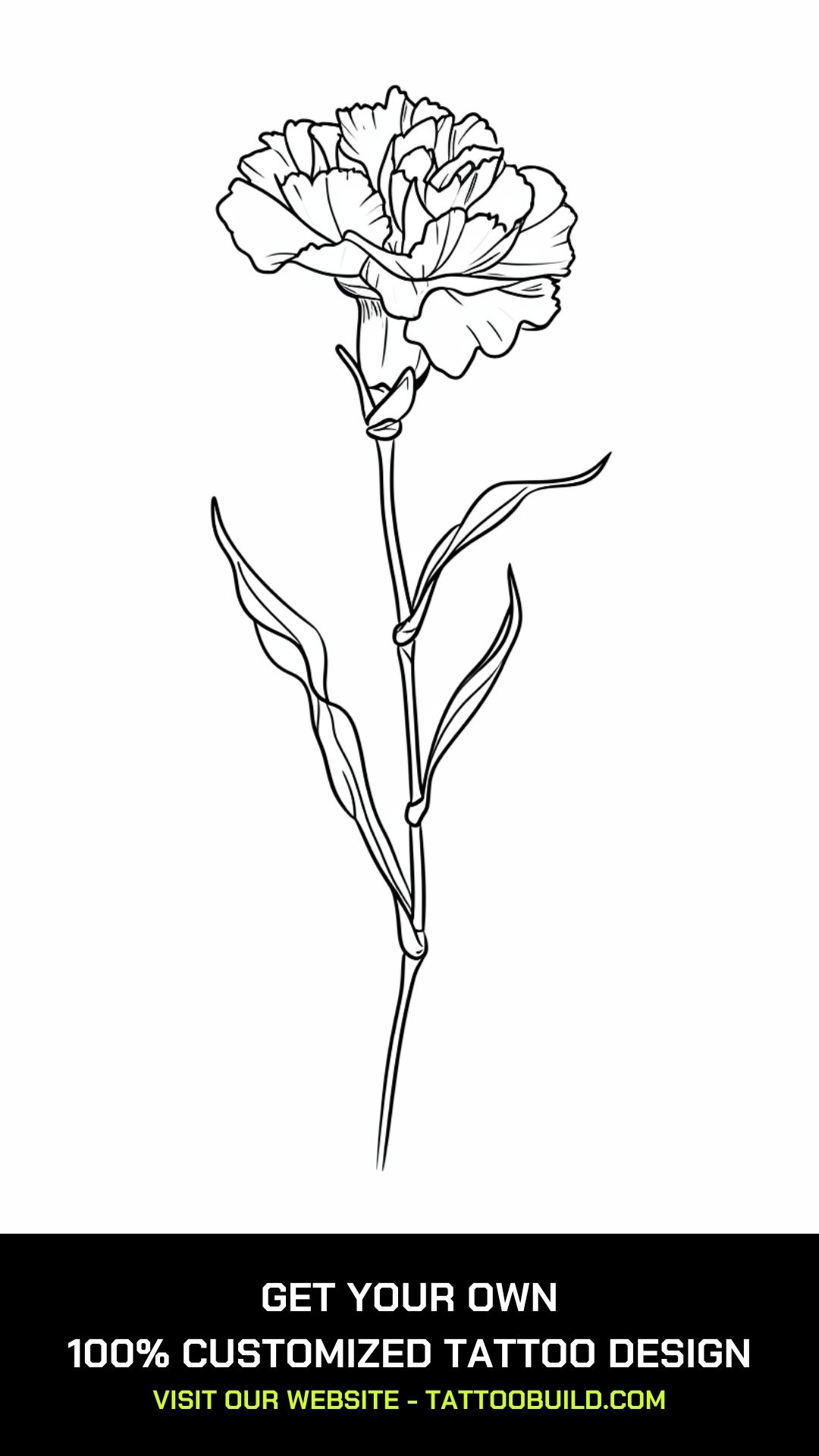
January gets two flowers with opposite personalities. The carnation is ruffled, dense and forgiving; the snowdrop is spare, drooping and almost architectural.
Carnations traditionally signal love and admiration, with the meaning shifting by colour. Snowdrops carry hope, largely because they push through frozen ground before anything else will.
In my experience the carnation is the safer choice for a first tattoo. Those layered petals give an artist plenty of room to build shading, and the design stays legible as it softens.
The snowdrop is harder. It is mostly negative space and three thin bells, so it needs a confident hand and a placement with enough flat skin — the outer forearm rather than the wrist.
February — Violet, Primrose and Iris
February is the month where the colour is the point. A violet drawn in plain black line work reads as a generic five-petal flower and loses most of its identity.
Violets mean faithfulness and modesty. Primroses signal young love. Both are small, low-growing plants, which suits them to compact placements.
If you are a February baby set on a violet, budget for colour. The purple is doing the identification work, and a soft wash is enough — it does not need to be saturated.
The iris is the underrated option here. It has a genuinely distinctive silhouette with those three falling petals, so it survives in black and grey where the violet does not.
March — Daffodil and Jonquil
The daffodil is one of the best-behaved birth flowers there is. That trumpet centre is unmistakable, and it stays unmistakable at almost any size.
It symbolises rebirth and new beginnings, which is a fitting association for a flower that shows up at the front edge of spring. Tradition holds that a single daffodil is unlucky and a bunch is not, so most artists draw two or three stems.
In black and grey, a daffodil holds up as well as anything on this list. The trumpet creates a natural focal point and the outer petals radiate from it, which gives the composition an obvious structure.
A small yellow accent inside the trumpet is a good compromise if you want a hint of colour without a full colour piece. It is a quick addition and it lifts the whole design.
April — Daisy and Sweet Pea
April is the friendliest month on this list. The daisy is the flower almost everyone can draw from memory, and that familiarity is exactly why it works — see the wider daisy tattoo ideas for how much range it actually has.
Daisies mean innocence and new beginnings. Sweet peas mean blissful pleasure and, slightly oddly, goodbye — they were traditionally given as a parting gift.
A single daisy in black and grey with a stippled centre is one of the most reliably good small tattoos I have seen. It ages well because the radial petal arrangement stays readable even after the lines soften.
Sweet peas are the more delicate proposition. Those crumpled, papery petals need a light touch, and a pale lavender wash suits them better than hard black outlines.
May — Lily of the Valley and Hawthorn
Lily of the valley is the most requested May flower by a wide margin, and it is genuinely lovely as a tattoo — that arcing stem with bells hanging beneath it has a natural rhythm.
It means sweetness and a return to happiness. Hawthorn, the less-used option, means hope.
The design works best running along a limb rather than sitting square. Follow the forearm or the calf and let the stem curve with the muscle; placed against the natural line, it looks stiff.
Worth saying plainly: the plant itself is toxic if eaten. That has no bearing on the tattoo, but it comes up often enough in consultations that it is worth knowing before someone tells you at a party.
Hawthorn deserves more attention than it gets. The clustered white blossoms with red buds give you a small, self-contained composition with built-in colour contrast.
June — Rose and Honeysuckle
June has the most tattooed flower in history, which is a blessing and a problem. Every artist can draw a rose; the difficulty is making yours look like a birth flower rather than generic flash — there are more directions to take it in this rose tattoo collection.
Roses cover love in most of its forms, with the colour shifting the specifics. Honeysuckle means devoted affection and bonds of love.
The trick with a June rose is restraint. A single stem with two or three leaves and a soft, muted pink reads as personal. A full traditional rose with heavy black shading reads as a rose tattoo.
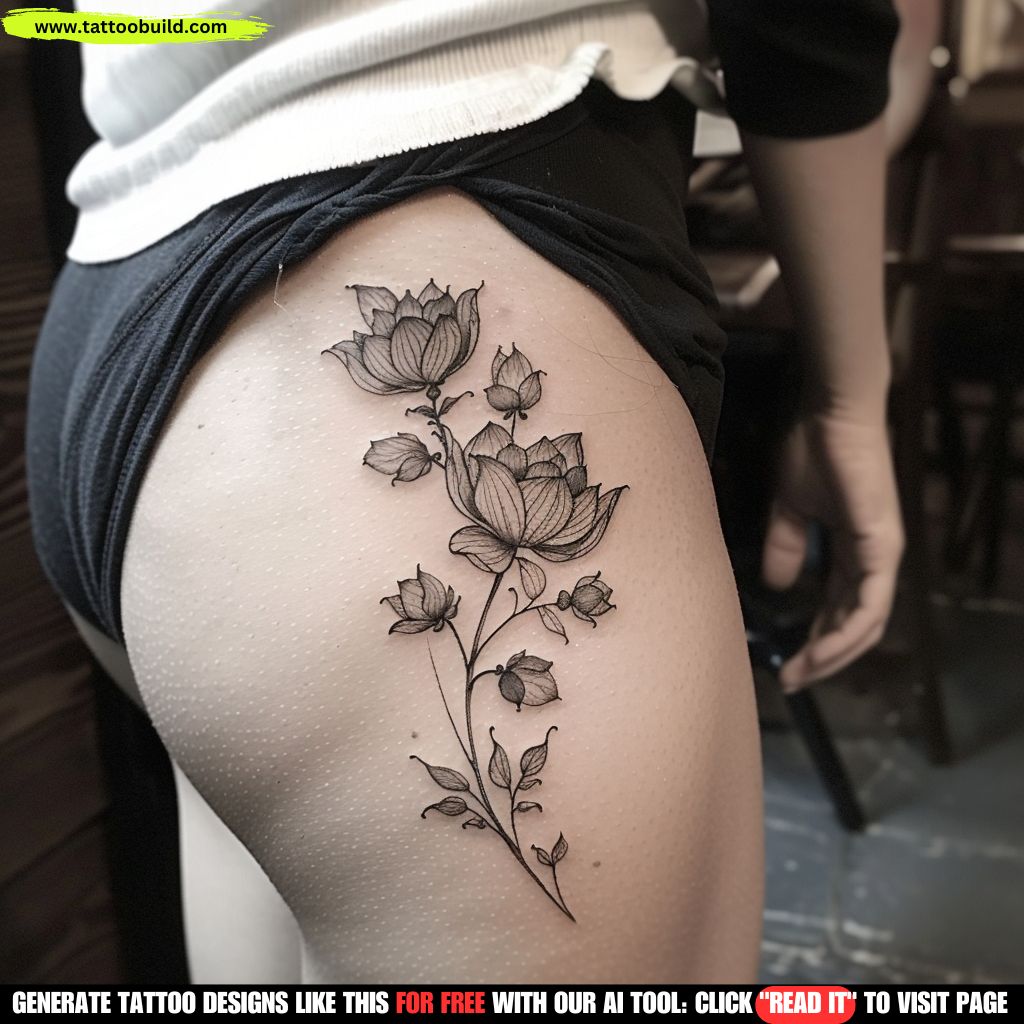
Honeysuckle is the interesting alternative and almost nobody picks it. Those long tubular petals in orange and red twist around a placement in a way a rose cannot, and it wraps an ankle or wrist beautifully.
July — Larkspur and Water Lily
Larkspur is the vertical flower of this list. Blooms stack up a tall spike, which makes it a natural fit for placements that are longer than they are wide.
It represents an open heart and strong attachment. The water lily stands for purity and enlightenment, borrowing much of the symbolism attached to the lotus.
The spine, the outer forearm and the back of the calf all suit larkspur for the same reason: they give the stem somewhere to go. In blue-violet it is a striking piece and it is not something you see often.
Water lilies ask for more space. The petals radiate outward from a broad centre, so the design wants width — a shoulder or upper arm rather than a wrist.
August — Gladiolus and Poppy
August pairs a bold flower with a fragile one. The gladiolus is a tall spike of large ruffled blooms; the poppy is a single papery cup on a thin stem — and it has its own set of design directions worth looking through.
The gladiolus means strength of character and moral integrity. The poppy carries remembrance and, in some traditions, peaceful sleep.
Gladiolus takes colour well. It is one of the few birth flowers where a saturated pink-and-yellow treatment genuinely looks better than black and grey, because the ruffled petals need colour to separate from one another.
Poppies are the opposite. A soft red or pink wash with a dark stippled centre and a fine black line stem is, to my eye, the single most elegant thing on this whole list.
September — Aster and Morning Glory
The aster is a daisy-like flower with narrower, more numerous petals, and September people often do not know it is theirs.
Asters mean wisdom and patience. Morning glories mean affection and, because the blooms open and close within a day, they are also a quiet symbol of mortality.
In fine line black and grey, an aster is a small, tidy tattoo that behaves itself. Two or three heads on thin stems is a good composition, and it works at a scale that fits a forearm or an ankle.
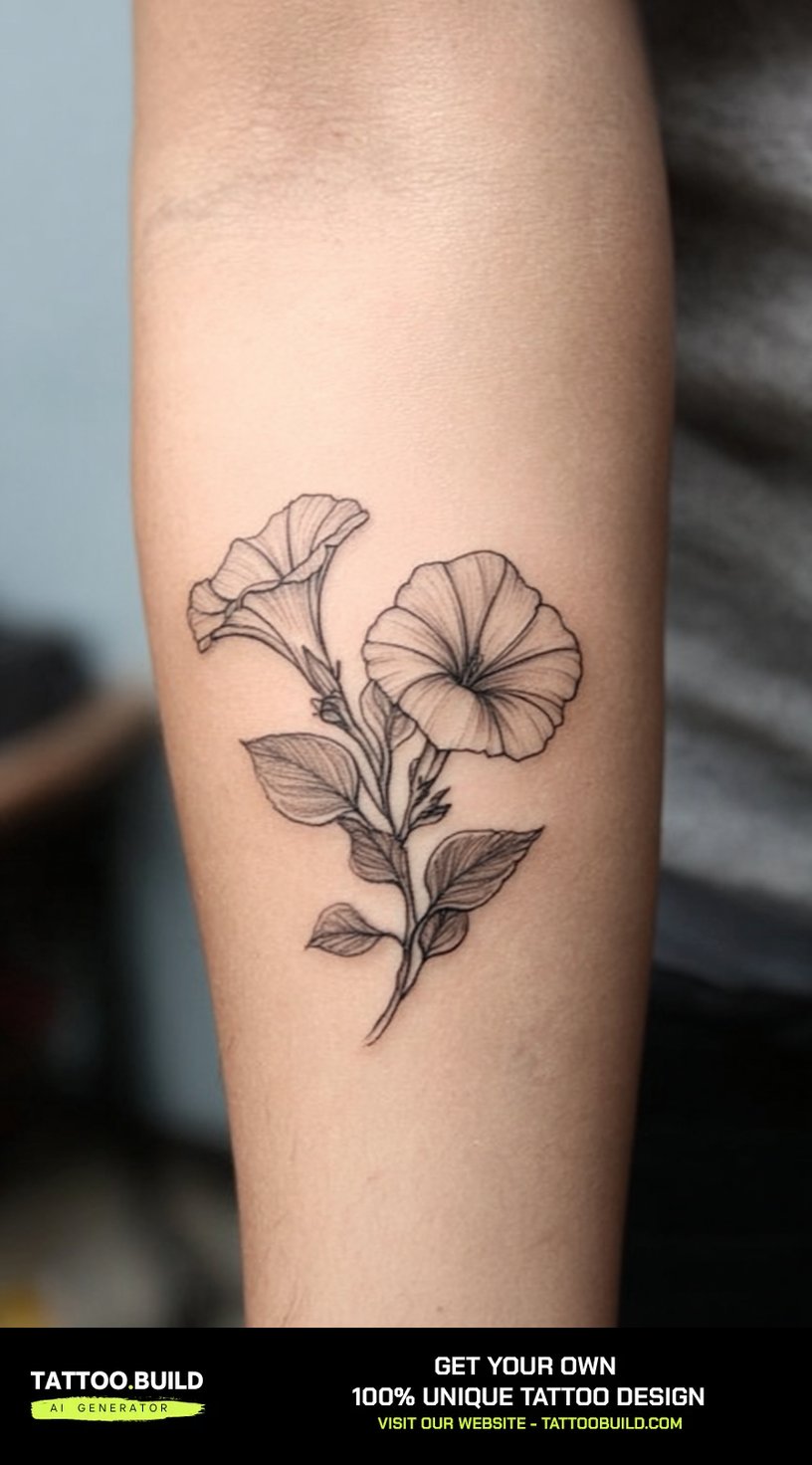
The morning glory’s trumpet shape is distinctive enough to survive without colour, which is unusual on this list. It also has a natural trailing habit, so it suits a design that wraps rather than sits.
October — Marigold and Cosmos
October is the boldest month by some distance. Marigolds are dense, layered and unapologetically orange.
They carry warmth and creativity in the Western tradition, and hold a far more significant place in Día de los Muertos, where they guide spirits home.
The marigold is the birth flower I would bet on to look best in twenty years. Heavy outlines, saturated orange and dark green leaves is a combination that has been proven by a century of traditional tattooing.
Cosmos are the counterweight — eight simple petals on a slender stem, and about as delicate as this list gets. If the marigold feels too heavy, a pair of pink cosmos gives you the same month at a fraction of the visual weight.
November — Chrysanthemum
November gets one flower and it is a demanding one. A chrysanthemum has dozens of narrow petals packed into a tight dome, and every one of them has to be placed deliberately — the chrysanthemum tattoo guide goes deeper into how artists handle that.
It symbolises loyalty and long friendship in Western usage, and in Japanese tradition it is a flower of the imperial family and of longevity, which is why it is so common in irezumi.
This is the one month where I would tell you to be genuinely selective about your artist. Get the petal spacing wrong and the flower fills in as a solid mass within ten years — I have seen it happen more than once.
Look through a portfolio specifically for chrysanthemums or peonies before booking. If an artist has done them well repeatedly, they understand how much room the ink needs to spread into.
December — Narcissus and Holly
December’s narcissus is the paperwhite variety, and it looks close enough to the March daffodil that people mix them up constantly. Narcissus blooms cluster several to a stem; daffodils usually stand alone.
Narcissus means good wishes and respect. Holly means defence and domestic happiness, and it is by far the more distinctive of the two as a tattoo.
Holly is a gift for an artist. Spiked leaf edges, glossy surfaces to shade and a cluster of red berries give you shape, texture and a colour accent in one small design.
It reads as festive if you draw it as a wreath, so most people go with a single sprig running along the arm instead. Same flower, none of the Christmas-card association.
Variations Worth Considering
The single-stem version is the default, but it is not the only way to do this.
Family bouquets
Combining the birth flowers of several family members into one arrangement is the most common variation I see, and the most rewarding when it works.
Keep it to three or four flowers. Beyond that the composition becomes a shapeless mass and no individual flower stays recognisable, which defeats the entire point.
Wrapping and bracelet placements
Trailing flowers — honeysuckle, morning glory, holly sprigs — wrap a wrist or ankle naturally. If that appeals, the small wrist tattoo options are a useful reference for scale.
Wrapping designs need an artist who plans the wrap on the actual limb, not on flat paper. Ask to see the stencil applied and walk around with it before anyone starts.
Building toward a sleeve
Some people start with one birth flower and add a new one over the years. Done deliberately this becomes a floral half sleeve with real meaning behind every element.
Tell your artist at the first session that this is the plan. Placing the first flower with future additions in mind costs nothing then and saves an awkward composition later.
Adding names, dates and script
Script alongside a birth flower is popular and it is where a lot of designs go wrong. Fine script placed too close to fine line work merges into it as both spread.
Leave real space between the two, and have the lettering drawn slightly heavier than feels necessary. In my experience that gap is what keeps the piece legible ten years on.
Aftercare and Keeping the Detail Sharp
Botanical tattoos live and die on their fine detail, which makes healing more consequential here than on a bold traditional piece.
Follow the aftercare your artist gives you rather than anything you read online, including this. They know their inks, their machine settings and how your particular piece was worked. The American Academy of Dermatology’s guidance on caring for tattooed skin is a sound general reference if you want a second, medically grounded source.
Sun exposure is what actually destroys these designs. Fine lines and pale washes fade far faster than bold black, and once a soft pink poppy has gone, no amount of moisturiser brings it back. Sunscreen on a healed piece is the highest-value habit there is.
If you see spreading redness, swelling that increases after the first few days, discharge, or a rash in the tattooed area, see a doctor rather than waiting it out. Allergic reactions to pigment are uncommon but real, and the AAD’s page on unexpected tattoo skin reactions covers what they look like. Nothing in this article is medical advice.
Still Not Sure? Common Mistakes to Avoid
The mistake I see most often is picking the flower before picking the size. People fall for a detailed reference image, then ask for it at half the scale it was drawn.
The second is treating the birth flower list as fixed. Several months have competing traditions and there is no authority enforcing them — if your month’s official flower does nothing for you, the alternate is equally legitimate.
The third is over-designing. A birth flower tattoo does not need a frame, a banner, a moon and a constellation. If you like clean and restrained, the minimalist tattoo approach suits this subject well.
And be honest with yourself about colour. A soft wash needs touching up eventually. If you would resent that, ask for black and grey from the start rather than being disappointed in five years.
Frequently Asked Questions
Do I have to use my own birth month flower?
Not at all. Plenty of people choose a partner’s, a child’s or a parent’s flower instead, and some pick a month that marks an event rather than a birth. The tradition is a starting point, not a rule. What matters is that the flower means something to you, because you are the one looking at it every day.
Which birth flowers work best as small tattoos?
Daisy, cosmos, morning glory and violet hold up best at a small scale because each has a simple, readable silhouette. Chrysanthemum, marigold and water lily need more room, since their identity comes from layered internal detail that closes up when shrunk. As a rough guide, anything with a dense petal structure wants at least four inches of length.
Should I get my birth flower tattoo in colour or black and grey?
It depends on the flower. Violets and poppies are largely identified by their colour, so black and grey versions lose something. Daffodils, daisies, asters and holly have distinctive shapes that survive perfectly well without it. Colour also generally requires more sessions and eventual touch-ups, so factor that in.
How much does a birth flower tattoo usually cost?
It varies enormously by artist, city and size, so anyone quoting you a universal figure is guessing. What is consistent is that pricing follows session time, and detailed botanical work takes longer than it looks. Get a quote from your specific artist with your specific design, and treat online estimates as loose context only.
Can I combine several family members’ birth flowers in one tattoo?
Yes, and it is one of the most popular versions of this idea. The practical limit is around three or four flowers before the arrangement stops reading clearly. If you have more people to include, spreading them across separate small pieces usually looks better than crowding one composition.
Quick Summary
- Every month has one or two traditional birth flowers, and several months offer a legitimate alternate if the main one does not appeal.
- Ask your artist to exaggerate the flower’s identifying feature — the daffodil trumpet, the holly berries, the lily of the valley bells — so it stays recognisable as it softens.
- Detailed flowers such as chrysanthemum, marigold and water lily need roughly four inches or more; daisies, cosmos and violets work small.
- Violets and poppies depend on colour for their identity; daffodils, asters, daisies and holly read perfectly well in black and grey.
- Marigold and gladiolus in saturated traditional colour are the safest long-term bets on this list.
- Chrysanthemums are the most technically demanding — check a portfolio for them specifically before booking.
- Sun exposure, not age, is what fades fine botanical work; sunscreen on healed skin is the single best habit.
- For family bouquets, keep it to three or four flowers so each one stays readable.