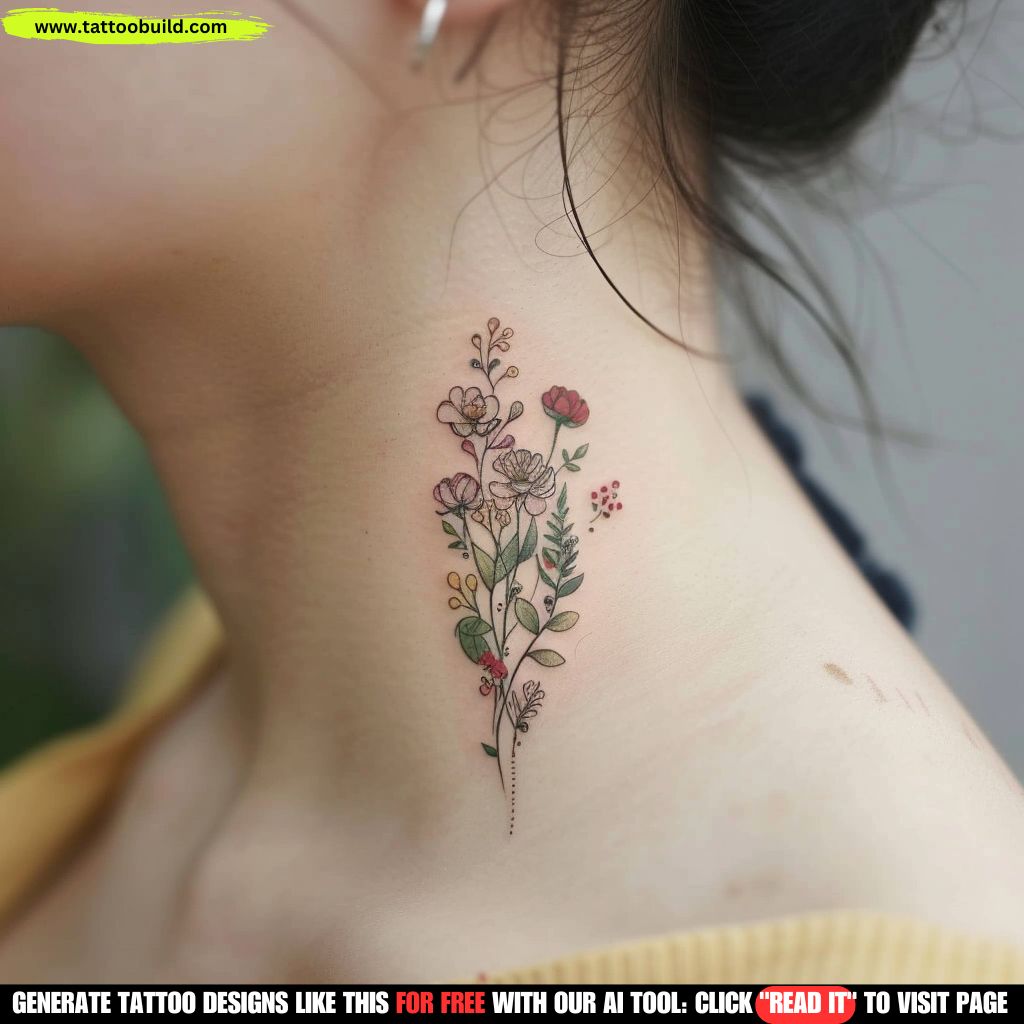
A poppy tattoo is one of the few florals that carries real weight before you add a single word to it — remembrance, sleep, resilience, and quiet grief all live inside the same red bloom.
I have watched this design move from a niche remembrance piece into one of the most requested flowers on the wall, and the reason is simple: it is beautiful enough to stand alone and loaded enough to mean something.
Over the years I have sat in on poppy pieces ranging from a fifteen-minute fine line stem on an inner wrist to a full colour thigh panel that took three sittings. The flower is forgiving, which is rarer than it sounds.
Below are 40+ poppy tattoo designs, plus the practical notes I wish someone had given me the first time — style choices, placement, how the red holds up, and what to ask your artist. If you are still comparing blooms, our guide to birth flower tattoo ideas is a good companion read.
Which Poppy Tattoo Style Is Right for You?
Style choice matters more than size with this flower. Here is how the five most common approaches actually compare in the chair and five years later.
| Style | Typical Size | Rough Sitting Time | How It Ages | Best For |
|---|---|---|---|---|
| Fine line / minimalist | 2–4 inches | 45 min – 1.5 hrs | Softens fastest; may need a touch-up in a few years | First tattoos, wrists, ankles, behind the ear |
| American traditional | 4–6 inches | 2–3 hrs | Best long-term legibility of any style here | Anyone who wants it readable at arm’s length in 20 years |
| Black & grey realism | 5–8 inches | 3–5 hrs | Holds well if the artist built real contrast | Memorial pieces, forearms, calves |
| Colour realism | 6–10 inches | 4–8 hrs, often split | Reds soften with sun exposure; needs protection | Statement pieces on covered placements |
| Watercolor | 4–7 inches | 2–4 hrs | Softest of all; better with an underlying line structure | People who want a painted rather than drawn look |
If you are torn, my honest default recommendation is traditional or neo-traditional. It is the least fashionable answer and the one people regret least.
What a Poppy Tattoo Actually Means
The poppy’s strongest association in English-speaking countries is remembrance. That link comes from the red field poppies that grew across the churned battlefields of the Western Front, and from John McCrae’s 1915 poem In Flanders Fields.
The Royal British Legion has run its Poppy Appeal around that symbol for over a century, which is why a plain red bloom on the chest or shoulder often reads as a veteran’s tribute without any lettering at all. You can read the background on the Royal British Legion site if that meaning is the reason you want one.
The older meaning is sleep. In Greek and Roman myth the poppy belonged to Hypnos and Morpheus, gods of sleep and dreams, and by extension to Thanatos — the reason it also carries a gentler association with death and rest rather than violence.
Then there is the meaning most people actually land on: resilience. Poppies are pioneer plants. They colonise disturbed, broken ground and bloom there first, which is why so many clients bring them to me after a hard chapter.
None of these meanings cancel the others out. In my experience most people carry two of them at once and only explain one when asked.
Poppy Tattoo Styles Worth Considering
These are the seven approaches I see most often, roughly in order of how frequently they get requested.
1. Watercolor Poppy Tattoos
Watercolor poppies let colour bleed deliberately past the linework, mimicking pigment spreading on wet paper.
The flower suits this better than most because real poppy petals are already translucent and slightly crumpled — the softness is honest to the subject.
One caution from experience: ask for an underlying line or shadow structure, even a faint one. Pure wash-only watercolor is the fastest-fading thing I have seen on skin, and pieces built on a skeleton of linework still look intentional a decade later.
If the painterly look is the whole appeal, our roundup of watercolor tattoo ideas shows how other subjects handle the same technique.
2. Realistic Poppy Tattoos
Realism is where the poppy earns its reputation as a difficult flower. The petals are thin, veined and often folded, and the seed pod at the centre has a distinct crown-shaped stigma.
The detail that separates a good realistic poppy from a generic red flower is the seed pod. Every artist I have asked about this says the same thing — get the pod and the dark stamen ring right and the rest reads correctly.
Budget properly for it. A palm-sized colour realism poppy is usually a four-to-eight hour commitment, sometimes split across two sittings, and it is not the piece to price-shop.
3. Black and Grey Poppy Tattoos
Stripping the red out sounds counterintuitive for a flower defined by its colour, and it works anyway.
Black and grey poppies rely on contrast rather than hue, and in my experience they are the most reliable long-term choice for anyone with deeper skin tones or a lot of sun exposure.
They also sit more comfortably next to existing black and grey work. If you already have a sleeve in progress, matching the value range matters far more than matching the subject.
They also photograph better than colour work, which matters more than people expect.
4. Fine Line and Minimalist Poppies
A single-stem poppy in thin black line is one of the most common first tattoos I see, and for good reason — it is quick, affordable and low-commitment.
Keep it genuinely simple. Fine line work spreads slightly over the years, so a tiny design packed with internal detail will close up into a dark blob while a clean, open one stays legible.
Size honestly: below about two inches, drop the petal texture entirely and let the silhouette do the work.
Our fine line tattoo ideas guide covers the longevity trade-offs in more depth.
5. Traditional and Neo-Traditional Poppies
American traditional treats the poppy the way it treats a rose: firm black outline, flat saturated red, minimal internal fuss.
It is the least trendy option on this page and the one that will still read clearly from across a room in twenty years. That bold outline is doing structural work, holding the colour in place as the ink settles.
Neo-traditional keeps the outline but adds depth, richer palettes and decorative elements — leaves, banners, geometric framing.
6. Geometric and Abstract Poppies
Geometric poppies frame an organic subject inside deliberate structure — a triangle, a circle, a band of dotwork behind the bloom.
Abstract versions go further, breaking the silhouette into fragments, negative space or unresolved lines.
These are style-forward pieces, which is the honest caveat: they date more visibly than traditional work. I would not talk anyone out of one, but I would place it somewhere you can build around later.
Symmetry is the whole point here, so give your artist a clean, uncluttered space to work in.
7. Illustrative and Botanical Poppies
Illustrative poppies borrow from botanical plate drawing — visible hatching, accurate leaf shapes, the stem and seed pods drawn as carefully as the bloom.
This is my favourite direction for anyone who cares about the plant itself rather than the symbol. The corn poppy, Papaver rhoeas, has hairy stems and deeply lobed leaves that most stylised versions skip entirely.
It also scales beautifully. A botanical poppy that includes buds and seed pods gives an artist natural filler for a larger composition later.
8. Poppy Sleeves and Large Floral Panels
Poppies work unusually well in sleeves because the stems create natural flow lines that wrap a limb without fighting the anatomy.
When I have seen poppy sleeves go wrong, it is almost always because the blooms were placed first and the stems were fitted around them afterwards. Good ones start with the flow.
Poppies also mix well with other blooms — cornflowers, wildflowers, wheat. Our floral half sleeve forearm gallery shows how these compositions get built.
Poppy Tattoo Variations and Pairings
Once the style is settled, these are the four variations that come up most often.
Poppy with Butterflies, Bees or Moths
Adding a pollinator gives the design a second focal point and a little narrative movement.
Bees and butterflies push the piece warmer and lighter; a moth pushes it noticeably darker without changing the flower at all.
Keep the insect meaningfully smaller than the bloom. When the two compete for attention, neither wins.
Poppy Fields and Landscapes
A field of poppies rather than a single stem changes the meaning — from one loss or one person to something collective.
These need length to work. Ribs, outer thigh, spine and the full run of a forearm all give the horizon room; a four-inch square does not.
A soft grey background wash behind the field adds depth without committing to a full colour background.
Remembrance and Memorial Poppies
A remembrance poppy is usually kept deliberately plain — one bold red bloom, minimal decoration, often on the chest, shoulder or upper arm.
If you are marking a specific person, a name or date in small script below the stem is the most common treatment. Our memorial tattoo ideas guide covers lettering choices that stay readable.
Give script generous spacing from the artwork. Lettering crowded against linework is the single most common regret I hear on memorial pieces.
Colour Choices Beyond Red
Red is the default, but not the only option. Orange California poppies, white and pale pink varieties, and deep purple somniferum poppies all exist in nature.
Red ink deserves one honest note: it is a common trigger for delayed allergic reactions in tattoos, more so than most other pigments. It is not a reason to avoid it, but it is a reason to mention any pigment or metal sensitivities to your artist beforehand. Our red ink tattoo ideas page covers the aesthetic side.
Black-only poppies remain the safest bet for longevity, which is worth weighing if you want this to look sharp for decades.
Where a Poppy Tattoo Sits Best
The flower’s shape — a round bloom on a long stem — makes placement easier than most florals.
Forearms and outer upper arms take the vertical stem naturally and are among the least painful options. Ankles and wrists suit small single blooms but limit detail permanently.
Ribs, spine and thigh are where poppy fields and multi-bloom compositions belong. They hurt more and heal slower — expect a longer, itchier heal on the ribs specifically. If you want something smaller, ankle tattoo ideas is a useful starting point.
Sun exposure should influence the decision. A red poppy on the back of the hand or the top of the foot will fade faster than the same piece on an inner arm, and no aftercare routine fully compensates for that.
Aftercare and Keeping the Red Bright
Follow the aftercare instructions your artist gives you over anything you read online, including this page — they know what they put in your skin and how they work.
The general shape of it: keep the wrap on as long as instructed, wash gently with clean hands and fragrance-free soap, apply a thin layer of the recommended ointment, and let it breathe. Thick layers trap moisture and slow healing.
Do not pick or scratch the flaking stage, and stay out of pools, hot tubs, lakes and direct sun until it is fully healed. Sun is the main enemy of a red poppy specifically — once healed, SPF 30 or higher on the piece is the single highest-return habit for keeping colour saturated.
See a doctor rather than your artist if you develop spreading redness, swelling that worsens after day three, pus, a fever, or a raised itchy reaction weeks or months later. Those are medical issues, not touch-up issues. General guidance on tattoo risks is available from Mayo Clinic. This article is not medical advice.
Common Mistakes and What to Do If You Are Still Not Sure
The mistake I see most often is going too small for the amount of detail requested. A realistic poppy at two inches becomes a red smudge; the same design at five inches stays a flower.
The second is choosing an artist by price rather than portfolio. Look specifically for healed photos of florals in the style you want — not fresh ones, healed ones.
The third is rushing the concept. If the poppy is not quite landing for you, compare it against peony tattoo ideas, wildflower tattoo ideas or classic rose tattoo ideas before you book. Nothing is lost by waiting a month.
And bring reference photos of real poppies, not just other tattoos. The best florals I have seen came from someone who studied the actual plant.
Frequently Asked Questions
What does a poppy tattoo symbolise?
Most commonly remembrance, because red field poppies grew on the battlefields of the First World War and became the symbol of Remembrance Day. It also carries much older associations with sleep, dreams and peaceful death from Greek and Roman mythology. A third and increasingly common reading is resilience, since poppies are among the first plants to bloom on disturbed ground. Many people mean two of these at once. There is no wrong interpretation as long as it is yours.
Does a red poppy tattoo always mean military remembrance?
Not always, but be aware that many people will read it that way, particularly in the UK, Canada, Australia and New Zealand. A plain red poppy on the chest or shoulder is the most strongly coded version. If you want the flower for its beauty or its sleep symbolism rather than its war association, styling it as a botanical illustration, a field, or in a non-red palette shifts the reading considerably. Your artist can help steer the design either way.
How much does a poppy tattoo cost?
It depends far more on your artist’s hourly rate and your city than on the flower itself. A small fine line poppy is usually a shop-minimum or single-hour job, while a colour realism piece can run four to eight hours and is often split across sittings. Ask for a quote based on a rough size and reference images rather than a general price list. Be wary of a quote far below local norms for detailed colour work.
Do poppy tattoos fade quickly?
Red pigment is generally more sun-sensitive than black, so a red poppy in a sun-exposed placement will soften faster than a black and grey one on an inner arm. Fine line work also spreads slightly over the years regardless of colour. Daily SPF on the healed tattoo is the most effective thing you can do, and most colour pieces benefit from a touch-up at some point. Traditional and black and grey styles hold their legibility the longest.
Where is the least painful place to get a poppy tattoo?
For most people the outer forearm, outer upper arm and outer thigh are the more comfortable options, since there is more muscle and fewer nerve endings close to the surface. Ribs, spine, sternum, ankles, feet and the inner arm generally hurt more. Pain tolerance varies a lot between individuals, so treat this as a rough guide rather than a promise. Eating beforehand and staying hydrated genuinely helps.
Quick Summary
- Meaning first: poppies read as remembrance, sleep and resilience — decide which one you are carrying before you design.
- Style drives longevity: traditional and black and grey age best; pure watercolor and micro fine line age fastest.
- Get the seed pod right — it is what makes a poppy look like a poppy rather than a generic red flower.
- Size honestly. Below two inches, drop the internal detail and let the silhouette carry it.
- Placement affects fade. Sun-exposed spots like hands and feet will dull red pigment faster than covered ones.
- Red ink is a more common allergy trigger than most pigments — flag any sensitivities to your artist beforehand.
- Choose the artist on healed floral work, not fresh photos and not price.
- SPF 30+ on the healed piece is the single highest-return habit for keeping the red saturated.