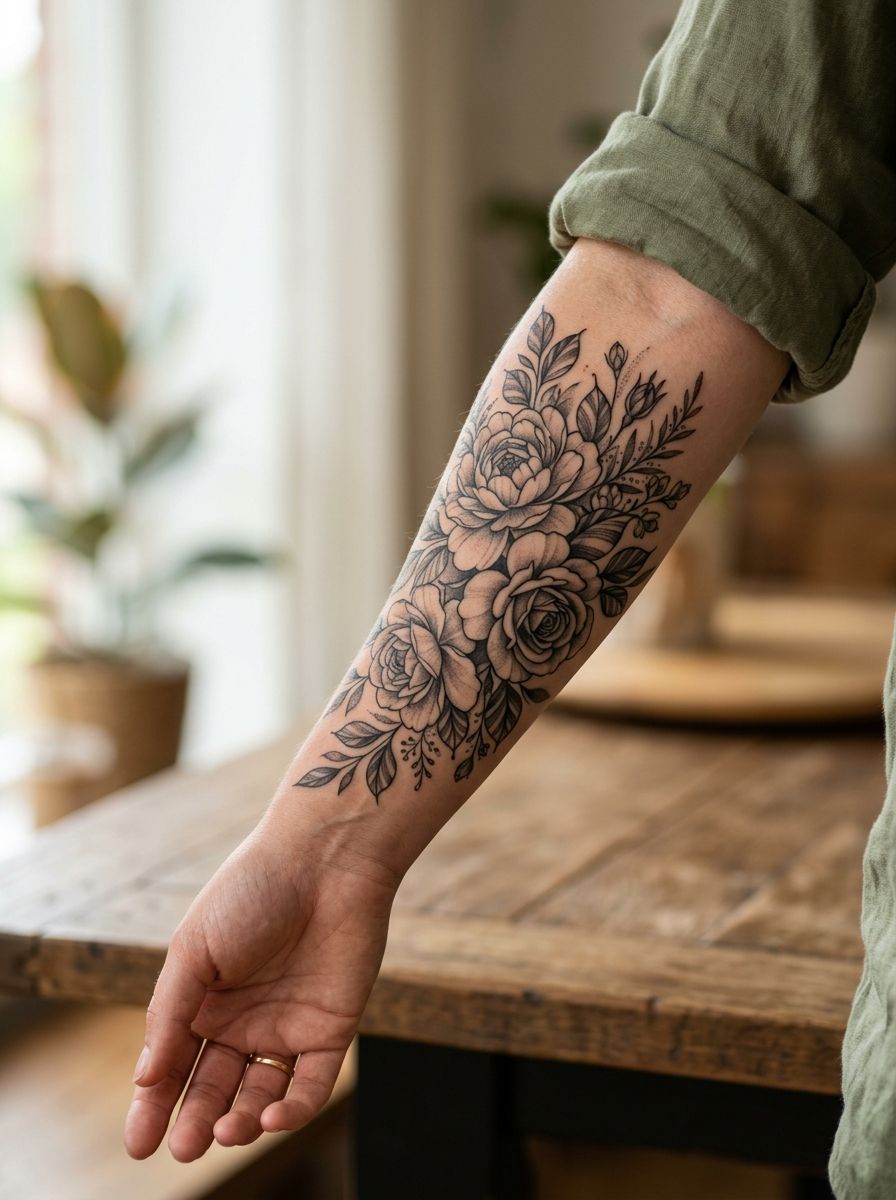
In every US state the default legal age for a tattoo is 18. A number of states carve out an exception at 16 or 17 when a parent signs a consent form and stays in the room, and a smaller group refuses to tattoo anyone under 18 no matter what a parent says. In the UK it is a flat 18 with no exceptions.
That spread is why the question gets answered so badly online. The real answer depends on which state you are standing in, whether a parent is standing next to you, and — just as often — on the shop’s own house rules.
The Baseline Is 18, and It Is Not Arbitrary
Eighteen is the floor in all fifty states and the District of Columbia because that is the age at which you can give informed consent to a permanent, skin-breaking procedure. A tattoo machine punctures the skin thousands of times a minute, carries a genuine infection risk, and is designed never to come off. Legislatures treat it much the way they treat other decisions a minor cannot legally make alone.
Artists have their own stake in that number. Tattooing a minor illegally is typically a misdemeanour and a licence-ending event for the shop, not a slap on the wrist. That is why a reputable studio cards you at the counter before anyone discusses placement — and why a shop that waves you through without asking is quietly telling you how it handles sterilisation too. If you are still choosing where to go, how to find the right tattoo artist covers the rest of what separates a careful studio from a risky one.
States Where 16 or 17 Works — With a Parent in the Room
Most states that permit minors to be tattooed attach two conditions: written parental consent, and the parent physically present for the appointment. Alaska requires both. California, Colorado and Indiana all require a parent or guardian to be there while the work is done, not merely to have signed something in advance.
A few go lower than people expect. Florida permits tattooing at 16 with notarised parental consent and photo identification. Idaho allows it at 14 if a parent signs in the artist’s presence. Nevada does not set the rule at state level at all — it defers to regional health districts, and Southern Nevada’s allow 14 with parental consent.
Consent on paper is not the same as a studio agreeing. Plenty of artists set a personal minimum of 18 and will decline a minor even where the law allows it, partly because a design chosen at 16 is often not the design you would choose at 25. If you are weighing a first piece, first tattoo ideas for women and first tattoo ideas for men are both built around designs that age well.
States Where a Parent’s Permission Changes Nothing
In Arkansas, Iowa, New York, North Carolina, Oklahoma and Wisconsin, tattooing anyone under 18 is prohibited outright — there is no consent form that unlocks it. Washington treats 18 as an absolute minimum in the same way. In those states a parent offering to sign is simply irrelevant, and an artist who proceeds anyway is committing an offence.
Two narrow carve-outs exist for a specific reason. Tennessee allows 16- and 17-year-olds to be tattooed with parental consent only to cover an existing tattoo. Texas permits cover-up work on minors with parental consent where the original design is gang- or drug-related. Both are there to help people get out of ink they did not choose freely, not to create a back door — and tattoo cover up ideas shows what that kind of work actually involves.
Connecticut is the real outlier: it restricts tattooing to physicians, or to nurses and technicians working under supervision, which changes who may tattoo rather than who may be tattooed.
Outside the US, and What the Shop Will Actually Ask For
The UK is simpler and stricter. The Tattooing of Minors Act 1969 makes it an offence to tattoo anyone under 18 unless the work is done by a qualified medical practitioner for medical reasons. There is no parental consent route at all. An artist charged under it can defend themselves by showing they had reasonable cause to believe the customer was 18 — which is precisely why British shops ask for ID without exception. Most of Europe lands in a similar place, while Australia and Canada vary by state and province rather than nationally. If you are travelling to get tattooed, check the rule where the needle is, not where you live.
Wherever you are, expect to show government-issued photo ID, and to sign a consent and medical-history form before anyone opens a needle. If you are a minor somewhere that permits it, bring the parent whose signature is on the paperwork — with their ID too. Preparing properly for the appointment and knowing what the first session involves will do more for the result than anything else, and it is worth reading how much it actually hurts and the pain chart by body part before you commit to a placement. One caveat worth taking seriously: these statutes are amended more often than people assume, so confirm your own state’s current health code before you book.
Spend the Wait Designing Something Worth the Permanence
If you are under the legal age where you live, the wait is not dead time — it is the design phase. Most people who regret a tattoo regret rushing this part rather than the ink itself.
Tattoobuild’s AI tattoo generator is built for exactly that stretch. You can run unlimited variations of an idea, see it rendered in different styles and scales in seconds rather than waiting weeks for a consultation slot, and save the ones that work to your own gallery, so there is something concrete to put in front of an artist the day you are legally able. Plans start from $6. Walking in with a considered design instead of a screenshot you found that morning is also the simplest way to get a better tattoo — and minimalist tattoo ideas is a sound starting point for a clean first piece. From there, what a small tattoo costs and the aftercare guide cover the money and the fortnight that follows. And if the craft itself is what draws you, how to become a tattoo artist maps that path out.