The thigh is the single most forgiving canvas on the body for a large, detailed tattoo — it is flat, it is wide, and it hides under a pair of jeans on any day you want it to.
I have spent a lot of hours in tattoo studios watching thigh pieces come together, and the pattern is always the same: people who plan the shape of the leg first end up happy, and people who pick a flash design first end up asking for a cover-up two years later.
This guide covers where on the thigh a design actually sits well, which styles hold up over a decade, what the session realistically feels like, and how to look after it once you walk out. If you want the shorter, softer end of this topic, my notes on classy feminine thigh tattoo designs cover the same ground with a lighter touch.
Nothing here is medical advice. For anything involving healing that has gone wrong, an infection, or a reaction to ink, talk to your artist first and a doctor second — not a blog.
Which Thigh Tattoo Style Is Right for You?
Every style ages differently on the thigh because the skin here stretches, folds when you sit, and rubs against clothing all day. Here is how the four most common approaches compare in practice.
| Style | Best For | How It Ages | Touch-Up Needs |
|---|---|---|---|
| Fine line | Delicate florals, script, small motifs on the inner thigh | Softens fastest — thin lines spread over the years | Highest; expect refreshes |
| Blackwork / ornamental | Bold hip-to-knee panels and pattern work | Excellent — solid black holds its shape longest | Low |
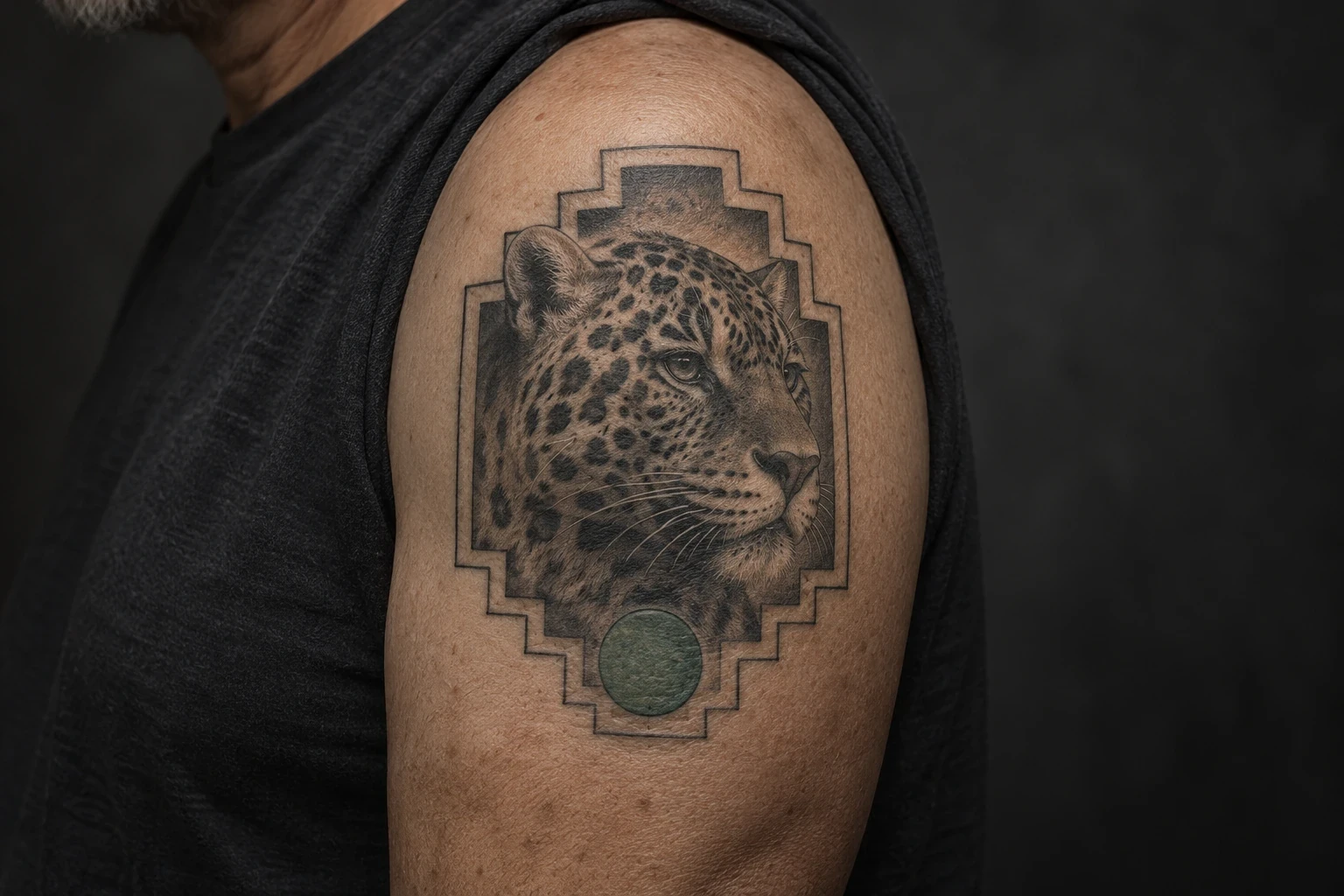
| Black and grey realism | Portraits, animals, botanical detail on the outer thigh | Good if the artist built in enough contrast | Moderate |
| Colour / watercolour | Statement florals and vivid abstract work | Depends heavily on sun exposure and ink choice | Moderate to high |
If you are torn, my honest default recommendation is a design with a strong black backbone and detail layered on top. It is the version that still looks intentional in ten years.
What Actually Affects How a Thigh Tattoo Turns Out
The first thing is movement. The thigh is one big muscle group, and a design that looks perfect on a flat stencil can distort badly once the leg bends.
Good artists account for this by drawing the stencil while you are standing and checking it again while you are sitting. When I have seen this step skipped, the finished piece almost always looks slightly off.
The second factor is scale. The thigh is large enough that small tattoos can look lost on it — a two-inch motif floating on a wide surface rarely reads as deliberate unless it is placed deliberately, usually high on the inner thigh.
Third is sun. The thigh spends most of the year covered, which protects the ink, but a few unprotected beach days will fade a colour piece faster than a year of ordinary wear. The American Academy of Dermatology recommends broad-spectrum sunscreen on healed tattoos for exactly this reason.
Finally, weight and body changes. Skin on the thigh stretches more than skin on the forearm, so significant changes can shift a design. In most cases the effect is mild, but it is worth knowing before you commit to a piece with fine geometric symmetry.
Thigh Tattoo Placement Zones and What Each One Does
“Thigh” covers at least five distinct placements, and they behave completely differently. Here is how I would describe each one to a friend.
Front Thigh (Over the Quad)
This is the flattest, most stable surface on the leg and the easiest place to put a design with straight lines or clean symmetry.
It is also the placement you see most often on yourself, which matters more than people expect — you will look at a front-thigh piece every single day.
Pain here is on the lower end for most people. The quad has real muscle underneath and few bony landmarks, so the needle feels more like a persistent scrape than a sharp sting.
Front thigh is where I would send anyone getting their first large piece. It sits comfortably, it heals cleanly because it does not rub against a chair, and it gives the artist room to work without contorting you into an awkward position.
Outer Thigh and Side of the Leg
The outer thigh is the classic placement for a design meant to be seen — it stays visible when you walk and it follows the natural line from hip to knee.
Vertical compositions work best here. Anything wide tends to disappear around the curve of the leg where nobody can see it from a single angle.
One practical note from experience: the outer thigh sits right where a waistband and pocket seam land, so healing can be slightly slower if you wear tight jeans. Loose clothing for the first ten days makes a noticeable difference.
This placement pairs naturally with a hip piece if you ever want to extend upward. If that is the direction you are heading, look at hip tattoo ideas for women before you finalise the composition.
Inner Thigh
The inner thigh is the most private placement on the leg and, for most people, the most painful one.
The skin is thin, there is less muscle padding, and there are more nerve endings — a combination that makes long sessions genuinely hard. Every artist I have asked recommends breaking inner-thigh work into shorter sittings.
The trade-off is intimacy. An inner-thigh tattoo is something you choose to show rather than something people see by default, and a lot of people specifically want that.
Friction is the main healing challenge. The two thighs touch when you walk, which means more rubbing than almost anywhere else on the body — expect a slightly messier heal and follow your artist’s wrapping instructions closely.
Back of the Thigh (Hamstring)
The back of the thigh is an underrated placement. It is broad, relatively flat, and it takes a vertical design beautifully.
The obvious drawback is that you cannot see it without a mirror, which some people love and others find frustrating after a few months.
Healing is the real consideration here: you sit on this area every day. If you have a desk job, plan the appointment for a Friday and be honest with your artist about how much sitting your week involves.
Hip to Knee and Wrap-Around Pieces
A full thigh panel running from hip to knee is a serious commitment — typically multiple sessions spread over weeks, with healing time between them.
Wrap-around designs that continue from front to back are the most technically demanding, because the artist has to make the composition work from every viewing angle.
If you are considering this scale, treat it the way you would treat a sleeve. Looking at leg sleeve tattoo drawings is useful even if you only ever plan to tattoo the thigh, because the flow principles are identical.
Book a consultation before you book the tattoo. A piece this size deserves a drawing session, not a same-day decision.
Popular Styles for Women’s Thigh Tattoos
Style choice matters more on the thigh than on smaller placements, simply because there is more surface for a weak choice to show on.
Fine Line and Micro-Realism
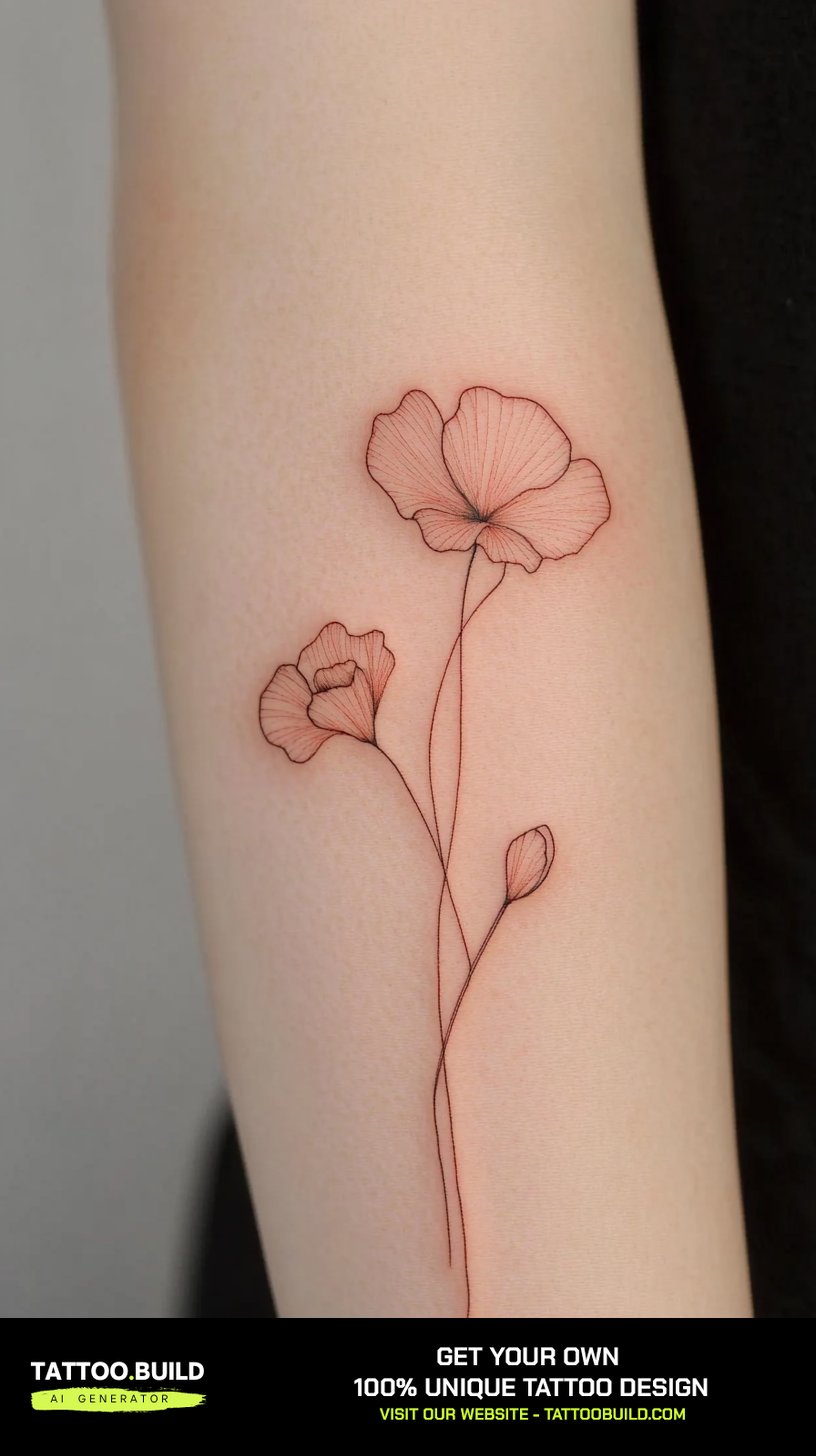
Fine line work is the dominant look right now, and on the thigh it can be stunning — thin, precise outlines that read almost like a pencil drawing.
The honest caveat is longevity. Very thin lines spread slightly as they settle into the skin, so fine line pieces usually need a touch-up sooner than bolder work.
In my experience the pieces that hold up best are the ones where the artist varied line weight instead of using a single hairline thickness throughout. If this is the direction you want, browse fine line tattoo ideas and pay attention to which ones still have contrast.
Blackwork and Ornamental
Blackwork is the most durable option on this list. Solid black, strong shapes and ornamental pattern work hold their edges longer than anything else.
It also suits the thigh’s scale — large areas of black look confident on a large canvas in a way they rarely do on a wrist.
The trade-off is that it is difficult to cover or modify later. Go into it expecting it to be permanent in a stronger sense than usual.
Floral and Botanical
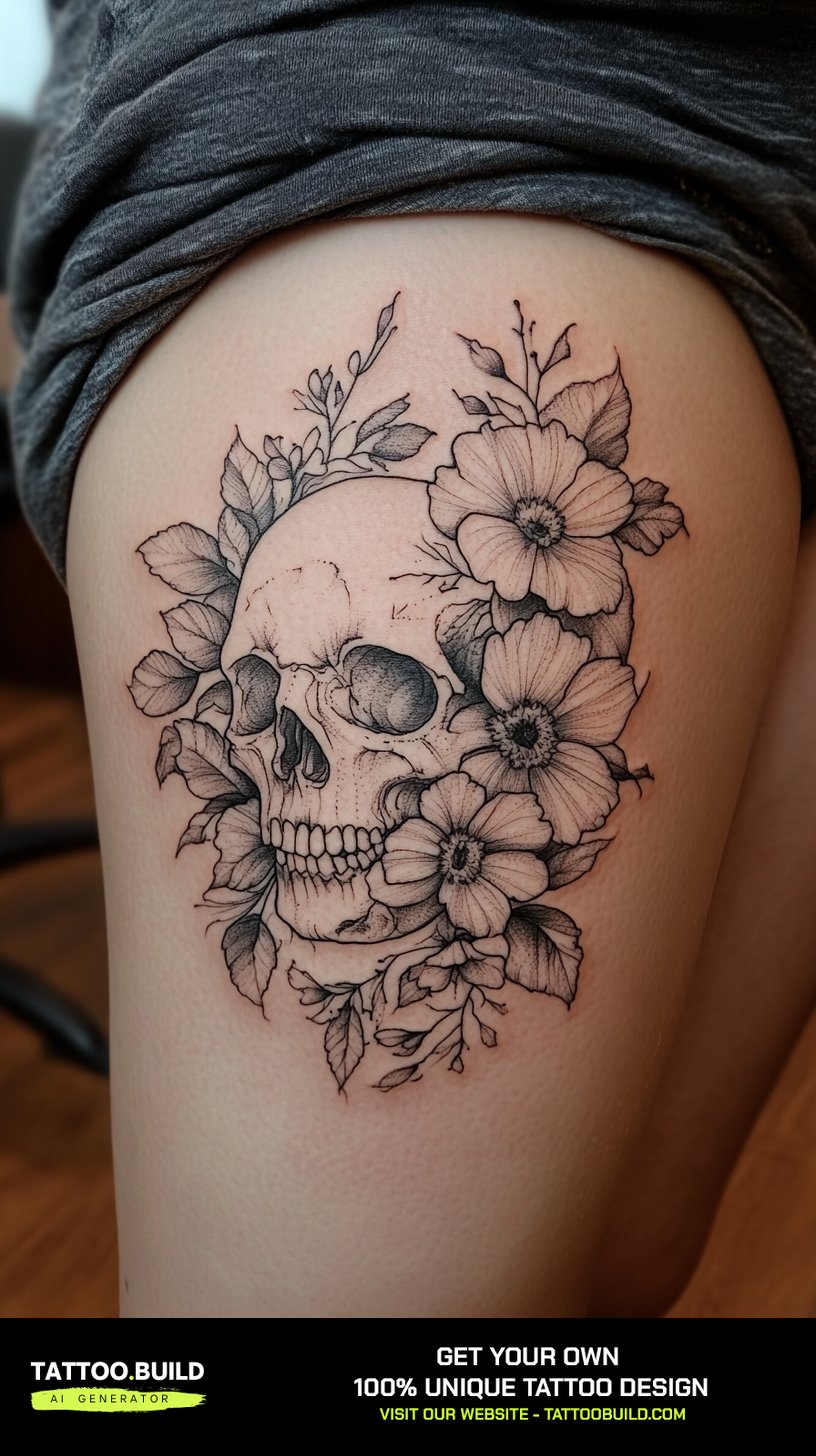
Florals remain the most requested thigh subject, and for good reason — stems and leaves naturally follow the shape of the leg.
The best floral thigh pieces I have seen use one dominant bloom with smaller supporting elements, rather than an even scatter of flowers at the same size.
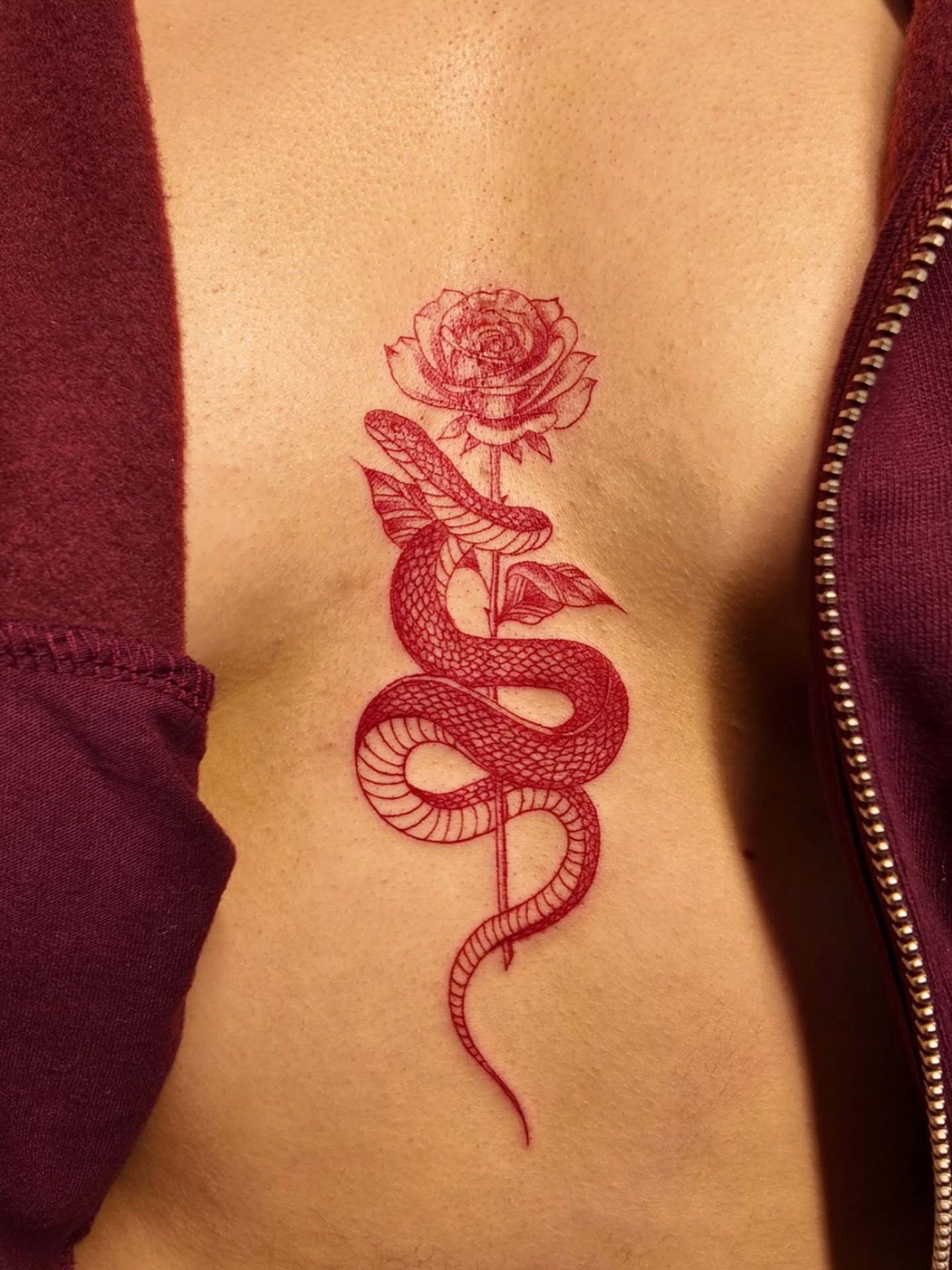
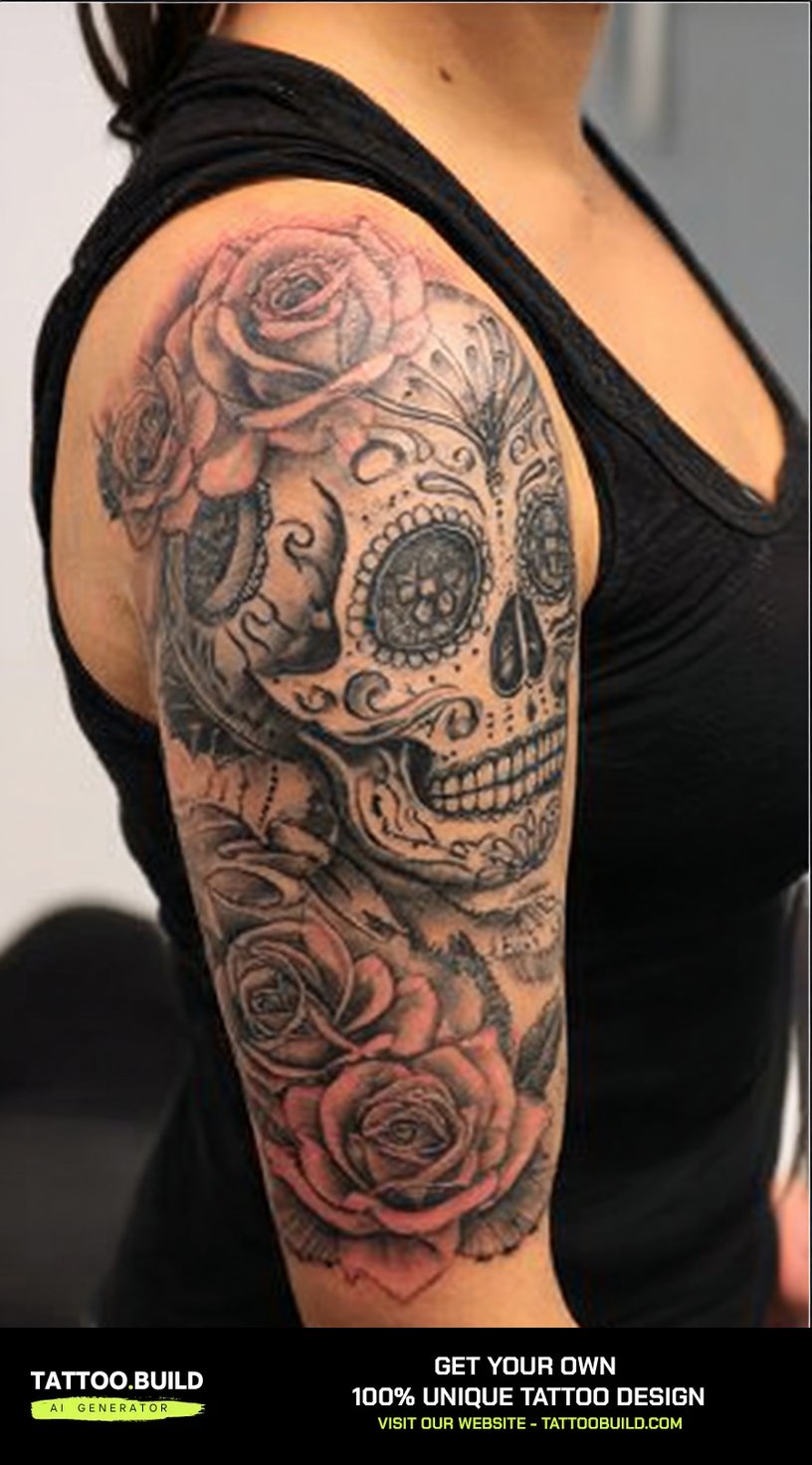
Birth flowers, peonies and wildflower arrangements all work well. Roses paired with a second motif are a reliable classic, and one dominant bloom gives the piece a focal point instead of an even spread of detail.
Animals, Snakes and Moths
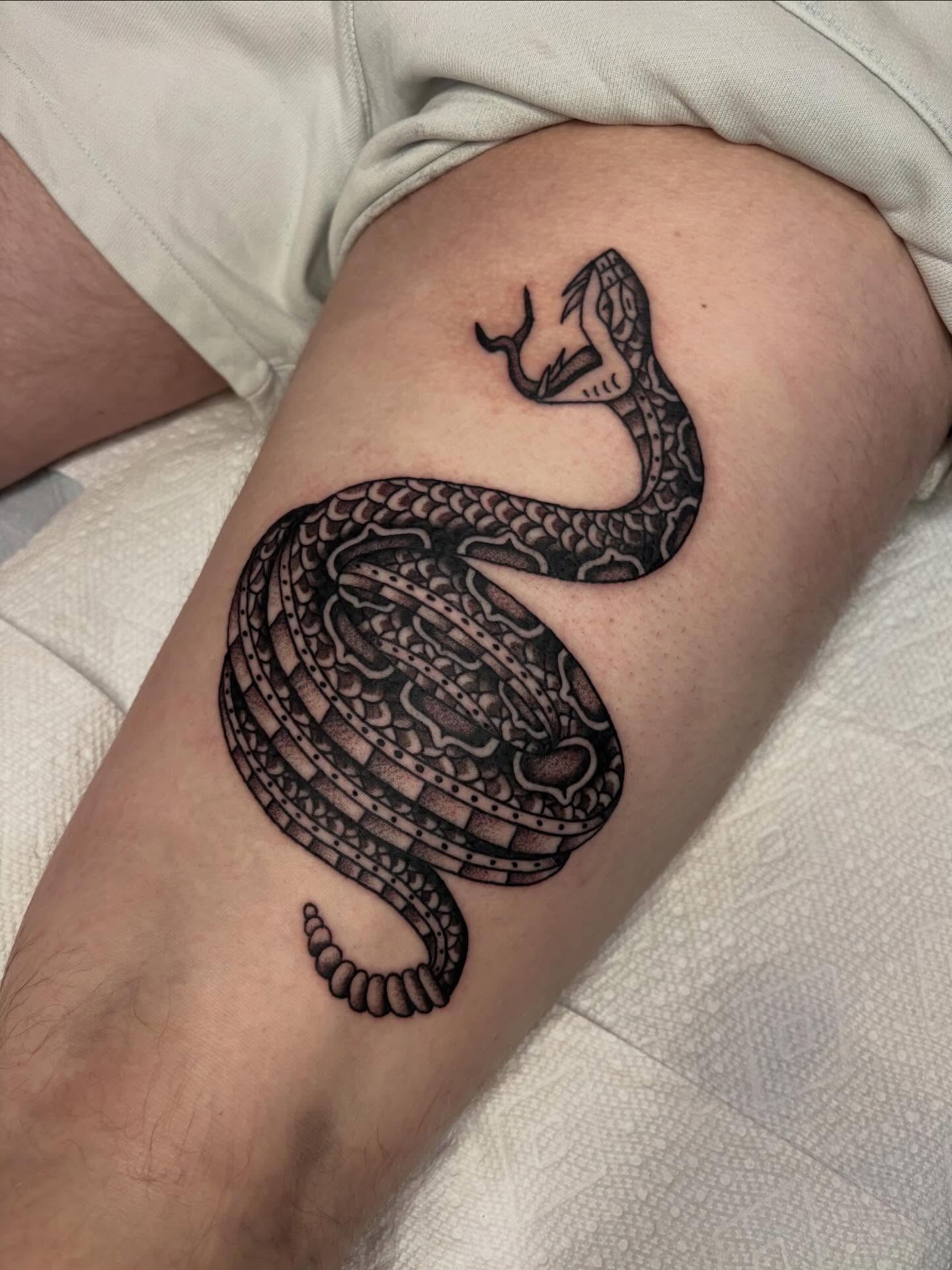
Snakes are the single best-suited subject for a thigh tattoo, because a long sinuous body maps perfectly onto a long curved surface.
Moths and butterflies work for the opposite reason — they are symmetrical, so they sit best flat on the front or outer thigh where the skin does not curve much.
If you want something with more narrative weight, snake tattoo ideas for women is a good starting point for shape and flow.
Variations and Alternatives Worth Considering
Not every idea needs to be a full thigh piece. These are the variations I suggest most often.
A Small Anchor Piece First
Getting one modest tattoo high on the thigh, living with it for six months, then building outward is the lowest-risk path to a large piece.
It also tells you how your skin actually heals before you commit to twenty hours of work.
Matching Both Thighs
Mirrored designs across both legs look striking but are much harder to execute than they sound — true symmetry across two limbs is unforgiving.
A softer version is complementary rather than identical: two pieces from the same visual family that do not have to line up exactly.
Extending From Hip or Knee Instead
If you already have a hip or knee tattoo, extending into the thigh usually produces a better result than starting an unrelated design in the middle of the leg.
Flow between existing pieces is the thing people most often wish they had planned for.
Sitting Well: Pain, Sessions and Aftercare
Thigh pain varies more by zone than almost any other body part — the quad is manageable for most people, the inner thigh and the area just above the knee are considerably sharper. A general tattoo pain chart is a useful reference, but treat it as a rough guide rather than a promise.
Eat properly beforehand and bring something sugary. Long thigh sessions are where I most often see people get lightheaded, and it is almost always because they skipped breakfast.
For aftercare, follow whatever your artist tells you over anything you read online — they know what they used on you. In general terms that means keeping it clean, keeping it lightly moisturised, avoiding soaking it, and leaving the flaking alone. The tattoo aftercare guide and the walkthrough of tattoo healing stages both go into more detail.
Watch for anything that is not ordinary healing. Spreading redness, heat, swelling that worsens after the first few days, pus, or a fever are reasons to contact a doctor rather than wait it out. The Mayo Clinic has a plain summary of the risks worth reading before your appointment.
Common Mistakes — and What to Do If You Are Still Not Sure
The mistake I see most often is choosing a design at the wrong scale. Something sized for a forearm looks stranded on a thigh.
The second is booking with an artist whose portfolio does not contain the style you want. A brilliant traditional artist is not automatically a brilliant fine line artist, and vice versa.
The third is under-planning the session length. A large thigh piece is not a lunch break, and rushing it is how you end up with lines the artist would not have accepted with more time.
If you are still undecided, the most useful thing you can do is collect twenty reference images and look for what they have in common — that pattern is usually your real taste. Browsing thigh tattoos for women and butterfly thigh tattoo ideas is a fast way to build that reference set.
Frequently Asked Questions
Do thigh tattoos hurt a lot?
It depends heavily on the exact zone. The front and outer thigh are among the more tolerable placements on the body because there is muscle underneath and few bony areas, while the inner thigh and the area just above the knee are noticeably sharper for most people. Pain is also personal — sleep, food and stress all change how a session feels. If you are nervous, start with an outer or front thigh design rather than the inner thigh.
How long does a large thigh tattoo take?
A palm-sized design is usually a single sitting, while a full hip-to-knee panel is typically several sessions spread over weeks with healing time in between. Your artist will give you a realistic estimate once they have drawn the design, and that estimate is far more reliable than any general figure. In my experience it is better to book more time than you think you need. Rushed line work is the thing people regret most.
Will a thigh tattoo stretch or distort over time?
Skin on the thigh does stretch more than skin on the forearm, so significant weight changes or pregnancy can shift a design slightly. In most cases the change is mild and the tattoo still reads clearly. Designs built on organic shapes handle it better than ones relying on precise geometric symmetry. If this is a concern, mention it at the consultation — a good artist will adjust the composition.
Can I get a thigh tattoo in the summer?
You can, but healing is harder. Sun, swimming, sweat and bare legs all work against a fresh tattoo, and a healing piece should not be soaked or exposed to direct sun. Autumn and winter are easier because the area stays covered naturally. If you do go ahead in summer, be strict about sun protection once it has fully healed.
Are thigh tattoos easy to hide at work?
Yes — this is one of the main reasons people choose the placement. Almost any trousers, jeans or longer skirt will cover a thigh tattoo completely, which makes it a practical choice for workplaces with visible-ink policies. The inner thigh is the most discreet option of all. Just remember that clothing rubbing against a fresh tattoo can slow healing in the first couple of weeks.
Quick Summary
- The thigh is the most forgiving large canvas on the body — flat, wide and easy to cover with clothing.
- Front and outer thigh are the most comfortable placements; the inner thigh is the most private and the most painful.
- Design at the scale of the leg — small motifs often look stranded on a large surface.
- Blackwork and ornamental styles age best; fine line work looks beautiful but needs touch-ups sooner.
- Snakes, florals and vertical compositions suit the shape of the thigh better than wide symmetrical designs.
- A hip-to-knee piece is a multi-session commitment — book a consultation before booking the tattoo.
- Loose clothing, no soaking and no sun during healing; follow your artist’s instructions over anything online.
- Spreading redness, heat, pus or fever means contact a doctor, not a forum.