Mayan tattoo ideas can begin with a stepped building, a jaguar, a maize plant or the shape of a carved ornament. The useful first decision is what you want the image to refer to: a specific place, a documented artwork, a plant or animal, or a modern composition inspired by those subjects.
This guide uses “Maya” for the peoples, art and cultural references it discusses. Maya communities and traditions continue today. The fifteen designs below are contemporary ideas to take to an artist, with a clear distinction between a historical reference and a new arrangement.
About the images: All sixteen images, including the hero, are original AI-generated tattoo concepts made with ImageGen. They are not real client work, healed examples or reconstructions of ancient Maya tattoos. None includes a verified hieroglyphic inscription. A tattoo artist should redraw the chosen concept for your placement and check any culturally specific details before tattooing.
Start with a reference, not a universal meaning
The Met’s Lives of the Gods exhibition guide shows how Maya artists worked with subjects including maize, deities, animals and carved ornaments. Those works have particular contexts. A modern botanical or animal tattoo does not automatically carry the full religious meaning of an ancient image.
For a personal design, choose the reference you can identify and explain why it matters to you. A temple from a trip, a plant connected with family or a studied artwork can provide a more specific brief than asking for something that simply looks “ancient.”
The Smithsonian’s Living Maya Time resource presents Maya cultural knowledge and traditions. It is a useful place to begin learning, alongside object records and conversations with knowledgeable Maya people. Avoid describing a living culture as a vanished source of decorative symbols.
Choosing the direction of the design
- Architecture: a temple outline, doorway or monument-inspired surface can express an interest in a place.
- Plants and animals: maize, cacao, a jaguar or a tree can form a clear standalone subject.
- Objects and geometry: a pendant, vessel or stepped border can provide structure without requiring an inscription.
The examples use those directions separately so the main subject stays visible. Start with one idea, then choose its linework, shading and scale. If you combine several references, decide which one should remain the focal point.
1. A stepped-temple silhouette
A broad staircase and small summit building give this design a strong vertical outline. The image is a simplified architectural concept, not a measured drawing of a particular Maya site. That makes it a starting composition to refine rather than a record of a monument.
The inner forearm suits the tall arrangement. If you want a temple you have visited, bring photographs from several angles and name the site. Ask the artist to preserve its actual proportions instead of combining unrelated pyramids into a generic outline.
2. An upright maize ear
The maize ear uses repeated kernels and sweeping leaves to create a light botanical composition. Maize appears prominently in Maya art; the Met’s Maize God whistle is one documented reference. This tattoo depicts the plant, without claiming to reproduce that deity or object.
The forearm offers room for the leaves to taper. Simplify the kernel rows at a smaller size and keep the centre readable. A botanical design can express your interest in the crop without adding an unverified name glyph or assigning it a single universal meaning.
3. A jaguar in profile
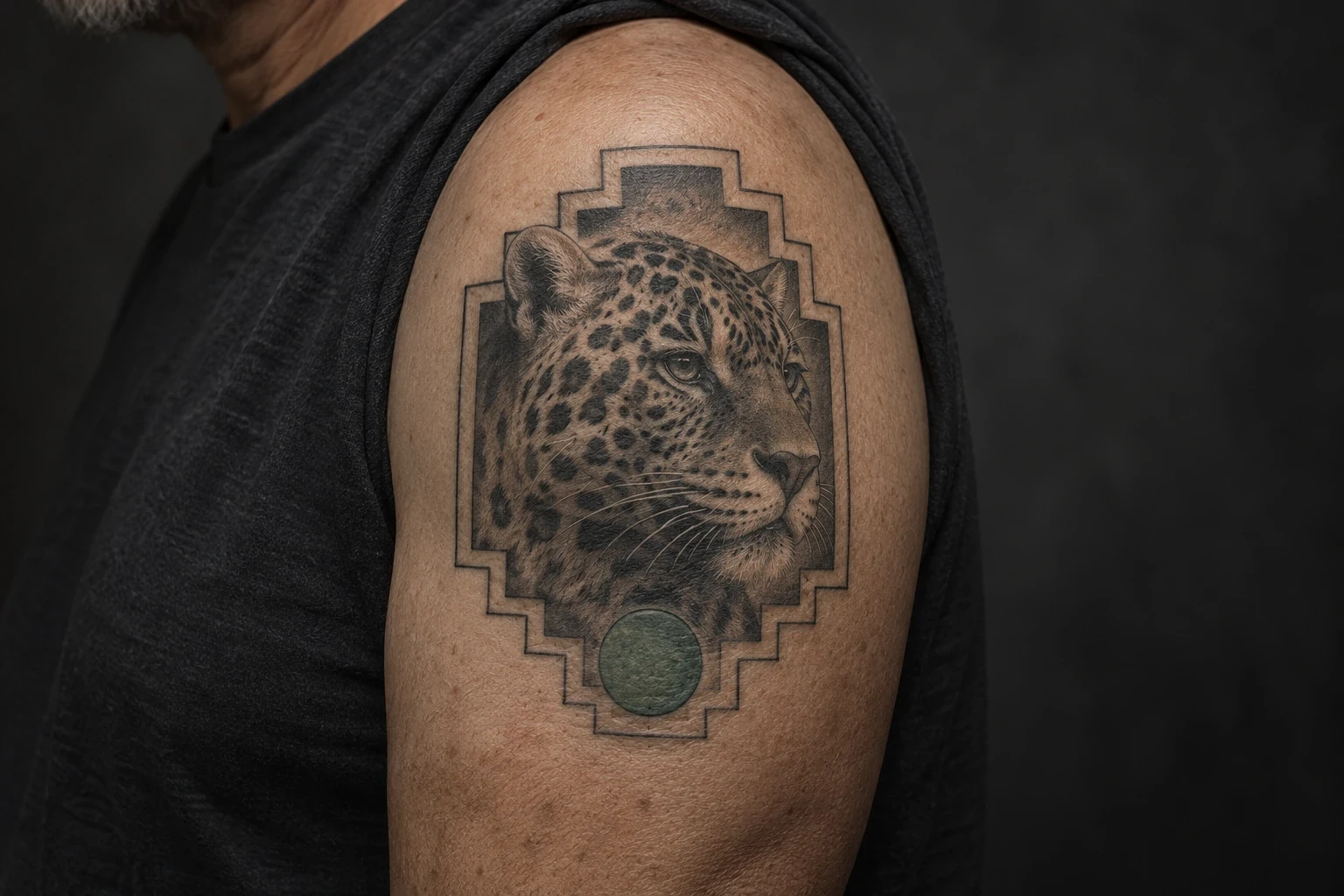
Rounded ears, a broad muzzle and rosette markings distinguish the jaguar from a generic big cat. The profile gives the head a clear edge, while the spots supply texture within it. This is a naturalistic animal study, not a named Maya deity portrait.
The upper arm gives the muzzle and ear room. If the religious context matters to you, use a specific documented artwork and seek informed guidance rather than assuming every jaguar image means the same thing. For a darker treatment, compare our blackwork tattoo designs.
4. A jade-green pendant shape
An oval pendant and two small beads offer a quiet object-inspired design. The green colour refers to the look of jade; it is ordinary tattoo pigment, not jade material. The simple surface avoids pretending to reproduce an identified carved face or inscription.
The upper arm gives the oval enough width for shading around its edge. If you prefer a historical object, bring its museum record and decide which features you want retained. Ask the artist to keep the drilled hole and surrounding skin breaks visible at the proposed size.
5. A conch-shell study
The shell’s spiral and broad opening create a curved composition with room for black-and-grey shading. Conch-shell objects appear among the works in the Met’s Maya exhibition guide. This drawing studies the shell itself rather than reproducing a named trumpet or its decoration.
A forearm placement can follow the shell’s length. Bring real shell photographs so the artist can check the whorls and opening. Keep the shading selective; too many narrow dark ridges can compete with the overall spiral.
6. A cacao pod with leaves
A ribbed cacao pod gives this botanical option a distinctive oval centre. The Met’s Vessel with Seated Lord discusses cacao drinks in Maya vessel imagery. The modern tattoo focuses on the plant rather than copying the vessel’s royal scene.
The upper arm offers space for the leaves beside the pod. Keep the ribs broad enough to follow the form and use a botanical reference for the pointed ends. A restrained linework version can work without adding chocolate-coloured fill or invented script.
7. A ceramic-vessel outline
An upright cup with an oval rim and a few terracotta bands creates an object-focused composition. The decoration here is deliberately geometric. It is not a transcription of a historical vessel’s painted scene, ownership statement or function inscription.
The forearm can accommodate the cup’s height. If a particular museum vessel appeals to you, identify it and ask the artist to redraw only the elements you understand. Text and image can work together in Maya art, so removing or changing the writing can change the reference.
8. Two long green feathers
The paired feathers supply a tall, flowing shape with a restrained green accent. The Met’s seated-lord vessel record identifies quetzal tail feathers in its imagery. These feather studies are a modern nature composition and do not reconstruct a royal headdress.
The upper arm lets the feathers bend gently with the surface. Keep the quills continuous and avoid making every barb a separate tiny line. A smaller version may need one feather instead of two, while a longer placement can carry the pair without crowding their tips.
9. A ceiba-inspired tree
A tall trunk, wide canopy and prominent roots make the tree the full composition. In the Smithsonian’s Connecting Earth and Sky transcript, Maya speakers discuss the ceiba’s sacred connection between earth and sky. This botanical interpretation is not a traditional glyph.
The calf provides length for roots and canopy. Use ceiba photographs if the species matters to your brief, and speak with someone knowledgeable if you want the religious interpretation to guide the drawing. The roots should remain distinct rather than turning into an unreadable mesh.
10. A stepped geometric band
Three broad stepped forms create an architectural rhythm across the arm. Open channels keep the pattern readable, and the plain border gives it a clear boundary. This is a contemporary geometric arrangement, not an asserted translation of a Maya sign.
The forearm suits a short band that does not need to wrap all the way around. Review the stencil from both sides if you extend it. Our geometric tattoo designs offer other examples of balancing repeated shapes with open skin.
11. A blank stone-stela silhouette
A tall slab with a rounded top and lightly shaded edges offers a monument-inspired outline. Its centre is intentionally blank. The concept borrows the idea of a carved stone surface without filling it with pseudo-writing or an invented ruler portrait.
The upper arm gives the slab room for a visible border. If you want an actual stela, choose one documented monument and have its imagery reviewed before tattooing. Do not treat blank space as a reason to add random glyphs simply to make the design look older.
12. A water-lily scene
A bloom, two pads and a few ripples create a lighter botanical option. Aquatic imagery appears in documented Maya art: the Met’s waterbird vessel describes water and plant motifs. This flower scene is a modern composition, not a copy of that vessel.
The inner forearm gives the pads enough width. Keep the bloom’s petals open and let a few ripples suggest the setting. Avoid assigning the flower a precise ancient religious meaning unless you have a source for the specific image you are using.
13. A howler monkey on a branch
The monkey’s side profile and long curved tail create a compact animal study. The Met’s Maya exhibition includes vessels with howler-monkey imagery. This version follows the living animal rather than reproducing a supernatural figure or a decorated ceramic lid.
The upper arm allows the branch to form a broad base. Bring natural-history photographs to check the face, limbs and tail. Keep the body readable before adding fur texture, and let the artist simplify the smallest marks for the final stencil.
14. A turtle paired with a maize shoot
The domed shell provides a broad base beneath a separate young plant. The two subjects make an intentional modern pairing within this Maya-inspired guide. The image does not reproduce a named mythological scene, and the shoot should not be read as a literal translation of an ancient sign.
The calf offers room for the shell pattern and leaves. If you want a myth-specific composition, replace this general concept with a documented artwork and informed interpretation. Keep the plant separate from the turtle so both remain easy to identify.
15. A corbelled-doorway study
Stone courses step inward around an empty opening, creating a simple architectural frame. The concept is inspired by corbelled forms and leaves the interior clear. It is not a measured reconstruction of a named doorway or a container for invented inscriptions.
The upper arm gives the blocks enough width to remain separate. Use photographs of a specific Maya building if accuracy to a place matters. A few well-proportioned courses can be more useful at tattoo scale than dozens of tiny stones drawn from memory.
Glyphs, dates and cultural accuracy
These concepts avoid writing because an attractive mark is not proof of a correct inscription. If you want a name, date or phrase, have the wording and final drawing checked by a qualified specialist in the relevant writing tradition. Keep the reference, reading and intended meaning together in the brief you give the tattoo artist.
For a calendar-related design, decide exactly what information you want represented and how it will be checked. Do not treat an unlabelled circular internet graphic as a verified Maya calendar. This guide does not provide a birth-date converter or assign calendar signs as personality types.
If your reference belongs to a different Mesoamerican culture, name it accurately rather than relabelling it Maya. A shared material, animal or architectural feature is not enough to establish that two artworks have the same origin or meaning.
For a deity or ceremonial image, seek informed guidance about the specific reference. There is no single answer that speaks for every Maya person or community. Understanding what you are choosing is part of making a considered personal design.
Placement and readable detail
The forearm suits a tall botanical subject or vessel, while the upper arm offers room for an animal portrait or a pendant shape. A calf can accommodate a tree with both roots and canopy. These placements are options to discuss, not rules that apply to every body.
Check the stencil at the actual proposed size. A kernel row, a jaguar rosette or a thin carved border can look clear on a large screen and crowded when reduced. Simplify the smallest details before shrinking the entire drawing. Ask the artist to leave enough space around the subject for its outline to remain readable.
Review a band from both sides if it wraps around a limb. For architecture, check the drawing while standing naturally and decide which view should look upright. A named monument deserves accurate proportions before texture is added.
Linework, colour and care
Black linework can keep plant and architectural studies light; black-and-grey shading can model a shell or animal; a restrained green or terracotta accent can support an object-inspired composition. Choose the palette from real healed examples in your artist’s portfolio. A generated picture cannot predict how the finished tattoo will look on your skin.
The American Academy of Dermatology notes that ultraviolet light can fade some tattoo inks. For healed tattooed skin exposed to sunlight, it recommends broad-spectrum, water-resistant sunscreen with SPF 30 or higher and reapplication at least every two hours. Follow fresh-tattoo aftercare instructions separately.
Questions about Maya-inspired tattoos
Are these authentic ancient Maya tattoo designs?
No. They are modern generated concepts inspired by art, architecture and related natural subjects. A museum reference for a vessel or ornament does not establish that its image was historically tattooed on skin.
Does every jaguar design have the same meaning?
No. A naturalistic animal portrait and a particular deity image are different references. Identify the artwork and its context if you want a historically specific interpretation, rather than assigning one meaning to every spotted cat.
Can I choose a simple design without glyphs?
Yes. A plant, animal, vessel shape or architectural outline can form a complete modern composition. Writing is not required to make a design thoughtful. Keep its connection to the reference clear in the brief.
Can someone outside a Maya community choose these ideas?
Approach the decision with an understanding of the reference and your reasons for choosing it. Learn from Maya voices and qualified sources where cultural or religious context matters. This article does not grant universal permission on behalf of a community.
What should I bring to the tattoo appointment?
Bring the concept, the original object or site reference, your placement preference and any checked interpretation you want retained. Explain which parts are historical and which are modern decoration. Ask the artist to refine the design rather than copying a generated thumbnail exactly.
A clear brief for your artist
Choose one main subject and identify its source. Decide whether your priority is a specific place, an object, a natural form or a personal modern arrangement. Then settle the placement and size before adding detail. A well-referenced, readable composition gives both you and the artist a clearer starting point.