The lower arm is the piece of skin you look at more than any other on your own body, and that changes everything about how a sleeve there should be designed.
A women’s lower arm sleeve tattoo is the most visible large-scale tattoo you can commit to, which is exactly why it rewards planning and punishes impulse.
I have sat in on enough forearm sessions to notice a pattern: the sleeves that still look good five years later were mapped out as one composition from the start, not assembled from three unrelated ideas.
The gallery below collects designs across every style I get asked about most — florals, fine line work, blackwork, animals and script. If you are still deciding between a lower arm and a full wrap, the full sleeve tattoo ideas for women guide is a useful companion to this one.
Which Lower Arm Sleeve Style Is Right for You?
Style choice affects three things at once: how many sessions you sit for, how the piece ages, and how much detail the forearm can realistically hold.
Here is how the six styles I see most often on lower arm sleeves compare. Session counts are typical ranges from artists I have spoken to, not fixed quotes.
| Style | Typical Sessions | Ages Like | Best For |
|---|---|---|---|
| Fine line botanical | 2–3 | Softens noticeably; may need a touch-up in 5–8 years | Delicate, jewellery-like sleeves that read quietly at arm’s length |
| Black and grey illustrative | 3–5 | Very well when shading is varied | Florals, portraits and storytelling pieces with depth |
| Blackwork / ornamental | 3–6 | Best of the group; bold shapes hold shape longest | Mandalas, lace patterns and high-contrast statement sleeves |
| Colour realism | 4–8 | Depends heavily on sun exposure and pigment choice | Vivid flowers, birds and painterly compositions |
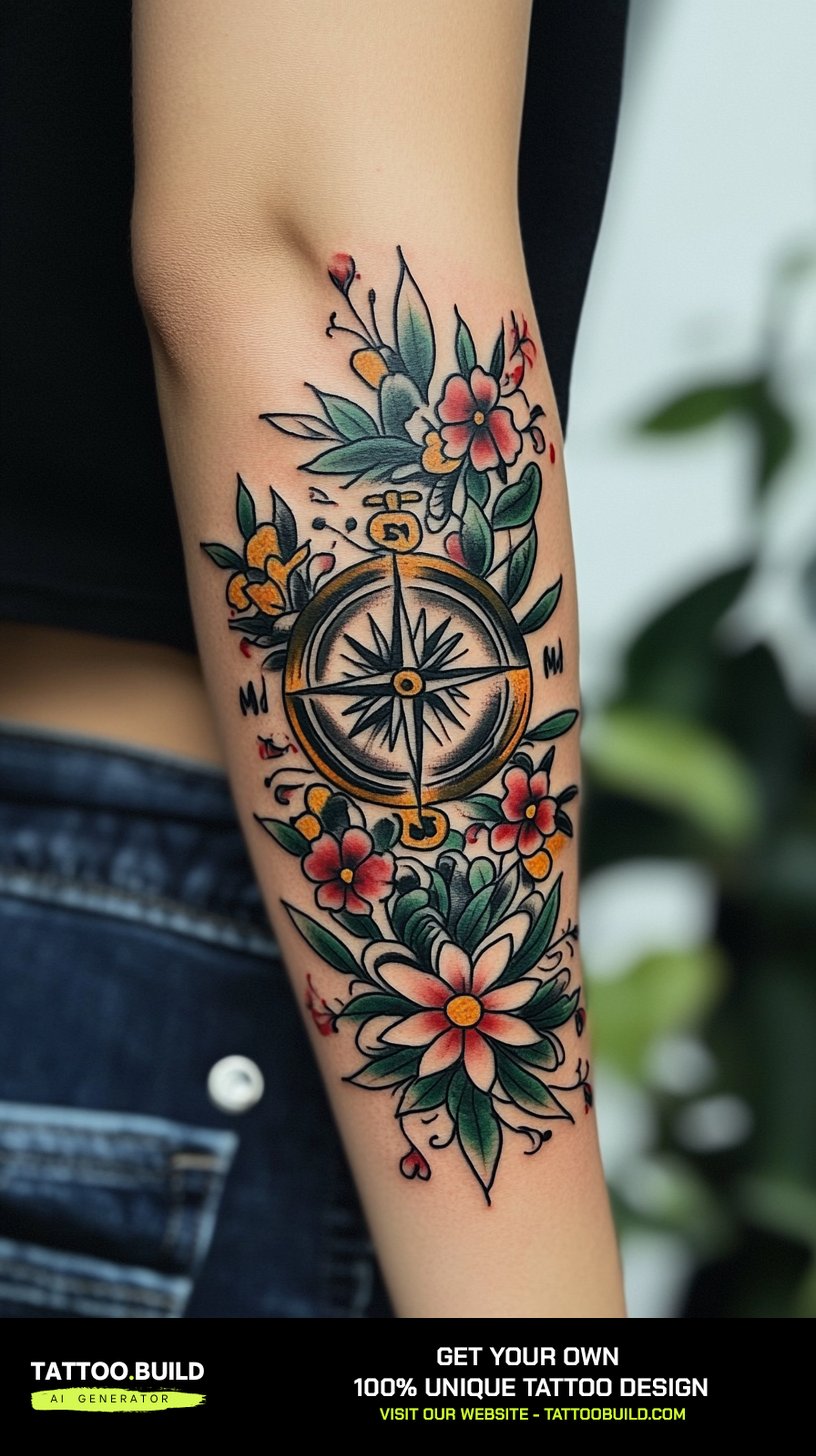
| Neo-traditional | 3–5 | Strongly, thanks to heavy outlines | Bold colour with a decorative, illustrated feel |
| Micro-realism | 2–4 | The most demanding — small detail can blur | Tiny portraits, insects and photo-real fragments |
If you want one honest shortcut: bold shapes and strong contrast age better than fine detail, almost without exception.
What Actually Makes a Lower Arm Sleeve Work
The forearm is a cone, not a cylinder. It narrows sharply toward the wrist, and a design drawn flat on paper will distort when it wraps.
Good artists solve this by building the composition around a spine — a diagonal line of flow that spirals from the elbow toward the wrist — then hanging the individual elements off it.
Negative space matters more here than anywhere else on the body. Skin left bare is what lets the eye rest and what stops a sleeve from reading as a solid smudge at conversational distance.
Pain is the other practical factor. The outer forearm is genuinely manageable for most people; the inner wrist and the elbow ditch are not, which is why the tattoo pain chart is worth a look before you book a long session.
Plan the borders before the artwork. Deciding exactly where the sleeve stops at the wrist and at the elbow does more for the finished look than any single design element.
Women’s Lower Arm Sleeve Tattoo Ideas
The designs below are grouped by approach rather than by subject, because in practice the style decision comes first and the subject follows.
Wrapping Floral Sleeves
Florals remain the most requested lower arm sleeve by a wide margin, and there is a good technical reason for it.
Petals and stems are naturally irregular, so they hide the seams where a design wraps around the arm. A geometric pattern has nowhere to hide that transition; a peony does.
The strongest floral sleeves I have seen use two or three flower sizes rather than one. A large focal bloom near the elbow, mid-sized supporting flowers, and small buds tapering toward the wrist creates depth without extra ink. The floral half sleeve forearm collection goes deeper on that layout.
Roses, peonies and magnolias dominate for a reason — they have enough internal structure to carry shading. Simpler flowers like daisies tend to work better as filler than as the focal point.
Fine Line and Micro-Realism
Fine line sleeves have taken over social feeds over the last few years, and they suit the lower arm particularly well.
Because the skin here is relatively thin and stable, single-needle work tends to heal crisply. The trade-off is longevity: fine lines soften as they settle, and closely spaced detail can merge over time.
Every artist I have asked about this gives the same advice — leave more space between fine lines than looks right in the stencil, because the healed tattoo will always be slightly heavier than the fresh one. The fine line tattoo ideas guide covers how to judge that spacing.
Ask to see healed photos, not fresh ones. A fine line artist worth booking will have them, and they tell you far more than a picture taken ten minutes after the last pass.
Blackwork and Ornamental Sleeves
If longevity is your priority, blackwork is the answer. Solid shapes and heavy contrast hold their form better than anything else over decades.
Ornamental sleeves borrow from mandala, lace and henna traditions: repeating motifs, radial symmetry, and patterns that follow the arm rather than sitting on it.
The lower arm suits this style because the pattern can genuinely wrap. A mandala centred on the outer forearm with ornamental bands running toward the wrist gives you a full sleeve silhouette without covering every square centimetre. Mandala tattoo ideas for women has more on that structure.
One caution I would give honestly: large areas of solid black are harder to cover or rework later. Go in expecting it to be permanent in a stronger sense than most tattoos.
Botanical and Wildflower Compositions
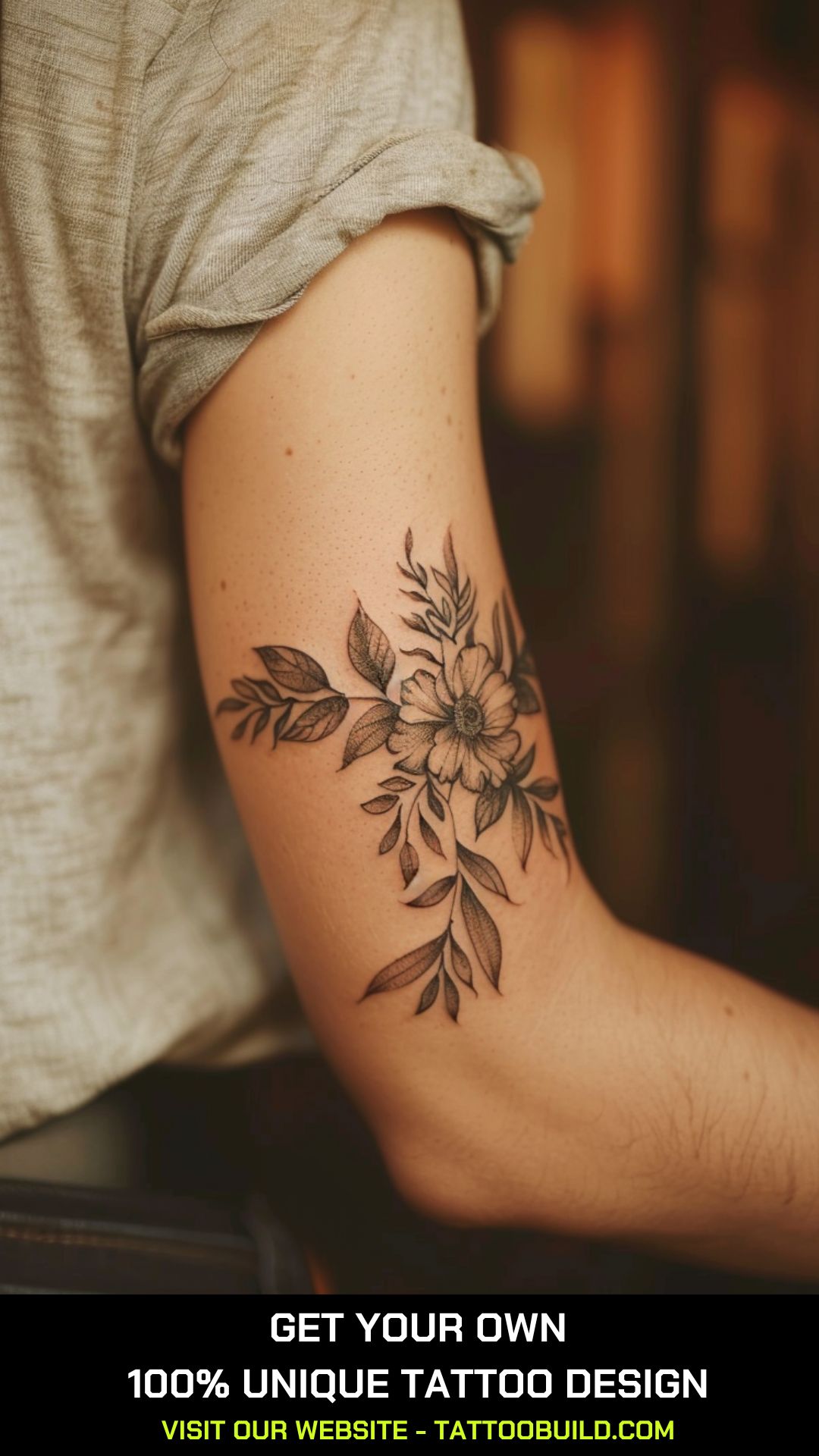
Botanical sleeves differ from floral ones in emphasis: leaves, ferns, seed heads and stems carry the design, and flowers are the accent rather than the subject.
This reads as noticeably more understated, and it is the direction I most often see chosen by people getting their first large piece.
It also ages gracefully. Foliage shapes are forgiving — a leaf that softens by a millimetre still looks like a leaf, where a softened portrait does not.
A common approach is to tie the plants to something personal: birth month flowers, a plant from a childhood garden, or foliage native to where you grew up. It gives the artist a constraint to design against, which almost always improves the result.
Animal and Symbolic Sleeves
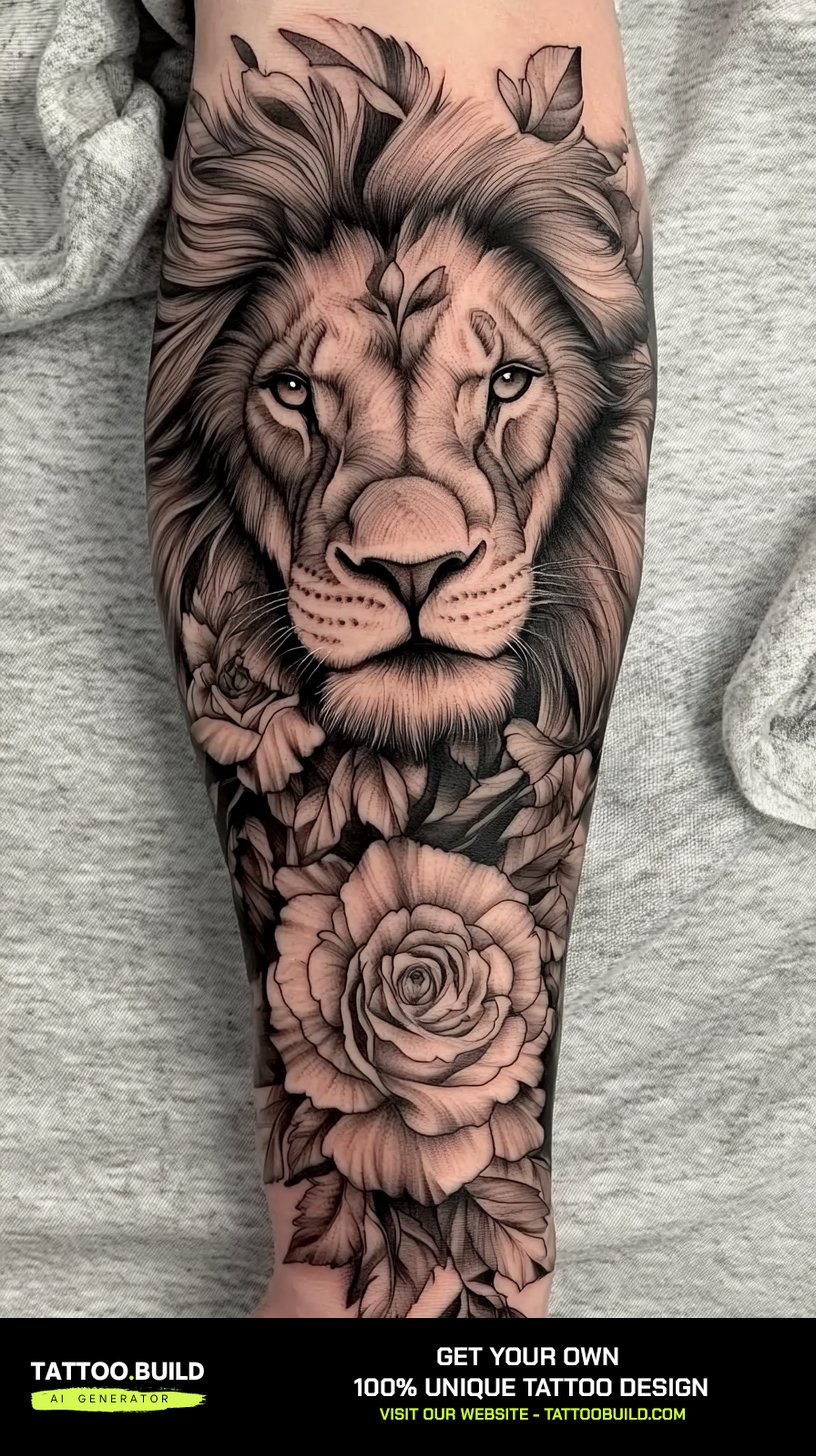
Animals give a lower arm sleeve a focal point that florals sometimes lack — a face or a silhouette the eye locks onto immediately.
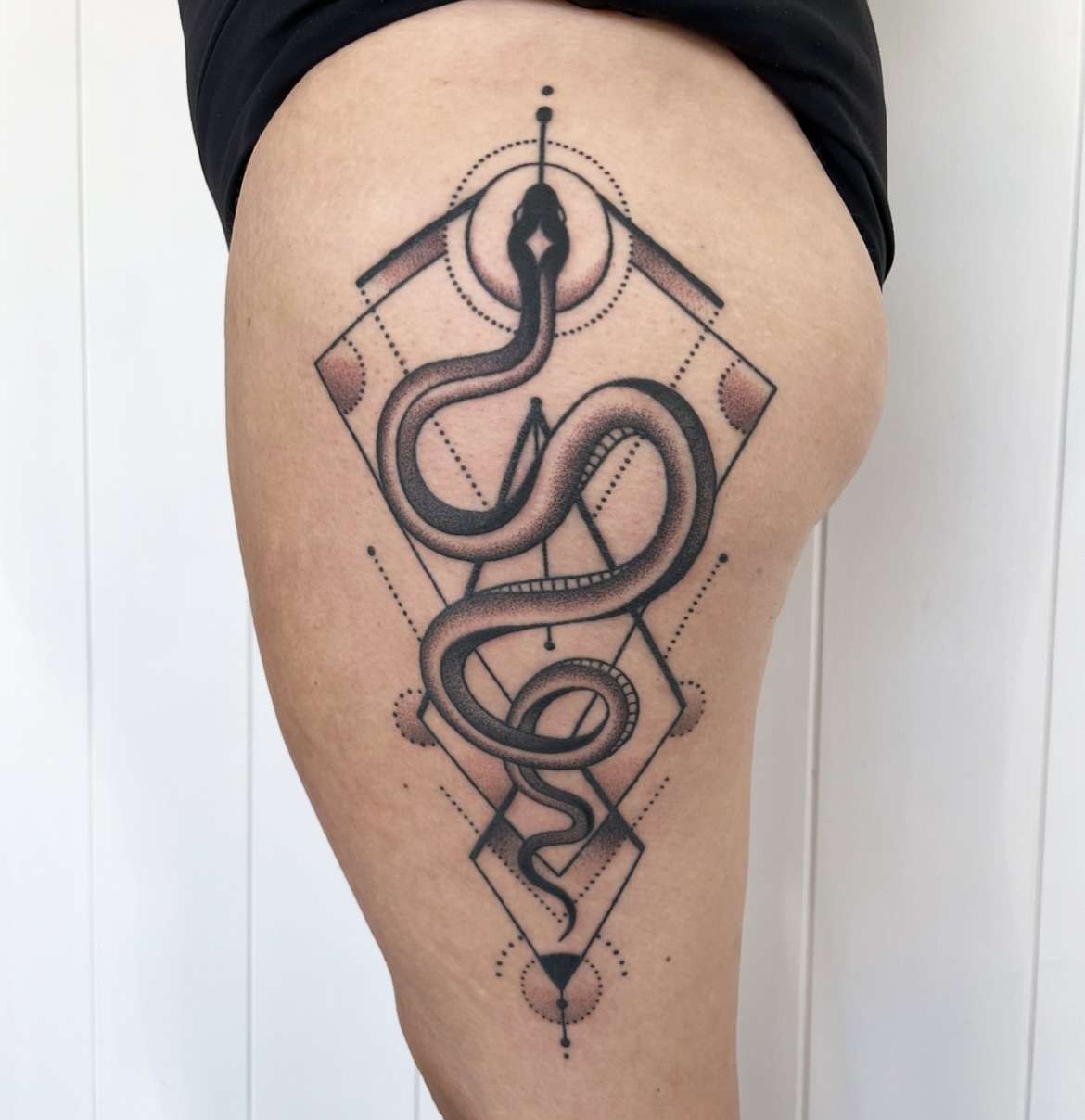
Butterflies, snakes, moths and birds appear most often, partly because their shapes suit a long, narrow canvas.
Snakes in particular are an artist’s favourite for forearms: the body can spiral naturally around the arm and solve the wrapping problem in one stroke.
When I have seen these go wrong, it is almost always scale. An animal drawn too small on a forearm loses its detail; drawn too large it fights the sleeve around it. Trust your artist on sizing here.
Black and Grey Illustrative Sleeves
Black and grey is the workhorse style of forearm sleeves, and for good reason: it offers realism’s depth without colour’s fade risk.
The technique relies on varied grey wash values rather than outlines alone, which is what gives these pieces their sense of volume.
Expect more sessions than a fine line piece. Shading passes take time, and the artist will usually build tone in layers across two or three sittings rather than in one.
Contrast is what keeps these readable. A sleeve shaded entirely in mid-greys turns muddy from three feet away, no matter how good the drawing is up close.
Script, Quotes and Mixed Compositions
Script rarely works as an entire lower arm sleeve, but it is excellent as connective tissue between larger elements.
A line of text following the inner forearm, or a short phrase filling the gap between two florals, adds meaning without adding visual weight.
A practical note from watching these heal: script placed directly on the inner wrist tends to soften faster than script on the outer forearm, because of how much that skin flexes.
If words matter to you, get the spelling and the font approved on a printed stencil placed on your arm before any needle touches skin. It sounds obvious. It is still the mistake I see most.
Alternatives and Variations Worth Considering
A full lower arm sleeve is not the only way to get the effect, and three variations come up often enough to be worth spelling out.
The Three-Quarter Sleeve
Stopping two or three centimetres short of the wrist keeps the design coverable by a shirt cuff and by most watches.
It changes surprisingly little visually and solves a lot of practical problems, particularly for anyone in a client-facing role.
The Open or Floating Sleeve
Instead of continuous coverage, elements are placed with deliberate gaps of bare skin between them.
This costs less, takes fewer sessions, and leaves room to add pieces later without crowding. In my experience it is also the version people regret least.
Starting With a Wrist or Bracelet Band
If you are not ready to commit to a sleeve, a band around the wrist gives you a border to build toward later. The wrist tattoo ideas collection covers designs that work as a future sleeve boundary.
The advantage is that the hardest aesthetic decision — where the sleeve ends — is already made when you do commit.
Practical Tips Before and After You Book
Book a consultation before the tattoo appointment. Twenty minutes talking through flow and borders saves hours of regret, and most reputable studios offer it at no cost.
Eat properly and sleep before a long session — forearm sleeves run three to five hours and your tolerance drops sharply when you are tired or hungry. Aftercare then does the rest of the work; the tattoo aftercare guide covers the routine in detail.
Sun is the main long-term threat to any forearm tattoo, simply because your forearms see more daylight than almost any other skin. Once healed, the American Academy of Dermatology recommends broad-spectrum sunscreen on tattooed skin whenever it is exposed.
On safety: tattooing carries real risks including infection and allergic reaction, and these are matters for professionals rather than for a blog. The Mayo Clinic and the US FDA both publish plain-language overviews. If a healing tattoo becomes hot, swollen, unusually painful or starts weeping after the first few days, contact your artist and see a doctor — do not treat it yourself.
Never attempt DIY tattooing or at-home removal. Both carry serious infection and scarring risk, and neither is something an article can make safe.
Common Mistakes — and What to Do If You’re Still Not Sure
The most common mistake is collecting tattoos rather than designing a sleeve. Unrelated pieces added one at a time almost never resolve into a composition.
The second is booking on price alone. Large work is where the gap between a good artist and an average one becomes permanent and obvious.
The third is rushing the wrist. That border is the first thing anyone sees, and it is the hardest area to fix once it is inked.
If you are still weighing it up, browsing adjacent collections helps more than staring at the same twenty images. Try forearm tattoo ideas for females for smaller starting points, or classy half sleeve tattoo ideas if you are leaning toward something more understated.
And if the style decision is the sticking point rather than the subject, how to choose a tattoo design walks through a process for narrowing it down.
Frequently Asked Questions
How long does a women’s lower arm sleeve tattoo take?
Most lower arm sleeves I have watched come together over two to five sessions of three to five hours each. A fine line botanical wrap can finish in two sittings; a dense black and grey composition with heavy shading usually needs four or more. Your artist will normally space sessions two to four weeks apart so each pass heals before the next. Booking the whole plan in advance is worth it — good forearm specialists often run months out.
Does a lower forearm sleeve hurt more than the upper arm?
In my experience it sits somewhere in the middle. The fleshy outer forearm is one of the easier places on the body, while the inner forearm, the wrist bend and the ditch of the elbow are noticeably sharper. Every artist I have asked says the inner wrist is the spot clients flinch at most. Pain is personal, though, so treat any chart as a rough guide rather than a promise.
Can a lower arm sleeve be covered for work?
Partly. A three-quarter shirt sleeve hides most of a lower arm sleeve, but the wrist and the back of the hand edge stay visible when you reach or gesture. If you need reliable coverage, ask your artist to stop the design a couple of centimetres above the wrist bone rather than wrapping it. That single decision has saved more than one person I know an awkward conversation.
How much does a women’s lower arm sleeve cost?
Pricing varies enormously by city and by artist, so any single number would mislead you. Most custom forearm sleeves are quoted per session or as a flat project rate rather than per hour of drawing. Ask for a written estimate that covers the design fee, every session and one touch-up. Be cautious of quotes that are dramatically below local averages — on large work, cheap usually shows.
Should I plan the whole sleeve before starting?
Yes, in almost every case. Adding unrelated pieces one at a time is the single most common reason forearms end up looking crowded rather than composed. Even a loose map of where the negative space, the focal flower and the wrist border will sit gives your artist room to build. You can still adjust the details as you go — what matters is agreeing the skeleton first.
Quick Summary
- Design the whole lower arm sleeve as one composition before any needle touches skin.
- Decide where the sleeve stops at the wrist and elbow first — borders shape the finished look more than the artwork does.
- Bold shapes and strong contrast age better than fine detail; blackwork holds up longest.
- Florals and foliage wrap the forearm most easily because irregular shapes hide the seams.
- Expect two to five sessions of three to five hours, spaced two to four weeks apart.
- Fine line work heals crisply on the forearm but softens over the years — ask to see healed photos.
- A three-quarter or open sleeve gives most of the effect for less time, cost and commitment.
- Sunscreen on healed skin is the single most effective thing you can do for longevity.