A full sleeve flower tattoo works best when the blooms, leaves and open skin follow one plan from shoulder to wrist. Picking beautiful flowers is the enjoyable part; deciding how they connect around the elbow and inner arm is what makes the sleeve feel complete.
These 18 full sleeve flower tattoo ideas for women compare different blooms, palettes and drawing styles. You will find dark roses, airy meadow flowers, colorful botanical compositions and more graphic interpretations. Use the images to choose a direction, then work with an artist on a drawing fitted to your arm.
Image disclosure: All images are AI-generated design concepts. They are not real tattoos, healed client photographs or a particular artist’s portfolio. Flower forms are stylized rather than botanical identification plates. An experienced tattoo artist needs to review the details, composition and placement before tattooing.
Choose a floral direction before collecting more flowers
Start with the overall effect: dense and dramatic, light and botanical, colorful, or mostly black and grey. Then choose one or two main flower types and a supporting leaf or stem treatment. A sleeve can contain several blooms without giving every one the same size and visual weight.
A useful reference set shows the shoulder, elbow and wrist, not just one attractive flower close-up. Bring a preferred palette and an example of the spacing you like. If you want a specific plant or a flower with a personal association, bring a clear reference of that actual flower rather than relying on a label attached to an online tattoo image.
For a wider comparison of styles, see our full sleeve tattoo ideas for women. If you are still deciding how much of the arm to cover, compare the smaller compositions in our floral half sleeve forearm guide before committing to a complete sleeve.
1. Black and grey rose sleeve
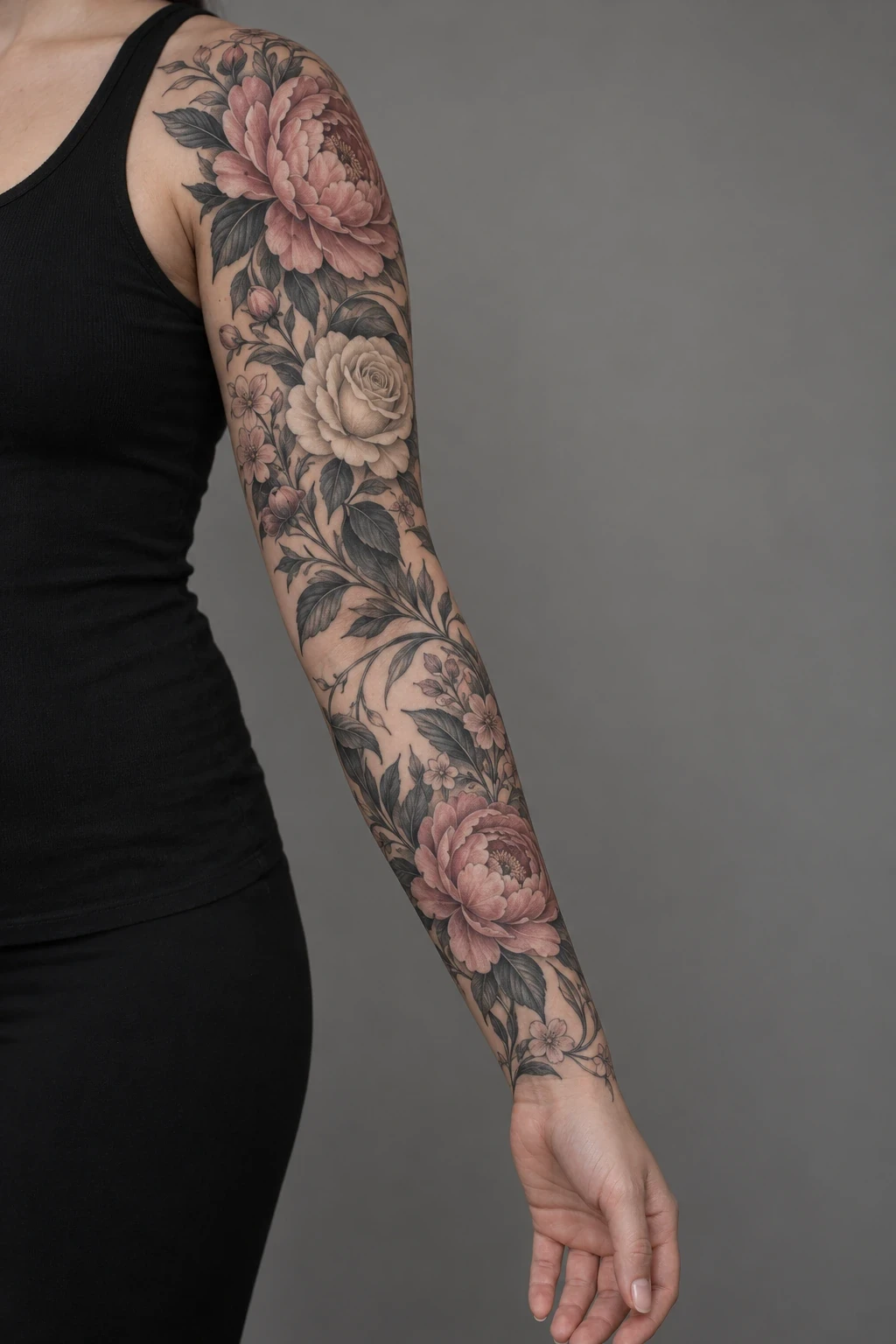
Large roses give a sleeve several clear focal points without requiring a long list of different flowers. Dark leaves connect the blooms, while lighter petals keep each rose visible. Staggering the flowers around the arm creates more movement than stacking identical circles down the outside.
Choose one dominant shoulder bloom and decide which lower flower should receive the next strongest emphasis. The artist can use leaf shapes to turn the composition through the elbow and onto the inner arm. Compare additional arrangements in our rose sleeve tattoo ideas if roses are your main subject.
2. Pink peonies with flowing bands
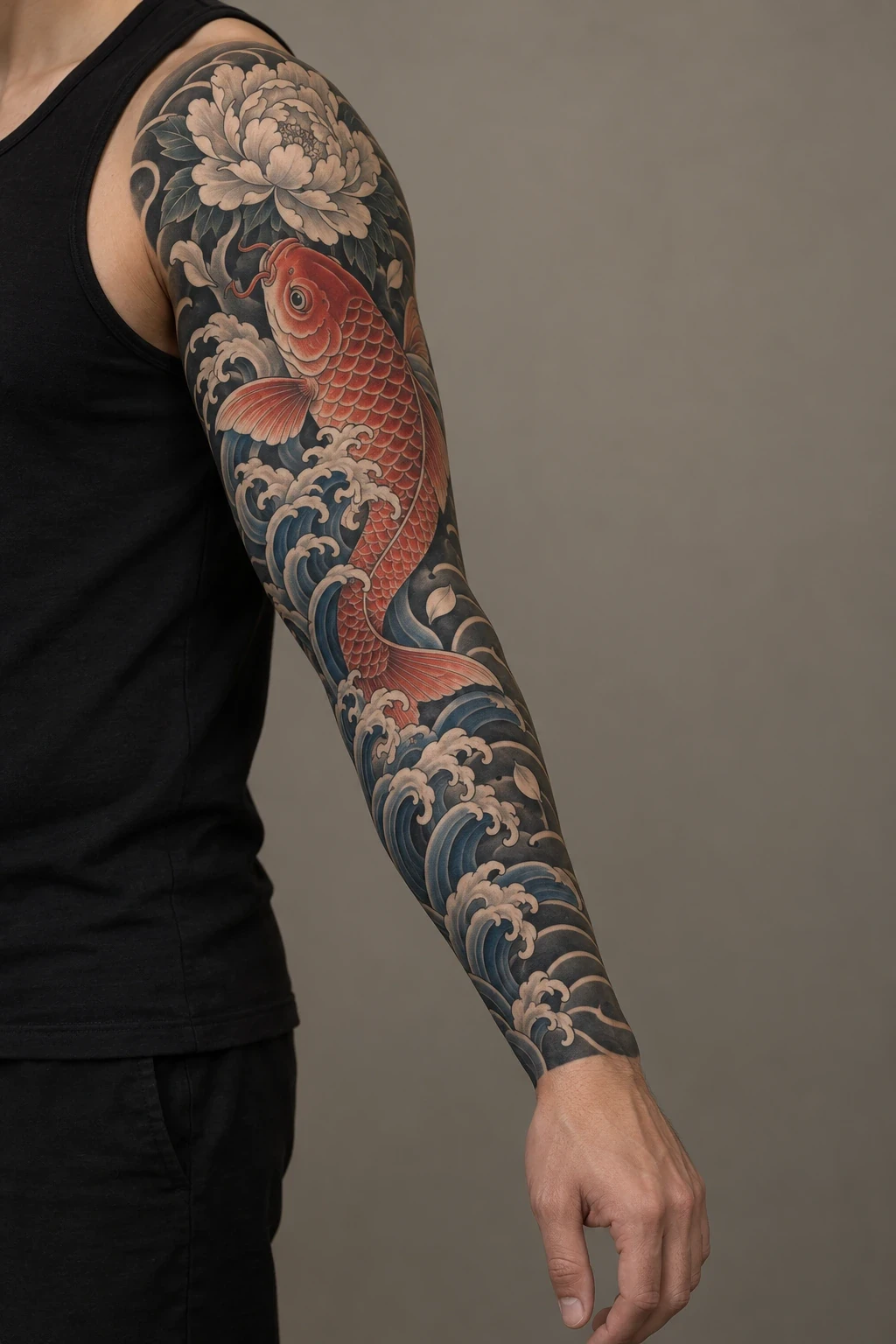
Broad pink peonies create a softer color direction, with dark leaves and charcoal bands holding the sleeve together. The supporting bands provide a route across the elbow instead of leaving the blooms as disconnected patches. The flowers remain the focus because the palette stays consistent.
Discuss how large the peonies should be before adding more of them. Their layered petals need enough space to remain distinct in the drawing. If you want a composition within a particular Japanese tattoo tradition, choose an artist who works in it and let them guide the flower pairing and background structure.
3. Airy meadow flowers and grasses
A meadow sleeve spreads smaller flowers, grasses and stems through a generous amount of open skin. The individual blooms can vary in height and angle, creating a lighter rhythm than a dense block of large flowers. A few larger shapes give the eye places to pause.
The open areas still need a plan. Ask the artist to show how the stems move around the inner arm and where the arrangement finishes at the wrist. If you prefer delicate drawing, review the artist’s own healed work and discuss an appropriate detail level rather than assuming every tiny line in a reference should be preserved.
4. Golden sunflower sleeve
Golden sunflowers make strong, bright focal points against green foliage. Their darker centers help separate the flower faces from the surrounding petals. Placing a few large blooms at different angles gives the sleeve variety without introducing unrelated colors or subjects.
Decide whether you want the biggest flower facing outward at the shoulder or lower on the arm where you see it more easily. Keep some stems, leaves and buds between the main blooms. That change in scale helps the artist connect the sleeve without filling every transition with another full flower.
5. Blackwork lotus composition
Open petal shapes against dark leaves give this lotus-inspired sleeve a graphic character. The contrast comes from black areas and uninked skin rather than a colorful palette. Curved bands link the shoulder and forearm flowers while leaving the blooms clearly separated.
Agree on the amount of black coverage before work begins. The artist should show how each petal edge remains visible when the design wraps around the arm. For more focal shapes to compare, browse our lotus flower tattoo ideas, then have the chosen form redrawn as part of a full sleeve.
6. Botanical lilies with long leaves
Trumpet-like lily flowers and pointed leaves create a different silhouette from rounded roses. Their outward-facing blooms can turn around the upper arm while narrow leaves carry the composition toward the wrist. Black and grey keeps the attention on those shapes.
Bring a specific flower reference if the type of lily matters to you. Ask the artist to keep the petal overlaps and stamens understandable at the intended size. Long leaves can connect the spaces between blooms, but their direction should support the arm’s flow instead of crossing every flower face.
7. Purple and pink orchid sprays
Orchid-inspired sprays offer a sequence of smaller focal blooms linked along stems. Purple and pink create variation within a related palette, while green leaves provide a contrasting base. The flowers can step around the arm rather than forming one straight outside column.
The flower centers need as much attention as the outer petals. Review the actual plant reference and the artist’s simplified drawing together if recognizable orchids are important to the brief. Keep enough space between blooms that their shapes do not merge when a stem passes around the side of the arm.
8. Burgundy dahlias with geometric framing
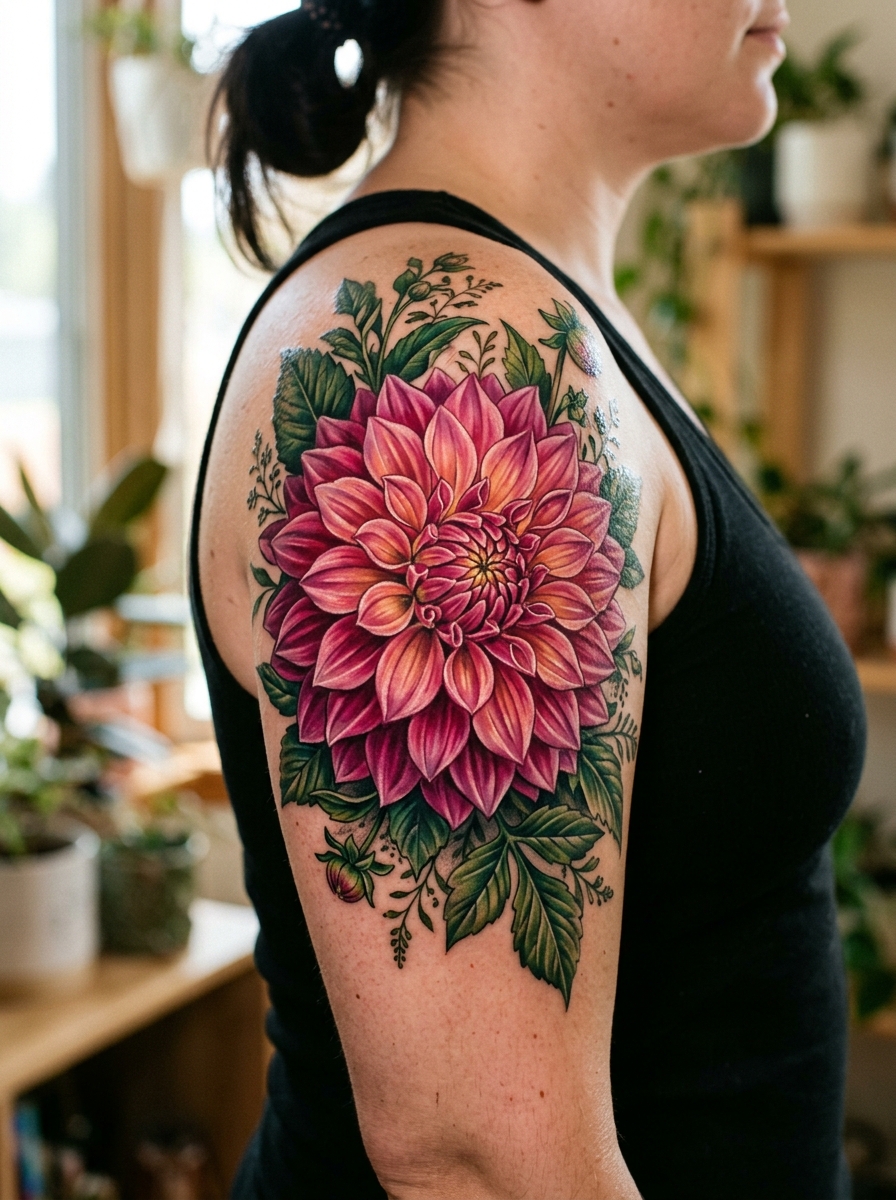
Layered dahlia blooms create rich petal texture, and subtle diamond outlines add a quieter structural element behind them. Burgundy keeps the palette restrained. The geometry acts as framing rather than dividing the sleeve into separate boxes.
Choose how much of the geometric outline should remain visible after the flowers overlap it. Too many small intersecting lines can compete with the petals. Ask the artist to simplify crowded centers and preserve clear outer flower shapes, particularly on the narrower forearm where the available width changes.
9. Ivory magnolias on dark branches
Ivory magnolia-inspired blossoms provide broad light shapes against darker branches and leaves. The branch structure can connect the whole arm while leaving space around the flowers. It is a useful direction if you want contrast without an opaque background behind every bloom.
Plan where the branches fork and where the largest leaves sit before adding smaller twigs. A few convincing connections can make the composition clearer than a mesh of lines. Check how each flower wraps around the arm so its light petals remain recognizable from more than one view.
10. Red poppies with seed pods
Red poppies give this sleeve loose, open flower shapes with dark centers. Seed pods and long stems introduce a second texture without adding another main flower type. The spaces between stems keep the composition relatively airy even with a vivid palette.
Ask the artist to vary the flower angles and distribute the darker centers deliberately. A line of equally sized dark circles can dominate the arm even when the petals look soft. Decide whether you want a few large poppies or more smaller ones before the connecting stems are finalized.
11. Blue-violet irises and blade-like leaves
Iris-inspired flowers combine upright and drooping petal shapes with long, narrow leaves. That vertical movement gives the artist a route down the arm, while larger blooms interrupt it at the shoulder and forearm. Blue-violet and green keep the floral subjects related.
Use a clear plant reference to establish the flower shape you want, then let the artist adapt it to the sleeve. Leaves should help connect the composition without hiding all the open skin around the elbow. Review both the inner and outer arm so the narrow stems do not become an afterthought.
12. Coral hibiscus and tropical foliage
Coral hibiscus-inspired blooms create a bright floral sleeve with broad petal faces. Green foliage adds a larger-scale supporting shape than fine stems alone. Buds can bridge the main flowers while keeping the shoulder-to-wrist composition connected.
Decide how much foliage you want as part of the finished coverage. A lush leaf background and an open floral arrangement are different briefs, even if both use the same flowers. Keep the centers and projecting stamens clear in the drawing so the blossoms remain the primary subject.
13. Pale anemones with dark centers
Pale lavender and white anemone-inspired flowers gain definition from their dark centers and surrounding leaves. The light petals can provide breathing room between darker parts of the sleeve. Smaller buds help vary the rhythm without adding many different flower types.
A limited pale palette still needs a contrast plan. Ask which petal edges will rely on outline, shading or open skin to remain distinct. Review real examples from the artist’s portfolio when discussing color on your skin tone rather than treating the brightness of a generated image as an expected result.
14. Pink chrysanthemums and dark leaves
Chrysanthemum-inspired flowers add a dense, curving petal texture to the sleeve. Dusty pink blooms and dark leaves create a clear color relationship, while grey background bands connect the composition. Varying the bloom sizes prevents every part of the arm from receiving equal emphasis.
Keep the major flower outlines readable before judging the smaller petal lines. The artist may simplify the inside of a bloom as it moves around the elbow or narrows toward the wrist. If you want a traditional Japanese approach, discuss that explicitly so the background and supporting elements follow the artist’s chosen practice.
15. Blue and lavender hydrangea clusters
Rounded hydrangea-inspired clusters create a different scale of detail: many small flower shapes grouped into larger masses. Blue and lavender keep the clusters related, while broad green leaves separate them. The sleeve depends on the outline of each cluster as much as its individual florets.
Ask the artist how they will keep the small flowers readable at the chosen size. A few larger, well-spaced clusters may serve the arm better than continuous tiny detail. Leave room for stems and leaves between the groups so the sleeve has a route through the elbow rather than becoming one uninterrupted texture.
16. Open-skin flowers against bold black shapes
This sleeve uses uninked petal shapes to define roses and peonies against dark surrounding areas. The flowers are part of the open space, making the contrast feel more graphic than a conventional shaded bouquet. Broad channels help connect the composition through the elbow and wrist.
Discuss the coverage carefully before choosing this direction. Ask the artist to show which parts will be solid black and which will remain skin in the full drawing. The open flowers should read from several angles, and the wrist boundary needs as much planning as the large shoulder bloom.
17. Art Nouveau-inspired floral curves
Pale purple irises, long curved stems and ochre outlines give this sleeve a decorative drawing style. The stems do more than connect flowers: they establish a flowing framework around the arm. Open spaces between the curves keep the arrangement from becoming a continuous wall of ornament.
Choose how stylized you want the flowers to be before adding more decorative lines. This is a modern interpretation of a flowing ornamental look rather than a botanical study. Ask the artist to make the curves work around your elbow and inner arm instead of transferring a flat border pattern unchanged.
18. Stained-glass-inspired roses
Dark dividing outlines and flat sections of red, pink, teal and muted gold create a stained-glass-inspired floral sleeve. The roses remain recognizable while the surrounding shapes provide a more graphic framework. Repeating the palette across the arm makes the separate sections feel connected.
The dark divisions need a deliberate route around the body. Ask the artist to keep the flowers dominant and avoid creating too many tiny colored compartments near the wrist. This is an illustrated effect in tattoo form; review the artist’s own work to decide how much outline weight and color separation suits the result you want.
Plan the shoulder, elbow and wrist together
A full sleeve is a wraparound composition, so one outside-arm image cannot show every connection. Ask the artist to plan the inner arm and the transitions around the elbow alongside the main view. Check the drawing with your arm relaxed, turned and bent.
- Shoulder: Decide whether one large bloom forms the cap or whether stems and leaves open the sleeve more gradually. Consider any future connection to chest or back work.
- Upper arm: Give the main flowers enough room. Vary their size or angle rather than repeating one identical bloom all the way down.
- Elbow: Ask how the leaves, stems or background will pass through the joint. Let the artist choose an appropriate amount of detail for that area.
- Forearm: Decide whether it gets a second major flower or a lighter continuation of the upper composition. Review both its inner and outer surfaces.
- Wrist: Choose the endpoint deliberately: a clear boundary, a tapered stem arrangement or another finish that belongs to the whole sleeve.
If you already have tattoos on the arm, show clear photographs at the first consultation. Their position, size and darkness affect the remaining composition. Do not assume a full floral sleeve can simply be laid over an existing piece without a separate assessment.
Choose density and drawing style
A dense floral sleeve uses flowers, leaves and background to cover much of the arm. The main challenge is keeping the blooms separate enough to read. Look for a clear contrast between light petals, darker leaves and any background shading.
An open botanical sleeve uses more visible skin between stems and flower groups. Its gaps still need structure, especially around the elbow and inner arm. More empty space does not remove the need for a full-arm drawing.
A graphic sleeve may use blackwork, ornamental outlines or colored sections to organize the flowers. Decide how much of that framework you want before adding the botanical detail. Our tattoo styles guide can help you describe the drawing approach you prefer.
Review an artist’s own healed sleeves as well as fresh photographs. Ask about their experience with your skin tone and the level of detail you are considering. Generated skin, color and shading cannot show how a real tattoo will heal or look over time.
Color, black and grey, or open-skin contrast?
Choose a palette for the whole sleeve rather than selecting a new set of colors for each flower. A few related shades can tie several species together. If you prefer vivid blooms, decide whether the foliage stays equally colorful or becomes a quieter supporting layer.
Black and grey puts more emphasis on tonal separation. Agree where the darkest leaves and backgrounds will sit and which petals stay light. For a design built around solid black and open skin, have the artist mark both clearly in the full drawing before work starts.
Flower names and personal meanings are separate choices. If a particular plant matters because of a person, place or memory, bring an accurate reference and explain that association. You do not need a universal symbolic meaning to justify choosing a bloom you love.
Prepare a useful consultation brief
Bring a short list of main flowers, one preferred palette and an example of the density you like. Explain the feature you want from each reference: perhaps the shoulder placement in one, the leaf treatment in another and the wrist finish in a third. Give the artist room to resolve those preferences in an original composition.
Ask for an estimate based on your actual arm and the final drawing, how the work might be divided into appointments and what could change the total. Our sleeve tattoo cost guide can help you frame those questions; the artist’s current quote is the amount to budget around.
If you plan to start with one section and finish the sleeve later, agree on the whole layout first. Ask how the first completed area will look on its own and what space must remain available for future flowers and connections. Get the artist’s preparation and aftercare instructions in writing so you can plan each stage.
Care and realistic expectations
Follow your artist’s instructions for a fresh tattoo and seek medical advice for concerning skin changes. These AI-generated concepts do not demonstrate healing, long-term wear or how your skin will respond.
For healed tattooed skin, the American Academy of Dermatology recommends sun protection because UV light may fade some inks. Its advice includes broad-spectrum, water-resistant SPF 30 or higher sunscreen before going outside, reapplied at least every two hours. A new or changing skin reaction should be assessed by a dermatologist.
Full sleeve flower tattoo FAQs
Can I mix different flowers in one sleeve?
Yes. Give the main flowers a clear hierarchy and use a consistent drawing style, palette and supporting foliage. A mixture can feel cohesive when it follows one plan; adding every favorite bloom at the same size can make the composition harder to read.
Does a full sleeve need a solid background?
No. An open arrangement of flowers, stems and leaves can still extend from shoulder to wrist. Decide how much visible skin you prefer and have the artist plan the gaps as part of the composition.
Can floral sleeves work on smaller arms?
The artist needs to redraw the sleeve for the available space. Fewer large blooms or simpler petals may work better than uniformly shrinking a dense reference. Review the actual arm layout before committing to a level of detail.
Should I choose all the flowers before finding an artist?
A shortlist is useful, but leave room for the artist’s advice. Their drawing approach may suit certain shapes or levels of detail better than others. Choose someone whose own portfolio shows the kind of floral work you want, then develop the final arrangement together.
Where can I compare full sleeve drawings before choosing?
Our ladies’ full sleeve tattoo drawings provide a broader comparison of composition ideas. Use them to identify the structure you prefer, then return to the flower types and palette that best fit your brief.