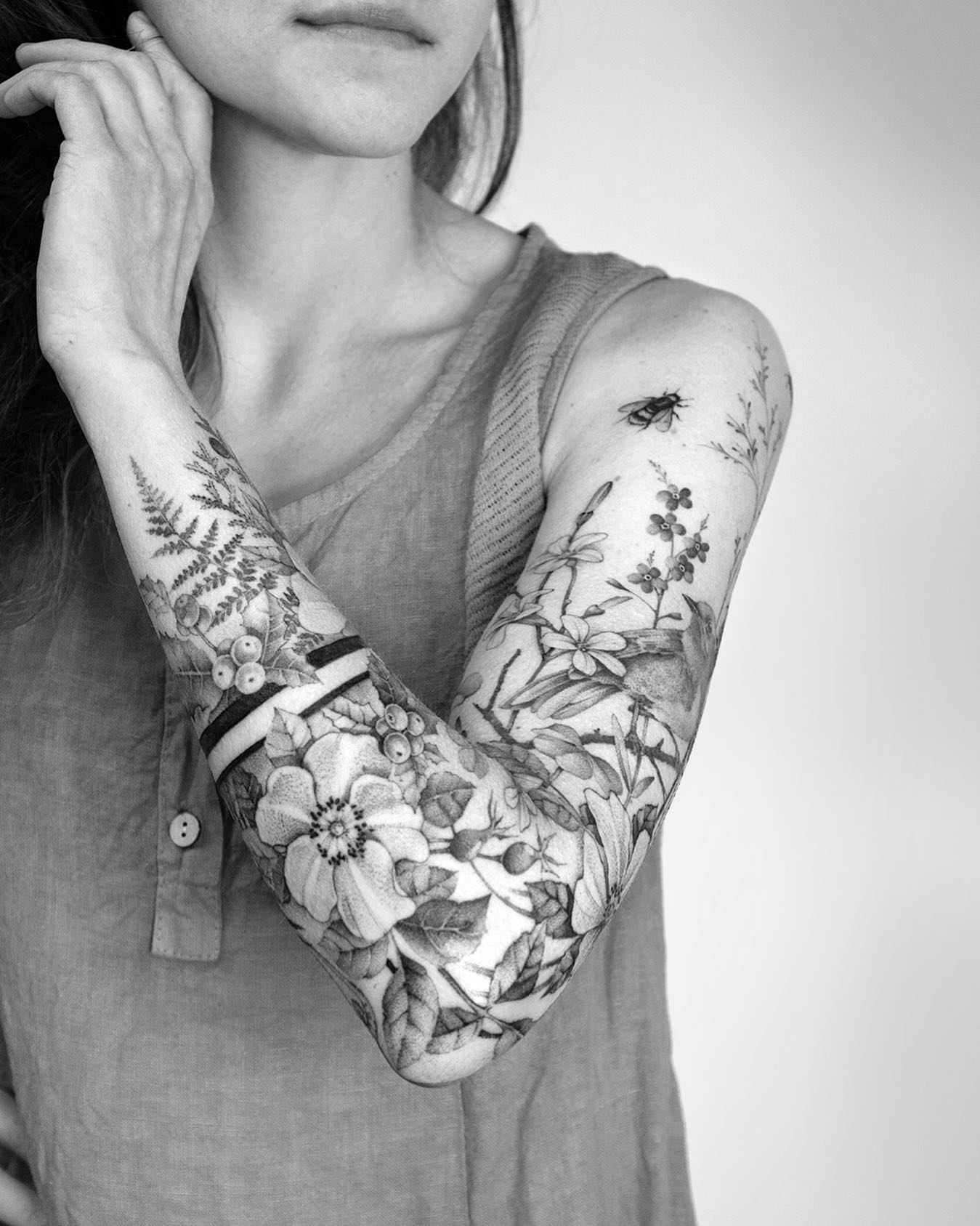
A Japanese full sleeve tattoo gives a large subject room to move: a koi can rise up the arm, a dragon can coil around it, and flowers can anchor the shoulder and forearm. The challenge is making those parts feel like one composition when your arm bends and turns.
These 16 Japanese full sleeve tattoo ideas compare different focal subjects, palettes and background treatments. Each concept extends from the shoulder to the wrist. Use them to identify a direction for a consultation, then let your artist redraw the sleeve for your proportions and their own practice.
Image disclosure: Every image in this article is an AI-generated design concept. These are not photographs of real tattoos, healed client work or a particular artist’s portfolio. Generated details and placement need an experienced tattoo artist’s review before tattooing.
Choose a subject, then build a sleeve around it
Start with one main decision: do you want an animal-led sleeve, flowers, a mask or a landscape? A second subject can add interest, but the largest shapes should still be easy to identify from across a room. The connecting waves, clouds and wind bands deserve as much attention as the centerpiece.
These are Japanese-inspired compositions rather than a claim that every combination follows a particular traditional school. If you want a traditional sleeve, ask an artist who works in that tradition to guide subject pairings, seasonal elements and background structure. Describe the personal meaning you want without assuming that a motif has one fixed meaning for everyone.
For a wider starting point, browse our Japanese tattoo designs. For a quieter approach to individual motifs, compare the minimal Japanese tattoo ideas before committing to full-arm coverage.
1. Koi and rolling waves
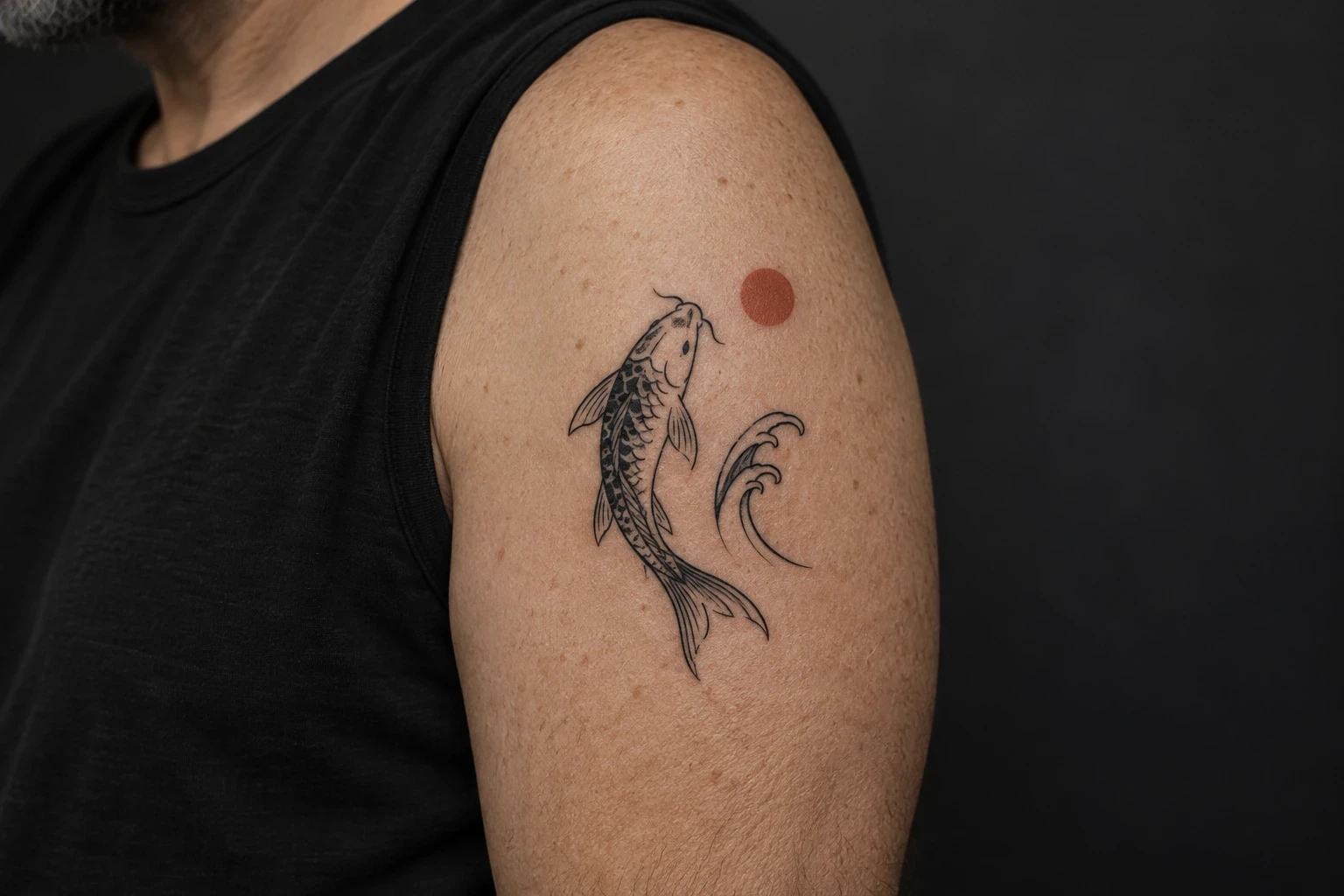
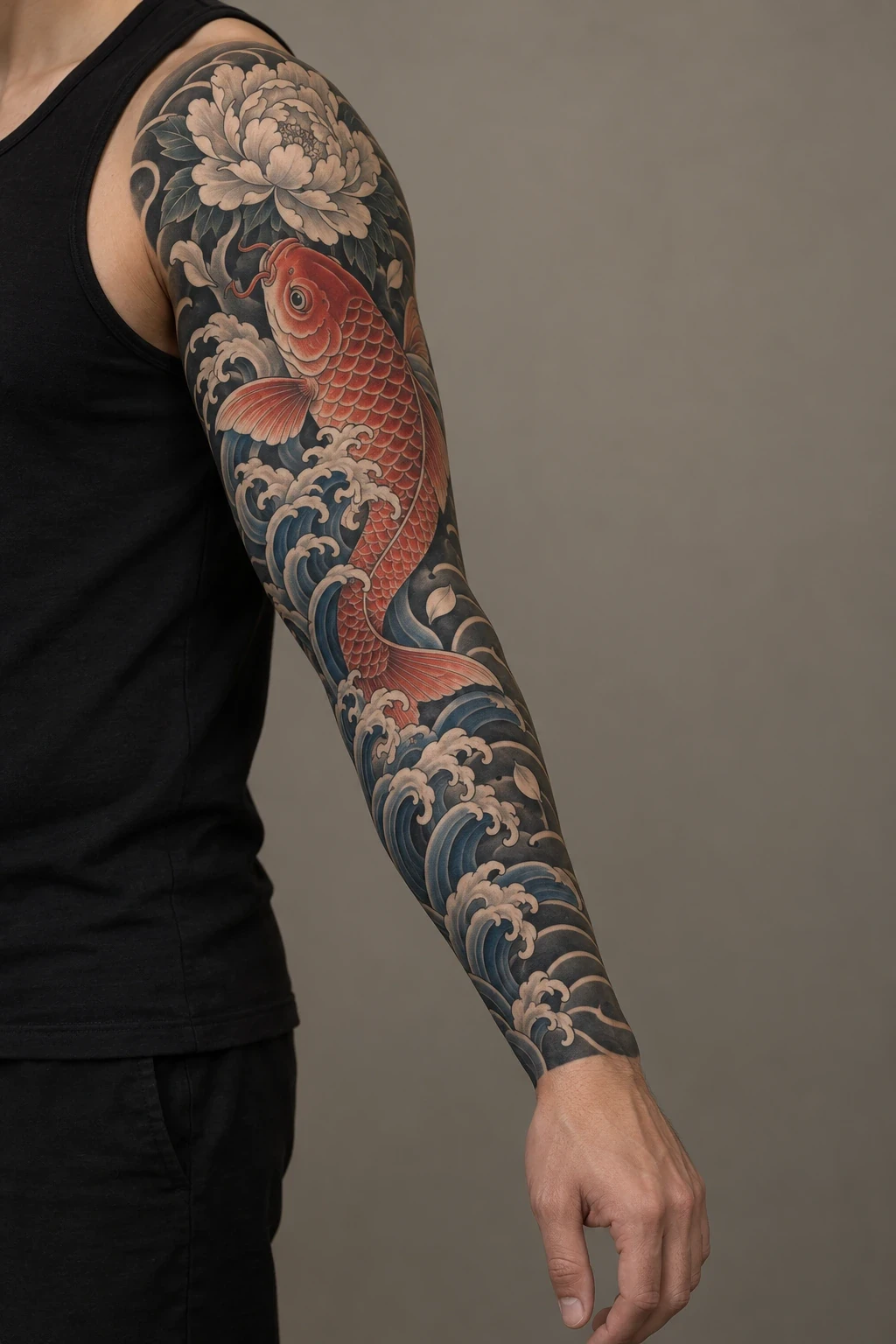
A warm orange koi gives this sleeve one obvious focal point, while cool blue waves carry the eye through the elbow and down the forearm. Pale foam separates the fish from the water so the body does not disappear into the background. It is a useful starting direction if you want color without giving every section a different palette.
Ask your artist to map the koi’s full body around the upper arm before settling the waves. A head that looks strong in one view can lose its silhouette when the arm rotates. Keep the wrist finish calmer than the shoulder, and compare more focal arrangements in our koi fish tattoo design guide.
2. Teal dragon through grey clouds
A dragon gives a sleeve a natural long shape, but the body needs a believable route. Here, the teal head sits high and the body curves through grey clouds rather than breaking into separate decorative pieces. Small red accents keep the limited palette lively without competing with the face.
For the consultation, ask where the head, main bend and tail will sit on the actual arm. The face should remain readable, while the cloud bands can handle changes of direction. Review claws, whiskers and body connections in the drawing rather than relying on every small detail in the generated reference.
3. Peonies linked by wind bands
Large peonies create several broad stops along the sleeve: one at the shoulder, another around the middle and a final bloom on the forearm. Black wind bands link them into one structure. Red and dusty pink petals give variation while keeping the flowers related.
This direction works best when the flower sizes have a clear hierarchy. Ask for one dominant bloom instead of three identical circles stacked down the arm. Leaves and background bands should guide the gaps between them, with enough open space for each petal edge to remain distinct.
4. White cranes with pine branches
White cranes bring a lighter focal shape against dark pine and grey clouds. Their long necks and wings offer a different rhythm from coiled animals. The upper and lower birds create two separate points of interest without filling every area with a large face.
Keep the birds large enough for their heads and limbs to read clearly. An artist can decide which wing belongs on the outer arm and where a standing bird will avoid the elbow bend. Pine branches can connect the scene, but should not obscure the crane silhouettes or make the lower sleeve feel tangled.
5. Golden chrysanthemums on a dark background
Golden chrysanthemums make strong rounded focal points, while their layered petals add texture up close. A dark background gives the yellow flowers a clear boundary. The grey wind bands are secondary, leaving the blooms to carry the sleeve.
The main design choice is how much petal detail you want. Take both a close view and an arm-length view of the artist’s drawing into account. Ask them to simplify crowded centers if necessary and keep the forearm flower proportionate to the available width rather than shrinking it to fit a leftover gap.
6. Tiger, bamboo and rocks
This sleeve places a tiger high on the arm and uses bamboo to extend the scene toward the wrist. The rocks create a visual base under the animal, while the narrow stems offer a change of texture from the tiger’s bold stripes. Orange and green keep the subject easy to distinguish.
A strong tiger sleeve depends on a coherent face and a clear relationship between the head, paws and body. Bring this as a composition reference, then ask the artist to rebuild the animal’s anatomy. Leave breathing room around the eyes and muzzle, and avoid running dense bamboo leaves across those focal features.
7. Red and gold phoenix with a flowing tail
The phoenix uses the shoulder and upper arm for its head and wings, with long feathers carrying movement down the forearm. Red and gold create a bright centerpiece, while grey clouds keep the background quieter. This layout emphasizes length rather than several separate round motifs.
The tail can help unite the sleeve, but it needs a deliberate path through the elbow. Ask which feathers will remain broad enough to read when your arm bends. Keep the wing structure understandable and avoid placing so many small feathers at the wrist that the finish loses its clean outline.
8. Oni mask with cream peonies
A red oni mask creates a direct focal point, and pale peonies soften the transition into the lower arm. The dark background provides separation between the mask and flowers. The contrast is graphic: a strong face above, large open petals below.
Make the mask the first element you review with the artist. The horns, eyes and mouth should work together, and the drawing should distinguish an oni mask from other mask subjects you may have saved. Discuss the specific reference and why you chose it rather than attaching a generic meaning to every mask.
9. Maple leaves over river currents
A sleeve does not need a single large animal. Red maple leaves can move diagonally through a blue river background, with rocks adding a few solid pauses. This approach makes the changing flow of the water the main feature of the composition.
Ask your artist to vary the leaf sizes and spacing so the sleeve feels planned rather than evenly patterned. Wider areas of current can give the elbow room to move visually. If you want a traditional composition, discuss the seasonal choices and their compatibility with any additional flowers before adding them.
10. Cherry blossoms and open clouds
Pink blossoms and grey clouds create a gentler palette without turning the sleeve into isolated tiny flowers. Dark branches hold the composition together, and uninked skin between the cloud bands gives the eye places to rest. The result depends as much on the open areas as the petals.
Decide whether you prefer a few generous blossoms or a denser scatter. The artist can distribute them around the arm rather than keeping all the flowers on the visible outer side. Review how the branches pass through the elbow and how the wrist edge finishes so the design does not trail off accidentally.
11. Ivory snake around red peonies
An ivory snake contrasts with red peonies and a darker background. Its curves link the two flower groups, giving the sleeve a continuous route instead of a stack of separate images. The head creates a smaller focal point than a large dragon or mask.
The snake should have one continuous body with a clear head and tapering tail. Trace that route in the drawing before approving the layout. Where the body passes behind a flower, the next visible section needs to reconnect convincingly; the artist should correct any ambiguous overlaps in the generated concept.
12. Black and grey dragon sleeve
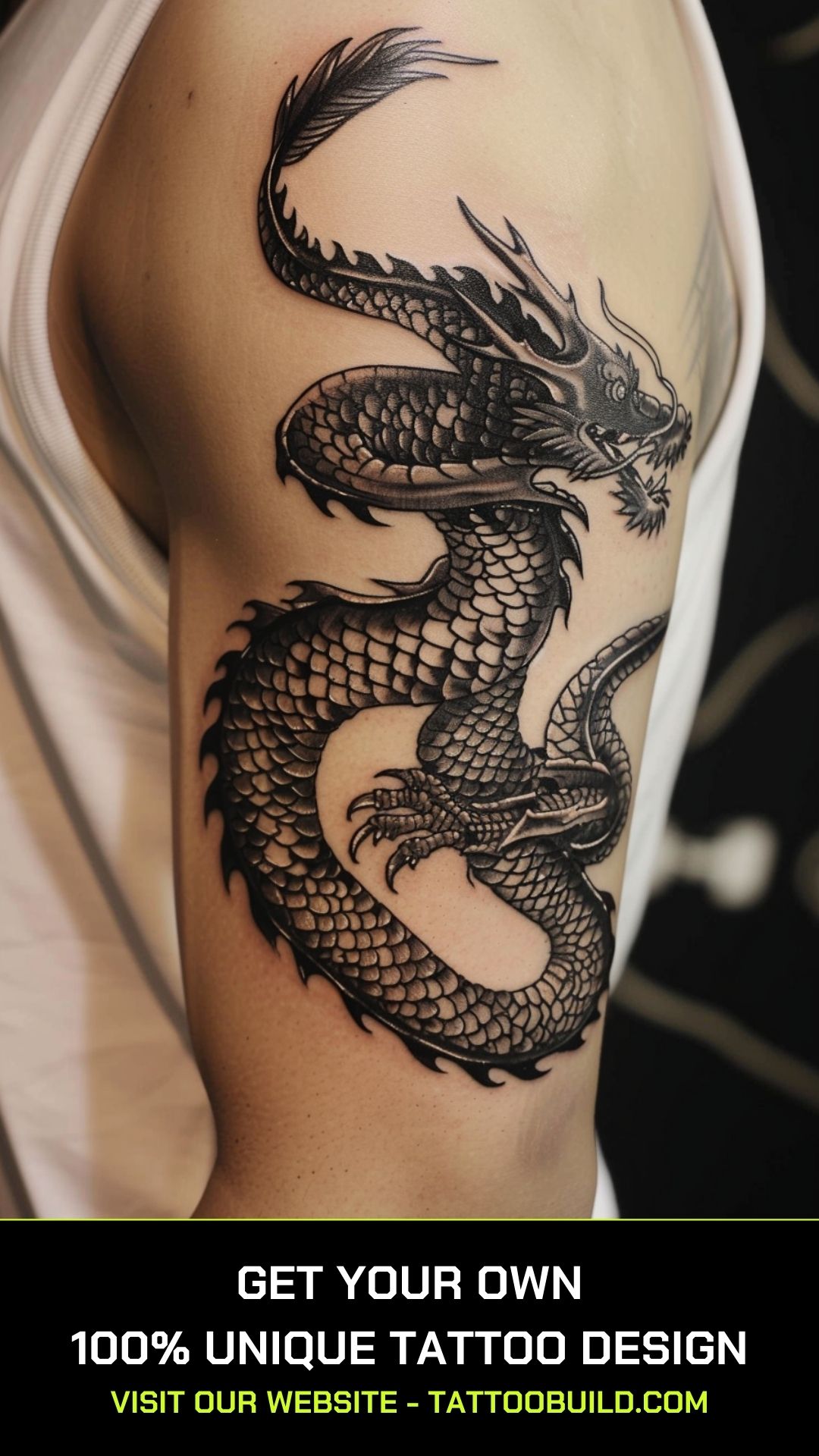
Removing the color shifts attention to outline, shading and open skin. A dragon head at the shoulder and a curling body below can feel dramatic without a bright palette. Grey clouds soften the transitions between the large black shapes.
Ask to see healed black-and-grey sleeves in your chosen artist’s portfolio, especially examples with a similar amount of background coverage. Discuss which areas will stay light and where solid black will sit. The contrast plan matters more than the number of scales, because the whole arm needs to remain readable.
13. Two koi with lotus blooms
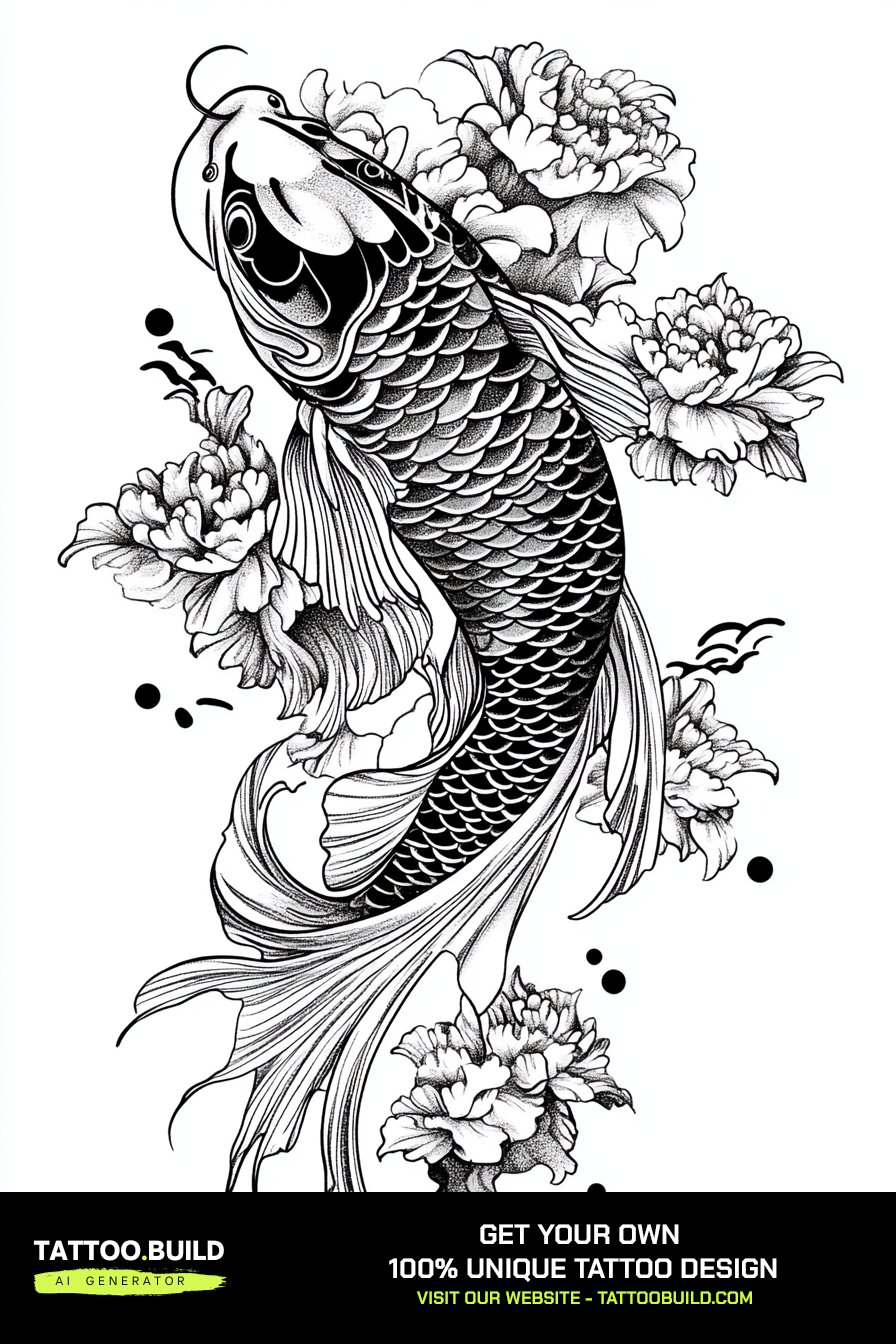
Two koi create a different rhythm from the single-fish sleeve: one high and one lower, separated by water and pink lotus blooms. The black and ivory fish give the layout built-in contrast. The flowers can serve as pauses rather than additional dominant subjects.
Ask the artist to make the two fish different enough in size or direction that they do not look duplicated. Their bodies should have independent, coherent paths around the arm. This is a modern Japanese-inspired combination; if tradition is your priority, let a specialist guide the floral pairing and the overall scene.
14. Wave landscape with a small Mount Fuji
A wave-led landscape makes the background itself the subject. Blue currents and pale foam sweep down the arm, with a small mountain providing a quieter point near the shoulder. The sleeve can stay visually cohesive with very few colors.
Hokusai’s Great Wave is a useful art reference for the contrast between a large wave and a small Mount Fuji; the Met dates that print to about 1830–32. This concept is an original modern arrangement, not a reproduction. Ask your artist to adapt the landscape around the arm rather than stretching a rectangular print onto it.
15. Blackwork peonies with open petals
Large peonies with uninked petals can create a bold sleeve using black and skin alone. Dark leaves and sweeping bands connect the flowers, while open channels prevent the entire arm from becoming one continuous dark area. This design emphasizes shape rather than color blending.
Agree on the amount of solid black before work starts. Have the artist show how the shoulder, elbow and forearm connect in the full drawing. A flower that reads well on a flat page may need a different angle on the arm, and the negative space should look intentional from more than one side.
16. Dragon above a koi
A blue dragon in clouds occupies the upper sleeve, while a red koi and waves anchor the forearm. The change from sky to water gives the composition two related zones. Keeping the subjects in different colors helps distinguish them in a busy sleeve.
This is the most layered option here, so give the main subjects generous space. Ask your artist to plan the transition across the elbow first, then balance the two focal points. If the drawing becomes crowded, simplify the background or choose just one animal rather than shrinking both to preserve every detail.
Plan the entire arm before the first session
A full sleeve is a wraparound composition. One outer-arm picture cannot show every part of it, so ask your artist to map the inner arm, elbow and wrist as well as the main view. Check the design with your arm relaxed, bent and turned. A face, fish or flower should not depend on a single photographic angle to make sense.
- Shoulder: Decide how the sleeve begins, especially whether it stops at the shoulder cap or might eventually connect to chest or back work.
- Upper arm: Give the main subject enough space. Avoid crowding a large head with several equally bold flowers.
- Elbow: Ask how the background and subject connections will work across the joint. Let the artist choose the detail level for that placement.
- Forearm: Decide whether it carries a second focal subject or continues the first one. Review both the inner and outer surfaces.
- Wrist: Choose the endpoint deliberately. A clean boundary and a softer fading composition create different finishes.
Bring a short reference set: one preferred main subject, one palette, and a background treatment. Explain what you like in each image instead of asking for an exact copy. If your arm already has tattoos, show clear photographs at the first consultation; the artist will need to plan around their position, size and darkness.
Traditional direction or a modern Japanese-inspired sleeve?
Both can be useful starting points, but be specific about your goal. If you want traditional Japanese composition, choose an artist whose portfolio demonstrates that work and let them guide the pairings and background. If you want a modern interpretation, discuss which features you want to retain: bold outlines, large motifs, waves, clouds or a limited palette.
Do not treat an AI image as evidence of an artist’s skill or as a finished stencil. Ask to see the artist’s own healed sleeves and full-arm views. Compare how their large shapes, background and contrast read after healing, then decide whether that approach suits your idea.
Any script or named figure needs its own review. These concepts use no written Japanese. If you later add text, have the actual wording and lettering checked by a fluent reader before it becomes part of the sleeve. For script-focused starting points, see our Japanese word tattoo ideas.
Color, black and grey, or blackwork?
Color helps separate large subjects: a red koi against blue water, for example. Choose a palette that the artist can sustain across the whole sleeve, rather than selecting colors independently for every motif.
Black and grey puts more emphasis on tonal separation. Discuss where the darkest background will sit, which subjects stay lighter and how much skin remains open. Blackwork can make a striking floral sleeve, but the amount of solid coverage should be agreed in the drawing, not improvised around leftover gaps.
Take the artist’s experience with your skin tone into account when reviewing their portfolio. Generated skin and ink do not predict your result. A consultation is the place to compare real examples and set expectations for the palette and level of detail.
What to ask about sessions and budget
Request an estimate for your actual arm, design and artist rather than using one fixed session count. Ask what is included in the estimate, how appointments are booked, what could change the total and how the artist plans to divide the sleeve into stages. Our sleeve tattoo cost guide can help frame those questions; the artist’s current quote is the figure to budget around.
Tell the artist about work clothing, travel and activities that could affect your appointment planning. Ask for their written preparation and aftercare instructions so you can organize each stage. Avoid choosing a design solely because a generated image makes the entire sleeve appear finished at once.
Care for the finished sleeve
For a new tattoo, follow your artist’s instructions for the fresh wound and seek medical advice for concerning skin changes. The images here cannot demonstrate healing or long-term wear.
For healed tattooed skin, the American Academy of Dermatology advises sun protection because ultraviolet light can fade some inks. Its guidance recommends broad-spectrum, water-resistant sunscreen of SPF 30 or higher, applied before going outside and reapplied at least every two hours. A new or changing skin reaction warrants a dermatologist’s assessment.
Japanese full sleeve tattoo FAQs
Does a Japanese sleeve need a dragon or koi?
No. Flowers, birds and wave-led landscapes can provide a complete design direction too. Choose a subject you want to live with, then ask the artist to build a coherent composition around it rather than adding an animal simply to fill space.
Can I start with the upper arm and finish later?
Discuss the full sleeve first, even if you intend to book it in stages. A shared plan gives the artist a way to reserve space for the lower arm and connect the background. Ask how the first completed section will look while the rest remains unfinished.
Can these sleeves work on smaller arms?
The artist needs to resize and redraw the composition for the arm. A smaller canvas may call for fewer focal subjects, broader shapes or less internal detail. Do not shrink the entire reference uniformly and assume every feature will still work.
Should I choose every flower and background detail myself?
Bring your preferences, but give the artist room to resolve the composition. If tradition matters to you, ask them to explain their recommended pairings. A short, clear brief is often more useful than a collection of unrelated favorite images.
Where can I compare other sleeve styles?
See our full sleeve tattoo ideas for men and full sleeve tattoo ideas for women for a broader range of styles. Use the categories as browsing routes; the final sleeve should suit your arm and preferences.