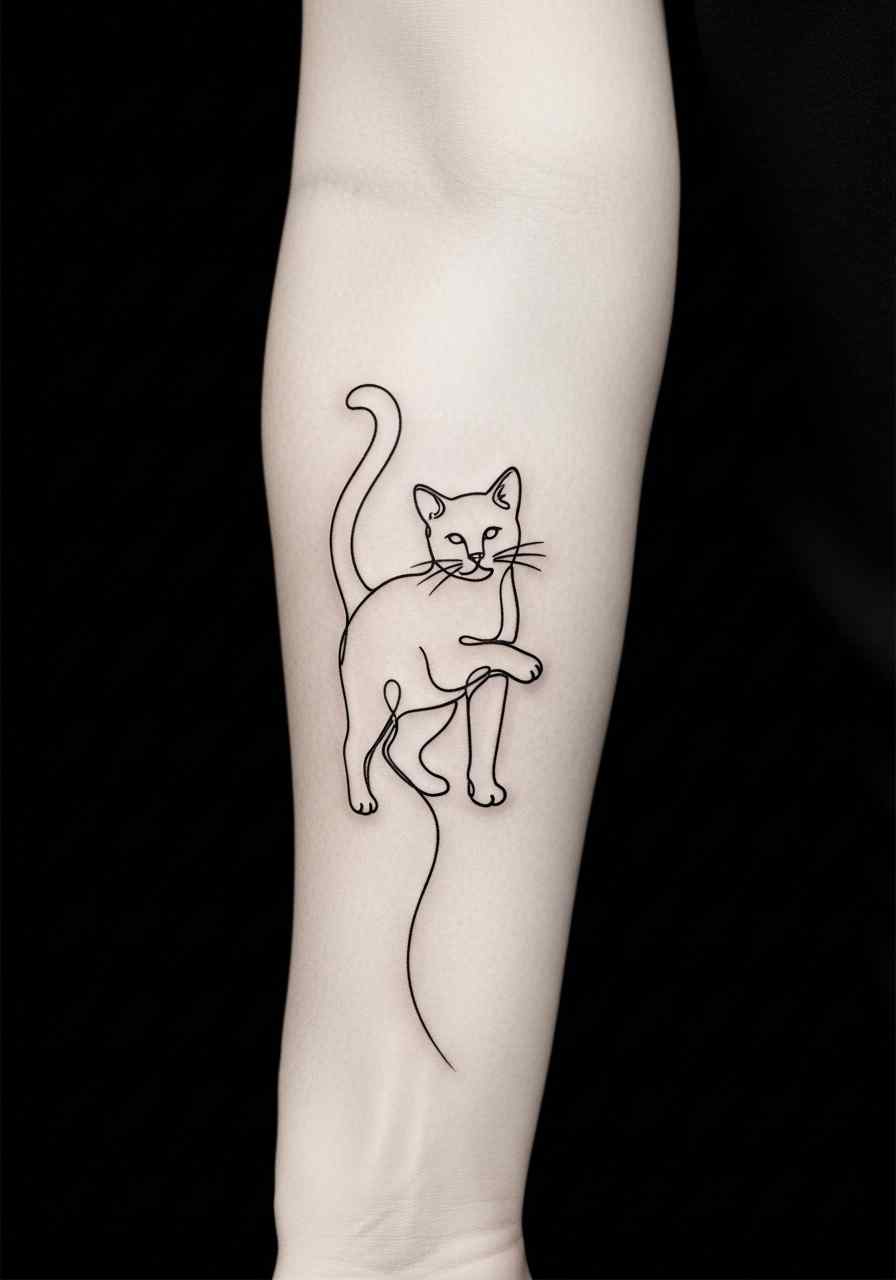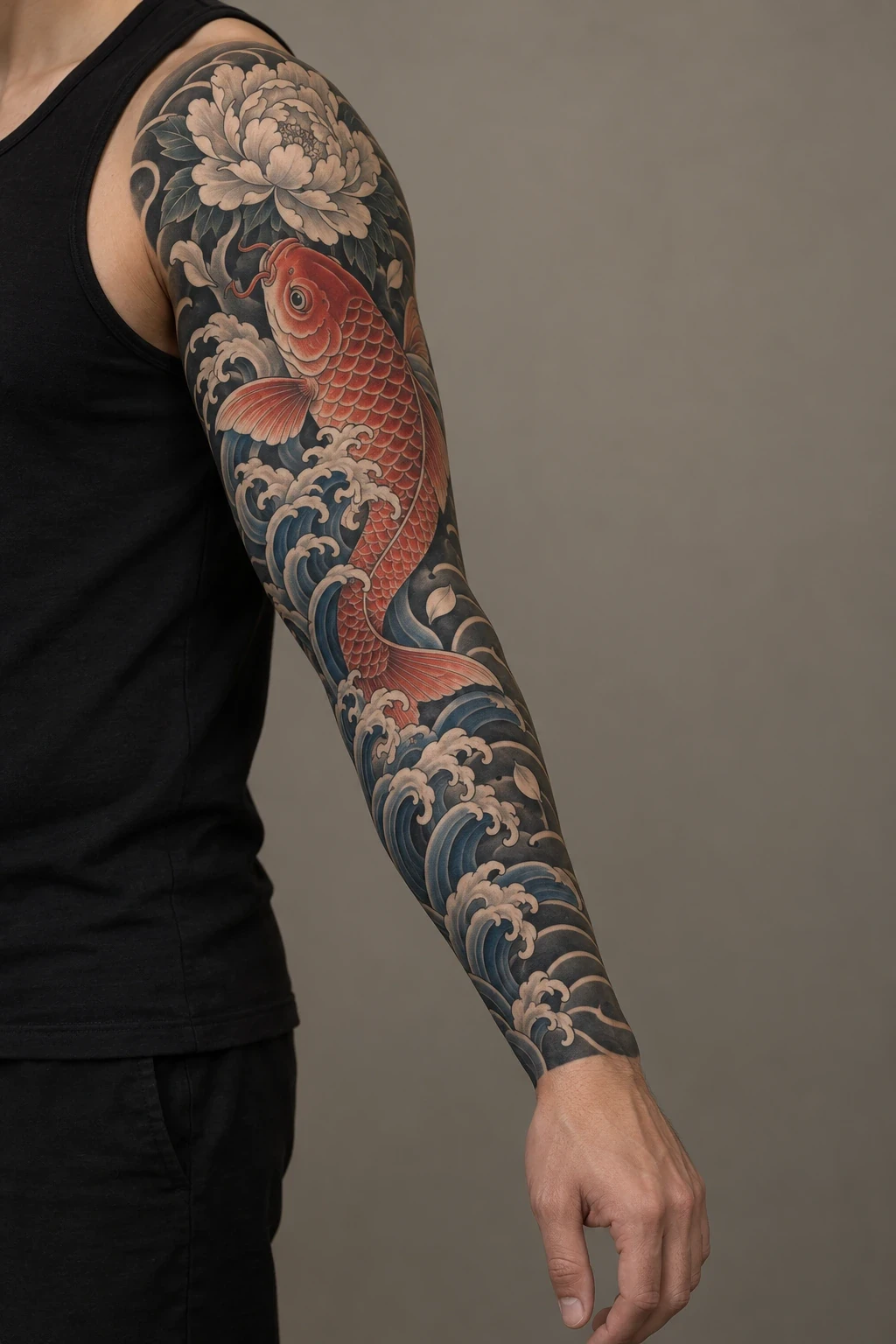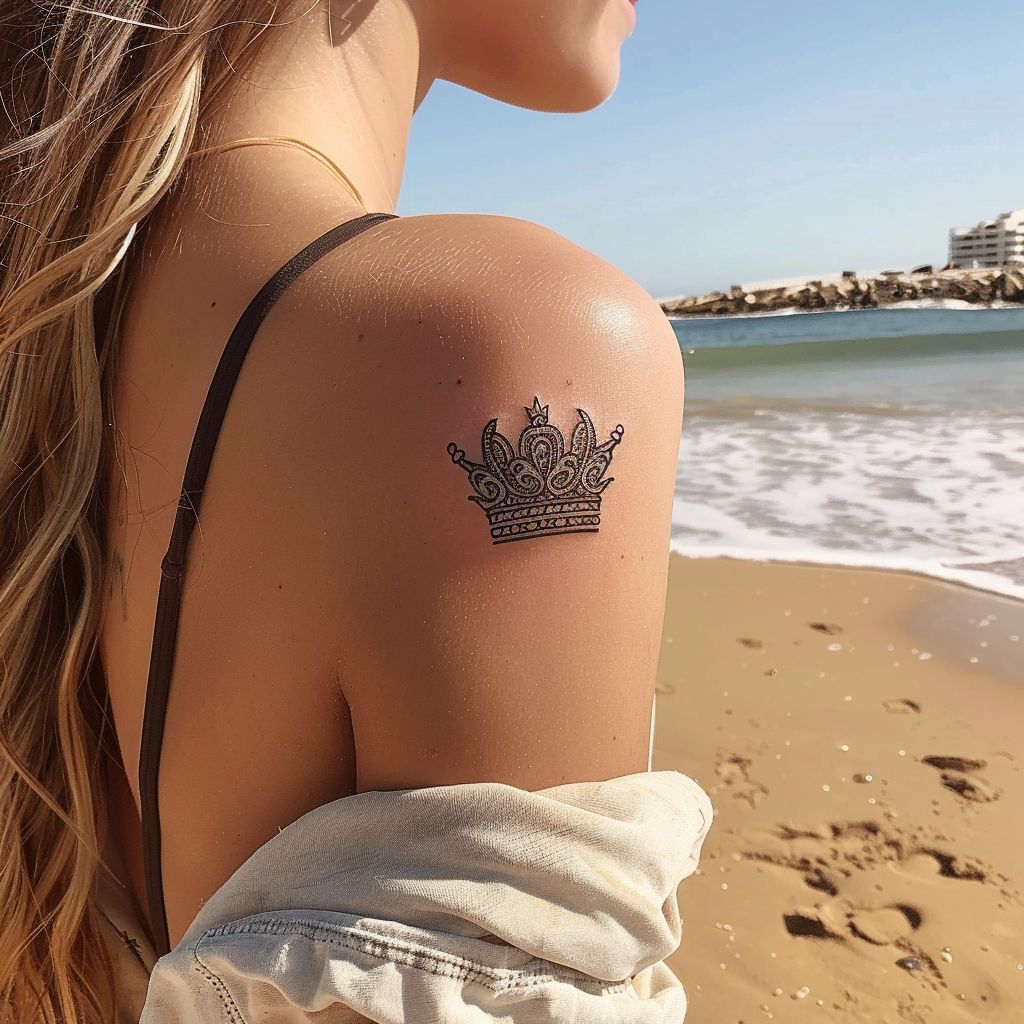
Minimal Japanese tattoos can use one clear flower, a small koi, a folding fan or a few lines of landscape. The useful choice is which details make the subject recognisable and which can be left out. A simple drawing still needs accurate proportions, open space and an intentional placement.
These sixteen ideas explore modern Japanese-inspired compositions with restrained linework and occasional colour accents. The references include art, natural subjects and objects with cultural context. Several plants and animals also appear in other artistic traditions; the Japanese inspiration comes from the reference and arrangement you choose.
About the images: All seventeen images in this guide, including the separate hero, are original AI-generated tattoo concepts made with ImageGen. They are not real client work or healed results. Use them as composition references for an artist who can redraw the subject, check its details and set a practical size for your placement.
What makes a design minimal?
Minimal here describes the amount of information in the drawing, not a promise that the tattoo must be extremely small. A wider flower with a few clear petals may feel calmer than a tiny version packed with narrow lines. The same applies to a koi’s scales, a fan’s ribs or a bird’s feathers.
Choose a clear outline, then retain only the internal marks that help explain the subject. A restrained black-and-grey design can include a red or green accent if it supports the focal shape. Open skin should be planned as part of the composition rather than treated as space that needs filling.
If you prefer fuller backgrounds and more elaborate arrangements, compare the broader Japanese tattoo guide. This article focuses on compact modern ideas. For an even simpler starting point, our minimalist tattoo ideas offer other subjects to compare.
Choose the reference before assigning a meaning
A flower or animal can hold a personal meaning, but it does not have one interpretation that applies to every tattoo. Start with the subject and the reason you want it. If a particular artwork, religious object or place informs the design, identify that reference and understand its context.
The torii and daruma examples below have specific cultural associations, so their source links are part of the brief. None of these concepts includes kanji or another inscription. If you later add writing, have the wording and final character forms checked by a fluent reader rather than copying an unverified decorative image.
1. A small cherry-blossom branch
Two blossoms and one bud give the branch a clear rhythm without turning it into a full floral panel. The subtly notched petal tips help distinguish the flowers from a generic five-petal bloom. Bare skin inside the petals keeps the composition light.
The inner forearm suits the branch’s length. Ask the artist to check the petals at the final stencil size and simplify the smallest centre marks. A few clear flowers can be more readable than a dense cluster reduced to fit a small space.
2. A single plum blossom
One rounded flower on a short angled branch offers a quieter alternative to a longer blossom spray. The stamen dots supply a focal centre while the branch gives the bloom direction. The design can stay compact without adding a frame or falling petals.
The upper arm leaves room around the flower. Bring a botanical reference if distinguishing plum from cherry matters to you, and review the final petal shape with the artist. Avoid crowding the stamens until the centre becomes a solid dark spot.
3. An outlined chrysanthemum
Curved elongated petals form several open rings around a small centre. The repeated direction gives the flower movement, while the lack of fill keeps it lighter than a fully shaded bloom. The goal is a readable petal structure rather than the maximum possible number of petals.
A forearm placement provides width for the outline. Let the artist remove or widen the narrowest petal gaps at the proposed size. If you prefer a larger and more detailed approach, our Japanese tattoo designs offer broader compositions to compare.
4. A single ginkgo leaf
A fan-shaped leaf, shallow notch and short stem make a complete small composition. A few radiating veins show the leaf’s structure without filling every available space. Its outline remains the most noticeable feature, which suits a restrained linework brief.
The inner forearm makes the leaf easy to view. Check that the central notch remains visible and choose only the veins needed to describe the shape. A botanical reference helps keep the drawing specific instead of turning it into a generic fan or heart.
5. A short bamboo stem
A segmented stem and sparse leaves create a tall design with a clear centre. The joints break the length into a few sections, while the leaf clusters supply movement at the sides. Open space around the stem keeps the composition from feeling like a dense plant bundle.
The upper arm suits the vertical arrangement. Ask the artist to keep the joints distinct and the leaves large enough to read individually. For a shorter version, remove a segment before shrinking all the details equally.
6. A sparse pine branch
A gently curved branch with a few needle clusters gives this design a loose, natural direction. The branch carries the structure; the needles provide texture in selected places. Leaving gaps between clusters keeps the linework calm and makes the silhouette easier to follow.
The forearm allows the curve to follow the limb. Choose which needle groups matter most and let the artist simplify the smaller marks. Bring a real pine reference if a particular species or a tree connected with a place is part of your story.
7. Mount Fuji with a restrained sun accent
A broad mountain outline, broken snowcap and small vermilion circle form a compact landscape. The mountain is the focal shape, with the circle supplying a single colour accent. The image is a simplified Fuji-inspired study rather than a measured view from a particular location.
The upper arm gives the mountain enough width for a calm outline. If you want a view tied to a trip, bring your own photograph and explain what should be retained. Keep the snow line selective so it does not divide the mountain into an overly busy pattern.
8. A single curling wave
A clear crest and a few flow lines give the wave movement without adding boats, clouds or a full landscape. The Met’s record of Hokusai’s Great Wave is a useful art reference for studying a wave’s silhouette. This concept uses an original simplified arrangement.
The calf offers room for the curl and separate foam marks. Ask the artist to keep the main flow continuous and remove tiny splashes that compete with it. A small wave benefits from a recognisable crest before extra texture is added.
9. A koi with a gentle curve
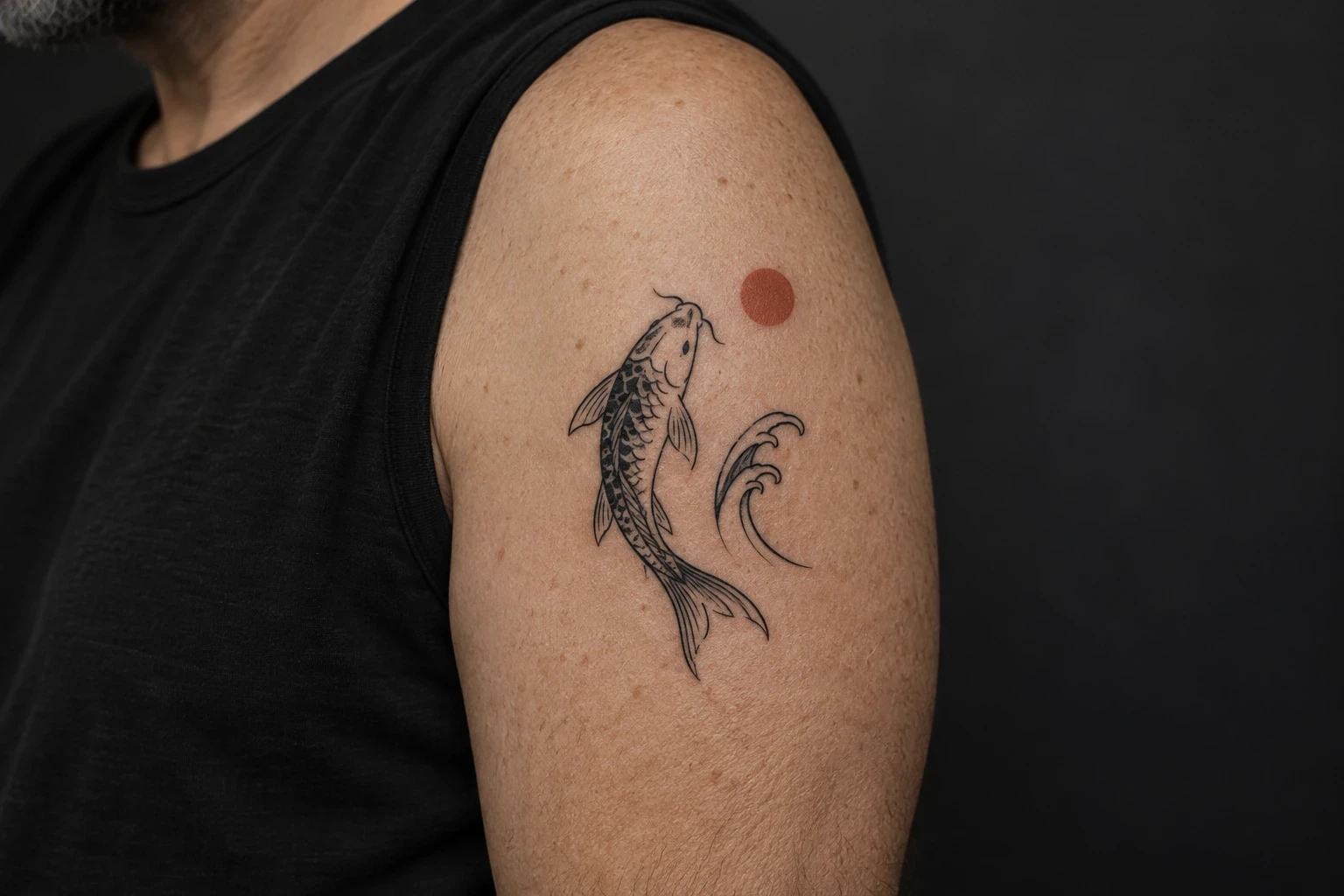
The koi’s body follows a soft curve, with the tail and fins establishing its movement. Sparse scale marks keep it lighter than a heavily patterned fish. Without a water frame, the shape can remain a clear standalone subject.
The inner forearm suits an upward arrangement. Review the fins, tail and barbels with a real koi reference before approving the stencil. Our koi fish tattoo designs explore fuller compositions if you want to add water or more body detail.
10. A standing crane with a red crown
A long curved neck and slender bill make the bird readable with relatively few marks. The tucked wing keeps the body compact, while a restrained red crown supplies a small colour focus. The leg and neck provide most of the design’s vertical structure.
The upper arm gives the standing pose enough length. Have the artist check the bird’s anatomy rather than stretching the neck simply to fill the space. At a smaller size, the folded wing can be suggested with one or two clear lines.
11. A sparrow on a short branch
A round body, short bill and folded wing give the sparrow a compact silhouette. The short branch offers a base without becoming a separate botanical composition. A few selected feather lines are enough to support the subject.
The forearm gives the bird room to sit in open skin. Choose the body outline before adding feather texture, and keep the beak distinct from the head. If you want a particular species, bring photographs so the artist can refine the head markings and proportions.
12. An open folding fan
Broad ribs meet at one hinge, giving the fan a clear semicircular form. A red arc near the outer edge adds a restrained accent without covering the whole surface. Leaving the panels quiet makes the fan’s construction the main feature.
The upper arm provides width for the open shape. Check that the ribs meet coherently and that the hinge remains readable. If you add a flower or pattern later, choose one focal element rather than filling every panel with a different motif.
13. A torii outline
Two posts and two crossbeams give the gate a clear architectural outline. Jinja Honcho’s guide to jinja explains the torii as a boundary at a shrine entrance between sacred space and the everyday world. That context matters when choosing it as a tattoo reference.
The inner forearm suits the gate’s upright shape. Keep the opening clear and check the beam proportions with a specific gate reference if one matters to you. A torii can be drawn simply while still carrying a religious association worth understanding.
14. A small red daruma
The rounded robe and simplified face create a compact colour option. The Japan National Tourism Organization’s daruma guide describes a wish-making practice in which the eyes are filled at different stages. This concept shows two eyes; choose the intended treatment deliberately with your artist.
The upper arm gives the face enough room for separate eyes and eyebrows. The robe has no lettering, so the design does not depend on an unverified character. A tattoo can express a personal goal or association without promising that the image will bring good fortune.
15. A linework origami crane
Triangular wings and a folded neck give this paper-crane design a geometric character. The folds are described with a few clean lines and no cast shadow. The effect stays graphic rather than trying to make the crane appear like a physical object on the skin.
The forearm suits the spread wings. Bring a photograph of a real folded crane to check the structure before simplifying it. Our linework tattoo ideas offer other examples of using a clear outline without dense shading.
16. A crescent moon above grasses
Three stems and a thin crescent create a light seasonal scene. The grasses supply the vertical movement while the moon gives them an open focal point above. This is a modern nature composition, with no fixed religious meaning assigned to the arrangement.
The calf offers space for the stems to taper. Keep the seed heads sparse and make sure the crescent is distinct from the upper grasses. If you want a smaller version, reduce the number of stems before making every mark thinner.
Placement and readable scale
The inner forearm suits a curved branch, koi or upright gate. The upper arm offers width for a flower, fan or small object, while the calf gives a wave or grass scene more length. These are starting options for your artist to assess against your anatomy and existing tattoos.
Review the stencil in a relaxed posture and decide which viewing direction matters most. Leave enough space around the subject for the outline to stay clear. A few useful details are better than many cramped ones, especially around a fish’s fins, a blossom’s centre or a bird’s bill.
There is no universal minimum size that makes every design practical. Ask the artist which gaps need widening and which lines can be removed. Look at their real healed work with similar line weights and subjects, as well as fresh photographs.
Keeping the subject and context clear
Bring a botanical, animal, object or architectural reference alongside the concept. It gives the artist a reliable structure to simplify. Cherry and plum blossoms, a crane and a sparrow, or a folded crane and a living bird each need different identifying features.
For a specific shrine gate, photograph or artwork, explain which features should be retained. If you are drawing on a religious reference, learn its context and seek informed guidance where needed. A considered brief is more useful than assuming an attractive silhouette is culturally neutral.
Keep the image’s purpose clear: these are modern tattoo concepts. They do not establish how a motif was historically tattooed or grant one interpretation on behalf of a whole tradition.
Linework, colour and care
Fine outlines and small colour areas should be chosen using real healed examples from the artist you plan to book. A bright digital concept cannot predict how the final ink will look on your skin. Give important outlines and skin breaks enough room instead of relying on very thin marks to carry the whole design.
The American Academy of Dermatology says ultraviolet light can fade some tattoo inks. For healed tattooed skin exposed to sunlight, it recommends broad-spectrum, water-resistant sunscreen with SPF 30 or higher, applied before going outside and reapplied at least every two hours. Follow fresh-tattoo aftercare instructions separately.
Questions about minimal Japanese tattoos
Does minimal always mean tiny?
No. It can describe a drawing with fewer elements and more open space at a comfortable size. Let the artist decide the smallest practical stencil for the subject rather than choosing a measurement before the design is resolved.
Can the design include colour?
Yes. A small red crown, a sun accent or a simple robe can work within a restrained composition. Decide which part should carry the colour and keep the surrounding drawing clear.
Do I need kanji to make it Japanese-inspired?
No. Art references, flowers, objects and architecture can provide a clear starting point. Writing adds a separate accuracy requirement; use it only when the wording and character forms have been checked.
Which idea suits a first tattoo?
Start with a subject you can explain and a drawing whose outline remains recognisable at the proposed size. A leaf or branch may be a straightforward visual brief, while a fish, bird or folded object needs more anatomy or geometry checking. Your artist should assess the actual design.
Can I copy the generated picture exactly?
Bring it as a reference and have the artist refine it. Generated details may need correction, and the final stencil should account for your placement, size and intended viewing direction. These images cannot replace a checked drawing or a healed portfolio.
A useful artist brief
Choose one main subject, bring its reference and explain what you like about the simplicity. Name the placement, the viewing direction and any colour accent you want retained. Let the artist remove unnecessary marks while preserving the subject’s identifying features. A clear shape with room around it is a strong foundation for a minimal tattoo.