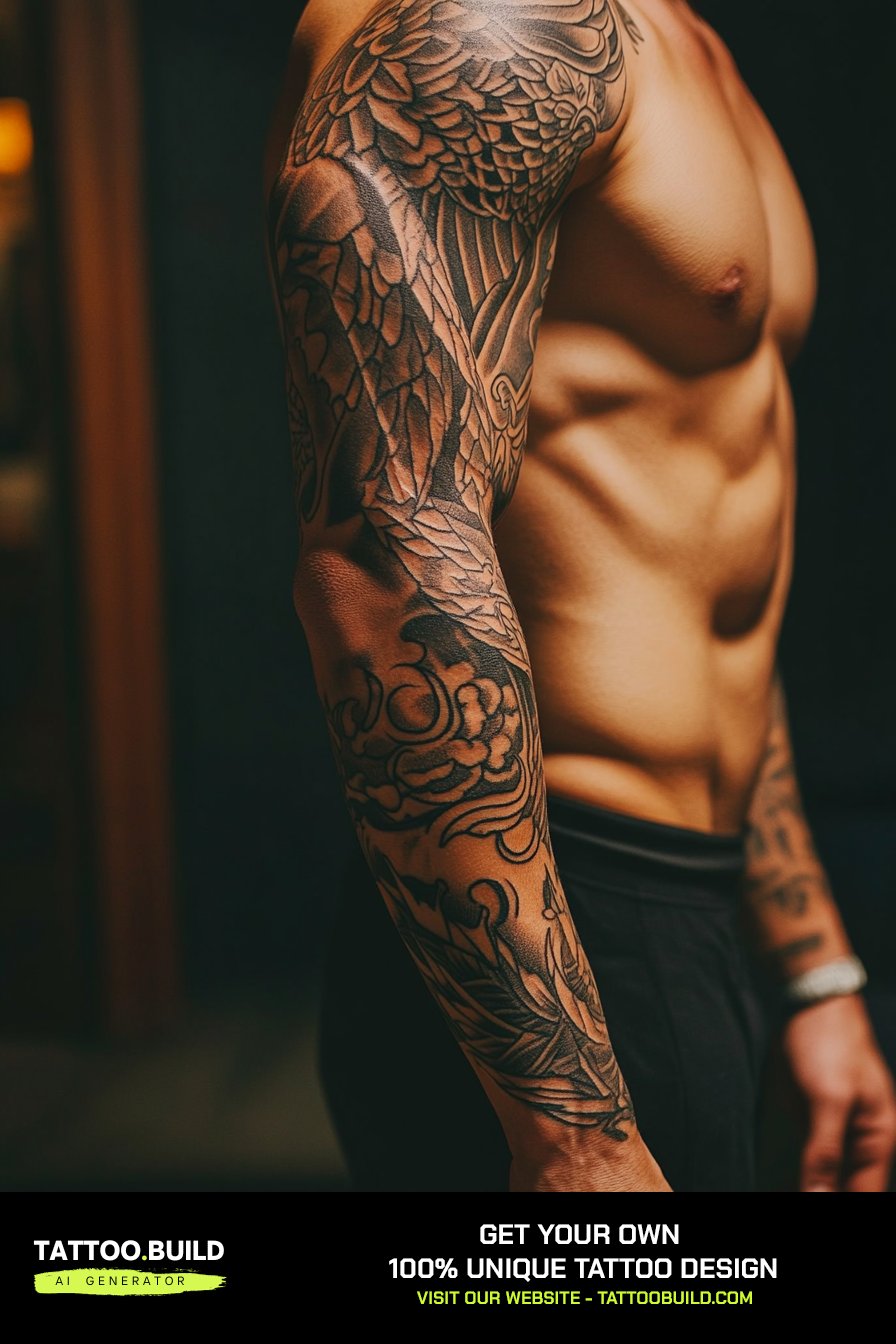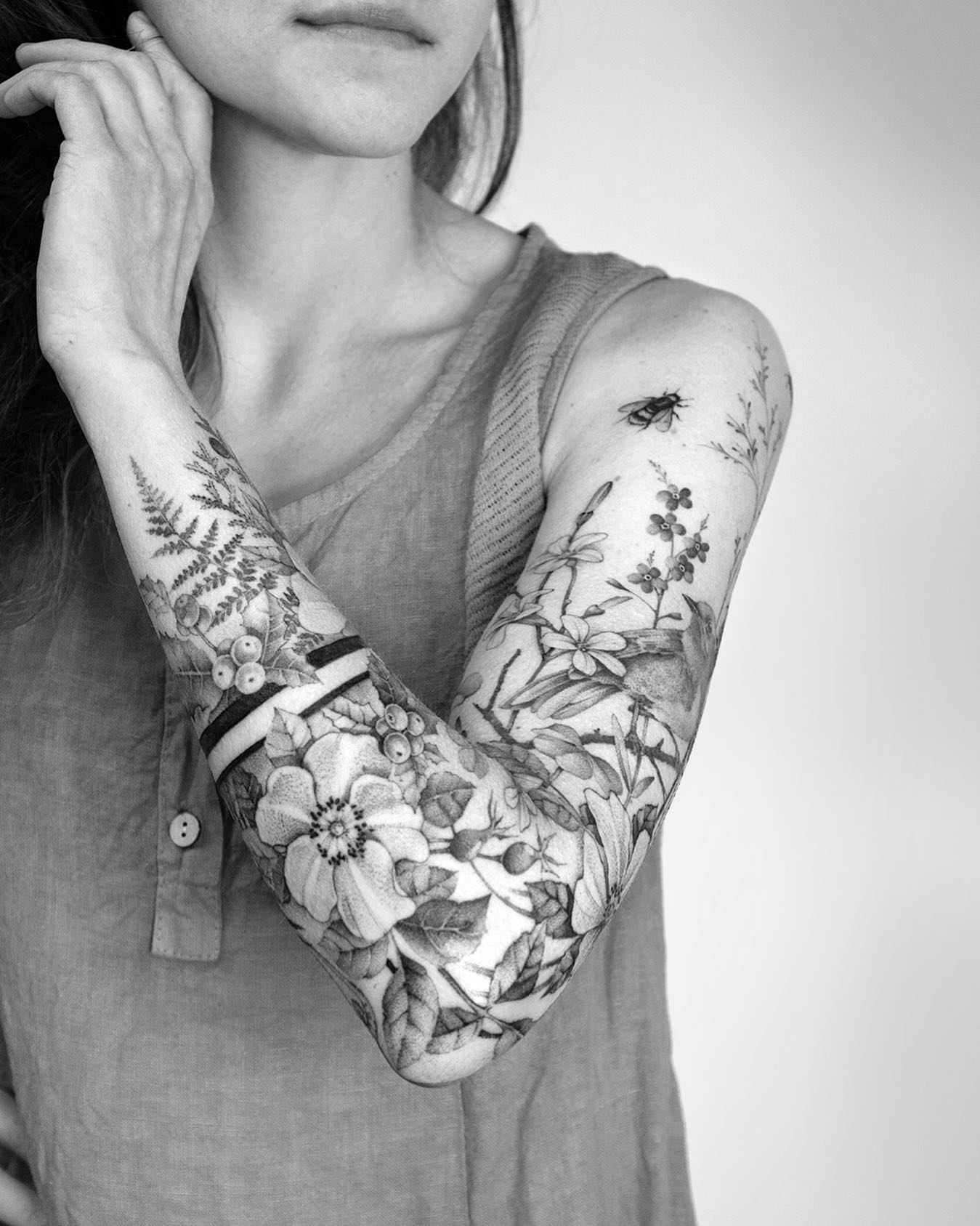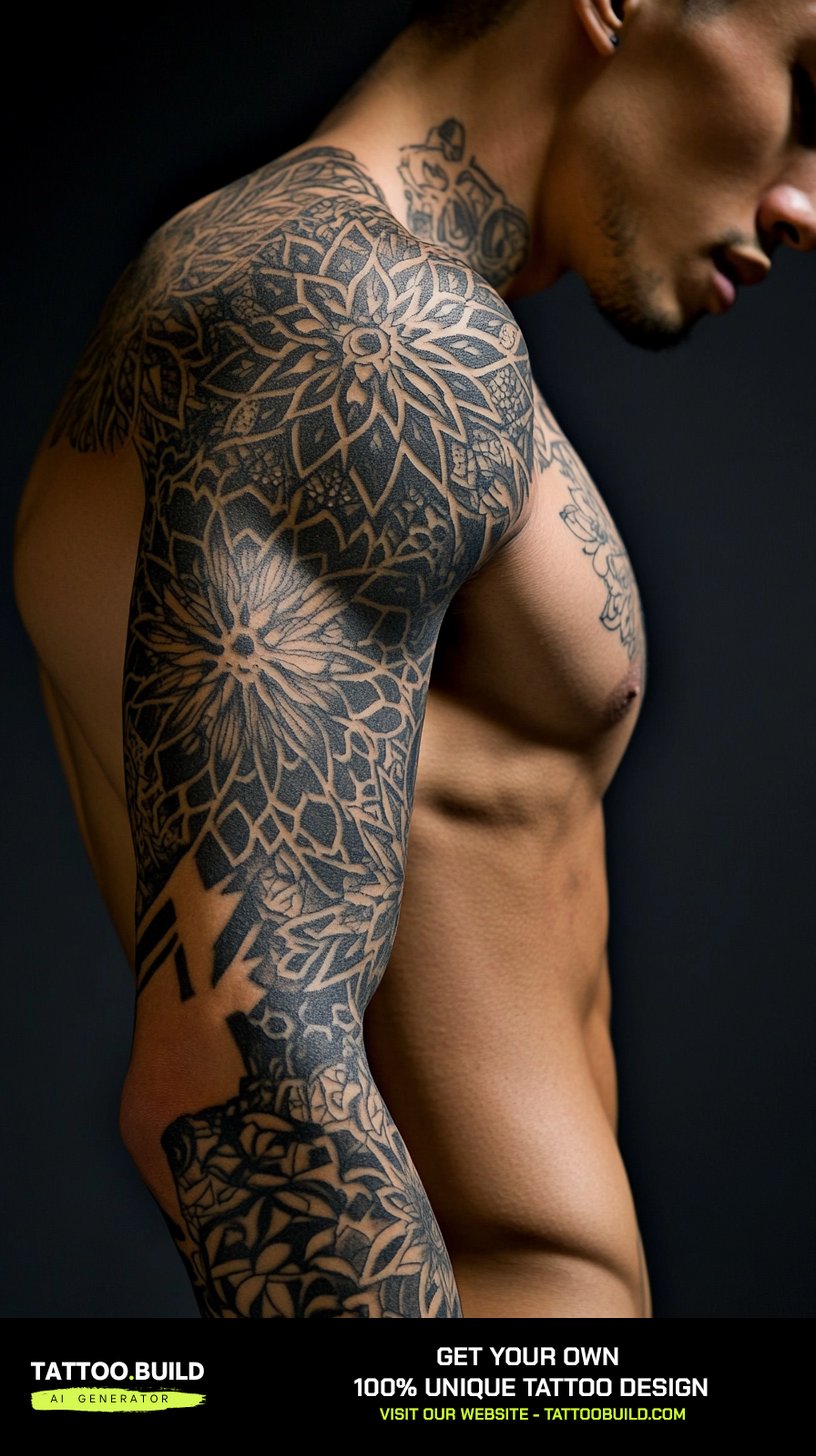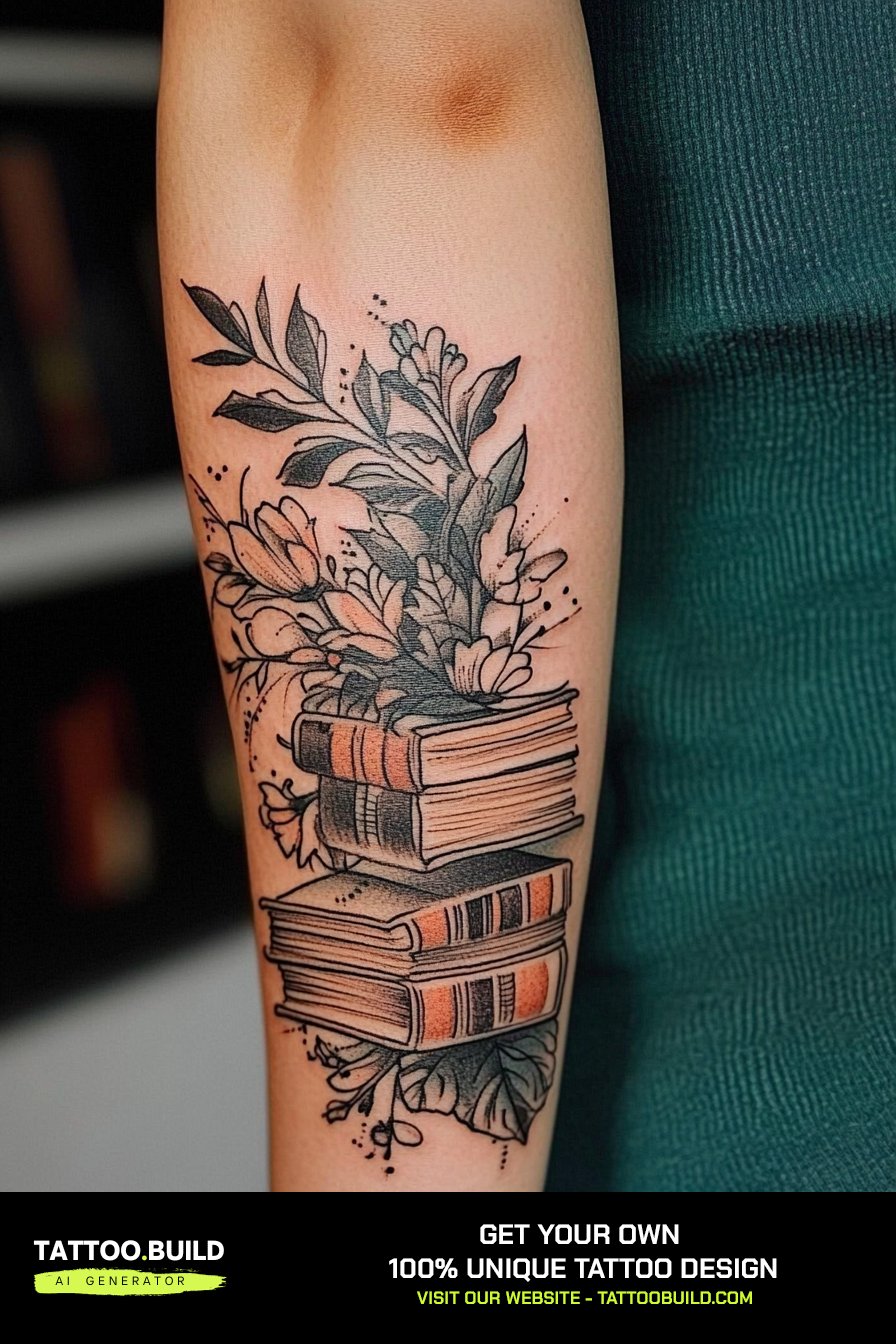
A full sleeve is not one tattoo — it is a composition, and the drawing stage is where it either works or falls apart. Every strong sleeve I have watched come together started as a rough pencil layout long before a needle touched skin.
I have spent a lot of hours in shops watching artists tape reference sheets to the wall, trace an arm shape onto tracing paper, and shuffle elements around until the flow finally reads right. The finished piece always looks effortless. The drawing never does.
That is why I collect ladies full sleeve tattoo designs drawings rather than only finished photos. A drawing shows you the skeleton — where the negative space sits, how the composition wraps the bicep, which element is doing the heavy lifting. If you are still narrowing down placement, our guide to the coolest sleeve tattoos for women is a useful companion piece.
Below are 28 sleeve concepts, grouped by the kind of design problem each one solves, plus the planning notes I wish someone had given me before my first consultation.
Which Full Sleeve Style Is Right for You?
Style choice drives everything downstream: session count, healing behaviour, how the piece ages, and how much your artist can improvise. This is the rough shorthand I use when helping someone narrow things down.
| Style | Best For | What to Expect | Ages Like |
|---|---|---|---|
| Fine-line floral | Soft, feminine sleeves with lots of skin showing through | Fewer, shorter sessions than solid work; needs a specialist | Lines can soften over the years; usually wants a touch-up eventually |
| Blackwork & ornamental | Bold graphic impact, symmetry, dagger and mandala motifs | Long packing sessions; the most physically demanding option | Extremely well — solid black holds its shape longer than most |
| Illustrative colour | Storytelling sleeves — botanicals, birds, mythology | Multiple sessions; colour layers usually go in last | Well with maintenance; sun exposure is the main enemy |
| Black-and-grey realism | Portraits, animals, photographic detail | The longest builds; heavily dependent on artist skill | Fine detail can blur; mid-tones need to be planned generously |
| Neo-traditional | Bold outlines with decorative colour — flowers, faces, animals | Efficient sessions thanks to strong line structure | Very well — heavy outlines keep the image readable |
If you are not ready to commit to a whole arm, a classy half sleeve lets you test the style and the artist before scaling up.
What Actually Shapes a Full Sleeve Drawing
The first thing every good artist I have worked with asks about is not the subject matter. It is the arm.
A sleeve has to survive movement. The inner bicep stretches, the elbow ditch folds, the wrist rotates constantly — so elements get placed where the anatomy will not distort them, not where they look prettiest on flat paper.
Flow is the whole game. Artists usually build a sleeve around one or two long diagonal lines that spiral the arm, then hang the smaller elements off that spine. That is why so many drawings look like a ribbon of imagery rather than a stack of separate tattoos.
Negative space is the second consideration, and the one most people underestimate. Leaving bare skin between elements is what stops a sleeve turning into a grey blur from three feet away.
Budget and time shape it too. Most full sleeves I have seen finished were built across several sittings spread over months, and the drawing usually got revised between sessions as the piece revealed what it needed. If you are pricing it out, our breakdown of how much a sleeve tattoo costs covers the variables honestly.
28 Ladies Full Sleeve Tattoo Designs Drawings, Grouped by Idea
I have sorted these by the design problem they solve rather than by subject, because that is how they are actually useful at a consultation.
1. Botanical Cascades That Wrap the Arm
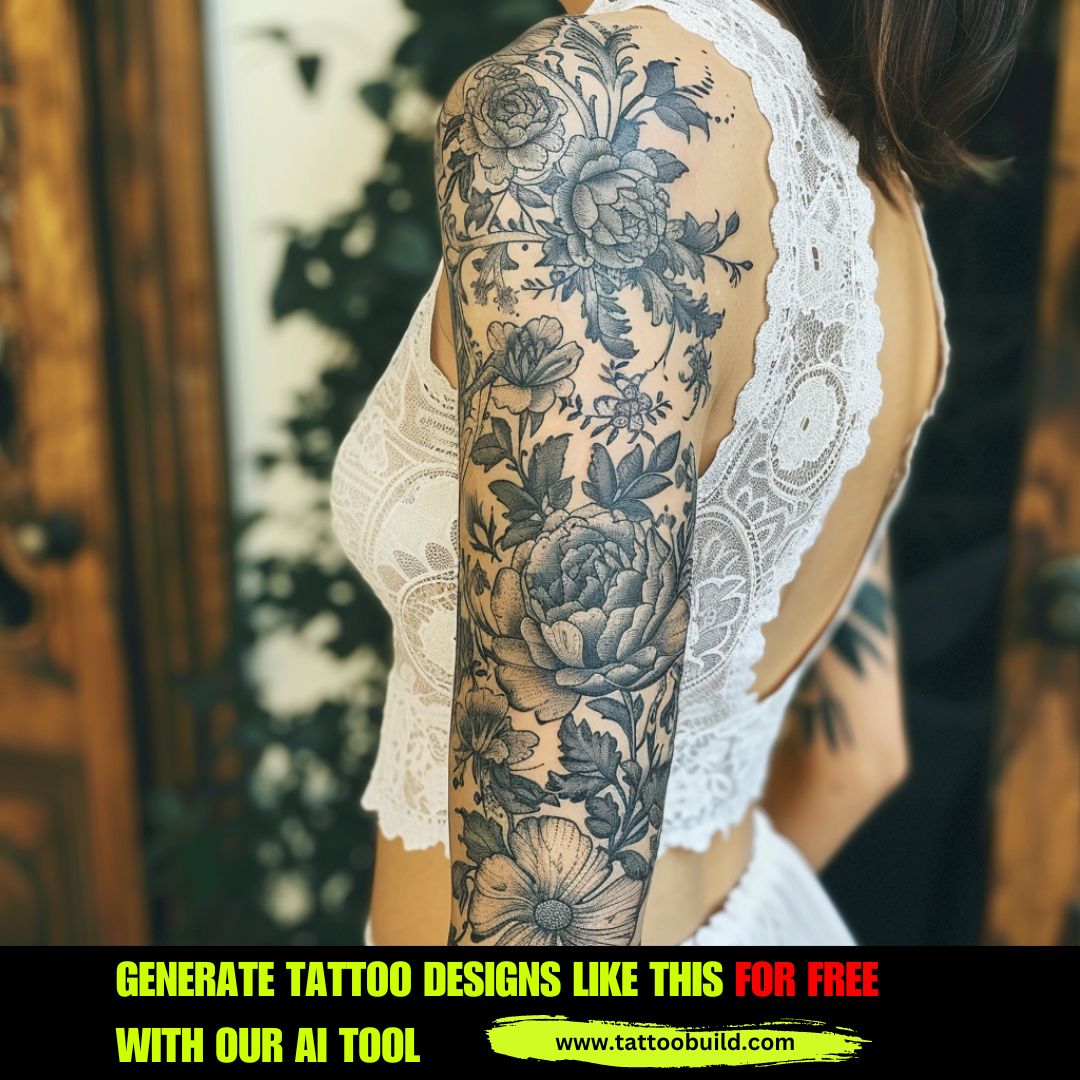
Flowing florals are the most requested starting point for ladies full sleeve tattoo designs drawings, and for good reason — they bend around the arm without fighting the anatomy.
A cascade layout runs one continuous line of blooms from shoulder to wrist, tapering as it goes. Larger flowers sit on the outer bicep and forearm where there is room; buds and leaves fill the tighter inner arm.
Sunflowers, lilies and peonies all work here because they have a clear silhouette. In my experience, small clustered flowers like baby’s breath read beautifully in the drawing and then disappear at conversational distance, so artists usually use them as filler rather than focal points.
Ask your artist to draw the flow line first and the flowers second. Every botanical sleeve I have seen go wrong was drawn flower-by-flower with no underlying structure.
2. Portraits Framed in Flowers
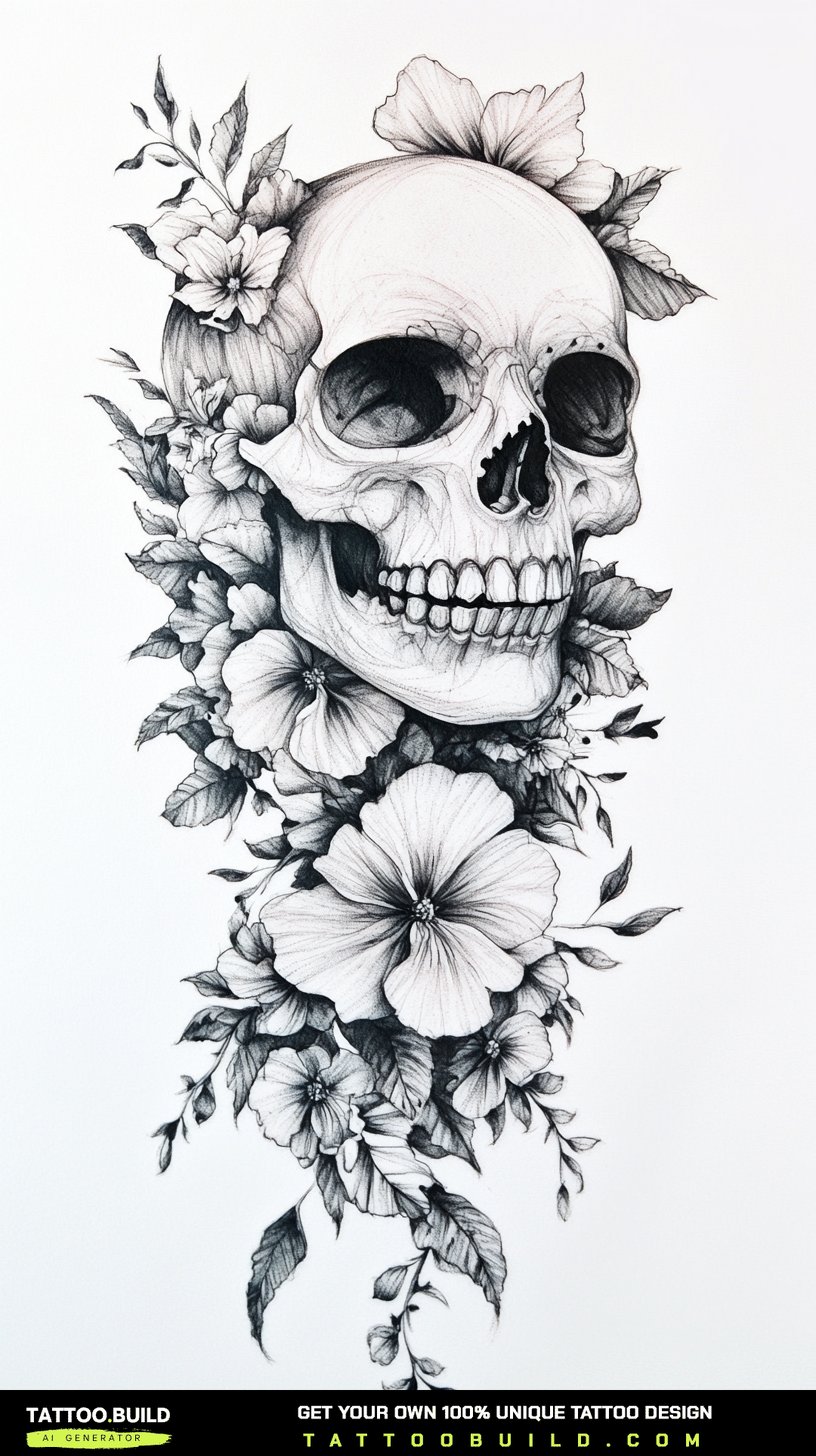
A face inside a floral frame is one of the strongest anchor elements you can put on a sleeve, because it gives the eye somewhere to land.
These drawings almost always place the portrait on the outer bicep or the outer forearm — the flattest, most visible planes on the arm.
Portrait work is the least forgiving thing you can ask for. Every artist I have asked says the same thing: a slightly off eyeline is obvious forever, so look hard at healed portrait photos in a portfolio, not fresh ones.
Flowers around a face are doing real structural work. They soften the hard edge of the portrait and give the artist somewhere to blend the piece into the rest of the arm instead of ending in a hard border.
3. Fine-Line and Ethereal Work
Fine-line sleeves are having a long moment, and they are genuinely lovely — but they are a specialist discipline.
The drawings look sparse on paper because they are meant to. Large areas of bare skin are the design, not an unfinished part of it.
When I tested a fine-line piece on my own forearm, the thing that surprised me most was how much the healing changed it. Fine lines settle and soften over the first month, so what you see at week one is not the finished result.
Ask specifically whether your artist offers a free touch-up window. Most reputable shops do, and for delicate work it matters more than usual.
4. Butterflies, Dragonflies and Winged Details
Wings are the most useful filler element in sleeve design, and I do not mean that dismissively.
A butterfly or dragonfly can be scaled up or down, angled any direction, and tucked into an awkward gap — the inner elbow, the back of the wrist — without looking like an afterthought.
They also carry meaning easily. Transformation, resilience, a person you have lost: the symbolism does a lot of quiet work without needing a literal portrait or name.
If wings are your main theme rather than filler, our dragonfly tattoo inspiration collection has more variations worth borrowing.
5. Tropical, Coastal and Nature-Led Sleeves
Monstera leaves, ferns, shells and waves make an unusually good sleeve because the shapes are large, simple and repeatable.
Big leaf forms give an artist something to build depth with — layered leaves create a natural foreground and background without needing complicated shading.
Coastal sleeves have a practical advantage too. Wave and water shapes are essentially decorative flow, so they can be extended or trimmed during the tattoo to fix any spacing problems that show up on skin.
In my experience these age well, because the shapes are bold enough to stay readable even after the fine detail has softened. If the ocean is your theme, our ocean tattoo ideas gallery is worth a look before you commit.
6. Bold Statement Pieces: Dragons, Daggers and Mermaids
Not every feminine sleeve needs to be soft, and some of the best ladies full sleeve tattoo designs drawings I have seen lean hard the other way.
A dragon coiling the arm is one of the oldest and most reliable sleeve structures in tattooing, because the body of the dragon is the flow line. Everything else hangs off it.
Daggers, snakes and mythological figures work similarly — they give the arm a long vertical spine and let flowers or ornament fill the space around them.
The contrast is the point. Roses against a dragon, or lace ornament against a blade, reads as far more intentional than either element on its own.
7. Ornamental, Symmetrical and Decorative Layouts
Ornamental sleeves borrow from lace, jewellery and architectural pattern, and they suit anyone who wants structure rather than storytelling.
Symmetry is the appeal and also the difficulty. A mandala or ornamental band has to be measured and stencilled precisely, because the eye catches a crooked line instantly on a repeating pattern.
These pieces often use bands and cuffs — a decorative ring at the bicep, another at the wrist — to break the arm into sections. It is a genuinely clever way to make a full sleeve feel designed rather than accumulated.
Ornamental work also tends to pack a lot of solid black, so expect longer, heavier sessions than a fine-line piece of the same size.
8. Full-Arm Compositions With Continuous Flow
These are the drawings to study if you want to understand how a sleeve is actually built.
There is no obvious start or finish — the imagery spirals from shoulder to wrist so that no matter how you turn your arm, something complete is facing the viewer.
Artists usually draw these directly on the arm with markers first, or on a photograph of the client’s arm, because a flat sketch simply cannot show you what the back of the bicep is doing.
This is also the approach that survives being extended later. A well-flowed sleeve can grow onto the chest or shoulder years afterward without needing to be rebuilt, which is not true of a stacked collection of separate tattoos.
Alternatives If a Full Sleeve Feels Like Too Much
A full sleeve is a serious commitment of money, time and visibility. These are the routes I most often suggest to people who love the look but are not ready.
Start With a Half Sleeve
Shoulder-to-elbow is the standard, and it is the smartest entry point — it hides under a t-shirt, costs a fraction of a full arm, and can be extended downward later.
Browse half sleeve tattoo drawings for layouts specifically designed to be extended rather than closed off.
Build a Lower-Arm Sleeve First
Elbow-to-wrist is more visible but heals faster and is easier to sit through. It also tells you honestly how you feel about a permanently visible tattoo.
Our women’s lower arm sleeve collection covers this format in detail.
Try a Floral Forearm Panel
A single botanical panel on the outer forearm gives you the aesthetic of a sleeve at maybe a fifth of the commitment, and it slots neatly into a larger design later.
There are strong examples in our floral half sleeve forearm gallery.
Take It One Element at a Time
Some of the best sleeves I have seen were never planned as sleeves. They grew, one piece at a time, from the same artist working in the same style.
This only works if you commit to one artist early. Mixing styles across three shops is the single most common way people end up with an arm that never quite resolves.
Planning, Sessions and Aftercare: What Nobody Tells You
A full sleeve is a project, not an appointment. Most of the ones I have followed were built over several sittings spaced weeks apart, because a healed section takes colour and shading far better than a freshly tattooed one.
Eat properly before a long session and bring snacks. Blood sugar, not pain tolerance, is what usually ends a sitting early — every artist I have asked says the same.
Aftercare is mostly boring discipline: keep the area clean, follow your artist’s specific washing and moisturising instructions, and stay out of pools, hot tubs and direct sun until it is fully healed. The American Academy of Dermatology has clear, non-commercial guidance on caring for new tattoos and on what a healthy heal should look like.
Know the difference between normal healing and a problem. Mild redness, swelling and flaking in the first week are usual; spreading redness, increasing pain after a few days, pus, or a fever are not. If any of those appear, contact a doctor rather than waiting it out or asking the internet — this article is not medical advice, and infections are treatable when caught early.
Allergic reactions to ink are uncommon but real, and red pigments are the most frequently reported culprit. The US FDA keeps a plain-language page on tattoo ink risks that is worth reading before a large colour piece. Never attempt to tattoo or remove a tattoo yourself — both carry serious infection and scarring risk, and removal in particular belongs with a qualified clinician.
Long term, sunscreen is the single most effective thing you can do. Sun exposure fades a sleeve faster than age does, and it is the one variable entirely under your control.
Common Mistakes, and What to Do If You Are Still Not Sure
The mistakes I see repeated are almost never about the imagery. They are about process.
Booking the artist before choosing the style. Pick the style first, then find someone whose healed portfolio is full of exactly that — not someone who is willing to try it.
Filling every millimetre. A sleeve with no breathing room turns into a solid grey mass at distance, which is the opposite of what the drawing promised.
Starting at the wrist. Most artists I have spoken to prefer to start at the shoulder, partly because it is the least visible section if you change direction, and partly because it is the easiest place to sit through a first long session.
Ignoring how the arm moves. Ask to see the stencil while you flex, rotate and bend the arm before anyone starts. If you want more inspiration first, our classy arm tattoos for women and rose tattoo ideas galleries are good places to keep browsing.
And the honest one: if you cannot articulate why you want the design, wait. In most cases a few months of sitting with an idea either confirms it or quietly kills it, and both outcomes are useful.
Frequently Asked Questions
How long does a full sleeve tattoo take to finish?
In most cases a full sleeve is completed across several sessions rather than in one sitting. The exact number depends heavily on the style, the level of detail and your artist’s pace — dense blackwork and photorealism take considerably longer than fine-line botanical work. Sessions are usually spaced weeks apart so each section can heal properly before the next one starts. Your artist can give you a realistic estimate once the drawing is finalised.
Do ladies full sleeve tattoo designs drawings need to be finished before starting?
Not always, and many artists prefer not to. A common approach is to finalise the overall flow and the major focal elements first, then draw the smaller filler work as the piece progresses on skin. This lets the artist react to how the design is actually sitting on your arm. Insist on seeing the full composition sketched out, though, even if the details stay flexible.
Which part of a full sleeve hurts the most?
Pain is individual, but the inner bicep, the elbow ditch and the inner wrist are the areas most people find hardest, because the skin is thin and close to nerves. The outer bicep and outer forearm are generally the most comfortable. Sitting time matters as much as location — hour five is harder than hour one anywhere on the arm. Tell your artist when you need a break rather than pushing through.
Can I mix styles in one sleeve?
You can, but it is difficult to do well and it is where a lot of sleeves come unstuck. Mixing fine-line and heavy blackwork, or realism and neo-traditional, usually needs a unifying device — a consistent colour palette, a shared background texture, or one flow line running through everything. If you want a mix, choose an artist who has done it successfully before and can show you healed examples.
How do I keep a full sleeve looking sharp over the years?
Daily sunscreen on exposed skin is the biggest factor, followed by keeping the skin moisturised. Expect that fine detail will soften somewhat over the years — that is normal ageing, not bad work. Many people book a touch-up session after several years to refresh line work and saturation. Talk to your original artist first, since they know exactly how the piece was built.
Quick Summary
- Flow before subject. A sleeve is built on one or two long lines that spiral the arm; everything else hangs off them.
- Leave negative space. Bare skin between elements is what keeps a sleeve readable from across a room.
- Match style to priorities. Blackwork ages hardest but sits heaviest; fine-line is gentler to get but needs touch-ups.
- Anchor with one focal element. A portrait, dragon or large bloom gives the eye somewhere to land.
- Choose the artist for the style — check healed work in that exact style, not fresh photos or mixed portfolios.
- Plan for multiple sessions spaced out for healing, and eat properly before each one.
- Aftercare decides the result. Follow your artist’s instructions, avoid sun and water while healing, and see a doctor for spreading redness, worsening pain or fever.
- Start smaller if unsure. A half sleeve or forearm panel can be extended into a full sleeve later if it is drawn with that in mind.