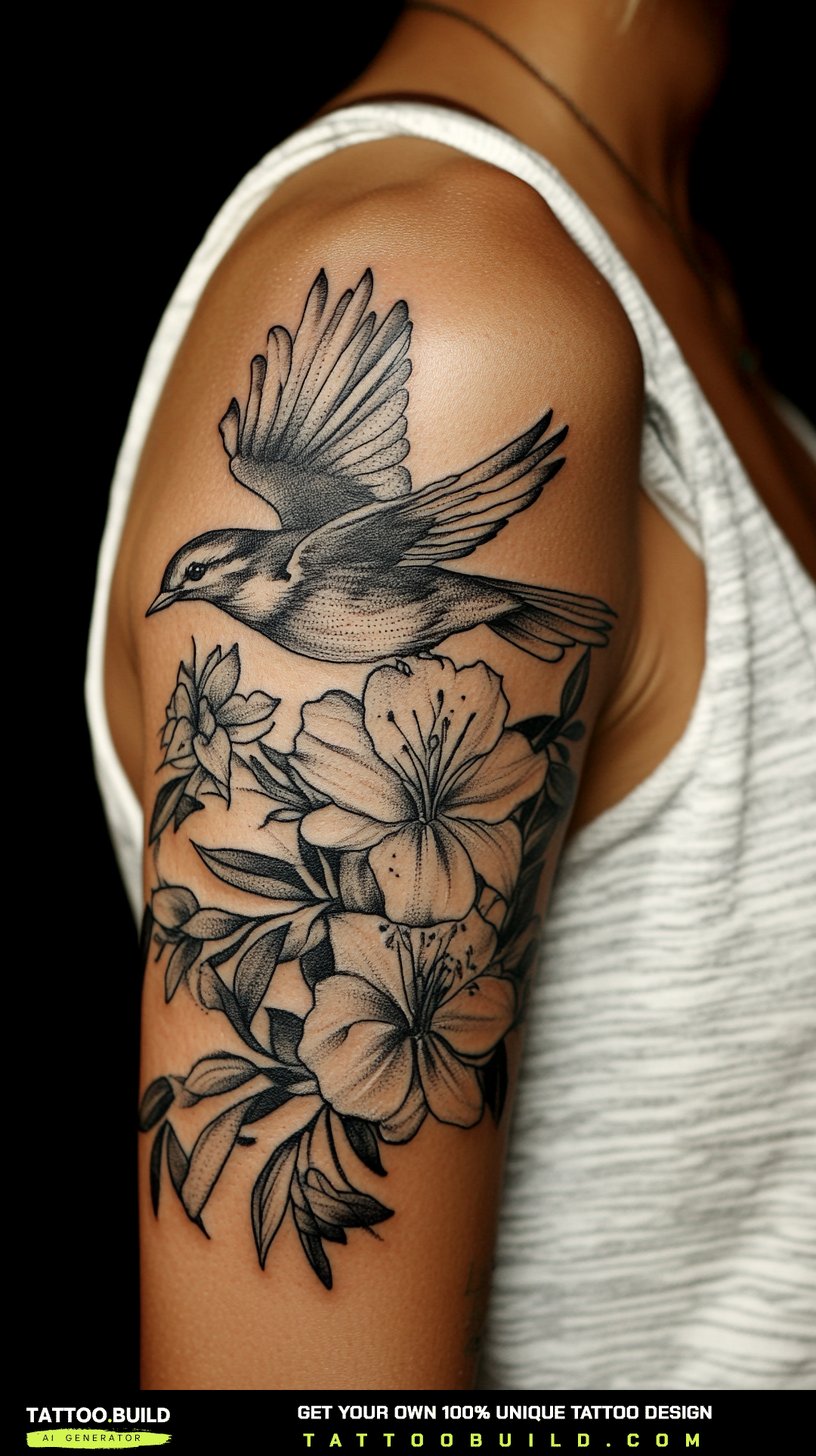
I have spent more hours than I would like to admit scrolling saved folders of arm tattoos with a client, and the same thing keeps proving true: a classy half sleeve is not about how much you fit on the arm, it is about how much you leave alone.
The pieces that still look elegant five years later almost always share three traits – a single clear subject, breathing room around it, and shading that was built to soften rather than to fill.
A half sleeve usually runs from the shoulder to just above the elbow, or from the elbow to the wrist. That gives you a real canvas without committing to a full arm, which is why it is so often the first large piece a woman books.
Below are thirty-three designs I have collected while planning arm work, grouped by the approach behind them rather than by subject alone. If budget is part of your planning, our guide to what a sleeve tattoo actually costs is worth reading alongside this one.
Which Half Sleeve Style Is Right for You?
Style choice affects healing, session count and how the piece ages far more than subject matter does. Here is how the four approaches in this collection compare.
| Style | What It Looks Like | Best If You Want | How It Tends to Age |
|---|---|---|---|
| Fine line botanical | Thin outlines, minimal shading, lots of open skin | Something delicate that reads as jewellery from a distance | Softens fastest; usually needs a touch-up sooner than heavier work |
| Black and grey illustrative | Defined outlines with layered grey wash and solid blacks | A piece that still reads clearly across a room | The most forgiving of the four in my experience |
| Ornamental and mandala | Geometry, dotwork and repeating pattern used as framing | Structure and symmetry rather than a single subject | Holds shape well, though fine dotwork can blur |
| Colour accent | Black and grey base with a few saturated flowers or highlights | Warmth without a fully coloured arm | Colour fades faster than black, especially on sun-exposed arms |
What Actually Makes a Half Sleeve Look Classy
Every artist I have asked about this lands on the same first answer: negative space. The skin you do not tattoo is what gives the design somewhere to sit.
The second answer is usually flow. A half sleeve that follows the natural line of the bicep and the taper toward the elbow will look composed; one that ignores that shape will look pasted on, no matter how good the drawing is.
Third is restraint in subject count. When I have watched pieces go wrong, it is almost never bad linework – it is four ideas competing for the same arm.
There is also a practical dimension. A design with one dominant element is far easier to extend later if you decide to go for a full sleeve, and far easier to place around an existing tattoo.
If you only take one rule from this article, make it this: pick one hero element, then build everything else as support. Browsing our wider collection of sleeve tattoos for women is a good way to see that principle applied across dozens of finished arms.
Classy Half Sleeve Tattoo Ideas Worth Saving
1. Botanical and Floral Half Sleeves
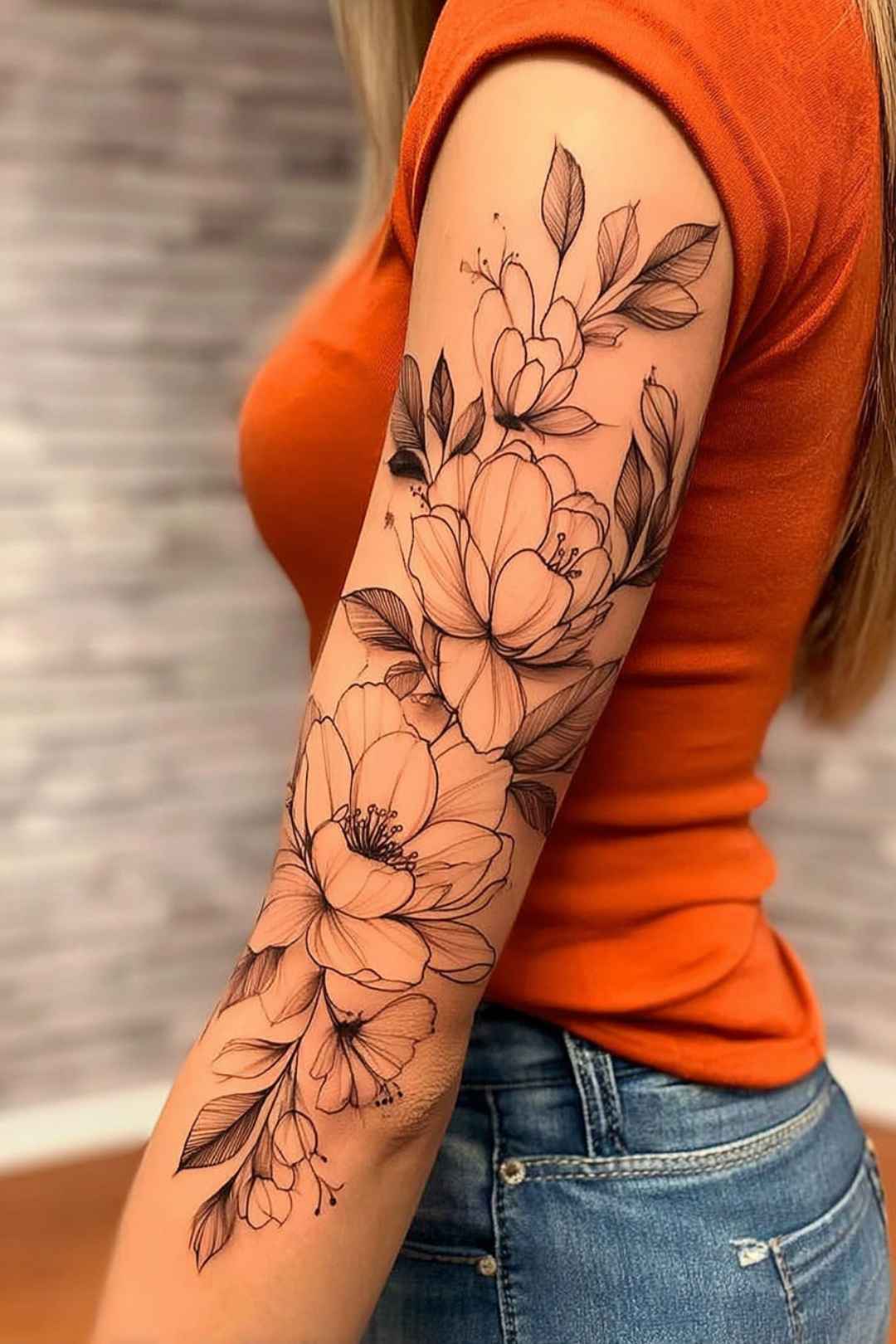
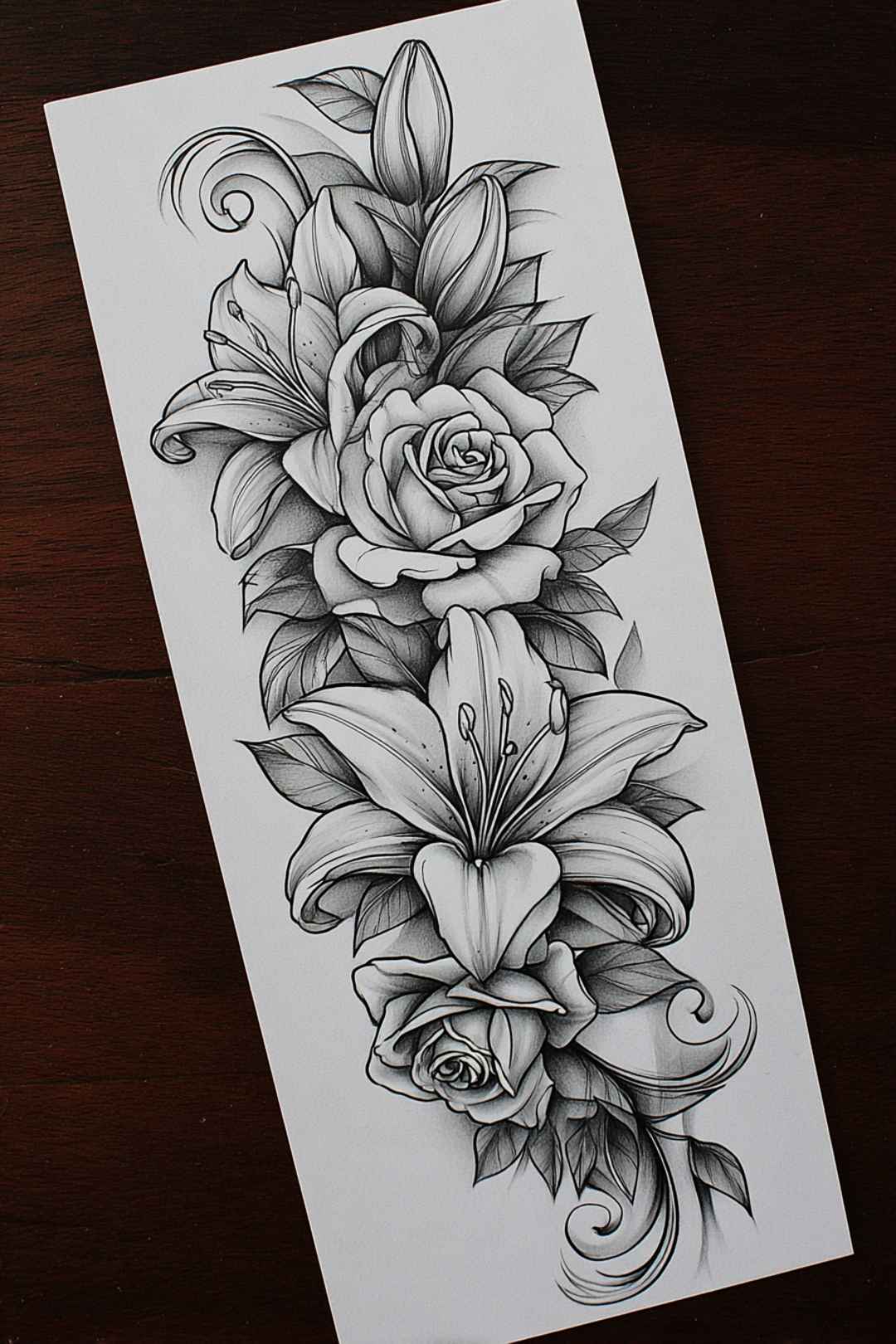
Florals are the default half sleeve subject for a reason – they wrap a curved surface better than almost anything else, and they can be scaled up or down without losing their shape.
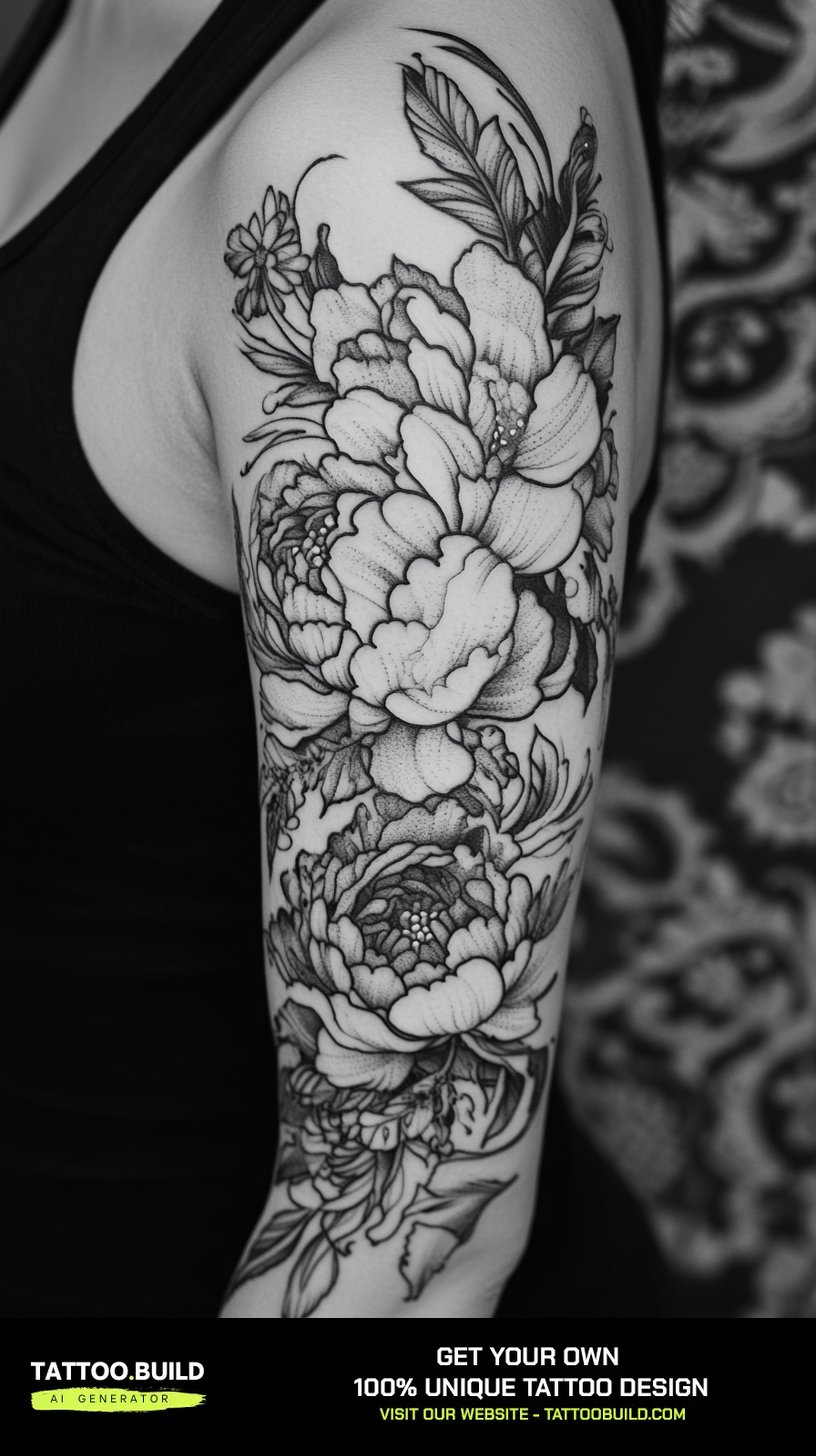
The versions that read as classy tend to use fewer, larger blooms rather than many small ones. Three open peonies across a shoulder will look more considered than fifteen crowded stems.
In my experience the mistake is asking for a bouquet. A bouquet has a fixed outline; an arm does not, so the design ends up with an awkward hard edge somewhere.
Leaf and stem placement is the other quiet decision. Stems that run with the arm read calm; stems that cut across it create tension, which is occasionally what you want but rarely by accident.
If peonies specifically are what you keep coming back to, we have a whole gallery of peony tattoo ideas that shows how differently they can be shaded.
2. Birds, Branches and Movement
A bird gives a floral design something to be about. It creates a focal point and, more usefully, a direction of travel up the arm.
Songbirds on branches are the most common request I hear, and they work because the branch can follow the arm’s curve while the bird stays upright and readable.
Placement matters more here than in a pure floral piece. A bird facing into the shoulder tends to look settled; a bird facing off the edge of the arm often looks like it is leaving the composition.
Branches are also the easiest way to link separate elements. If you already have a tattoo on the arm, a branch can reach toward it and make two pieces feel like one.
These three show the same idea at three different scales – shoulder, upper arm and forearm.
3. Fine Line and Soft Shading
Fine line work is what most people mean when they say they want something delicate, and on a half sleeve it can be beautiful.
It is also the style I would push back on hardest without a frank conversation first. Thin lines placed close together can spread over years, and a design that relies entirely on 1-2mm gaps has less margin than a bolder one.
The fix is not to abandon the style but to scale it up. The same flower drawn twice as large in the same weight of line will hold far longer.
Ask your artist directly how their fine line work has aged on past clients – a good one will happily show you healed photos rather than fresh ones. Our broader fine line tattoo guide covers what to look for.
4. Landscape and Scenery Sleeves
A landscape half sleeve uses the arm as a window rather than a canvas, and when it works it is one of the most striking options on this list.
The trick is depth. Pine trees at the front rendered darker, mountains behind them left pale – that contrast is what stops a scene from flattening into texture.
These take longer than people expect. A detailed scenic half sleeve will usually run several sessions, because the grey work has to be built up in passes rather than laid down at once.
Skies are worth discussing explicitly. Solid black behind a treeline is dramatic but heavy on the arm, and a smoked grey sky usually ages more gracefully.
They also suit people who want something meaningful without it being literal – a specific trail, coastline or skyline reads as personal without needing explanation.
5. Animal Portraits Framed in Flowers
Pairing a portrait with botanicals is the most reliable way I know to make an animal tattoo feel elegant rather than aggressive.
The flowers do two jobs: they soften the subject, and they give the artist somewhere to fade the piece out into skin instead of ending it on a hard edge.
Pet portraits are their own category. Bring several photos in good, even light – a portrait is only ever as good as the reference, and a phone photo taken in a dim room is a genuinely hard brief.
Scale is the other decision people underestimate. A portrait needs enough room for the eyes and muzzle to carry detail, and shrinking it to fit above the elbow is usually a false economy.
For wild animals, ask for the eyes to be placed where you will actually see them. A lion looking down your arm reads very differently from one looking out at the viewer.
6. Mandala and Ornamental Geometry
Ornamental work gives a half sleeve architecture. A mandala at the shoulder acts like a keystone, and the rest of the design can hang off it.
It is also the easiest style to extend later, because pattern can be repeated downward without needing a new subject.
Symmetry is the risk. Geometry on a curved, moving limb is harder than it looks, and it is worth asking whether your artist stencils ornamental work in sections or freehands it on the arm.
Dotwork also takes longer to tattoo than it looks, because the density is built up by hand. Budget more chair time than an equivalent area of line and wash work.
If the pattern side of this appeals more than the florals, our collection of mandala tattoos for women goes deeper on layout and dotwork.
7. Tropical, Water and Flowing Motifs
Koi, lotus, hibiscus and hummingbirds all belong to the same family of designs: subjects that imply motion.
Water is the underrated element here. Well-drawn flow lines can carry a design around the arm and hide the seam where the composition wraps out of view.
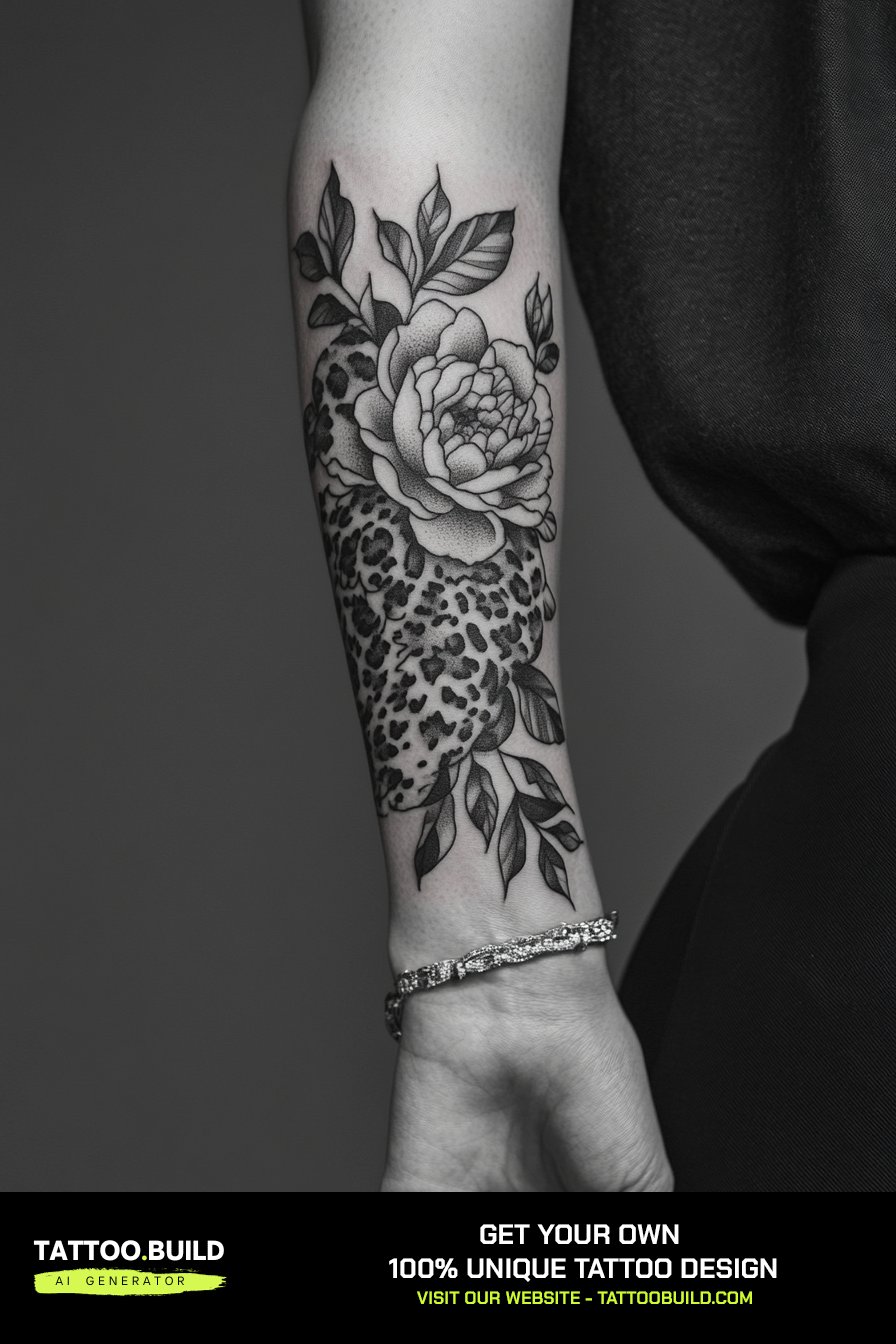
Hibiscus in particular suits the flat plane of the forearm, where a large bloom has room to open rather than curving away from the eye.
Lotus works differently again – it reads well as a static anchor at the shoulder while the flowing elements move beneath it.
Hummingbirds are the smallest subject that still works as a focal point at this scale – see our hummingbird tattoo drawings for reference poses before you commit.
8. Statement Pieces With a Single Focal Subject
Some half sleeves are not decorative at all. They are one image, sized to the arm, with everything else in service of it.
An illustrative portrait, a heavily contrasted rose, a bird mid-flight – these need a confident hand and usually a longer consultation, because there is nowhere for a weak drawing to hide.
When I have seen these succeed, the client came in with a mood rather than a picture. Handing an artist a reference photo to copy tends to produce a flatter result than describing the feeling you want.
These pieces also age best when the contrast is genuinely bold. Mid greys everywhere give you a soft image now and a vague one later.
Expect to pay more for design time on a piece like this, and expect at least one round of revisions before the stencil goes on.
Variations Worth Considering Before You Commit
Start With a Quarter Sleeve or Shoulder Cap
A shoulder cap covers the deltoid and stops short of the mid-bicep. It costs less, heals faster, and is genuinely easy to extend into a full half sleeve later.
I suggest this to almost everyone booking their first large piece. You learn how you sit, how you heal, and whether you actually like living with a visible arm tattoo – all before committing to the larger canvas.
Ask your artist to design it as the top third of a half sleeve from the start, even if you never extend it. That way the outer edges are already planned to connect.
Use Colour as an Accent, Not a Base
A fully coloured half sleeve is a bigger commitment than most people realise – more sessions, more sensitive healing, and faster fading on an arm that sees sun.
Colour used as punctuation is a good middle path. A black and grey subject with two or three saturated blooms gives you warmth without the upkeep of a full colour arm.
Reds and warm oranges tend to hold their character longest in my experience; pale yellows and soft pastels are the first to go quiet.
Take It to the Forearm Instead
The lower arm is flatter, less painful for most people, and easier to see on yourself – which matters more than people expect.
It is also more visible to everyone else, so it is worth thinking honestly about your workplace before booking.
Our gallery of floral half sleeve forearm tattoos covers layouts built specifically for that flatter plane.
How to Plan a Half Sleeve, Step by Step
Step one: choose your hero element before you choose your artist. Knowing you want botanicals with a bird narrows the field enormously, and artists specialise more than portfolios suggest.
Step two: build a reference folder of eight to twelve saved images, and note what you like about each one. “The shading on this” is more useful to an artist than “this whole tattoo”.
Step three: book a consultation, not a session. A half sleeve deserves a conversation about placement, session count and total budget before any deposit changes hands.
Step four: plan for multiple sittings. In my experience a half sleeve is rarely one appointment – outline and shading are usually split, with healing time between.
Step five: eat properly and sleep before you sit. Long sessions go badly on an empty stomach, and the upper arm is more tolerable than most placements but still a long sit – our tattoo pain chart puts it in context.
Step six: follow the aftercare your artist gives you, not the one you read online, and keep the healed piece out of direct sun.
Common Mistakes – and What to Do If You’re Still Not Sure
The most common regret I hear is not about the design at all. It is booking a half sleeve in pieces, from different artists, and ending up with three good tattoos that do not talk to each other.
The second is choosing an artist by price. Design time is most of what you are paying for on a piece this size, and it is the part that cannot be redone cheaply.
A fourth, quieter mistake is booking around a holiday. Fresh work and strong sun are a poor combination, and swimming pools and open water are usually off the table while a large piece settles.
The third is going too small. A design scaled down to feel safer usually just looks crowded once it is on the arm.
On safety: any redness, swelling or heat that is getting worse after the first few days is worth a call to your artist and, if it persists, a doctor. Healing skin should improve day over day, and the American Academy of Dermatology’s guidance on caring for tattooed skin is a useful reference for what a normal heal looks like.
Allergic reactions to specific pigments are uncommon but real, and can appear well after healing – the AAD covers unexpected tattoo skin reactions in detail, and the FDA maintains a plain-language page on tattoo ink safety.
None of this is medical advice – if something on your skin worries you, ask a professional artist first and a doctor if it does not settle. And if you are still undecided on direction, our tattoo aftercare guide is the natural next stop.
Frequently Asked Questions
How long does a half sleeve tattoo take?
Most half sleeves I have seen planned run across two to four sessions rather than one. Outline work is usually a shorter sitting, with shading built up over one or more longer appointments. Detailed grey wash and landscape pieces sit at the higher end of that range. Your artist should be able to give you a session estimate at consultation, and it is fair to ask.
Does a half sleeve hurt more than a small tattoo?
It is less about intensity and more about duration. The outer bicep is one of the more tolerable areas for most people, while the inner arm and the skin near the elbow are usually reported as sharper. The real challenge is sitting still for several hours at a time. Eating beforehand and scheduling breaks makes a bigger difference than anything else.
Can I add to a half sleeve later to make it a full sleeve?
Usually yes, and it is much easier if the original was designed with that possibility in mind. Ask your artist to plan the lower edge as a transition rather than a hard border. Extending someone else’s work is harder but very common, so a good artist will not turn it away. Bring healed photos to the consultation rather than fresh ones.
Will fine line work hold up on a half sleeve?
It can, but it asks more of both the artist and your aftercare. Very thin lines placed close together have less room to spread over the years than bolder work does. Scaling the design up slightly, and keeping the healed piece out of direct sun, both help. Ask to see healed photographs from a year or more out before you book.
How do I choose between black and grey or colour?
Look at your existing tattoos, if you have any, and at how much sun your arms get. Black and grey generally holds its contrast longer and is more forgiving as it settles. Colour gives warmth and impact but usually needs more sessions and more upkeep. A black and grey base with a few colour accents is a genuinely good compromise.
Quick Summary
- Pick one hero element – a bird, a portrait, a mandala – and design everything else as support.
- Leave negative space deliberately; open skin is what makes a half sleeve look composed rather than crowded.
- Follow the arm’s natural taper so the design flows with the limb instead of sitting on top of it.
- Black and grey illustrative work is the most forgiving over time; fine line is the most delicate and colour needs the most upkeep.
- Consider starting with a shoulder cap or quarter sleeve designed to extend later.
- Budget for a consultation and two to four sessions, not a single appointment.
- Choose your artist on portfolio and healed photographs rather than on price.
- Follow your artist’s aftercare, keep it out of the sun, and see a doctor if healing is getting worse rather than better.