A classy half sleeve is not a smaller version of a full sleeve — it is a design that knows exactly where it stops. That single decision is what separates the pieces that still look elegant five years later from the ones that look unfinished.
I have spent a lot of time looking at half sleeves on women, both in studios and in the reference folders artists share with clients, and the pattern is consistent. The elegant ones commit to one style, one palette and one direction of flow.
The gallery below collects more than thirty classy half sleeve ideas, grouped by style so you can see how each approach behaves on a real arm. If you are still deciding between a half and something larger, it is worth browsing sleeve tattoo ideas for women alongside this page.
Everything here is design guidance from experience, not medical advice. Anything involving healing, reactions or skin conditions belongs with your artist and, when it matters, a doctor.
Which Half Sleeve Style Is Right for You?
Style choice affects far more than looks. It changes how many sessions you sit for, how the piece ages, and how easily it can be added to later.
| Style | Best for | Typical sittings | How it ages | Easy to extend? |
|---|---|---|---|---|
| Fine line floral | Subtle, jewellery-like results | 2–3 | Softens; may need a touch-up | Yes |
| Black & grey botanical | Depth and contrast | 3–5 | Very well | Yes |
| Ornamental / lace | Decoration without a subject | 3–4 | Well if lines are spaced | Moderate |
| Celestial | Symbolic, quiet designs | 2–4 | Well | Yes |
| Watercolour / soft colour | Painterly, unusual pieces | 3–5 | Fades faster than black | Harder to match later |
| Illustrative nature | A clear focal point | 4–6 | Very well | Yes |
What Actually Makes a Half Sleeve Look Classy
The word gets used loosely, so it is worth being specific. Classy, in tattooing, usually means restraint: fewer subjects, one consistent style and deliberate empty skin.
The most common thing I see go wrong is density. An arm packed edge to edge with unrelated elements stops reading as a design and starts reading as a collection.
Flow is the second factor. A half sleeve should follow the muscle — wrapping the bicep and tapering toward the elbow — rather than sitting on the arm like a sticker.
Palette matters as much as subject. Every artist I have asked about longevity says the same thing: black and grey with a limited accent colour tends to stay elegant longer than a full spectrum.
Finally, scale. Elements that are too small get lost across a large area, and elements that are too large leave nowhere for the eye to rest. Most classy half sleeves use two or three sizes of element, not five.
30+ Classy Half Sleeve Tattoo Ideas for Women
The sections below group the gallery by style. Each one behaves differently on the arm, so read the notes rather than only looking at the pictures.
1. Fine Line Floral Half Sleeves
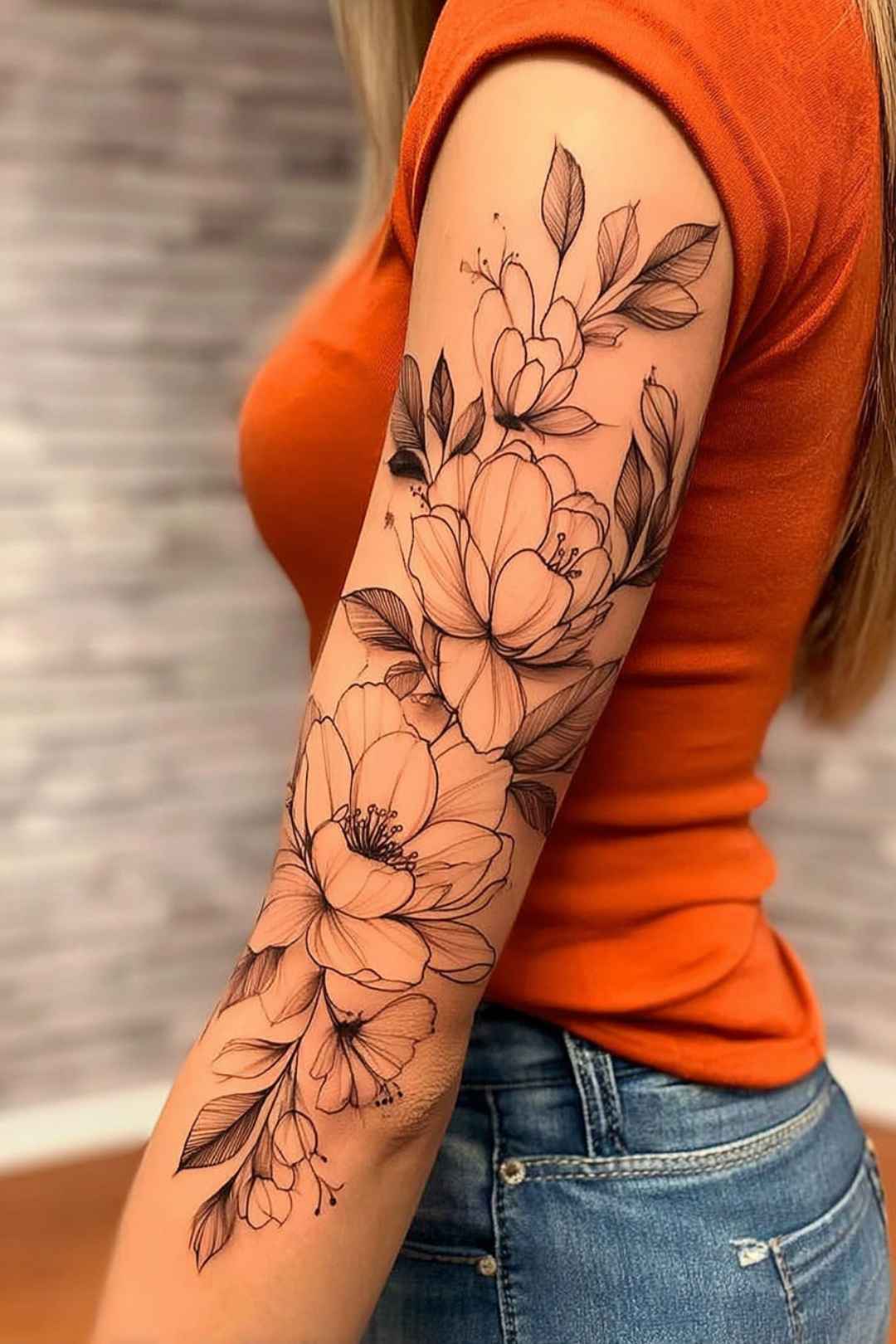
Fine line florals are the most requested classy half sleeve, and for good reason: they cover a large area while still feeling light.
The technique uses single needle or very small groupings, which means thin, consistent lines and very little heavy black. The trade-off is durability — thin lines soften more noticeably over the years than bold ones.
In my experience the pieces that hold up best keep at least a few millimetres between adjacent lines, so the design does not blur into itself. Any artist who packs fine linework tightly is setting you up for a touch-up.
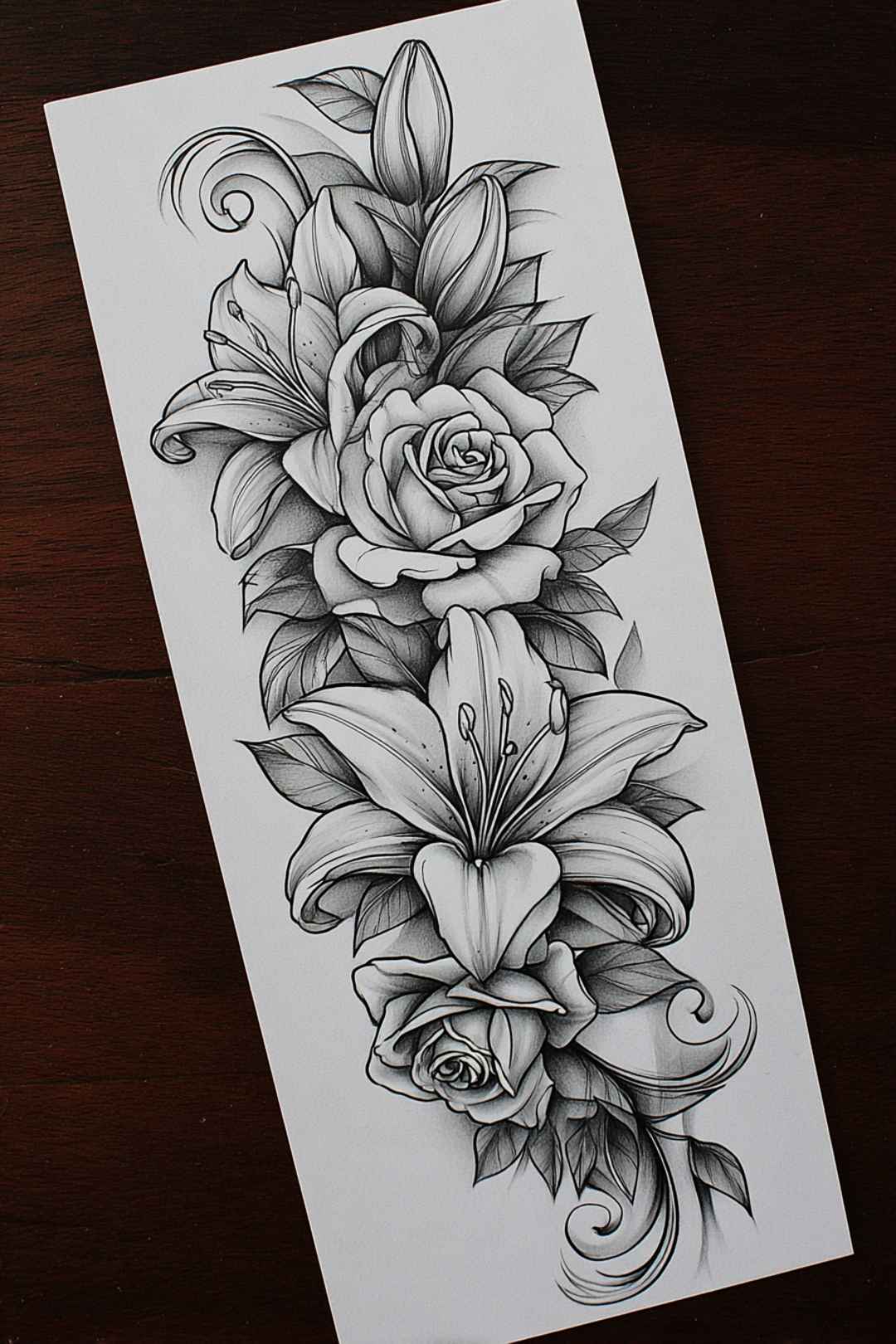
Roses, wildflowers, sprigs of lavender and loose stems all work. So does an asymmetric layout where the density sits on the outer arm and thins toward the inner bicep. For more of this approach, see fine line sleeve tattoo ideas.
2. Black and Grey Botanical Work
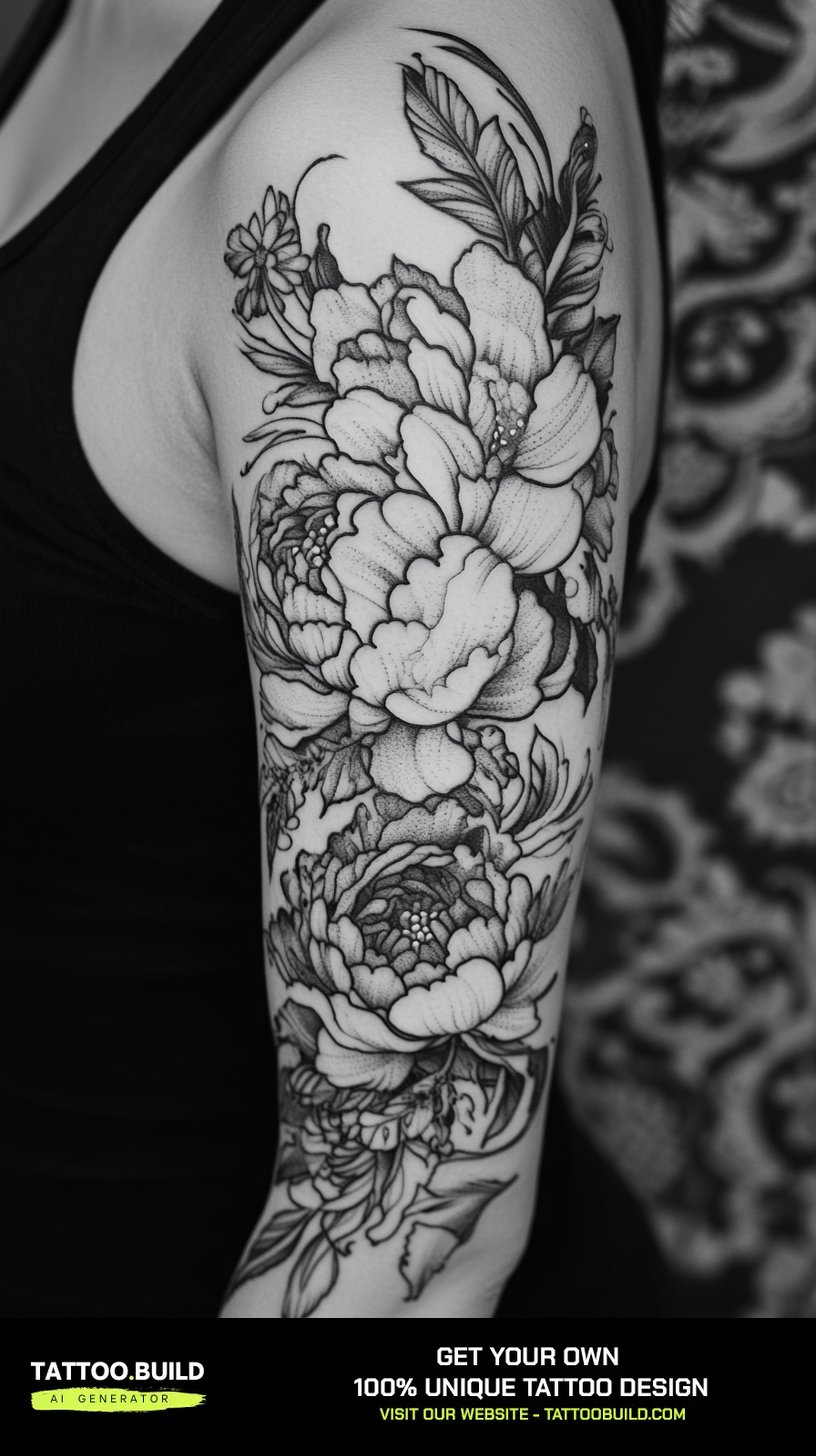
If fine line is the lightest option, shaded black and grey botanical work is the most durable one.
Peonies, roses, magnolias and large leaves give an artist room to build real depth with grey wash, and that depth is what makes the arm look three-dimensional rather than printed on.
This style ages better than almost anything else because it relies on tonal contrast rather than delicate detail. When the lines soften slightly, the shading still holds the shape together.
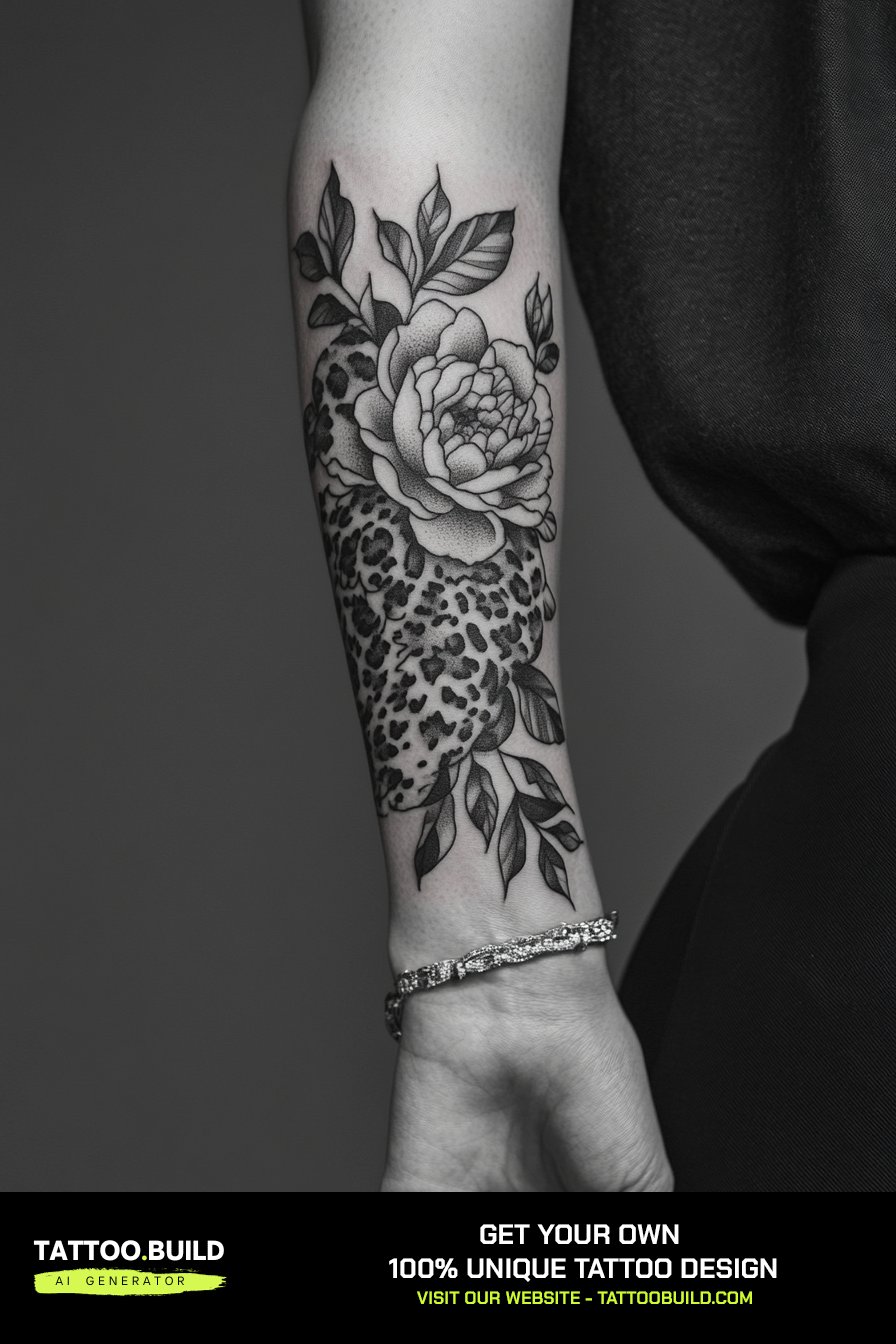
Expect more chair time. A shaded botanical half sleeve is usually a multi-session project, and rushing it is the fastest way to end up with patchy grey. A related look worth comparing is the floral half sleeve forearm design, which uses the same vocabulary lower down the arm.
3. Ornamental and Lace-Inspired Designs
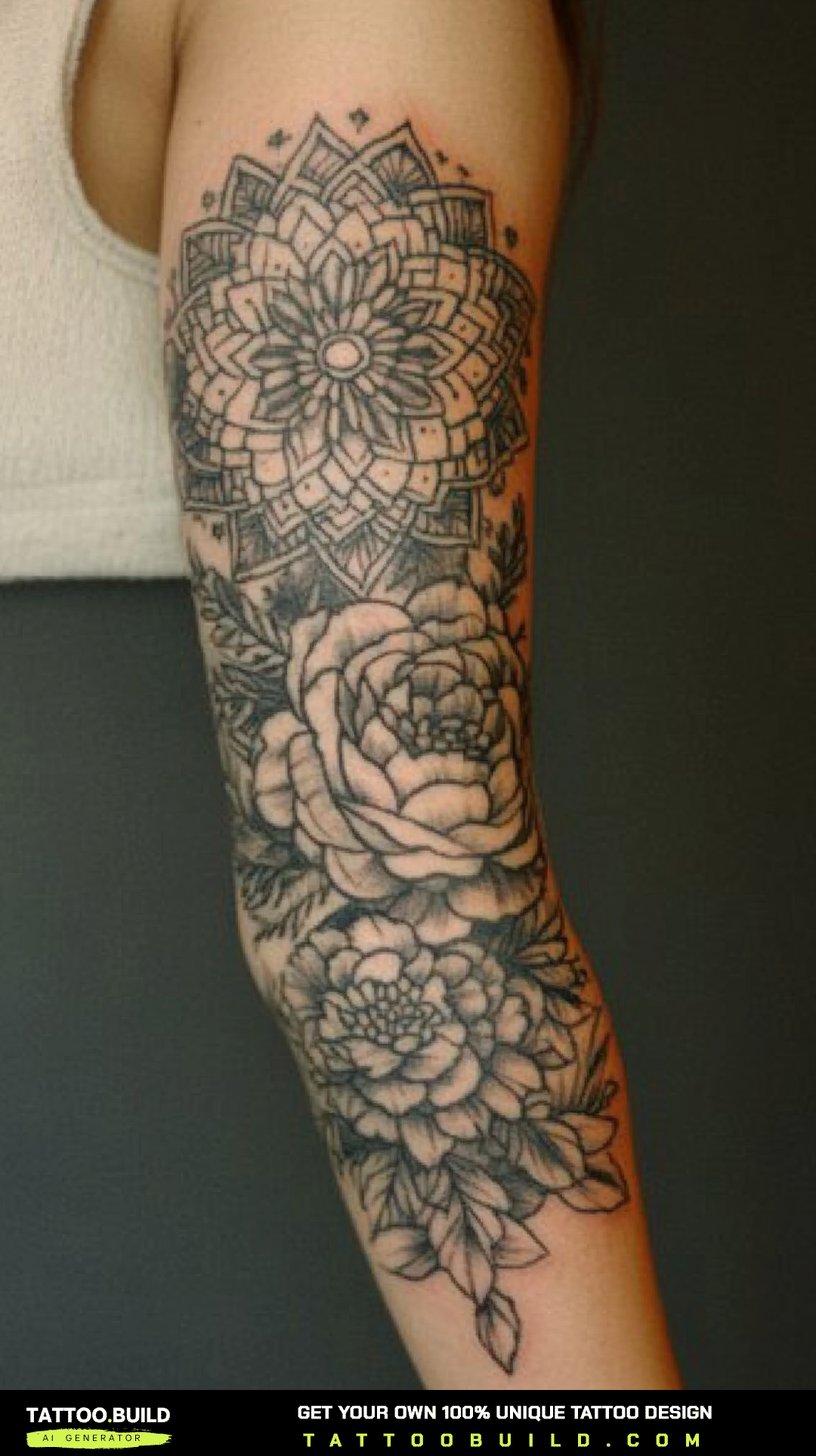
Ornamental half sleeves skip literal subjects entirely. Instead of flowers or animals, they use pattern — filigree, mandala segments, beadwork and chain detail.
The effect is closer to jewellery than illustration, which is why this style suits people who want decoration without committing to a specific symbol.
Symmetry is the whole game here. Because the pattern repeats, any wobble in the linework is obvious, so this is a style where the artist’s portfolio matters more than the reference photo.
One practical note: ornamental work wraps beautifully, but it needs to be mapped on the arm freehand or with a stencil built in sections. Browse ornamental tattoo ideas if this direction appeals.
4. Celestial, Moon Phase and Star Designs
Celestial half sleeves have an obvious structural advantage: moon phases naturally form a sequence, which gives the design a built-in top-to-bottom rhythm.
Add fine stars, a sun at the shoulder and some soft dotwork, and you have a piece that fills the arm without needing a large central subject.
I like this style for people who want something meaningful but not literal. It reads as personal without spelling anything out.
Dotwork shading is the usual finish. It is slower to apply than solid grey wash, so budget more time than the size suggests. See also moon phase tattoo ideas. Keep stars varied in size — uniform dots tend to look like a texture rather than a sky.
5. Butterflies, Moths and Winged Elements
Wings are one of the few subjects that give a floral half sleeve a genuine focal point without dominating it.
Butterflies read lighter and more delicate; moths read darker and slightly gothic. The choice changes the whole tone of the sleeve more than most people expect.
Placement matters more than size here. A single well-placed moth on the outer bicep does more work than three butterflies scattered down the arm.
When I have seen this go wrong, it is almost always because the wings were placed flat against the arm instead of angled with the muscle, which kills the sense of movement.
6. Watercolour and Soft Colour Half Sleeves
Watercolour trades crisp outlines for soft washes of colour that bleed at the edges, mimicking paint on paper.
It is the most striking option on this list and also the most demanding. Without an underlying structure — usually a light line drawing or strong value plan — watercolour pieces can lose their shape as they settle.
Muted palettes hold up better than bright ones. Dusty pinks, sage greens and soft blues stay readable far longer than saturated yellows and light pastels.
Be realistic about maintenance. Colour work generally needs more sun protection and is more likely to want a refresh down the line. If you like the effect, watercolour tattoo ideas shows how it behaves at different scales.
7. Script, Quotes and Meaningful Symbols
Text inside a half sleeve works, but only when it is integrated rather than added on top.
The most elegant versions run script along the natural line of the arm, weaving between floral elements so the lettering becomes part of the composition.
Give lettering room. Fine script that sits too close to shading will lose definition as it settles, and cramped text is one of the hardest things to fix later.
Small symbols — a key, a birth flower, a date in Roman numerals — often carry more weight than a full sentence, and they age far better.
8. Animals and Nature Scenes
A bird, a fox, a snake or a horse gives the sleeve a clear centre of gravity, with botanical work filling in around it.
This is the most illustrative approach on the list and usually the longest project, because a recognisable animal has to be right — there is no hiding a misjudged proportion.
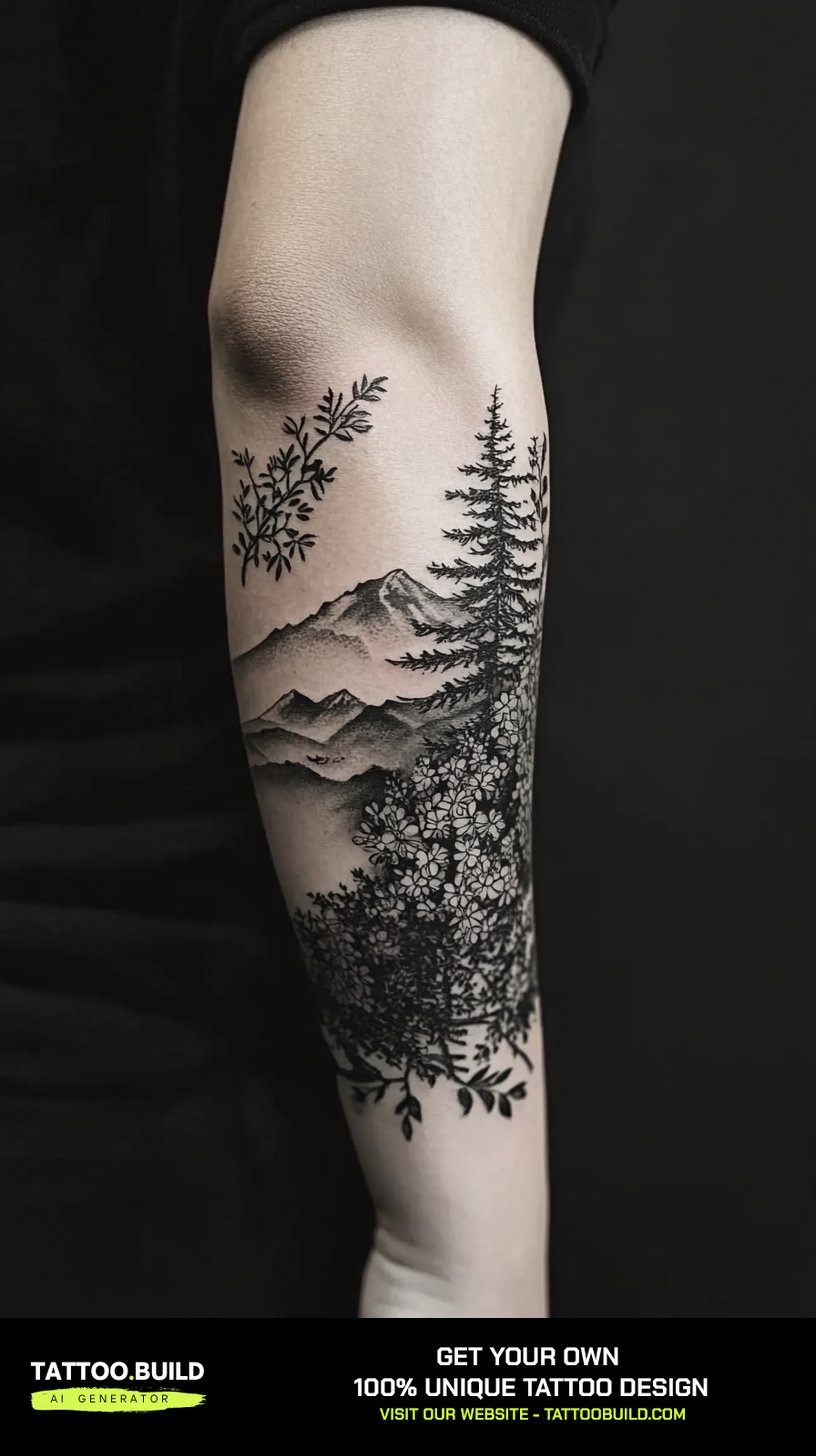
In my experience the best versions keep the animal in a single tonal range and let the surrounding foliage sit lighter, so the focal point stays obvious.
Branches, leaves and grasses also make excellent connective filler, joining separate elements into one continuous piece.
Alternatives and Variations
A half sleeve is not the only way to get this look, and it is not always the right first step.
Quarter Sleeve
A quarter sleeve covers the shoulder cap and the top of the bicep. It is a sensible starting point if you are unsure about commitment, and it can be grown into a half sleeve later.
Tell your artist your long-term plan at the first session. A quarter designed in isolation is much harder to extend cleanly than one designed with room to grow.
Three Quarter and Full Sleeves
Extending past the elbow changes the piece considerably — the elbow itself is a difficult, more painful area, and the forearm reads very differently in everyday clothing.
If you suspect you will eventually want the whole arm, it is worth looking at full sleeve tattoo ideas for women before your first session so the composition is planned for the full canvas.
Half Leg Sleeves
The same styling translates almost directly to the thigh or calf. Leg pieces are easier to keep covered, and the flatter surfaces suit large botanical work.
Healing on the lower leg is generally slower, mostly because of swelling and the amount you move it during the day.
Planning, Placement and Aftercare Tips
Most of the difference between a good half sleeve and a great one is decided before the needle touches skin.
Bring reference for style, not for copying. Artists work best when you show them the feeling you want — line weight, density, palette — and then let them draw for your specific arm.
Ask to see the stencil on your arm while you are standing with your arms down, not while you are seated with your elbow bent. A design that looks balanced in one position can sit oddly in another.
For healing, follow the aftercare your artist gives you rather than advice from the internet, and keep new work out of direct sun. The American Academy of Dermatology has straightforward guidance on tattoo safety, and the U.S. Food and Drug Administration covers ink and infection risks. If you see spreading redness, swelling, pus or a fever, that is a doctor’s call, not a forum’s. Our own tattoo aftercare guide covers the day-to-day routine.
Common Mistakes and Still Not Sure?
The mistake I see most often is mixing styles. A fine line floral shoulder joined to a bold traditional rose almost never resolves into one piece.
The second is booking the whole sleeve before seeing how your skin takes ink. One session on a smaller area tells you a lot about healing, fading and pain tolerance.
The third is choosing an artist by price. Reworking a poorly executed half sleeve costs far more than getting it right once, and some errors cannot be fully corrected.
If you are still weighing it up, the tattoo pain chart gives a realistic sense of what the upper arm feels like, and classy shoulder tattoos for women is a smaller commitment in the same visual family.
Frequently Asked Questions
How long does a classy half sleeve tattoo take?
Most half sleeves take between two and six sittings depending on style and detail. Fine line work is usually at the shorter end, while shaded black and grey or illustrative animal pieces are at the longer end. Sessions commonly run three to five hours, with healing time between them. Your artist can give a realistic estimate once the design is drawn.
Does a half sleeve hurt more than a smaller tattoo?
The outer bicep and shoulder are generally considered among the more tolerable areas because of the muscle underneath. The inner arm and the area near the elbow tend to be sharper. Pain is highly individual, so treat any chart as a rough guide rather than a promise. Duration is usually the harder part — sitting for four hours is a different challenge from a short session.
Can a half sleeve be extended into a full sleeve later?
Usually yes, and it is far easier when the original design was planned with that possibility in mind. Tell your artist at the consultation if a full sleeve is a maybe. Styles with open composition — florals, ornamental and celestial work — extend more naturally than tightly framed single-scene designs. Matching a colour-heavy piece years later is harder than matching black and grey.
Will a fine line half sleeve fade quickly?
Fine line work softens over time more visibly than bold linework, and this happens sooner in areas exposed to sun. That does not mean it disappears; it means the crisp edges gradually become slightly softer. Sunscreen on healed work and occasional touch-ups keep it looking sharp. Ask your artist what their line spacing approach is, since crowded fine lines blur fastest.
How much does a classy half sleeve tattoo cost?
Cost depends on your artist’s rate, your city and the number of hours involved, so any single figure would be misleading. Most artists charge either an hourly rate or a flat day rate for large work. Ask for an estimated hour range at consultation and expect it to shift once the drawing is finished. Booking a highly experienced artist usually costs more up front and less overall.
Quick Summary
- A classy half sleeve depends on restraint — one style, one palette, deliberate negative space.
- Fine line florals look lightest but soften fastest; keep the lines spaced.
- Shaded black and grey botanical work ages best of any style here.
- Ornamental and lace designs give decoration without committing to a subject.
- Celestial layouts have built-in vertical rhythm, which makes them easy to compose.
- Watercolour is the most striking option and the highest maintenance.
- Design should wrap the bicep and taper toward the elbow, not sit flat on one side.
- Tell your artist at the first session whether you might extend it to a full sleeve.