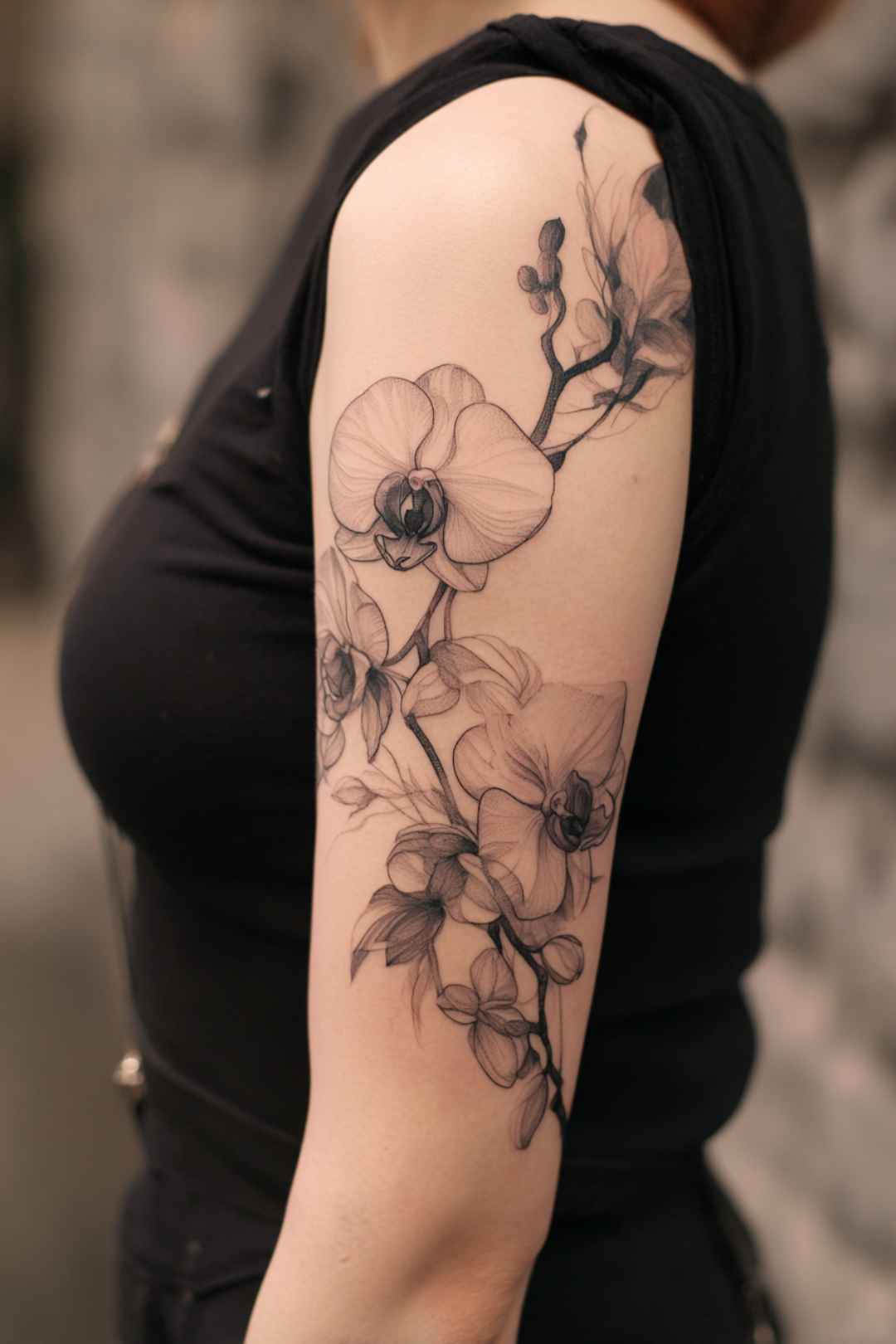
A female classy half sleeve tattoo is defined less by what it shows than by how much skin it leaves alone. That is the single thing I have noticed in every piece of this kind that still looked good five years later.
I have spent a long time collecting and comparing half sleeve designs on women, and the elegant ones almost never win by adding more. They win by editing.
A half sleeve covers roughly from the shoulder to the elbow, or from the elbow to the wrist if you go the other direction. It is enough room for a real composition, and small enough that a long-sleeved shirt puts it away entirely.
Below are ten directions I keep returning to, with two photographs of each, plus the practical parts nobody mentions until you are already in the chair.
Which Classy Half Sleeve Style Is Right for You?
This is the comparison I sketch out for anyone who asks me where to start. Sessions are rough guides only, since arm size and detail level change everything.
| Style | Best if you want | Typical sessions | How it ages |
|---|---|---|---|
| Soft black & grey florals | Timeless, low-drama elegance | 2-4 | Very well; soft shading blurs gracefully |
| Fine line & ornamental | Delicate, jewellery-like detail | 2-3 | Needs touch-ups; thin lines can soften |
| Mandala & dotwork | Structure and symmetry | 3-5 | Strong, if the dots are spaced well |
| Botanical / wildflower | A natural, scattered look | 2-4 | Well, when negative space is kept |
| Watercolour | Colour and softness | 3-4 | The least predictably; sun is its enemy |
| Celestial / figurative | Something not floral | 3-5 | Well with a skilled black and grey artist |
What Actually Makes a Half Sleeve Look Classy
The word “classy” gets used loosely, so it is worth pinning down. In practice it comes down to four things, and none of them are about subject matter.
The first is negative space. A sleeve that is 60 percent skin reads as considered; one that is 95 percent ink reads as loud, no matter how pretty the flowers are.
The second is flow. The design should follow the muscle rather than sit on top of it, which is why the best artists draw or stencil directly on your arm instead of sizing a flat drawing.
The third is a limited value range. Soft greys and one deep black anchor point look refined; six competing colours rarely do.
The fourth is simply time. Pieces that are planned as one composition from the start hold together in a way that a collection of separate tattoos joined later usually does not – though a good artist can rescue that too.
Placement matters as well, and the inner arm hurts noticeably more than the outer. If you have not been tattooed on the arm before, the tattoo pain chart is worth reading before you book.
Classy Half Sleeve Tattoo Ideas I Keep Coming Back To
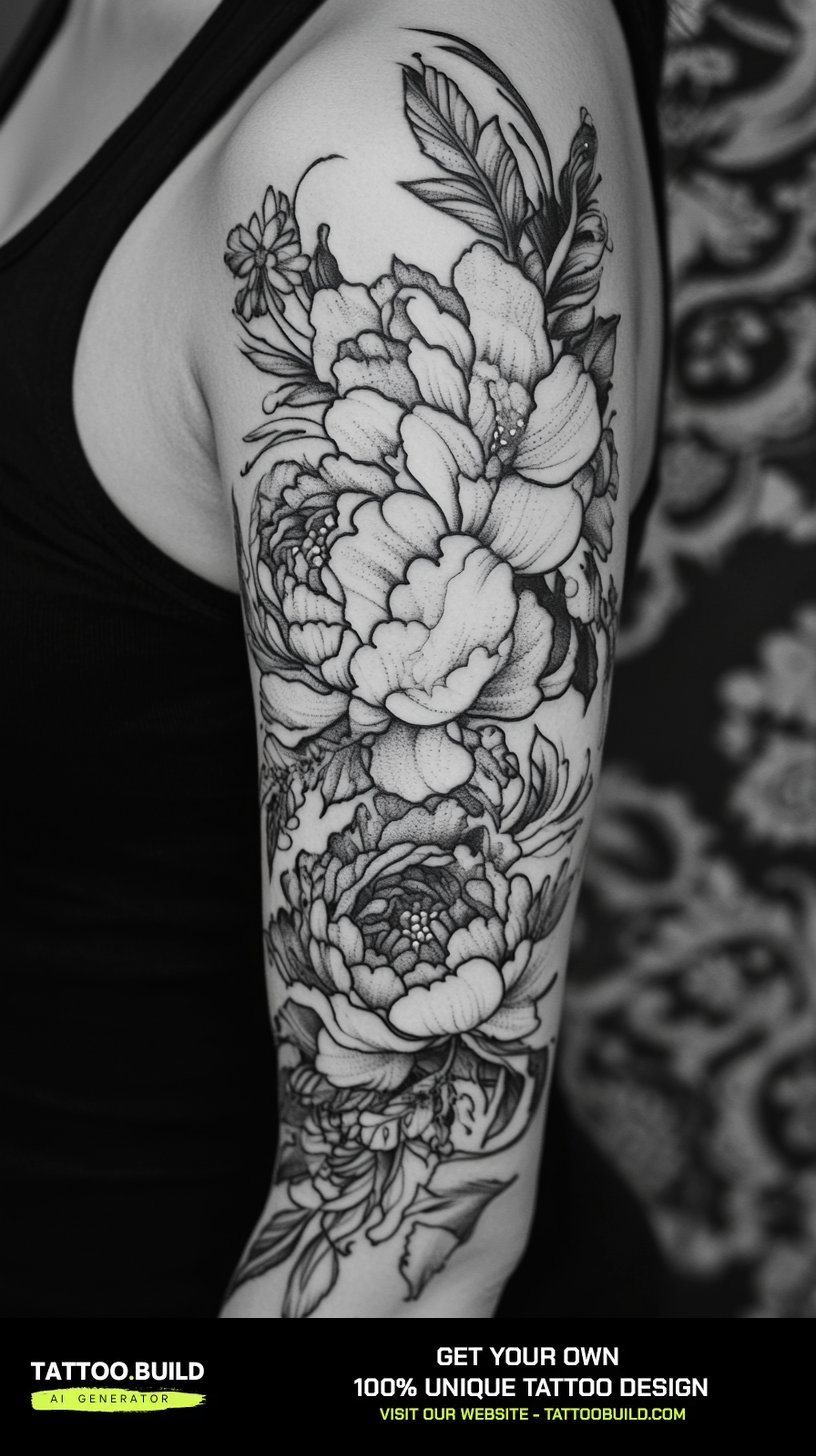
1. Soft Peonies and Leaves in Delicate Shading
Peonies are the workhorse of the elegant half sleeve, and for good reason: the layered petals give an artist somewhere to put shading without needing hard outlines.
When I compare peony sleeves, the ones that hold up are shaded with whip or brush technique rather than packed solid. The grey stays open, and the flower keeps its shape as the skin settles.
One large bloom on the outer shoulder, a smaller one near the elbow, and leaves connecting them is a composition I have seen work on almost every arm size.
Ask your artist to leave the centre of at least one bloom light. That single bright spot is what stops the piece flattening out from three feet away.
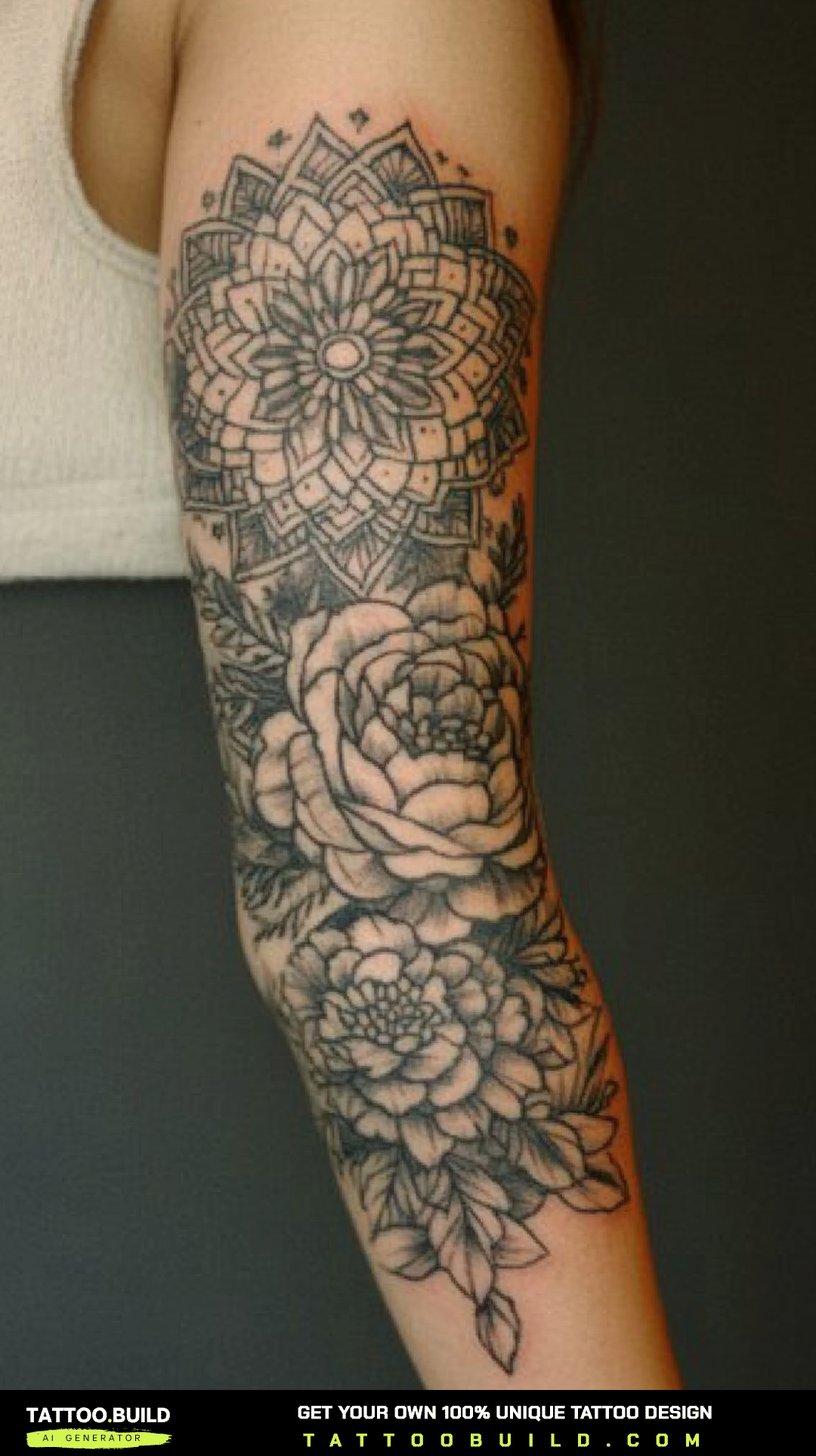
2. A Mandala Blossoming Into Floral Patterns
This design solves a real problem: mandalas are rigid and symmetrical, arms are not.
By anchoring the mandala on the flattest part of the outer shoulder and letting it break apart into loose florals as it travels down, you get structure without the piece looking pasted on.
The dotwork inside a mandala is slow work. Every artist I have asked about it says the same thing – budget more time than you think, and do not let anyone rush the spacing.
If the geometry is the part that appeals to you, there is a wider set of mandala tattoo ideas for women worth browsing before you commit to an arm-sized version.
3. Botanical: Lavender, Eucalyptus and Wildflowers
The botanical sleeve is the most forgiving option on this list, because it does not depend on one perfect focal flower.
Three or four plant types, drawn at slightly different scales and scattered rather than bunched, gives an arrangement that reads as natural instead of decorative.
In my experience this is also the easiest style to extend later. There is always room for one more stem.
The mistake to avoid is even spacing. When every flower sits the same distance apart, a botanical sleeve stops looking like a garden and starts looking like wallpaper.
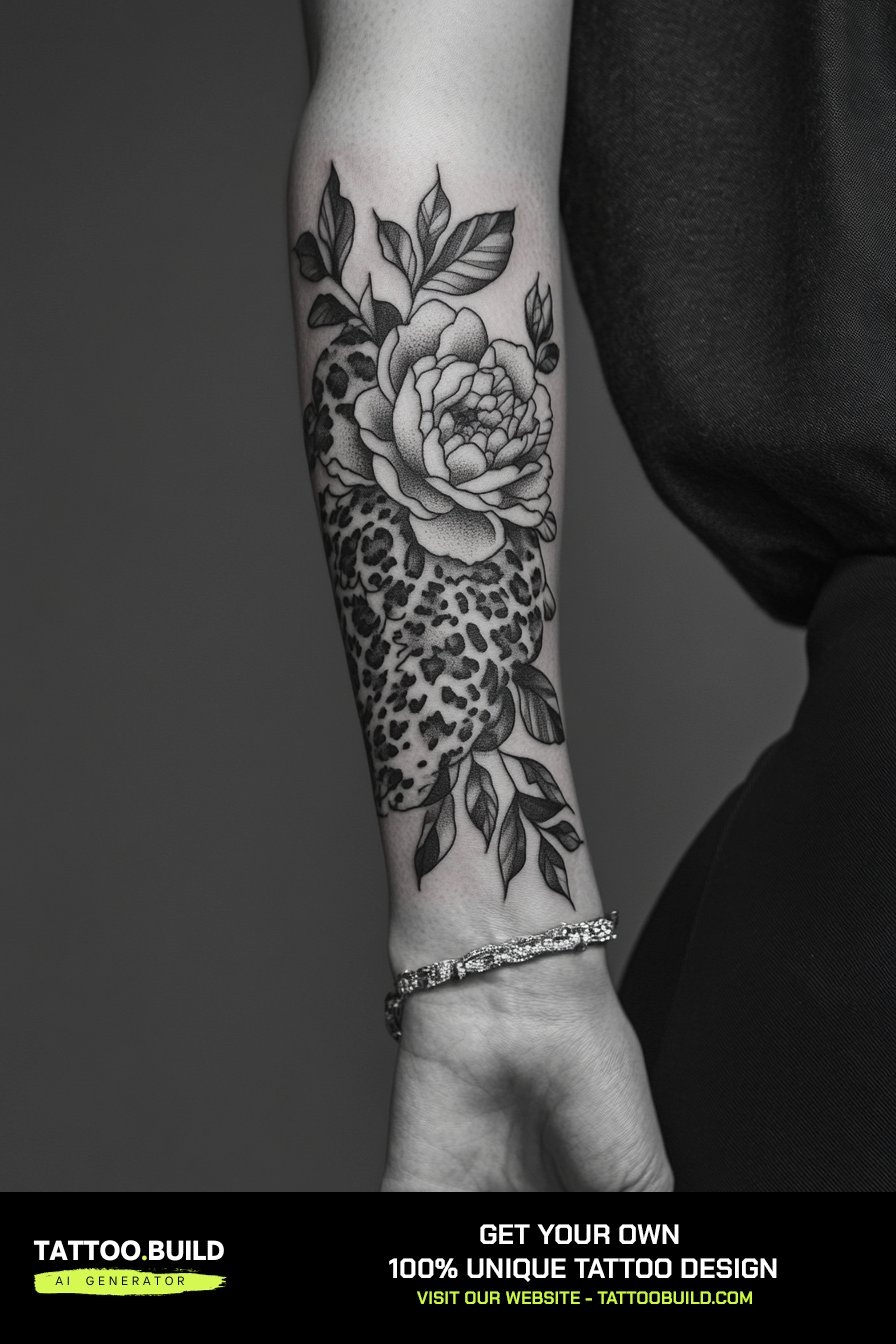
4. Roses Mixed With Fine-Line Ornamental Shapes
Roses can look heavy on their own. Pairing them with thin ornamental filigree gives the eye somewhere light to rest.
The contrast is the whole point: soft organic petals against sharp repeating line work. One softens the other.
This style scales down well too, which is why it appears so often in rose sleeve tattoo ideas that stop at the elbow rather than running the full arm.
Be honest with your artist about how fine you want the ornamental lines. Very thin work looks stunning at three weeks and often needs a touch-up at three years.
5. Lotus Flowers With Subtle Geometric Accents
The lotus carries meaning for a lot of people, and it happens to be a shape that suits the curve of a bicep.
Geometric accents here work best as a frame – a thin arc above the bloom, a few aligned shapes below – rather than as the subject itself.
When the geometry starts competing with the flower, the piece tips from elegant into busy. That line is easy to cross on paper and hard to uncross on skin.
I usually suggest seeing the stencil on the arm in two positions, relaxed and flexed, before the first line goes in.
6. Butterfly and Floral With Elegant Negative Space
Butterflies are common enough that doing one well takes some thought.
The version that works is the one where untattooed skin does the separating – open space between the wings and the florals behind them, rather than a hard outline.
Keep the body of the butterfly light. A solid black body turns the whole design into a dark mass at conversational distance.
Soft wings, open skin, one deep shadow. That is the recipe I have seen hold up best.
7. Orchids With Long, Flowing Stems
Orchids are the most underused flower in this category, which is exactly why they look fresh.
The long stems are the real asset – they give the artist a natural way to connect two blooms without filling the space between them.
Running the stems along the inner arm makes for a beautiful piece, but be warned: the inner arm is one of the more tender spots on the limb.
If you like the thin-line quality of these, the wider category of fine line sleeve tattoo ideas covers how that style behaves over time.
8. A Celestial Goddess With Stars and Moons
This is the option for anyone who has decided they do not want a floral sleeve at all.
Figurative work asks more of the artist than botanicals do. A face that is slightly off will bother you forever, so this is the style where portfolio-checking matters most.
Stippled shading around the figure creates the impression of glow without any colour at all, which is how these pieces stay in the classy register.
When I have compared celestial sleeves side by side, the restrained ones – one figure, a handful of small stars – consistently beat the crowded ones.
Variations Worth Considering
Magnolias With Watercolour Shading
Watercolour is the one style on this page I give a caveat with rather than a straight recommendation.
Fresh, it is gorgeous – the soft colour bleed at the petal edges does something black and grey cannot.
Over years, though, soft colour without a line or grey anchor underneath tends to lose definition faster than black and grey does, and sun exposure accelerates it.
If you want watercolour, ask for a light grey structure beneath the colour. It keeps the shape once the pigment softens.
Cherry Blossoms on the Lower Half Sleeve
Most half sleeves run shoulder to elbow. Running elbow to wrist instead changes the whole feel of the piece.
Cascading cherry blossoms suit the narrower canvas because the branches naturally taper as the arm does.
It is also the more visible choice, worth thinking about if your workplace is conservative about visible ink.
Going Colour-Free but Not Grey
Solid blackwork with heavy negative space is a different kind of elegant – graphic rather than soft.
It suits bold ornamental patterns far better than it suits realistic flowers.
For a middle ground, a floral half sleeve in black and grey gives you the softness with none of the colour maintenance.
Starting Smaller and Growing Into It
You do not have to commit to a full half sleeve on day one, though there is a trade-off.
Planning the full composition first and tattooing it in stages produces a better result than adding pieces and connecting them later.
If budget is the constraint, most artists I have spoken to would rather book you three sessions six months apart than design around existing unrelated tattoos.
Practical Advice Before and After Your Sessions
Eat properly and sleep well the night before. A long arm session is more tiring than most people expect, and being under-fuelled makes the last hour miserable.
Aftercare is where half sleeves are won or lost. Follow whatever protocol your artist gives you rather than mixing methods, and if you want the general version, our tattoo aftercare guide walks through the first month.
Sun is the long-term threat. The American Academy of Dermatology recommends covering a healed tattoo or using broad-spectrum sunscreen, and on an arm that means most of the year.
Take ink and hygiene seriously. The U.S. Food and Drug Administration notes that reactions to tattoo inks and infections from unsterile practice do happen, so choose a licensed studio and ask how they sterilise.
If your tattoo becomes hot, swollen, unusually painful, or starts weeping after the first few days, see a doctor rather than asking the internet. Nothing on this page is medical advice, and skin infections are treatable when caught early.
Still Not Sure? Common Mistakes to Avoid
The most frequent one is choosing the artist second and the design first. Pick the artist whose existing work already looks like what you want, then let them design it.
The second is filling every gap. Space that feels empty on the stencil almost always feels right once the piece is healed and on a moving arm.
The third is mismatched styles. Fine line next to bold traditional rarely settles, which is why sleeve filler should be chosen in the same visual language as the main pieces.
And the fourth is rushing placement. If you are still deciding how much arm to commit to, browsing classy arm tattoos for women at different sizes helps more than looking at half sleeves alone.
Frequently Asked Questions
How much of the arm does a half sleeve cover?
A half sleeve normally covers either shoulder to elbow or elbow to wrist, so about half the arm’s length. The upper version is the more common choice because a short sleeve mostly hides it and a long sleeve hides it completely. The lower version is more visible day to day. Which one suits you is usually a question about your work environment rather than about the art.
How many sessions will a classy half sleeve take?
Most of the designs on this page are realistically two to five sittings, depending on detail and how well you sit. Fine line and simple botanical work tends toward the low end; dotwork mandalas and figurative celestial pieces toward the high end. Your artist can estimate far better than any article can once they have drawn the actual composition. Expect several weeks between sessions so each part heals properly.
Does a half sleeve hurt more than a small tattoo?
It is not usually more intense minute to minute, but it lasts much longer, and duration is what most people find hard. The outer arm and shoulder are generally among the more tolerable areas, while the inner arm and the skin near the elbow ditch are noticeably sharper. Everyone’s tolerance differs, so treat any pain chart as a rough guide rather than a promise. Breaks, food and water make more difference than most people expect.
Can a half sleeve be added to tattoos I already have?
Often yes, though it depends on where they sit and what style they are in. A skilled artist can design around existing work, incorporate it, or in some cases cover it, but the result is usually better when the whole arm is planned as one piece. Bring photographs of everything already on that arm to your consultation. Be prepared for the artist to suggest a different layout than the one you arrived with.
Will fine line work fade faster than bold work?
Very thin lines generally soften sooner than thicker ones, because there is less pigment holding the shape. That does not make fine line a bad choice – it means budgeting for a touch-up somewhere down the line and keeping the piece out of direct sun. Placement matters too, since areas with more friction and sun exposure tend to lose crispness first. Ask your artist how their own healed fine line work has held up and to show you photos of it.
Quick Summary
- Negative space, not density, is what makes a half sleeve read as classy.
- Soft black and grey florals – peonies especially – are the most reliably timeless option.
- Mandalas work best anchored on the outer shoulder and dissolving into florals as they descend.
- Botanical sleeves are the most forgiving and the easiest to extend later.
- Fine line and ornamental work is beautiful but should be planned with a future touch-up in mind.
- Watercolour needs a light grey structure underneath and diligent sun protection.
- Choose the artist whose healed work already looks like what you want, then let them design it.
- Plan the whole composition first, even if you tattoo it across several sessions.