The first classy half sleeve I ever watched come together took four sittings, and by the third the client stopped asking “will this still look good in ten years” and started asking “how far can we take it”. A half sleeve is the point where a tattoo stops being a decoration and starts being a design decision about your whole arm.
That is exactly why so many women land here. A half sleeve gives an artist enough room to build something with real composition, while still stopping at a line you can cover with a shirt on a Monday morning.
The 30 pieces below are grouped by style rather than thrown together, because choosing a style is the decision that actually matters. Everything else, from subject to placement, follows from it. If you are still deciding on the overall look, our guide to classy half-sleeve tattoos for women is a good companion to this one.
I have also included what I have seen hold up over years on real skin, not just what photographs well the day it is finished. Those are rarely the same thing.
Which Half-Sleeve Style Is Right for You?
Before scrolling through ideas, it helps to narrow the field. Here is how the main half-sleeve styles compare on the things clients ask me about most.
| Style | Best If You Want | How It Tends To Age | Typical Commitment |
|---|---|---|---|
| Black & grey florals | Softness with real presence; easy to cover for work | Very well, as long as the shading has contrast | Two to four sittings for most arms |
| Fine line | The lightest, most delicate look on the arm | Softens fastest; expect touch-ups down the line | Often one or two sittings |
| Nature and landscape scenes | A single story that wraps the whole arm | Well when there is strong dark to hold the shape | Three to five sittings, usually |
| Ornamental and mandala | Symmetry that follows the shape of the arm | Strongly, if the artist leaves space between lines | Two to four sittings |
| Blackwork and realism | Maximum impact and depth | Best of any style for keeping its punch | Four or more sittings for dense pieces |
| Colour and neo-traditional | Warmth, personality and a vintage feel | Good with bold outlines; softer colours fade sooner | Three to five sittings |
There is no wrong column here. There is only the one that matches how visible you need the tattoo to be and how much time you want to spend in the chair.
What Actually Makes a Half Sleeve Look “Classy”
“Classy” is a vague word, so let me be specific about what I have seen separate the arms that look considered from the ones that look collected.
The first factor is negative space. The half sleeves that read as elegant almost always leave bare skin between elements, so the arm still looks like an arm rather than a wall.
The second is a single style. An arm with fine line florals near the wrist and dense realism at the shoulder rarely settles, no matter how good each piece is on its own.
The third is flow. A design that follows the muscle, wrapping the bicep and tapering toward the elbow, always looks better than one that sits flat on the arm like a sticker.
The fourth is restraint with colour. Every artist I have asked says the same thing, that limited colour on a black and grey base ages more gracefully than a full spectrum. Cost matters too, and if you are budgeting, our breakdown of what a sleeve tattoo costs is worth reading before your consultation.
30 Classy Half-Sleeve Tattoo Ideas for Women
The sections below move from the most understated designs to the boldest. Each one includes what the style asks of you and of your artist.
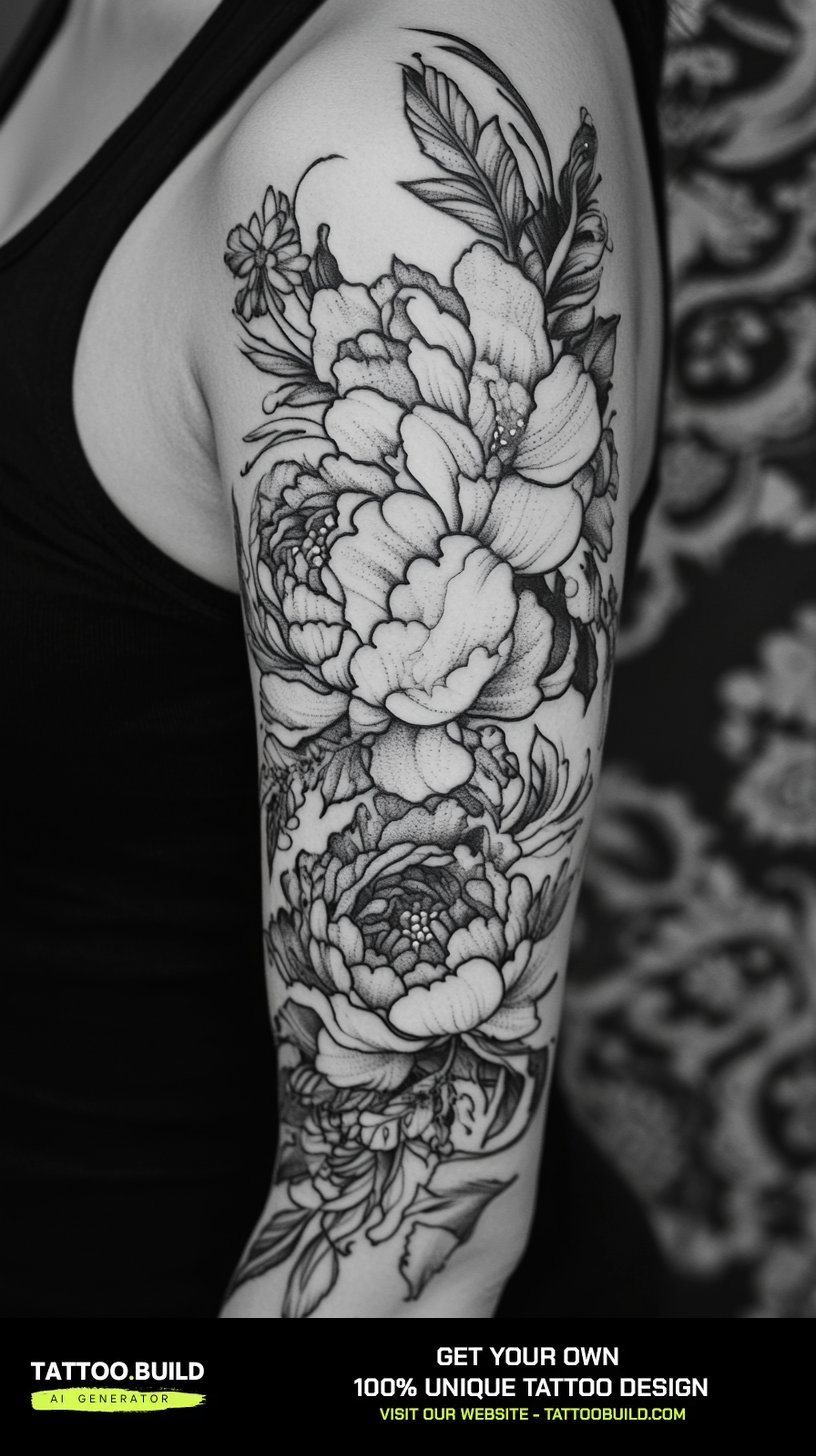
1. Black-and-Grey Floral Half Sleeves
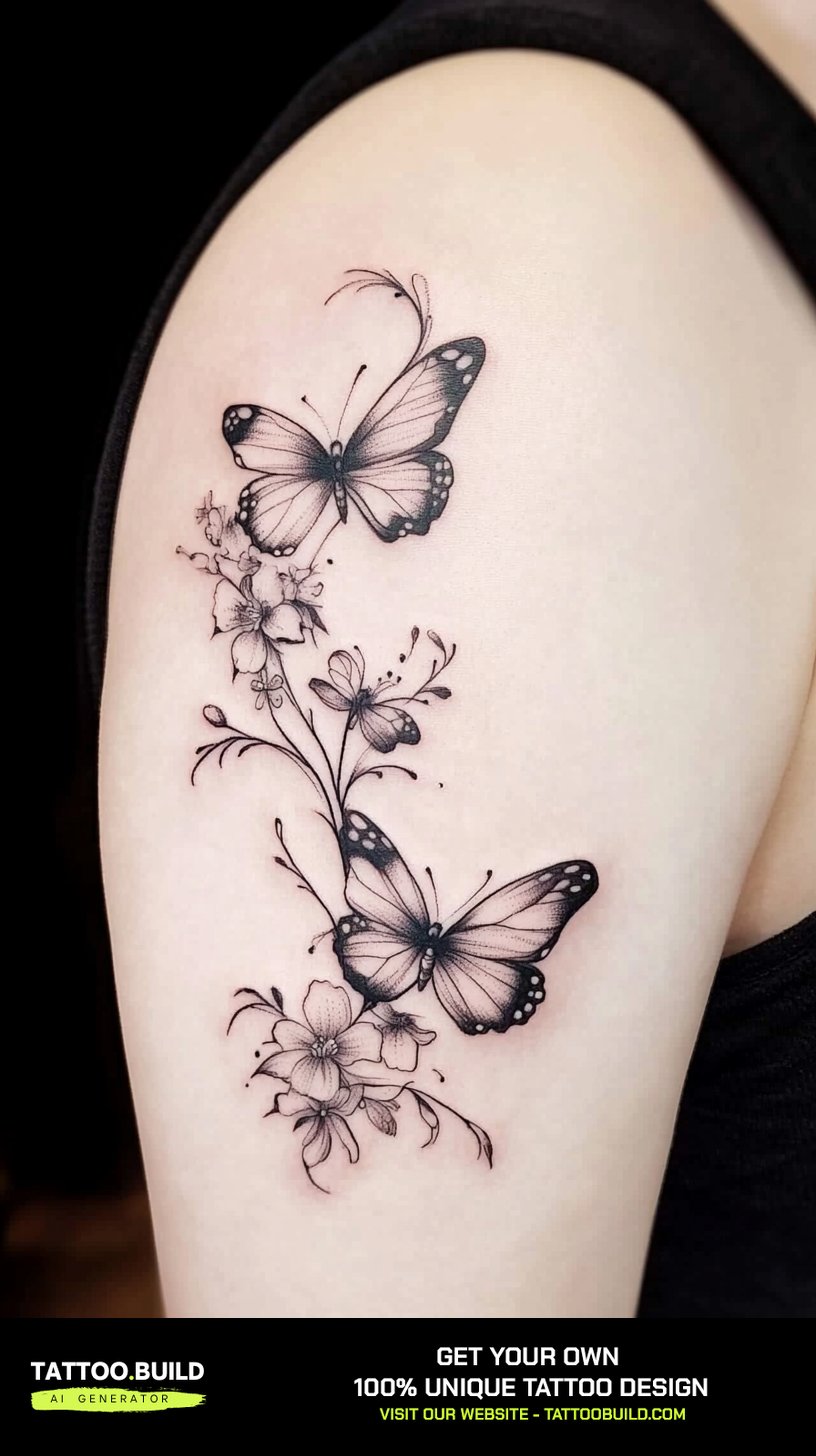
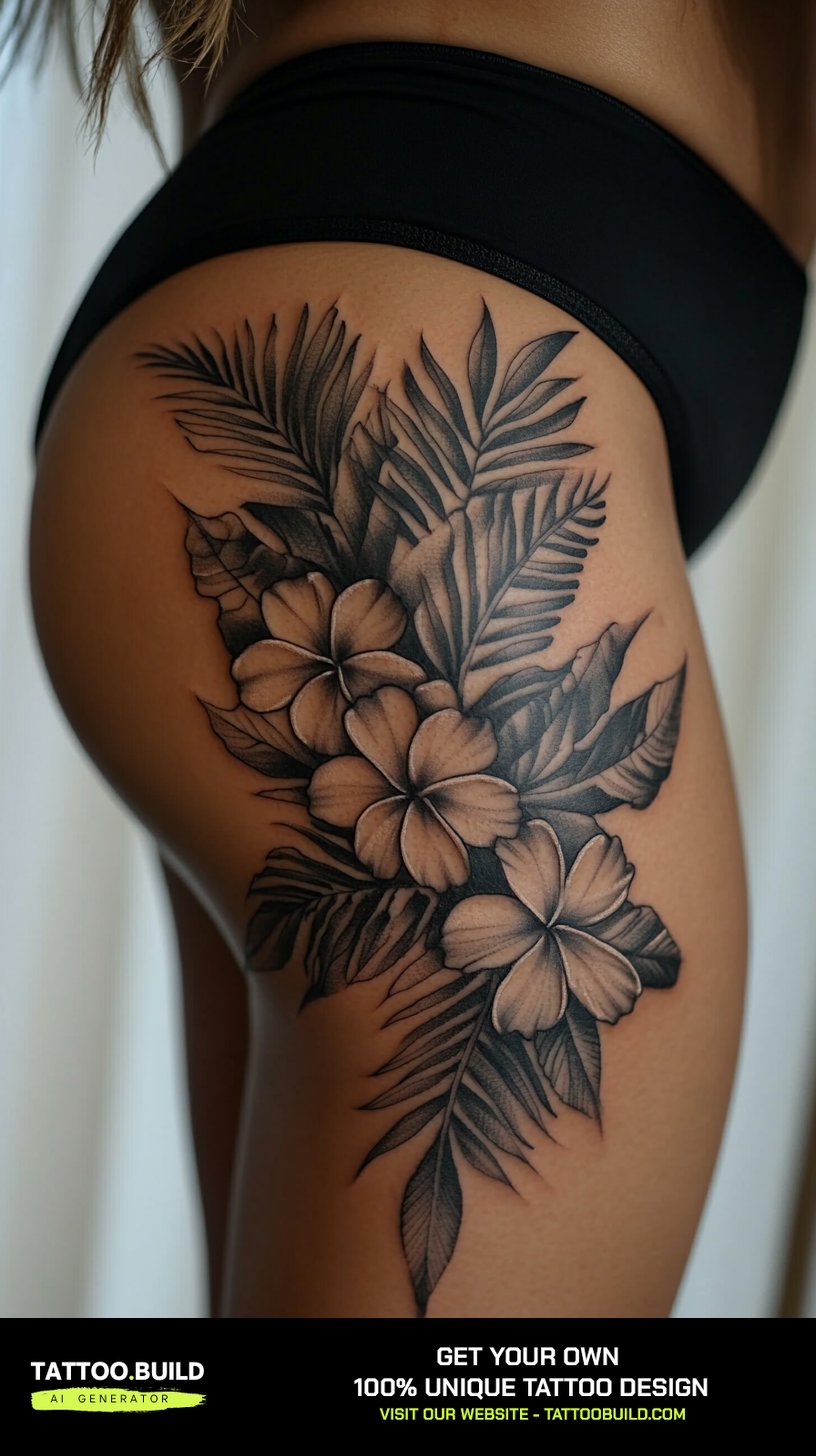
This is the most requested classy half sleeve I see, and for good reason. Large blooms give the composition an anchor, and leaves fill the gaps without adding visual weight.
Peonies, roses and magnolias work best because their petals give the artist somewhere to build shading. Small scattered wildflowers tend to disappear into grey after a few years.
What makes these age well is contrast. If the darkest darks are genuinely dark, the design will still read from across a room in a decade. If everything sits in the middle grey range, it will soften into a smudge.
When I look at a healed floral sleeve, the first thing I check is whether the petals still have edges. That is entirely down to how the artist handled the black, not how pretty the sketch was. For more subject options in this direction, see our collection of floral half-sleeve tattoos.
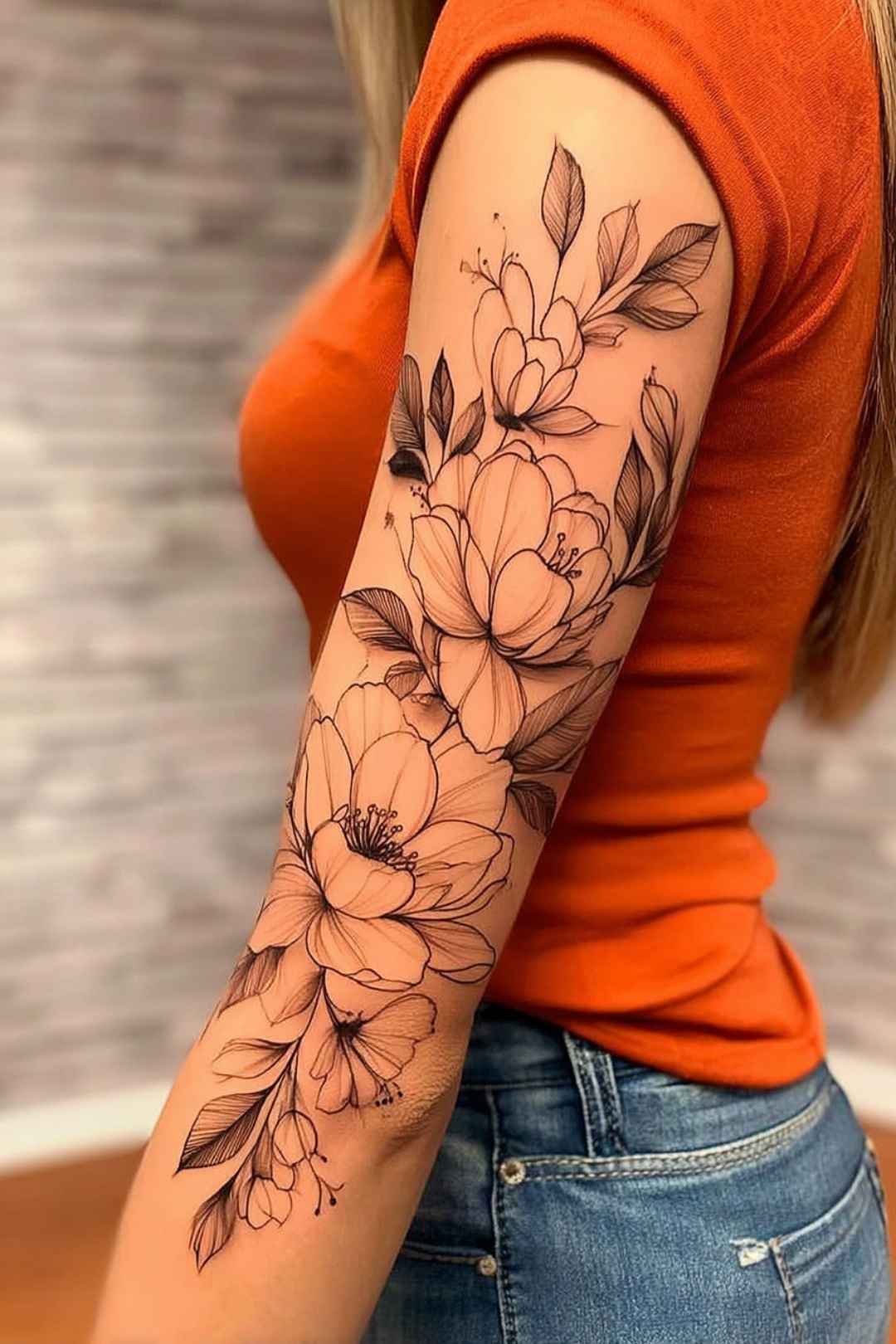
2. Fine Line and Delicate Botanicals
Fine line half sleeves are the lightest option on this list and the one clients most often underestimate.
The look is beautiful, and it is genuinely quicker and usually cheaper to sit for. Some of these can be finished in a single long session.
The honest trade-off is longevity. Very thin lines spread slightly as skin ages, so fine line work usually needs a touch-up sooner than heavier styles. Any artist who tells you otherwise is overselling.
I still recommend it constantly, especially for a first large piece, because it is the least overwhelming way to commit to a half sleeve. Just budget mentally for a refresh in a few years. Our gallery of fine line sleeve tattoo ideas has more in this direction.
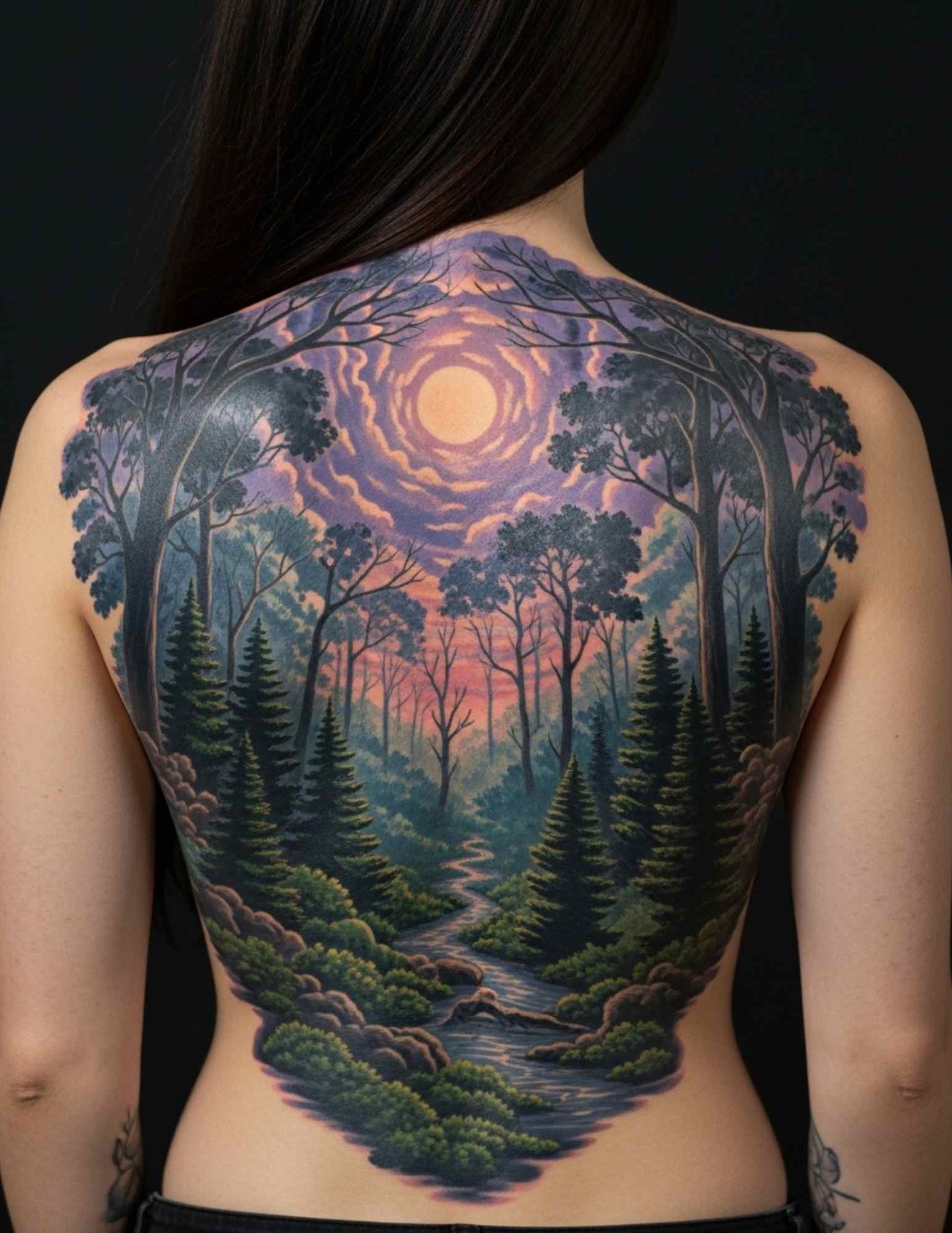
3. Trees and Forest Half Sleeves
A tree is one of the few subjects that naturally suits the shape of an arm, because the trunk follows the limb and the canopy opens across the shoulder.
These pieces work especially well as upper-arm half sleeves, where the deltoid gives the branches somewhere to spread.
The technical challenge is texture. Bark and foliage need thousands of small marks, which means longer sittings than the design might suggest.
In my experience these are the half sleeves clients grow most attached to, because the subject carries meaning without needing to be explained to anyone.
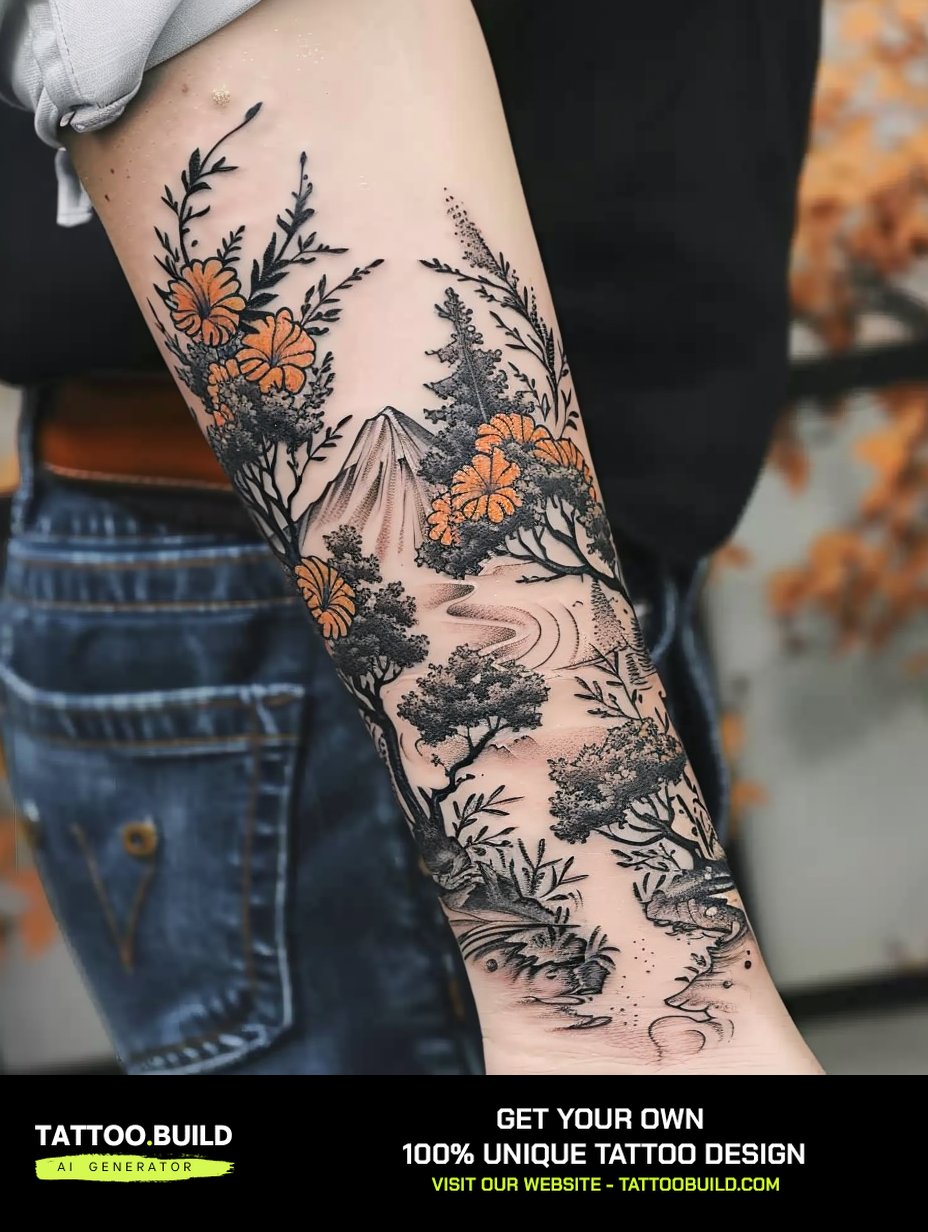
4. Landscapes, Mountains and Wrapping Scenes
A landscape half sleeve treats the whole arm as one continuous scene rather than a set of motifs.
Because the design wraps, you need to decide early where the “front” of the tattoo is. That is the view most people will see, and it should carry the strongest element.
Depth is what makes these succeed. Distant peaks should be light and soft, foreground trees dark and sharp, or the scene flattens.
These are also the easiest half sleeves to extend later, since a horizon line can keep travelling down the forearm whenever you are ready.
5. Ornamental, Mandala and Mythic Designs
Ornamental work uses symmetry, pattern and jewellery-like detail to follow the natural curve of the arm.
It suits the upper arm particularly well, where a repeating pattern can wrap the bicep cleanly.
The skill here is spacing. Ornamental designs live or die on whether the artist left enough skin between the lines to keep the pattern readable as it ages.
Mythic and figurative subjects fit naturally into this category, since ornamental framing gives a portrait or a creature a structure to sit inside. If the pattern side appeals more than the figure, look at our mandala sleeve tattoo ideas.
6. Blackwork and Animal Realism
This is the boldest end of the classy spectrum, and it is not a contradiction. A well-executed realism piece can look extremely refined.
Dense black holds its shape better than any other approach over decades. If longevity is your priority above all else, this is the style to choose.
The catch is that realism is unforgiving. A mediocre floral tattoo still looks like a flower, while a mediocre animal portrait looks wrong in a way everyone notices.
For realism, choose the artist first and the design second. I would travel and wait months for the right portfolio rather than book locally out of convenience.
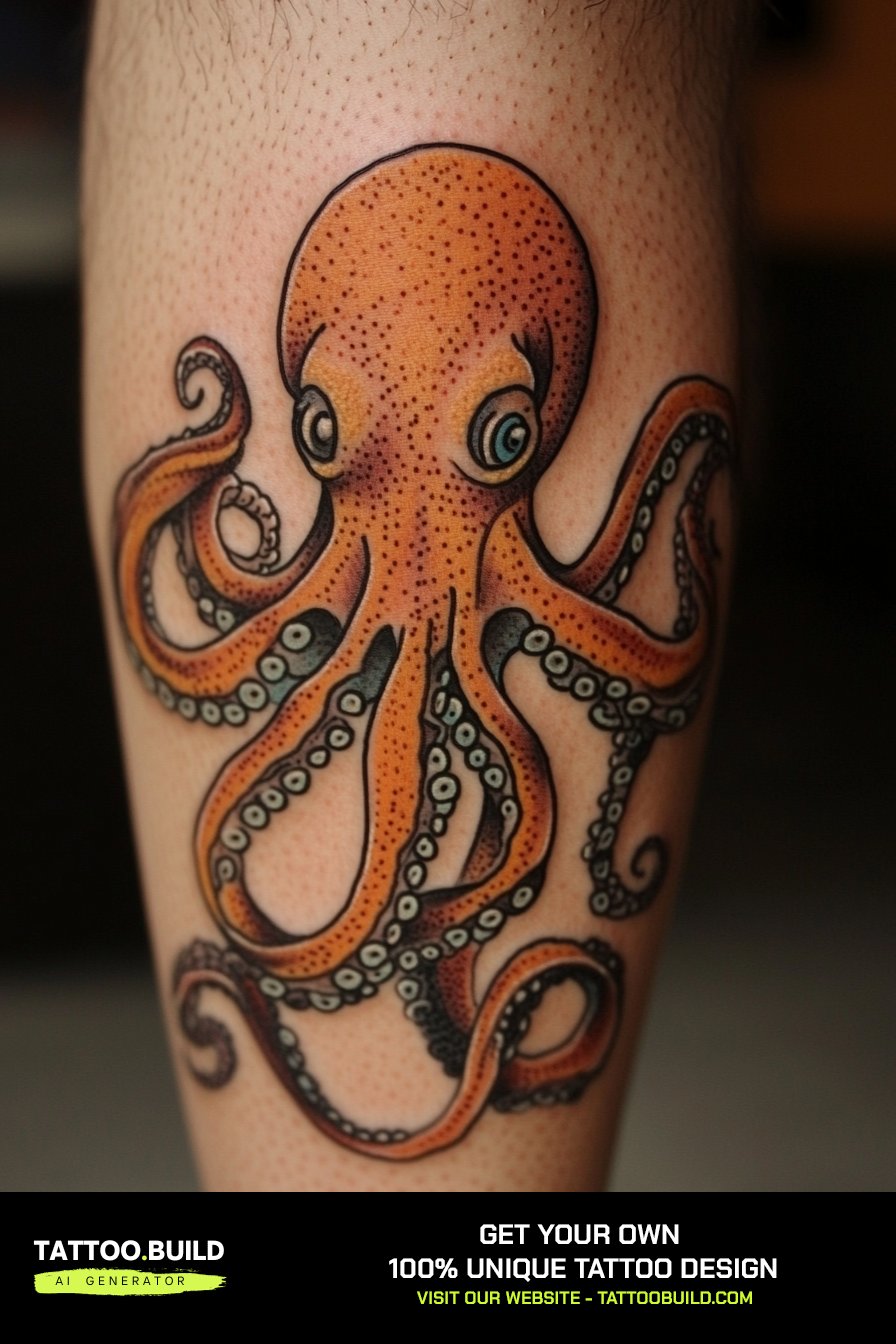
7. Neo-Traditional and Illustrative Colour
Neo-traditional half sleeves combine bold outlines with painterly shading and a limited palette.
The heavy outline is doing quiet structural work. It holds the design together as the colour inside softens over the years.
This style has personality in a way black and grey rarely does, which is why it suits people who want their tattoo to feel warm rather than serious.
It also handles unusual subjects gracefully. Animals, figures and objects that would look strange in realism sit comfortably here.
8. Soft Colour Florals and Coastal Scenes
Soft colour is where I see the most disappointment, and almost all of it is avoidable with the right expectations.
Muted pastels look stunning fresh. On most skin they also fade faster than saturated tones and can look washed out sooner than clients expect.
The way around it is to keep a black and grey structure underneath and let colour sit on top as an accent rather than the whole design.
Ask to see healed photographs at least a year old, on skin close to your own tone, before committing to a heavily coloured half sleeve. Fresh photos tell you almost nothing.
Variations Worth Considering
If none of the eight categories above is quite right, these variations come up constantly in consultations.
Narrative and Storytelling Scenes
Some half sleeves are built around a specific place or memory rather than a decorative subject.
These take longer to design, because you and the artist are effectively editing a story down to what fits on an arm.
My advice is to pick one scene rather than three, and let the detail carry the meaning.
Darker and Fantasy-Leaning Pieces
Gothic architecture, ravens and fantasy creatures sit at the moodier end of the classy category, and they belong here as much as florals do.
The word “classy” describes the execution, not the subject. A well-composed gothic half sleeve with good negative space looks far more refined than a crowded floral one.
Upper Arm Versus Forearm
An upper-arm half sleeve runs from the shoulder to the elbow and disappears under almost any shirt.
A forearm half sleeve runs from the elbow to the wrist and is visible most of the time, which is a lifestyle decision more than an aesthetic one.
Both can be extended later into a full sleeve if you plan the layout now rather than improvising it in three years.
Practical Advice Before You Book
A half sleeve is a long project, so the preparation matters more than it does for a small piece.
Book a consultation before you book a session. Any artist doing work of this scale expects one, and you should be wary of anyone who does not offer it.
Eat a proper meal beforehand and bring snacks. Long sittings go badly when blood sugar drops, and I have seen more sessions cut short for that reason than for pain.
On healing, the Mayo Clinic notes that most tattoos take about two weeks to heal on the surface, with washing twice daily, light moisturiser and no sun or swimming during that window. Follow the specific instructions your artist gives you, since they know what they put into your skin, and see a doctor rather than an internet forum if you notice spreading redness, swelling or discharge. Our tattoo aftercare guide covers the routine in more detail.
It is also worth knowing that the FDA has documented infections and allergic reactions linked to contaminated inks, and advises contacting a healthcare professional if a rash or reaction develops. Choosing a licensed studio that uses single-use needles and sealed ink caps is the single most effective thing you can do about that risk.
Common Mistakes and How to Avoid Them
Almost every half sleeve I have seen go wrong went wrong for one of these reasons.
Collecting instead of designing. Adding one tattoo at a time from different artists and hoping it will resolve into a sleeve is the most common and most expensive mistake.
Filling every millimetre. Density is not the same as impact, and crowded arms look busy rather than bold. If you need ideas for the gaps, our guide to sleeve filler shows how to do it without smothering the design.
Ignoring the elbow. The elbow ditch and the elbow itself are sensitive and heal unpredictably, so plan around them deliberately rather than discovering them mid-session. It is worth checking a tattoo pain map before you commit to a layout.
Rushing the artist search. Waiting six months for the right person is nothing compared to living with the wrong result permanently.
Frequently Asked Questions
How long does a classy half sleeve tattoo take to finish?
Most of the half sleeves I have watched come together were built over three to five sittings of three to five hours each, spaced two to four weeks apart. Line work usually happens first, then shading, then any colour. Fine line pieces are the exception and can sometimes be finished in one or two sessions. Your artist will give you a realistic plan once they have seen your arm and the reference you bring.
Does a half sleeve hurt more than a smaller tattoo?
It is less about intensity and more about duration, in my experience. The outer upper arm is one of the more forgiving spots, while the inner bicep, the elbow ditch and the wrist tend to be sharper for most people. Eating properly beforehand and booking a shorter first session helps more than any numbing trick. If pain is a real worry for you, say so when you book and ask to split the work into shorter appointments.
Can I get a classy half sleeve if I work in a conservative office?
Usually yes, because a half sleeve that stops above the elbow disappears under a short sleeve and completely under a long one. Every woman I have spoken to who works in a formal setting chose the upper arm for exactly that reason. Ask your artist to design the piece so it ends at a natural line rather than trailing past the elbow. Check your workplace policy first if you are unsure, since rules still vary a lot by industry.
Should I plan the whole sleeve before starting?
I would plan the layout even if you only commit to part of it now. Artists can design a half sleeve that reads as complete on its own but has obvious room to grow toward a full sleeve later. Piecemeal tattoos collected from different artists over years are the hardest thing to unify, and fixing that later usually costs more than planning ahead. A single consultation is normally enough to map it out.
Is black and grey or colour better for a classy look?
Both can look refined, so the honest answer is that it depends on your skin tone and the subject. Black and grey suits botanical and ornamental work and is the safer choice for long-term crispness. Colour brings warmth and works beautifully in neo-traditional and illustrative pieces, though softer pastel tones tend to fade sooner and may need refreshing. Ask your artist to show you healed photos of both on skin similar to yours before deciding.
Quick Summary
- Pick one style and commit to it before choosing any subject matter.
- Decide between upper arm and forearm based on how often you need to cover it.
- Leave negative space, because bare skin is what makes a half sleeve look designed rather than crowded.
- Choose black and grey for the safest long-term crispness, and treat colour as an accent.
- Expect three to five sittings for most designs, spaced a few weeks apart.
- Select a specialist artist by their healed photos, not their fresh ones.
- Plan the whole arm at the consultation, even if you only get part of it done now.
- Follow your artist’s aftercare instructions and see a doctor if healing looks wrong.
If you take one thing from this, take the first point. Every good half sleeve I have seen started with a decision about style, and every bad one started with a decision about a single tattoo.