I have spent more hours than I can count looking at hip pieces, and the thing that keeps surprising me is how forgiving this placement is. The hip is one of the few spots on the body where a tattoo can be completely private on Monday and the centrepiece of an outfit on Saturday.
That double life is the whole appeal. A hip tattoo sits under almost every waistband, and then reappears with a swimsuit, a cut-out dress or a low-slung skirt.
The 30+ designs below are grouped by style rather than thrown into one endless scroll, so you can jump to the look you are actually drawn to. If you want a broader look at the placement first, our guide to hip tattoos for women covers the basics before you commit.
Fair warning on one point I will keep coming back to: the hip is not the gentlest place to sit for a long session. It is worth knowing that before you fall in love with a full hip-to-thigh piece.
Which Hip Tattoo Style Is Right for You?
Every style on this page behaves differently once it is healed and living on your skin. This is the comparison I wish someone had handed me the first time I booked a hip piece.
| Style | Typical size | Rough sitting time | Ages best when | Best for |
|---|---|---|---|---|
| Fine line florals | 3-6 inches | 2-3 hours | Lines are kept apart and not too thin | A first hip tattoo |
| Black and grey shading | 6-10 inches | 4-6 hours, often split | Contrast is strong from day one | A statement piece |
| Minimalist line work | 1-3 inches | Under an hour | Placed away from the crease | Discreet, low commitment |
| Ornamental and mandala | 4-7 inches | 3-5 hours | Dotwork is dense enough to hold | Symmetry lovers |
| Colour work | 5-9 inches | 5-8 hours over sessions | Kept out of the sun | Bold, illustrative pieces |
| Hip-to-thigh panels | 10 inches and up | Multiple full days | Designed around your own curve | Committed collectors |
If you are torn between two rows, book a consultation rather than guessing. Most artists will tell you honestly which one suits your body and your pain tolerance.
Why the Hip Works So Well as a Placement
The hip is a curved, three-dimensional surface, and that changes how a design has to be drawn. A tattoo that looks balanced flat on paper can pull and shorten once it wraps around the bone.
Good hip artists design directly on the body for exactly this reason. When I have watched artists stencil a hip piece, they almost always reposition it two or three times while the client stands, sits and leans.
The skin here also stretches. Weight changes, pregnancy and normal muscle gain all move this area more than, say, a forearm, so pieces with a little organic flow tend to hold up better than rigid geometry.
There is a practical upside too. Because the hip is covered by almost everything you wear to work, it stays out of the sun by default, and sun exposure is one of the main things that fades a tattoo over time.
The trade-off is comfort. The hip bone sits close to the surface and the area near the crease is thin-skinned, so most people I have talked to rate it firmly in the uncomfortable half of the most painful tattoo spots.
30+ Classy Hip Tattoo Ideas, Grouped by Style
Every image below is a hip or hip-to-thigh piece. Use them as reference material to bring to your artist, not as something to copy line for line.
1. Tropical and Botanical Florals
Tropical florals were the first hip designs that made me understand why this placement gets so much attention. Hibiscus, plumeria and palm fronds have long, sweeping shapes that follow the hip line naturally.
The trick with this style is negative space. When every gap is filled with leaves, the piece reads as a dark mass from across a room.
In my experience the versions that still look good after five years are the ones where the artist left clear skin between the blooms. Ask for that explicitly if it matters to you.
These pieces usually run 6 to 9 inches and are commonly split across two sessions once shading is involved.
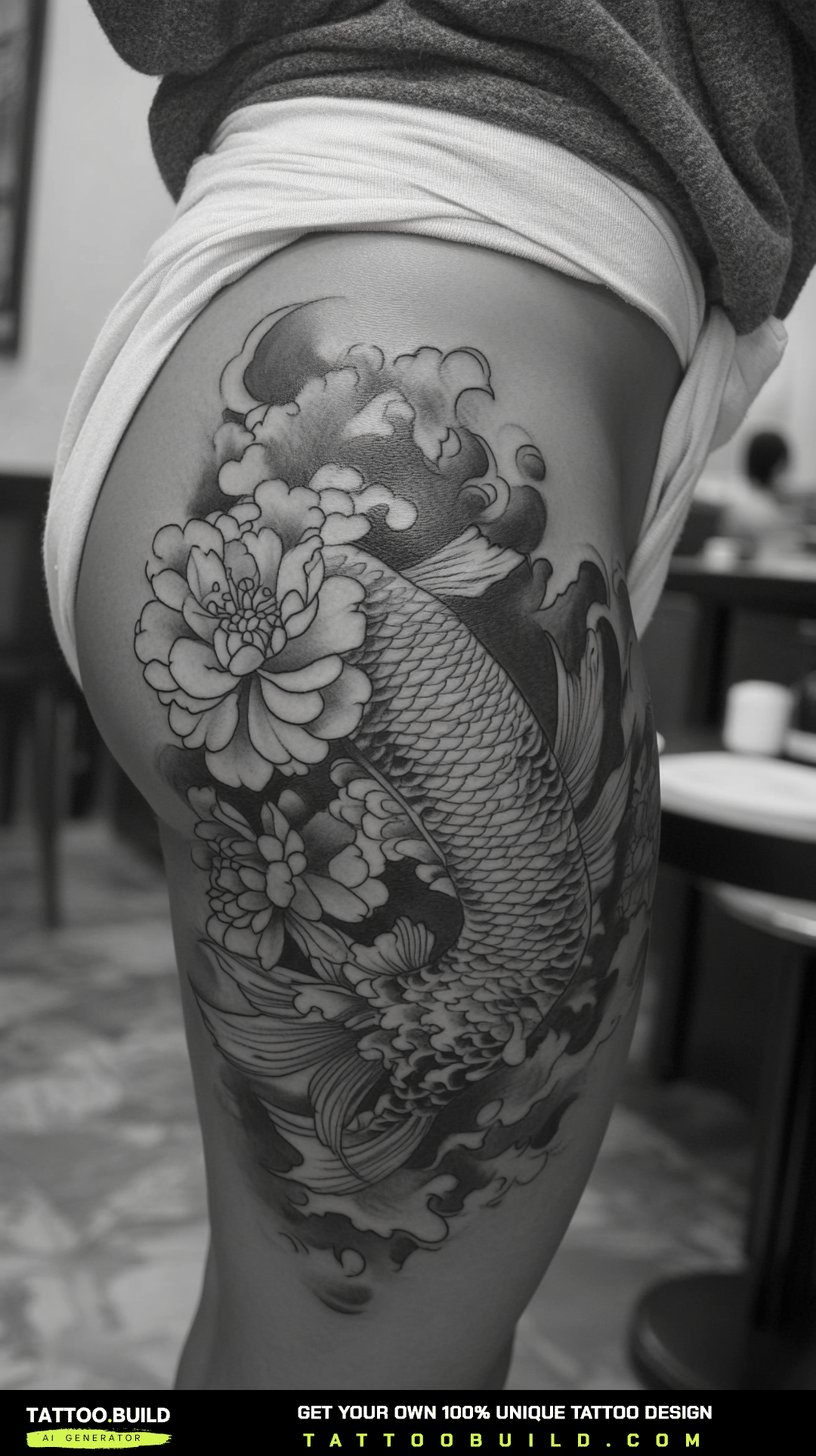
2. Bold Black and Grey Peonies and Roses
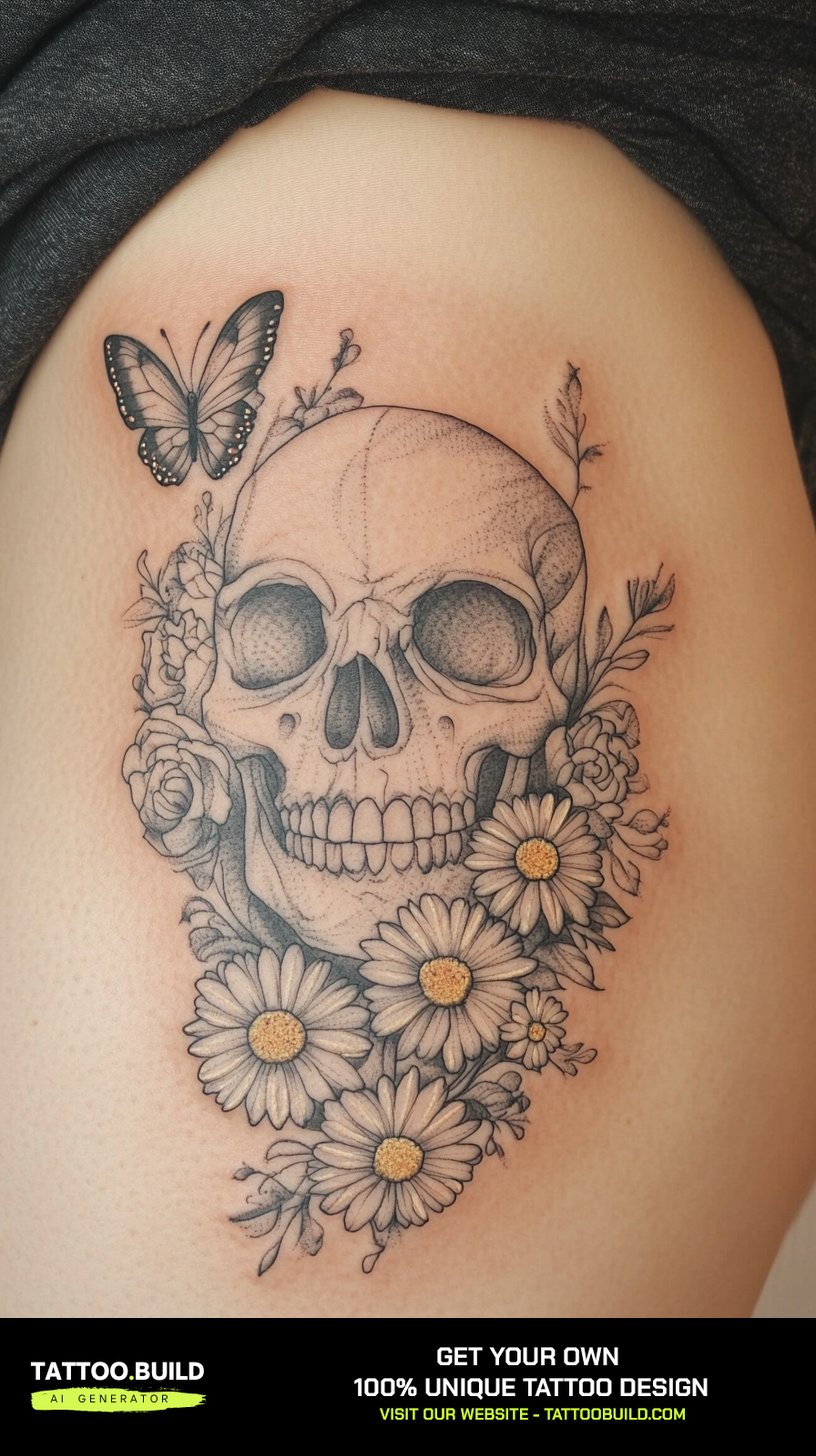
If you want one tattoo that carries the whole hip, a large peony or rose in black and grey is the safest bet on this list.
Big petals hold ink well. The broad shapes give the artist room to build real contrast, and contrast is what keeps a tattoo readable as it softens with age.
Ornamental details are what turn a flower into a hip piece. The hanging chains and beaded strands you see below are drawn to fall along the hip bone, so the design has a clear top and bottom.
Expect four to six hours for a piece at this scale, and do not be surprised if your artist wants to split it. Sitting on your side for six straight hours is harder than it sounds.
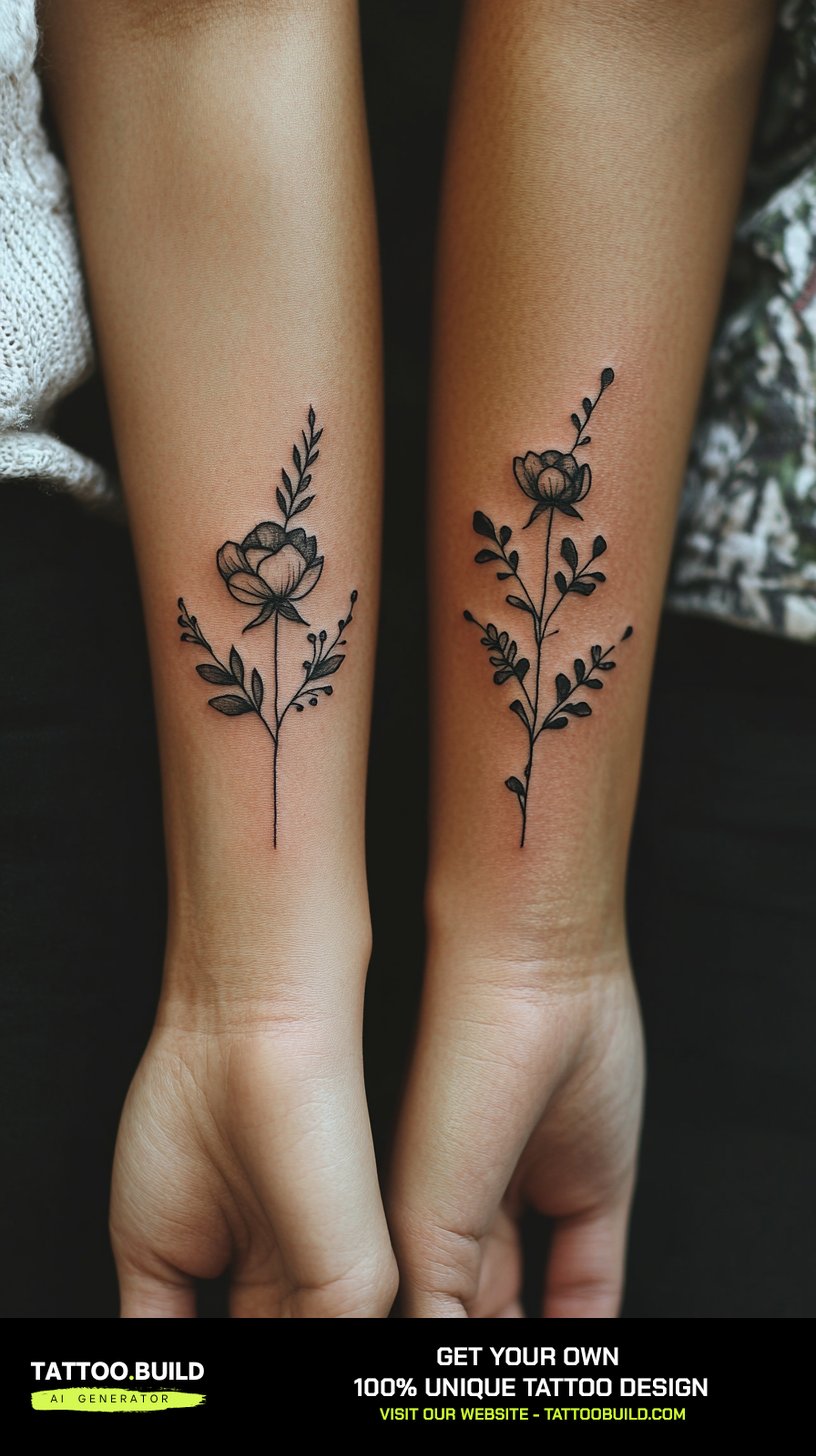
3. Fine Line and Single-Needle Designs
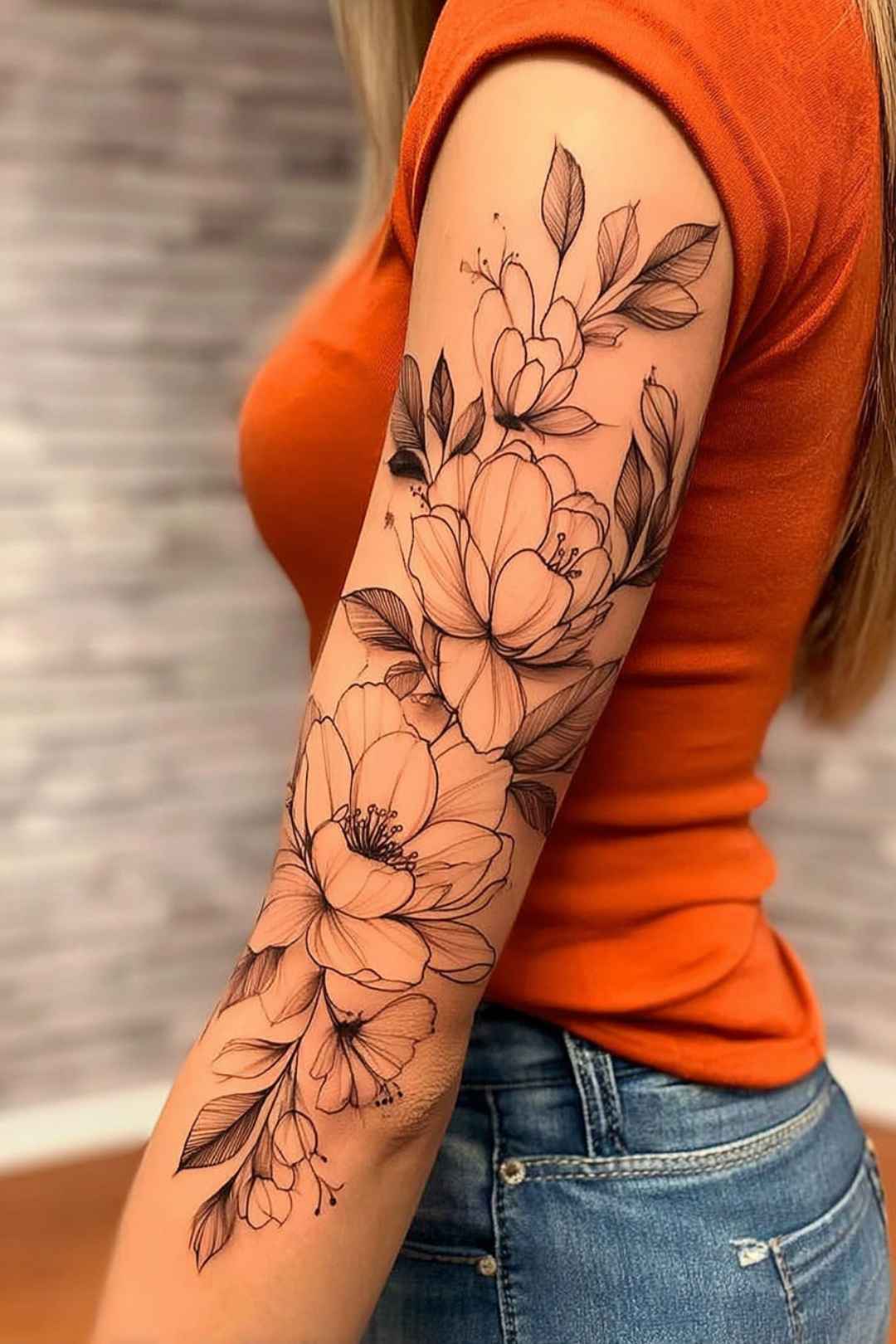
Fine line work is the most requested style I see for hips right now, and it suits the placement for a practical reason: less trauma to sensitive skin.
Lilies, wildflowers and loose botanical sprays work particularly well because their outlines are already delicate.
The honest limitation is longevity. Very thin lines placed close together can blur into each other over the years, especially in an area that stretches, so a good artist will space them more generously than the reference photo suggests.
If this is the direction you are leaning, our fine line tattoo ideas gallery has more examples across other placements.
4. Minimalist and Small Hip Tattoos
Not every hip tattoo needs to be a project. Some of the most elegant ones I have seen are barely three inches across.
A single outlined bloom, a small crescent and sunflower pairing, or a compact mandala all sit comfortably above the hip bone and finish in under an hour.
This is also the smart starting point if you are not sure how you handle the sensation here. You learn what the placement feels like without committing to a full day.
It is also the easiest style to add to later, since a small piece leaves room for the design to grow around it.
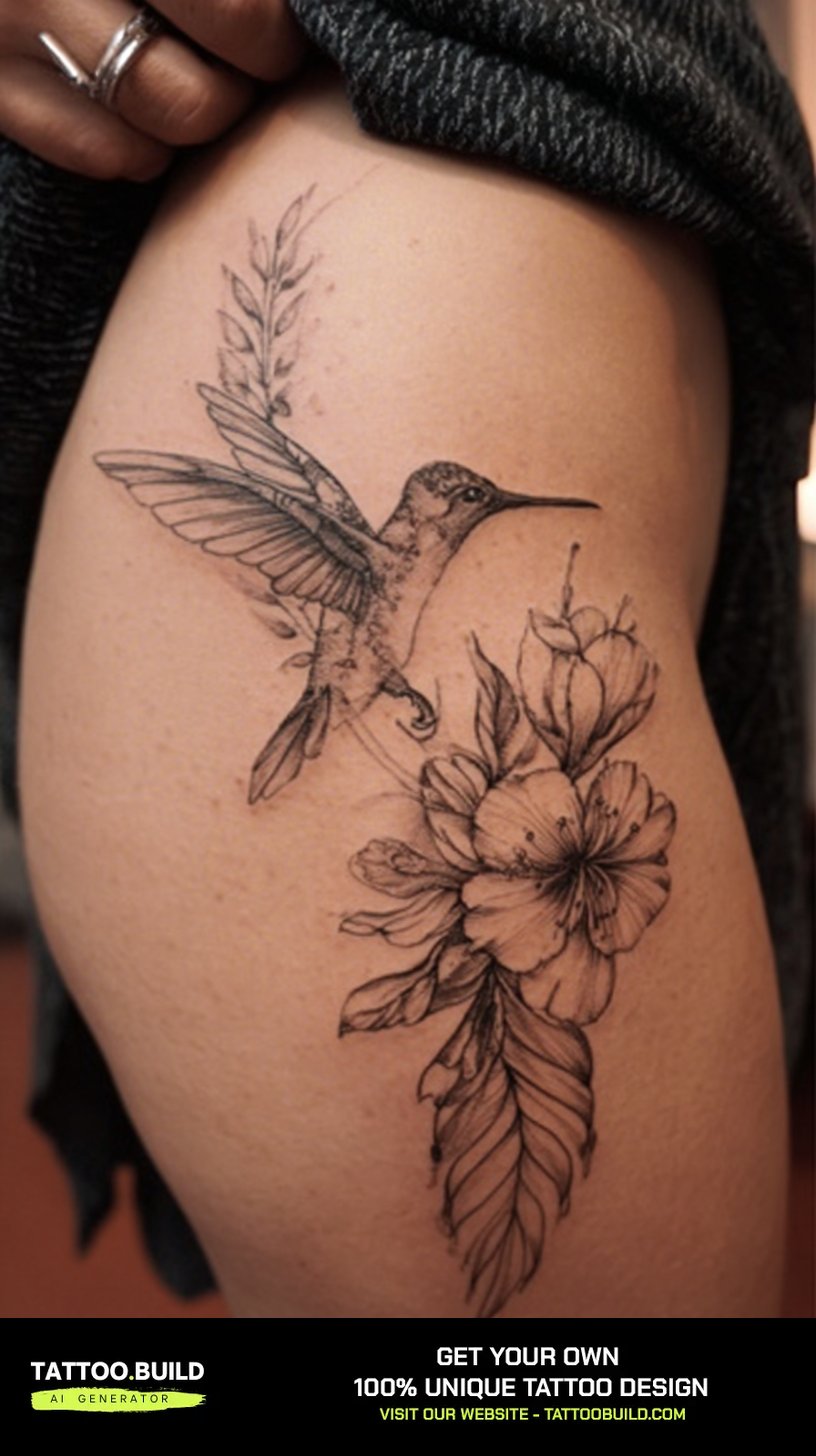
5. Birds, Wings and Winged Florals
Wings and hips get along well. A spread wing has a natural diagonal that matches the angle of the hip, so eagles and other large birds sit here more comfortably than they do on flatter placements.
These designs also scale up gracefully. The same eagle can be a five-inch piece on the upper hip or a panel that runs onto the thigh.
When I have asked artists about this style, the consistent advice is to keep the bird’s head near the top of the hip. It gives the eye somewhere to land.
Flowers at the base help anchor the design so the bird does not appear to float on the leg.
6. Wolves, Snakes and Other Animals
Animal portraits demand more from an artist than florals do, because our eyes are unforgiving about faces.
A wolf with slightly wrong proportions reads as wrong immediately, while a peony with an odd petal does not. Look hard at healed animal work in a portfolio before booking.
Snakes are the exception that makes hips easy. A serpent is drawn as a long curve by definition, so it wraps the hip without any awkward compression, which is why it is one of the most popular snake tattoo ideas for women.
Mixing an animal with florals softens the whole piece, which is usually what people mean when they say they want something classy rather than harsh.
7. Landscapes, Travel and Scenery
Scenic hip tattoos are less common, and that is exactly why they stand out. A palm tree over water, a mountain range, a compass and a river all fit into a tall, narrow frame.
The hip suits them because the shape you have to work with is naturally vertical, like a postcard turned on its side.
These pieces live or die on depth. The distant elements need to be lighter than the foreground, and that is a shading skill worth checking for specifically in a portfolio.
A phoenix is the halfway house between this category and the last one, using a long tail to carry the eye down the outer hip.
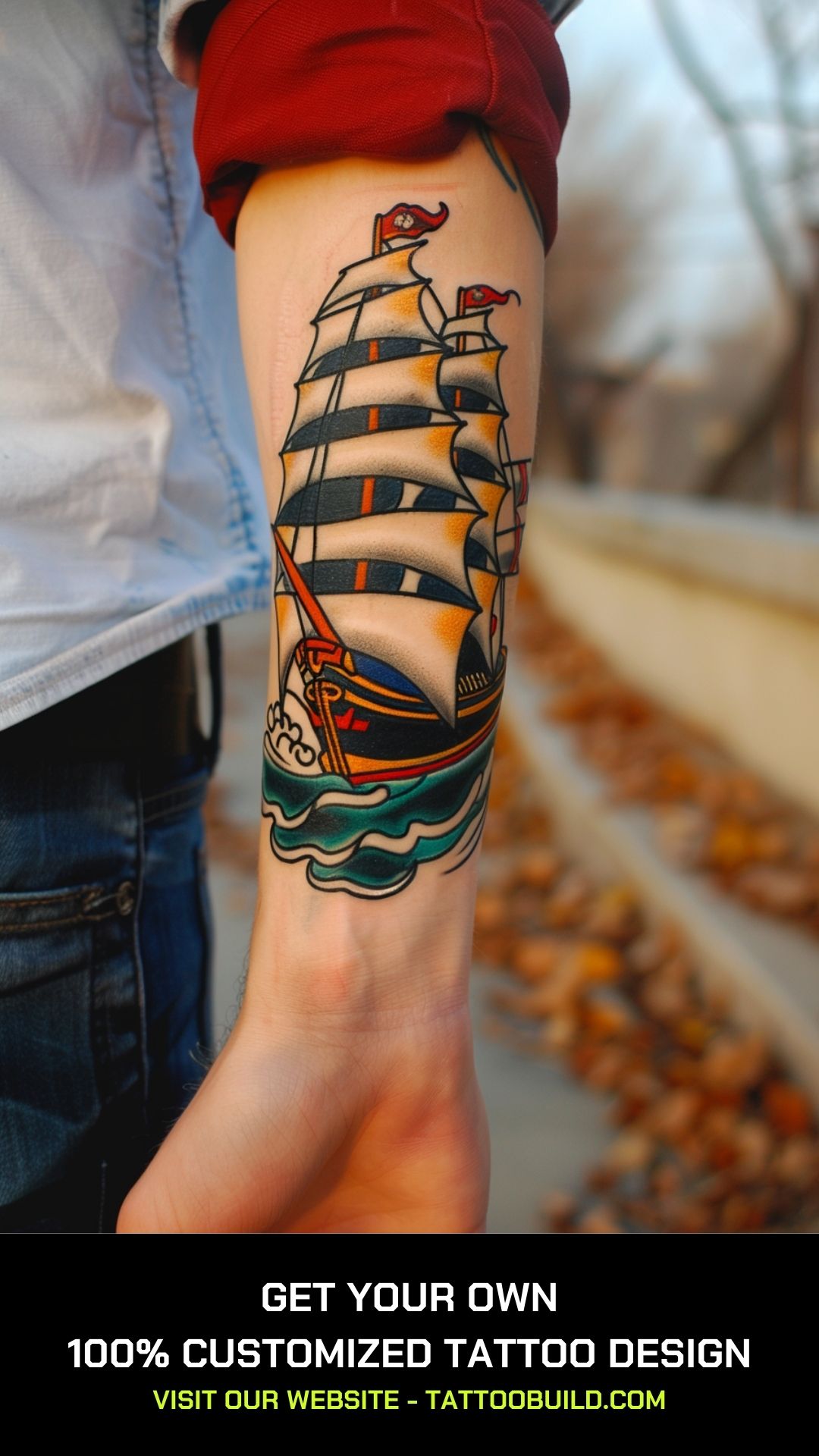
8. Colour Accents and Illustrative Work
Most of the hip work I see is black and grey, so a touch of colour goes a long way here.
The versions that work best keep the structure in black and grey and use colour on one element only, such as sunflower petals or a butterfly wing.
Colour does ask more of you. It usually needs more passes, it heals a little slower, and it is the first thing to fade if the area gets regular sun.
It is also worth knowing that pigment reactions, while uncommon, are more often reported with coloured inks than with black, and red pigments come up most often in dermatology write-ups such as the AAD’s guide to tattoo skin reactions from the American Academy of Dermatology.
Placements Worth Considering Instead
If the hip is not quite right for you, these four placements come up most often as alternatives and carry similar designs well.
Thigh
The outer thigh gives you more flat surface and, for most people, a noticeably easier session. Nearly every design on this page transfers directly, as the thigh tattoos for women gallery shows.
It is the placement I most often suggest to someone who loves a large floral but is nervous about the hip bone.
Rib Cage
Ribs give you the same wrapping, body-following effect. They are widely considered harder to sit through, so go in with realistic expectations and look at rib tattoos for women before deciding.
Lower Back
The lower back has quietly come back into fashion with far more sophisticated designs than the style it is remembered for. There is more usable width here than on the hip, and lower back tattoo ideas covers the modern versions.
Hip and Thigh Together
If you already know you want scale, plan the hip and thigh as one piece from the start rather than extending later. A classy feminine thigh tattoo designed as a single composition always flows better than two tattoos stitched together.
Aftercare and Healing for a Hip Tattoo
Hip tattoos have one healing complication that most placements do not: your waistband sits directly on them.
For the first week or two, loose clothing is not a comfort preference, it is the actual aftercare. Tight jeans rub a healing tattoo constantly and can pull ink out of the freshly worked skin.
Beyond that, standard advice applies. Keep it clean, keep it lightly moisturised, do not pick at flaking skin, and stay out of pools, hot tubs and baths until it has fully closed, which is the guidance the American Academy of Dermatology gives as well.
Follow your artist’s instructions over anything you read online, including this page. They know what ink and technique they used on you.
If you see spreading redness, swelling that worsens after a few days, pus, or a fever, stop researching and see a doctor. Infections and allergic reactions are uncommon but real, and the FDA’s tattoo fact sheet explains what is and is not regulated about tattoo inks.
Common Mistakes and How to Avoid Them
The mistake I see most often is choosing a design from a photo without checking how it sits on a real hip. Screenshots flatten the curve and hide how much a design has to be redrawn.
The second is placing a tattoo too close to the hip crease. That area folds, rubs and stretches more than anywhere else on the hip, and healing there is genuinely harder.
The third is underestimating the session. Booking a six-hour first tattoo on a sensitive placement is how people end up with an unfinished piece.
If the sensation is your main worry, read up on it before you book rather than on the day. Our tattoo pain chart is written for exactly that moment.
And if you want the design to mean something rather than just look good, starting from your birth flower is a reliable route.
Frequently Asked Questions
How painful is a hip tattoo?
Most people place hip tattoos in the more painful half of the body, though it varies a lot between individuals. The area directly over the hip bone and near the crease tends to be the sharpest, while the fleshier outer hip is usually more manageable. Pain is also cumulative, so a four-hour session feels very different from a one-hour one. If you are unsure, start with something small and see how you handle it.
How long does a hip tattoo take to heal?
The surface usually looks healed in about two to three weeks, while the deeper layers keep settling for a couple of months. Hip tattoos can feel slower than average simply because clothing rubs them constantly. Loose waistbands and high-waisted styles that sit above the tattoo help a great deal. Follow the aftercare your artist gives you, and contact a doctor if you see signs of infection.
Will a hip tattoo stretch with weight changes or pregnancy?
It can. The hip and lower abdomen are among the areas most affected by significant weight change and by pregnancy, so some distortion is possible. Designs with organic, flowing shapes tend to tolerate this better than rigid geometric patterns or tight lettering. No artist can promise a tattoo will look identical in twenty years, and anyone who does is overselling.
How much does a hip tattoo cost?
It depends almost entirely on size, detail and your artist’s hourly rate, which varies widely by city and by reputation. A small fine line piece is usually a shop minimum job, while a full hip-to-thigh panel is priced across multiple sessions. Ask for a written quote at your consultation rather than a number over direct message. Paying more for an artist whose healed work you have actually seen is generally money well spent.
Can a hip tattoo be hidden at work?
In almost all cases, yes. The hip sits under standard trousers, skirts and underwear, which makes it one of the easiest placements to keep private. That is a large part of why it stays popular with people in workplaces that discourage visible tattoos. The exception is a piece that extends high onto the waist, which can show with cropped tops.
Quick Summary
- The hip is one of the most private placements on the body, and one of the most striking when you choose to show it.
- Florals dominate the style for a reason: their shapes follow the hip’s curve without being forced.
- Fine line and minimalist pieces are the gentlest entry point and finish in an hour or less.
- Large black and grey work gives the best long-term contrast but usually needs two or more sessions.
- Animal portraits are the hardest thing to get right, so judge an artist on healed work, not fresh photos.
- Expect real discomfort over the hip bone and near the crease, and plan session length accordingly.
- Loose clothing for the first two weeks is the single most useful piece of hip-specific aftercare.
- Take reference images to a consultation and let the artist redraw them for your body rather than copying a photo.